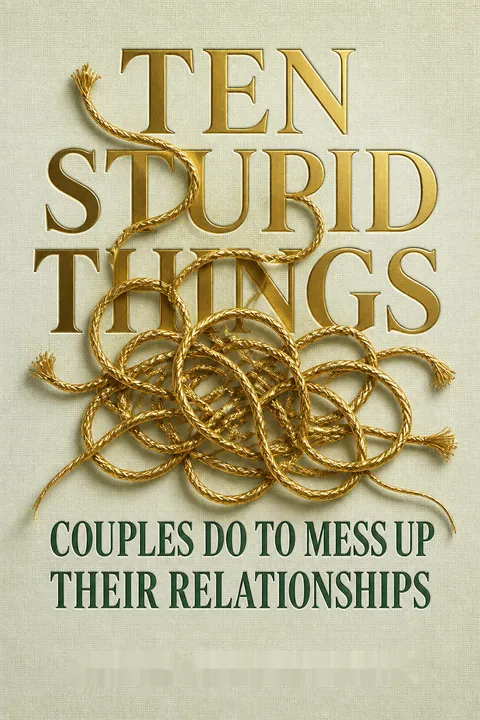


Key Takeaways
Tell the truth that changes a partner's choices, not every private thought.
Privacy is not deception. The book distinguishes private thoughts and harmless personal details from secrets that affect a partner's physical, financial, or emotional well-being. A spouse need not hear every detail of an old romance, but a serious medical history, concealed debt, ongoing affair, or behavior that puts the family at risk can change the partner's decision to marry or stay. Disclosure belongs when a relationship becomes serious, not necessarily on a first date.
One account describes a wife who learned only after marriage that her husband had previously been hospitalized for a mental health crisis. His later instability brought financial strain and damaged trust. The injury was not simply his history, but that he had denied her the chance to make an informed choice. The book urges honesty without turning intimacy into compulsory confession.
What's striking is the book's insistence that honesty serves the other person's agency, not just the speaker's relief from guilt. That aligns with informed consent: a choice is meaningful only when material facts are available. At the same time, disclosure should be paced and handled with care, especially around trauma or health conditions. A partner's right to relevant information does not create a right to every private detail, nor does a difficult past automatically predict future harm.
Treat a marriage as a shared project, not a service contract.
The relationship needs contributions. Schlessinger argues that a couple cannot thrive if each person asks only what the relationship provides. Work, hobbies, friendships, and personal ambitions matter, but treating them as untouchable rights can leave a spouse carrying the emotional and practical load alone. In the letters, partners describe small acts of care, such as making dinner or picking up after oneself, as turning points after years of mutual resentment.
The aim is not to erase individuality. A listener who had prized being entirely self-sufficient eventually found room for personal identity inside family life. The book's contrast is between reciprocal independence, where both partners matter, and hyperindividuality, where each protects personal freedom even when it repeatedly harms the couple. Giving is not a bargaining chip, but a way to make care visible.
The useful distinction is between autonomy and isolation. Relationship research often describes close partnerships as interdependent: each person retains agency while recognizing that choices affect the other. This is more durable than either total self-sufficiency or self-erasure. The book's language sometimes makes sacrifice sound like the primary proof of love. A healthier test is mutuality: both people should be able to express needs, negotiate limits, and contribute without one partner's identity or safety being treated as expendable.
Ask what happened before turning a small slight into a verdict.
Sensitivity needs a reality check. The book separates hypersensitivity, which reads ambiguous moments as deliberate insults, from legitimate concerns about repeated disrespect or unequal labor. A caller skipped a neighbor's party because she expected a second invitation reminder, then concluded that the neighbor had lied. The author points out that the invitation was already clear and that a simple question could have prevented the grievance.
Small matters can still count. Repeatedly leaving chores for one partner, for example, may turn a toothpaste cap or an unwashed dish into evidence of an unfair pattern. The practical move is to check assumptions, name the specific behavior, and ask for what is needed. If the issue is genuinely minor, letting it pass may protect more than pride.
Ambiguous social cues are easy to misread, especially when someone is already stressed or feels insecure. A pause and a clarifying question can interrupt the leap from event to motive. But restraint should not become a demand that one partner dismiss every complaint as oversensitivity. Repeated small acts can reveal unequal responsibility, and the person doing the extra work may have good reason to object. Context and pattern matter more than the size of any single incident.
Replace winning arguments with listening, restraint, and real repair.
Control is a lonely victory. Schlessinger calls the urge to dominate, correct, or always be right “Stupid Power.” A partner may listen only long enough to prepare a counterattack, or turn a disagreement into a contest over who is more exhausted. One listener and her husband named this pattern “King of Pain Syndrome.” Giving the pattern a name helped them notice the contest and return to the actual problem, which was their finances.
The book recommends listening without interruption, accepting harmless differences, and apologizing when wrong. A couple can agree to give each person a few uninterrupted minutes to speak. That is not surrender. It is a way to understand the issue before defending a position. However, a controlling or violent partner is not simply one half of an ordinary power struggle, and safety may require outside support or leaving.
Naming a recurring conflict can create distance from it: the couple sees a familiar script rather than treating each new argument as proof of bad character. Structured listening also makes it harder to confuse rebuttal with understanding. The important limit is that not every conflict is symmetrical. In coercive control or violence, framing both partners as equally responsible can obscure the danger. Mutual repair is appropriate where both people can participate freely, not where one person's power makes honesty unsafe.
Schedule your relationship before work, hobbies, and the spotless house.
Time reveals what matters. The book challenges couples who insist that their marriage is important while filling every hour with work, school, chores, or activities. In one story, two busy spouses wanted more intimacy but had not reserved time for each other. In another, a gas station owner worked more than a hundred hours a week for years, saw little of his family, and lost the business after the land was leased to someone else.
A couple described changing their lives after a child was harmed in daycare. They left demanding careers, moved to a smaller town, and built a routine with shared meals and evenings together. Their story is not a universal prescription to leave work. Its point is that a family cannot live on intentions alone. Put protected time on the calendar, and examine whether ambition or perfectionism keeps displacing it.
The strongest point is that priorities are demonstrated by recurring allocations of time, not by declarations of love. This resembles the distinction between stated preferences and revealed preferences in economics: behavior shows the tradeoffs a person actually makes. Yet the book tends to treat work as a choice of ego, while many families face economic necessity, limited leave, or scarce childcare. Practical planning should include those constraints and distribute caregiving fairly, rather than converting structural pressure into individual blame.
Do not outsource happiness to a spouse, affair, purchase, or thrill.
Feelings are not instructions. The book argues that people often expect marriage to provide perpetual excitement, then mistake routine or hardship for evidence that the relationship is over. A caller facing bereavement and a child's serious illness believed her husband did not comfort her because he was not verbally expressive. The author asked her to notice his practical care, including the tasks he was doing to ease her life. When she thanked him, they reconnected.
Schlessinger urges readers to act with warmth and appreciation even when they do not feel cheerful, rather than seeking a quick emotional lift through an affair, shopping, or a new romance. This is not a claim that grief vanishes through good manners. It is a reminder that partners can miss one another's ways of showing care, and that daily behavior helps shape the emotional climate.
This account links well-being to attention and action: noticing care can change how a person interprets a difficult day, and generous behavior can invite warmth in return. That resembles behavioral activation, an approach in which purposeful activity can support mood. Still, gratitude is not a cure for depression, chronic neglect, or unresolved conflict. Nor does every partner express love through practical tasks. Couples benefit from asking which forms of care each person recognizes, rather than assuming one style should speak for everyone.
Own the harm without excuses, then repair and prevent a repeat.
An apology needs follow-through. The book describes a four-part process called the 4 R's: take responsibility, feel remorse, repair what can be repaired, and commit to not repeating the behavior. A listener who grew up with a mother who yelled had begun reacting the same way with her own family. Recognizing the pattern helped, but she also had to stop treating her upbringing as permission to keep hurting her children.
A practical prevention step is to notice a trigger before it becomes an outburst. Someone who feels overwhelmed can say they need a brief pause, leave the room to settle, or seek help before returning to the conversation. The book's point is not that history is irrelevant. It is that explanation and accountability are different things. Without changed behavior, repeated apologies become another way to avoid consequences.
The four-part sequence usefully separates remorse from repair. A sincere apology does not undo harm, but it can acknowledge impact and establish observable steps toward change. This also avoids reducing people to their worst act: a learned pattern can be changed without denying where it came from. A further distinction matters, however. Shame says a person is irredeemably bad; accountability says a harmful action must stop. The latter supports growth, while shame can encourage hiding and defensiveness.
Set boundaries around outsiders who drain trust or undermine your home.
Loyalty needs boundaries. The book groups affairs, emotionally intimate online relationships, destructive friends, and intrusive relatives as outside attachments that can weaken a couple's trust. One listener spent money and time trying to rescue an alcoholic friend, concealed the effort from her husband, and neglected her family. That friend then pursued the husband. The account illustrates how a rescuer's desire to feel needed can become a breach of trust at home.
The author also argues that a couple must decide together how to handle relatives who insult a spouse, disregard parenting rules, or demand that adult children choose their family of origin over their new household. Boundaries need not mean cutting everyone off. They can mean limiting contact, declining a request, or refusing to share private marital complaints with people likely to take sides.
The book is perceptive about triangulation: conflict between two people can intensify when a third person becomes confidant, rescuer, or rival. Digital intimacy can also feel consequential even without physical contact because secrecy and emotional investment alter a couple's trust. The caution is that its broad suspicion of close opposite-sex friendships can encourage isolation. Better boundaries are negotiated and reciprocal, based on honesty, context, and agreements, rather than blanket rules that presume every friendship is a threat.
Treat dating as evidence gathering, and leave when the evidence is bad.
Attraction is not an investigation. The book urges people to learn a prospective partner's character across ordinary situations before making commitments that cloud judgment. It recounts a woman who married after a three-month courtship, only to see her husband's drug use return soon after the wedding. Her later marriage grew from a long friendship that allowed her to observe his character over time.
Schlessinger recommends taking dating slowly, discussing children, money, family, faith, and work, and treating persistent lies, addiction, irresponsibility, or incompatible values as evidence rather than as projects to fix. She often advises a long period of getting to know someone, but time alone does not guarantee compatibility. Premarital counseling and attention to repeated behavior can help distinguish a rough patch from a pattern that makes a safe partnership unlikely.
The book reframes dating as due diligence rather than a race toward intimacy. That is valuable because attraction can narrow attention, while repeated behavior across settings offers better evidence of reliability. But a fixed waiting period cannot function as a guarantee: people can conceal problems for years, and people can also change. The more useful standard is accumulating evidence, asking direct questions, observing whether words match actions, and checking whether disagreements can be handled with respect.
Do not abandon a repairable marriage just to escape ordinary frustration.
Commitment outlasts a mood. The book warns against ending a marriage solely because excitement has faded, routine has arrived, or one partner expects the other to manufacture happiness. It describes a caller who considered leaving during bereavement and a child's illness. Once she recognized her husband's practical attempts to care for her, she thanked him, and the couple found a way back toward one another.
The author favors effort, communication, and repair when both partners are willing to participate. But she does not present every marriage as salvageable: abuse, addiction, repeated infidelity, and dangerous behavior may justify leaving, especially when there is no genuine remorse or change. Commitment is not permission to endure harm. The question is whether the relationship is difficult but repairable, or persistently unsafe and destructive.
The book's best corrective is to distinguish ordinary disappointment from a verdict on the whole relationship. Long-term bonds include routine and strain, and a temporary low mood does not always reveal a permanent mismatch. Yet commitment can become harmful when treated as an absolute duty. The useful modern balance is to resist impulsive escape while taking evidence of danger seriously. Couples can seek counseling or trusted support, but preservation is not the highest value when safety and dignity are at stake.
Analysis
This is a moral argument about relationships delivered through the architecture of radio advice: a claim, a caller's story, a blunt interpretation, and a proposed correction. Its central insight is behavioral. Love is not merely a feeling to receive; it is also a pattern of honesty, attention, restraint, and responsibility. The most useful distinctions are unusually practical: privacy versus consequential secrecy, sensitivity versus mind-reading, commitment versus impulsive escape, and explanation versus excuse. The call-in anecdotes make these distinctions vivid, especially when a small domestic incident exposes a much larger pattern of neglect or mistrust. The same method limits the book. Personal stories illustrate possibilities, but they do not establish how common a behavior is or prove the author's causal claims about divorce, cohabitation, sexuality, or social change. The book often presents broad claims about women, men, feminism, and family roles as settled truths without demonstrating them. Its religious framework gives the argument coherence for readers who share its premises, but its prescriptions about gender and sexuality will not fit every couple. The emphasis on personal responsibility can also become victim-blaming if a reader mistakes abuse or coercion for a mutual communication problem.
The strongest contemporary reading preserves the book's insistence on accountability while refusing its overgeneralizations. Couples do benefit from disclosing facts that affect consent, addressing recurring conflicts directly, and protecting time for the relationship. They do not benefit from compulsory disclosure of every thought, rigid expectations about gender, or the belief that sacrifice alone proves love. Nor should commitment require staying in a dangerous home. The book is most persuasive as a guide to noticing how everyday choices erode trust, not as a universal theory of why relationships succeed or fail. Its central question remains useful: is each partner's behavior making a shared life more trustworthy, or making it harder to remain close?
Review Summary
Ten stupid things couples do to mess up their relationships receives mixed reviews. Some praise Dr. Laura's straightforward advice and traditional values, while others criticize her harsh tone and outdated views. Readers appreciate her focus on personal responsibility and relationship insights, but many find her writing repetitive and overly opinionated. The book's religious content and anti-feminist stance are contentious points. Overall, reviewers acknowledge some valuable relationship advice, but the delivery and certain perspectives are polarizing.
People Also Read






Glossary
privacy and secrecy
Personal space versus harmful concealmentThe book uses privacy for personal thoughts or details that do not materially affect a partner, and secrecy for withheld information that can affect the partner's well-being or ability to choose. The distinction allows room for individual space while treating concealed debts, ongoing affairs, and significant risks as matters that can undermine trust.
4 R’s
A process for taking responsibilityA four-part approach to responding to wrongdoing: accept responsibility, experience remorse, repair what can be repaired, and commit to avoiding repetition. The sequence distinguishes genuine accountability from an apology used to end an argument. Its final step requires changed behavior, not merely a promise or an explanation of why the harm occurred.
secondary gains
Benefits that sustain a problemThe advantages a person receives, consciously or not, from continuing a problematic behavior or identity. The book gives examples such as gaining sympathy, avoiding responsibilities, or controlling others through displays of hurt. Recognizing these benefits can explain why a behavior persists even when it damages the person and the relationship.
King of Pain Syndrome
Competing over who suffers moreA conflict pattern in which partners compare whose work, stress, or hardship is greater, often to win recognition or avoid attending to the original issue. A couple in the book gives the pattern a name so they can recognize it, stop competing, and return to the practical problem they need to solve.
Stupid Power
Control used to feel superiorThe book's label for needing to dominate a disagreement, correct a partner, or remain in control at the expense of understanding and closeness. It can appear as one-upmanship, criticism, or refusal to admit error. The term does not describe every disagreement; it targets the use of conflict to protect status or avoid vulnerability.
Stupid Mismatch
A relationship ignored despite warning signsThe book's term for continuing or deepening a relationship despite serious evidence of incompatible values, unreliable behavior, or poor prospects for a healthy partnership. The concept centers on the tendency to explain away red flags in the hope that love or effort will transform the other person, rather than making a clear choice based on observed behavior.
FAQ
What's Ten Stupid Things Couples Do to Mess Up Their Relationships about?
- Focus on Mistakes: The book by Dr. Laura Schlessinger identifies ten common behaviors that can undermine relationships.
- Behavior Analysis: Each chapter explores a specific "stupid" behavior, such as withholding secrets and egotism, explaining how these actions damage intimacy and trust.
- Practical Solutions: Dr. Schlessinger offers strategies for couples to recognize and change these behaviors to foster healthier relationships.
Why should I read Ten Stupid Things Couples Do to Mess Up Their Relationships?
- Improve Dynamics: The book provides insights into common pitfalls, helping readers avoid these mistakes in their relationships.
- Real-Life Examples: Dr. Schlessinger uses examples from her radio show to illustrate the consequences of these behaviors, making the advice relatable.
- Strengthen Bonds: Addressing these issues can help couples build stronger, more fulfilling relationships, leading to greater happiness.
What are the key takeaways of Ten Stupid Things Couples Do to Mess Up Their Relationships?
- Awareness of Behaviors: Recognizing behaviors like egotism and power struggles is crucial for avoiding relationship damage.
- Communication Importance: Open and honest communication is vital for resolving conflicts and misunderstandings.
- Commitment to Change: Couples are encouraged to commit to personal growth and mutual respect for a healthy partnership.
What are the best quotes from Ten Stupid Things Couples Do to Mess Up Their Relationships and what do they mean?
- “Human beings have needs…”: This quote emphasizes recognizing and addressing deeper emotional needs in a relationship.
- “You can choose to be the master.”: Highlights the power individuals have to control their actions and choices.
- “It’s not much skin off your nose.”: Suggests letting go of minor irritations for the sake of harmony in a relationship.
What are the ten stupid things couples do according to Dr. Laura Schlessinger?
- Stupid Secrets: Withholding important information can lead to distrust and resentment.
- Stupid Egotism: Prioritizing personal desires over relationship needs creates imbalance.
- Stupid Pettiness: Focusing on trivial issues can escalate conflicts and harm the relationship.
- Stupid Power: Engaging in power struggles undermines partnership and intimacy.
How does Dr. Laura Schlessinger define "Stupid Power" in the book?
- Control Over Others: "Stupid Power" refers to the need to dominate or control a partner, leading to resentment.
- Destructive Behavior: This behavior can manifest as criticism, manipulation, or emotional abuse.
- Lack of Intimacy: Power struggles make it difficult to connect emotionally, breaking down trust and affection.
What is the significance of communication in Ten Stupid Things Couples Do to Mess Up Their Relationships?
- Foundation of Trust: Effective communication is essential for building and maintaining trust.
- Conflict Resolution: Open dialogue allows couples to address misunderstandings before they escalate.
- Emotional Connection: Sharing thoughts and feelings fosters intimacy and strengthens bonds.
How can couples avoid the "Stupid Priorities" trap?
- Set Relationship Goals: Couples should prioritize their relationship by setting mutual goals.
- Balance Commitments: Balance work, family, and personal interests to keep the relationship a focal point.
- Regular Check-Ins: Schedule discussions about each other’s needs to maintain connection.
What role does self-awareness play in improving relationships according to Dr. Laura Schlessinger?
- Recognizing Flaws: Self-awareness helps individuals identify harmful behaviors.
- Taking Responsibility: Understanding one’s actions fosters accountability and encourages growth.
- Enhancing Empathy: Awareness of one’s feelings can lead to greater empathy towards a partner.
How does Ten Stupid Things Couples Do to Mess Up Their Relationships address the issue of jealousy?
- Understanding Insecurities: Jealousy often stems from personal insecurities and fears.
- Open Communication: Discuss feelings of jealousy openly to address underlying issues.
- Healthy Boundaries: Establish boundaries regarding interactions with others to promote security.
How does Ten Stupid Things Couples Do to Mess Up Their Relationships address communication issues?
- Encourages Open Dialogue: Emphasizes discussing feelings and concerns openly to prevent misunderstandings.
- Identifies Pitfalls: Outlines common communication failures that lead to conflict.
- Promotes Active Listening: Encourages active listening to foster understanding and empathy.
What advice does Dr. Laura give for couples dealing with in-law issues?
- Establish Clear Boundaries: Communicate boundaries regarding family involvement to prevent conflicts.
- Support Each Other: Partners should support one another when dealing with family issues.
- Prioritize Your Marriage: Remember that the marriage comes first, helping navigate family dynamics effectively.
About the Author
Other books by Laura Schlessinger
Download PDF
Download EPUB
.epub digital book format is ideal for reading ebooks on phones, tablets, and e-readers.








