

Plot Summary
The House at Thanksgiving
Ainsley Holloway, a private investigator newly settled in Gooseberry Bay, has come to the isolated town because an old photograph and recurring dreams seem to connect her childhood to the Winchester estate on Piney Point.
At the abandoned Hamish home, she finds another mystery waiting: five years earlier, Mark and Mary Hamish and their four daughters vanished, leaving a Thanksgiving meal behind. Reporter Parker Peterson is reopening the cold case, and Ainsley agrees to help.
A neighbor, Vanessa Hudson, says she once knew the eldest daughter, Hannah, and recalls hearing that a blue sedan watched the house before the family disappeared. The clue gives Parker's investigation a fresh direction, though Vanessa's guarded manner makes Ainsley wonder what she has not said.
Ainsley's arrival puts two forms of absence in the same frame. The Hamish house has been left physically intact but socially abandoned, while Ainsley's own past survives only in a photograph and incomplete dreams. Her decision to help Parker is therefore more than a hobbyist's curiosity: it gives her a way to approach the unresolved questions about herself through another family's disappearance. Vanessa's car clue is useful precisely because it is uncertain. It could be evidence, rumor, or a test of whether Ainsley and Parker can be trusted. The town's isolation turns geography into both refuge and trap, making disappearance seem plausible before anyone knows what it means.
Patrick's Story Splinters
A call to Gil Monroe, her late father's former police partner, unsettles the account Ainsley has accepted all her life. Gil confirms that Patrick Holloway pursued a case on Christmas Eve 1995 and that a warehouse fire helped lead to an arrest.
But Gil never witnessed a formal adoption, recalls no search for Ainsley's identity, and cannot explain how Patrick possessed a photograph of her from months earlier. Ainsley also realizes that a three-year-old would ordinarily know her own name.
The social worker Patrick said he contacted, Sherry Young, died in a car crash days after Christmas. Gil cannot say whether she ever handled Ainsley's case. Ainsley leaves the call unsure whether Patrick concealed the truth to protect her, and whether Sherry's death was truly accidental.
Gil's account does not discredit Patrick's love for Ainsley; it separates emotional truth from factual certainty. He describes a devoted father while confirming that the official story has gaps, so Ainsley must consider that protection and concealment may have been intertwined. The detail about her name is small but psychologically potent: it lets her question a childhood narrative through ordinary developmental knowledge rather than a dramatic revelation. Sherry's death adds danger without proof, keeping suspicion in the realm of possibility. The scene asks how a person can honor a caregiver while investigating what that caregiver chose not to tell. For Ainsley, loyalty no longer requires silence.
A Name From the Garden
A dream of the Piney Point patio grows clearer: as a child, Ainsley hid pieces of sea glass she imagined were baby birds, while two women searched for her and a trusted groundskeeper helped her tuck the objects into a hidden space by the fountain. One woman called the child Ava.
The name lands with the force of recognition, though Ainsley cannot yet make it feel entirely like her own. The dream also sharpens her sense that the blond woman was not her mother, and that she feared a bad man. These fragments link her childhood to the estate but explain neither why she left nor how she ended up alone in Georgia. Her search becomes more personal and more urgent.
The dream functions as memory in pieces, not as a reliable recording that can simply be played back. Ainsley feels the child's fear and tenderness, yet interprets them with an adult's understanding, so recollection and reconstruction remain difficult to separate. The hidden glass birds are especially revealing: the child takes responsibility for protecting small, fragile things when the adults around her feel unpredictable. Remembering Ava gives her a possible identity, but not a stable one; twenty-five years as Ainsley have made the new name both intimate and strange. The scene turns the past from a puzzle of documents into an embodied experience of attachment, fear, and a child's attempts to preserve what she loves.
Dinner Was Arranged
Parker brings her old files to the group, and photographs of the Hamish kitchen expose a mismatch: the turkey was uncarved, the sides were ready, and the table was formally set, yet there were no dirty pans or utensils. Ainsley suspects the meal was arranged to look interrupted. Jemma finds almost no financial or online trace of the family beyond a nearly empty bank account, strengthening the possibility that Hamish was an assumed name.
A school yearbook offers another puzzle: Hannah has no formal portrait, but a background photograph resembles Vanessa. When Ainsley and Parker canvass nearby homes, no one can confirm the blue sedan. Vanessa later calls to ask whether they found evidence of it, suggesting the car matters deeply to her.
The case advances through the gap between an official-looking scene and the practical labor that should have produced it. A prepared meal usually records a household in motion, but the clean kitchen and carefully arranged food instead suggest performance. The missing financial history supports the possibility of deliberate concealment, while the unverified sedan resists becoming a convenient answer. Vanessa's follow-up call makes that clue emotionally charged: she is not merely passing along neighborhood gossip, but has a personal stake in whether the car existed. The investigators learn to distinguish what they can verify from what they want to believe. Their uncertainty is not a failure of detection; it is the condition that makes further trust necessary.
Piney Point Remembers
Adam Winchester, one of the estate's owners, first approaches Ainsley cautiously, then listens as she explains the photograph and her fragmented memories. He remembers the late groundskeeper, Mr. Johnson, as the person who gave him the steadiness his own family could not always provide, and Ainsley recognizes the same safety in her memories of him.
Adam contacts a retired estate manager and a former seasonal worker. The worker recalls two women, Marilee and Wilma, staying at the house with two girls; he remembers the older child being called Ava and believes the baby may have been Avery.
The confirmation gives Ainsley names and a time frame, but no explanation for the family's departure. Adam offers to search his father's records, and their growing trust draws Ainsley toward the Winter Ball.
Adam's contribution matters because it converts Ainsley's private impressions into evidence remembered by someone outside her own mind. Yet the witness can confirm names and presence, not motive or destination; the past becomes more concrete without becoming complete. Ainsley and Adam also recognize a shared emotional history through Mr. Johnson, whose dependable care mattered more to both of them than formal family roles might suggest. That connection makes Adam's help feel personal rather than merely transactional. The estate itself carries this double function: it is a source of archival clues and a place where Ainsley can begin to imagine belonging. Her invitation to the Winter Ball offers a glimpse of community life alongside the unresolved search.
Vanessa Breaks Her Silence
After agreeing to speak confidentially, Vanessa confirms that she is Hannah Hamish and explains why the family disappeared. Years earlier, her father overheard a powerful client admit to killing a pregnant mistress; after a journalist exposed the crime, Vanessa's father was shot.
Believing the powerful men were retaliating, he moved his family repeatedly, changing their names and keeping the children isolated. In Gooseberry Bay, a blue sedan revived his fear. Vanessa was nearly eighteen, exhausted by constant flight, and secretly in love with Logan Hudson.
Her parents staged the Thanksgiving kitchen, left the family car behind, and escaped in a van hidden in the woods. Once she turned eighteen, Vanessa chose independence over the family, surrendering all contact. Now a mother herself, she wants help finding her sisters.
Vanessa's account transforms the Hamish disappearance from a crime-scene riddle into a family strategy shaped by long-term fear. The meal was not evidence of an interruption but a deliberate decoy, and the blue sedan mattered because it reopened an old argument between a frightened father and a daughter desperate for a life of her own. Vanessa's choice to leave was not a rejection of her family so much as an attempt to stop living inside her father's alarm. Yet freedom required her to sever the very bonds she hoped one day to recover. Motherhood changes the stakes: she wants her daughter to know grandparents and aunts, and must now decide whether old promises still deserve obedience.
The Wrong Enemy
Jemma investigates the Houston murder and discovers that the client, Douglas Fairchild, and the lawyer who helped him conceal the crime are still imprisoned. Neither can be pursuing Vanessa's father.
More startlingly, her research shows that his shooting was the first of eight similar attacks in parking garages, all committed by Walter Palmer, a spree killer later arrested. Vanessa's family fled before the later shootings and never learned that the danger came from a random attacker, not Fairchild's circle.
The discovery offers no easy way to correct ten years of fear: Vanessa's father has built his family's life around an explanation that once seemed convincing. Still, the evidence gives Vanessa a reason to reach out, and a chance to tell her mother that the family may finally be safe.
Jemma's research does not prove that Vanessa's father was foolish to be afraid. He was shot, and the political scandal gave that violence a plausible explanation. What changes is the causal story: the same event that seemed to confirm targeted retaliation was part of a pattern that had nothing to do with his earlier witness role. This distinction matters because fear can be rational in the moment and still become a prison when new evidence never reaches the people living inside it. Vanessa's family lost years not through a single villain's continued pursuit, but through an uncorrected interpretation. The reveal offers possibility rather than instant repair; trust and shared history must still survive the truth.
An Elf's Hidden Message
Vanessa hopes her younger sister Jen may have left the family too, so Ainsley, Parker, Jemma, and Josie devise a discreet route to reach her. Parker designs a Christmas Village advertisement featuring Vanessa among the elves, with family names woven into the message so only someone who knows them will understand.
The paper runs it in its Thanksgiving issue. On Thanksgiving morning, Vanessa calls Ainsley with news: Jen has emailed from Akron, recognized her, and wants to visit.
Jen knows where the rest of the family is, and she believes their mother may be ready to hear that the danger has passed. At the peninsula gathering, Ainsley shares the news with her friends. Vanessa's hoped-for reunion has begun, though no one yet knows how her father will respond.
The advertisement turns the local newspaper from Parker's reporting tool into a carefully controlled channel of kinship. Its public form protects Vanessa by avoiding an explicit appeal, while the embedded names make it legible to the one person she hopes will see it. This is a small act of design that acknowledges how secrecy has shaped the family's lives: contact must be recognizable to loved ones without being obvious to strangers. The response comes through Jen, not through a dramatic reunion or a sudden all-family reconciliation. That restraint keeps the ending emotionally credible. Ainsley's community helps Vanessa reopen a door, but the people on either side still have to decide whether they can walk through it.
A Threat After Thanksgiving
The Thanksgiving celebration leaves Ainsley with a growing circle of friends, plans to choose a Christmas tree, and an appointment with Adam to search his father's records.
Her personal history remains unresolved: the memories have supplied the name Ava and two women's names, but not the fate of her sister Avery or the reason she was taken across the country. After returning to her cottage, Ainsley receives a message from an unknown number declaring Ava dead and warning her to leave the matter alone.
The text arrives just as the Hamish family's story seems to be opening toward reunion, sharply changing the mood. Ainsley has no way to know whether the sender is credible, but the threat makes clear that someone knows what she is investigating.
The final message prevents the book's two mysteries from settling into parallel, comfortable resolutions. Vanessa's family has a plausible path back to one another, but Ainsley's origin story remains exposed to an unknown person who wants it closed. The blunt text offers neither proof nor explanation, only an attempt to control what Ainsley may learn and what name she may claim. That uncertainty shifts the emotional arc from curiosity, through recognition and hope, into renewed vigilance. The story's central question is no longer simply what happened to the child called Ava; it is who benefits from keeping that past sealed. Ainsley's ordinary plans for the holiday now exist beside a threat she cannot yet place.
Analysis
Thanksgiving Past braids a cold case with a search for identity, then lets each plot revise the other's meaning. The Hamish family's empty house seems at first to preserve the instant of a crime. Its untouched meal instead proves to be a crafted decoy, showing how domestic objects can be arranged to tell investigators a false story. Ainsley's own evidence is less deliberate but no less unstable: a photograph, a remembered name, and dreams that may mix childhood perception with adult interpretation. In both mysteries, the work is not simply to find clues, but to ask who shaped them and what fear made them appear necessary.
The book is careful about the difference between a threat and a person's belief in one. Vanessa's father was actually shot, so his suspicion had a real wound at its center. Yet Jemma's research reveals that he misidentified the danger, and his family's years of flight followed from that error. The story neither mocks his fear nor treats it as harmless. It shows how trauma can harden an explanation into a family rule, then pass its costs to children who did not choose the original danger. Vanessa's separation from her family becomes an act of self-preservation, while her wish to reconnect grows from the life she has built as a mother.
Ainsley's relationship with Patrick is similarly complex. Discovering inconsistencies in his account does not erase his care; it makes love and truth coexist without easy resolution. The community around Ainsley offers an alternative to secrecy, using meals, work, friendship, and a newspaper advertisement to make trust practical. But the closing threat prevents belonging from becoming a simple answer. The Hamish family may have a path back to one another, while Ainsley's own history remains contested. The novel ends by insisting that recovering a name is not the same as recovering safety, and that the past can remain active when someone still wants it hidden.
Review Summary
Thanksgiving Past is highly praised by readers, with an average rating of 4.47/5. Reviewers love the engaging characters, compelling mysteries, and charming Gooseberry Bay setting. The book features two interwoven mysteries: Ainsley's search for her past and a cold case involving a family's disappearance. Readers appreciate the well-crafted plot, descriptive writing, and strong emphasis on friendship. Many consider it an improvement over the first book and eagerly anticipate the next installment, especially due to the cliffhanger ending.
Characters
Ainsley Holloway
Origin-seeking investigatorAinsley is a private investigator who comes to Gooseberry Bay seeking the truth behind a photograph and childhood memories she cannot fully place. Her practical habits come from years of discussing cases with her father, a police officer who raised her, but her own history tests the distance she usually keeps between evidence and feeling. She is observant, physically active, and willing to revise a theory when new facts contradict it. At the same time, the prospect that her father concealed part of her past unsettles the trust on which her identity rests. Her bonds with the peninsula community give her a sense of belonging as she investigates, while the name Ava opens a question about who she was before she became the person she knows.
Parker Peterson
Reporter chasing closureParker is a local newspaper reporter whose early investigation of the Hamish disappearance failed to produce an answer. She has kept her notes, photographs, and interview records, treating the case as unfinished work rather than a story she can simply forget. More experienced now, she welcomes Ainsley, Jemma, and Josie's help, though her desire to publish must be balanced against the safety and trust of people who may hold information. Parker's ambition is genuine, but it is not her only motive: she wants the facts to hold up and is prepared to limit a story when protecting someone matters more than a headline.
Vanessa
Guarded young motherVanessa is a young mother whose careful manner suggests that privacy and safety have become habits rather than preferences. She is devoted to her daughter and protective of the people she loves, but she also carries the cost of choices made under pressure. Her approach to Ainsley is cautious and indirect, reflecting how difficult it can be to seek help without exposing oneself. Vanessa's central tension is between loyalty to an earlier promise and the desire to restore family connections for her child. She is neither simply fearful nor reckless; she weighs risk against the possibility that the life she wants may require reopening a history she has kept sealed.
Jemma
The team's digital sleuthJemma is a technically skilled researcher and one of Ainsley's closest friends in Gooseberry Bay. She follows digital and documentary trails that the others cannot easily access, from property ownership and school records to old police information. Her competence is matched by discretion: when Ainsley asks her to investigate without drawing attention, Jemma takes the risk seriously. She does not treat data as automatically complete or neutral; missing records can reveal as much as visible ones, but only when interpreted carefully. Her practical help lets the group turn suspicion into checkable questions.
Josie
A warm peninsula hostJosie is a generous member of the peninsula community who makes room for people through meals, conversation, and steady companionship. She helps organize the Hamish investigation but is willing to challenge a theory when it does not make sense, particularly the idea that Vanessa could be Hannah without a clear reason for returning. Her hospitality is active rather than decorative: she gathers the group, keeps them fed, and makes collaborative work feel possible. For Ainsley, Josie's home becomes one of the places where friendship begins to feel like family.
Adam Winchester
Winchester heir and allyAdam is one of the Winchester brothers who owns the Piney Point estate. He can seem guarded and formal, but his warmth emerges when he speaks about the people who shaped his childhood, especially the groundskeeper who cared for him. He listens to Ainsley's account without promising more than he can deliver, then contacts former estate staff for help. His willingness to search family records reflects both curiosity and a respect for the past attached to his home. Adam's growing connection with Ainsley develops alongside her investigation, giving the estate a human presence beyond its grand rooms and old documents.
Gil Monroe
A father's old partnerGil is Patrick Holloway's former police partner and closest friend, and he remains a trusted presence in Ainsley's life. He wants to be honest with her while respecting the confidence he once shared with Patrick, so he distinguishes what he remembers from what he can only guess. His care for Ainsley is evident in his willingness to revisit a painful period without pretending to know more than he does. Gil represents the limits of loyalty as well as its value: he can offer perspective, but not a complete account of the past.
Patrick Holloway
The father who raised herPatrick was a police officer and Ainsley's father, a practical, devoted man who built his life around caring for her. He was not drawn to paperwork or procedure, preferring his own judgment about what was right. His bond with Ainsley shaped her interest in investigation and the way she tests a theory by looking for its weak points. Because he is no longer alive to answer her questions, Ainsley must hold together two truths: the father she loved and the parts of her history he may have chosen not to explain.
Hope Masterson
The inn's community anchorHope owns the local inn and was Ainsley's landlord before becoming her friend. She knows the town's history and its social rhythms, and she helps Ainsley understand why Gooseberry Bay could appeal to people seeking distance from the world beyond it. Hope is busy, observant, and generous without joining every investigation herself. Her work organizing the Christmas Village shows how she turns local affection into practical effort, giving Ainsley a route into the community beyond her cottage.
Archie Winchester
Adam's sociable brotherArchie shares ownership of the Piney Point estate with Adam and is more visibly attached to its traditions. He helps connect Ainsley to Adam and contributes to the estate's place in Gooseberry Bay's social life. His enthusiasm for the Winter Ball contrasts with Adam's more reserved manner.
Mr. Johnson
The trusted groundskeeperMr. Johnson worked at Piney Point and became a dependable adult in the lives of both Adam and the young Ainsley. He taught Adam practical skills and offered Ainsley a sense of safety during a confusing childhood. His importance rests less on authority than on attention: he noticed what each child needed and responded with care. Though absent from the present-day investigation, the memories he left behind help Ainsley connect her fragmentary childhood to the estate.
Marilee
A woman from Ainsley's pastMarilee is one of the women remembered by a former seasonal worker as having stayed at Piney Point with two young girls. Her presence belongs to Ainsley's incomplete childhood memories, and the limited recollection of her leaves her role uncertain.
Wilma
A woman from Ainsley's pastWilma is the second woman recalled from the summer Ainsley spent at Piney Point. A former estate worker remembers her alongside Marilee, but the surviving details do not establish why the women and children were there.
Sherry Young
A social worker and friendSherry was a social worker known to Patrick and Gil, a compassionate person they believed would try to help a child in crisis. Ainsley cannot ask her what she remembers, so even the possibility of Sherry's involvement remains part of the uncertainty surrounding her early life.
Jen
A younger sister seeking contactJen is a young woman whose independence and attachment to her own life mirror the difficult choices faced by the people around her. She is connected to Vanessa's hope of rebuilding family ties, but she has her own perspective on what safety, freedom, and reunion should mean. Her willingness to communicate depends on recognizing a private message intended for her.
Logan Hudson
Vanessa's steady partnerLogan is Vanessa's husband and the father of their daughter. He provides a stable home life that contrasts with the uncertainty Vanessa associates with her earlier years. Though mostly offstage, his relationship with her helps explain the family she has built and the future she wants for her child.
Keni
Ainsley's closest confidanteKeni is Ainsley's longtime best friend, living in New York while Ainsley investigates her past in Washington. Their calls let Ainsley share fears and memories with someone who knows her beyond the mystery. Keni offers warmth and perspective without pretending to solve what Ainsley has not yet remembered.
Plot Devices
The staged Thanksgiving meal
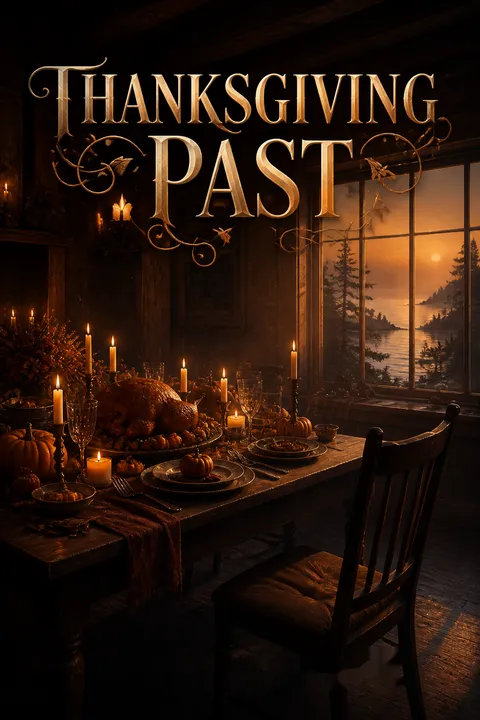
A false scene of interruptionThe Hamish kitchen appears to show a family interrupted just before dinner, with a complete meal left on the counter and the family gone. Ainsley notices that the clean kitchen, uncarved turkey, and carefully set table do not match the ordinary work of preparing and serving the food. The meal first supports theories of abduction or sudden flight, then becomes a deliberate false picture designed to misdirect anyone reconstructing the family's last hours. It is the central physical clue in Parker's cold case because it changes the apparent time and manner of the disappearance.
Ainsley's photograph and dreams
Memory's incomplete evidenceAn old photograph of a woman and two children brings Ainsley to Gooseberry Bay, while recurring dreams supply sensory fragments of the Piney Point estate. The images gradually yield names, locations, and emotional impressions, but not a full account of what happened. Adam's conversations with former staff later provide limited independent confirmation, allowing Ainsley to compare subjective memory with another person's recollection. The device keeps her personal mystery intimate and uncertain: each new fragment makes the past more real without establishing who the adults were, where her family went, or why Ainsley ended up in Georgia.
The blue sedan
A clue that carries fearVanessa's report of a blue sedan parked near the Hamish home offers Parker a possible lead and gives the vanished family's last days a watchful presence. The investigators cannot independently confirm the car, so it remains evidence of uneven strength rather than a solved clue. Its importance changes when Vanessa explains that her father interpreted a similar sighting as proof that an old enemy had found them. The sedan therefore works both as a physical question and as a measure of how fear can shape a family's decisions, even when the suspected pursuer is not the source of danger.
The Christmas Village advertisement
A private message in publicParker's holiday advertisement offers Vanessa a way to contact her family without publishing an explicit appeal. The Christmas Village promotion features elves and includes names meaningful to the sisters, allowing a relative who sees the notice to recognize its intended recipient. The strategy uses the newspaper's ordinary community function as cover, balancing visibility against discretion. It depends on several uncertainties: whether Jen will read the issue, understand the reference, and feel safe enough to respond. Its success demonstrates how a small, carefully designed message can reopen contact without forcing an immediate public revelation.
FAQ
Synopsis & Basic Details
What is Thanksgiving Past about?
- Intriguing family disappearance: The story centers on the mysterious vanishing of the Hamish family, who disappear from their home on Thanksgiving, leaving behind a fully prepared meal.
- Ainsley's personal quest: Ainsley Holloway, new to Gooseberry Bay, becomes entangled in the mystery while also searching for answers about her own forgotten past.
- Intertwined mysteries: The narrative blends the investigation into the Hamish family's disappearance with Ainsley's personal journey of self-discovery, creating a compelling dual storyline.
Why should I read Thanksgiving Past?
- Compelling mystery: The book offers a captivating mystery with unexpected twists and turns, keeping readers engaged until the very end.
- Emotional depth: The story explores themes of family, identity, and the search for truth, resonating with readers on an emotional level.
- Character-driven narrative: The well-developed characters and their relationships add depth and complexity to the plot, making the story relatable and memorable.
What is the background of Thanksgiving Past?
- Small-town setting: The story is set in the isolated coastal town of Gooseberry Bay, which becomes a character in itself, contributing to the sense of mystery and intrigue.
- Recent history: The disappearance of the Hamish family occurred five years prior to the main events of the story, creating a sense of urgency and the need to uncover the truth.
- Personal history: Ainsley's fragmented memories and the photo she discovers are tied to the house on Piney Point, adding a layer of personal history and mystery to the narrative.
What are the most memorable quotes in Thanksgiving Past?
- "How exactly does one disappear without a trace?": This quote, early in the book, encapsulates the central mystery and Ainsley's initial intrigue.
- "Gooseberry Bay really is the perfect town to settle in if you want to get lost.": This quote highlights the town's isolated nature and its potential as a place for secrets and hidden identities.
- "I'm pretty sure she's dead. I'm pretty sure they all are.": Vanessa's somber statement reflects the tragic undertones of the mystery and the fear surrounding the Hamish family's fate.
What writing style, narrative choices, and literary techniques does Kathi Daley use?
- First-person perspective: The story is told from Ainsley's point of view, allowing readers to experience the mystery and her personal journey through her eyes.
- Dialogue-driven narrative: Daley uses dialogue to reveal character motivations, advance the plot, and create a sense of realism.
- Foreshadowing and red herrings: The author employs subtle foreshadowing and red herrings to keep readers guessing and maintain suspense throughout the story.
Hidden Details & Subtle Connections
What are some minor details that add significant meaning?
- The pink bucket: The faded pink bucket in the yard of the abandoned Hamish house symbolizes the lost innocence and the children who once lived there.
- The staged Thanksgiving meal: The meticulously prepared but untouched Thanksgiving meal suggests a deliberate staging, hinting at a planned departure or a cover-up.
- The blue sedan: The recurring mention of a blue sedan parked near the Hamish house foreshadows a potential threat or surveillance, adding to the mystery.
What are some subtle foreshadowing and callbacks?
- Ainsley's dreams: Ainsley's recurring dreams of a house on Piney Point foreshadow her connection to the area and her forgotten past.
- The name "Ava": The dream revelation of Ainsley's possible childhood name, "Ava," is a callback to her fragmented memories and a clue to her true identity.
- The mention of a "bad man": The child's fear of a "bad man" in Ainsley's dreams foreshadows the potential danger and the reason for her family's disappearance.
What are some unexpected character connections?
- Ainsley and Adam: The connection between Ainsley and Adam, who owns the house from her dreams, is unexpected and crucial to her personal investigation.
- Vanessa and Hannah: The revelation that Vanessa is actually Hannah Hamish is a major twist, linking the two mysteries and adding a layer of complexity.
- Ainsley and Mr. Johnson: The connection between Ainsley and Mr. Johnson, the groundskeeper from her dreams, reveals a deeper emotional bond and a clue to her past.
Who are the most significant supporting characters?
- Parker Peterson: As a journalist, Parker's investigative skills and access to information are crucial to solving the Hamish mystery.
- Jemma: Jemma's tech skills and ability to uncover hidden information are essential to both the Hamish case and Ainsley's personal investigation.
- Josie: Josie's warm and welcoming nature provides a sense of community and support for Ainsley, making her a vital part of the story.
Psychological, Emotional, & Relational Analysis
What are some unspoken motivations of the characters?
- Ainsley's need for belonging: Ainsley's search for her past is driven by a deep-seated need to understand her identity and find a sense of belonging.
- Vanessa's desire for truth: Vanessa's decision to contact Ainsley is motivated by her desire to uncover the truth about her family's past and find closure.
- Adam's sense of responsibility: Adam's willingness to help Ainsley is driven by a sense of responsibility to the history of his family's estate and a genuine interest in her story.
What psychological complexities do the characters exhibit?
- Ainsley's fragmented memories: Ainsley's struggle with fragmented memories and the trauma of her past creates a complex psychological profile.
- Vanessa's paranoia: Vanessa's paranoia and fear, stemming from her family's past, highlight the psychological impact of living in hiding.
- Adam's guarded nature: Adam's guarded nature and initial skepticism reveal a complex personality shaped by his family's history and his own experiences.
What are the major emotional turning points?
- Ainsley's dream revelation: The moment Ainsley realizes her name might be Ava is a major emotional turning point, connecting her to her past.
- Vanessa's confession: Vanessa's decision to share her family's story with Ainsley is a major emotional turning point, revealing the truth behind the mystery.
- The reunion of the sisters: The reunion of Vanessa and her sister Jen is a major emotional turning point, highlighting the power of family and connection.
How do relationship dynamics evolve?
- Ainsley and the peninsula gang: Ainsley's relationships with Jemma, Josie, and Parker evolve from casual acquaintances to close friendships, providing her with a sense of belonging.
- Ainsley and Adam: The relationship between Ainsley and Adam evolves from a professional alliance to a deeper connection, hinting at a potential romantic interest.
- Vanessa and her family: Vanessa's relationship with her family evolves from a state of separation and fear to one of hope and reconciliation.
Interpretation & Debate
Which parts of the story remain ambiguous or open-ended?
- The identity of the "bad man": The identity of the "bad man" from Ainsley's dreams remains ambiguous, leaving the reader to wonder if he is a real threat or a figment of her imagination.
- The circumstances of Ainsley's arrival in Georgia: The exact circumstances of how Ainsley ended up in a burning warehouse in Georgia remain unclear, leaving a gap in her personal history.
- The future of the Hamish family: The future of the Hamish family after their reunion is left open-ended, leaving the reader to imagine their new lives.
What are some debatable, controversial scenes or moments in Thanksgiving Past?
- Vanessa's decision to leave her family: Vanessa's decision to leave her family, while understandable, is a controversial moment that raises questions about family loyalty and personal freedom.
- Ainsley's father's actions: Ainsley's father's decision to change her name and keep her past a secret is a debatable moment that raises questions about his motivations and ethics.
- The staged Thanksgiving meal: The staging of the Thanksgiving meal is a controversial moment that raises questions about the family's intentions and the extent of their deception.
Thanksgiving Past Ending Explained: How It Ends & What It Means
- The Hamish family's reunion: The story ends with the reunion of Vanessa and her sister Jen, offering a sense of closure to the Hamish family's story.
- Ainsley's continued search: Ainsley's personal journey remains open-ended, with her still searching for her sister Avery and the truth about her past.
- A message of hope: The ending emphasizes the themes of hope and resilience, suggesting that even in the face of uncertainty, there is always the possibility of new beginnings.
Download PDF
Download EPUB
.epub digital book format is ideal for reading ebooks on phones, tablets, and e-readers.








