

Plot Summary
The Box From Paris
In the summer of 1975, fifteen-year-old Ava Winters is already acting as caretaker for her withdrawn mother, Mary-Lyn, while her father, Tom, spends much of his time elsewhere. One morning, Mary-Lyn becomes convinced that Jesus is calling her, then slips through the kitchen window while Ava answers a school call.
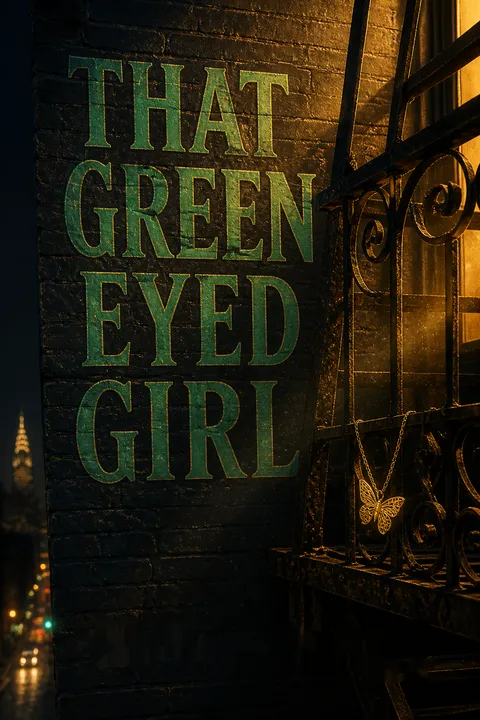
Ava searches the neighborhood and returns to find a heavy, unclaimed parcel in the hall. Inside are photographs, unfinished letters, a butterfly necklace, a scarf, and a whiskey glass. One photograph shows a smiling young woman defaced with the word LIAR.
Tom eventually brings Mary-Lyn home from Central Park, where police found her wandering, but he locks her in the bedroom and urges Ava to keep the family trouble quiet. The box offers Ava a mystery she can investigate while her own home unravels.
Ava’s first response to crisis is practical: she lies to school, searches the streets, and tries to keep her mother safe. The parcel arrives at the precise moment those familiar duties fail, offering a second kind of problem, one with clues that might be sorted. Its contents connect private feeling to material evidence: a necklace, photographs, and letters survive when their owners cannot speak for themselves. The contrast also exposes the family’s habits of concealment. Tom asks for silence, while Ava turns toward the box because its silence seems legible.
A Kiss Seen
Twenty years earlier, teacher Dovie Carmichael and art teacher Gillian McNichol share an apartment and a love they can show only behind closed blinds. They imagine a future in Paris, but even a hand held in a dark cinema makes Gillian watchful.
Dovie, who cannot bear to leave a colleague feeling slighted, invites secretary Judith Schnagl and her cousin Peggy to dinner. She and Gillian carefully disguise their shared home, separating toothbrushes and hiding photographs. Later, Judith catches them kissing in the kitchen.
Dovie cannot tell whether Judith has seen enough to understand, and Gillian’s fear that they could lose their jobs or be punished makes their fragile privacy feel suddenly vulnerable. Dovie has tried to be kind; the consequence is that Judith now holds knowledge that could endanger them both.
The danger begins not with a dramatic declaration but with Dovie’s ordinary reflex to soothe someone else. Her social kindness is genuine, yet it is also a vulnerability shaped by a world where a casual invitation can expose a forbidden relationship. Gillian’s vigilance recognizes that affection has unequal costs: what feels like a small domestic gesture to Dovie may become evidence against them. The apartment offers safety only while its boundaries hold. Judith’s presence turns those boundaries porous, and the couple’s private rituals become things they must stage, hide, and monitor.
Blackmail Moves Upstairs
Judith confronts Dovie at school and makes clear that she will keep the kiss secret only if Dovie lets her move into the apartment rent-free. Dovie agrees, then hides the bargain from Gillian, insisting Judith is staying because it is safer to keep her close.
The arrangement becomes a daily occupation: Judith takes Gillian’s chair, fills cupboards, and listens at night after stopping her sleeping pills. She also engineers outings that isolate Dovie and make Gillian feel excluded.
When Gillian’s former fiancé, Paul, visits New York, Dovie’s jealousy sharpens as Gillian tends to him after a street assault. At last, Dovie admits Judith has known about them from the beginning. Gillian sees the danger and the betrayal in the same lie, and leaves for home, unable to trust Dovie or face the risk of staying.
Dovie’s concealment is an attempt to protect the relationship, but it reproduces the very danger she hopes to contain: Gillian loses the ability to make an informed choice about her own home and safety. Judith exploits not only their social vulnerability but also Dovie’s discomfort with conflict, making coercion appear like accommodation. Gillian’s departure is therefore not simply jealousy or fear. It is a response to being excluded from a decision that affects her future. The episode shows how secrecy imposed by persecution can migrate into intimacy, turning protective silence into a breach of trust.
Ava Finds the Old Names
Mary-Lyn’s condition worsens after she breaks a bedroom window and cuts her hand. Tom calls Dr. Cohen, who arranges her admission to a psychiatric hospital, where doctors begin electroconvulsive treatment.
Ava visits, sees her mother barely responsive, and learns how easily adults can discuss a child’s family as though she were not there. On the fire escape, Ava notices Dovie and Gillian’s initials carved into the rail, confirming that the women in the photographs once lived in her apartment. Her friend Viola helps trace a school photograph to Gray’s School.
There, secretary Mrs. MacDougal searches damaged staff records and finds Dovie Carmichael and Gillian McNichol on an old roster. Ava now has surnames, a shared workplace, and evidence that the box belongs to people who once inhabited her home.
Ava’s investigation grows out of more than curiosity. The hospital makes her feel powerless, while the records and initials offer tasks with clear steps and attainable answers. The fire escape works as a hinge between generations: Ava touches marks made by women whose lives have left almost no public trace. Mrs. MacDougal’s willingness to search the archive counters the institutional indifference Ava encounters at the hospital. One system files people away; another, through patient attention, recovers their names. Ava’s emerging agency is modest but real: she begins connecting evidence that adults have neglected.
The Raid at Jazzland
After Gillian leaves, Dovie spends a lonely night drinking at a women’s bar, where she meets Mary-Lyn Bergman, a green-eyed young woman who offers her kindness. A police raid erupts before Dovie can leave. Officers drag women toward waiting vehicles, beat and grope them, and turn the club into a trap.
Mary-Lyn escapes through a bathroom window with Dovie’s help, but when officers reach for them, Dovie panics and releases her hand. Mary-Lyn is arrested, begging for help as Dovie climbs to the street and runs. The sight of women being punished for loving women strips away Dovie’s earlier belief that rumors might exaggerate the danger. She has seen the consequences directly, and her failure to save Mary-Lyn will stay with her.
The raid makes state power bodily and immediate. The threat is not abstract loss of reputation but hands on skin, cuffs, and the possibility of forced treatment. Dovie’s abandonment of Mary-Lyn is a moment of terror, not indifference, but the distinction cannot erase its consequence. She understands the fear that has shaped Gillian’s caution only after witnessing it herself. The episode also plants a hidden connection across the book: Ava’s mother bears Mary-Lyn’s name, and her later treatment began in the same year. The story lets evidence accumulate before it permits certainty.
Judith’s Name in Ink
While searching Gray’s records, Ava recognizes the third woman in the old photograph as Miss Schnagl, her talkative downstairs neighbor, Judith. A hospital file then reveals that Mary-Lyn Bergman underwent electroconvulsive treatment in 1955 for behavior doctors classified as improper.
The dates match the raid Dovie witnessed, and Ava begins to suspect that her mother was the young woman Dovie failed to pull through the window. She visits Judith under the pretext of researching the building.
Judith admits she knew Dovie and Gillian, calls Gillian cruel, then abruptly shuts down when Ava asks about them. Before closing the door, she says Dovie got what she deserved. Ava has not yet proved what Judith did, but the neighbor’s fear and hostility make her central to the mystery.
Ava’s discoveries unsettle the boundary between family history and public record. Mary-Lyn’s earlier hospitalization gives a possible explanation for her present illness, but the file’s language also shows how institutions converted social disapproval into medical judgment. Ava’s suspicion that her mother was the woman from the raid is compelling rather than confirmed, and that uncertainty matters: the past is reconstructed from records made by authorities and memories shaped by pain. Judith’s reaction supplies a different kind of evidence, emotional rather than archival. Ava learns to read evasions as clues without confusing suspicion with proof.
Dovie Leaves New York
Dovie returns to her family farm, where her practical older sister Franny finally reveals the life she has kept hidden. Before marrying Bill, Franny loved Joel, a Black farmhand, but abandoned him because their community would not accept an interracial marriage.
Joel later died in Korea. Franny tells Dovie that fear made her choose a respectable life she still regrets, and urges her not to surrender her own future. Back in New York, Dovie finds Judith still in the apartment. Judith claims Gillian came with Paul, chose him, and wanted Dovie gone.
Gillian’s belongings are missing; her butterfly necklace and Dovie’s photograph, marked LIAR, have been left behind. Believing the relationship over, Dovie packs her life and leaves for Paris, carrying grief and the necklace with her.
Franny’s confession gives Dovie a familial mirror rather than a simple warning. The older sister’s life is loving and substantial, yet her regret shows how respectability can be purchased at the cost of an unlived possibility. Dovie hears that survival is not the same as fulfillment. But Judith’s manipulation still determines what Dovie believes about Gillian, making the departure both an act of self-preservation and a choice built on false information. The necklace and defaced photograph become contradictory evidence: objects of love are made to look like instruments of rejection.
A Letter From Paris
In 1975, Ava and Viola find a French letter hidden beneath the couch and persuade a singer named Marianne to translate it. Christine LeGrand, a Paris friend of Dovie’s, explains that Dovie died after a short illness and had asked for her possessions to reach Gillian.
She could not complete her final letter or provide Gillian’s full name, so Christine sent the box to the only address she could find. Ava visits Judith with the news and sees an old photograph of Judith beside Dovie and Gillian.
Judith grows frightened, then refuses to explain herself. Her remark that Dovie deserved her fate deepens Ava’s suspicion. The translation changes the box from a puzzle into a last act of love: Dovie had kept Gillian in mind for decades and wanted her to receive what remained.
The letter gives the keepsakes a purpose while withholding the closure Ava hoped to find. Dovie’s intention is clear, but the missing words leave the relationship’s rupture unresolved. Christine’s effort to honor the wish across an ocean also establishes care as a practice: she cannot repair the past, but she can send its evidence onward. Ava’s visit to Judith demonstrates the limits of direct inquiry. The older woman’s hostility makes the mystery more urgent, yet Ava must still distinguish what she knows from what she fears. The story treats objects as testimony, not as complete explanations.
Paris Becomes a Home
Dovie reaches Paris expecting the city she and Gillian once imagined, but her first hotel is cold, lonely, and nothing like their shared dream. She buys the yellow butterfly necklace she had once given Gillian, then moves into a room offered by Christine, a dressmaker who welcomes her through music, gestures, and patient companionship.
Christine introduces Dovie to her circle and takes her to jazz clubs, including a performance by Chet Baker. Dovie gradually builds a life among friends, cafés, and familiar records, though Gillian remains the person she cannot forget.
Years later, as illness weakens her, Dovie prepares a box for Gillian and tries to write an apology. Her attachment to Paris is genuine, but the home she made cannot erase the loss that brought her there.
Paris is neither a cure nor a failed escape. Dovie’s first days expose the gap between a dreamed destination and the ordinary labor of being alone in a foreign city. Christine’s friendship helps turn the city into a place of belonging, but it does not replace Gillian. The butterfly necklace carries that distinction: it can be bought again, but the history attached to the first one cannot be restored. Dovie’s eventual effort to send the box reframes her life abroad as a real home and an enduring act of remembrance, not a refusal to feel what she lost.
Ava Chooses the Letter
Ava’s life narrows after her mother’s hospitalization and her father’s divided attention. At the pool party, she watches Cal choose Barbara Mulkenny and leaves with her old fear of being unwanted sharpened. When Mary-Lyn gives a handmade doll to another patient’s young daughter, Ava feels overlooked once more.
She withdraws until Viola returns, apologizes for dismissing the mystery, and listens as Ava admits how alone and ashamed she feels. Viola reminds her that her parents’ failures are not evidence of her own unworthiness.
Ava then remembers that Mrs. MacDougal found Gillian’s current address. Though she once rejected the chance to contact her, Ava decides to write, not to solve every wrong, but to make sure Gillian knows Dovie loved her and wanted her to have the box.
Ava’s despair is not caused by one disappointment. Cal’s rejection lands alongside parental neglect, the hospital’s dehumanizing routines, and her mother’s inability to respond consistently. Her belief that she must be at fault turns these separate injuries into a single verdict on her worth. Viola interrupts that logic not with a solution but with sustained attention. That distinction allows Ava to act without pretending her family is fixed. Contacting Gillian becomes an ethical choice: Ava cannot restore Dovie or guarantee a welcome, but she can carry a truth that was withheld.
Dovie’s Unfinished Goodbye
In February 1975, ill and exhausted in Paris, Dovie arranges her affairs and returns to the letter she has tried to write for years. She remembers the life she and Gillian planned, admits that she never stopped loving her, and wishes she had reached out sooner. The letter remains unfinished. Dovie collapses at a café table before she can complete it, and the wind scatters the pages along the street.
Christine later gathers Dovie’s remaining keepsakes and sends them to New York, honoring the request Dovie had made before her death. That is how Ava receives the box without a finished explanation. The objects travel where Dovie’s words could not, carrying a final intention that neither distance nor time managed to erase.
The unfinished letter gives the novel’s central delay a physical form. Dovie does not lack love or insight; she lacks time, and the years of hesitation have made a first step feel harder with each passing birthday. The scattered pages deny her the clean confession that might have repaired the past, but the box survives as a less articulate form of truth. This is not a simple vindication of regret. Dovie’s attempt matters, yet it cannot undo the damage caused by silence. The scene makes belated communication both meaningful and insufficient.
The Hallway’s Old Truth
After several letters, Gillian comes to Ava’s apartment for the box. She explains that Judith once told her Dovie wanted her gone and had chosen Judith instead. Gillian believed the lie, left with Paul, and later married him after he helped protect her during police questioning.
Reading Dovie’s letters, she recognizes the love she thought had been withdrawn. Ava and Gillian confront Judith downstairs. Judith admits her resentment of Gillian and reveals, through her accusations, that she reported the couple, helping bring the police down on them.
Gillian nearly attacks her, then leaves without violence, naming the harm Judith caused and the regret she herself carries. She takes Dovie’s keepsakes and thanks Ava for restoring the truth. Ava cannot undo the past, but she has stopped its most consequential lie from being the final word.
The confrontation resolves the mystery by separating two betrayals that had been fused in memory. Judith engineered the separation, but Gillian also acknowledges that fear and her own assumptions made the lie easier to accept. Neither admission cancels the other’s responsibility. Judith’s jealousy becomes politically consequential when she reports the women to authorities, turning private resentment into a threat of institutional violence. Gillian’s decision not to strike her is not forgiveness; it is refusal to let Judith dictate one more action. Ava’s role is restorative rather than reparative: she cannot return the lost years, but she can return evidence and choice.
Epilogue
In 1976, Ava’s mother comes home for good after treatment. Ava returns to the apartment through falling snow and finds Mary-Lyn dancing to music, with the old Coney Island poster restored above the record player. Her mother recognizes her, reaches out, and draws her into the dance.
Gillian now writes to Ava every week, and Ava carries one of those letters in her pocket. Outside, Joel waits beneath the lit windows. The ending does not promise that the family is suddenly healed; it gives Ava a small, tangible change: her mother reaches for her, and Ava answers.
The ending echoes the earlier image of Ava dancing with her mother, but now the gesture carries the weight of what they have survived. Mary-Lyn’s recovery remains tentative, and the novel does not pretend that treatment has erased the past or restored every missing year. What changes is the possibility of reciprocal contact: the mother reaches, the daughter accepts. Gillian’s weekly letters extend the same possibility beyond the family, showing that Ava’s intervention has opened a relationship rather than closed a case. Joel’s presence hints at another future without converting hope into certainty.
Analysis
The novel builds its mystery from a moral asymmetry: the past is not hidden because nobody cared, but because the people who cared most were forced into silence, then misled by someone who understood how that silence could be exploited. Dovie and Gillian’s separation is not a puzzle solved by one decisive clue. It is the consequence of overlapping pressures: criminalized intimacy, fear of psychiatric confinement, Dovie’s conflict avoidance, Gillian’s guardedness, and Judith’s resentment. The story therefore resists treating betrayal as a single villain’s act, even while it holds Judith accountable for deliberate harm.
Ava’s investigation gives the inherited story an active reader. Her school records and objects do not deliver a neutral past; they need interpretation, and each witness carries a different kind of knowledge. Hospital files expose the violence hidden inside medical language. Judith’s recollections are contaminated by grievance. Dovie’s letters communicate love but not the full history. Gillian’s testimony repairs some of the record while preserving the cost of her own choices. The novel’s structure asks readers to revise their assumptions as Ava does.
Across both generations, care becomes complicated by secrecy. Ava hides Mary-Lyn’s crisis because she is ashamed and protective. Dovie hides Judith’s blackmail in the name of protecting Gillian. Gillian accepts Judith’s story partly because believing it spares her from confronting a frightening uncertainty. These silences are understandable, but they give other people control over the truth. The book’s answer is not that disclosure heals everything. Dovie’s unfinished letter arrives too late to restore their shared life, and Mary-Lyn’s recovery remains uncertain. Yet truthful contact changes what can happen next. Ava makes the past available to Gillian and, in doing so, stops a lie from defining the relationship forever. The ending’s dance is modest by design: not proof of perfect recovery, but a brief return of recognition and mutual reach.
Review Summary
That Green Eyed Girl is a compelling debut novel with dual timelines set in 1950s and 1970s New York. Readers praise the evocative writing, complex characters, and emotional depth. The story explores themes of forbidden love, mental health, and societal expectations. Many reviewers were moved by the poignant portrayal of LGBTQ+ experiences in the 1950s. While some found certain characters frustrating or the ending disappointing, most readers highly recommend this thought-provoking and beautifully crafted book.
Characters
Ava Winters
The keeper of other livesAva is a perceptive, self-conscious teenager growing up in a New York apartment where adult responsibilities have quietly fallen to her. She worries about school, her appearance, and whether Cal notices her, while also managing the instability created by her mother’s illness and her father’s absence. Her friendship with Viola gives her a place to be candid, though shame initially keeps her from using it. The Paris box attracts her because its clues can be followed when the people around her feel impossible to understand. Ava’s compassion is not passive: she chooses to investigate, listen, and carry another person’s truth forward, even when doing so requires her to risk rejection.
Dovie Carmichael
A dreamer afraid to refuseDovie is an English teacher whose warmth and imagination make it easy for others to feel welcome. She dreams aloud about a life with Gillian in Paris, but her need to avoid disappointing people repeatedly pulls her into compromises she cannot easily reverse. Her relationship with Gillian is both her deepest source of joy and the part of her life most exposed to social danger. Dovie is not simply reckless or timid: she is generous, romantic, and acutely vulnerable to guilt. Her inner conflict turns on the difference between protecting someone and deciding for them. The objects she preserves reveal how powerfully she remembers, even when she struggles to say what she means.
Gillian McNichol
Dovie’s guarded belovedGillian is an art teacher who loves Dovie but approaches their shared future with more caution than Dovie does. She understands that discovery could cost them their work, freedom, and safety, so she guards their privacy closely. Her reserve is not a lack of feeling; it is a strategy for living under pressure. Gillian also has a past with Paul, whose return complicates her bond with Dovie and gives old choices renewed force. She is capable of tenderness and fierce anger, but fear can make her accept a version of events that spares her from choosing. Her story asks how long a person can mistake retreat for safety.
Judith Schnagl
The neighbor with leverageJudith is a school secretary and lonely neighbor whose hunger for belonging often curdles into entitlement. She watches other people closely, notices small slights, and uses her knowledge to place herself where she is not wanted. Her manner can appear needy or harmless, which makes her pressure difficult to confront without seeming cruel. Judith’s resentment of Gillian grows from feeling mocked and excluded, while her attachment to Dovie confuses kindness with an invitation to intimacy. She wants a secure place in other people’s lives, but her methods make genuine closeness impossible. Her role exposes how ordinary grievance can become dangerous when paired with social power.
Mary-Lyn Winters
A mother behind the silenceMary-Lyn is Ava’s mother, a former lively presence now living with severe psychological distress. Ava remembers both the mother who danced with her and the woman who withdraws, speaks to unseen people, or cannot recognize her daughter. Mary-Lyn’s illness shapes the household even when she is silent, leaving Ava to interpret moods and manage practical needs beyond her age. Her history is difficult for the family to discuss, and the medical system treats her with a mixture of routine and distance. The contrast between her past brightness and present vulnerability gives Ava’s memories their emotional force, while Mary-Lyn’s intermittent gestures of care keep their bond from being reducible to illness.
Viola
Ava’s candid best friendViola is Ava’s longtime friend, a jazz lover with a quick tongue, broad curiosity, and a gift for making rooms feel less solemn. She can be impulsive and dismissive when a mystery stops promising adventure, but she is also loyal enough to return and listen when Ava is in trouble. Her energetic family life contrasts with Ava’s lonely home, though Viola does not always recognize the difference until Ava tells her. She offers practical help, companionship, and the blunt reassurance Ava needs to challenge her belief that her parents’ failures are her fault.
Tom Winters
A father who drifts awayTom is Ava’s father, a charming man whose attention has shifted toward Candy and away from the household he once shared with Mary-Lyn and Ava. He can be tender with his daughter, especially through remembered routines, but his comfort often comes with requests for silence or patience. Faced with Mary-Lyn’s illness, he relies on doctors and avoids difficult explanations, leaving Ava to fill the gaps. His affection is real, but so is the harm caused by his absence and divided loyalties.
Candy Jackson
Tom’s new companionCandy works at Zerilli’s and becomes Tom’s romantic partner, bringing a younger, freer presence into Ava’s family life. Ava initially sees her as the rival who displaced the Sunday rituals she shared with her father. Candy can be flirtatious and self-absorbed, yet she also shows moments of concern and discomfort about Ava’s situation. She is not the sole cause of Tom’s neglect, but her presence makes that neglect impossible for Ava to ignore.
Franny
Dovie’s practical sisterFranny is Dovie’s older sister, a capable farmwife and mother whose life is built around work, family, and community. Her practical manner can make Dovie feel judged, but beneath it lies a long-buried grief she has rarely allowed herself to name. Franny’s history gives her advice unusual weight: she knows that a respectable life can still contain profound regret. She loves Dovie without pretending to share her choices, and wants her sister to pursue a happiness Franny once believed she could not choose.
Christine LeGrand
Dovie’s Parisian refugeChristine is a Parisian dressmaker who offers Dovie a room and helps her find companionship in an unfamiliar city. Their limited shared language makes their friendship attentive and deliberate, built through music, gestures, and invitations rather than easy conversation. Christine introduces Dovie to friends and jazz clubs, helping her turn an imagined destination into a lived community. She is loyal to Dovie and takes seriously the wishes entrusted to her.
Paul
Gillian’s former fiancéPaul is Gillian’s former fiancé, a figure from the life she might have lived before becoming Dovie’s partner. His return brings old familiarity into a household already strained by Judith, and Gillian’s concern for him intensifies Dovie’s jealousy. Paul is neither a simple villain nor a romantic answer; his actions later place him in a position to protect Gillian from legal consequences. His presence shows how safety and affection can become entangled with the compromises people make.
Mrs. MacDougal
The school’s patient archivistMrs. MacDougal, whom students call Mac, is Gray’s School’s sociable secretary. She keeps candy and cookies for visitors and is delighted by Ava’s mystery, taking time to search damp, disorganized staff records. Her talkative manner can wander, but her curiosity is matched by genuine helpfulness. By treating Ava’s questions as worth pursuing, she turns school paperwork into a bridge between generations.
Cal
Ava’s hoped-for first loveCal is a handsome boy from Ava’s neighborhood whose casual attention becomes, in her imagination, a possible escape from the loneliness at home. Ava watches for signs that he might like her, measuring herself against the confident girls he notices. His appeal matters less as romance than as a mirror for Ava’s fear that she is not enough.
Joel
Franny’s lost possibilityJoel is the young Black farmhand Franny loved before she married Bill. His relationship with her was shaped by the racism of their community and the future it made difficult to imagine. Though he appears chiefly through Franny’s memory, his absence reveals the cost of choices made under social pressure.
Dr. Bailey
The hospital’s clinical authorityDr. Bailey oversees Mary-Lyn’s hospital care and explains her treatment to Tom and Ava in brisk, impersonal terms. His manner reflects an institution more focused on procedure and visible compliance than on a family’s understanding. He is one of the adults whose authority shapes Ava’s experience without making room for her questions.
Dr. Cohen
The family’s emergency doctorDr. Cohen responds when Mary-Lyn injures herself and helps arrange her hospital admission. His intervention addresses an immediate crisis, though it cannot resolve the family’s longer history of illness and silence.
Plot Devices
The Paris box
A past delivered homeThe parcel gives Ava a concrete mystery to follow and carries Dovie’s private history across twenty years and an ocean. Its photographs, letters, necklace, scarf, and glass are not random keepsakes: each supplies a different kind of evidence, from names and dates to emotional attachment. The box also connects the timelines without requiring either generation to know the other at first. Its arrival transforms Ava’s apartment from a setting marked only by her mother’s illness into an archive of a life lived there before. Its eventual delivery to Gillian makes the investigation consequential rather than merely curious.
The butterfly necklace
A love made tangibleThe yellow enamel necklace begins as a gift from Dovie to Gillian and later becomes one of the clearest surviving links between their relationship and its aftermath. Ava finds it in the box and wears it before knowing whose it was, allowing an object from the past to enter her present life. Its movement between New York and Paris gives it a history of intimacy, anger, and memory. The necklace cannot explain why Dovie and Gillian separated, but it contradicts the idea that their love simply vanished. Its return helps Gillian recognize the life she thought she had lost.
The marked photograph
A lie made visibleThe photograph of Dovie bearing the word LIAR prompts Ava to ask what happened between Dovie and Gillian. It first appears to confirm a betrayal, especially because the women’s lives are known only through scattered images and unfinished letters. Later, its meaning changes as Gillian explains what she believed and Ava identifies Judith as a likely source of the accusation. The photograph gives the novel a visual question that can be carried from one timeline to another. Its damage is evidence of anger, but not reliable evidence of who caused the separation.
The fire escape initials
A hidden home revealedThe initials carved into the apartment fire escape confirm that Dovie and Gillian once lived where Ava now lives. They turn a weathered railing into a private record, one overlooked by the present occupants until Ava traces the grooves after her mother’s hospitalization. The fire escape also links the women’s domestic world to the wider city, a place where they could find air and privacy while remaining physically close to danger. The initials make the past tangible without making it fully knowable; Ava still needs archives, witnesses, and the box to understand what happened.
Download PDF
Download EPUB
.epub digital book format is ideal for reading ebooks on phones, tablets, and e-readers.








