


Plot Summary
The Message on the 6:20
Travis Devine rides the 6:20 train from Mount Kisco to a job at the investment firm Cowl and Comely, a life he chose partly to punish himself for leaving the Army. One morning, he watches Michelle Montgomery swim in the pool of his boss Bradley Cowl's enormous estate, but her display feels less like vanity than a signal he cannot yet read.
At work, an anonymous email tells him that Sara Ewes, a colleague he secretly dated, has been found hanged in the building. The message includes details no ordinary outsider should know. Devine confirms that Sara is dead, conceals their intimacy from the staff, and decides he must learn why she died.
A Debt Becomes a Mission
A man calling himself Detective Karl Hancock questions Devine about Sara and probes their relationship, while a pair of federal agents later take him to a covert office.
There, retired General Emerson Campbell lays out Devine's buried military history: Lieutenant Roy Blankenship was murdered by Captain Kenneth Hawkins, and Devine fought Hawkins, then left him wounded to die. The Army treated Blankenship's death as suicide and ignored Devine's objections.
Campbell says the Army can prosecute Devine, but offers to keep him out of prison if he investigates Cowl and Comely from inside. The firm, Campbell says, may be involved in a threat to national security. With little real choice, Devine accepts, returning to intelligence work under the shadow of his own guilt.
Cowl's Palace and the Desk
Devine follows Cowl's Bugatti from the suburban estate to the firm's Manhattan tower, where lights appear on the floor where Sara was found. He slips inside and sees Jennifer Stamos, a colleague from Sara's cohort, enter the building. Near the taped-off storage room, he hears an office being used for sex and watches Cowl leave while Stamos remains behind, exposed and abandoned on a desk.
Devine photographs them and records the encounter, keeping the evidence as insurance against Cowl. He knows the discovery may matter to Campbell's investigation, but his attention is also fixed on Sara's death and Stamos's connection to her. His choice to spy gives him leverage, and puts him in Cowl's sights.
A Fight in the Alley
Devine follows Stamos to a Greenwich Village bar and tries to draw out what she knows about Sara. She dodges his questions, especially when he mentions Cowl and the firm's rankings, and her unease leaves him more suspicious than before. Three men, including Christian Chilton, mistake Devine's intervention for a challenge and follow him into an alley.
Devine warns them off, then disables all three when they attack, using the close-combat skills he learned as a Ranger. Stamos sees the fight and warns him when one attacker comes at him from behind. The episode leaves Devine injured, Stamos shaken, and Chilton a lingering question: a wealthy young investor who has now crossed Devine twice.
Godot's Unanswered Signal
When Devine meets Stamos for a drink, she admits Sara had visited her shortly before her death and urged her to see Waiting for Godot. Stamos says Sara seemed frightened, but offers no clear explanation for the recommendation. Devine attends the play, hoping its meaning will unlock the mystery, yet leaves without an answer.
A visit to Sara's parents, Fred and Ellen Ewes, deepens the unease: they have just arrived from New Zealand and are grieving, while Ellen insists Sara kept a diary that police have not found. The parents confirm that Sara had become distant from them. Devine realizes the play may be a clue, not a message about despair, and that Sara left something important undiscovered.
The Log Names Devine
Police detectives Ralph Shoemaker and Paul Ekman question Devine about Sara's abortion and whether he could have fathered her child. He denies knowing she was pregnant, but cannot prove where he was during the hours she died. With help from his roommate Will Valentine, he breaks into Cowl and Comely's security database and finds his own badge listed as the only entry to Sara's floor during the relevant window.
The record makes him look guilty, though he knows he was home. Cowl later says there is also video of Devine entering the building, then bargains over evidence each man holds against the other. Devine suspects someone has manufactured a case against him, while the false detective's questions grow harder to explain.
A Dating Site Connects Them
Devine's roommate Jill Tapshaw, a gifted founder of the dating platform Hummingbird, discovers that Sara had been one of her earliest subscribers. Sara's profile shows she once sought a partner but later stopped using the service.
Meanwhile, Devine traces Chilton's wealthy Mayflower Enterprises to properties held by a mysterious company called the Locust Group. He learns that Chilton is interested in investing in Hummingbird, giving Devine a reason to warn Jill to slow the deal until he can understand the connection.
Stamos finally reveals that she and Sara were lovers, not rivals, and says Sara knew Cowl was not the father of her pregnancy. Her disclosure changes Devine's understanding of Sara's private life, but she still withholds what frightened Sara.
The Floor Behind the Door
Devine learns that an inaccessible floor in Cowl and Comely's tower is not the firm's known high-frequency trading center. With Michelle Montgomery's help, he substitutes a convincing copy of Cowl's phone, uses the real device to enter the restricted floor, and photographs its servers and screens.
The data shows large transfers moving among foreign accounts, Locust Group, Mayflower Enterprises, and other entities. He plants a miniature surveillance camera before returning Cowl's phone, and later confirms that its feed reaches him outside the building.
The evidence suggests an immense financial operation but does not yet prove a crime. It gives Campbell a lead and puts Devine closer to the people who are trying to keep the floor's purpose hidden.
Bikinis Send Orders
Devine notices that Montgomery's appearances by the pool follow a pattern: Cowl chooses when she goes outside and whether she wears red or green. With Montgomery's help, he realizes the colors are messages to someone watching from the 6:20 train.
Green means resume the operation; red means stop it. After Sara's death, the signals become more frequent, and a red appearance coincides with activity on the hidden floor stopping. Devine visits former financial reporter Elaine Nestor, whose investigation of Cowl was buried by lawsuits.
Nestor confirms that Cowl's sudden wealth and unknown partner Anne Comely never made sense, and explains how criminal fortunes can be hidden in trusts and converted into assets. The bikini becomes both a crude code and a visible trace of the conspiracy.
Hearts in Sara's House
After Devine learns that Sara's parents had been estranged from her, he returns to their Brooklyn home and finds Fred and Ellen dead in bed, stabbed through the heart. Campbell intervenes before Devine contacts police, and the homicide detectives later learn that the killings happened while Devine was elsewhere.
Around this time, Valentine maps the scale of the Locust Group's holdings: more than a hundred thousand properties, companies, and other assets across dozens of countries, with a staggering value.
Devine recognizes that the operation reaches far beyond one investment firm. At Campbell's urging, he keeps investigating while the police pursue the murders. A new anonymous email taunts Devine about the Eweses, confirming that the sender knows intimate details and is addressing him personally.
Chilton Leaves No Exit
Devine and Montgomery find Christian Chilton visiting his grandfather, Poppy, in a memory-care facility. Chilton's family once employed Montgomery's parents, then lost most of its wealth; now Chilton runs Mayflower and lives in a Locust Group property. Devine urges him to break with Cowl, but Chilton refuses.
Soon Chilton's investment offer to Jill disappears, and his body is found in Cowl's pool after someone strikes him and leaves him to drown. Poppy dies after seeing the news of his grandson's death during a rare moment of lucidity. Montgomery loses both a childhood friend and the old man who once made her feel welcome. Devine suspects that Chilton's ties to Cowl's financial network have made him expendable.
A Penthouse Turns Battlefield
Devine and Montgomery confront Cowl in his penthouse, where he insists the hidden floor held lawful trading and cryptocurrency equipment. He admits finding Stamos's body but denies killing her. Then Karl Hancock, the supposed detective, appears with three armed men and reveals that they intend to kill Devine and Montgomery and frame Devine for Chilton's death.
Montgomery pretends to collapse, allowing Devine to draw her concealed pistol. He kills three gunmen and wounds Hancock, then calls Campbell's federal team. Cowl is taken into custody, but the fight does not expose the larger network. Devine's evidence from the secret floor is legally compromised, and the people behind the operation remain beyond reach.
The Janitor's Last Secret
After Cowl and Hancock are killed in custody, Devine returns to Sara's case and finds custodian Jerry Myers dead at home, poisoned with cyanide. Myers had claimed that someone summoned him to Sara's floor to fetch a printer cartridge, but Devine realizes the floor should have been empty because the staff were attending a seminar elsewhere.
The supposed errand may have been a cover for Myers entering the storage room. The detectives now recognize that he could have killed Sara, then discovered her body himself to seem above suspicion. His new truck suggests payment. As Devine follows that lead, someone opens the gas line in his town house. Devine rescues Helen Speers and Jill, but Valentine is missing.
Hummingbird's Founder Unmasked
A diagram left on Jill's computer points to Valentine as the source of the strange emails, but Devine discovers he was framed too. At Hummingbird's office, Devine finds Sara's missing diary and proof that Jill arranged artificial insemination with sperm from her twin brother Dennis.
Sara ended the pregnancy after growing afraid of Jill's fixation, and later loved Stamos. Jill admits she hired Myers to hang Sara, killed Stamos and the Eweses, and murdered Valentine after he traced her messages.
She also forged the security log and video that implicated Devine. Jill shoots Devine, but Speers arrives and kills Jill before she can fire again. Devine survives, finally seeing that the serial killings sprang from possessive grief, not the financial conspiracy.
The Train Moves On
Devine wakes in hospital with Speers beside him and learns she was a federal agent assigned to watch over him. Campbell offers him another chance to serve rather than face prosecution over Hawkins's death, and Devine accepts.
The wider network is still active: Cowl, Hancock, and others have died in custody, while the evidence from Area 51 cannot support a clean prosecution. Jill's mother collects her body, and Montgomery leaves the country for her own safety, sending Devine a letter and her number in Italy.
Three weeks later, with one arm in a sling, Devine rides the 6:20 for the last time and sends Nestor the evidence he gathered. The Cowl estate stands empty. Devine has not solved every injustice, but he no longer chooses work as punishment.
Analysis
The novel makes two forms of power look alike before separating them. Cowl's financial network hides ownership behind shell companies, secret floors, and coded signals; Jill's murder plot hides personal obsession behind forged records and an apparently technical mystery. In both cases, Devine initially reads visible evidence as the whole truth. He must learn that access to information is not the same as understanding motive, and that data can be both accurate and deliberately arranged to mislead.
Devine's real conflict is not simply whether he can survive another dangerous assignment. He has organized his life around punishment for leaving Hawkins to die, choosing a hated job because his father would approve of it. Campbell offers him a mission, but the deeper offer is a way to act from responsibility rather than self-hatred. Devine's eventual acceptance does not erase his guilt; it changes what he does with it.
The book also questions the fantasy that institutions automatically produce justice. Cowl's influence obstructs investigation, digital evidence becomes unusable, and the wider financial network survives the capture of its visible operators. The killings are not solved by the same authorities pursuing the laundering scheme, and the government's partial success cannot restore the dead. Yet Devine's decision to send evidence to Nestor preserves a route to public scrutiny after formal channels falter. The ending is deliberately provisional: he has chosen a better reason to rise each morning, but the machinery of money and violence remains larger than any one operative.
Review Summary
The 6:20 Man received mixed reviews, with ratings ranging from 1 to 5 stars. Many readers praised the fast-paced plot, complex characters, and unexpected twists. Some found the financial crime elements intriguing, while others felt the story became far-fetched. Criticisms included predictable writing, unrealistic scenarios, and an unsatisfying ending. Despite mixed opinions, many longtime Baldacci fans enjoyed the book and expressed interest in seeing the protagonist, Travis Devine, in future installments.
People Also Read









Characters
Travis Devine
Reluctant field operativeA West Point graduate and former Army Ranger, Devine now works as a junior analyst at Cowl and Comely. He is observant, physically disciplined, and skilled at reading danger, yet he is far less adept at understanding what he wants from ordinary life. His father's lifelong comparisons with his accomplished older siblings shaped a deep belief that approval must be earned through suffering. Devine's departure from the Army carries a private moral burden, and he turns his new career into a form of self-punishment. His concern for Sara and his growing loyalty to people around him reveal a conscience more active than his grim self-image allows. He is not a natural spy, but his field experience makes him difficult to intimidate.
Michelle Montgomery
The poolside messengerMontgomery is Cowl's young girlfriend, a striking presence whose early swims become a familiar sight to Devine on his commute. She grew up in a wealthy household as the daughter of the staff, and her mother's insistence that beauty mattered more than intelligence left her wary of being valued only for her appearance. She is practical about money and determined to build a life beyond dependence on a powerful man. Beneath her flirtation and easy confidence, she is perceptive, compassionate, and capable of taking serious risks for someone she trusts. Her relationship with Devine begins amid suspicion and attraction, but her willingness to act makes her more than a bystander to his investigation.
Emerson Campbell
The hard-edged recruiterA retired two-star general and former combat soldier, Campbell runs a small government office that investigates threats to national security. He is blunt, strategic, and skeptical of sentiment, but his military history has left him with a strong regard for people who accept responsibility. Campbell recruits Devine by putting the consequences of his past directly before him, then offers a mission in place of prosecution. His methods are coercive, yet he sees service as a possible path out of self-imposed penance. He understands that institutions often protect themselves before they protect the truth, and his alliance with Devine is built on shared experience rather than easy trust.
Sara Ewes
The absent colleagueSara is a talented Cowl and Comely employee who has survived years of brutal competition and become a mentor to younger analysts. Devine remembers her as warm, funny, and encouraging, while the firm's daily rankings make her appear to others as a rival. Her private life is more complicated than her polished professional image suggests. She wants connection and a future of her own, but family pressure and the secrecy demanded by her workplace narrow the space in which she can act freely. Even after her death, the choices she made continue to redirect Devine's investigation and expose the distance between what colleagues assume about a person and what that person is actually living.
Jill Tapshaw
The brilliant founderTapshaw is the creator of Hummingbird, an online dating company built from her technical skill, relentless focus, and belief that technology can help people find meaningful relationships. A computer science graduate with a fast-tracked business education, she is ambitious without the usual financial world's disdain for ordinary users. She works long hours, neglects meals, and treats the company as both a business and a personal mission. Her confidence can make her seem younger and more carefree than she is, while her disciplined intelligence gives her unusual command of digital systems. Her relationship with Devine is friendly and trusting, shaped by their shared experience of building lives under pressure.
Helen Speers
The watchful roommateSpeers is a quiet, athletic roommate who appears to be preparing for a legal career while sharing a crowded town house with Devine. She is perceptive, self-possessed, and more attentive to the people around her than her reserve initially suggests. She offers practical help when Devine faces police scrutiny and does not accept his attempts to make light of danger. Their attraction develops through glances, teasing, and a rare moment of honesty rather than grand gestures. Speers guards her private life carefully, and her controlled manner makes it difficult for Devine to know when she is being candid or simply observing him.
Bradley Cowl
The untouchable financierCowl is the charismatic, self-made public face of a powerful investment firm. He cultivates spectacle, wealth, and ruthless competition, while insisting that his success reflects hard work rather than luck or inherited advantage. He is shrewd about reputation and treats people as both assets and risks. His attention to younger employees blurs mentorship with personal appetite, and his constant calculation makes even private relationships feel transactional. Cowl understands that financial power depends on public trust, so he fears scandal as much as legal exposure. Devine sees in him a vivid version of the world he has been trying to punish himself by entering.
Jennifer Stamos
The ambitious analystStamos is a gifted Cowl and Comely employee from Sara's cohort, ranked near the top of her class. Her beauty and professional talent make her conspicuous in a workplace that turns colleagues into competitors. She is guarded with Devine, partly because she knows how easily the firm's hierarchy can punish intimacy or vulnerability. Her connection to Sara matters deeply, even though she initially hides it from him. Stamos's mixture of ambition, grief, and fear makes her difficult to read, and Devine's early assumptions about her reveal how little he knows about the people around him.
Will Valentine
The Russian white-hatValentine is Devine's Russian roommate, a professional security tester who works remotely and has a formidable grasp of computer systems. He performs a comic version of the American consumer, favoring pizza, beer, and blunt jokes, but beneath that persona is a serious technical mind. He is proud of his adopted country and sees hacking as both a craft and a route to independence. His casual manner can make him seem less careful than he is, while his ability to explain digital vulnerabilities helps Devine see how easily corporate security can be faked.
Christian Chilton
The polished investorChilton is a wealthy young investor who runs Mayflower Enterprises and belongs to a family once close to Michelle Montgomery. He presents himself as confident and well connected, with the expensive clothes and inherited name of a man accustomed to elite circles. Yet his family history includes a collapse in fortune, and he remains emotionally tied to his elderly grandfather, Poppy. His interest in Hummingbird appears commercially plausible, though his connections to Cowl and the Locust Group complicate Devine's judgment. Chilton's loyalty to old relationships makes him difficult to separate from the world he has entered.
Karl Hancock
The suspicious detectiveHancock presents himself as an NYPD detective investigating Sara's death. He is direct, observant, and quick to exploit Devine's military background and guarded answers. His questioning feels less like a routine inquiry than an effort to push Devine into revealing what he knows. Hancock's knowledge of Devine's service and his habit of approaching him away from the office make him an unsettling presence. For much of the investigation, Devine cannot tell whether Hancock is following evidence or trying to steer it.
Fred and Ellen Ewes
Sara's distant parentsFred and Ellen are Sara's parents, missionaries who have spent years living in New Zealand. Their grief is complicated by distance from their daughter and by sharply different temperaments: Fred is quiet and conciliatory, while Ellen is forceful in her religious convictions. They arrive in Brooklyn to face the sudden loss of their only child and the painful questions left by her private life. Their relationship with Sara was strained, though they each respond to that history differently. Devine's visit reveals how family love can coexist with judgment and how incomplete a parent's knowledge of an adult child may be.
Elaine Nestor
The silenced journalistNestor is a former investigative financial reporter whose career was damaged after she questioned Cowl's history and the unexplained rise of his firm. She is skeptical of polished success stories and willing to follow money through legal structures designed to confuse outsiders. Years of professional retaliation have made her cautious, but not timid. Devine's visit gives her a reason to examine Cowl again, this time with evidence that could connect private financial machinery to national security. She understands that public silence is often produced by legal pressure rather than a lack of facts.
Jerry Myers
The building custodianMyers works as a custodian at Cowl and Comely and is the person who reports finding Sara's body. He is a solid, practical man who knows the building's routines and equipment. His ordinary role makes him easy for executives and analysts to overlook, while his access to restricted floors gives him a different relationship to the workplace than theirs. Devine speaks with him because his account of the discovery may clarify how Sara died. Myers's presence at the crime scene becomes one of the investigation's crucial ambiguities.
Plot Devices
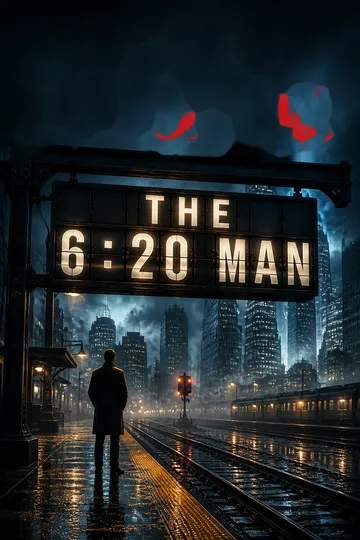
The 6:20 Train
A daily observation postDevine's commute gives him a repeated view of Cowl's estate and turns the train into an informal surveillance platform. Its predictable stop at the knoll lets riders see the pool through a gap in the landscaping, while the recurring journey mirrors Devine's sense of being trapped in a life he chose as punishment. The same route later carries signals between the estate and an unseen watcher. The train is therefore not simply a setting: its schedule, windows, and recurring passengers become part of the story's covert infrastructure.
The Inaccessible Floor
A concealed financial engineThe sealed floor at Cowl and Comely is first explained away as a high-frequency trading room, but Devine learns that the firm's known trading platform is elsewhere. Entry requires Cowl's phone, which functions as a privileged key. Inside, Devine finds servers and screens moving vast sums among shell entities, properties, and foreign accounts. His camera records the operation, but the surveillance is legally compromised and later erased. The floor represents how secrecy can be engineered through corporate access controls, digital infrastructure, and the legal difficulty of turning intelligence into admissible proof.
The Bikini Signals
A color-coded human channelCowl directs Montgomery to sit by the pool in specific colors at a regular time, knowing a commuter train can see her. Green signals that the hidden operation should proceed; red orders it to stop. The method avoids phone records and electronic surveillance, a precaution shaped by Cowl's history of being monitored. Montgomery initially understands the appearances as a private fetish rather than communication. Once Devine identifies the pattern, the apparently decorative poolside scenes become operational messages and help explain why the secret floor's activity changes.
The Untraceable Emails
A killer's private tauntBrief messages reach Devine from numerical addresses that cannot be traced by Valentine or the government's specialists. Each gives information about a death and appears to address Devine personally. Their technical construction makes them seem connected to the larger financial conspiracy, but that assumption distracts him from the intimate motives behind Sara's murder. The messages work as both psychological pressure and deliberate misdirection: they force Devine to keep investigating, while encouraging him to interpret the killings as part of the operation he is assigned to expose.
The Cloned Security Badge
A manufactured alibi trapCowl and Comely's low-frequency RFID badges can be copied with simple equipment, while access logs record a card rather than the person carrying it. Devine's badge appears in the building during Sara's murder, and video seems to show him entering, making him a plausible suspect. He later learns that both the badge record and footage were manipulated. The device links the murder mystery to the firm's lax security and demonstrates how a record can look authoritative while proving only that someone controlled the data.
FAQ
Synopsis & Basic Details
What is The 6:20 Man about?
- Wall Street Analyst's Penance: Travis Devine, a former Army Ranger, commutes daily on the 6:20 train to his Wall Street job, a penance for his past. He navigates the cutthroat world of finance while grappling with his military experiences.
- Mysterious Death and Investigation: The apparent suicide of a colleague, Sara Ewes, at his firm, Cowl and Comely, leads Devine to uncover a web of secrets, lies, and potential murder. He becomes entangled in a dangerous investigation.
- Hidden Connections and Deception: As Devine delves deeper, he discovers unexpected connections, hidden agendas, and a complex web of deception that extends beyond the walls of his workplace. He must confront powerful adversaries and his own demons.
Why should I read The 6:20 Man?
- Intriguing Character Study: The novel offers a compelling character study of Travis Devine, a complex protagonist with a troubled past and a strong moral compass, making his journey both relatable and captivating.
- High-Stakes Thriller: The story combines elements of a high-stakes thriller with a deep dive into the world of finance, creating a suspenseful and engaging narrative that keeps readers guessing until the very end.
- Exploration of Morality: The book explores themes of morality, redemption, and the consequences of choices, prompting readers to reflect on their own values and beliefs. It also examines the corrupting influence of power and wealth.
What is the background of The 6:20 Man?
- Post-Military Transition: The novel is set against the backdrop of a former soldier's difficult transition to civilian life, highlighting the challenges faced by veterans as they try to find their place in a world far removed from the battlefield.
- High-Pressure Finance World: The story is deeply rooted in the high-pressure, competitive environment of Wall Street, exposing the ruthless nature of the financial industry and the moral compromises required to succeed.
- Contemporary Social Issues: The book touches on contemporary issues such as wealth inequality, corporate greed, and the dark side of power, providing a relevant and thought-provoking commentary on modern society.
What are the most memorable quotes in The 6:20 Man?
- "You work till you drop, Travis. Nobody in this world gives you a damn thing. You have to take it, and you take it by working harder than anybody else.": This quote from Devine's father encapsulates the relentless work ethic and competitive spirit that drives the characters in the novel, highlighting the pressure to succeed at all costs.
- "This place, this space, this world, isn't about luck. It's about brains and talent and belly fire. You have to want it more than the next guy.": This quote from Brad Cowl reveals his ruthless ambition and the cutthroat nature of the financial world, emphasizing the importance of drive and determination in achieving success.
- "This was about paying one's debts.": This quote reflects Devine's internal struggle and his motivation for enduring a life he despises, highlighting his sense of responsibility and his need for redemption.
What writing style, narrative choices, and literary techniques does David Baldacci use?
- Fast-Paced and Suspenseful: Baldacci employs a fast-paced, suspenseful writing style that keeps readers engaged and eager to turn the page, using short chapters and cliffhangers to maintain tension.
- Multiple Perspectives: The narrative primarily follows Devine's point of view, but also shifts to other characters, providing a broader understanding of the events and motivations, and creating a sense of mystery and intrigue.
- Foreshadowing and Red Herrings: Baldacci uses subtle foreshadowing and red herrings to mislead readers and create a sense of uncertainty, making the plot twists more surprising and impactful.
Hidden Details & Subtle Connections
What are some minor details that add significant meaning?
- The Train's Signal Problem: The recurring signal problem that causes the 6:20 train to stop near Cowl's mansion becomes a symbolic pause in Devine's life, allowing him to observe and reflect, and also to see the woman by the pool.
- The Color of the Bikini: The color of the bikini worn by the woman at Cowl's mansion becomes a subtle signal, later revealed to be part of a larger scheme, highlighting the hidden layers of communication and control.
- The Name "Area 51": The informal name given to the off-limits floor at Cowl and Comely, "Area 51," foreshadows the clandestine activities and hidden secrets that are eventually uncovered, adding a layer of intrigue.
What are some subtle foreshadowing and callbacks?
- The "Sweet Cheeks" Remark: Cowl's use of the term "sweet cheeks" to address Jennifer Stamos foreshadows his involvement in her death and his objectification of women, and also connects him to Devine, who uses the same term.
- The Description of the Storage Room: The detailed description of the storage room where Sara Ewes dies, including the removed ceiling panel and the overturned chair, foreshadows the violent nature of her death and the meticulous planning of the killer.
- The Mention of "Waiting for Godot": Sara Ewes's recommendation of the play "Waiting for Godot" to Jennifer Stamos foreshadows the themes of waiting, uncertainty, and the search for meaning that permeate the novel, and also becomes a clue to the location of the Locust Group.
What are some unexpected character connections?
- Jill Tapshaw and Sara Ewes: The revelation that Jill Tapshaw and Sara Ewes were in a secret relationship adds a layer of complexity to the story, highlighting the hidden connections and motivations that drive the characters.
- Michelle Montgomery and Christian Chilton: The connection between Michelle Montgomery and Christian Chilton, who are revealed to be childhood friends, adds a layer of intrigue and highlights the interconnectedness of the characters' lives.
- Devine and Helen Speers: The unexpected romantic connection between Devine and Helen Speers, his roommate, adds a layer of personal stakes to the investigation, blurring the lines between professional and personal relationships.
Who are the most significant supporting characters?
- Will Valentine: As Devine's roommate and a skilled hacker, Valentine provides crucial technical support and insights, helping Devine uncover hidden truths and navigate the digital landscape of the investigation.
- Helen Speers: As Devine's roommate and a law school graduate, Speers offers legal expertise and a different perspective, challenging Devine's assumptions and providing a voice of reason. She also becomes a key player in the final confrontation.
- Michelle Montgomery: As Brad Cowl's girlfriend, Montgomery provides Devine with access to Cowl's world and valuable information, while also challenging his perceptions and forcing him to confront his own biases.
Psychological, Emotional, & Relational Analysis
What are some unspoken motivations of the characters?
- Devine's Self-Punishment: Devine's decision to work on Wall Street is driven by a need for self-punishment, a way to atone for his past actions and the guilt he carries from his military service.
- Cowl's Need for Control: Brad Cowl's actions are motivated by a deep-seated need for control, both in his business and personal life, leading him to manipulate and exploit those around him to maintain his power.
- Tapshaw's Obsessive Love: Jill Tapshaw's actions are driven by an obsessive love for Sara Ewes and a desire for revenge, highlighting the destructive nature of unrequited love and the lengths to which some will go to protect their vision of happiness.
What psychological complexities do the characters exhibit?
- Devine's Internal Conflict: Devine struggles with the moral compromises required to succeed in finance, creating an internal conflict between his desire for redemption and his disdain for the industry's ruthless nature.
- Cowl's Narcissism: Brad Cowl exhibits narcissistic traits, displaying a sense of entitlement, a need for admiration, and a lack of empathy for others, which drives his manipulative and exploitative behavior.
- Tapshaw's Instability: Jill Tapshaw's actions reveal a deep-seated instability, driven by her obsessive love for Sara and her inability to cope with loss and betrayal, leading her to commit acts of violence.
What are the major emotional turning points?
- Devine's Discovery of Sara's Murder: The realization that Sara Ewes's death was not a suicide but a murder marks a major emotional turning point for Devine, fueling his determination to uncover the truth and seek justice.
- Devine's Confrontation with Cowl: The confrontation between Devine and Brad Cowl forces Devine to confront his own biases and assumptions, leading him to question his place in the world and his ability to judge character.
- Devine's Discovery of Tapshaw's Betrayal: The revelation that Jill Tapshaw was behind the murders is a major emotional turning point for Devine, forcing him to confront the reality that the people he trusted were not who they seemed.
How do relationship dynamics evolve?
- Devine and Sara: The relationship between Devine and Sara Ewes evolves from a professional connection to a personal one, highlighting the complexities of love and loss in a high-pressure environment.
- Devine and Montgomery: The relationship between Devine and Michelle Montgomery evolves from suspicion to trust, as they work together to uncover the truth, highlighting the power of shared experiences and mutual respect.
- Devine and Speers: The relationship between Devine and Helen Speers evolves from a casual friendship to a deeper connection, as they navigate the dangers of the investigation, highlighting the importance of loyalty and support in times of crisis.
Interpretation & Debate
Which parts of the story remain ambiguous or open-ended?
- The True Nature of Area 51: The exact nature of the activities taking place in Area 51 remains somewhat ambiguous, leaving readers to speculate about the full extent of the illicit operations and the true motives of those involved.
- The Identity of the Email Sender: While Jill Tapshaw is revealed to be the sender of the untraceable emails, the question of whether she was acting alone or under the influence of others remains open-ended, leaving room for further interpretation.
- The Future of Cowl and Comely: The long-term consequences of the events at Cowl and Comely are left somewhat ambiguous, leaving readers to wonder about the future of the firm and the fate of those who were involved.
What are some debatable, controversial scenes or moments in The 6:20 Man?
- Devine's Relationship with Sara Ewes: The nature of Devine's relationship with Sara Ewes is open to interpretation, with some readers questioning whether his feelings were genuine or driven by a need for redemption.
- Montgomery's Motivations: Michelle Montgomery's motivations are complex and sometimes contradictory, leading to debates about her true allegiances and her role in the unfolding drama.
- The Morality of Devine's Actions: Devine's actions, particularly his use of violence and deception, raise questions about the morality of his methods and whether the ends justify the means.
The 6:20 Man Ending Explained: How It Ends & What It Means
- Justice and Loss: The ending of "The 6:20 Man" is bittersweet, with justice served but at a great cost. While the perpetrators of the crimes are brought to light, the loss of life and the betrayal of trust leave a lasting impact on Devine.
- Redemption and New Beginnings: Despite the tragic events, Devine finds a path to redemption and a new beginning, leaving behind his past and embracing a future where he can use his skills and knowledge for good.
- The Cycle of Violence: The ending also highlights the cyclical nature of violence and the difficulty of breaking free from the patterns of the past, leaving readers to ponder the long-term consequences of the characters' actions.
The 6:20 Man Series Series

About the Author
Other books by David Baldacci









Download PDF
Download EPUB
.epub digital book format is ideal for reading ebooks on phones, tablets, and e-readers.








