

Key Takeaways
Make the idea carry the ad; polish cannot rescue an empty concept.
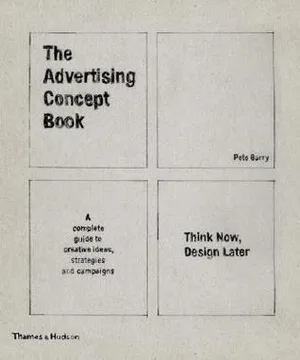
Start with the thought. Barry treats the concept as the essential argument an ad makes, positioned between strategy and execution. A beautiful photograph, clever typeface, or slick edit can improve a good idea, but cannot supply the missing reason to care. That is why the book favors rough pencil sketches: they expose the idea before visual finish can distract from it. The test is simple: can the ad’s central thought be understood without expensive production or a long explanation?
A small idea can work. Barry’s apartment-block sign asking dog owners to treat the sidewalk as a sidewalk quickly stopped a local mess. It was no award winner, but it communicated clearly and changed behavior. The example makes the point: creative quality is not decoration. It is a way to make a message land.
What's striking is how rough sketches function as a form of prototyping. Product designers often test a crude model before investing in materials, because an early failure is cheaper and easier to correct. Advertising benefits from the same separation between idea and finish. Yet the distinction should not become a hierarchy in which execution is dismissed: in public, the finished work is the message’s interface. A strong concept that is hard to notice, read, or trust can still fail. The useful discipline is to test the idea plainly first, then make the final form amplify it.
Pick one benefit and one audience problem before inventing the campaign.
Define the promise. A single-minded proposition, also called a promise or benefit, is the one most important product advantage the ad should communicate. A strategy statement, or creative brief, records the client, market context, problem to solve, audience, proposition, supporting facts, tone, and required inclusions or exclusions. The document is not paperwork for its own sake. It gives creative work a clear destination.
Start with people. The Flowers & Plants Association wanted more year-round sales. Rather than treating flowers only as gifts for occasions, its strategy encouraged women to buy them for themselves. BUPA faced a different problem: private healthcare cost more than public care. Its campaign reframed the service around staying healthy, not simply receiving treatment. In both cases, the strategy made the idea relevant by connecting a product to a real consumer tension.
A well-defined brief resembles a good scientific question: it narrows the search without prescribing the answer. One benefit also reduces cognitive load, especially in media where attention is brief. The caution is that single-mindedness can become simplistic if a product genuinely serves different needs or audiences. The book allows for exceptions, but the practical lesson remains useful: choose the primary job of each communication. A brand can carry several truths across its business, while an individual ad should make clear which one it wants the audience to remember.
Make familiar truths feel new through a relevant, unexpected turn.
Find the human truth. Barry calls everyday observations truisms: recognizable facts about life that audiences can quickly grasp. A truism can become the starting point for a campaign when it connects naturally to a product. Guinness built on the patience required to pour its beer. A Kodak student campaign began with the observation that places change, then used photographs to make that loss tangible.
Turn the truth sideways. A visual simile makes one object resemble another, while exaggeration stretches a real quality rather than inventing an implausible one. The book’s VW Polo example turns the assumption that small cars are vulnerable into a case for their toughness. Other useful moves include implying rather than explaining, reversing expectations, and using contrast. The boundary matters: an unexpected idea earns attention only when the audience can connect it back to the product.
This method has a close cousin in comedy: recognition creates the setup, then a turn changes the meaning. It also resembles metaphor in literature, where a concrete image lets an abstract point arrive quickly. These devices make an ad easier to notice and remember because the audience does a small amount of interpretive work. That effort must stay proportionate. If a visual comparison is too obscure, the viewer spends attention solving the puzzle instead of understanding the offer. The best lateral idea feels surprising on first contact and obvious in retrospect.
Generate widely, judge later, and stop treating first ideas as precious.
Separate making from selecting. The 1-in-10 tool is Barry’s reminder that more attempts improve the odds of finding a strong headline, visual, or concept. It is not a guarantee that every tenth idea will be good. The practical instruction is to keep producing after the first promising thought, then compare the options instead of defending the first one.
Protect the process. Write ideas down, because a partial thought may become useful later. Step away and return with fresher judgment. Barry also urges creatives to avoid premature criticism, fear of looking foolish, attachment to old successes, and stopping at the first acceptable answer. Partners may reach the same solution in different ways; the result matters more than who thought of it first. More options make it easier to discard an idea that is attractive but ineffective.
The distinction between divergent and convergent thinking is central here. Divergent thinking creates alternatives; convergent thinking evaluates and refines them. Mixing the two too early can shut down exploration, because people tend to protect ideas they have already invested in. A quota of attempts is a simple way to postpone that judgment. Quantity alone, however, can produce repetition rather than discovery. The useful question is not merely how many ideas exist, but whether each takes a meaningfully different route to the brief. Deliberate variety makes selection more intelligent.
Give campaigns room to grow without repeating one execution in disguise.
Build an expandable thought. A campaign is a central idea expressed through multiple executions, usually three or more. The executions should feel related, but each should add a fresh variation rather than restating the same joke. Barry contrasts small campaign ideas that run out after a few versions with larger ideas that can support years of work. More executions alone do not prove an idea is strong; an overly broad template can generate endless dull variations.
Use the tagline as a test. A tagline should express or clarify the campaign idea, not sit at the bottom as an unrelated slogan. If the concept and tagline fit, each new execution has a useful anchor. The book points to campaigns such as MasterCard’s long-running work as examples of an idea that can be adapted repeatedly while keeping a recognizable core. Sometimes a one-off ad is better than forcing a campaign.
A campaign works like a narrative world: repeated elements create recognition, while variation sustains interest. That balance is familiar in television series, music, and product design. Too little consistency makes each message feel unrelated; too much turns the work into a predictable template. The tagline can act as a compact memory cue, but it is not a substitute for distinct executions or a sound product experience. Long life is a strategic advantage, not a virtue by itself. A campaign should be renewed when the audience, market, or brand promise changes enough to make its old expression less useful.
Match the idea to the medium's strengths, not its fashionable label.
Respect the format. Print is demanding because a poster may have only a few seconds to communicate. Barry offers three seconds and roughly eight words as a useful billboard guideline, not an unbreakable rule. The goal is to remove anything the viewer does not need. Television can use movement, sound, timing, and a final twist; the One Frame Goal asks creatives to see whether the core idea can be captured in one image. Radio has no visuals, so it can use sound and the listener’s imagination as its theater.
Use place as part of the idea. Ambient advertising places a message in an unexpected physical setting or uses traditional media in an unusual way. The location should make the idea clearer, not merely stranger. Across formats, the central question stays consistent: does this execution communicate quickly, feel appropriate to the audience, and connect to the product?
Each medium has different affordances, meaning different things it makes easy or difficult. Print rewards compression; radio can make listeners imagine what cannot be shown; video can build anticipation through time. Treating every channel as a container for the same asset wastes those differences. At the same time, medium-specific cleverness can become a trap if novelty overshadows the message. A location stunt that attracts photographs but leaves viewers unsure of the brand has generated spectacle, not necessarily communication. The strongest adaptation preserves the idea’s meaning while letting the format contribute something distinctive.
Make digital interaction useful enough to earn attention and sharing.
Give participation a payoff. Interactive work asks an audience to do something, so the effort should lead to entertainment, usefulness, information, or a personal experience. Barry’s U S A P I E checklist names six possible rewards: utility, status, access, provocation, inspiration, and entertainment. The checklist helps test an idea, but it does not make an uninteresting concept compelling by itself.
Design for sharing. A social button makes content shareable, not worth sharing. The book urges brands to ask what the audience gets from participating and why they would pass the experience along. Fiat’s eco:Drive, for example, used driving data to suggest ways drivers could reduce fuel use. Strong integrated campaigns also connect channels because the central idea benefits from them, not simply because every new platform is available.
Participation changes the audience’s role from receiver to actor, a shift that can create deeper involvement when the action has genuine value. This is why useful tools often outperform decorative digital novelties: they give people a reason to return even when the campaign is not new. Sharing also carries social risk. People attach their taste and judgment to what they recommend, so a brand cannot assume that an easy share function will produce advocacy. The central test is whether the experience is rewarding on its own terms and still unmistakably connected to the brand.
Treat craft, presentation, and practice as part of the idea's journey.
Make the work legible. Execution includes layout, photography or illustration, typography, color, and production. Barry recommends checking hierarchy, meaning the order in which a reader encounters the ad’s elements, and removing clutter that slows understanding. Roughs help explore the concept; finished work must still look intentional and readable.
Learn to sell the thinking. A presentation should explain the bridge from the brief to the idea, then show each execution clearly. The creative should anticipate objections without surrendering the central thought at the first request. For students, a portfolio is evidence of range and judgment, not a storage box for every assignment. Barry advises beginning and ending with strong work, removing weaker pieces, and continually refreshing the book. Practice matters because ideas must survive collaboration, critique, and real production.
Creative work is made inside organizations, so persuasion and collaboration are not administrative chores added after invention. They shape which ideas are understood, funded, and produced. Clear rationale helps a client evaluate a proposal against the problem it is meant to solve rather than against personal taste alone. Still, confidence should not harden into defensiveness. Criticism can reveal a communication failure that the creator no longer sees. The most resilient creative practice combines conviction about the idea’s purpose with flexibility about its expression, then uses each project to sharpen both craft and judgment.
Analysis
The book’s structure mirrors its central claim. Strategy sits below the surface, concept gives that strategy a memorable form, and execution is the visible part the audience encounters. Barry’s unusual strength is joining creative philosophy to practical instruction: the reader moves from choosing a proposition to sketching a print ad, writing a radio script, building a social experience, and presenting work to a client. That progression makes the book useful as both a handbook and a theory of how ideas travel through organizations.
Its most durable contribution is a vocabulary for creative judgment. Terms such as visual simile, reductionism, and the invisible thread turn vague feedback into specific questions: Is the comparison legible? Can the ad lose an element? Does the copy flow? The many case studies make these questions concrete, while the exercises invite repetition rather than passive appreciation. The book’s insistence on truth, relevance, and simplicity also offers a corrective to digital novelty for its own sake.
Some claims need to be treated as working heuristics rather than universal laws. The suggested poster word limit depends on placement and audience; a successful campaign can carry multiple benefits; and no formula reliably predicts what becomes shareable. The book’s left brain and right brain account of creativity reflects a popular but oversimplified model of cognition. Its more persuasive argument does not depend on that model: effective advertising balances logic and emotion, verbal and visual expression, and strategic focus with imaginative surprise.
The book is rooted in agency practice, where brands compete for attention and success is often judged through both business and creative recognition. That perspective can underplay questions about whether a product deserves promotion or whether its wider effects are beneficial. Yet Barry explicitly encourages questioning the brief and recognizes that advertising is not always the right solution. The result is a demanding craft manual with a sound governing principle: make the communication worth the interruption, then make every production and presentation decision serve that purpose.
Glossary
ROSE REFS
A copy editing sequenceA mnemonic for stages of developing body copy: Research, Organize, Shape, Edit, Rewrite, Edit, Finesse, and Speak. It begins with gathering and arranging material, then improves structure and wording through repeated editing. Reading the final copy aloud helps reveal awkward phrasing, weak rhythm, or a tone that does not sound natural.
Download PDF
Download EPUB
.epub digital book format is ideal for reading ebooks on phones, tablets, and e-readers.








