

Key Takeaways
Treat inherited processes as hypotheses, not laws
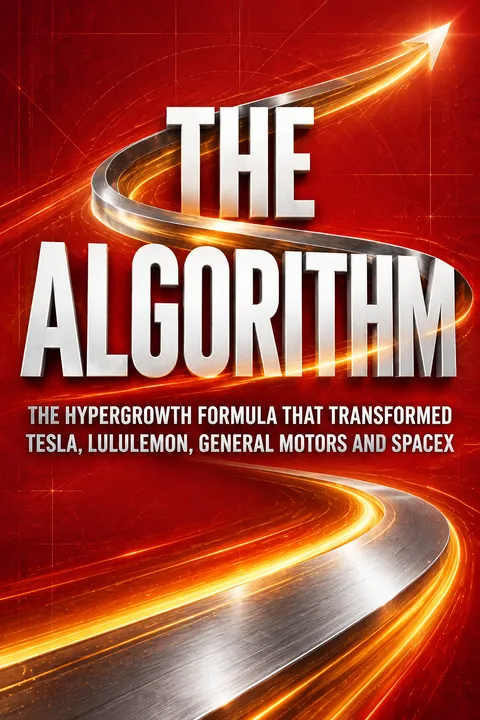
The method begins with doubt. McNeill calls the approach he learned at Tesla the Algorithm: a five-part operating method that challenges requirements, removes unnecessary work, simplifies what remains, improves speed, and introduces automation only after the work is understood. Its aim is not efficiency for its own sake, but faster learning and growth.
Start where work leaks. Before joining Tesla, McNeill took test drives at eight stores and received no follow-up. Customer records revealed 5,000 more neglected prospects. He asked the sales team to call them before booking more test drives. Sales quickly jumped. The discovery came not from a grand strategy, but from experiencing the process and tracing a missed opportunity to its cause.
The opening story makes the method concrete: an organization can mistake activity for progress when its incentives reward test drives but not completed sales. This resembles process mining, where analysts reconstruct what actually happens from operational traces rather than relying on a polished flowchart. The useful discipline is to observe the customer journey, locate the point where value stops moving, and test a focused fix. The book's larger claims are harder to establish from anecdotes alone, since strong execution, market timing, and leadership all matter. Still, the neglected leads show how a modest operational observation can outperform an elaborate strategic plan.
Challenge constraints before accepting that the impossible is permanent
Separate law from habit. Tesla wanted a factory in China without the joint-venture arrangement that other foreign automakers accepted. After fourteen months of negotiations, the company secured permission for a fully Tesla-owned plant. The point is not that rules can always be ignored, but that requirements may be customs, recommendations, or negotiable conditions rather than immovable laws.
Test the technical story, too. Tesla's body shop used hundreds of welded pieces. Engineers questioned whether large sections could instead be cast, despite industry fears about strength and safety. Experiments led to chassis construction using three major castings rather than roughly 300 parts. Elsewhere, a team distinguished a driver's phone from a passenger's by analyzing how each moved into a car, sidestepping the assumed need for highly precise GPS.
This is a practical form of assumption testing: identify the constraint, find out who or what imposes it, then gather evidence before treating it as permanent. In science, a failed explanation often becomes productive when researchers change the measurement or frame the question differently. The phone example illustrates that shift from asking where a device is to examining how it arrived. The caution is essential: regulatory rules and engineering safety limits are not interchangeable with office conventions. A healthy challenge culture needs evidence, expert scrutiny, and clear stop conditions, especially when a mistaken experiment could harm people.
Remove customer-facing steps until buying feels almost frictionless
Count the effort customers endure. Buying a Tesla online originally took 64 clicks and offered more than 300,000 possible configurations. Research showed that the sprawling menu and performance-heavy website did not reflect what all buyers cared about. Reducing the offers to two core packages simplified the online decision and also made manufacturing and purchasing from suppliers less complicated.
Question every click. The team then examined financing documents. Much of the paperwork came from bank lawyers' caution, not legal mandates. With two banks and prefilled customer information, Tesla reduced the purchase process to 12 clicks. Online and app sales rose twentyfold over ten months. A tedious customer task had concealed opportunities throughout the business, from lending procedures to production complexity.
The case connects customer experience to choice architecture: more options can make a decision harder rather than more satisfying. It also shows why reducing friction at the front end can simplify work behind the scenes. A useful test is to count each required customer action and ask what risk or value it serves. Yet fewer clicks are not automatically better. Complex financial choices may require informed consent, and speed can become coercive if customers cannot understand what they are agreeing to. The goal is not minimum interaction at any cost, but removal of needless effort while preserving meaningful choice.
Simplify around the outcome customers remember, not the paperwork employees inherit
Aim at the experience. Tesla's new sales advisers once endured a month of training. McNeill's team initially tried to shrink that to two hours, then recognized that the real goal was not memorizing every detail. It was helping customers have such a good experience that they would tell others about it. The team replaced the sprawling curriculum with a clear service ambition, giving employees room to solve problems rather than recite procedures.
A story tested the idea. When a customer's Tesla broke down as his wife was about to give birth, a service manager drove the couple to the hospital, arranged a loaner car, and brought groceries and treats for their children. The employee used the new principle as a guide. The simplified instruction had enabled judgment and care that a training checklist could not have scripted.
This is a case of designing for intent rather than compliance. In organizational psychology, a clear purpose can help employees make sound decisions in situations no manual anticipated. The story also shows that simplification need not mean stripping away quality; here it removed memorization to make room for human attention. But a memorable slogan is not a substitute for technical competence, especially in safety-critical work. The strongest version pairs discretion with essential training, authority to act, and a way to learn from mistakes. Otherwise, employees may be asked to improvise without the tools or support to do so.
Measure end-to-end time, then repair the bottleneck that traps it
Distinguish waiting from work. When McNeill's wife's car spent more than four weeks at a repair shop, the bill showed only eight hours of labor. Cycle time is the total time from a customer's request to completion; touch time is the time someone actively works on the task. The gap between them can reveal delays, handoffs, and idle inventory that a task-level efficiency measure misses.
Make the whole flow visible. At Tesla, teams struggled to coordinate demand, factory output, and parts from a sprawling supply chain. A shared digital Vehicle Plan gave departments current information instead of conflicting spreadsheets. Production cycle time fell from 14 days to under six, and the system helped the company scale quarterly production from about 20,000 to 500,000 vehicles.
End-to-end measures counter a common organizational trap: each department can look efficient while the customer waits. This is closely related to the theory of constraints, which treats a system's throughput as limited by its slowest point. Shared visibility also improves coordination because teams can respond to the same facts rather than negotiate over competing versions of reality. The metric needs care, though. Faster completion can conceal rushed quality checks or work shifted to customers and suppliers. Pairing cycle time with quality, safety, and customer outcomes makes speed a useful diagnostic rather than a number employees learn to game.
Learn the work by hand before teaching machines to repeat it
Automation magnifies design errors. Tesla's planned highly automated Model 3 line jammed, damaged cars, and failed to produce at the needed rate. With cash running dangerously low, Jerome Guillen proposed a manual assembly line inside a temporary tent. Workers built 75 cars in its first week. After six weeks of observation and adjustment, output reached 750 per week, and the team had removed half the production steps.
Then encode what works. The tent made the sequence and its bottlenecks visible before more machines were introduced. McNeill applies the same logic to Curbee, a mobile-repair business that initially coordinated work through spreadsheets, forms, maps, and paper on walls. Only after the team learned the operating model did it build software to support other dealerships.
The principle resembles prototyping in engineering: expose assumptions cheaply before committing to an expensive, rigid system. Manual work can function as an instrument for discovery, not as nostalgia for pre-digital methods. It reveals exceptions, handoffs, and tacit knowledge that requirements documents may miss. Still, manual processes can be slow, inconsistent, or hazardous at scale. The relevant question is not whether humans or machines are superior, but whether the process is understood well enough to automate responsibly. In some settings, a limited automation pilot can itself generate learning, provided it remains reversible and closely monitored.
Compete across the customer's whole journey, not just the product
Customers experience a system. A Tesla buyer does not experience only the car. Shopping, financing, charging, repairs, and insurance all affect whether ownership feels worthwhile. McNeill argues that treating those surrounding services as part of the product can uncover pain points and new business opportunities. Tesla's connected vehicles provided driving data that could inform insurance pricing, while charging and mobile service addressed other parts of ownership.
The economics changed, too. Traditional insurers often relied on broad demographic categories. Tesla could assess driving behaviors such as hard braking and speeding, then offer a safety score intended to connect behavior with premiums. The company also made insurance easier to purchase alongside the car. The broader view turned an awkward step in buying and owning a vehicle into a potential recurring revenue stream.
This systems view is powerful because adoption often depends on complements, not the core product alone. An electric car becomes more useful when charging is convenient; a financial app matters more when its advice is understandable. Mapping the customer's journey can reveal where a company should partner, improve, or build. But greater reach can also mean greater responsibility. Driving data may support more tailored prices while raising questions about consent, privacy, and whether customers can contest a score. Expansion is strongest when it solves a genuine customer problem and makes the tradeoffs legible, rather than treating every adjacent need as a new monetization opportunity.
Put a small team on a hard goal, with weekly executive review
Make accountability active. Tesla's weekly cadence brought a small group working on a pressing problem to Tuesday sessions with Elon Musk. The meetings were not just progress reports; leaders examined evidence, challenged assumptions, and worked through obstacles. Direct attention from the CEO gave teams a deadline and a reason to surface problems rather than hide behind routine updates.
Give the team room to move. General Motors used a related structure for its electric Hummer project. A small team led by engineer Josh Tavel had unusual autonomy and a senior executive who cleared institutional barriers. A project that typically took four years reached production in about 19 months. The pattern is high-level sponsorship combined with focused ownership, not a demand that every employee attend more meetings.
Frequent review can shorten feedback loops, a basic principle of both project management and adaptive control. A senior leader who understands the work can remove obstacles and make decisions before delay compounds. The GM example also suggests that structural permission matters: urgency without authority merely adds pressure. The counterweight is the risk of chronic overload. The book describes intense accountability, including practices that strained sleep. Effective cadence therefore needs bounded goals, psychological safety for bad news, and sustainable workloads. Otherwise, teams may optimize for pleasing the executive or hitting a date instead of delivering a reliable product.
Use your own product to catch failures dashboards politely conceal
Experience the real workflow. McNeill calls this practice eating your own dog food: leaders use their own offerings as customers do, and inspect the competition as well. At Tesla, employees drove company cars and sent product feedback. A visit to a Lululemon flagship store exposed a long checkout queue, too few people on the floor, and staff diverted to online orders. The board member's direct note led the executive team to respond within a day.
Make feedback routine. McNeill's 20 percent rule meant spending one day each week experiencing some part of the customer journey. He also recommends asking frontline employees what they would change if they ran the company. These methods shorten the distance between a problem and the people who can allocate resources to fix it.
Direct use is a form of field research with unusually short feedback latency. It can reveal confusing interfaces, awkward handoffs, and service failures that aggregate dashboards flatten into averages. Visiting a competitor can also reset internal assumptions about what customers now consider normal. However, an executive's experience is still only one observation. Senior leaders may receive unusually attentive service, and their preferences may not represent those of ordinary customers. Firsthand observation works best alongside customer research, frontline reports, and disaggregated operating data. Its special value is not statistical representativeness, but the urgency and texture it can bring to a problem.
Analysis
The book's central contribution is an operational habit of mind: treat processes as designed systems that can be inspected, challenged, and rebuilt. Its five-part method is most persuasive when the steps reinforce one another. Questioning exposes assumptions, deletion reduces needless complexity, simplification clarifies the work, faster cycles reveal weak points, and automation can then scale a process that people understand. The recurring stories make this sequence memorable because they show the same logic in factories, retail, finance, and service.
The strongest examples are not simply stories of moving faster. They show how measuring actual work changes what leaders notice. Eight failed follow-ups expose a sales incentive problem. Four weeks of repair delay around eight hours of labor distinguishes waiting from doing. A temporary manual line turns a failed automation plan into a learning environment. These cases suggest that operational improvement depends less on abstract slogans than on direct observation, useful data, and permission to alter the process.
The evidence is still primarily retrospective and comes from a leader invested in the method. The examples establish plausibility, not that this approach alone caused each commercial outcome. Talent, product appeal, capital, regulation, and market conditions also shape results. The book's success stories cannot show how often similar experiments fail or how much the methods vary across organizations.
There is also a real tension between urgency and durability. Tight deadlines and executive attention can focus a team, but excessive pressure can suppress bad news, reward metric gaming, and exhaust people. Likewise, lower friction can improve a customer journey while weakening informed choice, and richer data can personalize services while creating privacy costs. A practical application therefore needs balancing measures: quality and safety alongside speed, consent alongside personalization, and sustainable workloads alongside accountability.
Read as a toolkit rather than a universal formula, the method is compelling. Its best question is not merely how to accelerate a process, but which parts of the process create value, which parts create risk, and what evidence would justify changing either one.
Glossary
The Algorithm
five-stage operating methodMcNeill's name for an operating method used to improve business processes and support growth. It proceeds by questioning requirements, removing unnecessary steps, simplifying and optimizing the remaining work, accelerating its completion, and automating only after the process is understood. The stages overlap in practice, and the method is presented as a repeatable discipline rather than a software algorithm.
cycle time
total elapsed process timeThe elapsed time from the start of a process to its completion. For a car repair, it runs from dropping off the keys to getting them back; for an online order, it runs from purchase to delivery. The book distinguishes cycle time from the active labor spent on a task, using the measure to reveal delays and opportunities to improve throughput.
touch time
time spent actively workingThe portion of a process's total cycle time during which the product or service is actually being worked on. Comparing touch time with cycle time helps identify how much time is spent waiting, being transferred, or sitting idle. McNeill uses an auto repair that took weeks but involved only hours of billed labor to illustrate the difference.
Vehicle Plan
shared production planning systemTesla's system for giving teams current information about manufacturing, supply-chain constraints, logistics, orders, and local demand. It replaced fragmented planning based on separate spreadsheets with a common operational picture. The system helped teams coordinate production and respond to disruptions across a complex network of factories, suppliers, and markets.
weekly cadence
recurring executive problem reviewA regular meeting structure in which a small team reports progress on a limited number of urgent company problems to the CEO or another senior leader. The meeting is intended for active problem-solving, not just status updates. Clear goals, frequent deadlines, and direct executive attention create accountability and allow obstacles to be addressed quickly.
innovation by subtraction
innovation through purposeful removalMcNeill's label for discovering a better solution by trying to remove complexity rather than merely improving each existing step. In Tesla's sales training, an effort to shorten a month of instruction led the team to reconsider what employees actually needed to deliver. The resulting change focused on the customer outcome instead of preserving the accumulated training materials.
20 percent rule
weekly customer-experience dayMcNeill's practice of spending roughly one day each week experiencing some part of a customer's journey. The activity can include using a product, visiting a store, or observing a service process. The aim is to create a direct feedback loop that reveals problems and opportunities that may be obscured by internal reports or prepared demonstrations.
safety score
behavior-based driving measureA Tesla insurance measure designed to connect observed driving behaviors with risk and premiums. The book describes inputs such as hard braking, aggressive turns, speeding, and late-night driving. Drivers could see the score and potentially lower premiums through safer behavior. The approach relies on vehicle data rather than only broad demographic categories.
eat your own dog food
experience your own productA practice in which employees and leaders use their own product or service in realistic conditions, much as customers do. The goal is to discover friction, defects, or confusing design firsthand and respond quickly. McNeill extends the practice to visiting stores, observing operations, and trying competitors' products to understand customer expectations.
Download PDF
Download EPUB
.epub digital book format is ideal for reading ebooks on phones, tablets, and e-readers.








