

Key Takeaways
Read fiction as a safe rehearsal for lives you cannot afford to live.
Stories are practice. Viv Groskop argues that novels and plays let readers enter other people’s inner lives without enduring their disasters firsthand. Russian classics can show both how to live and how not to: their characters betray friends, mistake desire for destiny, and sometimes die under a train. The point is not to extract a tidy rule from every plot. It is to recognize motives and consequences in a vivid human context.
No secret handshake required. Groskop writes as an enthusiastic amateur, despite her Russian degrees and years of study. She encourages readers to use translations, read slowly, skip passages, or return to a difficult book years later. Her own search for identity gives the essays a personal thread: literature offered companionship while she tried to understand where she belonged.
Fiction’s strength here is not that it predicts what a reader should do, but that it makes motives visible. A reader can notice how pride, fear, or longing shapes a character before recognizing the same pattern at home. That kind of rehearsal can widen moral imagination. It also has limits: fictional outcomes are designed, while real lives remain uncertain. The books are best treated as prompts for attention, not authorities that can settle every choice.
Let Anna Karenina complicate your idea of an authentic life.
No easy verdict. Anna is trapped between a loveless marriage, a passionate affair with Vronsky, and her devotion to her son. Her story can look like a warning against adultery, yet Tolstoy writes her with such sympathy that the novel also exposes the cruelty of the society judging her. Meanwhile, Levin and Kitty build a steadier life that seems morally safer, though not especially simple. Their contrasting paths make happiness difficult to define as either excitement or respectability.
Identity stays unsettled. As a teenager, Groskop saw Anna’s unfamiliar name as a possible answer to her own questions about origin. She tried to resemble the character, even injuring her eyelashes with a curler. The joke carries a serious point: identification with a fictional person can reveal a longing, but it cannot tell a reader who they must become.
Anna’s story resists the common habit of treating authenticity as permission to follow every desire. Her feelings are real, but the effects of her choices are real too, especially for her child. The novel’s strength is holding both truths at once. That complexity resembles moral reasoning more than rule-following: context matters, but context does not erase responsibility. Readers may still disagree about whether Tolstoy’s treatment of Anna is ultimately compassionate or punitive, which is precisely why the character remains useful to think with.
Accept what fate brings without confusing surrender with innocence.
History reshapes private life. In Doctor Zhivago, Yuri’s relationships and plans are repeatedly disrupted by revolution, war, and coincidence. He loses contact with his pregnant wife after being taken away to serve as a doctor, then builds a life with Lara when circumstances bring them together. The novel’s idea of fate captures how events outside a person’s control can redirect a life, but Yuri also takes convenient paths that hurt people he loves.
Keep going anyway. Groskop links the novel’s language of fate and soul to the experience of facing reality and instinct. Her own memories of a young Russian friend’s suicide make the question painfully personal: why one person dies and another survives may have no satisfying explanation. Pasternak does not offer a formula for fairness. The essay’s practical lesson is to continue living without pretending that every outcome was chosen or deserved.
The distinction between circumstance and choice is vital. A person can be swept along by political upheaval, illness, or chance, while still making decisions within the narrow space available. Calling every outcome fate can offer comfort, but it can also become a way to avoid accountability. Zhivago’s story is most revealing when those ideas remain in tension. Acceptance helps people face what cannot be changed; it should not require them to excuse avoidable harm.
Bear witness when silence would erase other people's suffering.
Poetry preserves testimony. Anna Akhmatova’s Requiem records the experience of women waiting outside prisons during Stalin’s purges, hoping for news of arrested relatives. Akhmatova herself spent seventeen months in those queues. Because her work could endanger her, poems were memorized by trusted friends rather than safely kept on paper. In one remembered encounter, a woman in the queue asks whether this suffering can be described. Akhmatova accepts the task of making it visible.
Hope can be quiet. Requiem does not soften terror or promise rescue. Its hope lies in the continued act of remembering and writing. Akhmatova’s personal losses, surveillance, and exclusion from official literary life did not stop her work. Groskop emphasizes that this courage is not simply a matter of feminine elegance or personal resilience: the poems speak for people whose pain the state sought to hide.
Akhmatova’s example makes witness an ethical practice, not merely a literary one. Naming suffering can preserve evidence, affirm the humanity of those affected, and create a shared memory under pressure. The poems also complicate the language of optimism. Hope here is not confidence that events will improve; it is the refusal to let brutality dictate what can be remembered. Still, praising endurance must not make endurance seem like an adequate substitute for safety, justice, or material help.
Stop treating one-sided love as proof of emotional depth.
Longing can become a refuge. In Turgenev’s play A Month in the Country, Rakitin loves his friend’s wife, Natalya, who does not return his feelings. The household becomes a comic chain of people longing for someone unavailable. Turgenev drew on his own enduring attachment to the married singer Pauline Viardot, though he also had other relationships. The play makes unrequited love both painful and faintly ridiculous, rather than automatically noble.
Notice the safety in rejection. Groskop recognizes a similar pattern in her own intense attachment to a Ukrainian musician who did not love her as deeply. Loving someone unavailable offered a strange certainty: rejection was already built in, so real intimacy and its risks could be postponed. Seeing the comedy in the situation helped her understand that the pain was not proof that the relationship was profound or meant to last.
The essay’s sharpest insight is that longing can protect a person from the vulnerability of mutual commitment. That does not make unreturned feelings fake, or the person foolish for having them. It does invite a useful question: is the attachment directed toward this particular person, or toward the safety of wanting what cannot be fully had? Humor can loosen a romantic script without humiliating the person inside it. The challenge is to use that insight for self-understanding, not self-blame.
Notice self-sabotage before regret becomes your permanent companion.
Onegin creates his own loss. Pushkin’s verse novel follows Eugene Onegin, who dismisses Tatyana when she declares her love. He then provokes his friend Lensky into a duel and kills him. Years later, Onegin falls for Tatyana, now married, but his chance has passed. The tragedy is not simply that fortune turns against him. His careless choices help produce the very loneliness he later regrets.
Hindsight is not a plan. Groskop describes a stage production that showed Onegin at two ages, allowing the older man to confront the arrogance of his younger self. That staging makes visible the gap between knowing what one wants and behaving as if it matters. The story also reflects a culture in which duels and social honor could magnify foolish decisions, but Onegin’s attention to Tatyana and Lensky was still his responsibility.
Onegin is a memorable study in how people can mistake detachment for strength. His later regret cannot repair the damage, a familiar feature of choices made for status or convenience. The duel also warns against reducing the story to individual psychology: its social code gives private vanity a lethal public form. That context deepens rather than cancels the lesson. When a choice affects another person, delaying reflection until consequences arrive is itself a consequential choice.
Test grand theories against the ordinary needs beneath them.
An idea becomes an excuse. In Crime and Punishment, former student Raskolnikov convinces himself that extraordinary people may break ordinary moral rules. He kills a pawnbroker and her half-sister, supposedly to prove his own power and solve his financial troubles. Instead, he is overwhelmed by guilt and illness. Dostoevsky’s religious and political concerns shape the novel, but its psychological force comes from showing how grand reasoning can conceal pride, desperation, and basic human vulnerability.
Many truths can coexist. Isaiah Berlin’s Hedgehog and the Fox distinction, used by Groskop, contrasts thinkers drawn to one organizing principle with those who accept a world of competing truths. Raskolnikov’s rigid theory resembles the first type. Groskop’s own fixation on becoming Russian similarly narrowed her view, until she failed to respond when a woman suffered a seizure on a tram.
Raskolnikov’s theory is dangerous partly because it converts a personal desire into a supposed law of history. The fox-and-hedgehog contrast helps readers ask whether one explanation is illuminating everything or merely protecting it from contradiction. Yet pluralism is not automatically wise: too many competing considerations can also paralyze action. The tram episode shows the cost of a self-concept that crowds out immediate perception. In a crisis, practical attention to the person present may matter more than resolving one’s identity.
Stop relocating your happiness to a place called elsewhere.
Moscow is an idea. In Chekhov’s Three Sisters, Olga, Masha, and Irina repeatedly dream of returning to Moscow, where their childhood once seemed full of possibility. The city becomes a symbol of a better life, though none of the sisters can make the imagined future happen. Their longing obscures both the people and the small pleasures around them. Chekhov treats the fantasy with compassion and humor, while showing how it can keep someone from inhabiting the life already at hand.
Ask what the destination means. For Olga, Moscow recalls youth; for Irina, it promises a new beginning; Masha chiefly wants escape from an unhappy marriage. The same dream serves different needs. Groskop connects their fixation to the habit of imagining that another job, city, or life stage will solve everything. Chekhov’s answer is not that change is pointless, but that a place cannot guarantee the happiness projected onto it.
The sisters’ dream is not empty: it gives them a shared language for hope and dissatisfaction. That makes it more than simple envy. But a goal can become a container for several unaddressed needs, from autonomy to companionship, and changing location may not answer all of them. The useful question is not whether to want more, but what the desired elsewhere is meant to provide. That question preserves ambition while reducing the fantasy that one destination will cure every frustration.
Protect one private piece of dignity when everything else is controlled.
Small things sustain a person. Solzhenitsyn’s One Day in the Life of Ivan Denisovich follows a political prisoner through an ordinary day in a labor camp. Ivan watches food, weather, work rules, and the movements of guards because these details shape survival. He keeps a spoon hidden in his boot, a modest possession that preserves some independence. When another prisoner receives a food parcel, Ivan does not demand a share. He is grateful for what is offered and avoids coveting what is not his.
Routine can be resistance. The novel’s narrow focus makes camp life concrete rather than abstract. Ivan’s careful habits, including when he eats his bread and where he stores his things, help him retain a sense of self under brutal conditions. Solzhenitsyn had also been imprisoned after criticizing Stalin in a letter. His work insists that dignity can persist in small acts, even when freedom and justice are absent.
The spoon is powerful because it is neither grand nor symbolic in the abstract: it is an object Ivan can use and call his own. Material details matter under coercion, where control over food, time, and possessions is stripped away. This is a more grounded account of resilience than advice to maintain a positive attitude. It also requires care in application: a prisoner’s capacity to endure should never become a reason to minimize the brutality imposed on him.
Use humor to expose absurd power without letting it own you.
The joke sees clearly. Bulgakov’s The Master and Margarita sends Satan and his strange entourage into Soviet Moscow, where they unsettle writers, officials, and social climbers. A giant talking cat and a series of uncanny events turn bureaucratic pretensions into farce. Beneath the comedy lies a portrait of a society where people must act as if a senseless system makes sense. Bulgakov wrote the novel in secrecy while his work was censored and his livelihood remained uncertain.
Laughter keeps perspective. The novel refuses a solemn, predictable attack on power. Its surreal scenes make the absurdity harder to dismiss, while its humor gives readers a way to breathe inside a threatening world. Groskop sees the book as a reminder that playfulness can survive even when circumstances are frightening. The joke does not undo political harm, but it can keep fear from claiming the whole of a person’s inner life.
Satire can reveal the rules people have been trained not to question. Bulgakov’s supernatural visitors make ordinary coercion look strange again, restoring the reader’s capacity for judgment. Humor also creates distance, a way to look directly at something without being entirely consumed by it. But comic survival has a double edge: jokes can expose power, or help people tolerate what should be changed. Their value depends partly on whether laughter restores clarity or simply replaces action.
Expose the self-serving motive hiding inside your noble explanation.
Chichikov sells a fiction. In Gogol’s Dead Souls, a smooth-talking stranger buys the names of serfs who have died but remain listed in official records. He plans to use these imaginary assets to appear wealthy and obtain money. The landowners who sell them are initially suspicious, then persuaded by convenience and the prospect of avoiding taxes. The scheme reveals how easily people accept a transaction when it serves their interests, even when its substance is absurd.
Hypocrisy often sounds reasonable. Groskop connects Chichikov’s self-invention to her own effort to claim a Russian identity that felt more exciting than her actual family history. Gogol’s specialized term poshlost’ describes vulgarity or false importance that a person may not recognize in themselves. The warning is not to distrust every motive, but to ask whether a supposedly generous or principled action is really driven by status, comfort, or self-protection.
Gogol’s con works because the people around Chichikov have their own incentives to cooperate. Self-deception is rarely solitary; it gains strength when other people find the fiction useful too. This makes honest self-examination more demanding than simply declaring good intentions. At the same time, the memoir’s identity story suggests that imaginative self-making is not always a con. The key distinction is whether the story remains open to correction or requires facts and other people to disappear.
Build identity from lived attachments, not ancestry or a perfect story.
A long book rewards patience. War and Peace follows several families through war, romance, loss, and changing fortunes. Groskop recommends treating it as a book to return to, not a test to pass. A reader can follow one family, pause when attention fades, and resume without guilt. Pierre’s encounter with the peasant prisoner Platon Karatayev distills Tolstoy’s emphasis on ordinary gratitude, human connection, and accepting what cannot be controlled.
A life is not a pedigree. Groskop learns that her family came from Łódź and was Jewish, not straightforwardly Russian as she had imagined. Yet her family records also show her ancestor describing his origin as Russian or Prussian. The discovery does not make her earlier connection to Russian literature false. It changes its meaning: identity is shaped by ancestry, but also by relationships, work, stories, and the life one actually builds.
The ending avoids replacing one rigid identity with another. Ancestry matters because it carries histories that may have been obscured, but it cannot dictate every present attachment. Groskop’s Russian education and reading remain meaningful even after her imagined origin is corrected. That distinction is useful beyond family history: a person can revise a story without declaring the experience that story once organized worthless. The caveat is that flexibility should not become an excuse to ignore historical erasure or the unequal power behind assimilation.
Analysis
The book’s form mirrors its central claim: people understand themselves through stories, but stories rarely deliver a clean verdict. Each essay pairs a classic with a practical question, then unsettles the apparent lesson through contradiction. Anna’s desire may be real while her choices hurt others. Zhivago is buffeted by history, yet his passivity has consequences. Akhmatova’s hope is not cheerfulness, and Ivan Denisovich’s resilience is not a reason to excuse the camp. This method makes literature less like a shelf of moral instructions and more like a collection of difficult cases.
Groskop’s memoir supplies a second narrative, her effort to become Russian and her eventual discovery of Polish Jewish ancestry. That arc prevents the book from treating identity as an abstraction. She first uses literature to imagine belonging, then learns that an inaccurate origin story can still have shaped a real life. The conclusion is not that origins do not matter, but that they cannot exhaust a person. Reading, friendship, family, and chosen work also become part of the self.
The book’s greatest strength is its resistance to literary gatekeeping. Its humor makes intimidating works approachable without pretending they are simple, and its personal anecdotes give readers permission to approach them imperfectly. Its limits are visible too. The canon it surveys is heavily male, and some of its compact lessons risk making structural constraints sound like individual choices. The discussion of women’s restricted agency and Akhmatova’s political witness partly counters that risk. The most durable insight is therefore not a single life rule. It is a way of reading: attend to motive, notice contradiction, and let another person’s story complicate the account one tells about oneself.
Review Summary
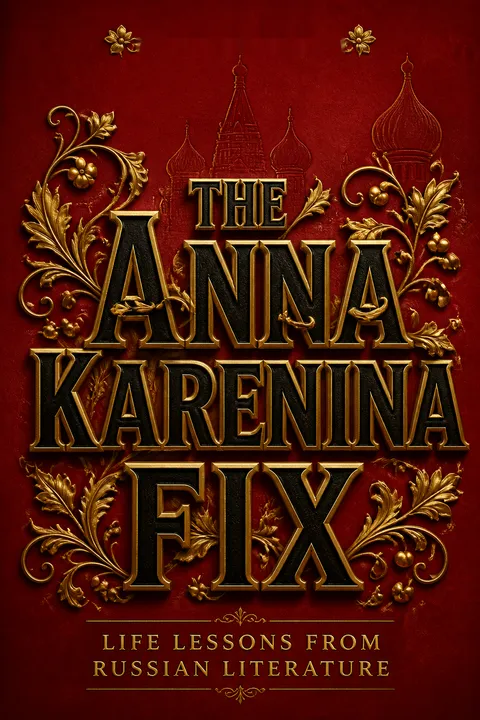
The Anna Karenina Fix is praised as an entertaining and insightful look at Russian literature. Groskop's witty, self-deprecating style and personal anecdotes make the classics accessible and relatable. Readers appreciate her blend of literary analysis, humor, and life lessons. The book sparks interest in reading or revisiting Russian novels. Some reviewers note similarities to Elif Batuman's work. While a few find the self-help aspect unnecessary, most enjoy Groskop's fresh perspective on beloved authors and works.
Glossary
Hedgehog and the Fox
One idea versus manyA distinction associated in the book with Isaiah Berlin. The hedgehog seeks to explain life through one central idea, while the fox accepts that experience contains many competing truths. Groskop uses the contrast to describe Dostoevsky’s need for a unifying moral vision and Tolstoy’s broader attention to conflicting perspectives.
poshlost’
False importance or vulgarityA Russian term Groskop discusses through Gogol and Dead Souls. It describes something tacky, trivial, or falsely elevated, especially when a person mistakes superficial status or charm for genuine importance. The term has a moral edge: people displaying poshlost’ often cannot recognize it in themselves.
zek
Political labor-camp prisonerA Russian word used for an inmate imprisoned in the Soviet forced-labor camp system, particularly a political prisoner. In One Day in the Life of Ivan Denisovich, the word places Ivan within a system that controls nearly every part of daily life, from work and food to clothing and movement.
pre-Gutenberg conditions
Poetry preserved by memoryA phrase used for the way Akhmatova’s prohibited poems were kept alive without written copies. Because manuscripts could be confiscated during searches, trusted friends memorized the poems and helped preserve them orally. The practice recalls a time before printing, when poetry could be transmitted through human memory.
Russian soul
Cultural shorthand for inwardnessA recurring phrase in the book’s account of Russian life and literature, used to suggest instinct, emotional depth, or a felt connection to a culture. Groskop treats it as a powerful cultural idea, not proof that people of Russian ancestry possess a single, fixed nature.
FAQ
What's The Anna Karenina Fix about?
- Life Lessons from Literature: The Anna Karenina Fix by Viv Groskop explores life lessons derived from classic Russian literature, focusing on themes that address common life challenges.
- Eleven Key Novels: The book discusses eleven significant works, including Anna Karenina, Doctor Zhivago, and Crime and Punishment, each paired with a specific lesson or moral.
- Accessible Approach: Groskop aims to make Russian literature approachable, arguing that it should be enjoyed by everyone, regardless of their familiarity with the language or culture.
Why should I read The Anna Karenina Fix?
- Relatable Life Lessons: The book offers practical advice on navigating life's complexities, using relatable examples from well-known Russian novels.
- Engaging Writing Style: Groskop's humorous and conversational tone makes the book enjoyable to read, even for those who may not typically engage with literary analysis.
- Cultural Insight: Readers gain insight into Russian culture and literature, enriching their understanding of these classic works while also reflecting on their own lives.
What are the key takeaways of The Anna Karenina Fix?
- Understanding Identity: Groskop emphasizes the importance of knowing oneself, as illustrated in Anna Karenina, to avoid self-destructive choices.
- Facing Life's Challenges: Each chapter provides a unique perspective on dealing with adversity, such as resilience in Doctor Zhivago and optimism in despair from Requiem.
- Navigating Relationships: The book highlights the complexities of love and friendship, particularly in Eugene Onegin, exploring the consequences of unrequited love and poor decisions.
What are the best quotes from The Anna Karenina Fix and what do they mean?
- “All happy families are alike...”: This famous line from Anna Karenina suggests that happiness is often uniform, while unhappiness is unique and complex.
- “To go wrong in one’s own way...”: From Crime and Punishment, this quote emphasizes the importance of personal authenticity and the dangers of conforming to others' expectations.
- “Love of every kind...”: From A Month in the Country, this quote warns against losing oneself in love, highlighting the need for balance and self-preservation.
How does Viv Groskop relate personal experiences to the lessons in Russian literature?
- Personal Anecdotes: Groskop shares her own experiences, such as her struggles with identity and love, to illustrate the lessons drawn from the novels.
- Connecting Themes: She connects her life events to the themes of the novels, showing how literature can provide insight into personal challenges.
- Encouraging Reflection: By sharing her journey, Groskop encourages readers to reflect on their own lives and consider how the lessons from these classic works can apply to their situations.
What specific advice does The Anna Karenina Fix offer for dealing with unrequited love?
- Avoiding Self-Destruction: Groskop emphasizes recognizing when love is unreciprocated and not allowing it to consume you, as seen in Turgenev's A Month in the Country.
- Finding Humor: The book suggests maintaining a sense of humor about the situation, which can help mitigate the pain of unrequited feelings.
- Embracing Self-Worth: Groskop encourages readers to focus on their self-worth and not to define themselves by someone else's feelings.
How does Groskop address the theme of inner conflict in Crime and Punishment?
- Understanding Raskolnikov's Struggle: Groskop explores Raskolnikov's internal turmoil and the consequences of his actions, emphasizing that inner conflict is a universal human experience.
- Moral Dilemmas: The book discusses how Raskolnikov's choices reflect broader moral dilemmas, encouraging readers to consider their own ethical boundaries.
- Consequences of Actions: Groskop highlights that the struggle between right and wrong can lead to self-destruction, serving as a cautionary tale about self-awareness and accountability.
What insights does The Anna Karenina Fix provide about the role of humor in coping with life's challenges?
- Humor as a Coping Mechanism: Groskop illustrates how humor can be a powerful tool for navigating difficult situations, as seen in The Master and Margarita.
- Finding Joy in Tragedy: The book emphasizes that even in the darkest moments, there can be elements of absurdity that provide relief.
- Encouraging Resilience: By incorporating humor into her reflections, Groskop encourages readers to adopt a resilient mindset, reminding them that laughter can coexist with sorrow.
How does Groskop suggest readers can engage with Russian literature more deeply?
- Reading with Openness: Groskop encourages readers to approach Russian literature without fear or intimidation, emphasizing its accessibility.
- Exploring Different Translations: The book suggests experimenting with various translations to find one that resonates, as each can offer a different perspective.
- Taking Your Time: Groskop advises readers to savor the language and themes, reading at their own pace and revisiting texts as needed.
How does Three Sisters illustrate the feeling of longing for something better?
- Grass is Greener Syndrome: Groskop discusses the characters' obsession with Moscow as a symbol of hope and a better life.
- Emotional Isolation: The sisters' inability to appreciate their current lives serves as a cautionary tale about the dangers of envy.
- Shared Dreams: The book suggests that shared delusions can bind people together but also lead to disappointment when reality sets in.
What does One Day in the Life of Ivan Denisovich teach about resilience?
- Daily Survival: Groskop highlights the importance of finding small joys in life, as Ivan Denisovich does in the harsh conditions of the Gulag.
- Self-Denial: The book emphasizes the value of self-denial and patience, showcasing how Ivan maintains his humanity.
- Hope and Individuality: Personal items, like Ivan's spoon, symbolize individuality and hope, reminding readers to cherish their identity.
How does The Master and Margarita provide a humorous perspective on life?
- Absurdity of Existence: Groskop points out that Bulgakov's novel uses humor to address serious themes, suggesting that laughter is essential in the face of despair.
- Satirical Critique: The book critiques Soviet society through absurd characters and situations, making it a powerful commentary on the human condition.
- Lightness Amid Darkness: The juxtaposition of dark themes with comedic elements illustrates the importance of maintaining a sense of humor in difficult times.
About the Author
Other books by Viv Groskop
Download PDF
Download EPUB
.epub digital book format is ideal for reading ebooks on phones, tablets, and e-readers.








