

Plot Summary
Blake’s Two Lives
As a boy, Blake watches an injured dog die without feeling grief; hunting later teaches him that he excels at the precise routines surrounding death. He builds a career under invented identities, then hides behind Joe, a Paris restaurant owner, husband, and father.
In March 2021, disguised as a runner in Quogue, he shoots a wealthy client and the client’s bodyguard before leaving the country. By June, he is back in Paris, keeping his ordinary life and his criminal one sealed apart. Someone watches him from a nearby café. Blake believes careful planning can contain every risk, but the coming crisis will put his two selves in the same world.
Blake’s defining trait is not simple cruelty but procedural distance. He converts killing into a series of technical decisions, and his childhood response to death suggests how early he learned to separate observation from feeling. His family life is not merely a disguise: it gives him a second, genuinely valued identity, which makes the division more unstable than he admits. The novel places his meticulous control beside an event no plan can explain. His story asks whether a person is the sum of private memories, outward roles, or the habits that survive when identity is split open.
Victor Writes Ahead
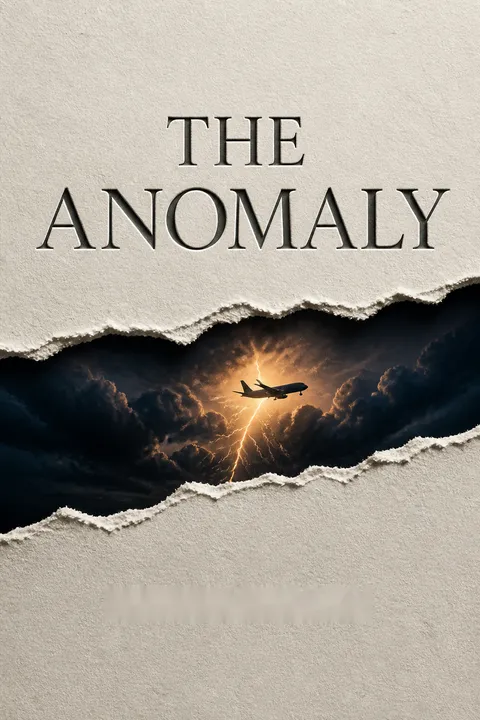
Victor Miesel, a French translator and little-read novelist, has spent years making peace with modest success and failed relationships. During a terrifying transatlantic flight in March, he stops resisting the turbulence and returns to Paris in a state of estrangement from ordinary life. He begins writing uncontrollably, producing a strange, urgent manuscript titled The Anomaly.
On April 22, after sending the completed file to his editor, Victor falls or jumps from his balcony. His editor, Clémence Balmer, publishes the book quickly, and the dead writer becomes a literary sensation. The passengers on the later aircraft include another Victor, who has not lived through these months and does not know the book exists.
Victor’s manuscript becomes a disturbing bridge between authorship and prediction. The version of him who writes it seems to have transformed his disorientation into art, while the living Victor aboard the later flight has no access to that experience. The book’s success also exposes how public attention can arrive only after a person is no longer available to receive it. Clémence’s mixture of grief, professional judgment, and discomfort complicates the usual romantic story of a neglected genius vindicated by death. Here, literary recognition is real, but its timing makes it feel less like justice than a consequence no one can use.
The Storm Repeats
On March 10, Air France Flight 006 crosses the Atlantic through a violent storm that damages its nose and windshield. Its passengers include Victor, the architect André Vannier, film editor Lucie Bogaert, lawyer Joanna Woods, singer Slimboy, and the Kleffman family. The aircraft lands safely in New York, and life continues for its occupants.
Then, on June 24, a damaged Boeing with the same flight number appears over the East Coast and requests help. Its captain, David Markle, reports the same storm, the same crew, and the same passengers. The new aircraft lands at a military base. Its occupants insist that it is still March 10, though the calendar says June.
The anomaly is introduced not as a vision or a theory but as a bureaucratic and physical contradiction: the same aircraft has arrived twice, and both landings have passengers who remember being aboard. The exactness matters. A vague resemblance could be dismissed as fraud; matching bodies, memories, and damage makes denial harder. Yet the two groups are not interchangeable, because one has lived through the intervening months and the other has not. The novel turns a science-fiction premise into a crisis of temporal ownership. Who has the right to call a life original when both versions remember the same beginning?
Protocol Forty-Two
The government grounds the arriving plane at McGuire Air Force Base and confines its passengers in a hangar. Adrian Miller, a Princeton mathematician, is summoned because he helped design Protocol 42 after the September 11 attacks with Tina Wang. The protocol was meant for an event that fit none of their categories, and its activation code had begun as a private joke.
Now DNA tests confirm that the arrivals are exact matches for people already living elsewhere. Soldiers collect their devices, medical staff take samples, and psychologists begin interviews. During a deliberately started fire, one passenger forces an exit, steals a truck, and escapes. Blake has slipped out before authorities can identify him.
Protocol 42 dramatizes the gap between preparedness and comprehension. Adrian and Tina had mapped hundreds of recognizable emergencies, then created a final category for the event that could not be categorized. The joke becomes useful precisely because the official system has no better answer. Yet the response quickly turns people into security problems: their phones are seized, movement restricted, and memories tested as evidence. Blake’s escape shows that even an elaborate apparatus has blind spots, especially when it assumes every threat will behave like a known one. The state can manage the hangar, but it cannot restore a shared account of what is real.
Reality Under Examination
Adrian and Tina gather specialists to consider how the plane crossed from one date to another. Their proposed explanations include a passage through folded space, a biological copying process, and the possibility that the passengers exist inside a computer simulation.
Logician Arch Wesley argues that advanced civilizations could create so many simulated worlds that simulated minds would vastly outnumber original ones. No experiment can easily disprove the idea, since any apparent evidence might itself be part of the system.
The president asks Adrian to explain the crisis to foreign leaders. In Beijing, officials recognize the pattern from another duplicated aircraft, which they have already dismantled. They keep their discovery secret from Washington.
The competing theories do more than offer possible mechanisms. Each rearranges the passengers’ moral status: a wormhole preserves them as travelers, a copying process makes them products, and simulation questions whether there is an original reality at all. Wesley’s argument is especially destabilizing because it cannot be settled by ordinary observation. The Chinese aircraft expands the crisis beyond American control, while the decision to withhold it shows that governments still behave according to familiar strategic instincts even when faced with an unfamiliar universe. The debate exposes a paradox: uncertainty about reality does not suspend power, secrecy, or responsibility.
Faith Faces the Doubles
As the passengers wait in the hangar, officials worry that religious groups will label them demonic or counterfeit. Jamy Pudlowski, a skeptical psychological-operations specialist, convenes Christian, Jewish, Muslim, and Buddhist leaders to ask whether duplicated people possess souls and whether they should be protected.
The meeting produces no shared account of creation, but its participants agree that the arrivals must not be attacked. Meanwhile, the passengers begin recognizing one another and trying to understand why they are being held.
Some organize a legal challenge; children draw and play under supervision; soldiers manage rising anger with food, tents, and diversions. News leaks out, making secrecy increasingly difficult to maintain.
The religious meeting is less a resolution of doctrine than a test of whether doctrine can be made to protect people under pressure. The leaders disagree about creation but converge on restraint, a practical ethic that matters more than metaphysical consensus. Jamy’s questions expose how quickly unfamiliar bodies can be cast as threats, even before anyone understands what produced them. Inside the hangar, ordinary actions such as demanding counsel, entertaining children, and sharing space resist the reduction of the passengers to specimens. The crisis is not only whether a soul can be copied, but whether human communities will recognize moral claims they cannot explain.
André Meets André
André Vannier, a sixty-three-year-old architect, has arrived in New York after dealing with a construction dispute in Mumbai. The man from the June flight watches surveillance footage of his March counterpart beside Lucie, who has not yet ended their relationship. Seeing his own anxious attentions from outside, he recognizes how his need for reassurance helped drive her away.
When the two Andrés finally meet, the March version confirms that Lucie left him and explains what he regrets. He advises his younger counterpart to give her room rather than smothering her with desire. The two men divide their futures pragmatically: the March André will take a new identity and move to the Drôme, while the June André can return to work.
André’s double makes self-knowledge unusually concrete. He does not infer his flaws from memory alone; he watches himself enact them beside the woman he loves, with the benefit of knowing the relationship’s outcome. That knowledge does not make him omniscient or free of pain, but it converts regret into advice. The two men’s decision to separate their lives is also a refusal to treat identical memories as a claim to identical futures. Their encounter suggests that intimacy can be damaged not by a lack of feeling but by feeling made so urgent that it leaves the other person no room to choose.
Slimboy Finds Slimboy
Slimboy, the Nigerian singer whose hit Yaba Girls has transformed his career, is flown from Lagos to London under the promise of meeting Elton John. Instead, MI6 brings him face to face with the version who left Paris in March and missed the months of sudden fame. The two men recognize the same scar and the same memory of Tom, Slimboy’s first lover, who was killed by a mob in Nigeria.
They discuss the fame the March version has gained and the concealment the June version still needs to survive. Rather than compete, they begin composing together and plan to present themselves as Yoruba twins, giving the less established version a safer public identity.
Slimboy’s meeting converts duplication from a threat to a form of mutual shelter. The shared memory of Tom establishes a private truth that neither needs to defend to the other, while their different careers give them something to exchange rather than divide. Fame is not treated as a simple victory: the celebrated version has gained money and reach, yet still hides his sexuality behind a public arrangement. Their plan to claim twinhood uses an existing cultural framework to make an impossible event legible. The scene asks whether identity must be defended through sameness or can instead become a resource shared between people who know exactly what the other has endured.
David Faces His Death
David Markle, the June-flight captain, meets his March counterpart in a Mount Sinai hospital room. The March David lies unconscious and near death from pancreatic cancer diagnosed only weeks after the first landing. His brother Paul, an oncologist, recognizes the returning David’s face and voice, then explains that the June version’s cancer has been detected earlier.
Treatment may give him more time, though no cure is promised. David later meets his wife, Jody, in a hospital garden. She is relieved to see him alive but frightened that the same illness may take him again. She postpones telling their children, unable to make them face their father’s death twice.
David’s reunion makes the anomaly emotionally cruel because it offers a second chance without guaranteeing a different ending. The earlier diagnosis changes the medical timeline, but not the underlying disease, so hope becomes both rational and dangerous. Paul’s expertise cannot protect him from the shock of seeing his brother’s dying body beside a living version. Jody’s response is similarly divided: she recognizes David and loves him, yet his return carries the prospect of renewed loss. The novel refuses the comforting logic that restored time must restore health. A few months of difference can matter enormously without being enough.
Two Joannas, One Future
Joanna Woods, a formidable lawyer, has taken a high-paying defense job with pharmaceutical executive Sean Prior partly to fund treatment for her sister Ellen. After the March landing, she married cartoonist Aby Wasserman and became pregnant. The June Joanna has not shared those months.
When the two women meet in Aby’s Brooklyn studio, the pregnant version’s marriage and future collide with the other’s still-unlived possibilities. Both love Aby, and neither can pretend the other is a stranger. They also know that Ellen’s illness and the Valdeo case have shaped the March Joanna’s choices. Aby cannot divide his love neatly between them, leaving the women to face a conflict no legal precedent can settle.
The two Joannas confront a particularly intimate form of duplication: one is carrying a child and inhabiting a marriage, while the other remains the person who could have entered that life. Their shared memory does not produce shared desire or equal claims. Joanna’s legal training gives her tools for arguing rights, but it cannot make affection divisible or make the circumstances fair. The encounter also complicates the idea that a double is simply an intruder. The June Joanna is not an impostor; she is a legitimate continuation interrupted before the months that changed her counterpart. Their grief comes from recognizing each other as equally real.
Children Name the Impossible
In Paris, Lucie Bogaert’s two versions argue over their son Louis, each insisting that she is his mother and has a right to raise him. Louis proposes using dice to divide the weeks, allowing chance to spare him from choosing between them. In New York, the two Sophias meet under FBI supervision.
The girl who has lived through the intervening months reveals that her father, Clark, abused her during their family’s Paris trip and afterward at home. Her mother, April, learns what happened and is offered help leaving Clark and protecting the children. Betty, Sophia’s revived toad, connects the girls’ memories of Paris and becomes a small, living focus for their distress.
The children respond to duplication with a clarity adults often lack. Louis devises a procedure that preserves his relationship with both mothers without pretending the conflict can be solved by argument. Sophia’s disclosure, by contrast, shows how a child’s dependence can make silence feel like obedience and safety at once. Betty’s return from apparent death offers a modest counter-image to the larger crisis: the toad survives by waiting for water, but Sophia’s trauma requires another person to listen and act. Together, the children’s stories insist that emotional reality is not made less consequential by being difficult to classify.
The Doubles Go Public
After governments begin acknowledging the duplicated passengers, actress Adriana Becker and her counterpart appear together on The Late Show. They explain that both remember the same life and ask viewers not to fear them. The broadcast attracts religious demonstrators who call the young women abominations. Jacob Evans, a violent believer, reaches their car after the show and shoots both Adrianas.
Their deaths are broadcast into a world already struggling with the simulation theory, and reports of suicides, panic, conspiracy claims, and renewed religious fervor follow. Officials launch Operation Hermes, preparing to conceal the passengers’ identities because public exposure has made ordinary life dangerous.
The broadcast tries to make the doubles recognizable through a familiar format: two young women, a shared story, a public appeal. Yet visibility does not guarantee acceptance. The show’s entertainment logic turns their identity into spectacle, while the crowd outside translates uncertainty into a target. Jacob’s violence demonstrates the material cost of treating metaphysical disagreement as permission to harm. The aftermath also gives the authorities a grim justification for secrecy. Operation Hermes may protect the passengers, but it cannot undo the fact that disclosure has already shaped public behavior. The novel makes the demand to be seen collide with the need to survive.
Lives Reassigned
Under Operation Hermes, American and allied authorities erase records and arrange new identities for passengers who fear being recognized. Victor Miesel, now alive, returns to France and discovers that the book written by his dead counterpart has become an international success. He keeps both red Lego bricks, then meets Anne Vasseur, the woman he once failed to find after a translation conference.
Joanna leaves Aby and the pregnant Joanna a letter before taking a new identity. André settles into a separate life, while the two Lucies use Louis’s dice plan to share his care. Slimboy and his counterpart turn their shared past into music. Blake remains unlocated, moving through the upheaval without public scrutiny.
The aftermath offers no universal rule for what doubles should do. Some choose separation because proximity would turn love into rivalry; others preserve a relationship by inventing a practical structure around it. Victor’s paired bricks make the problem tangible: the objects have equal histories, and he cannot identify an original, yet together they broaden his sense of possibility. Joanna’s departure is painful but chosen, while Louis’s system gives his mothers a way to remain present without forcing a winner. These responses resist the fantasy that a single discovery should produce a single moral answer. The survivors build workable lives from unequal options.
The Missile and the Pulse
By October, David Markle’s cancer has returned to its final stage, and his wife and brother watch him die again. Other lives have begun to settle: the Slimboys perform together, Joanna prepares for her daughter’s birth, and André builds a new relationship. Then another Air France 006 appears over the Atlantic, carrying the same crew and passengers.
The American president orders a fighter jet to destroy it rather than allow a third landing. As the missile closes in, a faint vibration passes through the world. The novel does not show whether the plane is struck or explain the pulse; its final image breaks apart mid-description, leaving both the political decision and the underlying reality unresolved.
The final return of Flight 006 turns the anomaly from a crisis to a pattern, and the president’s order reveals how quickly uncertainty can be answered with force. His decision may prevent another containment emergency, but it also risks destroying people who have already been duplicated and detained. The worldwide pulse interrupts that calculation without explaining itself. By ending in sensory disruption and broken language, the novel denies readers the confirmation that its characters have been seeking. The unresolved ending is not merely a puzzle box: it tests whether people can act responsibly without knowing the structure of their world or the consequences of their choices.
Analysis
The Anomaly begins with a material impossibility and uses it to unsettle the categories people rely on to organize ordinary life. The duplicated aircraft is not merely a puzzle about time or technology. It produces competing claims to the same relationships, memories, bodies, and legal identities. The March and June counterparts share a past but not an equal present, so the novel asks whether continuity is something a person owns or something communities recognize.
Its treatment of science is deliberately double-edged. The researchers offer explanations, but no theory resolves the practical crisis, and the simulation hypothesis cannot be cleanly tested from inside the world it describes. Yet uncertainty does not excuse inaction. Patients still need care, children need protection, partners need boundaries, and governments remain answerable for decisions made under pressure. The book’s most consequential question is therefore ethical: how should people act when certainty is unavailable but consequences are not?
The doubles also expose the limits of possession. Love does not grant exclusive ownership of a shared past, and parenthood cannot be reduced to a document or a biological claim. Some characters choose distance to prevent affection from becoming a contest; others invent rules that let relationships continue. These solutions are imperfect, but they show that identity is negotiated through care as well as memory.
Public life offers a darker counterpoint. Governments try to contain the passengers, religious movements turn ambiguity into doctrine, and television converts private terror into spectacle. The shooting of the two Adrianas shows how quickly the demand for an explanation can become a demand for a target. The novel ends without revealing whether its world is real, simulated, or about to change again. That refusal keeps attention on what can be known: people suffer, choose, love, and harm one another, and those actions matter even when the universe supplies no final answer.
Review Summary
The Anomaly has garnered mixed reviews, with praise for its inventive premise and philosophical themes. Many readers found the story engaging and thought-provoking, exploring concepts of reality, identity, and existence. Critics appreciated the author's humor and clever writing style. However, some felt the character development was lacking and the ending unsatisfying. The book's structure and pacing were points of contention, with some enjoying the multiple perspectives while others found them confusing. Overall, it's seen as an ambitious and unique work of science fiction.
Characters
Blake
A methodical contract killerBlake is a highly organized assassin who treats violence as skilled work rather than an outlet for anger. As a child, he showed little emotional response to an animal’s death, then discovered that he could shoot with unusual accuracy. He is patient, observant, and inventive, building elaborate precautions around each contract. Under the name Joe, he also runs a vegetarian-food business and has a wife and two children. That domestic life is not simply an alibi; it represents a version of himself he carefully protects. Blake’s central psychological strategy is compartmentalization, the belief that sharply divided identities can remain safely separate.
Victor Miesel
The overlooked literary mindVictor is a French novelist and translator whose intelligence is matched by self-deprecating humor and a tendency to observe himself from a distance. He writes in several languages, makes a modest living translating commercial fiction, and has learned not to expect broad recognition for his own books. A red Lego brick carried in his pocket connects him to a childhood memory of his father and an unfinished model. Victor’s romantic life is marked by hesitation: he can recognize an attachment without knowing how to approach it. He is drawn to the strange and the human in equal measure, often using jokes to keep disappointment from becoming a final verdict.
Lucie Bogaert
A guarded film editorLucie is a gifted film editor whose close attention to framing and rhythm reflects the control she seeks in her emotional life. A single mother, she is devoted to her son Louis and protective of the independence she built after a harmful past relationship. She is drawn to André’s gentleness and humor, yet becomes wary when his affection turns insistent. Lucie dislikes being treated as an image or prize and wants desire to leave room for her own pace. Her reserve can seem cold, but it also functions as self-protection and as a demand to be encountered as a whole person rather than an idealized body.
André Vannier
An anxious architect in loveAndré is a successful architect whose work reflects his preference for elegant structures stripped of unnecessary ornament. In private, he is more vulnerable than his professional confidence suggests. He falls deeply for Lucie, a much younger film editor, and wants closeness to confirm that their relationship is secure. His fear of aging and loss can make his tenderness feel pressuring to the person he loves. André is also observant and capable of humor, with a taste for travel, old memories, and unconventional details. His emotional challenge is learning that intensity alone does not create intimacy, and that another person’s freedom cannot be replaced by reassurance.
David Markle
A pilot facing uncertaintyDavid is an experienced Air France captain, a husband to Jody, and a father to Grace and Benjamin. He is practical and warm, with an active family life that includes jokes, travel, and squash with his brother Paul. He tends to think in concrete terms, but an interest in small details, such as a struggling plant, reveals a reflective side. David’s bond with Paul is especially close, shaped by childhood memories and adult trust. He depends on the people around him without mistaking that dependence for weakness. His identity is grounded in family and routine, which makes sudden uncertainty about time and health especially destabilizing.
Joanna Woods
A relentless courtroom strategistJoanna is a brilliant Black lawyer who has earned her place in an elite firm through sharp argument and an unwillingness to flatter powerful clients. Her ambition is partly rooted in childhood experiences of racism and class contempt, which made professional success a form of self-definition. She is fiercely loyal to her sister Ellen and willing to make difficult compromises to secure her care. With Aby, she discovers a tenderness that sits uneasily beside her instinct to analyze and control. Joanna’s moral life is not simple: she can see the human costs of corporate power while still working within it to protect the people she loves.
Adrian Miller
A shy mathematician on callAdrian is a Princeton probability expert whose career began with mathematical work on emergency decision systems. He is awkward in social settings, quick to calculate risks, and inclined to turn even romantic uncertainty into a probability problem. Beneath his self-consciousness is a sincere capacity for attachment, particularly to his colleague Meredith. Adrian’s modesty contrasts with the authority suddenly placed upon him when a contingency protocol he helped write is activated. He approaches extraordinary events with a scientist’s caution, but his emotional life repeatedly pushes him beyond calculation. His story joins technical responsibility to the ordinary need for courage and connection.
Meredith Harper
A sharp-tongued topologistMeredith is a British mathematician specializing in topology, newly arrived at Princeton and dissatisfied with the provincial limits she finds there. Her wit is abrasive, her intelligence formidable, and her candor often masks loneliness. She can take control of a conversation or a room, yet is also willing to show desire plainly when she trusts someone. The possibility that reality is simulated provokes her into philosophical anger because it threatens not only certainty but the meaning of pain, love, and choice. Meredith does not settle for easy reassurance. She challenges abstractions until they touch the actual lives people are trying to lead.
Slimboy
A guarded Nigerian music starSlimboy, born Femi Ahmed Kaduna, is a Nigerian singer whose music draws on the streets and working women of Lagos. His success grows from a song honoring his mother and neighborhood, rather than the lavish image expected of a rising star. He is charismatic in public but guarded about his attraction to men, living in a society where disclosure can bring grave danger. The memory of his first love, Tom, remains central to his emotional life. Slimboy is neither simply ashamed nor fearless; he navigates survival through performance, compromise, and art, searching for a way to make music that does not erase the truth of his experience.
Sophia Kleffman
A curious child and naturalistSophia is an intelligent, observant child who takes a serious interest in animals, especially her small toad Betty. She reads about amphibians, gives Betty a carefully arranged habitat, and notices details adults overlook. Her scientific curiosity is matched by a strong need for safety and affection. Sophia is close to her mother April and brother Liam, while her father’s military life shapes the atmosphere of the household. She often approaches distress through concrete questions and careful observation. Her attachment to Betty reflects her wish to protect something vulnerable, and her childhood perspective reveals how much adults can fail to notice when they are occupied with their own crises.
April Kleffman
A mother under strainApril is Clark’s wife and the mother of Liam and Sophia. She once remembered Clark as a shy, affectionate young man, but years of military life have made their home more tense. She takes pride in Sophia’s intelligence while feeling the complicated envy of a parent watching a child possess freedoms she herself lacked. April is practical and attentive, often managing the family’s daily needs while absorbing her husband’s moods. Her history of self-effacement makes it difficult for her to trust her own perceptions, especially when family loyalty is involved.
Clark Kleffman
A soldier shaped by angerClark is an American soldier whose military service gives him structure, status, and a sense of purpose he struggled to find in civilian work. Combat has left him bitter and distrustful, and he carries his frustration into family life. He prizes authority and sees ordinary domestic demands as a failure to appreciate what he has endured. His behavior can be domineering, particularly when he feels ignored or disrespected. Clark’s story exposes how institutions may offer identity and discipline without helping someone understand the damage carried home from war.
Jody Markle
A wife holding her family togetherJody is David’s wife and the mother of their two children. She is a German-language teacher whose steady care for her family becomes especially visible during David’s illness. Jody is emotionally perceptive but not sentimental; she understands that love cannot make frightening realities disappear. She tries to protect Grace and Benjamin from adult pain while confronting her own fear. Her strength is expressed less through speeches than through practical acts of presence, including staying close when there are few useful things left to do.
Aby Wasserman
A cartoonist with deep loyaltiesAby is a newspaper cartoonist and Joanna’s partner. He is warm, earnest, and comfortable using humor to puncture pomposity, but his tenderness can leave him uncertain when a crisis has no fair answer. His Jewish family history is carried in a tattoo that honors his grandfather and the hope of rebuilding life after persecution. Aby values connection and loyalty, yet he cannot turn affection into a clean solution when the people he loves face conflicting needs.
Louis
A boy who invents fair rulesLouis is Lucie’s intelligent, imaginative son. He enjoys fantasy role-playing games, riddles, and spending time with André, whose attention gives him room to explore ideas. Louis is perceptive about adult tension without being consumed by it. When faced with a choice no child should have to make, he searches for a procedure that can protect his relationships and reduce the burden of deciding. His humor is not a denial of difficulty; it is one of the ways he thinks through it.
Paul Markle
A doctor and devoted brotherPaul is David’s brother and a respected oncologist. His medical training makes him disciplined about evidence, but family history repeatedly breaks through his professional composure. He knows how to explain treatment and probability, yet he cannot stop hoping that knowledge might somehow protect someone he loves. Paul’s combination of expertise and helplessness gives the novel one of its clearest portraits of care: he cannot control the outcome, but he continues to accompany his brother through it.
Tina Wang
A mathematician who plans aheadTina is an inventive mathematician who worked with Adrian on crisis-response models after September 11. She is intellectually confident, pragmatic, and more willing than Adrian to imagine edge cases that others dismiss. Her work on Protocol 42 shows both a scientific habit of anticipating failure and a dry sense of humor. Tina approaches the impossible without pretending that expertise guarantees an answer.
Patrick Silveria
A general commanding the responseGeneral Silveria is a senior military officer tasked with coordinating the agencies confronting the anomaly. He is accustomed to decisions backed by hierarchy and procedure, but the crisis forces him to work alongside scientists whose uncertainty cannot be commanded away. Beneath his formidable public bearing are memories of family, war, and roads not taken. He is capable of reflection, though the responsibilities of command keep pulling him toward control.
Jamy Pudlowski
A skeptical crisis psychologistJamy is a psychological-operations specialist who studies religious belief and group behavior. Raised between Catholic and Jewish family traditions, she chose not to define herself by either, developing a sharp skepticism about certainty. She is skilled at asking questions that help institutions anticipate public reactions, but her work does not make her indifferent to individuals. Jamy is especially alert to the danger that frightened people may turn an unexplained event into permission to persecute others.
Clémence Balmer
Victor’s perceptive editorClémence is Victor’s editor and one of the few people who consistently values his work. She is devoted to publishing, quick to recognize a manuscript’s force, and practical about the commercial realities surrounding books. Her loyalty to Victor is personal as well as professional, though she is uneasy when his posthumous success becomes a public spectacle. Clémence knows how to organize a literary life for others, but she cannot control what recognition means to the person who receives it.
Ellen
Joanna’s vulnerable younger sisterEllen is Joanna’s younger sister, a student living with a serious liver disease. Her need for expensive treatment shapes Joanna’s professional choices and gives her sister’s ambition an immediate, loving purpose.
Jacob Evans
A zealot seeking divine purposeJacob is a religious extremist who interprets unfamiliar events through apocalyptic certainty. His belief gives violence the false appearance of duty, making him a warning about conviction severed from empathy.
Adriana Becker
A young actress facing the impossibleAdriana is a young actor who performs in local theater and is returning from Europe when the anomaly separates two versions of her life. She is close to her family and still forming her adult identity. Her ordinary ambitions make the scale of the event especially striking: she is not a chosen figure, but a young woman trying to understand a sudden change she did not cause.
Sean Prior
A powerful pharmaceutical executiveSean Prior leads the pharmaceutical company Valdeo and hires Joanna as its lawyer. He is socially polished, politically astute, and confident that money and influence can shape the terms of any dispute. His cultivated friendliness carries the weight of unequal power.
Plot Devices
The duplicated flight
A physical break in timeAir France Flight 006 encounters a violent storm in March, lands, and then appears again in June with the same damage, crew, passengers, memories, and DNA. The returning aircraft does not simply resemble the earlier plane; it carries people whose lives have diverged because one group experienced the months between landings and the other did not. This device creates the novel’s central practical problem, forcing families, governments, scientists, and passengers to decide how two equally convincing versions of a person can occupy one shared world.
Protocol 42
A contingency for the unclassifiedAdrian Miller and Tina Wang helped design a large set of responses to aviation emergencies after September 11. When officials asked what to do about an event their system could not anticipate, the mathematicians added a final protocol and named themselves as its scientific supervisors. Its activation phrase began as a joke, and the phones assigned to the two researchers had never rung before the duplicated aircraft arrived. Protocol 42 supplies the government with a first structure for response, but it cannot tell officials what the event means or how much authority they should exercise over the passengers.
March and June selves
Two valid lives, one pastThe passengers are classified by the month in which their plane landed. March versions have lived through the intervening months, while June versions arrive with memories that stop at the original flight. Each pair shares a past but may differ in relationships, health, work, and family. The labels help investigators track people, yet they cannot establish which version is more authentic. The paired lives turn abstract questions about identity into concrete disputes over partners, children, jobs, medical care, and personal history.
The simulation hypothesis
A theory no test can settleAmong the scientists’ possible explanations is the idea that human beings inhabit a simulation created by a vastly more advanced intelligence. Arch Wesley argues that simulated civilizations could outnumber original ones, making simulated existence statistically likely. The idea cannot be easily disproved because any apparent experiment might itself be represented within the simulation. It becomes a public and personal crisis rather than a confirmed answer: people must still love, grieve, make choices, and bear consequences even when the foundation of reality is uncertain.
The red Lego brick
A memory made portableVictor carries a small red Lego brick connected to his childhood and the loss of his father. It serves as a private reminder of memory and loyalty, not a magical object. When Victor encounters the brick carried by his other self, he can no longer tell which one belonged to which life. Putting them together gives him a modest but meaningful sense of possibility. The bricks make the novel’s questions about originals and copies tactile: identical objects can hold different histories, even when no one can reliably distinguish them.
Download PDF
Download EPUB
.epub digital book format is ideal for reading ebooks on phones, tablets, and e-readers.








