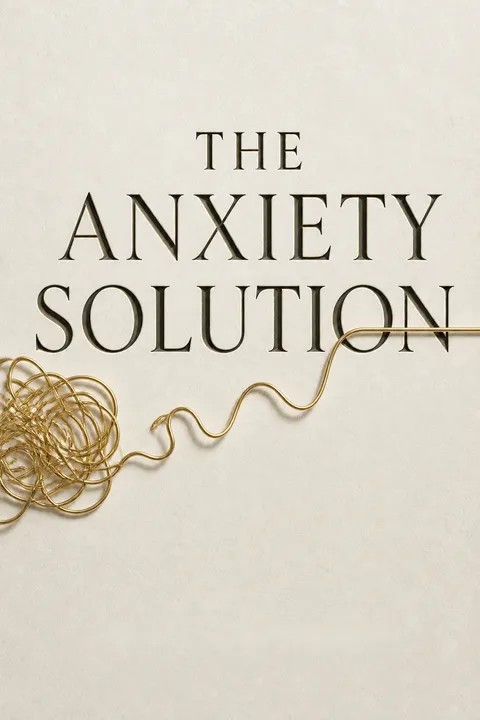


Key Takeaways
Treat anxiety as a retrainable alarm, not your identity
A defense misfires. Anxiety is a normal response designed to protect the body. The fight-or-flight response is the burst of physical readiness triggered when the brain detects danger. The trouble is that the alarm can react to a presentation, a crowded train, or a deadline as if survival were at stake. Adrenaline can produce a pounding heart, tight chest, dizziness, and dread, all of which can feel frightening without proving that danger is present.
Get help when needed. Brotheridge recalls her first panic attack at fifteen and the years of fearing that her own body had become unsafe. She argues that anxiety is not a fixed personality trait. If worry or panic disrupts daily life, the book advises seeing a doctor and considering professional support rather than self-diagnosing.
The alarm metaphor helps separate a person from a state: a nervous system can become overprotective without the person being weak or broken. That distinction can reduce shame and make change seem possible. It also needs a safety boundary. Chest symptoms and dizziness can have causes other than anxiety, so an explanation based on adrenaline should not substitute for medical assessment, especially when symptoms are new or unusual. The book is strongest when it frames self-help as a companion to professional care, not a replacement.
Schedule calm before work fills every gap
Burnout clarified the priority. Brotheridge describes working full time while training as a hypnotherapist and building a practice in the evenings. She became exhausted, cried after work, and developed irritable bowel symptoms. A yoga-studio message prompted a change in priorities: peace of mind could no longer be postponed until every task was done.
Make restoration concrete. She left her NHS job, made meditation and walks regular, wrote to process her thoughts, and eased up on self-imposed pressure. She reports feeling substantially better after about six months, with work improving rather than collapsing. The lesson is not that everyone should quit a job. It is that recovery needs protected time, and a life organized entirely around proving worth through productivity can undermine both wellbeing and the work itself.
This story challenges the assumption that rest is a prize earned after perfect performance. In occupational health, recovery is treated as part of sustainable effort, not its opposite. The practical question is which demands can be reduced, delegated, or bounded before exhaustion dictates the change. Still, individual routines cannot solve every source of distress. Financial insecurity, care responsibilities, and harmful workplaces are real constraints. The useful principle is to protect available recovery while also recognizing when the environment itself needs to change.
Read anxiety as a clue, then check what actually needs changing
Look beneath the alarm. Brotheridge proposes treating anxiety as a possible signal of an unmet need, a painful belief, or a situation that calls for action. Her client Annabel worked constantly to feel worthy; examining the pattern helped her recognize a need for rest and firmer boundaries. The aim is curiosity rather than panic about the symptoms.
A clue is not a verdict. Another client, Claire, had interpreted her father leaving when she was eight as evidence that she was unlovable. Guided reflection helped her reconsider that belief and comfort her younger self. Such exercises can reveal how old experiences shape present fears, but not every anxious episode has a clear psychological message. The book's approach is to explore possible meanings, then choose a useful response rather than assume one cause.
Curiosity can interrupt the secondary fear that often builds around anxiety: fear of feeling anxious. It also gives a person a route toward practical questions about workload, boundaries, and learned beliefs. The caution is important. A symptom is evidence of distress, not a reliable decoding device with one hidden answer. Biological, social, and situational factors can all contribute. Reflection is most helpful when it expands options, not when it pressures someone to uncover a trauma or assign blame for an experience.
Build self-worth beyond productivity, appearance, and other people's approval
Worth is not a performance review. The book distinguishes self-esteem, a person's sense of value, from confidence in a particular ability. Brotheridge argues that healthy self-esteem includes accepting imperfections, rather than needing to feel exceptional. She suggests listing genuine strengths, recalling challenges already handled, and using a friend-filter: would a trusted friend speak to you as harshly as your inner critic does?
Choose your own measures. Appearance and achievement can become unstable measures of worth. The book cites body-image research and describes how idealized media can intensify dissatisfaction. It recommends noticing which relationships and media habits build self-respect, and setting boundaries where needed. Goals rooted in interest, strength, or enjoyment are less dependent on applause than goals pursued mainly to win approval.
Self-compassion is not self-congratulation or an excuse to avoid responsibility. It is a more accurate and less punitive way to respond to mistakes, which can make repair and learning easier. The distinction between intrinsic aims and approval-seeking also connects wellbeing to autonomy: a goal is more sustaining when it reflects a person's values. Yet appearance pressures are not merely private thoughts. Advertising, discrimination, and narrow beauty standards help shape them, so personal reframing works best alongside a critical view of the culture producing the comparison.
Curate your inputs before blaming yourself for feeling overwhelmed
The feed is selective. The book describes how social platforms expose users to carefully chosen images of bodies, holidays, relationships, and career success, encouraging comparison with lives that are not shown in full. It reports that a 2014 UK survey found 22 percent of women felt anxious most of the time, and cites research suggesting women experience anxiety more often than men. Gendered expectations and economic pressures matter too, so anxiety should not be treated as an individual failure.
Test the effect. Brotheridge says she sometimes noticed faster thoughts when she checked her phone more often. She recommends delaying email, unfollowing accounts that trigger distress, and trying a short break from social media to observe the difference. The book also cites a Danish study in which people who stopped using Facebook for a week reported less worry and stress.
This is a useful shift from asking only what is wrong with a person to asking what repeatedly captures attention. Digital platforms are designed to invite return visits, while curated images make comparison unusually one-sided. A limited experiment, such as changing notifications or taking a break, can reveal whether a particular habit affects mood. The evidence does not mean social media harms every user in the same way, nor does it explain all anxiety. Personal boundaries help, but structural and social pressures still deserve attention.
Choose a good-enough option, then adapt to what happens
More options can stall action. In a study described in the book, shoppers offered twenty-four jam varieties were less likely to buy than shoppers offered six. Too many alternatives can fuel the search for a perfect choice and make settling on a reasonable one feel like failure. Brotheridge recommends asking whether an option is good enough, simplifying routine decisions, and remembering that many choices can be adjusted.
Decisions are not prophecies. A client became distressed trying to design a flawless summer trip. The book argues that no amount of analysis can control weather or every other variable. It suggests making important choices when rested, taking small steps to gather experience, and judging a decision partly by how one responds to its outcome. Some decisions are consequential and hard to reverse, so the point is not to be careless but to match deliberation to the stakes.
The jam example illustrates choice overload, but its lesson is not that fewer options always produce better decisions. The cost of a mistake differs greatly between choosing lunch and choosing medical care, a home, or a career. A useful decision rule is to set a stopping point, identify the few criteria that matter most, and spend more effort where the consequences warrant it. For low-stakes choices, a good-enough threshold can preserve attention for decisions that genuinely need it.
Face fear in steps, so avoidance stops shrinking your life
Practice safety gradually. Exposure therapy means approaching a feared situation in manageable steps so experience can challenge the brain's expectation of danger. Brotheridge recounts returning to snowboarding after an earlier frightening ski trip. Starting on gentle slopes and tolerating discomfort helped her learn that falling was survivable and that her skills could improve.
Allow the feeling. She also recommends not struggling against every anxious sensation. During a panic episode, understanding that adrenaline can cause intense symptoms may help a person let them rise and pass. Anxious reappraisal, a technique discussed in the book, means interpreting the physical surge of nerves as excitement before a performance instead of trying to force calm. Exposure should be gradual and safe; severe phobias or panic may call for a qualified therapist's guidance.
Avoidance can bring immediate relief while teaching the brain that the feared situation must have been dangerous. Gradual approach offers a different lesson through direct experience, a principle central to behavioral treatments for anxiety. The quality of the steps matters: they should be challenging but manageable, not a forced plunge into overwhelming fear. Reframing arousal as excitement can help in performance settings, but it is not a universal solution. Sometimes the most useful response is to accept nervousness and proceed without needing to rename it.
Give worry an appointment instead of letting it run the day
Contain the loop. Worry time is a planned daily period for writing down concerns, rather than trying to solve them whenever they appear. Brotheridge recommends noting worries during the day and returning to them at the scheduled time. This can reduce worry about worrying and make repeated themes easier to recognize.
Sort concern from action. During that period, separate problems that allow action from events outside personal control. For an actionable concern, identify a next step or make a short plan. For a worry with no available action, writing it down and answering it from a calmer perspective may help put it in context. Brotheridge describes using a budget and income ideas when money worries were circling. The technique does not guarantee worries vanish; it gives attention a structure and can turn some rumination into problem-solving.
Scheduled worry resembles a practical form of cognitive distancing: a thought is recorded and revisited, rather than treated as an emergency that must be obeyed immediately. The distinction between solvable and unsolvable concerns is especially valuable because endless analysis cannot control another person's choices or future events. Some people may find postponing thoughts frustrating, particularly when anxiety is severe or intrusive. In that case, the exercise can be adapted with a clinician rather than treated as a test of willpower.
Practice attention and relaxation before anxiety reaches a peak
Train the return. Mindfulness meditation means deliberately paying attention to present experience, such as the breath, and gently returning attention when the mind wanders. The book presents meditation as regular practice, not merely an emergency tool. Brotheridge found ten minutes a day helpful, while also emphasizing that no special posture or empty mind is required.
Use small resets. Her toolkit includes breathing in for a count of three and out for five, a body scan, guided imagery, gratitude notes, and a short screen-free period before bed. These techniques offer different ways to interrupt mental autopilot and settle physical tension. A wandering mind is expected, not proof of failure. The book presents meditation research as promising, including studies on anxiety and brain changes, but the practical claim is modest: repeated attention practice may support calmer responses.
Meditation is often misunderstood as an effort to eliminate thought. Its more defensible skill is noticing attention drift and returning without escalating into self-criticism. That practice resembles training a mental habit, and it can complement therapy or medication when needed. The book's neuroscience language helps make the practice feel concrete, but brain changes are not a simple guarantee of symptom relief for every individual. A short, repeatable practice is more useful than turning meditation itself into another standard to fail.
Move outdoors to build calm, competence, and confidence
Movement changes the state. Brotheridge recommends exercise as a support for anxiety, not a punishment for an imperfect body. The book cites NHS guidance of thirty minutes of moderate activity on five days each week, while advising beginners to start smaller. Walking, cycling, swimming, yoga, and team sports are all offered as options; the best activity is one a person can sustain and enjoy.
Small wins matter. Exercise can draw attention out of repetitive thoughts and give practice tolerating bodily sensations such as a faster heartbeat. The book calls the confidence gained from successfully handling a challenge self-efficacy. A walk with a friend or movement in a park can combine physical activity, social connection, and time in nature. The target is consistency, not an intense routine that adds pressure.
Movement is a particularly accessible form of behavioral activation: action can precede motivation, and a modest activity can create evidence that the body is capable. It also gives anxiety-prone people a chance to experience a raised heart rate in a safe context. That benefit should not be oversold as a replacement for care, and not everyone has equal access to green space, safe streets, or exercise facilities. Flexible forms of movement make the principle more inclusive than a single fitness ideal.
Eat for steadier moods, not as a cure for anxiety
Make food supportive, not moral. The book recommends slowing down at meals, tasting food without screens, and avoiding cycles of guilt around eating. It suggests noticing whether caffeine, alcohol, or sugary foods intensify symptoms for an individual. Caffeine can produce sensations such as jitters and a racing heart; alcohol may temporarily ease social fear but leave some people more anxious afterward.
Prefer small experiments. Brotheridge discusses regular meals, less reliance on highly refined foods, and foods such as vegetables, nuts, berries, and oily fish. She also describes possible links among gut health, stress, and mood, while advising readers with persistent digestive symptoms to consult a doctor. Restrictive approaches, including a low-FODMAP diet, should be guided by a dietitian. Food changes may support wellbeing, but the book does not present them as a standalone treatment.
The most durable nutritional advice here is observational rather than prescriptive: track how particular habits affect sleep, energy, digestion, and anxiety, then make measured adjustments. That avoids turning eating into another arena for perfectionism. The gut-brain connection is an active area of research, but mechanistic plausibility does not establish that a specific food or supplement will treat an anxiety disorder. Medical care remains important, especially when symptoms are persistent, severe, or linked to significant digestive problems.
Analysis
The Anxiety Solution combines memoir, popular psychology, and a practical self-help manual. Its narrative engine is Brotheridge's own movement from a frightened teenager who interpreted panic as catastrophe to an adult who changed her priorities, sought support, and tested tools in daily life. The personal stories make abstract advice legible: a workaholic's exhaustion becomes a question about boundaries, while the snowboarder's repeated falls illustrate learning through approach rather than avoidance.
The book's central contribution is its insistence that anxiety is neither a moral defect nor a permanent identity. It offers readers several levels of intervention: investigate beliefs and unmet needs, practice self-compassion, reduce avoidable stressors, make decisions with less perfectionism, and use meditation, movement, and practical routines. This breadth makes the book approachable, especially for readers who need more than one route into change. Its recurring emphasis on professional help also matters because self-help cannot assess every cause of distress.
The same breadth creates a limitation. The book moves among psychological insight, lifestyle guidance, neuroscience, and nutrition, fields with different evidentiary standards. Some explanations, especially claims about supplements, gut bacteria, or brain change, can sound more conclusive than the underlying research warrants. Its advice is most convincing when framed as experimentation and support, not as a biological fix. Likewise, the focus on women reflects the author's intended audience and the pressures she discusses, but anxiety affects people across genders and is shaped by more than individual coping habits.
The strongest synthesis is practical rather than curative: build a life with more recovery, less avoidable comparison, and repeated evidence that discomfort can be tolerated. Anxiety may remain a normal human emotion, but its presence need not dictate every choice. The book's tools are most valuable when used flexibly, with clinical care added when symptoms interfere with daily life.
Review Summary
The Anxiety Solution receives mixed reviews. Some readers find it helpful, especially those new to self-help books, praising its easy-to-understand approach and practical tips. Others criticize it for lacking depth and originality, feeling it rehashes common advice. The book's focus on women and casual tone appeals to some but alienates others. Readers appreciate the author's personal experiences but note the content can be basic for those familiar with anxiety literature. Overall, it's seen as a good starting point for anxiety management, though experienced readers may find little new information.
People Also Read





Glossary
fight-or-flight response
automatic threat responseThe body's rapid preparation to escape or confront a perceived threat. In the book, this response includes adrenaline release and physical changes such as a faster heartbeat and muscle readiness. It is useful in genuine danger, but can also activate in situations that are stressful rather than life-threatening, producing symptoms associated with anxiety or panic.
worry time
scheduled worry periodA planned daily period, suggested as about twenty minutes, for writing down and examining worries. Concerns that arise at other times are noted and postponed until this slot. The person can then distinguish worries that allow action from those outside personal control, and make a plan where possible.
exposure therapy
gradual approach to fearA psychological approach in which a person gradually encounters a feared situation rather than continually avoiding it. Repeated, manageable experiences can help update the expectation that the situation is dangerous. The book recommends small steps and notes that professional guidance may be appropriate for severe phobias or anxiety.
anxious reappraisal
relabel nerves as excitementA technique described in the book for performance situations. Instead of trying to suppress anxious arousal or force the body to calm down, a person interprets sensations such as a racing heart as excitement. The approach relies on the physical overlap between anxiety and excitement and may make a more positive interpretation easier.
mindfulness meditation
attention to present experienceA meditation practice that directs attention to present experience, often the sensations of breathing. When attention wanders, the practitioner notices this and gently returns to the chosen focus. The book presents it as a repeatable exercise in awareness, not as a requirement to stop thinking or achieve a special state.
self-efficacy
belief in one's capabilityA term from psychologist Albert Bandura referring to a person's belief that they can carry out actions needed to handle a task or challenge. The book uses it for the confidence gained by completing manageable activities, such as learning a movement or attending an exercise class, and argues that such experiences can support broader self-belief.
comparisonitis
habitual harmful comparisonThe book's informal name for repeatedly comparing one's appearance, achievements, or lifestyle with other people, especially through curated social media. The habit directs attention toward perceived shortcomings and can intensify self-doubt. Suggested responses include reviewing what is genuinely desired, limiting triggering media, and focusing on personal progress.
3-5 breathing technique
longer-exhale breathingA simple relaxation exercise in which a person breathes in for a count of three and out for a count of five, directing the breath toward the abdomen. The longer exhale is intended to support a shift away from a heightened alarm state. The counting also gives attention a steady focus during a period of anxiety.
FAQ
What's "The Anxiety Solution: A Quieter Mind, a Calmer You" about?
- Author's Background: Written by Chloe Brotheridge, a clinical hypnotherapist and nutritionist, the book draws from her personal experiences with anxiety and her professional expertise in helping others manage it.
- Purpose of the Book: It aims to provide readers with practical tools and techniques to manage anxiety, boost self-esteem, and achieve a sense of control and inner peace.
- Content Overview: The book covers various aspects of anxiety, including its causes, effects, and solutions, with chapters dedicated to self-esteem, decision-making, relaxation, and diet.
- Target Audience: It is particularly aimed at women, as statistics show they are more prone to anxiety, but the advice is applicable to anyone seeking to manage anxiety.
Why should I read "The Anxiety Solution"?
- Practical Techniques: The book offers actionable strategies and exercises to help manage anxiety, making it a practical guide for those seeking relief.
- Personal Insights: Chloe Brotheridge shares her personal journey with anxiety, providing relatable insights and encouragement for readers.
- Holistic Approach: It covers a wide range of topics, from diet and exercise to meditation and self-compassion, offering a comprehensive approach to anxiety management.
- Supportive Community: The book encourages joining a supportive community, such as the "Calmer You" Facebook group, to share experiences and gain support.
What are the key takeaways of "The Anxiety Solution"?
- Anxiety as a Teacher: The book suggests viewing anxiety as a messenger that can teach us about unmet needs or unresolved issues.
- Self-Care Importance: Emphasizes the importance of self-care and self-compassion in managing anxiety and improving mental health.
- Mindfulness and Meditation: Highlights the benefits of mindfulness and meditation in calming the mind and reducing anxiety.
- Diet and Lifestyle: Discusses the impact of diet and lifestyle choices on anxiety, advocating for a balanced diet and regular exercise.
How does Chloe Brotheridge suggest boosting self-esteem in "The Anxiety Solution"?
- Self-Compassion: Encourages practicing self-compassion by treating oneself with the same kindness and understanding as one would a friend.
- Affirmations: Recommends using positive affirmations to counter negative self-talk and build a healthier self-image.
- Focus on Strengths: Advises focusing on personal strengths and achievements to reinforce a sense of self-worth.
- Healthy Relationships: Suggests auditing relationships to ensure they are supportive and uplifting, and setting boundaries where necessary.
What are the best quotes from "The Anxiety Solution" and what do they mean?
- "When you change the way you look at things, the things you look at change." This quote emphasizes the power of perspective in transforming one's experience of anxiety.
- "Set peace of mind as your highest priority and organize your life around it." It suggests prioritizing mental well-being over external achievements or pressures.
- "No matter what happens, I’ll handle it." This mantra encourages confidence in one's ability to cope with challenges, reducing fear of the unknown.
- "You are a one-time event in the universe." A reminder of each person's unique value and the importance of self-acceptance.
How does "The Anxiety Solution" address decision-making anxiety?
- Good Enough is Enough: Encourages settling for "good enough" rather than seeking perfection, which can lead to decision paralysis.
- Trust Your Gut: Suggests listening to intuition as a valid form of decision-making, often as effective as analytical reasoning.
- Action Over Analysis: Promotes taking action to gain clarity and confidence, rather than overthinking and delaying decisions.
- Plan for the Worst: Recommends mentally rehearsing worst-case scenarios to feel prepared and reduce fear of making mistakes.
What role does diet play in managing anxiety according to "The Anxiety Solution"?
- Gut Health: Emphasizes the connection between gut health and mental health, suggesting probiotics and prebiotics to support a healthy gut.
- Anti-Inflammatory Foods: Recommends foods that reduce inflammation, such as leafy greens and omega-3-rich fish, to support brain health.
- Limit Sugar and Caffeine: Advises reducing sugar and caffeine intake to prevent blood sugar spikes and crashes that can exacerbate anxiety.
- Mindful Eating: Encourages eating mindfully to enhance digestion and promote a sense of calm and satisfaction.
How does Chloe Brotheridge suggest using meditation in "The Anxiety Solution"?
- Daily Practice: Recommends incorporating meditation into daily routines as a way to calm the mind and reduce anxiety.
- Mindfulness Meditation: Focuses on breath awareness to bring attention to the present moment and reduce overthinking.
- Guided Meditation: Suggests using guided meditations to help focus the mind and induce relaxation.
- Transcendental Meditation: Mentions TM as a method to quiet the mind through the repetition of a mantra, reducing stress and anxiety.
What is the "worry time" technique in "The Anxiety Solution"?
- Scheduled Worrying: Allocates a specific time each day to focus on worries, helping to contain and manage them.
- Action-Oriented: Encourages taking action on worries that can be controlled and planning for those that can't.
- Writing Down Worries: Suggests writing down worries to gain perspective and reduce their emotional impact.
- Meta-Worry Reduction: Helps eliminate meta-worry, or worrying about worrying, by providing a structured approach.
How does "The Anxiety Solution" suggest handling social media anxiety?
- Curate Your Feed: Advises unfollowing accounts that trigger negative feelings or comparison.
- Digital Detox: Recommends taking regular breaks from social media to reduce overwhelm and anxiety.
- Mindful Consumption: Encourages being mindful of the content consumed and its impact on mental health.
- Switch-Off Sundays: Suggests having a day each week without digital devices to reconnect with the real world.
What exercises does "The Anxiety Solution" recommend for anxiety relief?
- Body-Scan Relaxation: A technique to mentally relax each part of the body, reducing tension and promoting calm.
- 3–5 Breathing: A breathing exercise that involves inhaling for three counts and exhaling for five, activating the relaxation response.
- Walking Meditation: Encourages mindful walking, focusing on the sensations of movement to ground oneself in the present.
- Visualization: Uses positive imagery to mentally rehearse anxiety-inducing situations, building confidence and reducing fear.
How does "The Anxiety Solution" address the relationship between exercise and anxiety?
- Brain Benefits: Highlights how exercise reduces stress hormones and increases mood-boosting endorphins.
- Consistency Over Intensity: Emphasizes regular, enjoyable exercise rather than intense workouts for mental health benefits.
- Social Aspect: Suggests exercising with others to enhance mood and reduce feelings of isolation.
- Nature Connection: Recommends outdoor exercise to combine the benefits of physical activity with the calming effects of nature.
Download PDF
Download EPUB
.epub digital book format is ideal for reading ebooks on phones, tablets, and e-readers.








