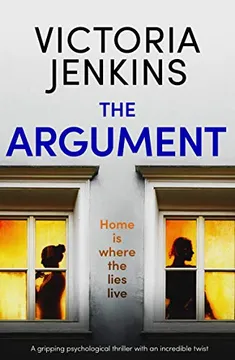


Plot Summary
Prologue
A teenage diarist feels trapped by a mother who controls her life and dreams of disappearing somewhere beyond her reach. She imagines that leaving would make her mother responsible for the loss.
The entry offers no name, but its fear and longing echo through the story: a girl who wants freedom, a mother who treats protection as authority, and a home where love and confinement may become difficult to tell apart.
The diary plants the novel's central uncertainty before the reader knows whose account it is. Its language of escape initially sounds like an ordinary adolescent revolt, but the wish to vanish carries a more serious undertow: the writer cannot imagine becoming independent while remaining visible to the person who controls her. The missing identity turns the entry into a test of interpretation. Is this a teenager exaggerating parental strictness, or someone recording a real threat? The story will repeatedly ask the same question of its characters, whose confident accounts of family life conceal radically different experiences.
Olivia Breaks the Ban
At thirty-four, Hannah Walters waits alone in the Penarth house while her husband, Michael, is away for work and younger daughter Rosie sleeps upstairs. Fifteen-year-old Olivia has gone to a party despite her parents forbidding it.
Hannah has tried her phone repeatedly, then lied to Michael by text that everything is fine. Olivia finally comes home unsteady and smelling of alcohol. In the living room, she dismisses the party, complains that other girls get more freedom, and refuses to explain what went wrong there.
Hannah takes her phone. Olivia storms upstairs, declaring her hatred through her actions and silence. Hannah sees teenage defiance, but Olivia's recent weight loss and growing isolation make the argument feel like the beginning of something less manageable.
The opening argument is a clash between two incompatible definitions of care. Hannah sees rules as safeguards and reads Olivia's resistance as ingratitude; Olivia experiences those same rules as evidence that she has no meaningful claim to her own life. Hannah's lie to Michael is small but consequential: she chooses domestic calm over sharing a problem, and so begins managing appearances rather than confronting the family's strain. Olivia's return from the party does not resolve her rebellion. It gives both women a new grievance to organize themselves around, while the detail of her shrinking body quietly complicates Hannah's assumption that this is merely bad behavior.
LIAR on the Cupboards
That night, Hannah wakes to breaking noises and rouses Michael. They find Olivia on the stairs, then discover a smashed patio door and the word LIAR sprayed across the kitchen cupboards. Nothing appears stolen. Michael patches the glass with bin bags and tape instead of calling the police, arguing that an investigation could expose Olivia if she is responsible.
Hannah has not told him she let Olivia go to the party, and now she is frightened both by the damage and by what the accusation might mean. She insists their daughter is not malicious, but Michael points out that Olivia could have staged a break-in. The next morning, they keep the damage from Rosie. Olivia says nothing, leaving her parents to mistake silence for possible guilt.
The painted accusation works because its meaning is withheld even from the people who see it. Instead of treating the word as evidence of an outside threat, Hannah and Michael turn it into a mirror for their own suspicions. Their choice not to contact police is presented as protection of Olivia, yet it also protects the household from scrutiny. This is an early example of how secrecy can masquerade as care. Hannah's withheld account of the party adds a second layer: her fear of being judged makes her less able to judge the situation clearly. The family responds to uncertainty by closing ranks, which leaves the person most likely to help them outside the door.
The Missing Diary
On Monday, still convinced Olivia may have brought the spray paint into the house, Hannah searches her daughter's room. Beneath the bed she finds a red diary, removes it, and hides it in her own bedroom. Its pages belong to a private history Hannah does not want exposed.
That same day, Olivia faces whispers at school about the party; when a boy humiliates her in English, teacher Miss Johnson makes him leave the classroom. Olivia refuses the teacher's offer of help, but later uses a school computer to search for Eleanor Medway, her mother's mother, and copies care-home numbers from the results.
A call confirms Eleanor is at Sea Breeze House. Meanwhile, Hannah discovers her keys have disappeared and then reappeared, an unexplained disturbance that strengthens her belief that Olivia is becoming dangerous.
The diary and the keys create two different kinds of evidence, neither of which Hannah can interpret without suspicion. She searches Olivia's space to test a theory, but taking the diary gives Olivia a reason to investigate her in return. At school, Olivia's humiliation is public, while her decision to search for Eleanor is private and purposeful. These parallel forms of looking matter: Hannah searches for proof of misconduct, Olivia searches for a family history withheld from her. Miss Johnson offers a brief alternative to the household's closed system, but Olivia cannot yet trust an adult enough to accept it. Each mother and daughter now believes the other is concealing the truth.
Eleanor's Closed Door
Olivia walks to Sea Breeze House and finds her grandmother, Eleanor Medway, in a care-home room. Eleanor is frail and confused by Olivia's arrival, first mistaking her for staff, then denying that her daughter Hannah has children.
Olivia leaves without the family recognition she had hoped for, but the denial sharpens her belief that Hannah has lied about the past. Around the same time, Hannah receives a call from someone pretending to be a receptionist at Rosie's school, reporting an accident.
She races there and finds Rosie unharmed in a gym lesson; the actual staff know nothing about the call. Embarrassed and frightened, Hannah concludes that someone deliberately used Rosie to distress her. With the break-in still unexplained, she increasingly suspects Olivia.
Eleanor's denial does not provide Olivia with a clean revelation. It makes her family history less certain, not more, because the grandmother's condition could explain her confusion while Hannah's secrecy remains unexplained. Hannah, meanwhile, experiences an invented emergency as proof of a hostile intelligence at work. The scene makes fear itself part of the evidence: panic narrows her attention until the person she already distrusts becomes the simplest answer. Both women encounter a gap in what they know and fill it with a conclusion that confirms their existing suspicions. Their parallel investigations do not bring them closer to truth; they make each more isolated from the other.
Olivia Takes the Roof
After classmates shame Olivia over what happened at the party, she returns to school determined to be noticed on her own terms. During lunch, she climbs onto the Art block roof and draws a crowd in the yard below. Students expect her to jump.
Instead, Olivia removes her shirt and bra, shocking them while several record the scene on their phones. The videos spread online, and the school suspends her for a week. Hannah sees the footage and feels both horror at Olivia's exposure and anger at the students who film rather than help.
When she collects Olivia, she cannot get an explanation. The public stunt gives Hannah another reason to call her daughter out of control, while Olivia's brief sense of power gives way to fear about what the recordings will do to her.
Olivia's spectacle is an attempt to control the terms on which people see her. She cannot stop classmates from mocking her, so she converts their attention into an act she chooses, even though the phones in the crowd quickly take that choice away. The consequence is not liberation but a permanent, shareable record she cannot govern. Hannah recognizes the cruelty of the audience, yet focuses more readily on the shame the video brings the family than on the distress that preceded it. The scene shows how adolescent visibility can become a trap: being noticed is not the same as being understood, and exposure can intensify isolation rather than end it.
Carly's Warning
A young woman named Carly comes to Hannah's door asking to discuss Michael. Hannah refuses to let her in, so Carly leaves an envelope. In it, Carly says she has been having an affair with Michael and that he persuaded her to break into the Walters home and make the false call about Rosie.
She says he described Hannah as dangerous and promised to leave his family for her, then raped Carly when she threatened to expose him. The letter warns that he is manipulative and dangerous.
Hannah reads it but cannot immediately accept its claims. She has built her sense of safety around Michael's steadiness, and the allegations threaten not just her marriage but the story she has told herself about how he rescued her. She hides the letter rather than seeking help.
Carly's letter supplies a coherent explanation for events Hannah has treated as separate: the vandalism, the school call, and the pressure within her marriage. Yet information alone does not dissolve dependence. Hannah has relied on Michael to interpret danger for her, so recognizing him as its source would require her to distrust the very framework that has organized her life. Her refusal to act is not simple disbelief; it is an attempt to preserve a livable version of reality. The envelope also establishes an unsettling pattern of women being recruited into Michael's private story, then punished when they resist it. Hannah has been warned, but she is not yet ready to hear the warning as fact.
The Torn Page
Rosie tries to search her parents' bedroom for Olivia's missing diary, but Hannah catches her and sends her out. Olivia then confronts Hannah about Eleanor and the diary's torn passage. Pressed about the secret she has kept, Hannah reveals that she was raped at seventeen, after sneaking out to a party.
Olivia understands that the assault led to her conception and interprets Hannah's distance as proof that she was never wanted. Hannah refuses to discuss every detail, then tells Olivia and Michael that they plan to send her to a summer boot camp because they believe her behavior threatens the family. Olivia's anger shifts toward a new question: what else have her parents hidden, and will they separate her from the only person she trusts, Rosie?
The confession gives Olivia an explanation for her mother's emotional distance, but explanation does not automatically repair injury. Olivia connects her conception to years of perceived rejection and makes a painful inference about being unwanted. Hannah, by contrast, treats disclosure as something extracted from her, not an invitation to build trust. Their conversation therefore exposes two forms of inherited silence: Hannah's inability to speak about violence and Olivia's inability to ask about family without being treated as a threat. The proposed boot camp turns that rupture into an immediate practical danger. What might have been a family conversation about trauma becomes another exercise of parental power.
The Visitor's Story
Olivia writes a school story about a girl kept indoors by her parents, watched through locks and restraints, and hoping a teacher will discover the truth. Miss Johnson and head of year Mr Lewis visit the Walters home after reading it and noticing Olivia's troubling behavior.
Hannah dismisses the story as fantasy and insists the family is fine. Before they arrive, however, she has restrained Olivia to the bed and muffled her cries; the teachers leave without seeing her. Their visit convinces Hannah that sending Olivia away must happen soon.
Olivia hears what has happened and realizes that even a carefully written account can be explained away when the adults controlling her are allowed to speak first. Her last hope shifts to Rosie, who can move through the house more freely.
Olivia uses fiction because direct disclosure has felt too dangerous, and the story gives her a way to make private conditions legible to an adult. But the form is easy for Hannah to discredit: a story can be dismissed as invention, especially when the writer has been framed as unstable. The teachers' visit demonstrates the limits of concern when it remains at the threshold and accepts a parent's explanation. Hannah's restraint of Olivia makes the gap between the polished home and the lived home concrete. The episode also changes Olivia's strategy. Since narration has failed to open the door, she must seek help through action and through her sister.
Rosie Sees the Body
While Olivia remains restrained, Rosie shows her a news report about a woman found dead on the beach. Olivia recognizes her as Carly, the woman who had waited near their street and later appeared at the house. The discovery confirms that the threat is not confined to their home.
Olivia persuades Rosie to escape and alert someone, instructing her to watch Michael's keys and leave her phone behind. When Michael returns, Rosie follows the plan and disappears.
Hannah and Michael search for her; Michael unlocks Olivia's restraints, claims he is taking her with him, and drags her to the car. Hannah asks where he is going, but he silences her. Olivia is taken away in the boot, while Rosie has become the sisters' one chance of bringing outsiders to them.
Carly's death changes the story's danger from a pattern of coercion into a threat of lethal violence. Rosie, previously easy for Olivia to mistake as sheltered, becomes an active participant in their escape. The sisters' bond is no longer only a source of comfort; it becomes practical knowledge and coordinated risk. Olivia's plan depends on her father's habits, especially his use of keys, turning domestic routine into a possible weakness. Michael's decision to take Olivia by force reveals that the household's rules were never merely an overprotective response to her behavior. They were a means of keeping the girls available to his control.
The Cliffside Fight
Michael drives Olivia to a dark coastal spot near the pier, carrying her from the car when she cannot fight him off. He presents her public exposure as a disgrace that makes her death look plausible. Olivia bites his arm and runs, injuring her foot on the ground before he catches her.
During the struggle, he confirms he is her biological father. Olivia recognizes him as the man who raped Hannah and asks whether he also killed Carly. Michael does not answer before pushing her toward the cliff edge.
Olivia drops, grabs a rock, and strikes his head. He falls, and she escapes into the darkness, running despite her broken arm and exhaustion. The act that began as a bid to be noticed ends with Olivia choosing survival and resisting the person who shaped her captivity.
The revelation of Michael's paternity collapses the distinction Olivia has maintained between the father who raised her and the unknown rapist behind her conception. His claim that he acted for the family echoes the language Hannah used to justify control, exposing how thoroughly his version of protection has shaped their home. Olivia's escape is not a clean victory: she is injured, depleted, and forced to use violence to survive. Yet the decisive change is psychological as well as physical. She stops waiting for an adult to interpret her situation correctly and acts on what she knows. Survival becomes her own judgment, not a gift granted by a parent.
The Family Liaison Room
Police arrive after the sisters' escape; Hannah is arrested, while Michael is absent and later tries to blame her for the household's treatment of the girls. Two weeks later, Hannah meets Olivia in a supervised room. Olivia and Rosie are living with relatives of Miss Johnson, and neither daughter had wanted to visit before.
Hannah says she believed she was protecting them. Olivia answers that the protection kept them locked in with the danger. She tells Hannah she will never understand her or become like her.
A final entry from Hannah's teenage diary reveals that after the rape she discovered she was pregnant, and Michael persuaded her to continue the pregnancy by presenting himself as her rescuer. Hannah remains unable to admit the damage she helped cause, even as the diary exposes how her dependence began.
The ending denies the comfort of a complete apology or a simple reversal of blame. Hannah has suffered under Michael's manipulation, but she also exercised power over her daughters and continues to describe that power as care. Olivia's refusal to forgive on demand distinguishes empathy for Hannah's past from absolution for her actions. The diary's final account sharpens the tragedy: Michael entered Hannah's life as the person who promised rescue from violence he had himself inflicted. Her attachment began in a false narrative of safety, then became the structure through which she reproduced confinement. Olivia's new foster placement offers distance and protection, not instant recovery.
Analysis
The Argument makes domestic safety its central deception. Hannah's spotless kitchen, reliable routines, and careful rules appear to contrast with Olivia's impulsiveness, but the novel gradually shows that order is not proof of care. It can also conceal who has the authority to move, speak, eat, and be believed. Hannah's history helps explain why she clings to security, yet the story refuses to treat explanation as absolution. Trauma can shape a parent's fear without making every action protective.
The alternating viewpoints create a contest over interpretation. Hannah reads Olivia's silence as defiance; Olivia reads Hannah's restraint as rejection. Each interpretation contains a fragment of truth, but Michael benefits from keeping them separate. He turns the family's distrust into a tool, encouraging Hannah to see her daughter as dangerous and Olivia to see every adult as complicit. The title's argument is therefore more than a quarrel between mother and daughter. It is a struggle over whose account of reality will govern the household.
The book also examines the limits of visibility. Olivia's rooftop stunt makes her impossible to ignore, yet the crowd's recordings convert her exposure into a spectacle rather than a request for help. Her fictional school assignment is more deliberate, but it can still be dismissed as invention. In both cases, being seen does not ensure being understood. The meaningful shift comes when Rosie acts and Olivia trusts her own assessment enough to fight for survival.
The ending offers no easy inheritance of wisdom. Hannah's diary shows how Michael first presented himself as a rescuer, helping explain why she failed to recognize the danger he represented. But Olivia refuses to accept that history as a reason to excuse the confinement imposed on her and Rosie. The novel's sharpest lesson is that protection must be judged by what it permits a person to become, not only by what it claims to prevent. A home can shelter its occupants from danger while also becoming the place from which they most urgently need escape.
Review Summary
The Argument is a psychological thriller that starts as a family drama but takes unexpected turns. Readers found it gripping, with a shocking twist that divided opinions. Some praised the suspenseful build-up and character development, while others felt the pacing was slow. The book explores themes of teenage rebellion, family secrets, and parental control. Many reviewers were surprised by the ending, finding it either brilliantly twisted or implausible. Overall, it's a polarizing read that elicited strong reactions from readers.
Characters
Olivia Walters
The watchful daughterFifteen-year-old Olivia is the older Walters daughter and the story's most searching observer. She feels alienated at school and constrained at home, where her parents' rules leave little space for ordinary independence. Her sarcasm and defiance often disguise a desire to be noticed and taken seriously. Olivia's fascination with other people's lives, her private writing, and her determination to uncover family secrets show a mind that is both imaginative and alert to inconsistency. She can misread others when hurt, especially Rosie, but her need to protect her sister is equally strong. Olivia's conflict is not simply whether to obey; it is whether she can trust her own perception when the adults around her insist that she is the problem.
Hannah Walters
The anxious motherHannah is a young stay-at-home mother whose orderly home gives her a sense of competence and safety. She values routine, self-control, and a stable family life, partly because her own upbringing was marked by neglect and a demanding relationship with her mother. Those experiences leave her protective instincts tangled with fear and a strong need to manage uncertainty. She is more emotionally guarded with Olivia than with Rosie, though she tells herself that both girls need her rules. Hannah's point of view asks readers to distinguish intention from impact: she can love her children and still use control in ways that harm them. Her calm manner often conceals how little she has examined the foundations of her security.
Michael Walters
The composed providerMichael is Hannah's husband and the father figure in the girls' home. His senior role in a supermarket chain takes him away on frequent work trips, while his income supports the household Hannah values. He presents himself as practical, patient, and protective, especially when family tensions rise. His preference for calm, his confidence in making decisions, and his ability to frame rules as necessary can make him seem like the stabilizing force in the family. Yet this authority also shapes how the others understand their choices. Michael's importance lies in the contrast between his reassuring public manner and the degree of control he exerts within the home.
Rosie Walters
The quiet younger sisterRosie is Olivia's younger sister, a bright, bookish child with red hair and a habit of retreating to the tree at the end of the garden. Hannah sees her as gentle and easy to care for, while Olivia sometimes mistakes her quietness for naivety. Rosie is observant in her own way, and her stories, questions, and private jokes reveal more independence than either sister initially credits her with. She wants her family to remain together, but her affection for Olivia is not merely childish dependence. Rosie is the emotional counterweight to Olivia's restlessness: she offers tenderness, yet she is capable of making difficult choices when someone she loves needs her.
Eleanor Medway
Hannah's distant motherEleanor is Hannah's mother, an elderly woman living in a care home. Her illness and frailty complicate Olivia's attempt to understand the history Hannah has kept from her. Eleanor's past presence in Hannah's life is associated with control, dependence, and an uneven burden of care. In the present, her confusion makes it impossible for Olivia to receive a straightforward account from her. Eleanor matters because she represents the family history that Hannah has tried to leave behind, and because the damage between mother and daughter continues to shape how Hannah parents her own children.
Carly
The uneasy visitorCarly is a young woman and mother whose unexpected appearance unsettles Hannah's carefully ordered household. She seems anxious and determined to deliver information, but Hannah does not know her and initially refuses to hear her out. Carly's connection to Michael places her at the edge of the family's private world, where her account challenges the version of events Hannah has trusted. Her presence brings the danger outside the house into focus and gives the sisters reason to question what has been happening around them.
Miss Johnson
The attentive teacherMiss Johnson is Olivia's English teacher, a young educator who encourages students to discuss literature rather than merely complete assignments. She notices Olivia's distress when classmates mock her and offers a private place to work when the school feels hostile. Olivia imagines Miss Johnson as independent and confident, making her an appealing possible confidante. The teacher's attention matters because she treats Olivia as a person worth listening to, even when Olivia cannot yet bring herself to speak plainly. Her concern eventually places her in contact with the Walters family.
Mr Lewis
The accommodating head of yearMr Lewis is Olivia's head of year and a PE teacher whose imposing build hides a gentle, somewhat easily flustered manner. He monitors her attendance and participates in the school's response to her behavior. His concern is sincere, but he relies on school procedures and the information adults provide him, leaving him with an incomplete picture of Olivia's home life.
Plot Devices
Hannah's red diary
A past hidden in pagesThe diary holds Hannah's private teenage account of her mother, her attempts to escape, and the events that changed her life. Hannah hides it after finding it beneath Olivia's bed, but its missing pages and references to Eleanor become clues for Olivia. The diary gives readers access to Hannah's earlier understanding of her own life, which differs from the polished household she has built as an adult. Its final pregnancy entry reframes the origin of Hannah's attachment to Michael and complicates the way she later describes protection.
The kitchen accusation
A threat disguised as evidenceThe smashed patio door and the red word on the cupboards make the break-in look personal, but the message does not identify its target or explain its author. Hannah and Michael treat it as a possible act by Olivia and avoid contacting police, which lets suspicion grow inside the family. Later information connects the incident to Michael's manipulation of Carly. The break-in therefore works twice: first as a mystery that makes Olivia appear dangerous, then as evidence that someone has been engineering the parents' fear.
The Visitor story
Fiction as a distress signalOlivia's English assignment describes a girl trapped by controlling parents who hopes a teacher will discover the truth. The story converts experiences she cannot safely report into a form an adult might notice. Miss Johnson and Mr Lewis recognize its disturbing details and visit the house, but Hannah dismisses it as imagination. The device dramatizes a practical problem at the center of the novel: testimony can be present and still fail when the people controlling the situation also control the explanation. Olivia's writing becomes both a plea for help and a record of what others refuse to see.
Phones and keys
Domestic surveillance and escapeMobile phones seem to offer Olivia and Rosie a link to the outside world, but Michael monitors their use and tracks the family. The missing keys and their mysterious return make Hannah doubt her own memory, while Olivia studies how access to the house is controlled. At the climax, the same keys become part of Rosie's attempt to get free. Ordinary objects that usually signify convenience or safety are repurposed as instruments of surveillance, confusion, and escape.
Download PDF
Download EPUB
.epub digital book format is ideal for reading ebooks on phones, tablets, and e-readers.








