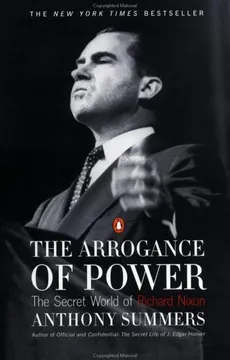


Key Takeaways
Nixon’s political brilliance repeatedly turned deception into both weapon and undoing
A practiced narrator. Summers presents Nixon as a gifted strategist whose public story often diverged from the record. The boyhood tale of lost oil wealth, for instance, was repeated even though no oil was found on the family’s land. As president, Nixon promised truth while denying U.S. bombing in Cambodia and insisting he had no role in Watergate. His 1973 effort to restore credibility, called Operation Candor, became another occasion for concealment rather than disclosure.
Truth became a political tool. Some of Nixon’s inventions were minor campaign flourishes; others hid consequential decisions or misconduct. The book’s central difficulty is therefore also its central argument: a vast archive, including White House recordings, does not automatically make a biography reliable when the subject routinely misleads colleagues, voters, and himself. Each claim needs to be tested against documents and independent testimony.
What is striking is how reputation itself becomes an instrument of government. Nixon could present himself as a plainspoken outsider while treating candor as optional whenever it threatened his aims. That split helps explain why small embellishments matter: they train audiences to accept a curated character, making larger deceptions easier to absorb. Still, a biography built around a habitual liar faces a real evidentiary trap. Suspicion is necessary, but suspicion alone cannot establish what happened. The strongest account distinguishes documented falsehoods from allegations that remain uncertain.
Treat the poor-boy story as political branding, not a complete biography
Hardship and myth. Nixon grew up in a strict Quaker household in Southern California, where two brothers died young and the family endured genuine financial strain during Harold’s long illness. As a teenager, Richard worked before school to help keep the family store running. Those experiences were real, but his later account made the family seem poorer than neighbors remembered. The Nixons had received substantial help from Hannah’s prosperous family, and their store generally made money.
Class grievance persisted. Nixon attended Whittier College on a scholarship created by his maternal grandfather, then graduated near the top of his class at Duke Law School. He nevertheless portrayed himself as excluded from elite institutions and carried resentment toward the East Coast establishment. That sense of grievance could coexist with his later membership in exclusive clubs and his enjoyment of deference from wealthy people.
The distinction between hardship and a poverty narrative matters because political identity is often built from selective memory. Nixon’s story was not wholly fabricated: illness, loss, and relentless work shaped his childhood. But he edited those facts into a sharper outsider identity than the surrounding evidence supports. That does not make class resentment insincere. It suggests that an emotion can be genuine while its public explanation is strategically simplified. Biography is most useful here when it resists both sentimental uplift and easy debunking.
Recognize dirty campaigning when opponents are recast as national threats
Fear proved more useful than debate. In 1946 Nixon defeated Democratic congressman Jerry Voorhis by associating him with Communists, despite Voorhis’s own record of opposing communism. The evidence cited by Nixon did not prove the charge, but its presentation left Voorhis struggling to answer. Four years later Nixon’s campaign against Senator Helen Gahagan Douglas used a pink flyer to suggest communist sympathies, along with misleading propaganda and organized heckling.
A method, not a mishap. Campaign adviser Murray Chotiner helped coordinate aggressive tactics, while friendly newspapers gave Nixon favorable coverage. Nixon knew the attacks were often misleading and later acknowledged privately that winning mattered more than the opponent’s character. These campaigns established a pattern in which political rivals were presented as threats to the country, making smear tactics seem like patriotic defense.
The important lesson is not simply that campaigns can be ugly. Nixon’s tactics blurred the boundary between political disagreement and national disloyalty, a move that makes ordinary scrutiny feel like betrayal. Once that framing takes hold, evidence matters less than which side controls the accusation. The book also shows how media advantage and financial imbalance can amplify such tactics. A caution is needed, though: the existence of dirty campaigning does not mean every later scandal was inevitable. It does show how a political culture can reward methods that weaken trust.
Follow the campaign money before trusting claims of political independence
Support came with strings. Nixon described his campaigns as scrappy efforts financed by ordinary Californians. The record instead points to substantial business support, including oil, banking, and real estate interests. In 1952, wealthy supporters maintained a private fund for his expenses. In 1956, Howard Hughes supplied $205,000 to Nixon’s brother Donald in a transaction Nixon said he had not arranged, though evidence points to his involvement.
The record has different levels of certainty. Mobster Mickey Cohen claimed he raised money for Nixon’s 1946 and 1950 campaigns. Investigators also examined cash from Howard Hughes, foreign donors, and a possible offshore portfolio linked to Nixon and Rebozo. Some claims rest on documents or Nixon’s own tapes; others depend on witnesses whose accounts are disputed. The larger pattern is clearer than every individual allegation: secrecy around political finance created obligations and leverage.
Money is not merely a resource in this story; it is a relationship that can outlast an election. A donor may expect access, favorable treatment, or simply the protection of a useful ally. That makes financial transparency a form of institutional memory: it reveals who may feel indebted to whom. The book’s strongest cases are those supported by records, while some of its most dramatic claims depend on criminal informants or incomplete trails. Readers should not flatten those differences. The pattern deserves scrutiny without turning every suspicion into proof.
Power enlarged Nixon’s loneliness, suspicion, and dependence on loyal intimates
A guarded private life. Nixon’s marriage to Pat lasted more than fifty years, but witnesses often described the couple as emotionally distant. Pat disliked political life, while Nixon repeatedly pushed forward. His closest confidant was Bebe Rebozo, who accompanied him on trips, managed aspects of his finances, and moved easily between the president’s private and political worlds. The psychotherapist Arnold Hutschnecker saw Nixon for years and described deep inhibition, depression, and a powerful need for respect.
Do not confuse interpretation with diagnosis. Nixon’s staff also recalled insomnia, exhaustion, abrupt anger, and drinking that affected his speech and judgment. Some witnesses reported physical abuse of Pat, but those claims are not established with the same certainty as the public record. The material supports a picture of strain and isolation, not a definitive psychiatric diagnosis or a simple causal account of his behavior.
A leader who distrusts ordinary intimacy may prefer relationships that are organized around loyalty, usefulness, or shared secrets. That pattern can offer comfort while narrowing the range of people able to challenge him. Rebozo’s role, as described here, is revealing because friendship and political brokerage overlap so completely. The book is strongest when it reports observable behavior and testimony; its psychological explanations require more caution. Childhood loss and emotional reserve can illuminate a person without explaining away choices made in adulthood.
Nixon’s China opening was real, but Vietnam exposed diplomacy’s human cost
A genuine diplomatic achievement. Nixon’s experience abroad as vice president helped him build relationships with world leaders, and his 1972 trip to China opened a major channel between Washington and Beijing. He also understood the importance of strategic negotiation with the Soviet Union. These accomplishments were substantial, not merely public relations.
Skill did not guarantee sound judgment. Nixon had supported a tougher American role in Vietnam well before becoming president, including early calls for U.S. ground troops. As president, he expanded the war into Cambodia while publicly concealing the bombing. More than 20,000 American service members died during his presidency, along with vastly larger numbers of Vietnamese combatants and civilians. The book asks readers to weigh diplomatic breakthroughs against the costs of the war Nixon prolonged.
This contrast resists two easy verdicts: that Nixon was only a criminal, or that foreign-policy achievement cancels domestic abuse. A leader can be strategically capable and still make disastrous judgments about force, allies, and human costs. The China opening shows why results matter; the Vietnam record shows why the means and aftermath matter too. The book’s account is particularly persuasive when it connects decisions to measurable consequences. The harder question is whether a successful diplomatic initiative can be separated from the broader policy system that made it possible.
Do not let election strategy decide whether peace talks get a chance
A secret intervention. In 1968 President Johnson was trying to bring North Vietnam and South Vietnam into peace talks. Nixon publicly said he supported the effort, but the book presents evidence that his campaign used Anna Chennault as an intermediary to encourage South Vietnam’s President Thieu to hold back. Intercepted messages and later accounts connect the Nixon circle to pressure on Saigon. On November 2, three days before the election, Thieu announced that he would not join the talks.
The counterfactual remains uncertain. Johnson’s initiative might not have ended the war, and Thieu had reasons to resist even without Nixon’s intervention. But Nixon’s team appears to have treated the timing of negotiations as an electoral variable. After winning, Nixon urged Thieu to reverse course and attend. The human cost continued: more than 20,000 American deaths followed during Nixon’s presidency.
The episode shows how electoral incentives can distort diplomacy even when leaders publicly claim to put country above party. A peace process is fragile because every participant worries about what an agreement will cost them; a candidate’s private assurances can intensify that fear. The book makes a strong case that Nixon’s circle interfered, while the exact effect on Thieu’s decision and the talks’ prospects cannot be known with certainty. That distinction matters. Moral responsibility for interference does not require pretending that a different outcome was guaranteed.
Treat secrecy as a warning when leaders bypass oversight to wage war
National security became a rationale for concealment. Nixon authorized secret bombing in Cambodia, then publicly denied that the United States had attacked a neutral country. His administration also monitored journalists and officials, and Nixon repeatedly pressed for surveillance or covert entries against political opponents. After the Pentagon Papers appeared, he ordered aides to seek files at the Brookings Institution and discussed breaking in to retrieve them.
Some allegations remain unsettled. The book also examines claims that Nixon, as vice president, had a substantial role in CIA plans to overthrow or kill Fidel Castro. His close involvement in Cuba policy is clear; his precise knowledge of particular assassination plots is contested. In both the foreign and domestic cases, secrecy made accountability harder and encouraged aides to treat presidential wishes as authorization.
Secrecy can protect legitimate operations, but it also changes the incentives around authority. When officials believe a president’s wishes outrank legal review, the boundary between confidential policy and private political action becomes dangerously thin. Nixon’s Cambodia deception and the recorded Brookings orders provide firmer evidence than every allegation about Castro. The useful distinction is not secrecy versus openness in the abstract. It is whether secrecy has a defined purpose, an accountable chain of approval, and a credible limit.
The Watergate burglary became fatal when Nixon chose concealment over inquiry
A burglary became a cover-up. On June 17, 1972, police caught Nixon campaign operatives inside Democratic Party headquarters at the Watergate. The burglars had links to the Committee for the Re-Election of the President, but the full extent of Nixon’s advance knowledge remains disputed. What the tapes establish more clearly is his involvement in efforts to obstruct the investigation, including his approval of pressure on the CIA to limit the FBI inquiry.
The recordings changed the stakes. Nixon had secretly recorded thousands of hours of conversations, believing the archive would protect his legacy. Instead, the tapes preserved his own words. A critical June 23 recording, the so-called smoking gun, showed him approving a plan to interfere with the investigation. The notorious 18-and-a-half-minute gap remains unexplained, but the broader cover-up is documented.
The defining failure was not simply the decision to spy on opponents. It was the belief that institutional machinery could be redirected to protect the president from consequences. Once the cover-up began, every attempt at containment created another record, another participant, and another reason to distrust official statements. The tapes are unusually powerful because they collapse the distance between public posture and private intent. Yet even here, precision matters: the recordings establish the obstruction more firmly than they settle who ordered the original break-in.
A statesman’s comeback cannot erase the record of wars and abuses
Rehabilitation is not absolution. Nixon resigned in August 1974, and President Ford later pardoned him before a full criminal trial could establish the limits of his responsibility. In retirement, Nixon rebuilt a public role as an elder statesman, advising later presidents and emphasizing his achievements in diplomacy. His 1994 funeral drew national leaders and tens of thousands of mourners, yet opinion remained divided: a poll cited in the book found more people expected him to be remembered as dishonored than great.
A whole record is the point. Nixon’s China initiative and arms diplomacy belong in the account, as do the Vietnam dead, secret bombing, political surveillance, and Watergate cover-up. Neither a final pardon nor a successful return to public respect resolves those contradictions. Summers argues that judging Nixon requires holding his capabilities and abuses together, rather than letting either erase the other.
The arc from disgrace to elder-statesman status is a story about memory as well as power. Public attention can shift, and later achievements can become more visible than earlier injuries. That is not inherently dishonest; political legacies are genuinely mixed. The danger is treating a comeback as a verdict, or treating condemnation as a substitute for historical accounting. Nixon’s record demands both recognition of consequential diplomacy and sustained attention to the human and institutional costs of his decisions.
Analysis
Summers builds an investigative biography around a problem of knowledge: Richard Nixon left an unusually rich record, including thousands of White House recordings, yet that record was produced by a man who repeatedly shaped facts to serve himself. The book’s strongest narrative is therefore not simply rise, fall, and rehabilitation. It is the widening gap between Nixon’s public identity as a plainspoken, peace-seeking outsider and his private use of secrecy, political pressure, and selective truth.
The early campaigns establish habits that later become more consequential. Nixon’s victories over Voorhis and Douglas show how anticommunism, press advantage, and personal attack could convert a contest over policy into a test of loyalty. His financial relationships deepen the picture: business donors, Howard Hughes, Rebozo, and alleged foreign contributions formed overlapping networks of access and obligation. The evidence varies considerably, however. White House tapes and official records provide firm anchors; claims based on mob figures, anonymous sources, or unverified financial documents require more caution. The book sometimes moves rapidly between these categories, so readers should keep the distinction visible.
The central institutional lesson is that misconduct grows when personal loyalty replaces accountable procedure. Nixon’s presidency combined consequential diplomacy with secret warfare, domestic surveillance, and efforts to use public agencies against political opponents. Watergate mattered because the burglary and cover-up revealed that these were not merely isolated excesses. The president’s own recordings documented how he thought about power and how he tried to protect it.
The book also invites skepticism about psychological explanations. Family history, depression, alcohol, and isolation offer context, but they cannot prove why Nixon made particular choices or establish a clinical diagnosis. The most defensible portrait joins motive to action without turning biography into diagnosis: Nixon could be intellectually formidable, strategically patient, and capable of genuine diplomatic achievement, while also repeatedly choosing deception and coercion. His contradictions are not a reason to avoid judgment. They are the material judgment must address.
Review Summary
Reviews of The Arrogance of Power are mixed, averaging 3.88/5. Many praise Summers' exhaustive research—1,000+ interviews and 125 pages of notes—and his compelling portrait of Nixon's corruption, drinking, paranoia, and abuse of power. Critics, however, note the book reads more like a polemic than a balanced biography, relying heavily on hearsay and unverified allegations, particularly regarding Pat Nixon's alleged abuse. Readers also flag the lack of a table of contents and limited coverage of Nixon's policy achievements. Most agree it's fascinating, if sensationalist.
Glossary
Operation Candor
Nixon’s credibility campaignNixon’s name for an effort to restore public confidence during the Watergate crisis. It was presented as a commitment to greater openness, but the book shows that Nixon continued to mislead aides, political leaders, and the public while using the campaign to manage his image.
Checkers speech
A televised defense of NixonNixon’s 1952 televised address responding to allegations that wealthy supporters maintained a private fund for his expenses. He emphasized his family’s modest circumstances and a dog given to his daughters, Checkers. The broadcast generated intense public support and helped keep him on the Republican presidential ticket.
Operation Pluto
CIA plan against CastroThe CIA’s 1960 program to organize Cuban exiles, build resistance inside Cuba, and prepare a leadership capable of replacing Fidel Castro. The plan developed under the Eisenhower administration, with Nixon closely involved in Cuba policy. It preceded the Bay of Pigs invasion, but the precise extent of Nixon’s role in assassination plotting remains disputed.
Madman Theory
Feigned unpredictability as leverageNixon’s proposed tactic of making adversaries believe he might take extreme military action, including escalation in Vietnam, because he was supposedly difficult to restrain. The intended effect was to frighten opponents into negotiation. The book treats the strategy as both a diplomatic gambit and a troubling way to make threats appear credible.
Plumbers
White House leak investigatorsThe nickname for a secret White House unit assembled in 1971 to stop leaks and investigate perceived threats to the administration. Its members included E. Howard Hunt and G. Gordon Liddy. They conducted covert operations, including a break-in at the office of Daniel Ellsberg’s psychiatrist, and later became central to Watergate.
Phoenix program
South Vietnam counterinsurgency programA program targeting the Viet Cong’s political and organizational infrastructure in South Vietnam. The book cites estimates that tens of thousands of Vietnamese were killed under the wider effort and reports Nixon’s support for maintaining its funding. The program’s operations and death toll remain matters of historical dispute.
Enemies List
Targets for political pressureA set of names assembled by Nixon aides for possible scrutiny or pressure, including politicians, journalists, business figures, and others viewed as opponents. The book links the lists to efforts to use federal agencies, especially the IRS, against critics. The lists reflected Nixon’s personal hostility as well as attempts to turn government power toward political advantage.
Nixonophobia
Reflexive hostility toward NixonA term coined by columnist Stewart Alsop for the unusually intense dislike Nixon provoked among some observers. It captures a political reaction that could exceed ordinary partisan disagreement. The book uses the term to show how Nixon’s conduct and personality generated both genuine distrust and, at times, exaggerated judgments by his opponents.
Download PDF
Download EPUB
.epub digital book format is ideal for reading ebooks on phones, tablets, and e-readers.








