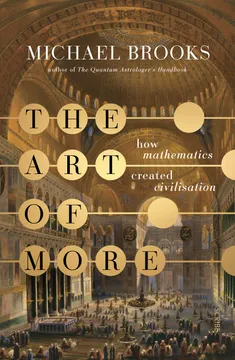


Key Takeaways
Treat number as a learned cultural tool, not a universal instinct.
Counting is acquired. Humans begin with an approximate number sense: we can distinguish small quantities, but larger groups may register simply as “more.” In psychologist Peter Gordon’s tasks with the Pirahã people of Amazonia, participants could match small groups of batteries but struggled as the quantities grew. The book’s point is not that one people lacks intelligence. It is that exact numbers become useful through culture, practice, and need.
Fingers help build number. Children develop finger sense, or gnosis, the ability to represent individual fingers, which can support early number understanding. Across cultures, people count on their hands in different ways. Shared number practices make trade possible even when buyers and sellers do not share a spoken language.
What's striking is how this account shifts mathematics from a test of innate talent to a record of what people learn to notice. Cognitive science similarly finds that abstract thought often develops through bodily and cultural scaffolds, such as fingers, marks, and counting routines. That perspective can make mathematics feel more accessible: struggling with symbols is not proof of a defective mind. The caution is that a particular number task measures only a narrow skill. Differences in performance should not be mistaken for differences in intelligence, culture, or human potential.
Audit the ledger, because whoever defines the numbers can govern.
Accounts create authority. In ancient Ur, King Shulgi’s administration tracked workers, production, absences, and debts. The records helped the state detect shortfalls and enforce its demands. Centuries later, double-entry bookkeeping made each transaction appear in two linked accounts, allowing merchants and lenders to check whether the books balanced and assess a business as an entity separate from its owner.
Numbers can discipline power. When Medici Bank chief accountant Giovanni Benci died, lax lending and imagined profits helped bring the bank toward collapse. In France, finance minister Jacques Necker’s effort to make government accounts more transparent helped turn bookkeeping into a public political issue. Alexander Hamilton, meanwhile, treated sound public credit as essential to the new United States. Accounting can enable trust and trade, but only when the records are honest and the measures fit their purpose.
Accounting is more than a mirror held up to economic life. Its categories help decide what counts as an asset, a debt, or a success, and those decisions distribute power. This connects to modern debates about corporate reporting and national measures such as GDP: what is not recorded can be treated as if it has no value. The book’s history also warns against treating transparent numbers as automatically fair. Audits can expose abuses, but the rules being audited still reflect human choices about whose interests matter.
Use geometry to turn distant worlds into measurable, navigable places.
Shapes make distance knowable. Geometry began with practical problems such as measuring land and building square corners. Similar triangles let Thales estimate a pyramid’s height from a stick and its shadow. In 240 BC, Eratosthenes compared the Sun’s angle at two Egyptian cities to estimate Earth’s circumference, arriving at a value reasonably close to the modern figure.
Maps are mathematical compromises. Trigonometry gave sailors ways to correct a course, while spherical geometry helped map a curved Earth onto flat paper. The Mercator projection preserves compass bearings but enlarges regions far from the Equator. Much later, John Parr Snyder developed a projection that helped convert satellite observations into accurate maps. Geometry also shaped Renaissance perspective, teaching artists how to represent three-dimensional scenes on a flat surface.
Geometry’s achievement is not simply that it measures the world. It makes distant places and hidden structures available to thought, whether a navigator is correcting a course or an artist is constructing perspective. Maps also reveal a broader lesson about models: preserving one feature often distorts another. The Mercator projection is useful for navigation, but misleading when readers compare land areas. The right map depends on the question being asked, a principle that applies equally to diagrams, dashboards, and scientific models.
Let algebra expose hidden structure, then use it to organize complexity.
Algebra finds the missing piece. Its name comes from the title of a book by the ninth-century mathematician al-Khwārizmī. Early algebra described problems in words; later, symbolic notation made unknown quantities easier to manipulate. Babylonian scribes used geometric reasoning to solve equations about land, including how to find a rectangle’s dimensions when its area and the difference between its sides were known.
The same logic scales up. Algebra helps organize practical systems as well as solve equations. A later analysis of the US population found that FedEx’s Memphis hub was close to, but not exactly at, the location that would minimize average delivery distances. The A-series paper sizes also rely on a proportion that stays constant when a sheet is halved. In physics, algebraic symmetry methods have helped researchers infer patterns among particles and forces.
Algebra earns its power by separating a problem’s relationships from the particular objects involved. Once a delivery network, paper format, or physical system can be represented symbolically, the same structure can be tested across many cases. This is a form of compression: one equation can stand in for countless individual calculations. But an optimized model is only as good as its inputs and objective. A hub that minimizes average distance, for example, does not necessarily minimize cost, emissions, or delivery time.
Use calculus when change itself is the problem to solve.
Calculus tracks motion. It gives two complementary tools: differentiation measures how quickly something is changing at a particular moment, while integration adds small pieces together to find a total. Johannes Kepler used an early version of integration to estimate the volume of wine barrels, motivated by a dispute over how a merchant measured them.
Its effects reach well beyond geometry. In the 1930s, mathematician Beverley Shenstone applied calculus to the design of the Spitfire’s elliptical wings, which reduced a form of drag and helped make the aircraft agile. In 1989, Alan Perelson used differential equations to model HIV’s interaction with the immune system. Work with clinical researchers helped establish the rationale for combining three antiretroviral drugs. Calculus also underlies engineering calculations for bridges and buildings, where loads and stresses change with conditions.
Calculus matters because many important quantities do not hold still: infection levels shift, aircraft move, and structures carry changing loads. Its practical strength comes from turning continuous change into something that can be calculated and tested. That does not mean an equation captures every relevant factor. The Spitfire’s performance depended on materials, manufacturing, and skilled design as well as mathematical analysis. Models are most valuable when they guide experiments and decisions, not when their precision is mistaken for completeness.
Convert multiplication into addition, but never trust exponential intuition.
Logarithms simplify hard arithmetic. John Napier developed logarithms to help astronomers avoid repeated, error-prone multiplication and division. The key trick is that, in a suitable system, multiplying numbers becomes adding their logarithms. Tables of logarithms made this practical; slide rules turned the tables into portable instruments used by scientists and engineers for centuries, including during the Apollo missions.
Growth can outrun intuition. Exponential growth occurs when a quantity increases in proportion to its current size, as when bacteria double at regular intervals. In a familiar illustration, a bottle that fills completely after an hour of doubling is only 3 percent full four minutes before the hour ends. People often picture such growth as linear, underestimating how quickly the final increase arrives. The same error can distort judgments about compound interest, debt, and epidemics.
Logarithms show how a change in representation can make a difficult task manageable. The slide rule did not make multiplication disappear; it translated it into a form people could handle quickly. Exponential-growth bias is a reminder that intuition is also a model, and sometimes a poor one. Still, the bottle example assumes perfectly regular doubling and unlimited resources. Real epidemics and investments encounter changing conditions, so exponential projections are warnings about possible trajectories, not guarantees of what will happen.
Accept imaginary numbers; they make electric reality calculable.
A new kind of number. Imaginary numbers arise from the square root of a negative number. They were once dismissed as impossible, but mathematicians found that they obey consistent rules and combine with ordinary numbers to form complex numbers. In the 1890s, Charles Proteus Steinmetz showed electrical engineers how to use complex numbers to simplify calculations involving alternating current, whose voltage and current vary in repeating waves.
Abstract tools build ordinary life. Complex-number methods helped engineers design electrical grids and circuits. They also contributed to the electronics behind radio, amplifiers, and sound systems. Hewlett and Packard’s early audio oscillator, developed from Bill Hewlett’s engineering thesis, relied on complex-number calculations. The book also points to their role in describing quantum phenomena, where the equations used to model particles involve complex quantities.
The story challenges a common assumption: mathematics must resemble everyday experience to describe it. Imaginary numbers are not physical objects, but they provide a compact way to represent relationships, especially when rotation and waves are involved. Their success in electrical engineering is a strong case for judging mathematical ideas by their explanatory and predictive performance. It does not, by itself, prove that mathematics is literally the substance of nature. A useful model can capture a pattern without settling what reality is made of.
Treat statistics as disciplined uncertainty, not a machine for certainty.
Statistics tests what evidence can support. In seventeenth-century London, John Graunt analyzed records of births and deaths to estimate life expectancy and compare causes of death. During the Crimean War, Florence Nightingale used mortality data and a visual chart to show that disease killed many more soldiers than battle wounds, helping win support for hospital reform.
Numbers can mislead when context disappears. Francis Galton developed influential statistical methods, including correlation, but also used measurement to support eugenics and racist claims. In court, the prosecutor’s fallacy confuses the rarity of evidence with the probability that a defendant is innocent. Statistical results depend on assumptions, sample sizes, and judgment calls. A reported 18 percent increase in relative risk, for example, can sound dramatic while representing a much smaller change in absolute risk.
Statistics is powerful precisely because it makes uncertainty explicit, but that power creates a duty to explain what a number means. Nightingale’s chart translated data into a form that decision-makers could grasp, while misuse in court shows the cost of confusing conditional probabilities. Statistical literacy should therefore include questions about the comparison group, the base rate, and what was measured. Visual clarity also deserves scrutiny: an arresting chart can persuade before a reader has checked whether its scales and categories are fair.
Build reliable communication by encoding, compressing, and correcting information.
Bits turn messages into machinery. Claude Shannon connected George Boole’s true-or-false logic to electrical switching circuits. His information theory made it possible to quantify messages, estimate how much information a channel can carry, and design codes that recover data corrupted by noise. A bit is a binary choice, represented as 0 or 1. Carefully chosen extra bits can help a receiver detect or correct errors without simply sending every message twice.
That framework underpins modern communication. Error-correcting codes helped spacecraft send usable images across vast distances, while data compression made digital pictures, music, and video easier to store and transmit. Shannon also formalized the limits of secure communication; practical encryption methods build on later developments of these ideas. The same mathematical foundations supported communications for Apollo missions and now carry everyday online data.
Information theory distinguishes the amount of information in a message from the meaning a person finds in it. That distinction is useful: engineers can improve a signal without understanding its subject matter. Shannon’s framework also makes reliability a design problem, not a matter of hoping that noise will stay away. Yet compression always raises a question about what can be discarded. A file can preserve what a format measures while losing details that matter for another purpose, so efficiency should be judged against the use case.
Demystify mathematics, because its power belongs to the people using it.
Mathematics is made and remade. The book challenges the idea that mathematical ideas arrive as sacred truths detached from human history. People developed counting, notation, geometry, and algorithms to solve problems, then found new uses for them. Its closing example is the golden ratio, often claimed to govern famous artworks and buildings. Many such claims depend on how a person chooses to measure the object, rather than on clear evidence of deliberate design.
Access matters. Mathematical systems can support trade, art, medicine, and communication, but they can also concentrate authority among those who control records and technical knowledge. Seeing mathematics as a shared human creation makes its history easier to enter and its uses easier to question. The central claim is not that numbers explain everything, but that human societies repeatedly use mathematical tools to reshape what is possible.
The book’s strongest educational move is to replace the image of mathematics as a sealed temple with a workshop full of human-made tools. That framing can invite more people into the subject while encouraging scrutiny of who builds a model and who benefits from it. There remains a productive tension: mathematical systems are invented through human conventions, yet their consequences can reveal patterns no one intended. Demystification need not deny wonder. It can relocate wonder from mystical numerology to the collective ingenuity of making useful abstractions.
Analysis
The book’s organizing claim is that mathematics is not merely a school subject layered onto civilization. It is among the tools through which civilization became possible. Each branch changes the scale of what people can coordinate: arithmetic supports accounts and administration; geometry makes land, oceans, and images measurable; algebra handles unknowns and complex systems; calculus describes change; logarithms reduce computational labor; complex numbers model electrical and quantum behavior; statistics evaluates evidence; and information theory makes digital communication reliable.
The narrative succeeds by attaching abstractions to memorable consequences. A number system becomes a state’s machinery, a triangle becomes a way to estimate Earth, and an equation becomes part of an aircraft or a medical treatment. This keeps the argument concrete without requiring readers to master advanced mathematics. It also makes the history cumulative: each new representation expands the kinds of questions people can ask and answer.
A key strength is the insistence that mathematical fluency is cultural, not simply innate. Fingers, ledgers, maps, tables, and machines all act as scaffolds between human perception and abstraction. The book also resists portraying mathematics as morally neutral. Accounting can expose public waste or enable predatory finance; statistics can improve health or dress prejudice in scientific language; engineering and information systems can serve both civilian and military aims. The sweeping history has limits. Individual inventions rarely transform society alone. Materials, institutions, labor, funding, and political decisions determine whether a mathematical technique becomes consequential. The book sometimes compresses these interactions into a clean line from insight to modern outcome, and its own accounts of contested origins show why such lines need qualification. Nor does mathematics’ predictive success settle whether it is discovered, invented, or both. Its more defensible conclusion is practical: human beings create abstract systems that can reveal durable relationships, and those systems alter the world when institutions put them to work. That is a powerful reason to make mathematical history accessible, and to ask who controls its applications.
Review Summary
Most readers appreciate The Art of More as an engaging, historically rich exploration of mathematics and its role in shaping civilization. Many praise Brooks' ability to make math accessible and entertaining through compelling storytelling about historical figures. Common criticisms include uneven depth across topics, with some finding explanations too basic while others struggled with the more complex derivations. Several readers noted the book is best suited for those curious about math history rather than those seeking rigorous mathematical instruction.
Glossary
Approximate number sense
Intuition for quantityA basic capacity to notice rough differences in quantity without representing an exact count. The book describes it as a shared human and animal ability that distinguishes small numbers more precisely than larger sets, which may be perceived simply as more. Exact counting develops through learning and cultural practice.
Double-entry bookkeeping
Linked records for transactionsAn accounting method that records each transaction in two connected accounts, commonly as a debit and a credit. The paired records make it possible to check whether accounts balance and to assess a business’s assets, liabilities, and owner’s equity. The method helped businesses establish trust, borrow, and operate as entities distinct from their owners.
Exponential-growth bias
Underestimating compounding growthA tendency to imagine rapid compounding as if it were steady, linear growth. The book illustrates this with bacteria that double in number at fixed intervals: a container can remain mostly unfilled until shortly before it is full. The bias can distort judgments about epidemics, compound interest, and accumulating debt.
Bézier curves
Controlled design curvesCurves defined through a small number of points that designers can move to alter the curve’s shape. The book explains how these curves made it practical to specify smooth forms for manufactured objects, including car bodies, and how related curves are used to define digital type and graphics.
Student’s t-test
Comparison for small samplesA statistical test developed by William Sealy Gosset, who published under the name Student. It helps compare sample averages while accounting for the uncertainty created by small sample sizes. Gosset first developed it to analyze brewing and agricultural data at Guinness; it is now used in fields including medicine and business.
Benford’s law
Pattern in leading digitsA statistical pattern in many sets of naturally occurring numbers: smaller leading digits, especially 1, appear more often than larger ones. The book describes how this pattern has been used to flag suspicious accounting records. It is a screening tool, not proof of fraud, since not every numerical dataset follows the pattern.
Boolean algebra
Algebra of true and falseA system for combining statements that can be true or false using operations such as AND, OR, and NOT. George Boole formalized these operations as a mathematical account of logical reasoning. Claude Shannon later showed how they could describe switching circuits, laying conceptual groundwork for digital computing.
Shannon entropy
Measure of information uncertaintyA quantity that measures the information associated with possible outcomes, taking account of how likely each outcome is. When outcomes are equally likely, more possible choices require more bits to identify one. Shannon’s formulation helped engineers reason about efficient communication and the limits of compressing messages.
Shannon limit
Capacity for reliable transmissionThe theoretical boundary on how much information can be sent reliably through a communication channel, given its bandwidth and the relationship between signal and noise. Shannon showed that carefully designed coding can approach this capacity while correcting errors. The limit guides the design of digital communication systems.
One-time pad
Single-use secret keyAn encryption method that combines a message with a truly random key at least as long as the message. If the key is secret and used only once, the method is mathematically secure. Its practical difficulty is distributing and protecting enough keys for sender and receiver to communicate safely.
About the Author
Other books by Michael Brooks
Download PDF
Download EPUB
.epub digital book format is ideal for reading ebooks on phones, tablets, and e-readers.








