

Key Takeaways
Let underestimation become cover, then turn access into evidence
An unlikely curator. Rose Valland rose from a working-class village through years of study, but sexism and class prejudice kept her from the curatorial career she had earned. The Jeu de Paume hired her first as an unpaid secretary. By 1940, she was effectively running the museum, yet German occupiers saw a grave, unremarkable employee who handled maintenance. That misjudgment gave her access to their art-looting operation.
Visibility has a price. Jacques Jaujard ordered Rose to stay at the museum as the Germans took it over. Her training, language skills, institutional knowledge, and apparent insignificance made her an unusually effective witness. Her low status was imposed, not a clever strategy she had planned from the beginning. Once circumstances changed, however, she made that blind spot useful, watching the people and paintings the occupiers assumed she could not understand.
What's striking is that Rose's access came not from formal authority but from other people's mistaken assumptions. That is a useful model of institutional intelligence: the person nearest the routine may notice what senior leaders miss. Yet her success should not turn discrimination into a romantic advantage. Being unpaid, overlooked, and exposed made her vulnerable; those conditions became useful only because Rose had rare expertise and Jaujard backed her. The lesson is not to accept invisibility, but to recognize what an overlooked position can reveal and to build routes for that knowledge to matter.
Prepare before catastrophe, because cultural rescue depends on logistics
Practice before panic. French museum officials began planning for war in 1932, ranking artworks for evacuation and deciding which could be sheltered on site. In 1938, when Hitler threatened Czechoslovakia, staff tested the plan by packing and sending art to the Loire Valley. The crisis passed, but the exercise exposed weak points, including insufficient crates, unsafe basements, and a likely traffic bottleneck at the depots.
Readiness pays off. When war began in 1939, Rose and a small guard team packed 119 Jeu de Paume paintings into 18 crates within hours, then sent more works south. Across Paris, 95 trucks moved more than 1,200 crates from the Louvre in the first week. Planning did not make the evacuation easy: the museums had been promised 30 trucks but could count on only 12. It made a vast operation possible at all.
The evacuation shows preparedness as a practical capacity, not a prediction that every danger can be foreseen. Lists, packing materials, trained staff, transport agreements, and fallback storage turned urgency into coordinated work. That logic applies to archives, emergency services, and any organization protecting irreplaceable assets. The book also makes clear that plans are only as strong as their bottlenecks. Shortages of trucks, unsafe shelters, and chaotic evacuations threatened people and objects alike, so readiness requires testing weak links, not simply writing a reassuring plan.
Recognize organized plunder before it disguises itself as administration
Theft by decree. Nazi art seizure was not a string of unrelated robberies. Hitler's orders described Jewish-owned property as being transferred into custody or protected, while agencies competed to control it. The Einsatzstab Reichsleiter Rosenberg, or ERR, was the Nazi task force that seized and processed cultural property. The Kunstschutz was a German army service nominally responsible for protecting art and monuments, and its head sometimes opposed the ERR's actions.
A machinery of dispossession. The ERR used art historians, photographers, inventories, police, informants, dealers, and transport companies. French collaborators helped identify Jewish owners and collections. Göring selected works for himself, while other Nazi leaders pursued separate collections. More than 30,000 works passed through the Jeu de Paume. Official terminology made theft look orderly, but paperwork did not make the seizures voluntary or lawful.
The distinction between an individual thief and an institutional system matters because systems distribute responsibility. A clerk records, a police unit locates, a dealer sells, and an official authorizes, allowing each participant to describe a partial task as ordinary work. The book's account shows how bureaucratic language can make violence appear procedural. Documentation is therefore double-edged: it can lend an operation false legitimacy, yet it can also reveal its structure. Careful scrutiny asks who owns the property, who consented, and who benefits, not only whether the forms are complete.
Write down what power hides, even when no one asks you to
A record built in secret. Rose could not maintain the French inventory she had been promised, so she adapted. She memorized paintings and conversations, copied German documents, retrieved carbon copies from waste, and smuggled out photographic negatives. She tracked owners, crate numbers, destinations, visitors, and the movements of ERR staff. Joyce, her partner, helped her understand German material.
Details become evidence. Rose reported what she learned to Jaujard, and she also passed information to Resistance contact Pierre-Louis Duchartre, who could alert railway workers. At times she recorded uncertain names or destinations with question marks rather than pretending to know more than she did. That caution mattered. The Jeu de Paume processed tens of thousands of stolen objects, and her notes helped identify where collections had come from and where the Germans sent them.
Rose's method resembles provenance research, the reconstruction of an object's ownership history through documents, labels, and testimony. Her attention to small identifiers made the art traceable across agencies and borders. Good records also preserve uncertainty instead of smoothing it away, as her question marks show. But evidence is not self-protecting: notes can expose their author, be seized, or remain unused in an office. The insight is both intellectual and institutional. Record the chain of events precisely, then ensure that trustworthy people can act on the record without putting its source at needless risk.
Use bureaucracy as resistance when open confrontation would be suicidal
Procedure as a shield. Jaujard used the occupiers' demand for formal process to slow them down. He created false paperwork that presented some Jewish-owned collections as earlier museum donations, hoping to protect them from confiscation. He also invoked France's right of preemption, a law allowing public institutions to acquire culturally important works before a proposed sale.
Delay creates options. Rose used ordinary maintenance duties to move through the Jeu de Paume, while French staff sometimes made deliberate errors that impeded the ERR's work. The tactic was not dramatic, but it bought time and preserved information. Jaujard's approach relied on his position and political skill; Rose's relied on her access and credibility. Neither could simply refuse every order without endangering people or losing access to the art.
Procedural resistance is valuable where an opponent expects compliance and treats delay as harmless. It can create room for escape, documentation, or intervention without triggering an immediate showdown. The episode also cautions against turning clever obstruction into a universal recipe. Jaujard had institutional standing, while Rose and the guards bore direct risks, including searches and threats. A tactic that protects one collection may expose the people carrying it out. Its ethical measure is not how ingenious it looks, but whether it reduces harm and preserves meaningful choices.
A work's market value could decide whether fanatics destroyed it
Ideology met profit. Nazi leaders branded modern art degenerate, and the Jeu de Paume stored many such paintings in a room staff called the Salle des Martyrs. Some works were exchanged for Old Masters, giving German officials and art dealers paintings they preferred while converting modern works into currency or trade goods. The Nazi art market was not governed by one consistent aesthetic rule. Hitler's appetite for Impressionist paintings grew when their financial value became useful.
Some works were condemned. In July 1943, German officials cut, kicked, and burned an estimated 500 to 600 modern paintings, including works by Picasso, Léger, Klee, and Ernst. Other pieces survived because they could be sold or exchanged. That distinction was not a judgment of artistic merit or justice. A painting could be hated as an idea and coveted as an asset.
The contradiction exposes the limits of ideology when power also seeks money, prestige, and private pleasure. In this case, marketability sometimes protected a painting from destruction, but only by making it useful to the people exploiting it. That is a bleak form of preservation: survival without respect for ownership or meaning. The episode also complicates any simple opposition between cultural appreciation and greed. Nazi leaders could study, admire, trade, and steal art at once. A work's survival tells little by itself about the motives or morality of its custodian.
Make resistance a network, not a lone hero's performance
Many hands, separate roles. Rose depended on Jeu de Paume guards who reported suspicious activity, workers who handled paintings, and Joyce, whose language skills helped interpret German documents. Jaujard carried her reports into the museum administration and the wider Resistance. Duchartre passed railway intelligence to SNCF workers, members of the railway resistance who could delay German shipments. Each connection gave Rose's observations a path beyond the museum.
Trust needed boundaries. Rose shared information selectively, kept sensitive material hidden, and did not immediately reveal everything to every ally. That caution reflected the danger of arrest and betrayal. Her work was not solitary, even when she appeared to be alone inside the museum. It relied on a loose chain of people who could observe, interpret, communicate, and act without exposing the entire network at once.
The network is the real unit of resistance here, not the exceptional individual by herself. Distributed roles allow a guard to notice a truck, a curator to identify a collection, and a railway worker to obstruct its departure. This resembles resilient systems in which no single point of failure carries the whole mission. Yet secrecy creates its own cost: trust is hard to verify, and withholding information can look like indifference. Rose's guardedness makes sense because exposure could destroy both the source and the operation. Coordination requires judgment about who needs to know what.
Take the private costs of resistance as seriously as its public victories
A hidden relationship under threat. Rose lived with Joyce Heer, a British citizen who worked at the US embassy and spoke German, French, and English. Their relationship was kept private in a society hostile to same-sex couples. Joyce's British nationality made her an enemy alien under occupation, and anyone sheltering a British citizen faced danger. In December 1940, French police took Joyce to an internment camp at Besançon with other British women.
Survival beyond the headline. Conditions in the camp were severe, and Joyce's health was fragile. She was released in February 1941 after the US embassy intervened. Rose continued working while not knowing what had happened to her partner. Joyce later returned to Paris and found work at the Swiss consulate. Their story shows that the work of protecting art unfolded alongside private fear, separation, and the need to conceal a life.
This relationship changes the scale of the story. Rose was not simply a fearless professional accepting risk on behalf of a public mission; her home and closest bond were exposed to the same occupation. Joyce's skills also mattered to Rose's work, complicating any division between private life and intelligence work. The account resists a familiar heroic simplification in which personal ties disappear once a mission begins. At the same time, danger should not be romanticized as proof of love or courage. The couple faced coercive conditions, not a chosen test of devotion.
Pair precise intelligence with people who can act on it
A train made traceable. In August 1944, Rose learned that the Germans planned to move 148 crates of modern art out of Paris. She copied the shipping information and shared it with Duchartre and Jaujard. Railway resistance workers stalled the train with a general strike, false mechanical problems, and sabotage. When it finally moved, the locomotive was removed and the train was diverted around Paris, buying crucial time.
The right people arrived. On August 27, Alexandre Rosenberg, a Free French artillery officer and son of art dealer Paul Rosenberg, led soldiers to secure the train at Aulnay-sous-Bois. It held about 1,000 paintings, including at least 151 from his father's collection. Rose's records identified the crates; the railway network delayed them; Alexandre's unit recovered them. Intelligence mattered because people with distinct capacities acted on it.
The rescue is a compact lesson in operational coordination. Information alone does not stop a train, and force alone may not identify what is worth saving. Rose supplied the route and cargo details, railway workers created delay, and soldiers secured the shipment. The chance that Alexandre, whose family art was aboard, led the recovery gives the episode unusual emotional force, but the outcome did not depend on chance alone. Its larger point is that reliable handoffs connect knowledge to action. A weak link, such as an unshared report, could have rendered meticulous observation useless.
Restitution remains unfinished when recovery outpaces justice
Recovery took years. After the war, Rose spent eight years in Germany locating stolen works and pressing for their return. Her information helped recover hundreds of thousands of objects from castles, depots, and mines. France returned more than 61,000 works of art in the decade after the war, but over 100,000 Nazi-confiscated works from across Europe are still believed missing.
Accountability lagged. Rose testified about the ERR and helped identify its personnel, yet Bruno Lohse, a central art-looting official, was acquitted after the war. Rose's own standing also remained limited in France, and her account of paintings burned by the Nazis was challenged despite testimony from guards and a contemporaneous Resistance report. Recovery, restitution to owners, and punishment of perpetrators were separate tasks, and success at one did not guarantee success at the others.
The ending resists the comforting idea that liberation automatically repairs theft. A work may be found but not returned to its family; a collection may be documented while its owners are dead or displaced; a perpetrator may retain a place in the art world. Rose's records made restitution possible, but the remaining losses show how much depends on governments and institutions choosing to follow evidence. Her story therefore treats memory as a form of unfinished public work. The challenge is not only to recover objects, but to establish ownership, confront complicity, and preserve testimony when it is inconvenient.
Analysis
The book's central achievement is to make the protection of art feel like a matter of human survival without confusing objects with people. The threatened paintings carry family histories, professional identities, and cultural memory. Their seizure was part of a racialized program of dispossession, not merely a side effect of military occupation. By tracing artworks through inventories, transport depots, and competing Nazi offices, the narrative shows how violence can be made administratively legible while being morally disguised.
Rose's story also unsettles the familiar lone-hero structure. Her courage is unmistakable, but her effectiveness depended on a wider ecology: Jaujard's institutional strategy, guards' observations, Joyce's linguistic help, railway workers' sabotage, and soldiers able to secure the final train. Her contribution was not simply bravery under fire. It was the conversion of scattered observations into durable evidence. That emphasis is especially important because the book's own subject is a woman whose expertise had been dismissed long before the occupation made it indispensable.
The narrative does not permit a clean division between virtuous institutions and criminal outsiders. French officials and dealers could collaborate, comply, resist, or maneuver, sometimes within the same bureaucratic environment. The postwar fate of Lohse and the slow recognition of Rose make the same point: victory does not guarantee accountability. Records can support justice, but they cannot compel it.
The book's strongest moral insight is therefore procedural. Naming an owner, copying a label, tracking a crate, or preserving a testimony may seem smaller than confronting an armed regime. Yet those acts preserve the possibility of future claims. They do not undo loss, and documentation cannot substitute for justice. But without evidence, stolen property becomes easier to normalize, sell, and forget. Rose's work matters because she understood that the fight over art was also a fight over who would be remembered as its rightful owner, and who would get to tell the story of its disappearance.
Review Summary
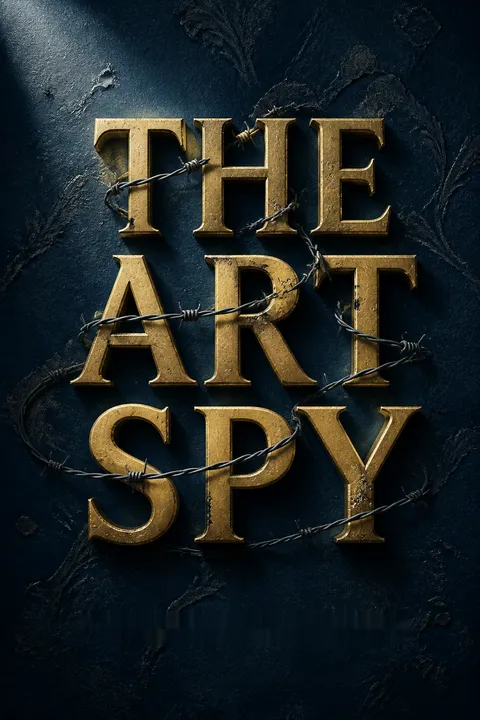
The Art Spy receives an overall rating of 4.1 out of 5 stars from 1,787 Goodreads reviews. Readers praise Michelle Young's well-researched account of Rose Valland, an unassuming art curator at Paris's Jeu de Paume museum who documented Nazi art looting during WWII. Reviewers appreciate the book's fast-paced, cinematic narrative and extensive detail, though some found the writing dry or textbook-like. Many note Valland's heroic, little-known story deserves recognition. Some critique that Rose isn't always front-and-center, with substantial focus on the Rosenberg family. The book is recommended for WWII history buffs and art enthusiasts.
People Also Read






Glossary
Einsatzstab Reichsleiter Rosenberg
Nazi art-seizure task forceThe Nazi organization commonly abbreviated as ERR, led by Alfred Rosenberg, that seized, cataloged, and redistributed cultural property in occupied Europe. In France, its operations targeted Jewish-owned collections and used art historians, photographers, police, informants, dealers, and transport networks. The Jeu de Paume became its Paris processing and storage center.
Kunstschutz
German army art-protection serviceThe German army's service for the protection of works of art and monuments in occupied territories. Its French head, Count Franz von Wolff-Metternich, objected to some Nazi seizures and tried to limit the removal of art from France. The institution's stated protective role existed within an occupying army and did not prevent the broader campaign of plunder.
M-Aktion
Seizure of Jewish household goodsA Nazi operation, named from Möbel, the German word for furniture, that emptied Jewish homes in occupied France. Furniture and household belongings were packed and sent elsewhere for use by German forces. The operation expanded far beyond its initial targets and operated alongside the seizure of artworks, while exposing the scale of dispossession beyond museum collections.
Salle des Martyrs
Storage room for modern artThe Jeu de Paume room where the ERR kept many modern paintings it classified as degenerate. The name, meaning Room of the Martyrs, was used ironically by Rose Valland. The paintings were at risk of being destroyed, traded, or sold. Their fate revealed how Nazi ideology and the market value of art could pull in different directions.
right of preemption
Priority purchase for cultural institutionsA French legal right that allowed a cultural institution to step in and purchase an artwork considered important to national heritage before a proposed sale to another buyer. Jacques Jaujard sought to use this mechanism to keep some looted works in French institutions. The tactic could preserve an object in the short term, but it did not itself restore ownership to the family from whom it had been taken.
drôle de guerre
The early, inactive phase of warThe French name, often translated as funny war, for the period after war was declared in 1939 when major fighting had not yet reached much of France. Paris life continued with cafés, theaters, and daily routines, despite air-raid alarms and military preparations. The term captures the uneasy mismatch between apparent normality and the approaching German invasion.
Ausweis
German-issued identity documentAn identification card issued under German occupation. Rose needed to show her Ausweis to enter the Jeu de Paume, where German sentries guarded the art-looting operation. The document allowed her to maintain access, but each inspection also exposed her to scrutiny and the possibility of losing the position that enabled her to observe the Germans.
Download PDF
Download EPUB
.epub digital book format is ideal for reading ebooks on phones, tablets, and e-readers.








