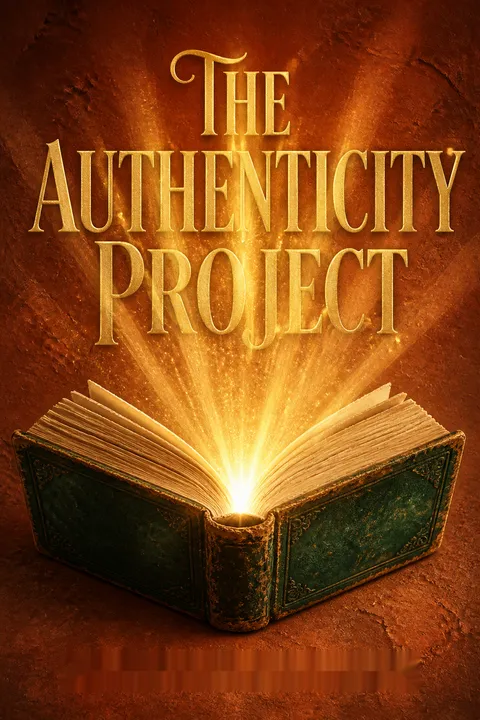


Plot Summary
The Green Notebook
Monica, a former City solicitor now struggling to keep her Fulham café solvent, finds a pale-green notebook left behind by Julian Jessop, an elderly portrait painter. Julian has written that he is lonely, still grieving his wife Mary, and has spent years retreating from the world. His memories reveal both a once-crowded artistic life and the selfishness that damaged his marriage.
Monica recognizes the book’s challenge in her own carefully managed life: she wants a husband and child, fears time is running out, and cannot make her business accounts balance. After a drunken stranger insults her outside the café, she opens the notebook again and writes about her longing, hoping honesty might change something.
The notebook turns private confession into a social act. Julian’s account is not a neutral self-portrait: it mixes genuine grief with a version of the past that excuses him, a tension that becomes important later. Monica’s entry likewise exposes the gap between her independent public identity and her private fear of missing out on family life. The book does not solve either problem by itself. Its power begins with a less magical mechanism: once these characters put their hidden needs into words, other people can respond to them rather than to the roles they perform.
Wine on the Pavement
The man who insults Monica is Hazard Ford, a City trader numbing himself with cocaine, alcohol, and casual encounters. The following morning, after another blackout, he admits to himself that he despises the life he has built. He quits his job, destroys his access to his dealer by abandoning his phone, and resolves to stop drinking and using drugs.
At a wine bar, he finds Julian’s notebook and reads Monica’s account of her business, her wish for a baby, and the death of a fellow solicitor that helped prompt her resignation. Her story gives him an unexpected task to focus on. He leaves London for a remote Thai island, taking the notebook with him and trying to begin recovery far from his old routines.
Hazard’s turning point begins not with noble insight but with shame: he notices that his contempt for Monica echoes his contempt for himself. His abrupt resignation and discarded phone are concrete attempts to interrupt a cycle that has made every ordinary feeling a cue for another high. Reading Monica’s confession gives him an outward-facing project, but it is also a way to avoid the harder work of examining his own life. The book therefore links generosity and evasion from the start. Hazard can do something kind for another person before he knows how to be honest about the damage he has done.
Julian Gets a Class
Monica finds Julian at his weekly drink in Brompton Cemetery, where he still visits the grave he and Mary once used as a meeting place. Rather than confront him about the notebook, she advertises for an art teacher at her café, hoping routine and students might draw him back into public life. Hazard secretly multiplies her single poster and places copies around Julian’s home and at the Admiral’s grave.
Julian follows the trail, accepts the job, and arrives at the first class in theatrical clothes carrying a cooked lobster for the group to draw. The lesson ends in an improvised supper, with the students sharing food and stories. More classes follow, and Monica’s café begins to attract the community she imagined when she opened it.
The class converts a confession into infrastructure. Monica’s response to Julian is practical rather than therapeutic: she gives him a schedule, a paying role, and a room where his expertise is useful. The lobster matters because it makes art social and imperfect, not a solitary performance by a celebrated painter. Hazard’s uncredited poster campaign also complicates the idea of authenticity: the group forms through an intervention nobody initially understands. Monica’s café becomes a place where people can arrive as customers and gradually become witnesses to one another’s lives.
Hazard’s Island Mission
On Koh Panam, Hazard counts twenty-three days without alcohol or drugs, enduring withdrawal and the return of feelings he had suppressed for years. The island’s beauty soon feels monotonous, so he occupies himself by screening male travelers as possible partners for Monica.
A Swedish teacher fails his test when he boasts about cheating on his girlfriend; another prospect cannot have children. Hazard’s matchmaking is clumsy, but it keeps Monica and Julian’s stories alive in his mind.
Then Riley Stevenson, an easygoing gardener from Perth, arrives in London-bound transit. Hazard decides Riley might suit Monica and deliberately sends him away with the notebook in his luggage, along with the café’s address. He hopes the book will bring its next reader into the story.
The island removes Hazard’s usual stimulation without immediately replacing it with insight. His matchmaking gives him a temporary sense of usefulness, but it also repeats his old habit of managing other people from a distance. He treats Monica’s desire for a family as a brief to fill and Riley as a candidate to assess. Yet sobriety has made him more attentive than he was before: he learns about strangers and tries to judge their suitability by conduct, not merely charm. His intervention may create a meeting, but it cannot guarantee honesty or love.
Riley Finds Fulham
Riley discovers the notebook on his flight to London and learns that Hazard has selected him for a matchmaking experiment. He goes to Monica’s café intending only to look, but Julian’s art class draws him in.
Monica invites him to Borough Market, where their differences become apparent: she calculates prices and worries about food safety, while Riley moves through the day with open curiosity. Their conversation also reaches Monica’s grief for her mother, and Riley responds with uncomplicated tenderness.
On London Bridge, he kisses her; she kisses him back. Riley enjoys their growing intimacy, yet keeps quiet about the notebook because he fears she will feel studied and manipulated. The secret turns an accidental-looking romance into a relationship carrying unequal knowledge.
Riley’s charm is not simply innocence; it is a style of attention that makes room for experiences Monica normally screens through planning and risk. Their kiss gives her a taste of spontaneity, but the relationship is compromised before either can name its terms. Riley knows Monica’s private hopes while she knows nothing of Hazard’s arrangement. His silence is meant to protect a promising moment, yet it preserves the imbalance that will later make the moment feel fraudulent. The novel distinguishes being kind from being transparent: good intentions do not cancel the consequences of withholding relevant truth.
A House Opens
As the art class grows, Julian begins teaching again and looks forward to being expected somewhere. Monica and Riley visit his cluttered cottage, where a forgotten note from Mary reminds him of the care she once put into their home.
Riley helps him sell unused possessions online, while Monica gives him an older smartphone. Baz’s grandmother, Betty Wu, begins teaching Julian tai chi in exchange for painting lessons, and she later joins the group at the cemetery with soup.
Monica also cleans Julian’s sitting room using scents he associates with Mary, then encourages him to paint freely. Julian joins her in an exuberant abstract painting. Their friendship gives him movement and company, though his home remains crowded with objects and memories he cannot yet release.
Julian’s recovery is built from acts that are modest but relational: a lesson to prepare, a phone that makes him reachable, tai chi with Betty, and friends entering a home he has allowed to decay. Monica’s cleaning is emotionally astute because she reconstructs remembered smells instead of insisting that order alone will help. The painting lesson then turns the clean room into a space for risk rather than preservation. Still, the chapter does not confuse renewed activity with complete change. Julian remains attached to the past, and his fear of losing Mary’s traces shows how grief can make familiar pain feel safer than a future one cannot picture.
Alice Behind the Filter
Alice Campbell, a young lifestyle influencer and mother to baby Bunty, watches Monica and Riley dancing in the café and envies their apparent freedom. At home, Alice’s online photographs conceal sleeplessness, painful feeding, a strained marriage to Max, and her reliance on wine to get through the day.
She finds the green notebook in a playground and reads its first entries after a tense Christmas with Max. Julian’s loneliness and Monica’s longing unsettle the polished stories she posts about herself.
Alice recognizes Monica as the woman she had watched dancing, then sees her crying alone in the café after Riley and Hazard are sent away. Carrying the notebook, she tries to approach Monica, but Monica rejects her sharply, leaving Alice with a new awareness of how little public images reveal.
Alice’s envy is reciprocal with Monica’s: each sees the other as possessing the life she lacks. The notebook breaks that illusion, but it does not instantly produce solidarity. Alice has learned intimate facts about Monica without earning her trust, so her offer of help lands as intrusion. Her own predicament is also shaped by the performance economy of social media, where polished images generate approval while making ordinary distress harder to admit. The scene insists that disclosure alone is not intimacy. People need consent, timing, and a relationship in which truth can be received rather than merely observed.
Christmas Comes Apart
At Christmas lunch in Monica’s café, Julian accidentally reveals that Baz is gay before Baz has told Betty, his beloved grandmother. Baz leaves in anger, fearing Betty will never accept Benji or the future they want.
The gathering is still raw when Hazard arrives from Thailand, expecting gratitude for his matchmaking. He explains that he planted the art-class posters and sent Riley back with the notebook. Monica realizes Riley knew her private hopes before they met and believes their romance began as a pity project.
She throws the Christmas pudding and orders both men out. Riley insists his feelings became real, but his delay in telling her has destroyed her trust. Later, Alice approaches Monica with the notebook and is rejected too. Christmas leaves several people isolated at once.
This rupture exposes the cost of treating other people’s lives as solvable projects. Hazard’s plan did create connections, but he never asked Monica whether she wanted her vulnerability used as a matchmaking brief. Riley’s feelings may be genuine, yet the concealed origin of the relationship gives Monica reason to doubt her own experience. Julian’s mistake with Baz raises a related question: whether truth belongs to the speaker or to the person whose secret is being disclosed. The novel does not make honesty a simple virtue. Truth can free people, but timing, consent, and responsibility determine whether it heals or harms.
The New Year Search
After Christmas, Julian stops answering his door and phone, and Monica, Riley, Hazard, Baz, and Betty join forces to find him. Betty directs them to his cottage, where they discover him in bed, confused and dangerously cold after retreating from the group. Monica arranges medical help, food, and warmth; Riley and Hazard assist, while Betty brings soup.
The incident forces Monica to recognize that her anger has not erased her care for Julian. It also gives Baz a chance to apologize for his outburst, while Betty begins to reconsider the future she had imagined for her grandson. On New Year’s Eve, the group stays with Julian, and his friends welcome the year together rather than leaving him alone.
The rescue makes community tangible: concern becomes a search, a forced entry, heat, soup, and medical attention. Julian’s withdrawal is not romantic solitude but a physical danger that other people must interrupt. Monica’s return to his side shows that friendship can survive anger without pretending the injury did not happen. The crisis also shifts Betty’s resistance from abstract family duty toward the people actually caring for Baz. The scene’s emotional work lies in ordinary labor. Nobody can cure Julian’s grief or settle every conflict, but they can notice his absence before it becomes irreversible.
Paris and the Garden
Alice recruits Riley to restore the overgrown garden at Mummy’s Little Helper, a childcare center for women in addiction recovery. Julian donates his share of the money earned from selling his possessions, and Hazard later helps turn the work into a gardening business with Riley and other Australian workers.
Alice’s exhaustion and marital isolation become harder to hide, and volunteer Lizzie begins supporting her with Bunty. Monica organizes an art-class trip to Paris, where the group navigates galleries, lost luggage, and a thief who steals Betty’s bag before Benji tackles him and gets it back.
On the return train, Riley finally explains to Monica how the notebook brought him to her. Monica accepts his apology but does not yet restore their romance.
The garden extends the book’s central metaphor into practical work: Riley and Hazard help create a place where children can play, while the center supports mothers who are trying to recover. Alice’s influence becomes more than a stream of curated images when she uses it to connect resources and people. Paris, meanwhile, tests the group as a temporary collective, complete with comic mishaps and genuine danger. Riley’s belated confession begins repairing the truth deficit, but forgiveness is not an automatic return to intimacy. Monica can believe his apology and still need to decide what kind of future she wants.
The Wedding Relapse
Hazard’s gardening business begins to thrive, and he joins Monica at the wedding of Daphne and Rita, two women he met while recovering in Thailand. Believing he can drink moderately, he accepts champagne, then continues through wine and cocaine with Annabel.
He insults Monica when she tries to stop him, reverting to the bullying man who first collided with her. Riley travels to the wedding and drives Monica and the minibus home, while Hazard lies intoxicated in the back.
The next morning, Hazard apologizes and admits that his confidence in moderation was false. Monica tells him about the compulsive cleaning she developed after her mother’s death, and he recognizes the shared urge to escape unbearable feelings. Their friendship deepens, but romance remains uncertain.
The relapse is not presented as a surprise villain taking over Hazard, but as a familiar bargain: one drink will supposedly prove that he is now different. His return to drugs shows how quickly confidence can become permission, especially when he has not disclosed his addiction to Monica. Her account of compulsive cleaning makes their bond more reciprocal. She is not merely the stable person monitoring him; she has her own history of trying to control what cannot be controlled. Their exchange creates empathy without absolving Hazard of the harm he causes.
Mary Walks In
For the fifteenth anniversary of Mary’s supposed death, Monica and the art-class friends prepare a café gathering with photographs, daffodils, and food Julian loves. Julian arrives late, caught up in his new social-media attention, and Monica challenges his absence and his fading commitment to the friends who helped him. Then a white-haired woman enters and identifies herself as Mary.
She has received the notebook from Lizzie, who found it after it disappeared from Alice’s bag. Mary explains that she left Julian fifteen years earlier after decades of infidelity and feeling diminished, then built a happy life with Anthony. Julian admits he had recast her as dead because facing his responsibility was harder than living with a fiction.
Mary’s arrival changes the notebook from a record of grief into evidence of self-deception. Julian’s loneliness was real, but his account erased the living person whose departure he had caused. Mary’s explanation restores her agency: she did not vanish into his loss; she chose to leave and made a life beyond him. The revelation also exposes how storytelling can protect a self-image by converting guilt into tragedy. Julian must now meet Mary as a person rather than as a memory he controls, while Monica confronts the danger of trusting a compelling narrative without testing what it leaves out.
The Stories Turn Back
After Mary’s return, Monica recognizes that her closeness with Riley cannot become the future she imagined. She tells him she does not love him enough to travel with him, though they part with affection and regret.
Mary then tells Monica she saw Hazard looking at her with unmistakable longing. Monica has read Hazard’s page in the notebook and is hurt by his judgments about her, so when he visits to confess his feelings, she throws the book at him and sends him away.
Riley sees Hazard in Monica’s apartment and wrongly assumes they are together, then decides to leave without asking. Meanwhile, Julian accepts that his possessions and refusal to sell his cottage are burdening his neighbors. Mary urges him to begin again, and he agrees to sell.
Monica’s decision is not a simple rejection of romance; it is a refusal to treat marriage and motherhood as proof that her life has succeeded. She releases Riley because affection cannot erase their mismatch, and rejects Hazard because desire cannot erase his earlier contempt. Her reading of his notebook entry makes intimacy feel risky again: she has been both exposed and misjudged. Julian’s decision to sell offers a parallel movement away from the past. Each character must give up a story that once made life manageable, even when the next chapter remains unknown.
The Locked Cemetery
Monica reads the notebook more fully, sees the limits of Hazard’s first impression, and considers Mary’s judgment that he is more complicated than he appears. At the same time, Riley leaves London believing Monica has chosen Hazard, though she has not.
Hazard waits at the Admiral’s grave after inviting Monica to meet him, convinced she will not come. The cemetery gates are locked by the time Monica arrives, but a Chelsea supporter helps her climb the wall. She finds Hazard hiding near the tomb and kisses him.
They are discovered by the park police and must explain why they are inside after closing. By morning, Monica has slept at Hazard’s apartment, and he has cleared a drawer for her. She agrees to try living without scripting every outcome.
The locked cemetery gathers the novel’s central tensions into one physical choice. Monica, who values rules and preparation, climbs a wall because she wants to act on desire rather than wait for certainty. Hazard does not win her through a flawless declaration; he waits, awkward and unsure, after she has already formed her own judgment. The drawer is a small, concrete invitation rather than a promise of marriage or children. Their beginning remains tentative. What changes is Monica’s willingness to enter an uncertain relationship without mistaking uncertainty for failure.
A Table for Strangers
Monica helps Julian launch a weekly supper club where neighbors can eat together, with higher-paying guests covering meals for those who cannot afford them. Julian finally sells his cottage, agreeing that preserving his memories there has become unfair to his neighbors.
Alice, overwhelmed by the distance between her online persona and her marriage, takes Bunty to Lizzie’s home for space and support; she begins confronting her life without instantly deciding its shape. Hazard commits himself to gardening work and sobriety, while Monica builds a relationship with him without surrendering her café or friendships.
Benji and Baz plan a wedding with Betty’s growing support. At Riley’s farewell gathering in Kensington Gardens, Mary plays her viola, the returned notebook rests with Julian, and the friends celebrate the lives they have made together.
The resolution replaces the fantasy of one perfect household with a network of imperfect forms of care. The supper club makes loneliness answerable through a shared meal, while the garden gives children and recovering mothers room to grow. Alice’s choice to leave temporarily is not framed as a neat marital solution, but as an honest need for space. Julian’s sale is an ethical act as well as a personal release. The story’s happy movement is collective: people can offer shelter, food, work, and company without pretending that every wound has been repaired.
Epilogue
At dusk in Kensington Gardens, park workers Dave and Salima spot an elderly man asleep in a deck chair beside a scruffy terrier. Dave approaches, hoping to send him home before the park closes, then discovers that the man has died. The dog remains beside him like a guard.
As Dave calls emergency services, he notices a green notebook in the dead man’s hand and carefully removes it for the next of kin. Its cover bears the name The Authenticity Project. The book has outlived its first owner and passed through another life, leaving the next story unwritten.
The ending returns the notebook to circulation, but not as a guarantee that confession saves everyone. Julian dies after finding connection, rather than being rescued from mortality, and the book becomes a material trace of the community he helped create. Dave’s discovery also echoes Monica’s first encounter with the notebook: an ordinary person notices an object and chooses not to discard it. The novel closes its emotional arc without closing the device’s narrative potential. Stories can invite care, yet each new reader must decide what honesty will require of them.
Analysis
The novel treats authenticity not as a pure, unfiltered self waiting beneath social roles, but as a practice that requires accountability. Julian’s notebook begins with an invitation to tell the truth, yet his own account hides the fact that Mary left him because of his behavior. Monica’s confession is sincere but focuses on a wished-for family more readily than on the grief and compulsions shaping her need for control. Hazard’s story admits addiction while still casting himself as a potential rescuer of Monica. Each account reveals something real and leaves something out. The people around the writer must decide how to respond without mistaking disclosure for complete knowledge.
That distinction gives the book its psychological texture. Julian turns guilt into elegy; Hazard turns restlessness into stimulation; Alice converts distress into carefully composed images; Monica manages fear through plans and cleanliness. These defenses are not presented as mere flaws. They once helped each person function, but become costly when they prevent reciprocal relationships. Change begins when another person offers a practical alternative: a class to teach, a garden to tend, a baby to help care for, a meal to share. The novel grounds emotional repair in schedules, kitchens, tools, and rooms rather than in insight alone.
Its community is deliberately improvised. The café, cemetery, childcare center, and shared table gather people with mismatched ages, histories, and needs. They do not erase conflict: Baz is hurt by Julian’s disclosure, Monica rejects both men at different points, and Hazard’s relapse injures the trust he has been building. Yet connection gives those failures consequences beyond private shame. People can apologize, return, and do useful work together, though forgiveness is neither automatic nor identical to reconciliation.
The ending refuses a simple equation between happiness and romantic completion. Monica chooses a relationship only after learning to imagine a life that does not depend on a husband or baby; Alice begins to question the marriage and persona she once treated as proof of success; Julian can accept both accountability and mortality. The green notebook continues onward, but its promise is modest: truth may start a conversation. Living truthfully requires what comes after, listening, correction, responsibility, and the willingness to let other people remain more complicated than the stories we tell about them.
Review Summary
The Authenticity Project receives mixed reviews, averaging 3.93/5. Many readers praise its uplifting, feel-good premise — a notebook passed between strangers encouraging authentic self-expression — and its lovable, quirky characters. Positive reviews highlight its warmth, humor, and community-building themes. Critical reviews cite poor writing, repetition, shallow characterization, implausible scenarios, and excessive length. Julian and Monica are frequently mentioned as standout characters. Overall, fans recommend it as a light, cozy read, while detractors find it clichéd and unbelievable.
People Also Read









Characters
Monica
The café-making plannerMonica is a former corporate solicitor who has traded billable hours for the café she built in memory of her mother. She is observant, organized, and deeply attentive to practical details, from customer allergies to whether the accounts will cover next month’s rent. Planning protects her from the uncertainty she fears, especially around love, age, and the possibility of having a child. Her generosity is active rather than sentimental: she creates classes, makes room for lonely neighbors, and notices when someone needs help. Beneath her competence is a history of grief and compulsive cleaning that she rarely shares. Monica’s central tension is not independence versus romance, but control versus the possibility of living without guarantees.
Julian Jessop
The vanished portrait painterJulian is an elderly artist whose former celebrity and flamboyant style contrast with years of isolation in his Chelsea cottage. He watches people closely and can make a room feel vivid, yet his charm has often served his own appetite for admiration. He depends on clothes, paintings, and remembered stories to keep the past near, while routine helps him manage the present. Julian is perceptive about others but less reliable when describing himself; he reshapes memories to avoid guilt and vulnerability. His attachment to Mary, his art, and his home gives him emotional depth, but it can also become a shelter from accountability. He is capable of warmth and reinvention, though not without confronting the ways his self-mythology has harmed others.
Hazard Ford
The recovering City traderHazard is a former equity trader whose polished confidence hides a long dependence on cocaine and alcohol. He has learned to use money, stories, and flirtation to keep people entertained and himself unexamined. When the drugs no longer deliver pleasure, he faces the fear and self-disgust he has been muting. His quick wit and instinct to intervene can be generous, but they also make him prone to managing people without asking what they want. Hazard is most compelling when his performance slips and he admits uncertainty. His struggle is not simply to stop using substances; it is to build a life in which work, friendship, and self-respect do not depend on the next rush.
Riley Stevenson
The Perth gardenerRiley is a thirty-year-old gardener from Perth who arrives in London with an open, unhurried way of meeting people. He is physically confident but emotionally less experienced with the complexities that others carry, and people sometimes mistake his optimism for simplicity. Gardening gives him a practical language for care: he notices what needs tending and is willing to work with his hands. His connection to Monica draws him into questions about honesty, commitment, and whether good intentions excuse silence. Riley values directness, but he does not always act on it quickly enough. He brings warmth to the group without being immune to hurt, and his ease with change can be both a gift and a source of misunderstanding.
Alice Campbell
The curated new motherAlice is a young mother and social-media influencer whose polished online identity conceals exhaustion, loneliness, and uncertainty about marriage and motherhood. Before Bunty’s birth, she worked in public relations; afterward, she struggles to recognize herself outside the roles of wife, mother, and online brand. She loves her daughter but feels ashamed that daily care can be monotonous and painful. That shame intensifies her dependence on the approval her posts bring. Alice is not merely vain: her platform can mobilize attention and resources, and she wants to be useful. Her psychological challenge is to let people see a life that is still valuable when it is messy, private, and impossible to frame as aspirational.
Mary Jessop
The midwife beside JulianMary is a midwife whose practical kindness helped make Julian’s once-busy home welcoming to friends, children, and artists. She is often described through his memories, which makes her easy to mistake for a supporting figure in his story. In reality, her warmth coexists with a clear sense of dignity and a capacity to make difficult choices. She values loyalty, but she is not defined by patience alone. Her relationship with Julian places care and self-erasure in uncomfortable proximity: she can love someone while recognizing that love does not require her to accept every injury. Mary’s perspective challenges romanticized accounts of devotion and asks what a person must reclaim in order to feel fully seen.
Lizzie Green
The observant caregiverLizzie is a retired childcare worker who now helps at Mummy’s Little Helper. Curious about everyone’s business, she has a reputation as a neighborhood watcher, yet her nosiness is paired with practical generosity. She knows who lives alone, who needs support, and which small signs suggest that a household is struggling. Lizzie’s instinct is to intervene, sometimes before anyone has invited her in. She offers Alice childcare and attention at a moment when the polished public version of motherhood is no longer sustainable. Her experience teaches her to recognize distress without turning it into spectacle, even as she must learn that concern can overstep boundaries.
Baz Wu
The restaurant heirBaz, also called Biming by his grandmother, is a young man from a Chinese family whose restaurant is part of the local neighborhood. He is affectionate and funny, and his relationship with Benji is an important part of his life. He also feels the pressure of family continuity, especially the expectation that he will inherit the restaurant and produce descendants. Baz’s devotion to Betty makes disclosure difficult, even when secrecy strains his relationship. His anger, when it surfaces, comes from fear and a wish to control how his family learns the truth. He is caught between filial loyalty and the right to shape his own future.
Benji
The café’s steady baristaBenji is Monica’s barista, a red-haired Scot whose easy humor helps turn the café into a welcoming meeting place. He is in a committed relationship with Baz and is patient with the family pressures surrounding them. Benji is less flamboyant than Julian and less strategic than Monica, but his steadiness matters: he shows up, works, cooks, and offers affection without demanding attention. When conflict leaves Baz frightened and withdrawn, Benji gives him room rather than forcing an immediate resolution. His role connects the café’s everyday labor to the larger question of who gets to feel at home in a family.
Betty Wu
The formidable tai chi teacherBetty is Baz’s grandmother, a Chinese immigrant with a strong will and a talent for meeting hostility with hospitality. She teaches Julian tai chi and shares food with the group, building connection through movement and cooking. Her expectations for Baz are rooted in love, cultural continuity, and the restaurant she helped establish, but those expectations can leave little room for his own choices. Betty is forceful enough to command a room and tender enough to worry about the future of her family. Her shifting response to Baz’s life shows how affection can coexist with fear, and how practical examples of care may change what argument alone cannot.
Daphne Corsander
The island’s retired travelerDaphne is a British retiree living for an extended period on Koh Panam, where she shares a close bond with Rita. Her son Roderick visits, believing his mother is still grieving her husband and not fully understanding the life she has made on the island. Daphne’s later-life companionship unsettles conventional assumptions about when people are allowed to begin again. She is warm but independent, and her choices quietly demonstrate that family members can love one another without completely understanding one another.
Rita
Daphne’s island companionRita is a retired traveler who has settled on Koh Panam and formed a close relationship with Daphne. Her strict manners and decisive opinions make her a memorable presence at the communal table. Like Daphne, she has built a life beyond the expectations others may have placed on her. Their partnership offers Hazard a glimpse of affection that is not organized around youth, status, or performance.
Roderick
Daphne’s well-meaning sonRoderick is Daphne’s cheerful son, a divorced estate agent who visits her on Koh Panam. He sees his mother’s island stay through the familiar story of a widow needing time to grieve, missing the fuller reality of her life there. His assumptions are affectionate rather than malicious, but they show how family members can mistake concern for understanding.
Max
Alice’s distant husbandMax is Alice’s husband and Bunty’s father, a successful professional whose long hours and need for control become more visible after the baby arrives. He misses the polished life he and Alice had before parenthood and struggles to find a place in the daily care of their child. His dissatisfaction emerges as criticism and withdrawal, leaving Alice to shoulder most domestic work. Max is not a simple antagonist: he too feels displaced, but his failure to share that burden fairly deepens the distance between them.
Bunty
Alice’s demanding babyBunty, whose given name is Amelie, is Alice and Max’s infant daughter. Her feeding, sleep, and care shape the rhythm of Alice’s days and expose the physical realities hidden by family photographs. Bunty’s needs are ordinary, but their constant repetition forces her parents to confront how little their former routines prepared them for shared responsibility.
Anthony
Mary’s devoted partnerAnthony is Mary’s later-life partner, a widower who treats her with steady affection and makes room for her independent identity. His presence offers a contrast to relationships built on admiration without reciprocity. He is content to let Mary’s history remain hers rather than trying to replace it.
Patricia Arbuckle
The neighbors’ association chairPatricia is Julian’s neighbor and chair of the residents’ association. She presses him to respond to the freeholder’s offer because the studio lease is nearing its end and the residents’ investments are at risk. Her brusque approach reflects real urgency, not mere hostility: Julian’s refusal to decide affects everyone around him.
Tanya
The warning from Monica’s old lifeTanya is a fellow City solicitor whose suicide becomes a painful warning for Monica. Monica never knew her personally, but the image of Tanya as a high-achieving professional with an apparently promising future helps Monica recognize how empty her own work-centered life has become.
Dave
The park worker who finds JulianDave is a parks worker whose final shift brings him to an elderly man resting in Kensington Gardens. He approaches with the ordinary task of clearing the park, then notices the man has died and preserves the notebook in his hand. His brief appearance returns the story to the small acts of attention on which its chain of connection depends.
Plot Devices
The Authenticity Project
A chain of private truthsJulian’s green exercise book asks each reader to write one truth about themselves and pass it onward. Julian, Monica, Hazard, Riley, and Alice add accounts that let strangers see beyond public roles, but the book also creates unequal knowledge and tempts readers to judge people from a few pages. It travels between the café, Thailand, London, a playground, and a childcare center, connecting characters who might never otherwise meet. Its most important function is not to provide a reliable record. Each entry is partial, shaped by the writer’s needs, and later challenged by events or by another person’s perspective. The notebook creates openings, not verdicts.
Monica’s Café
A neighborhood meeting placeMonica builds the café as an alternative to anonymous chain shops, filling it with books, comfortable chairs, and personal attention. It becomes the practical setting for Julian’s art classes, shared meals, community events, and the friendships formed around them. The café also puts pressure on Monica: she must make its accounts work while nurturing a social life that can blur the line between owner and friend. Its transformation from struggling business into a local hub tracks her ability to create the kind of connection she once wanted for herself.
The Admiral’s Grave
A recurring place of returnJulian visits the grave of Admiral Angus Whitewater every Friday, preserving a ritual from the years when he and Mary met friends there. The cemetery holds memory without requiring Julian to enter his crowded cottage, and its public setting lets new friends gradually join an old private habit. It becomes the site where characters wait, remember, and make choices. The grave’s permanence contrasts with the living people who gather around it, while its repeated use turns an isolated memorial practice into a shared landmark.
Curated Social Media
A polished public maskAlice’s Instagram account presents an attractive version of motherhood that conceals exhaustion, pain, and marital strain. Later, her skill with the platform helps Julian find an audience for his clothes and art, and helps draw attention to community work. Social media is therefore neither simply false nor simply useful. It rewards polished images, but can also distribute information and resources. Alice’s changing relationship with the platform asks whether visibility is meaningful when the person being seen has edited away her actual needs.
Art and Gardening
Care made visible through workJulian’s drawing classes give students a regular reason to gather, while Riley’s gardening helps turn neglected spaces into places where people can grow and play. Both activities require attention to what is actually present: the contour of a hand, the condition of soil, the needs of a living subject. They counter the characters’ habits of retreating into memory, fantasy, or performance. Art and gardening also create useful roles for people who feel unseen, turning private skill into a contribution others can recognize.
About the Author

Download PDF
Download EPUB
.epub digital book format is ideal for reading ebooks on phones, tablets, and e-readers.








