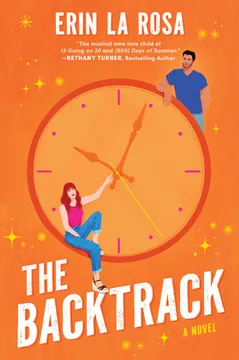


Plot Summary
Prologue
At fifteen, Sam Leto and Damon Rocha are best friends who share music, jokes, and the unspoken closeness of two people who may want more. After marching band practice, Damon gives Sam a mix CD and asks to kiss her.
Sam wants to say yes, but her mother’s warning against getting trapped in Tybee has become a commandment. Afraid that love will keep her from leaving, Sam pretends she feels ill. Damon turns away, hurt, while Sam holds the CD and lets their friendship fracture around the choice she cannot bring herself to explain.
The first refusal is less a rejection of Damon than an attempt to escape the future Sam associates with her mother. At fifteen, she treats love as a binding contract: if she kisses Damon, she will belong to Tybee and lose the life she has imagined elsewhere. Her lie protects her immediate ambition, but it also denies both teenagers a chance to name what they feel. The unopened CD becomes a material record of that silence. Sam’s later regret grows not from choosing a career, but from believing that intimacy and self-determination cannot coexist.
The Island Calls Her Back
At thirty-two, Sam is an international pilot who has built her life far from the Georgia island where she grew up. She returns to help her grandmother, Pearl, decide whether to leave the family cottage as her memory falters. Damon, whom Sam has not seen in eleven years, arrives with news that Pearl has broken her wrist.
Their reunion is awkward and warm, and he recognizes the CD player she still keeps from high school. When they touch it together, a static jolt runs between them and the old machine lights up. Sam stays to care for Pearl and sort the house, but the long-buried question of what she and Damon might have been is already in the room.
Sam’s return begins as practical caretaking, but the house immediately exposes the emotional costs she has kept out of view. Her childhood room preserves the ambitions that helped her leave, while the player preserves a friendship she never properly ended. The charged contact with Damon makes memory physical before Sam understands its cause. Her competence in the cockpit contrasts with her uncertainty at home: she can manage turbulence when the danger is measurable, but not the consequences of an old choice. Pearl’s injury also makes Sam confront the fact that family needs cannot be postponed indefinitely.
A Kiss Rewrites History
Sam finally plays the CD Damon made for her. As Evanescence fills her headphones, she is transported to the high school parking lot on the night she turned him down. This time, her younger self accepts his invitation to kiss, while adult Sam watches unseen. Damon also retrieves the moonstone earring Sam lost that night and slips it into her clarinet case.
Back in the present, Sam finds the earring exactly where the vision showed it, confirming that the experience was not an ordinary dream. Each song appears to open onto a different memory from a life in which she and Damon became a couple, and Sam cannot resist pressing on.
The earring transforms the visions from private fantasy into evidence. Sam is not simply indulging nostalgia; the alternate past has left a trace in the material world. The changed kiss also makes visible how much of her life has been organized around a single refusal. Yet the vision does not declare that her real choices were wrong. It gives her a comparison, not a verdict. That distinction matters because Sam initially treats the alternate timeline as an ideal answer key, despite having no idea what its apparent happiness might cost.
The Couple in the CD
The next tracks show Sam and Damon dating through high school. They hold hands at their lockers, trade affection during a Twilight screening, and skip a school activity together. Their closeness makes Sam’s alternate self bolder with Myles, the former jock who mocked them, and even the adult Sam enjoys seeing her younger self push back.
At first, the scenes seem to confirm that choosing Damon would have made Sam happier. But the visions also reveal small differences: this Sam is less focused on grades and less careful about following plans. The player is not replaying Sam’s memories. It is showing a life that changes with every decision, including the parts she once believed were essential to becoming herself.
The early visions tempt Sam with emotional ease: her alternate self receives the affection she once denied and appears more socially confident. But the scenes also unsettle her because they alter more than her romantic history. A different relationship changes habits, risks, and priorities. Sam’s instinct is to compare the two versions of herself as if one must be superior, which reflects the perfectionism that helped her succeed and now limits her ability to imagine complexity. The alternate life is attractive partly because it makes an old wound look repairable, not because it has yet shown its full consequences.
Prom Goes Off Course
On prom night, Damon drives his father’s prized convertible too fast while trying to impress Sam. The vision ends as their car approaches an intersection, leaving adult Sam unsure whether they survived. Later tracks answer the question: both live, but Sam suffers lasting double vision and needs corrective surgery before she can pursue flight school.
At graduation, she is no longer valedictorian, and Damon plans to study nursing instead of building a brewery with his sister. Sam is still reaching toward the sky, but her route has become slower and less certain. The player’s romantic alternative has begun to trade the real Sam’s carefully won opportunities for a life shaped by injury, money pressures, and early compromises.
The crash makes consequence unavoidable. Love did not cause the accident by itself; Damon’s recklessness did. Yet the alternate timeline links their shared adolescent choices to lasting limits on Sam’s mobility and ambitions. The vision challenges a romantic fantasy in which being together simply adds happiness to an unchanged life. Sam begins to see that a different choice would have remade the conditions under which she became a pilot. The contrast is not between love and success in the abstract, but between two specific lives with distinct costs, including a body that cannot do what its owner once planned.
Love's Alternate Cost
The later visions carry Sam and Damon into adulthood. They move into a modest house together, and Sam discovers she is pregnant. She miscarries, while her vision problems continue and her savings for surgery dwindle. Damon begins nursing school and tries to support her, but their plans increasingly revolve around bills, work, and her stalled route to flight school.
The surgery eventually fails, leaving Sam with glasses and the fear that she may never fly. At the opening of Farrah’s bar, the couple argue because Sam feels trapped and Damon cannot understand why she is withdrawing. Sam watches the life she once imagined with Damon become loving but constricting, a future in which affection cannot substitute for the freedom she needs.
These scenes correct Sam’s early idealization without making the alternate relationship a mistake in itself. The couple’s love is real, but it cannot cure grief, financial strain, or an ambition repeatedly deferred. Sam’s parallel with her mother begins to emerge: when a woman feels that her life has narrowed beyond recognition, devotion alone may not restore her sense of agency. The visions also expose the danger in treating self-sacrifice as proof of love. Damon’s support matters, yet Sam’s alternate self still needs an independent direction, and the relationship cannot provide that decision for her.
The Present Has Competition
In the present, Sam visits Damon’s brewery and finds him with Marissa, a surgeon he has been dating casually. At a family barbecue, Damon and Sam share a charged samba before Marissa arrives, and Sam sees how easily her old intimacy with him returns. She tries to repair their friendship by taking Damon kite-flying and then showing him the island from a small plane, where they spot an endangered right whale.
Sam admits she was a poor friend and apologizes for disappearing. Later, at the brewery, she accidentally brushes her lips against his while reaching for a hug. Rachel, Sam’s copilot and closest friend, arrives, hears about the strange visions, and believes her, even as Sam struggles to name her feelings.
Marissa makes Sam’s longing concrete by placing another person inside the space Sam has treated as a private memory. Her jealousy is uncomfortable because it reveals that her regret is no longer purely retrospective. The outings with Damon also reintroduce their friendship through shared pleasure rather than through the old wound alone: the kite, the plane, and the whale show two adults discovering each other again. Sam’s apology acknowledges the consequence of her long absence, but it does not erase it. Rachel’s belief offers a stabilizing counterweight, allowing Sam to test her experience without surrendering her judgment.
Rain Breaks the Distance
As a hurricane approaches, Sam struggles to board Pearl’s windows alone. Damon comes to help, and while they work in the rain, he asks why she rejected him as a teenager. Sam admits she wanted to kiss him but feared that loving him would keep her in Tybee and make her repeat her mother’s life. Damon tells her he still wants her.
They kiss, then retreat to Sam’s childhood bedroom and sleep together. Their happiness is interrupted when Pearl brings news that Damon’s mother needs him. Soon after, Bonnie, Sam’s estranged mother, appears at the cottage during the hurricane. Sam is left with the intimacy she has finally chosen and the unresolved family history she has spent years avoiding.
The storm externalizes the emotional pressure that Sam has tried to control through distance and planning. Her explanation to Damon distinguishes fear of being trapped from lack of love, allowing the old refusal to be understood rather than merely regretted. Their intimacy is a genuine choice in the present, not a reproduction of the CD’s alternate past. But the timing prevents romance from becoming an escape hatch: Damon must return to his family, and Bonnie’s arrival forces Sam to face the original source of her fear. The scene leaves desire and responsibility tangled together rather than neatly resolved.
A Tree Breaks In
During the hurricane, Sam listens to another track and sees her alternate self at the ice cream shop, where Myles presses his attention on her before Damon arrives to support her ahead of eye surgery. Another song shows Alt-Sam flirting with Myles while unhappy with Damon, then trying to end the relationship. As Sam watches, a palm tree crashes through her real bedroom window.
Pearl and Bonnie pull her from the trance and into the house’s protected hallway. After the storm, Sam learns that Bonnie has returned hoping to explain herself. The damaged room leaves Sam without her familiar retreat, and she goes to Damon’s home, carrying the player and the growing suspicion that the visions are not simply promising a second chance.
The broken window collapses Sam’s separation between memory and present danger. While the player shows an alternate Sam crossing boundaries and contemplating departure, the hurricane damages the actual room where Sam has used music to retreat from family conflict. Her mother and grandmother now protect her together, though their old tensions remain. Myles’s appearance also complicates Sam’s assumption that a changed past would preserve the same romantic certainty. The visions increasingly portray distress, not destiny. Sam is beginning to encounter the alternate self as a person with needs and failures, rather than as evidence that she chose the wrong life.
The Last Track Leaves
At Damon’s house, Sam discovers that the player works again when he touches it. She delays the final song, then secretly listens while he sleeps. The vision shows Alt-Sam explaining that she must leave Tybee, become a flight attendant, and find herself after years of depression, miscarriage, and disappointment.
Damon is devastated, but she goes. Sam realizes the alternate relationship did not fail because they lacked love; it failed because her other self had lost her own direction.
She tells Damon the truth about the player, and he listens to the playlist from the beginning. Seeing the full arc for himself, he asks Sam not to treat the visions as a prophecy. Sam still refuses to commit, convinced their different lives make them impossible.
The final vision overturns the premise Sam has been building toward. The alternate timeline is not a route to a hidden happy ending but a demonstration that the same longing can lead to a different form of self-erasure. Alt-Sam leaves not because she has stopped loving Damon, but because remaining has become psychologically untenable. Sam recognizes the parallel with her mother, yet initially converts that insight into fatalism: if the other couple separated, then she and Damon must be doomed too. Damon’s response introduces a competing interpretation, one based on present agency rather than supernatural prediction.
The Warning Was Misread
After the storm, Bonnie tells Sam that depression and drinking once made her feel unable to care for herself or her daughter. She says she tried to return, but Pearl discouraged her, fearing another abandonment. Pearl later confirms that she did keep Bonnie away, believing it protected Sam. Sam confronts her grandmother for allowing her to think her mother never wanted her.
Pearl apologizes and admits she mistook Sam’s silence for recovery. Jessie offers Pearl a place to live, giving the family a practical way to leave the damaged cottage without isolating her. When Bonnie clarifies that her old warning was about depression, not Tybee, Sam finally sees that she has built her life around a misunderstanding.
The family revelation replaces a simple story of abandonment with a painful chain of protection, shame, and withheld information. Bonnie’s depression helps explain her departure, but does not cancel the harm Sam experienced. Pearl’s motive is understandable, yet her silence deprived Sam of the chance to form her own judgment. The crucial correction about the warning changes Sam’s central fear: she was not commanded to escape a place, but cautioned against a state of despair. This reframing does not erase her ambition to travel. It allows her to imagine returning without confusing belonging with surrender.
A Future They Can Share
Sam agrees to begin rebuilding trust with Bonnie through small steps, while Pearl considers moving in with Jessie rather than entering a retirement home. With her family behind her, Sam goes to Damon’s brewery dressed in her old emo clothes. She apologizes to Marissa, who accepts that Damon’s feelings lie elsewhere, then finds Damon and makes a public musical gesture with a song from their shared past.
Sam tells him she wants a future together, not because the CD predicted it, but because she chooses him now. They plan to divide their time between Paris and Tybee, preserving Sam’s flying career and Damon’s brewery. At sunrise, they snap the old CD in half and keep the player as a reminder rather than a guide.
Sam’s return to Damon is meaningful because it does not require her to become Alt-Sam or abandon the life she built. The practical plan to split time between two homes answers the fear that love means being trapped in one place. Her apology to Marissa recognizes that choosing Damon carries obligations beyond private desire. The broken CD marks a shift from counterfactual authority to shared authorship: Sam and Damon can remember what almost happened without letting it dictate what happens next. Family reconciliation remains cautious, but Sam has stopped treating distance as the only protection against repeating her mother’s pain.
Epilogue
On a flight to Casablanca, Sam lands the plane smoothly while Rachel jokes with her about the crew’s matchmaking game. Damon is aboard for their first vacation together, wearing his brewery sweatshirt and newly revived red hair tips.
He brings out Sam’s travel bingo card, the one he made for her in high school, and they mark off Casablanca together. The last square is no longer a private goal Sam has to complete alone. As they plan a new card, their shared future feels less like a destination fixed in advance than an adventure they can keep revising.
The epilogue joins the book’s opening images of aviation, music, and the travel card without returning Sam to the old binary between ambition and intimacy. She remains a captain, Damon accompanies rather than contains her, and the completed list becomes a shared record instead of proof that she escaped her past. Their playful flight-game wager also suggests that romance need not abolish independence to be lasting. The new card matters most: the future is no longer a checklist Sam must finish before she can belong to someone. It is a plan both partners can alter together.
Analysis
The Backtrack treats the what-if not as a puzzle with one correct answer, but as a seductive form of hindsight. Sam begins by assuming that the alternate life will reveal whether she should have chosen Damon. The CD initially rewards that belief: the first scenes are funny, intimate, and full of the teenage affection she once refused. But the later tracks make the alternative concrete. A reckless drive changes Sam’s eyesight and career prospects; pregnancy and miscarriage compound financial pressure; a failed surgery and the loss of direction leave her other self feeling trapped. The story refuses to say that love caused every hardship or that ambition guarantees happiness. Instead, it asks what happens when a person treats partnership as a reason to postpone the self.
That question connects Sam’s romance to the three generations of Leto women. Sam has interpreted Bonnie’s warning as a command to escape Tybee, when Bonnie meant to warn her against a state of depression. Pearl, meanwhile, has tried to protect Sam by concealing Bonnie’s attempts to return. Both women act from fear, and both create harm while trying to prevent it. Sam’s eventual choice depends on separating explanation from excuse: Bonnie’s illness contextualizes her absence without erasing its cost, and Pearl’s protectiveness does not make her secrecy harmless.
The supernatural device gives Sam access to possibility, but not certainty. The visions can show her consequences; they cannot choose for her. Damon’s final refusal to accept the alternate breakup as prophecy reinforces that limit. Sam and Damon make a viable future by negotiating the actual needs that once seemed incompatible: her career and travel, his business and connection to Tybee, and Pearl’s continued care. The book’s resolution is therefore not a return to the lost teenage moment. It is a second beginning made possible by adult honesty, practical compromise, and a willingness to let love accompany a life rather than substitute for one.
Review Summary
The Backtrack receives mixed reviews, averaging 3.52/5. Many readers praise its 2000s emo nostalgia, magical realism concept, and the clever use of a CD player to explore alternate timelines. Grandma Pearl is frequently highlighted as a comedic standout. However, critics note underdeveloped chemistry between Sam and Damon, bland writing, and a rushed resolution. Fans of early 2000s pop culture, second-chance romance, and magical realism tend to enjoy it most, while others find the nostalgia heavy-handed and characters flat.
Characters
Sam Leto
The sky-bound returneeSam is a disciplined international pilot whose confidence in the cockpit contrasts with her discomfort around family and unresolved feeling. As a teenager, she believed leaving Tybee was the only way to avoid repeating her mother’s life, so she rejected Damon without explaining the fear behind it. Adult Sam is organized, ambitious, funny, and skilled at hiding vulnerability behind jokes and schedules. Her return forces her to examine whether independence requires emotional distance. She values travel as a genuine calling, not an excuse, but has to learn that intimacy can be negotiated without surrendering her agency. Her central struggle is not choosing between love and flight, but learning to let both shape her life.
Damon Rocha
The friend who stayedDamon is Sam’s childhood best friend, a music lover whose carefully made mix CDs once gave shape to their closeness. He is affectionate, teasing, protective, and more rooted in Tybee than Sam has ever been. As an adult, he has built a brewery with his sister and learned to carry his old hurt without turning it into punishment. Sam’s long absence leaves him cautious about trusting her return, even while his affection remains evident. He values community and family, but he is not simply a symbol of staying put. His relationship with Sam asks him to balance the life he has built with the possibility of making room for her restless ambitions.
Pearl Leto
The irreverent grandmotherPearl raised Sam in a beach cottage and remains fiercely independent, funny, and difficult to manage. She loves the sea, daily walks, strong opinions, and the company of her neighbors, while treating aging as an inconvenience she can joke her way through. Her protectiveness toward Sam can become controlling, especially when fear persuades her that withholding information is kinder than telling the truth. Pearl’s physical vulnerability unsettles Sam because it threatens the stable family role she has always occupied. Beneath the brash humor, Pearl wants to preserve her autonomy and keep the people she loves close, but she must learn that protection without honesty can create its own lasting wound.
Bonnie Leto
The absent motherBonnie is Sam’s mother, whose depression and alcohol use shaped the instability of Sam’s childhood. She left when Sam was young and became the focus of years of unanswered questions. Bonnie is neither a simple villain nor a blameless victim: her illness helps explain why she could not parent, but Sam still bears the consequences of being left behind. When she reappears, she tries to speak honestly about shame, recovery, and the ways she failed her daughter. Her challenge is to offer repair without demanding immediate forgiveness. For Sam, Bonnie represents both the person who hurt her and the possibility of understanding a family history more complicated than abandonment alone.
Rachel
Sam's grounded copilotRachel is Sam’s best friend and copilot, a practical, witty woman who can puncture Sam’s spirals without dismissing her. Her first instinct is to seek a rational explanation for Sam’s visions, but she ultimately trusts her friend enough to stay beside her and investigate. Rachel’s marriage and stable partnership offer Sam a model of closeness that does not require either person to abandon a career. She brings food, humor, and clear boundaries, particularly when Sam’s fascination with the CD player becomes consuming. Her loyalty is active rather than sentimental: she helps Sam face the strange experience while still urging her to care for her body and make her own decisions.
Jessie Tran
Pearl's unruly neighborJessie is Pearl’s next-door friend, a local artist with bright style, a fondness for outrageous jokes, and an appetite for experimental drinks. She welcomes Sam back without asking her to perform nostalgia or explain herself. During the hurricane, Jessie supplies food, company, and a reason for the family to keep gathering despite their conflict. Her offer to share her home with Pearl is practical as well as affectionate. Jessie’s irreverence makes room for difficult conversations without pretending they are easy, and her artistic eye often catches the loneliness and attachment others would rather avoid.
Farrah Rocha
Damon's entrepreneurial sisterFarrah is Damon’s older sister and business partner, a confident presence in the Rocha family. She and Damon once imagined owning a bar together, and their shared brewery reflects a durable sibling bond as well as their ambition. In the alternate life, her entrepreneurial path changes, helping Sam see how one altered romance can reshape more than two people. Farrah is affectionate, direct, and comfortable teasing her brother, but she also has her own plans and identity. She represents the network of family ties that gives Damon roots beyond his romantic history with Sam.
Marissa
Damon's surgeon girlfriendMarissa is a thoracic surgeon introduced as Damon’s casual girlfriend. Warm and socially confident, she approaches Sam without hostility, even when the history between Sam and Damon makes the situation awkward. Her presence exposes Sam’s jealousy and makes clear that Damon has continued building a life in her absence. Marissa is not merely an obstacle; she has her own standards for affection and recognizes when she is not receiving the kind of attention she wants. Her directness helps keep the romantic conflict grounded in the choices of real people rather than in Sam’s fantasies.
Myles
The former school bullyMyles was a popular high school athlete who mocked Sam and Damon for being outsiders. In adulthood, he has become part of Damon’s social circle, a change that challenges Sam’s assumption that people remain fixed in their teenage roles. The alternate visions give him a more complicated place in Sam’s life, showing him as a source of both attention and poor judgment. Myles is confident and often insensitive, but his presence helps reveal how much Sam’s perspective is shaped by old humiliation and how differently her alternate self responds to it.
Cathy Rocha
Damon's generous motherCathy is Damon and Farrah’s mother, a devoted cook and welcoming presence in the Rocha household. She offers Sam the warmth and maternal attention Sam has missed, while remaining a distinct personality rather than an idealized substitute for Bonnie. Cathy’s vegan baking and family gatherings are part of the home Sam once shared with the Rochas. Her health scare reminds Damon that parents are mortal, and it highlights how much life has continued in Tybee while Sam was away.
Humberto Rocha
Damon's nursing fatherHumberto, often called Humbe, is Damon and Farrah’s father, a nurse with Brazilian roots and an exuberant love of samba and grilling. He welcomed Sam into the Rocha family when she was young and remains a generous host. His influence helps explain Damon’s warmth and sense of obligation to family. In the alternate timeline, Humberto’s car becomes part of the prom-night accident, connecting a treasured family object to the long-term changes in Sam and Damon’s lives.
Byron
The bagpipe-playing neighborByron is an eccentric Tybee neighbor who greets the morning by playing bagpipes in a kilt. His noisy routine becomes one of the island’s recognizable rhythms for Sam and Pearl, a small reminder that the community continues while Sam is away.
Alice
The tireless beach walkerKnown around Tybee as Alligator Alice, she power-walks along the beach in relentless sun and seems unchanged to Sam after years away. Her repeated appearances make the island’s daily life feel continuous, even as its streets and buildings change.
Captain Jonah Sires
Sam's flight-school mentorCaptain Sires taught Sam to fly at a Savannah flight school and encouraged her appetite for the cockpit. His reunion with her lets Damon see the training ground behind Sam’s accomplished career, and reminds Sam how directly she pursued the life she wanted.
Plot Devices
The supernatural CD player
A doorway into alternativesThe old player holds the mix Damon made for Sam as a teenager. When Sam listens, each song carries her into a scene from an alternate life in which she and Damon became a couple. The visions last for the length of the track, cannot be replayed at will, and are inaccessible to Rachel until Damon touches the machine. The player turns Sam’s private what-if into a sequence of concrete consequences, first offering romance and then revealing injury, grief, stalled ambitions, and separation. It is both a narrative engine and a test of Sam’s habit of treating one possible future as proof of what she should do.
Damon's thirteen-song mix
A relationship told in tracksDamon’s playlist orders the alternate memories into a progression. Early songs accompany the teenagers’ first kiss and dating; later songs carry them through the prom-night crash, adult responsibilities, conflict, infidelity, and departure. The lyrics echo each scene without explaining it, so Sam initially mistakes the romantic opening for a promise of a happy ending. Only after the last track does she recognize that the sequence is a whole relationship, not a wish fulfillment. The mix gives the book its episodic structure and makes music a record of emotional change rather than mere nostalgia.
The travel bingo card
A map of Sam's ambitionsDamon once made Sam a handmade bingo card from the places she dreamed of visiting. As Sam fills in its squares, the card shows that Damon listened closely to her ambitions even when she was afraid their closeness might hold her back. Its final destination, Casablanca, remains a goal she has not yet reached during the main story. Unlike the magical playlist, the card does not offer an alternate history; it records the life Sam actually pursued and leaves room for Damon to join her without replacing her direction.
The approaching hurricane
Pressure that forces honestyThe hurricane gives Sam and Damon a practical reason to work side by side, then makes Tybee’s hazards impossible to ignore. They board Pearl’s windows together in driving rain, which creates the conditions for Sam to explain her teenage refusal and choose intimacy in the present. The storm also brings Bonnie unexpectedly back into the family home and later sends a palm tree through Sam’s bedroom window. Its damage disrupts Sam’s retreat into the past and makes the family’s questions about Pearl’s future immediate. It functions as a literal crisis that intensifies, rather than resolves, the emotional ones.

Download PDF
Download EPUB
.epub digital book format is ideal for reading ebooks on phones, tablets, and e-readers.








