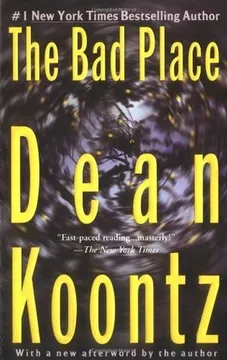


Plot Summary
Frank’s Alley Awakening
Frank Pollard1 wakes on a dark alley pavement with his name intact and the rest of his life erased. A packed leather flight bag lies beside him, but the faint flute-like music and unnatural gusts make him certain something is hunting him. He steals a car, hot-wires it, and drives into the night.
Sapphire flashes shatter its windows, burst its tires, and disable its steering; Frank1 survives the crash and runs with the bag as streetlights explode behind him. He hides in an abandoned apartment building, escapes through a window, and clings to a passing truck. A phrase about fireflies in a windstorm recurs without explanation, while the unseen pursuer4 remains close enough to turn every pause into a danger.
Frank’s lost memory is not simply a mystery to solve; it removes the ordinary moral map by which he might judge his own actions. He knows how to steal a car but cannot tell whether that skill makes him criminal, and he senses danger without knowing its source. The attack gives the story a physical grammar for the supernatural: the world fails in observable ways before Frank can interpret them. His bag becomes both a practical means of survival and the only material link to a self he cannot remember.
The Decodyne Ambush
That same night, private investigators Bobby2 and Julie Dakota3 watch security guard Tom Rasmussen17 steal the files for Decodyne’s new Wizard software. Their surveillance has been arranged to catch the people paying him, but Rasmussen17 realizes he is being watched and signals gunmen to attack Bobby2’s van.
Julie3 ignores Bobby2’s order to escape, drives straight at the shooters, kills one with the car, then fires at the other as he tries to flee. Bobby2 climbs out of the bullet-riddled van before it catches fire.
The couple recover the stolen disks and expose Rasmussen17’s employer, Kevin Delafield,18 though the case leaves Julie3 shaken by how readily she used violence. Their shared agency and their private dream of retiring by the sea are established alongside Bobby2’s unease that he may lose her.
The ambush establishes the Dakotas’ partnership through action rather than a tidy division of roles: Bobby’s protective instinct becomes a mistake Julie refuses to obey, and her decisiveness saves him. Yet success does not erase the moral cost. Julie is troubled by the threat she used against Rasmussen, while Bobby’s jokes help restore their closeness without resolving his fear. Their seaside plan gives that fear an object: the future they are building together. The ordinary crime plot therefore introduces the novel’s deeper pressure, the knowledge that love makes a person vulnerable to loss.
Money Without a Past
In Laguna, Frank1 counts about $140,000 in his bag and finds two sets of identification bearing other men’s names but his own photograph. He steals another car, changes its plates, and avoids the police because he cannot tell whether the money is his or why an enemy4 wants him. Sleep brings stranger evidence.
He wakes with cat’s blood on his clothes and scratches on his face, then later finds himself dressed in unfamiliar garments with more cash beside him. On another morning, black sand fills his fists; after another sleep, red stones fill his pockets and a huge dead insect lies on his chest. Frank1 keeps each clue, increasingly afraid that his missing hours contain violence he cannot remember.
Each new object appears to promise an answer, but instead it makes Frank’s identity less stable. The false documents suggest deliberate concealment, while the blood and claw marks implicate him in acts he cannot recall. His response is neither denial nor confidence: he preserves evidence and searches for help, even as fear keeps him from the police. The black sand, red stones, and alien-looking creature shift the mystery beyond ordinary crime without making Frank any less accountable for what he may have done. His growing terror comes from the possibility that his own body is acting beyond his knowledge.
The Dakotas Take the Case
By Monday, Frank1’s exhaustion has pushed him to Dakota & Dakota Investigations. Julie3 doubts his story, but Bobby2 and their colleague Clint Karaghiosis9 hear enough to agree to investigate.
The forged identity for George Farris leads Bobby2 and Julie3 to the home where Farris’s family was murdered; another false identity, James Roman, points to a house destroyed by fire, where Roman’s widow and children died. Neither family knew Frank,1 and their deaths suggest someone has been following the names on his documents.
Julie3 and Bobby2 suspect the same brutal pursuer4 is responsible, though Frank1 cannot explain the connection. The couple accept the case despite their recent brush with gunmen, taking Frank1’s money and evidence while knowing that the unknown hunter4 may come for them too.
The investigation makes Frank’s private confusion consequential for strangers: names he may have used casually have become trails leading to murdered households. The Dakotas’ decision to help is not pure certainty. Julie’s skepticism is professionally sound, while Bobby’s faith in Frank reflects his tendency to trust people before they have earned it. Their agreement to take the case joins compassion to risk, and their different motives begin to matter. By finding the victims before understanding the perpetrator, the investigators confront a disturbing asymmetry: the dead can establish the danger, but cannot explain why it chose them.
The Hospital’s Empty Bed
The Dakotas arrange medical tests and a guard for Frank,1 but Hal Yamataka10 watches him disappear from a locked hospital room amid cold drafts and the same eerie piping Frank1 heard in the alley.
Frank1 reappears briefly, vanishes again while gripping a steel bed rail, and returns later with the rail missing and black sand on the sheets. His clothes show pieces of fabric and metal woven into other materials, as if their components have been misplaced. Bobby2 theorizes that Frank is teleporting, with his mind reconstructing his body and anything he carries.
Each journey appears to leave him weaker and less able to read, calculate, or think clearly. The theory offers a mechanism, not a cure, and Frank1’s declining condition makes time part of the investigation.
The hospital turns a reported impossibility into a witnessed event, but observation does not restore control. Frank’s teleportation is not an escape hatch he can use freely; it is an involuntary process that damages the very person it transports. The rail makes the cost tangible, while the crossed threads in his clothing suggest that identity itself may be vulnerable to reconstruction errors. Bobby’s scientific-sounding explanation helps the others organize what they see, but it cannot protect Frank from the consequences. The scene’s central tension is epistemic: understanding the process is not the same as being able to stop it.
Diamonds from Another World
The investigators test Frank1’s evidence and discover that the blood on his shirt came from a cat, not a human victim. His real name is Francis Ezekiel Pollard,1 and old records place him in El Encanto Heights, though he remembers nothing of it.
Entomologist Dyson Manfred14 and geneticist Roger Gavenall15 examine the strange creature Frank1 found. It is an engineered organism that eats mineral-bearing earth and produces polished diamonds, including extraordinarily rare red ones.
Its biology exceeds known science, and the scientists suspect it came from another world or another time. The discovery explains the gems but deepens the danger: Frank’s involuntary journeys reach places beyond ordinary geography, and the creature’s existence could expose him if the researchers reveal it.
The laboratory sequence widens the novel’s scale without reducing its emotional stakes. A creature that mines diamonds turns Frank’s private nightmare into evidence of an entire alien system, yet the practical question remains whether he can survive his next journey. The scientists’ excitement also introduces a familiar human temptation: they want the specimen partly for knowledge and partly for prestige. Their reaction mirrors the investigators’ own growing entanglement with Frank’s money. Wonder is never neutral here; every discovery creates new claims of ownership, new risks of exposure, and new reasons to treat a vulnerable person as a resource.
Bobby Joins the Journey
The Dakotas use magician and hypnotist Jackie Jaxx to guide Frank1 toward memories buried behind his amnesia. Under hypnosis, Frank1 recognizes his mother6’s house as a place of cruelty and identifies Candy,4 his brother,4 as the pursuer4 who wants him dead.
When Frank1 panics, Bobby2 grabs his hand and is pulled into the teleportation. They flash through a snowy cabin, an abandoned apartment, the family property, and other places Frank1 once lived.
In the most terrifying stop, Bobby2 lands on an alien world where giant engineered miners extract red diamonds beneath a vast craft. Frank1 later returns to the office without Bobby,2 then retrieves him from the crater. Bobby2 comes back shaken but determined to understand Frank’s power before it consumes him.
Bobby’s choice to take Frank’s hand changes the case from surveillance into shared exposure. He can no longer treat teleportation as an intriguing hypothesis, because his own body has been carried through it. The journeys also reveal that Frank’s memory is conditional: the act of traveling seems to open it, then close it again. His childhood home, once only a name in a record, becomes a site of fear. Bobby’s terror at the alien crater is paired with a new respect for Frank’s endurance, but the experience also strips away Bobby’s comforting assumption that reason and good intentions can keep the world orderly.
Thomas Hears the Threat
At Cielo Vista, Julie’s brother5 Thomas5 senses a violent presence approaching long before he can explain it. He tries to warn Bobby2 through an unusual emotional connection, but his fear of sounding foolish keeps him from speaking plainly. When he reaches toward the presence in his mind, he experiences Candy4 feeding on an animal and nearly gets caught in the killer4’s consciousness.
Candy,4 meanwhile, detects Thomas’s mental contact and traps the connection long enough to learn the route to Cielo Vista. Thomas5 has mistaken his sensitivity for a private oddity; Candy4 recognizes it as a threat and a possible clue to powers beyond the Pollard family. Once Candy4 knows where Thomas5 lives, the care home is no longer a refuge.
Thomas’s difficulty is not a lack of perception but a lack of confidence that anyone will take his perception seriously. His fear of being judged by his intelligence and speech delays his warning, while his care for Julie keeps drawing him toward danger. Candy’s ability to exploit the connection reveals how vulnerability can be relational: Thomas reaches out because he loves people, and that openness gives a predator a path back to him. The care home’s everyday routines provide genuine comfort, but they cannot defend its residents from a threat that arrives through psychic contact rather than a door.
The Care Home Attack
Candy4 enters Cielo Vista and attacks Thomas’s roommate,16 Derek,16 killing him with the scissors Thomas5 uses for his picture poems. He throws an aide aside, seals the room’s metal fire door with blue energy, and turns on Thomas.5 Thomas5 is injured but manages to pull the scissors from Derek16’s body and stab Candy4 in the shoulder.
The wound does not stop Candy,4 who kills Thomas5 and leaves the home in flames and wreckage. As he dies, Thomas5 sends Bobby2 a confused but urgent message: Candy4 is coming, and a loving light may await beyond death. On the freeway, Bobby2 receives the warning and persuades Julie3 to continue toward Santa Barbara, where they hope to confront Frank1’s history.
Thomas’s final resistance matters because it is neither a miraculous victory nor a futile gesture. He cannot overpower Candy, but he acts for Derek and for the people he loves, transforming the scissors associated with his creative work into a weapon. The picture-poem maker and the murderer occupy the same room, one trying to compose meaning, the other reducing lives to prey. Thomas’s last message also completes a form of communication he struggled to achieve while alive. Its hope does not erase the violence; it gives Julie and Bobby a reason to imagine that love may outlast the body.
Candy Hunts the Helpers
After killing Thomas,5 Candy4 follows the clues left by the people helping Frank.1 He reaches the Karaghiosis home, kills Felina,12 and is shot twice by Clint,9 who cannot stop him. Faced with Felina12’s death, Clint9 takes his own life. Candy4 then returns to Dakota & Dakota, where he kills Hal10 and throws him from the office tower.
Lee Chen11 discovers Hal10’s body and contacts the police, learning that Thomas5 and Derek16 are dead and that Cielo Vista has burned. Bobby2 and Julie3 receive the news at a Santa Barbara motel. Their investigation has given Candy4 a chain of relationships to follow, and the couple realize that the people around Frank1 are now targets. They leave the motel to find Frank1’s family home and the man who knows its history.
Candy’s violence converts the investigation’s network of care into a map of targets. The Dakotas have not merely uncovered a killer; their work has connected Frank to people whose trust and assistance make them visible to him. The deaths also expose different responses to unbearable loss: Lee acts by calling the police, while Clint, after finding Felina dead, chooses an irreversible escape. Julie and Bobby cannot pause to grieve fully because Candy is still moving toward them. This does not make their grief less real; it shows how threat can force mourning into the margins without making it disappear.
Fogarty’s Family History
In Santa Barbara, Bobby2 and Julie3 find Dr. Lawrence Fogarty,13 whose study Frank1 visited during earlier journeys. Fogarty13 recounts how Roselle Pollard6 was born after incest between her mother and brother, and how Roselle6 later used her unusual biology to conceive children without conventional intercourse.
Frank1 was comparatively ordinary; Candy4’s extreme physiology helped produce his size and aggression, while the twins7 developed a bond with animals. Fogarty13 also admits he kept the family’s secrets and accepted Roselle6’s money, despite knowing Candy4 was dangerous.
Violet7 tells Candy4 that Frank1 is nearby. Candy4 breaks into Fogarty13’s house, seizes Julie3 as leverage, and orders Frank1 to return to the family home. Bobby2 and Frank1 must decide whether to abandon her or face Candy4 on his ground.
Fogarty’s account supplies a genealogy but not an excuse. The family’s unusual bodies and abilities shape the conditions of their lives, while Roselle’s doctrine of divine vengeance turns Candy’s aggression into a sanctioned identity. Fogarty’s choice to remain silent is another form of complicity: he treats the Pollards as a fascinating private case rather than people whose actions endanger others. The contrast between his detached storytelling and the living threat in the next room is deliberately stark. Knowledge arrives late, and it cannot undo the damage already done; it can only help Bobby understand what kind of choice the coming confrontation requires.
Frank Takes Candy Away
Candy4 carries Julie3 to the Pollard house and demands that Frank1 kneel. Bobby2 arrives with Frank,1 unloads his revolver, and tries to persuade Frank1 to act rather than flee. Frank1’s confusion begins to clear when he learns that Roselle6’s remains were consumed by the twins7 and the cats, provoking Candy4 to attack his sisters.7 Frank1 takes Candy4’s hand and teleports them both.
Bobby2’s plan depends on forcing repeated journeys until Frank’s failing ability can no longer rebuild Candy4’s body correctly. The brothers return again and again, first visibly fused, then grotesquely merged with misplaced organs, tissue, insects, and rats. Their final reappearance is a motionless mass, and Candy4’s hunt ends with Frank1’s life as its price.
Frank’s last act reverses the meaning of his power. For most of the story, teleportation removes him from danger at the cost of memory, health, and control; now he uses it deliberately to keep Candy from reaching Julie again. The method makes rescue inseparable from self-destruction. Bobby’s plea matters because it offers Frank something he has rarely possessed: a purpose chosen in relation to another person, not dictated by his mother’s violence. The horrific fused body is not a clean triumph. It is the physical outcome of a family history in which human beings were repeatedly treated as instruments, until Frank chooses to spend himself to stop that cycle.
A House Beside the Sea
With Candy4 and Frank1 gone, Julie3 and Bobby2 sell Dakota & Dakota and settle in a modest house by the Pacific. They preserve some of the Pollards’ hidden money and red diamonds, while helping Manfred14 and Gavenall15 conceal the creature’s true origin. The police accept a simplified account of the case and stop pursuing the couple.
At home, Bobby2 and Julie3 dance to their old records, cook together, and speak about Thomas,5 Hal,10 Clint,9 and Felina12 so their friends remain part of the life they continue. Julie3 becomes pregnant, and they adopt a black Labrador they name Sookie. Their dream does come true, though not untouched: it now includes grief, moral compromise, and a greater willingness to accept that love cannot guarantee safety.
The ending does not restore the future the couple first imagined; it revises it. Their seaside home and shared time arrive only after enormous losses, and the wealth that secures them is entangled with theft, secrecy, and an investigation they can no longer continue. Their decision to remember the dead is an active practice, not sentimental decoration. It counters the novel’s recurring threat of disappearance by keeping relationships present in daily life. Julie’s earlier despair that dreams fail gives way to a more modest understanding: fulfillment is real, but it does not erase suffering or make the past morally simple.
Analysis
The novel makes the body the place where its moral arguments become visible. Frank1’s teleportation promises escape but gradually damages his memory and flesh. Candy4’s strength and blood hunger are treated by his mother6 as proof of divine purpose, yet the belief that he has no choice is itself one of his most destructive choices. Thomas,5 whom others may underestimate, perceives danger and acts with courage when his friend16 is attacked. His picture poems offer a counterpoint to the Pollard family’s violence: he builds meaning by arranging fragments, while Candy4 turns grievances into permission to destroy.
Bobby2 and Julie3 bring another tension into the story. They want to help Frank,1 but the money and diamonds tempt them toward a future they cannot easily afford. Julie3 sees that their motives are mixed before Bobby2 does. Their eventual home by the sea is therefore not a reward for perfect virtue. It is a chosen life shaped by loss, compromise, and a more honest understanding of their own desires.
The book also tests whether love can survive knowledge of death. Thomas5’s final message gives Bobby2 and Julie3 a reason to imagine that existence continues beyond the grave, but the story does not use that hope to erase grief. Instead, the survivors remember the people they lost and carry those relationships into ordinary routines. The closing domestic details matter because they are small acts of order after a world in which bodies, memories, and moral boundaries repeatedly came apart. The novel’s answer is not that goodness guarantees safety. It is that care, chosen freely and practiced concretely, can still give lives meaning even when safety cannot be promised.
Review Summary
The Bad Place receives mixed reviews, averaging 3.94/5. Many praise its dark, gripping blend of horror, mystery, and supernatural elements, with compelling villains and high tension—especially in the final act. The character Thomas, who has Down Syndrome, is frequently highlighted as a standout. Critics note weaknesses including two-dimensional protagonists, overly black-and-white morality, loose plot threads, and stereotyped characters. Some find it among Koontz's best work, while others consider it entertaining but flawed, citing unbelievable relationships and unresolved storylines.
People Also Read


Characters
Frank Pollard
Amnesiac fugitiveFrank is a soft-spoken, round-faced man who wakes with almost no memory and an instinctive conviction that an enemy is hunting him. He distrusts his own unexplained skills and fears that he may have harmed someone during his missing hours. His decency is expressed less through confidence than through discomfort with the possibility of causing harm. Frank’s isolation comes from being unable to share a stable account of himself, even with people who want to help. He is also physically vulnerable in a way that makes his extraordinary circumstances costly rather than glamorous. His defining tension is between the urge to escape pain and the wish to make his life matter to someone else.
Bobby Dakota
Optimistic investigatorBobby runs Dakota & Dakota with his wife, Julie3. He likes people easily, uses humor to calm frightening situations, and believes that helping the innocent is part of the point of his work. His curiosity lets him entertain explanations that Julie3 would initially reject, but his optimism can also make him slow to see danger. Bobby’s affection for swing music, old films, and orderly routines reflects a desire for coherence beneath his buoyant manner. When Frank1’s experiences expose him to genuine chaos, Bobby discovers how deeply he depends on stability. His loyalty is practical as well as emotional: he follows Frank1 into danger and keeps trying to give him a reason to choose a life beyond fear.
Julie Dakota
Fierce investigatorJulie is Bobby2’s wife and equal partner in their investigation business. A former deputy, she is trained to assess risk, act decisively, and recognize how quickly a harmless-looking situation can turn violent. Her courage is inseparable from a fierce protectiveness toward Bobby2 and her brother Thomas5. Julie is also driven by guilt over the practical choices that placed Thomas5 in institutional care, even though she loves and visits him faithfully. She wants a quiet home by the sea, but her work repeatedly draws her toward danger and confrontation. Her anger can become a weapon, yet she is alert to the moral cost of using it and struggles to reconcile her wish to protect people with the harm she can inflict.
Candy Pollard
Zealous predatorCandy is a large, powerful man whose understanding of morality has been shaped by his mother’s rigid teaching. He treats violence as a sacred duty when it serves his family, and he explains his blood hunger as something imposed on him by God rather than as a choice for which he bears responsibility. His need for maternal approval gives that belief its emotional force: punishment and affection are intertwined in his private moral world. Candy is also preoccupied with control, purity, and vengeance, and he cannot tolerate evidence that his family’s history may be less holy than he has been taught. His menace lies in the certainty with which he converts private grievance into permission to harm others.
Thomas
Julie’s tender brotherThomas is Julie’s younger brother3, a man with Down syndrome who lives at Cielo Vista Care Home. He is affectionate, sensitive to other people’s moods, and often overwhelmed by the crowded, unpredictable world beyond the care home. His picture poems let him arrange magazine images into compositions that move people even when he cannot explain how he made them. Thomas worries that others will mistake difficulty with words for a lack of feeling or insight. His closeness to Julie3 and growing trust in Bobby2 give him a sense of family beyond the limits of his daily surroundings. He is both eager for connection and cautious about the emotional demands of the outside world.
Roselle Pollard
Mother and moral architectRoselle is the Pollard family’s mother, and her beliefs exert a powerful influence over her children. She combines warmth and indulgence with a controlling certainty that God has assigned her family a special purpose. In Candy4, she nurtures a need for her approval while teaching him to understand violence as righteous service. Her children inherit not only unusual abilities but sharply different ways of responding to the world. Roselle’s mixture of affection, grievance, and authority makes her a formative presence even when she is absent from the immediate action.
Violet
Animal-linked twinViolet is one of Candy4’s twin sisters. She is bound closely to Verbina8 and deeply connected to cats and other animals, whose sensations shape her experience of the world. More verbally capable than her sister, Violet can be watchful, sensual, and unsettlingly direct. She has little interest in conventional social rules and often regards human relationships as less vivid than the animal lives she can enter. Her loyalty to Verbina8 is absolute, while her relationship with Candy4 is marked by distance and challenge.
Verbina
Silent animal-linked twinVerbina is Violet7’s twin and almost never speaks. She communicates through sensation, movement, and her unusually intimate bond with her sister and their cats. Unlike Violet7, Verbina shows little interest in ordinary conversation or intellectual pursuits; she inhabits the animal world with open absorption. Her silence should not be mistaken for passivity. She has a distinct presence and participates in the twins’ shared life through a connection that is both emotional and physical.
Clint Karaghiosis
Steady agency partnerClint is the Dakotas’ dependable colleague, known for his reserve, practical judgment, and investigative skill. His quiet manner makes him seem almost immovable at work, but he is expressive and playful with his wife, Felina12. He is protective without wanting to diminish her independence, and his private life reveals more tenderness than his professional reserve suggests. Clint often handles careful research and follow-up, providing a stabilizing counterweight to Bobby2’s improvisation and Julie3’s forcefulness.
Hal Yamataka
Watchful investigatorHal is a security specialist who watches over Frank1 during the hospital stay. Broad-built, capable, and fond of adventure novels, he hopes his work might occasionally bring him close to the heroic life he reads about. He is practical enough to take responsibility and sensitive enough to be shaken when ordinary explanations fail. His loyalty to the Dakotas makes him a trusted presence in their small professional family.
Lee Chen
Cybersecurity specialistLee is the computer expert at Dakota & Dakota, skilled at finding information hidden behind institutional security. Stylish, self-possessed, and intellectually curious, he combines technical rigor with a personal belief that reality has spiritual dimensions. Lee can seem detached when absorbed in his work, but his loyalty to his colleagues is immediate when danger becomes concrete. He is particularly valuable when the investigation needs to connect scattered police records.
Felina Karaghiosis
Clint’s independent wifeFelina is Clint9’s wife and a skilled, independent woman who is deaf. She communicates through sign language, which Clint9 has learned, and takes pride in navigating daily life without being treated as helpless. Her warmth is expressed through direct affection and humor, especially in her marriage. Felina’s relationship with Clint9 is built on reciprocal attention: he wants to share his inner life with her, while she insists on being his equal rather than his responsibility.
Lawrence Fogarty
Pollard family doctorFogarty is a retired physician who knows the Pollard family’s history and was involved in several of their births. He is intelligent and observant, but treats people’s suffering as material for private fascination rather than as a call to help. His clinical knowledge is compromised by self-interest and a deep indifference to consequences. Fogarty’s polished surroundings and professional authority conceal a moral emptiness that the investigators must recognize before trusting his account.
Dyson Manfred
Entomologist of the unknownManfred is an entomologist whose intense fascination with insects makes Frank1’s specimen an extraordinary professional opportunity. He approaches the creature with patience and technical precision, though his excitement can eclipse concern for the people caught up in its discovery. His expertise helps establish that the specimen does not fit known natural categories.
Roger Gavenall
Geneticist and futuristGavenall is a geneticist who studies the possibilities of engineered life. He recognizes that Frank1’s creature appears to be a biological machine designed for a specific task, despite science being far from creating anything comparable. His ambition and professional pride coexist with genuine intellectual wonder, leaving him both a useful expert and a person with something to gain from the discovery.
Derek
Thomas’s gentle roommateDerek shares a room with Thomas5 at Cielo Vista. He is friendly, enjoys food and television, and often misses the seriousness behind other people’s words. His trusting nature makes him a comforting companion to Thomas5.
Tom Rasmussen
Corporate software thiefRasmussen is a technically gifted hacker who disguises himself as a security guard to steal Decodyne’s software. He is clever when working at a computer but weak under pressure, and his greed leads him to enlist violent help.
Kevin Delafield
Rasmussen’s employerDelafield is identified as the Microcrest executive who hires Rasmussen17 to obtain Decodyne’s software. He remains a distant figure, representing the corporate interests behind an apparently contained theft.
Tuong and Chinh Phan
Farris home’s new ownersTuong and Chinh are Vietnamese American immigrants who buy and renovate the house where the Farris family was murdered. Their hospitality, hard work, and determination to restore the home’s sense of safety contrast with the violence attached to its history.
Plot Devices
Frank’s teleportation
Escape with a costFrank1 disappears involuntarily when sleep or panic triggers his ability to travel between distant places. The process carries anything he grips, but it grows harder for him to reassemble his body and belongings correctly. The recurring drafts and strange piping announce his arrivals and departures, while black sand, displaced garment fibers, and embedded objects reveal the physical price. The power creates both the central mystery and the eventual means of confronting Candy4. Its limits matter as much as its reach: Frank1 cannot reliably choose where he goes, and every journey further weakens him.
Thomas’s picture poems
Images that communicateThomas5 composes poems by clipping and arranging magazine pictures because he cannot express everything he feels through writing. The resulting sequences move Julie3 and Bobby2, suggesting an intelligence and emotional precision that others may overlook. The poems also become a concrete record of Thomas5’s inner life and a clue Candy4 can use when he handles the scrapbook. Their function is therefore double: they let Thomas5 communicate beyond his usual limits, but they can also expose connections he did not intend to reveal.
Diamond-mining creature
Evidence from elsewhereThe large, insectlike organism found among Frank1’s possessions consumes mineral-bearing earth and produces diamonds. Its coded markings and highly specialized anatomy persuade experts that it was engineered, not naturally evolved. The creature links Frank’s unexplained journeys to a vast mining operation on a world beyond Earth. It gives the investigators material proof that Frank1’s story is not delusion, while also creating pressure from scientists who want to publicize the discovery and profit from its importance.
Roselle’s vengeance doctrine
Violence made righteousRoselle6 teaches Candy4 to interpret grievances as offenses against the family and his killings as divine punishment. This belief system gives his appetite for blood a moral disguise and lets him shift responsibility from himself to God. It is reinforced by Roselle6’s control of his affection: her approval comforts him, while her rejection devastates him. The doctrine explains Candy4’s particular blend of piety, grievance, and brutality without excusing it. It also shows how violence can be learned as a form of love when a child’s need for approval is shaped by a parent’s distorted rules.
Psychic animal network
Many bodies, shared sensesViolet7 and Verbina8 can enter the minds of animals, share their senses, and influence them, especially their large group of cats. Their connection gives them access to a world of sensation beyond ordinary human perception and lets Violet7 observe events from a distance. Candy4 has different abilities, including destructive telekinetic force and visions drawn from objects people have touched. Thomas5’s unexplained sensitivity creates another channel between the care home and Candy4. These gifts make conventional distance and privacy unreliable, allowing the story’s characters to track, warn, and threaten one another without meeting face to face.
Download PDF
Download EPUB
.epub digital book format is ideal for reading ebooks on phones, tablets, and e-readers.








