

Key Takeaways
Treat Scripture as the church's inheritance, not a national campaign prop.
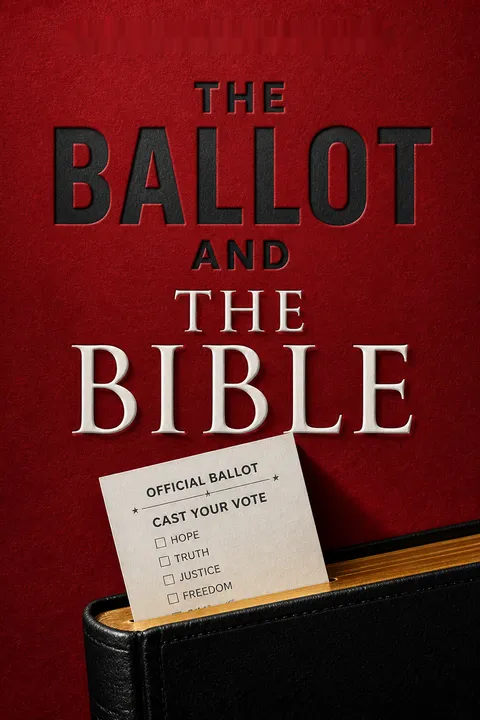
A book for formation. In 2020, after police cleared protesters from Lafayette Square, Donald Trump held up a Bible outside St. John’s Episcopal Church for photographers. The image sharpened the book’s central question: does Scripture shape a community, or lend borrowed authority to a politician? Schiess argues that Christians should read the Bible as the church’s book, not as a free-floating storehouse of slogans. Its meaning is encountered through worship, theology, and the wisdom of Christians across time and place.
Read with others. That does not make individual reading irrelevant. It means readers should test their assumptions against the church’s broader witness, especially voices that have been ignored. The goal is not to find a verse that blesses a preferred policy, but to become the kind of people Scripture calls the church to be.
The image of a Bible used as a political prop captures a broader problem of symbolic borrowing: an object can signal moral authority even when its contents do not guide the action. Reading in community offers a check on that maneuver because interpretations must answer to people beyond the reader’s own political circle. Yet communities can also reinforce prejudice or silence dissent. The appeal to church tradition is strongest when it includes the global and historical church, not merely the familiar congregation. A community becomes a safeguard only when it makes room for correction.
Don't mistake biblical covenant language for an American guarantee of divine favor.
A slogan with a past. John Winthrop’s 1630 speech to Massachusetts colonists drew on Jesus’s image of a city on a hill. Its emphasis was communal charity, care for the poor, and the danger of divine judgment, not a claim that America was uniquely chosen. The speech received little attention for centuries. John F. Kennedy revived the image in 1961, and Ronald Reagan made the shining city a familiar expression of national confidence.
Ask who is addressed. Jesus’s image describes a people whose good deeds point beyond themselves toward God and the wider world. It does not promise that a modern nation will prosper because it identifies with biblical Israel. The Noachian covenant, made with all living creatures after the flood, offers a different political measure: how communities treat human beings made in God’s image.
National stories often turn inherited language into evidence that a country has a special destiny. The historical distance between Winthrop’s warning and Reagan’s confident national image shows how much a metaphor can change when political needs change. This is not simply a problem of inaccurate citation. It is a problem of framing: citizens may hear national success as proof of virtue and national setbacks as temporary obstacles, rather than asking who benefits and who bears the costs. Shared symbols can inspire public responsibility, but they become dangerous when they place a nation beyond criticism.
Read Romans 13 beside Scripture's commands to resist injustice.
Authority has conditions. During the American Revolution, Loyalist clergy used Romans 13 to argue that Christians must obey their rulers. Patriot preachers answered with biblical stories of unjust kings, the Israelites’ escape from Egypt, and the command to obey God rather than human beings. Both sides appealed to Scripture, exposing how easily a single passage can be made to settle a political dispute.
Consider the ruler’s purpose. Romans 13 presents governing authority as accountable to God and responsible for public good. It does not provide a complete political theory or require unquestioning obedience. Revolutionary preacher Jonathan Mayhew argued that rulers who prey on the people they should protect betray their office. The passage must be read alongside the Bible’s wider witness, including its accounts of corrupt power and faithful resistance.
This history challenges the claim that one side simply reads the Bible while the other imports politics into it. Both Loyalists and Patriots had political commitments, but they reasoned with different parts of the canon and different accounts of authority. That does not make every interpretation equally sound. It does mean that a verse cannot be evaluated apart from its argument, audience, and relation to other texts. The practical question is not only whether citizens owe obedience, but what conditions make authority legitimate and what obligations remain when rulers violate them.
When power profits from an interpretation, listen hardest to the harmed.
Shared reverence did not prevent abuse. Before the Civil War, white Christians who defended slavery and those who opposed it both claimed biblical authority. Slaveholders cited passages about enslaved people obeying masters and adapted the story of Noah’s son Ham into a racial defense of slavery. Their economic and social position helped make those readings seem natural to them.
The oppressed read from another place. Black Christians drew hope from Scripture’s accounts of liberation and judgment. Frederick Douglass rejected the idea that slaveholders’ misuse of the Bible made the Bible itself a proslavery book. Enslaved people and their descendants inhabited the exodus story as a promise that God saw their suffering. Their experience did not make every interpretation automatically correct, but it exposed what powerful readers had learned to overlook.
The history makes interpretation’s incentives visible. When a reading protects wealth, status, or control, its defenders may experience it as common sense rather than self-interest. Listening to harmed communities can reveal consequences that abstract debates miss, a point also relevant to law, medicine, and public policy, where affected people often notice costs institutions ignore. Still, social position is not a substitute for argument, and no group is internally uniform. The essential correction is not to romanticize one standpoint, but to stop treating the powerful standpoint as neutral.
Let Scripture's liberation story reshape who you recognize as your neighbor.
A story people entered. Black Christians did more than extract a moral lesson from the exodus. They saw their own suffering within the story of an enslaved people whom God led toward freedom. In the civil rights movement, churches carried this way of reading into organizing, prayer, song, and protest. Martin Luther King Jr. connected biblical narratives with contemporary life, finding in the dangerous road of the Good Samaritan a way to describe present-day urban poverty and injustice.
Keep the whole story in view. King’s famous 1963 speech joined America’s promises to biblical visions of justice, but its demand for urgent change is often softened in public memory. The movement’s religious language was not decoration around a political project. It formed the community’s courage and gave its work a moral and spiritual meaning.
Narrative can do more than persuade; it can alter perception. A person who recognizes a present-day neighbor in an ancient story may become less able to treat that neighbor’s suffering as distant or inevitable. The civil rights movement shows how worship and collective storytelling can sustain action under pressure, not just express private belief. But stories can also recruit listeners into a flattering role, casting their own side as the righteous liberator. The test is whether a narrative enlarges responsibility and self-criticism, or merely supplies heroic costumes.
Take social suffering seriously without mistaking reform for redemption.
Faith has public consequences. The social gospel movement treated poverty, labor conditions, and other social problems as concerns for Christian life. Washington Gladden connected personal faith with social reform and argued that the nation could help realize a more just society. This tradition had evangelical roots, although later church divisions often made social action seem like the property of theological liberals.
Hope needs limits. Gladden’s confidence in American progress could slide into national self-congratulation. He portrayed the United States as a model for other nations while overlooking its own injustices. Theologian Reinhold Niebuhr later warned that groups convinced of their own moral goodness can be especially dangerous. The lesson is not to retreat from reform, but to hold together personal and communal sin, human responsibility, and the need for divine action.
The social gospel’s lasting contribution is its refusal to treat material suffering as spiritually irrelevant. Its weakness appears when reform is narrated as a smooth ascent toward moral perfection, especially under the banner of national progress. That tension resembles a recurring challenge in political movements: urgency can mobilize people, while confidence in one’s own historical mission can make self-correction seem disloyal. A more durable reform ethic combines institutional ambition with humility about motives and outcomes. Hope can justify effort without promising that any nation or program will complete the work.
Test economic theories as moral visions, not neutral machinery.
Economics carries assumptions. In the 1980s, Ronald Reagan and allied Christian leaders linked biblical faith with limited government, free enterprise, and opposition to communism. Some, like theologian Ronald Nash, argued that Scripture supplied broad moral principles while economics supplied empirical answers. Evangelical writer Ronald Sider instead used biblical teachings about Jubilee, generosity, and care for the poor to challenge economic arrangements that concentrated wealth.
Neither side gets a shortcut. The Bible offers no ready-made blueprint for a modern economy, but its concern for vulnerable people and communal life cannot be reduced to private charity. Economic theories also carry judgments about human nature, power, and responsibility. Social science can help assess whether a policy works; Scripture can shape which outcomes matter and whose wellbeing counts.
Calling a market or a government program neutral can hide the values embedded in its design. Every system distributes power, risk, and opportunity, even when it describes itself as merely technical. The useful distinction is not between moral theology and objective economics, but between different kinds of questions: evidence can estimate effects, while ethical reasoning evaluates which effects deserve priority. Yet biblical commitments alone cannot settle empirical disputes. A serious political theology needs both moral scrutiny and competent attention to how policies operate in real communities.
Read prophecy as protest and comfort, not a geopolitical codebook.
Fear made prediction feel practical. During the Cold War, nuclear danger and conflict with the Soviet Union made biblical end-times interpretations newly compelling. Hal Lindsey’s 1970 bestseller, The Late Great Planet Earth, sold tens of millions of copies by mapping prophecy onto modern nations and events. Its approach helped some readers feel that world events were understandable and that their choices still mattered.
Prophecy has other work to do. Biblical prophecy can expose injustice, comfort people under pressure, and call communities to faithfulness. Revelation, in particular, was written to churches and uses vivid imagery to challenge corrupt power and distorted worship. Treating it as a puzzle whose hidden answer is the latest weapon or international crisis can turn the text into speculation. Historical events may prompt questions, but they cannot simply certify a confident reading.
Apocalyptic stories meet a real human need: they give shape to fear and make suffering part of a larger account of justice. Their emotional force is also why they can be captured by political campaigns or conspiracy narratives. The interpretive safeguard is not to dismiss prophecy as irrelevant, but to ask what kind of people its images are meant to form. A reading that produces vigilance toward injustice differs from one that encourages certainty about which nation plays the villain. Humility matters most when an interpretation flatters the reader with privileged access to history’s secret plot.
Give government its due without handing it God's authority.
The coin was not the whole point. When Jesus was asked whether people should pay taxes to Caesar, he pointed to the emperor’s image on a coin and distinguished Caesar’s claim from God’s. In the Roman setting, the image and inscription advertised imperial power and even divine status. Early Christian interpreters connected the contrast to humanity bearing God’s image: political obligations exist, but they do not exhaust what people owe.
Do not split moral life in two. Jerry Falwell Jr. used the passage to argue that political leaders need not meet the moral standards expected in personal Christian life. That logic made political expediency seem like a separate ethical zone. The passage does not erase differences between civic and religious duties; it places both under God’s higher claim. A politician’s Christian identity is not proof that policies or conduct are faithful.
The coin story is a compact lesson in how power depends on symbols. Caesar can claim money and demand civic compliance, but the image on currency does not make his authority ultimate. That distinction helps explain why religious freedom and political participation can coexist with limits on state power. The harder implication is that spiritual conviction cannot be quarantined from public decisions. At the same time, invoking God’s authority does not settle a policy argument for a pluralistic audience. Public reasons still need to be explained, debated, and tested against their effects.
Cultivate church life that serves the city instead of fleeing or ruling it.
Exile is not an escape hatch. Jeremiah told Israelites deported to Babylon to build homes, plant gardens, raise families, and seek the city’s wellbeing. Christians across history have read this passage differently. Augustine emphasized cooperation for earthly peace while distinguishing it from ultimate hope. Calvin stressed prayer and obedience under civil rule. Modern exilic theology emphasizes a distinct church community, but can risk turning difference into withdrawal.
Practice public faith locally. The passage joins the health of the community to concern for its neighbors. Building a faithful church is not a substitute for civic engagement, just as seeking political influence is not proof of faithfulness. The book closes with King Josiah hearing a recovered law that condemned his own people’s conduct. His response models a needed discipline: receive Scripture as a word that can challenge one’s own interests.
Jeremiah’s instruction resists two temptations at once: the fantasy that Christians can rule the city into perfection, and the fantasy that they can preserve their integrity by abandoning it. Community formation matters because people learn habits of service, patience, and cooperation in concrete relationships before carrying them into public life. But an inward-focused community can mistake insulation for holiness. The decisive question is whether its distinct practices equip members to seek the common good, including alongside people who do not share their faith.
Analysis
The book’s central achievement is to make biblical interpretation a matter of political history and spiritual formation at once. Its examples do not divide neatly into faithful readers and cynical manipulators. Loyalists and Patriots, abolitionists and slaveholders, reformers and defenders of small government all argued from Scripture, often with sincere conviction. This makes the inquiry more demanding than identifying a bad quotation: readers must examine which texts they emphasize, which communities authorize their readings, and whose interests those readings protect.
The historical chapters also resist a simple story of national progress. The same biblical image can move from warning a small colony toward mutual obligation to reassuring a powerful nation of its exceptional status. The same appeal to biblical authority can defend enslavement or sustain the hope of enslaved people. Context does not make truth arbitrary; it reveals how interpretation is shaped by human limits, social position, and political desire.
The book’s most distinctive corrective is its insistence that biblical reading belongs to a community wider than the individual or nation. That community must include the church’s historical witness and the perspectives of people whose suffering dominant readers have ignored. This does not make marginalized identity an automatic guarantee of correct interpretation. Rather, it challenges the false neutrality of those who have long controlled public interpretation.
A productive tension remains. Scripture can orient political judgment without dictating a modern policy blueprint, but citizens still have to choose among imperfect proposals with real consequences. The author’s approach points toward disciplined judgment: interpret texts in context, attend to the whole biblical story, learn from history and social knowledge, and remain open to correction. The final measure is not whether a political side can attach a verse to its platform, but whether readers can hear Scripture against their own interests and act for neighbors beyond their own community.
Review Summary
The Ballot and the Bible receives high praise for its thoughtful exploration of how Scripture has been used in American politics throughout history. Readers appreciate Schiess's balanced approach, historical insights, and call for better biblical interpretation in political discourse. The book is lauded for its accessibility, relevance to current political climate, and encouragement of humility and introspection among Christians. Many reviewers find it informative, thought-provoking, and a valuable resource for engaging faithfully in politics while avoiding partisan traps.
People Also Read
Glossary
political theology
Faith's account of public lifeReflection on the meaning, purpose, and proper shape of human political communities in light of theological beliefs. In this book, political theology asks what government is for, how Christians should relate to earthly authorities, and how Scripture should inform civic participation without turning a nation or party into God’s chosen instrument.
Noachian covenant
God's covenant with all creationThe covenant established after the flood with Noah, his descendants, and every living creature. Schiess emphasizes that, unlike covenants specific to Israel or the church, it concerns all peoples. The biblical prophets condemn nations for violence, oppression, exploitation, and slavery, giving Christians grounds to assess every nation by its treatment of human beings.
jeremiad
Sermon warning of communal declineA sermon modeled on biblical lament and prophetic warning. It describes a community’s moral failures, warns of judgment, and urges people to change course. Puritan preachers used this form when they believed their colonies had fallen away from their religious commitments, and it became a recurring style in American political and religious speech.
social gospel
Christian movement for social reformA Christian movement, especially prominent in the late nineteenth and early twentieth centuries, that applied theological commitments to social problems such as poverty, labor conditions, and inequality. Its supporters often emphasized the prophets, Jesus’s ministry, and communal responsibility. The book treats it as a particular historical movement, not as a label for every Christian concern with public justice.
dispensationalism
History divided into divine erasA theological tradition that understands human history as divided into distinct periods, or dispensations, in which God relates to people in different ways. In the American prophecy movement discussed here, dispensationalism is associated with a distinction between Israel and the church and with an end-times sequence involving a rapture, tribulation, Christ’s return, and final judgment.
two kingdoms
Distinction between spiritual and civil ruleA theological approach, associated in the book with Martin Luther, that distinguishes God’s spiritual rule through the church from civil authority exercised by governments. It addresses how Christians can live under both forms of authority. The distinction does not mean that political conduct is exempt from Christian moral judgment, although it has sometimes been used that way.
exilic theology
Faithful life as a distinct communityA modern theological approach that draws on Israel’s exile to describe Christians living as a distinctive community within a society whose values they do not fully share. It stresses worship, communal formation, and resistance to overidentifying the church with the nation. Its risk is treating cultural difference as a reason to withdraw from the wider community.
civil religion
Nation's shared religious symbolismA public tradition in which national identity is expressed through religious language, symbols, rituals, and references to divine purpose. In the United States, presidential speeches and familiar biblical images have helped create this tradition. It can give public life a shared moral vocabulary, but it can also use Scripture’s authority without submitting national ambitions to its demands.
active-passivism
Political critique without policy directionA pattern identified in some evangelical sermons during the 2016 election: speakers express distrust or distaste for politics, insist that political life should be biblical, and avoid clarifying what that requires in practice. The result can sound spiritually elevated while leaving listeners without guidance about concrete civic responsibilities.
About the Author
Other books by Kaitlyn Schiess
Download PDF
Download EPUB
.epub digital book format is ideal for reading ebooks on phones, tablets, and e-readers.








