Plot Summary
Daddy's Girl, Daddy's Crimes
Mian Ross's world is defined by her father, Theo, a notorious thief whose love is fierce but whose choices are criminal. After her mother's death, Mian clings to her father, but his arrest for murder shatters her last sense of security. In a prison visit, she pleads for him to fight, but he's resigned to pay for his crimes. The pain of abandonment is raw—her father's love is real, but his choices leave her alone, forced into the care of relatives who despise her. Mian's innocence is already bruised, but her father's final words—his regret, his pride, his secrets—set the stage for a life where love and loyalty are always tangled with betrayal and loss.
Shattered Innocence, Stolen Night
Trying to reclaim normalcy, Mian agrees to a date with Aaron, a privileged college boy. The night spirals from awkward to dangerous: at a party, alcohol blurs her judgment, and Aaron's advances turn predatory. She resists, but the night ends in violation—her virginity stolen, her trust shattered. Aaron denies everything, leaving Mian isolated and pregnant. Her best friend drifts away, and her relatives cast her out. The trauma of that night becomes the crucible in which Mian's resilience is forged, but it also marks her with a wound that will shape every relationship and every desperate choice to come.
Survival's Price, Mother's Love
Eighteen months later, Mian is a single mother, scraping by in a hostile world. Jobs are lost, food is scarce, and her only solace is her son, Caylen. Her father's hidden savings are gone, her relatives have abandoned her, and Aaron refuses to acknowledge his child. Mian's days are a cycle of hunger, fear, and relentless searching for work. Her friendship with Anna, a neighbor with her own scars, is a rare comfort. When all options are exhausted, Mian faces the unthinkable: to keep her son alive, she must turn to the criminal legacy her father left behind, risking everything for a chance at survival.
Bandit's Legacy, Knight's Heir
Desperate, Mian visits her father in prison, begging for help. He reveals the location of a hidden safe in the home of his murdered best friend, Arturo Knight. The job is dangerous—Art's son, Angel, is now the ruthless heir to the Knight criminal empire. Mian's plan is simple: break in, steal what she can, and escape. But the legacy she's chasing is more than money; it's a black book, the key to the Knights' power and the city's underworld. As Mian prepares for the heist, the ghosts of her childhood—her love for Angel, her father's secrets, her own longing for family—haunt every step.
Breaking and Entering Fates
Mian's break-in is a blend of desperation and amateur bravado. She navigates the opulent Knight estate, searching for the safe, but finds herself caught by Angel's men—Lucas and Z. The reunion with Angel is electric and dangerous; he recognizes her instantly, and the old connection between them is laced with new threats. Angel is both fascinated and enraged by her intrusion. He lets her go, but not before making it clear: she's now a player in a game she doesn't understand, and the Knights never forget a thief. The stage is set for a collision of past and present, love and vengeance.
Ghosts, Promises, and Betrayals
Flashbacks reveal the tangled history between Mian and Angel. As children, they were forced together by their fathers' criminal partnership. Angel, older and already hardened, is both protector and tormentor. Mian's crush grows into something more, but Angel's own feelings are twisted by guilt, age, and the violence of their world. Their bond is forged in shared loneliness and mutual defiance, but betrayal is inevitable. When their fathers' partnership ends in murder, Angel blames Mian's father, and Mian is left to navigate a world where every promise is a potential lie.
The Devil's Invitation
Angel's obsession with Mian is rekindled by her intrusion. He orchestrates her kidnapping, using her son as leverage. Mian is imprisoned in the Knight estate, stripped of dignity and agency, forced to submit to Angel's rules. The psychological warfare is relentless: hunger, cold, humiliation, and the constant threat to her child. Angel's men—Lucas and Z—are both jailers and tempters, their own desires and loyalties complicating the power dynamic. Mian's resistance is fierce, but every act of defiance is met with calculated cruelty. The line between captor and captive blurs as old feelings resurface in new, dangerous forms.
Hunger, Desperation, and Stripping
With no money and her son sick, Mian is driven to the edge. She tries to pawn a stolen watch, but when that fails, she considers stripping at a club. The humiliation is acute, but survival leaves no room for pride. Angel's surveillance is constant; he watches her spiral, both disgusted and aroused by her desperation. The world is indifferent to her suffering, and every attempt to reclaim agency is met with new obstacles. The stripping episode is a crucible—Mian's lowest point, but also the moment she resolves to fight back, no matter the cost.
Captured, Collared, and Caged
Angel's capture of Mian is both punishment and possession. He uses her son as a pawn, forcing her into submission. The psychological games intensify: she is stripped, collared, and paraded before his men. The humiliation is both sexual and existential—Angel wants her to break, to admit she belongs to him. Mian's resistance is both physical and emotional, but the power imbalance is absolute. The dynamic between captor and captive becomes a twisted dance of seduction, violence, and longing. The boundaries between love and hate, pleasure and pain, are obliterated.
The Art of War
Angel's approach to Mian is modeled on Sun Tzu's art of war: subdue the enemy without fighting. He uses every tool—fear, deprivation, seduction, and the threat to her child—to bend her to his will. Mian, in turn, learns to play the game, using her wits and her body to survive. The psychological battle is relentless, with each side probing for weakness. Angel's men are both allies and rivals, their own desires complicating the siege. The war is not just for power, but for the right to define the terms of love, loyalty, and survival.
Boundaries, Beatings, and Beginnings
Angel enforces obedience through pain—spankings, beatings, and psychological torment. Mian's body becomes a battleground, her submission both forced and, at times, willingly given. The sexual tension between them is explosive, but always laced with violence and the memory of betrayal. As Mian endures, she discovers a dark pleasure in surrender, even as she plots her escape. Angel, too, is tormented by his own desires—his need to possess her, to punish her, to make her love him. Their relationship is born in violence, but it is also the beginning of something deeper and more dangerous.
Seduction, Submission, and Scars
The power struggle between Mian and Angel reaches its sexual climax. Their encounters are raw, explicit, and fraught with the scars of their pasts. Angel marks Mian—literally, with a tattoo, and figuratively, with his dominance. Mian learns to use her sexuality as a weapon, turning the tables on Angel, tying him up, and demanding her own pleasure. The lines between victim and victor, love and hate, are blurred beyond recognition. Their bodies become the site of both healing and harm, and every act of intimacy is a negotiation of power and pain.
The Ball, The Book, The Betrayal
The Knight family's grand ball is both a celebration and a trap. Mian is paraded as the final act, dressed in Angel's mother's gown, masked and marked as his possession. The missing black book—the key to the Knights' power—becomes the focus of every scheme. Betrayals are revealed: Mian's father's role in Art's death, the true nature of the book, and the web of lies that binds every character. The ball ends in violence—a failed assassination, a public reckoning, and the shattering of every remaining illusion of safety or love.
Bloodlines, Secrets, and Sacrifice
The truth about the past is finally revealed: Mian's mother's affair with Art, the betrayal that led to murder, and the real reason for the feud between the Ross and Knight families. Angel's mother is unmasked as the true killer, and the legacy of violence is shown to be both inherited and chosen. Mian's own blood is spilled in the final confrontation, as she stabs Angel in a desperate act of self-preservation and revenge. The cycle of violence is both broken and perpetuated, as every character is forced to reckon with the cost of their secrets and their love.
Chains of Power, Chains of Love
With the black book lost and the old guard dead, Angel inherits the Knight empire, but finds himself more imprisoned than ever. Mian, too, is trapped—by her love for Angel, her loyalty to her father, and the scars of her past. Their relationship is a chain of mutual need and mutual destruction. Every attempt at freedom is met with new forms of captivity, and every act of love is shadowed by the threat of betrayal. The only escape is through each other, but trust is a currency neither can afford.
The Price of Forgiveness
In the aftermath of violence, Mian and Angel are left to pick up the pieces. Angel's grief for his mother, his guilt for his own actions, and his longing for Mian threaten to destroy him. Mian, too, is haunted by what she has done and what has been done to her. Forgiveness is both necessary and impossible—their love is real, but it is built on a foundation of pain and betrayal. The only way forward is through honesty, but the truth may be the most dangerous weapon of all.
The Final Act: Death and Rebirth
The story ends with both loss and the possibility of new beginnings. The old generation is dead, the legacy of crime is in question, and Mian and Angel are left to decide what kind of future they can build from the ruins. Their love is scarred but unbroken, their trust fragile but real. The final act is not a resolution, but a promise: that even in a world defined by violence and betrayal, love can survive—if only by being remade in the fire of its own destruction.
Characters
Mian Ross
Mian is the emotional heart of the story—a young woman shaped by loss, betrayal, and the relentless demands of survival. Her love for her father is both her strength and her curse, binding her to a legacy of crime she never chose. As a mother, she is fierce and self-sacrificing, willing to endure any humiliation or pain to protect her son. Psychologically, Mian is marked by trauma—her rape, her abandonment, her captivity—but she is never broken. Her relationship with Angel is a crucible of love and hate, submission and defiance. Over the course of the story, she transforms from victim to agent, learning to wield her own power even as she is forced to confront the darkest parts of herself.
Angel Knight
Angel is both villain and anti-hero—a man forged in violence, loss, and the impossible expectations of his family. As the heir to the Knight criminal empire, he is ruthless, calculating, and obsessed with control. His relationship with Mian is the axis on which his world turns: he wants to possess her, to punish her, to make her love him, but he is also haunted by his own longing and guilt. Psychologically, Angel is a study in contradictions—capable of tenderness and cruelty, love and hate, dominance and vulnerability. His journey is one of self-destruction and, ultimately, the hope for redemption.
Theo Ross
Theo is the catalyst for much of the story's conflict—a loving but deeply flawed father whose choices doom his daughter to a life of hardship. His loyalty to his family is absolute, but his inability to escape the criminal world leads to betrayal, murder, and imprisonment. Psychologically, Theo is marked by regret and resignation; he loves Mian fiercely, but his love is always compromised by his own failings. His relationship with Mian is both a source of strength and a wound that never heals.
Lucas Devlin
Lucas is Angel's right hand—a man whose loyalty is matched only by his appetite for pleasure and violence. He is both protector and predator, his easy charm masking a dangerous edge. His relationship with Mian is complex: he is both her jailer and her tempter, drawn to her strength and vulnerability. Psychologically, Lucas is driven by a need for belonging and a fear of abandonment, making him both a loyal friend and a dangerous rival.
Zachariah "Z" Ellis
Z is the third member of Angel's inner circle—a man whose easy smiles and playful banter hide deep wounds. Orphaned and hardened by the system, Z is both a survivor and a seducer, using humor and sex to keep the world at bay. His relationship with Mian is marked by genuine affection and a desire to help her heal, but he is also complicit in her captivity. Psychologically, Z is haunted by his past, but his loyalty to Angel and Lucas is unshakeable.
Anna
Anna is Mian's only true friend—a teenage girl marked by her own traumas and neglect. Her willingness to help Mian, even at great personal risk, is a testament to her loyalty and courage. Psychologically, Anna is both vulnerable and resilient, her innocence a counterpoint to the darkness of the world around her. Her relationship with Lucas and Z is both a source of comfort and a site of new wounds.
Bea Knight
Bea is Angel's mother and a key figure in the story's central betrayal. Her affair with Art, Mian's mother's husband, sets off a chain of events that leads to murder and the unraveling of both families. Psychologically, Bea is marked by guilt, longing, and a desperate need for love. Her relationship with Angel is fraught with secrets, and her ultimate fate is a tragic reminder of the cost of hidden truths.
Victor Castro
Victor is the story's final antagonist—a man whose resentment and ambition drive him to betray both the Ross and Knight families. As Art's former friend and Bea's second husband, Victor is both insider and outsider, always scheming for power. Psychologically, Victor is driven by envy and a sense of entitlement, his actions motivated by a desire to claim what he believes is rightfully his. His manipulation of events is the final test for Mian and Angel.
Aaron Staten
Aaron is the privileged son of a senator whose assault on Mian sets the story's tragedy in motion. His refusal to acknowledge his son, his denial of responsibility, and his willingness to use power to escape consequences make him a symbol of the story's critique of privilege and impunity. Psychologically, Aaron is shallow, entitled, and ultimately cowardly.
Alon Knight
Alon is the aging head of the Knight family—a man whose commitment to legacy and power is absolute. His willingness to sacrifice anyone, including Mian, for the sake of the family's future makes him both a formidable antagonist and a tragic figure. Psychologically, Alon is marked by rigidity, pride, and a blindness to the cost of his own choices.
Plot Devices
Dual Timelines and Flashbacks
The narrative structure weaves together present-day events with flashbacks to Mian and Angel's childhood and adolescence. These dual timelines serve to deepen the emotional stakes, revealing the origins of their bond, the betrayals that shaped them, and the legacy of violence and love that binds their families. The flashbacks are not mere exposition; they are active agents in the story, constantly reframing the present and foreshadowing future revelations.
The Black Book as MacGuffin
The missing black book is the story's central MacGuffin—a physical object that drives the plot and motivates every character's actions. It is both a literal record of the Knights' criminal empire and a metaphor for the secrets, betrayals, and debts that define the world of the novel. The search for the book is a quest for power, but it is also a quest for truth, forcing every character to confront the cost of their own choices.
Power Dynamics and Psychological Warfare
The story is a relentless exploration of power—who has it, who wants it, and what they are willing to do to keep it. The psychological warfare between Mian and Angel is the engine of the narrative, with each using sex, violence, and manipulation to bend the other to their will. The shifting power dynamics are mirrored in the larger world of the Knights, where loyalty is always suspect and betrayal is always a possibility.
Foreshadowing and Symbolism
The novel is rich in foreshadowing and symbolism: masks at the ball, chains in the bedroom, the act of marking Mian's body with a tattoo. These symbols are not just decorative; they are integral to the story's exploration of identity, captivity, and the possibility of transformation. The inheritance of violence—from father to son, from mother to daughter—is both a curse and a challenge, forcing every character to decide what kind of legacy they will leave behind.
The Cycle of Betrayal and Forgiveness
At its core, the story is about the cycle of betrayal and the possibility (or impossibility) of forgiveness. Every character is both victim and perpetrator, wounded and wounding. The narrative structure mirrors this cycle, with every act of violence followed by an act of tenderness, every betrayal followed by a plea for forgiveness. The question is never whether love can survive, but what it must become in order to do so.
Analysis
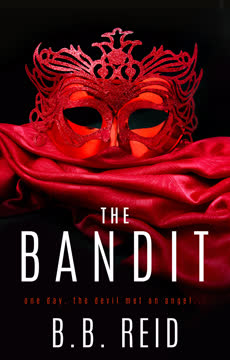
The Bandit is a brutal, unflinching exploration of the ways love, violence, and legacy are intertwined. At its heart, the novel asks whether it is possible to break free from the chains of the past—whether the children of criminals can ever escape the crimes of their parents, and whether love can survive in a world built on betrayal. The story's power lies in its refusal to offer easy answers: Mian and Angel's relationship is both toxic and redemptive, a site of both harm and healing. The novel's depiction of trauma—sexual, emotional, generational—is raw and honest, refusing to romanticize suffering but also refusing to deny the possibility of transformation. The black book is both a literal object and a metaphor for the secrets we inherit and the debts we owe. In the end, The Bandit is a story about survival—not just the survival of the body, but the survival of hope, dignity, and the possibility of love in a world that seems determined to destroy them. The lesson is clear: forgiveness is costly, trust is fragile, and the only way out is through.
Last updated:
Review Summary
The Bandit by B.B. Reid receives polarizing reviews averaging 4.02 stars. Fans praise the intense dark romance between Mian, a desperate single mother, and Angel, a ruthless mob boss seeking revenge after she burglarizes his home. Reviewers celebrate the dual POV storytelling, scorching sexual tension, flashbacks revealing forbidden past love, and complex plot twists. Critics cite problematic elements: poor editing, use of Mian's baby as leverage, humiliation scenes, and the cliffhanger ending. Many note Angel's possessive alpha characteristics and morally questionable actions. The book polarizes readers between five-star raves and one-star condemnations.