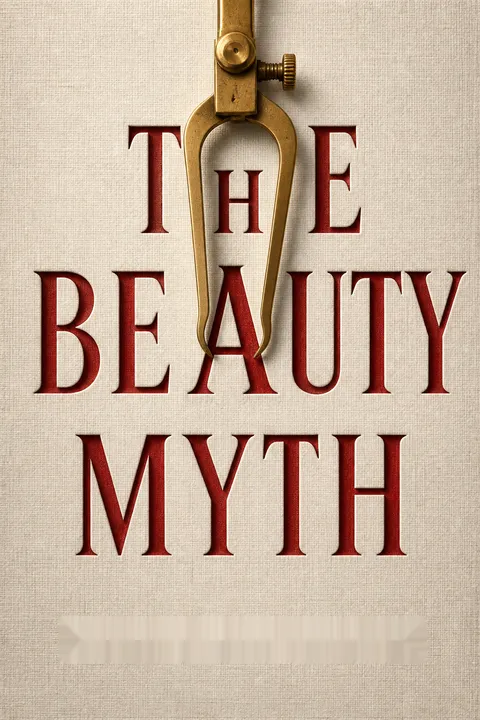


Key Takeaways
Treat beauty standards as social rules, not timeless facts
The backlash thesis. Naomi Wolf argues that as women gained legal, educational, and economic freedom, pressure to meet an ideal appearance intensified. The beauty myth is the belief that a single standard of female beauty is natural and universal, and that women’s worth depends on meeting it. Wolf sees it as a form of social control: it makes women compete for approval, directs attention toward their bodies, and recasts structural inequality as personal failure.
A changing ideal. Wolf traces the modern beauty standard to the spread of mass-produced images after the Industrial Revolution. Its speed of change undermines claims that it is biologically fixed. She points to cultures with different ideals and to traditions in which men, not women, compete over appearance. In her 2002 introduction, she notes that representation had broadened, while standards continued to shift and sexualized images reached younger girls.
What's valuable is the shift from asking whether an ideal is attractive to asking who defines it, how it spreads, and what behavior it rewards. That is a useful method for examining any norm presented as nature. Contemporary psychology also studies how repeated appearance-focused evaluation can draw attention away from other identities and goals. Wolf's argument is most persuasive as an account of reinforcing pressures, not as proof of a coordinated plan: beauty practices can also express pleasure, culture, or personal creativity. The key distinction is whether a choice remains genuinely optional, or becomes a condition for respect and opportunity.
Notice when employers turn appearance into an unofficial job requirement
The workplace test. Wolf calls appearance demands the Professional Beauty Qualification, or PBQ: an unofficial requirement that women meet a shifting beauty standard to be hired, promoted, or kept in a job. She contrasts it with legitimate job qualifications, such as appearance requirements for a model. Her examples include Playboy waitress Margarita St. Cross, whose employer ranked her against a beauty scale, and journalist Christine Craft, who said her television station pressured her about age, attractiveness, clothes, and makeup.
An added shift. Women already carried paid work and much of the unpaid work at home. Wolf argues that beauty maintenance added a third burden, consuming time, money, and attention. The rules could contradict one another: a woman might be criticized for looking too feminine, or not feminine enough. The result was less freedom to be evaluated mainly on her work.
The PBQ is a sharp way to expose how ostensibly neutral standards can reproduce unequal treatment. Organizational research often distinguishes transparent, job-relevant criteria from informal judgments that reward similarity to those already in power. Appearance rules are especially hard to challenge when employers call them customer preference or professionalism. A useful test is whether the rule is written, consistently applied across genders, and demonstrably necessary for the task. Not every grooming expectation is discriminatory, but vague standards give bias room to masquerade as common sense.
Read beauty media as commerce, not neutral advice
A mixed message. Wolf does not dismiss women's magazines as trivial. They often carried reporting on abortion, harassment, work, and women's lives to readers overlooked by mainstream journalism. But their business model depended heavily on advertisers selling cosmetics, diets, and treatments. The same publication could encourage women's ambition in one article and suggest that their faces or bodies needed correction in the next.
Images shape the frame. Wolf argues that repeated images teach women to compare themselves with a narrow, polished ideal, while retouching makes ordinary signs of age and bodily variation seem unusual. The magazines also offered a rare sense of shared female culture, which helps explain their emotional pull. The problem is not that every article is propaganda; it is that readers may mistake an advertiser-shaped beauty message for independent advice about what women want.
This account anticipates a core question in media economics: when audience attention is sold to advertisers, editorial independence becomes structurally vulnerable even without explicit orders. The insight applies beyond women's magazines to any platform whose revenue grows when users feel a problem and buy a remedy. Still, readers are not passive containers. They can enjoy fashion imagery, reject its claims, and use the same magazines to find language for shared concerns. Media literacy is strongest when it examines both the content and the incentives behind it, rather than treating all popular culture as uniformly harmful.
Recognize when beauty rituals turn self-care into endless penance
A borrowed religion. Wolf calls beauty routines the Rites of Beauty, a functional religious system rather than a literal church. Products and regimes promise improvement, while age, weight, and ordinary imperfections become evidence of personal failure. The believer is asked to monitor herself, confess lapses, and start again. Wolf compares this cycle to older religious patterns of sin, discipline, and hoped-for redemption.
No final pardon. A diet can be restarted after a lapse; an anti-aging product cannot stop time. That keeps the consumer in a loop of scrutiny and renewed effort. Wolf describes scales, calorie counting, and close inspection of the face as forms of surveillance that women learn to perform on themselves. In this account, the central demand is not simply to look a certain way, but to accept continual outside judgment over what the body may need or enjoy.
The religious analogy helps explain why a routine can feel morally charged even when it is sold as ordinary shopping. It also connects to the idea of self-surveillance: people begin enforcing social rules on themselves, often without a visible authority present. Modern fitness trackers and quantified-self tools can support health goals, but they can also turn every deviation into a score to repair. The analogy should not flatten spiritual practice or imply that grooming is inherently coercive. Its force lies in describing a particular pattern: guilt, monitoring, temporary relief, and a renewed sense of deficiency.
Protect sexual self-worth from images that confuse desire with display
Desire versus display. Wolf uses beauty pornography for commercial images that present women's bodies as polished objects, often posed to suggest sexual availability without showing their own agency or experience. She also criticizes beauty sadomasochism, in which women's humiliation or threat is styled as desirable. Together, she argues, these images teach women to watch themselves from the outside and can narrow the cultural picture of female sexuality.
A constrained script. The concern is not explicitness by itself. Wolf objects to a culture that circulates a limited set of images while offering few popular depictions of mutual desire, trust, and individual difference. She connects this imbalance to women's self-consciousness and to unequal expectations in heterosexual relationships. Her proposed alternative is not sexual modesty, but a broader understanding of sexuality as embodied, varied, and chosen rather than earned through resemblance to an image.
The strongest insight here is that sexual imagery can act as a script, supplying expectations before partners have learned to communicate their own desires. Media-effects research generally treats such influence as probabilistic and shaped by social context, not as a direct cause of any single person's behavior. That distinction matters: images can normalize a narrow script without mechanically determining conduct. The positive implication is practical. More varied stories of mutual pleasure, consent, and ordinary bodies can expand what people imagine as possible, while honest conversation remains essential to making those possibilities real.
Treat chronic dieting as a risk, not a character test
Restriction has consequences. Wolf argues that persistent dieting can produce the very fixation and distress it is supposed to cure. She cites a Minnesota study in which healthy male volunteers, after months on restricted food, became preoccupied with meals, socially withdrawn, and emotionally distressed. She also cites a 1984 survey of 33,000 women: 75 percent of respondents aged eighteen to thirty-five thought they were fat, though only 25 percent were medically overweight. These are historical figures, not current estimates.
A personal memory. Wolf recounts beginning to restrict food as a young teenager amid comments and images that taught her to distrust a normal body. She describes becoming compliant and mentally consumed by food. Her account supports her larger claim that eating disorders cannot be understood only as individual weakness. It does not mean every diet causes an eating disorder, but it does challenge the assumption that severe restriction is harmless self-discipline.
The Minnesota experiment is a useful reminder that food restriction can alter mood, attention, and social behavior even in people without an eating disorder. That makes self-blame a poor first explanation for distress around food. At the same time, clinical eating disorders have multiple interacting causes, including biological vulnerability, psychological history, and social pressure. Treating the issue as political damage can reduce shame, but it should not replace individualized care. The clearest lesson is to take persistent restriction, bingeing, purging, or intense body distress seriously and seek qualified support rather than escalating control.
Question who benefits when healthy bodies are labeled defective
Redrawing the line. Wolf argues that the Surgical Age turns ordinary features of female bodies into defects: wrinkles, cellulite, postpartum changes, and aging breasts become conditions to correct. She compares this with earlier medical systems that described menstruation, pregnancy, and menopause as illnesses. The common pattern, in her account, is that social expectations are given medical authority, making normal female experience seem abnormal.
Choice under pressure. Cosmetic surgery may be a personal decision, but Wolf asks whether it is fully free when appearance affects employment, social standing, or the hope of being desired. She criticizes advertising and medical writing that, as she documents them, minimized risks or framed procedures as simple fixes. Her argument is not that every operation is wrong; it is that informed consent requires honest information, and that pressure can make a nominal choice feel compulsory.
This section usefully separates bodily autonomy from the assumption that every market choice is made under equal conditions. Ethical consent requires understandable information and the freedom to refuse without punishment, principles that matter in medicine far beyond cosmetic procedures. The book's historical claims about risks, regulation, and industry practice belong to its period and should not be treated as current clinical guidance. Its durable question is more general: when a healthy trait is framed as a disease, who defines the problem, who profits from treatment, and whose interests are left out?
Replace comparison with solidarity, and reclaim choice over adornment
Choice, not abstinence. Wolf does not ask women to stop wearing makeup, dressing up, or caring about appearance. She argues that adornment becomes oppressive when women must use it to secure credibility, safety, work, or love. Her alternative is to detach personal worth from the beauty ranking and make appearance one possible form of expression among many.
Change the conditions. Wolf calls for collective action: challenge appearance-based hiring, organize workers, support women's cultural work, and build ties across generations. In her 2002 introduction, she notes genuine shifts toward broader representation and better consumer protections, but also warns that the ideal adapts, including through the sexualization of younger girls. The goal is not to win the ranking, but to make it less powerful by treating other women as allies rather than rivals.
The distinction between choice and compulsion prevents a critique of beauty culture from becoming another rule about how women should look. It also makes solidarity materially relevant: shared organizing can address workplace standards and public representation in ways that isolated individual choices cannot. The challenge is that rejecting comparison is easier in principle than under systems that distribute attention and opportunity unevenly. A useful practice is to notice when a judgment about another woman's appearance is being treated as information about her character or worth, then refuse that shortcut.
Analysis
The Beauty Myth is a polemical synthesis of labor history, media criticism, feminist theory, and personal testimony. Its distinctive move is to treat appearance standards not as a narrow matter of taste, but as a bridge linking private self-perception to institutions. At work, appearance becomes a qualification; in magazines, it becomes a consumer problem; in diet culture, a moral test; in sexual imagery, a script; and in cosmetic medicine, a defect to repair. The same pressure appears in different settings, so the book reads less like a list of beauty harms than a model of how a social norm reproduces itself.
Its most durable contribution is a change of question. Instead of asking whether a woman is beautiful enough, ask how the standard is made, who gets to judge, and what happens when someone refuses it. That shift helps explain why individual confidence alone cannot undo institutional penalties, while also preserving room for pleasure, style, and self-expression. The book's proposed answer is therefore both personal and collective: reclaim the body as one's own, and alter the rules that make appearance a condition of belonging.
The argument also has limits. Much of its evidence comes from studies, court cases, and industry figures from the 1970s through the early 1990s. Those data illuminate the period but should not be presented as current statistics. Wolf sometimes moves from correlation to an expansive account of political purpose, making a diverse set of actors appear more coordinated than the evidence can establish. The analysis also centers middle-class Western women, even as it recognizes differences of race and class. These qualifications do not erase the book's insight; they sharpen its use. Read it as a powerful framework for tracing incentives and consequences, not as a complete causal theory of every beauty practice. In contemporary settings, personalized feeds and creator-driven commerce provide new channels for comparison, while also creating space for counternarratives. The central diagnostic question remains relevant: does appearance serve self-expression, or has it become the price of being taken seriously?
Review Summary
The Beauty Myth receives mixed reviews, with many praising its groundbreaking ideas on how beauty standards oppress women. Readers appreciate Wolf's analysis of the beauty industry's impact on women's self-esteem and societal roles. However, some criticize the book's dense writing style, outdated statistics, and overgeneralizations. Despite its flaws, many consider it essential feminist reading, noting its continued relevance in the age of social media. Critics also point out the book's lack of intersectionality and its focus on white, middle-class women's experiences.
People Also Read

Glossary
The beauty myth
Appearance as social controlWolf's term for the belief that a universal standard of female beauty exists and that women should organize their identities around attaining it. She argues that the standard changes with culture and commerce, yet presents itself as natural. It can turn social judgments about women's value into private anxieties about their faces and bodies.
Iron Maiden
A punishing beauty idealWolf's metaphor for the rigid, idealized female image imposed by mass culture. Like a restrictive mold, it invites women to measure themselves against a narrow standard that cannot be comfortably or permanently inhabited. The image is presented as attractive, but Wolf emphasizes the physical and psychological costs of trying to fit it.
Professional Beauty Qualification
Appearance as job requirementWolf's term for the informal demand that women meet beauty expectations to obtain or retain work, even when appearance is not genuinely necessary to perform the job. She contrasts it with narrowly defined occupational qualifications and argues that shifting standards can disguise discrimination as professionalism or customer preference.
Third Shift
Beauty labor after paid workWolf's label for the time, money, and effort women may spend maintaining an approved appearance, in addition to paid employment and unpaid domestic labor. She argues that this extra burden can drain energy and resources while being presented as a personal choice or investment in professional success.
Rites of Beauty
Rituals of appearance and guiltWolf's description of beauty routines and industries as a functional belief system. Dieting, grooming, and anti-aging practices can organize daily life around rules, self-monitoring, guilt, and temporary relief. The phrase is an analogy for how these practices may resemble religious ritual, not a claim that they constitute a literal religion.
One Stone Solution
The promised weight-loss fixWolf's term for the culturally promoted belief that losing a modest amount of weight will resolve women's dissatisfaction with their bodies. She argues that the promised endpoint is often below a woman's natural weight, encouraging repeated cycles of restriction and renewed self-criticism rather than lasting confidence.
beauty pornography
Commercialized sexual displayWolf's term for imagery that presents women as polished, sexually available objects while limiting the representation of their individual desire and experience. She argues that its conventions circulate beyond explicit pornography into advertising and popular media, shaping ideas about how women should look and how sexuality should be displayed.
FAQ
What's The Beauty Myth about?
- Exploration of beauty standards: The Beauty Myth by Naomi Wolf examines how societal standards of beauty are constructed and enforced, particularly against women, serving as a form of social control.
- Feminist critique: The book presents a feminist perspective, linking beauty standards to broader issues of women's rights and societal progress, arguing that these ideals intensify as women gain more power.
- Cultural implications: Wolf discusses how the beauty myth affects various aspects of women's lives, including work, culture, religion, and sexuality, distracting women from their achievements and undermining their self-worth.
Why should I read The Beauty Myth?
- Empowerment through awareness: Reading this book can help women recognize and challenge internalized beauty standards, serving as a tool for empowerment and self-acceptance.
- Cultural critique: The book provides a critical analysis of the media and advertising industries, making readers more aware of how these forces shape perceptions of beauty.
- Historical context: Wolf places the beauty myth within a historical framework, showing its evolution alongside women's rights movements, deepening readers' appreciation for contemporary feminist issues.
What are the key takeaways of The Beauty Myth?
- Beauty as a social construct: Wolf argues that beauty is not an objective standard but a socially constructed ideal that varies across cultures and time periods.
- Impact on mental health: The book highlights the psychological toll of striving for unattainable beauty ideals, including eating disorders and body dysmorphia.
- Call to action: Wolf encourages women to reject the beauty myth and embrace their individuality, advocating for a collective movement towards redefining beauty standards.
What are the best quotes from The Beauty Myth and what do they mean?
- “It is far more difficult to murder a phantom than a reality.” This quote emphasizes the elusive nature of beauty standards, suggesting they are unattainable ideals leading to frustration and self-doubt.
- “The more legal and material hindrances women have broken through, the more strictly and heavily and cruelly images of female beauty have come to weigh upon us.” Reflects Wolf's argument that as women gain rights, societal pressures to conform to beauty ideals increase.
- “Beauty is a currency system like the gold standard.” Illustrates how beauty is treated as a form of currency, impacting women's social and economic opportunities.
What is the beauty myth according to Naomi Wolf?
- Definition of the beauty myth: Wolf defines it as the societal belief that women must adhere to certain physical standards to be valued, serving as a form of social control.
- Historical evolution: The beauty myth has evolved alongside women's rights movements, becoming more pronounced as women gain power.
- Cultural manifestations: It manifests in media representations, advertising, and cultural expectations, which Wolf encourages women to recognize and challenge.
How does The Beauty Myth address the relationship between beauty and work?
- Workplace discrimination: Wolf discusses how beauty standards are used to evaluate women in the workplace, leading to discrimination based on appearance rather than qualifications.
- Impact on professional advancement: Women often face a "professional beauty qualification" (PBQ) affecting hiring and promotion decisions, reinforcing the idea that a woman's value is tied to her appearance.
- Call for change: Wolf advocates for reevaluating workplace standards to prioritize skills and qualifications over appearance.
How does The Beauty Myth connect beauty to religion?
- Rituals of beauty: Wolf draws parallels between beauty rituals and religious practices, suggesting that the pursuit of beauty has become a modern form of worship for women.
- Moral implications: Beauty is often framed as a moral imperative, creating a cycle of self-judgment and shame for not meeting societal standards.
- Spiritual void: As traditional religious structures weaken, the beauty myth fills the void, offering a new belief system centered around appearance.
What are the psychological effects of the beauty myth?
- Self-esteem issues: The beauty myth contributes to low self-esteem among women, as they constantly compare themselves to unattainable standards.
- Eating disorders: There is a link between the beauty myth and the rise of eating disorders, as women strive to achieve an idealized body type.
- Mental health impact: The pressure to conform to beauty standards can lead to anxiety, depression, and other mental health challenges.
How can women combat the beauty myth?
- Critical awareness: Wolf encourages women to develop a critical awareness of beauty standards and their origins, empowering them to reject harmful ideals.
- Collective action: The book advocates for collective action among women to challenge societal norms and redefine beauty.
- Positive self-image: Emphasizes the importance of fostering a positive self-image that is not dependent on external validation.
How does The Beauty Myth define the "Professional Beauty Qualification" (PBQ)?
- Definition of PBQ: The PBQ refers to the societal expectation that women must adhere to certain beauty standards to be considered successful or competent in their professional lives.
- Impact on women: Creates a double standard where women are judged more harshly than men based on their looks, pressuring them to invest in appearance over skills.
- Consequences of PBQ: Results in feelings of inadequacy if women do not meet these standards, highlighting the need for systemic change.
What role does media play in perpetuating the beauty myth according to The Beauty Myth?
- Media representation: Media often portrays a narrow definition of beauty, distorting women's perceptions of themselves and each other.
- Censorship and control: Media censorship reinforces the beauty myth by limiting the diversity of images and narratives available to women.
- Advertising influence: Advertising promotes beauty products using fear and insecurity, creating a cycle where women feel compelled to conform to beauty standards.
How does The Beauty Myth address the issue of aging?
- Aging and beauty standards: Societal beauty standards often equate youth with beauty, leading to a devaluation of older women.
- Cultural attitudes: Critiques cultural attitudes that stigmatize aging, suggesting these views are rooted in patriarchal ideals.
- Embracing aging: Encourages women to embrace aging as a natural and valuable part of life, leading to greater self-confidence and fulfillment.
Download PDF
Download EPUB
.epub digital book format is ideal for reading ebooks on phones, tablets, and e-readers.








