

Plot Summary
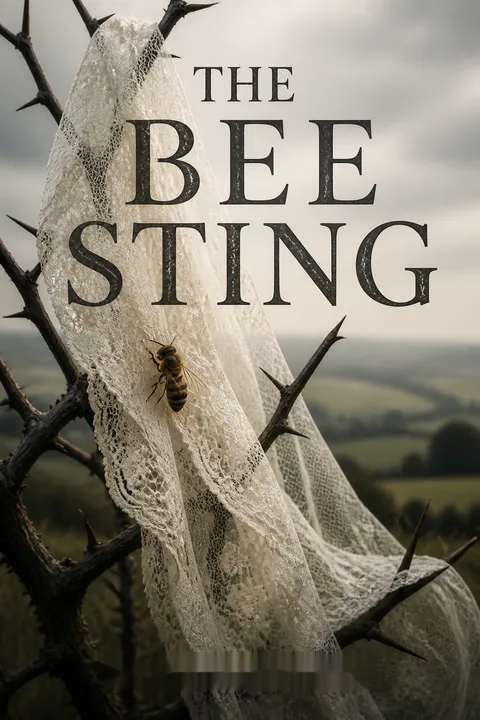
The Bee in the Veil
Cass Barnes,1 bookish daughter of a failing car dealer, believes she and glamorous Elaine Comerford5 share the same life and the same escape plan. Their families are prosperous, their grades high, and Dublin seems like a future they can claim together.
Then Elaine5 discovers why Cass's mother,3 Imelda,3 has no wedding photographs: a bee stung Imelda beneath her veil, and vanity kept her from telling her children. Cass1 laughs with Elaine,5 then imagines the frightened insect and the ruined bride, a small joke turning into a private emblem of shame.
Meanwhile, Dickie Barnes's2 dealership is losing customers in Ireland's financial crash, while Elaine's father12 still spends freely. Cass1 begins to understand that their friendship rests on a picture of sameness that is already cracking.
The bee story makes family history both comic and bodily. Imelda's carefully maintained beauty cannot erase the public humiliation beneath her veil, while Cass's sympathy extends even to the insect, reflecting her anxious tendency to feel responsible for harms far beyond her control. Her friendship with Elaine offers an escape from the town, but it also gives Cass a measure of herself through Elaine's attention. As the families' fortunes diverge, the girls' apparent likeness becomes a fragile social fiction.
The Poet's Hidden Pages
A new English teacher, Julie Grehan,14 introduces Cass1 and Elaine5 to women poets whose work joins beauty to pain. Elaine5 decides that poetry might be a route out of town, and Cass1 follows her enthusiasm, secretly using Imelda's3 bank card to buy Grehan's14 self-published chapbook.
The poems unsettle Cass1 with their explicit bodily imagery; the acknowledgements lead her online to a concealed sexual circle associated with the teacher.14 Before she can share what she found, Elaine5 grows absorbed in Grehan14 and another classmate, Sarah Jane Hinchy.13
Cass1 submits the book to the principal. Grehan14 disappears from school, amid rumors that a parent complained, and Elaine5 turns away from Cass.1 The friendship's first serious rupture comes not from a single argument, but from Cass1 choosing disclosure over trust.
The chapbook punctures the girls' expectation that a compelling adult's private life will resemble her curated public image. Cass wants intimacy with Grehan's hidden self, yet responds to what she finds by handing the evidence to authority. This is not simple moral courage or malice: she is jealous, frightened of exclusion, and unable to separate truth-seeking from possession. Elaine's retreat leaves Cass with the cost of turning private knowledge into public consequence, a pattern that will recur in the family's larger secrets.
The Garage Closes
Dickie2 shuts the dealership's branch after the recession empties its showroom and makes the bills impossible to meet. Imelda3 blames her husband's2 gentle, bookish nature, while Cass1 blames herself for a school project that calculated the garage's contribution to climate change.
Elaine5 stops inviting Cass1 over, and the promised future in Dublin fades into uncertainty. Sarah Jane,13 once a target of their jokes, helps Cass1 understand student grants and the cost of living away from home. Cass1 resists the help because needing money feels like a public demotion.
When Elaine5 finally draws her back to the Drain, she presents Cass1 to the crowd as her oldest friend and reassures her that the garage's failure is Dickie's2 burden, not hers. Cass1 returns to the friendship, but not to its old innocence.
The closure turns economic loss into a social verdict. In a town where everyone knows the Barnes name, Cass experiences her father's business failure as a stain on her own identity, while Imelda converts shame into accusation. Sarah Jane's practical advice offers a different model of care: not admiration or rescue, but useful knowledge. Elaine's return comforts Cass, yet her framing of Dickie as solely responsible encourages Cass to trade understanding for blame, making their renewed intimacy emotionally powerful and morally unstable.
The Drain at Night
Cass1 begins visiting the Drain with Elaine,5 where boys, alcohol, and attention seem to offer a substitute for the future they once planned. She calls Rowan Headley19 her boyfriend largely because they kiss; outside those moments he is indifferent, and Elaine5 explains that pleasure is not required for a relationship to count.
Cass1 keeps returning, partly to remain beside Elaine.5 When Polish mechanic Ryszard11 appears, Elaine5 tries to recruit Cass1 to arrange him a job at Dickie's2 garage.
Cass1 refuses to be used as a flirtation tool, but later finds herself drawn to Ryszard's11 stare and tells him to approach her father2 directly. He vanishes from their nights, leaving Cass1 with a glimpse of desire as something that can feel both exciting and unchosen.
The pub's transaction is not only sexual or economic. Cass learns to measure her worth through whether boys approach her and whether Elaine keeps her close, while Elaine treats attention as a resource she can distribute. Cass's passivity is not consent to every arrangement; her refusal to help Elaine use her family business marks an emerging boundary. Ryszard's charged gaze complicates her sense of agency, showing how adolescent desire can feel like discovery even when it is shaped by other people's expectations.
Floodwater at the Bunker
After weeks of rain, the river floods the town, closes the Drain, and strands the students at home. Cass1 and Rowan19 retreat to the old stone shed in her family's woods, which he calls the Bunker. Elaine5 soon arrives with friends, turning it into a crowded, sodden party. The girls drink with older men in town as well, learning how to accept drinks and dodge unwanted advances until one man grabs Cass.1
In the woods, Ryszard11 draws Cass1 and Elaine5 into a three-way kiss. Instead of letting him dictate what happens next, the girls break into laughter, revive the private jokes that once made them inseparable, and run hand in hand toward the reopened nightlife. Their bond briefly feels restored, though neither has solved what she wants.
The flood suspends the ordinary structures that had been pushing Cass and Elaine apart. In the Bunker, their laughter reclaims a shared language, but the scene does not settle their desire or repair the class and emotional differences between them. Cass's experience with older men shows that apparent freedom can mask coercion, while the girls' refusal to take Ryszard's staged intimacy seriously gives them a moment of mutual agency. The storm's temporary isolation makes their closeness vivid without making it durable.
Imelda's Stolen Childhood
Imelda3 grows up in a poor, violent household where her father, Paddy Joe, beats his sons and controls his beautiful daughter as a prized possession. When a gang invades the home and threatens Imelda,3 her great-aunt Rose8 arrives, uses an uncanny story about a black dog to frighten the men away, and later takes Imelda3 to live with her.
Rose8 gives her safety, schooling, and a view of life beyond her father's reach. At a dance, Imelda3 meets Frank Barnes,6 a celebrated young Gaelic footballer from a wealthy family. Their attraction is immediate, but Imelda3 keeps him at a distance, afraid of sex and of the badness her mother said lived inside her. Frank's6 patience makes a different future imaginable.
Imelda's beauty is treated by the adults around her as property, first by her father and later by the social world that prizes her appearance. Rose's protection interrupts that arrangement, though her folk knowledge remains ambiguous: the black dog may be supernatural, or a story that gives frightened men permission to leave. Imelda's fear of desire has roots in coercion, not prudery alone. Frank offers affection without force, but the class divide between their households means that love also brings her into another family's system of judgment.
The Brother at Trinity
At Trinity College, Dickie Barnes2 feels inferior to the confident students around him, but Willie Laughton,9 an eccentric and brilliant debater, draws him into university life. After Dickie2 is assaulted by a man he meets at a gay bar,23 Willie9 becomes his confidant and lover.
Dickie2 experiences intimacy alongside intense shame, repeatedly trying to disown the part of himself that wants it. When Frank6 visits Dublin, he asks Dickie2 whether he should flee to England rather than marry Imelda3 under her father's pressure.
Dickie,2 newly aware that he does not want to return to the family dealership, persuades his brother6 to choose marriage and remain at home. His advice protects his own escape route, though he tells himself he is helping Frank6 follow his heart.
Dickie's education gives him language and possibility, but not the freedom to inhabit them. He can argue brilliantly in public while treating his private desire as evidence against himself. Willie offers recognition, yet Dickie uses guilt and secrecy to control how close they can become. His counsel to Frank is therefore ethically mixed: it sounds like loyalty, but also clears space for Dickie's own ambitions. The novel links self-deception to social performance, showing how a person can mistake a persuasive explanation for an honest motive.
The Wedding Without Frank
Frank's6 football career collapses after he misses a decisive chance in the provincial championship, then drinks heavily, loses his place on the team, and considers leaving for London. After a reconciliation with Imelda,3 he becomes engaged, but he later drives away and dies when his car crashes and burns.
Dickie2 returns from Dublin, ends his relationship with Willie,9 and helps Imelda3 through the funeral and the weeks of grief. They sleep together while mourning, and Imelda3 discovers she is pregnant.
Dickie2 proposes marriage, presenting their union as a way to care for one another and the baby. At the wedding, Imelda3 keeps searching the ballroom for Frank's6 ghost; when she sees only her reflection, she understands that she herself is the remnant of the life she lost.
The marriage is both an act of care and an attempt to overwrite catastrophe. Dickie and Imelda do not enter it from a settled mutual desire; they are joined by grief, pregnancy, duty, and Dickie's need to become the brother he envies. Imelda's search for Frank at the wedding dramatizes the difference between public ritual and private time: everyone sees a bride, while she experiences herself as a survivor from a vanished world. The unresolved emotional debt becomes the foundation of a family that will struggle to speak honestly.
The Family Underwater
Years later, the Barnes family is losing its house, savings, and standing as Dickie's2 dealership fails. Imelda3 sells clothes and household goods, often grieving over the possessions she parts with; Dickie2 stays late at work and grows silent at home.
Cass1 drinks and hides her shame, while her younger brother PJ4 fears his parents2 will separate and that he will be sent away. A flood temporarily revives the repair side of the garage, but the old stone shed draws Dickie2 and PJ4 back into the woods.
Meanwhile Maurice7 returns from Portugal, lets Big Mike Comerford12 assume control of the dealership, and begins scrutinizing its accounts. The family's crises no longer remain separate: the business threatens the children's future, and the unspoken past begins pressing into the present.
The recession makes the Barnes family's private habits visible: Imelda's spending had helped create a performance of security, while Dickie's silence allowed a failing business to remain emotionally unaddressed. The flood briefly restores revenue without restoring trust, illustrating how a crisis can reward the very structure that failed. PJ and Cass respond differently to instability, one clinging to family unity, the other seeking distance. Maurice's return shifts the financial pressure into a question of judgment and accountability, which Dickie is not prepared to answer.
The Name Tag Returns
As an adult, Dickie2 attends a Dublin dealership conference and secretly arranges to meet Willie,9 now a public environmental campaigner. He uses a false identity to make contact, then reaches the Butterfly, the gay bar where their college relationship began. Willie9 sees him, but a bouncer quickly ushers Dickie2 back onto the street.
Dickie2 leaves Dublin devastated and returns to the flooded town, where he encounters Ryszard11 in the closed garage. The mechanic's beauty and availability pull Dickie2 into an affair he had long denied wanting. Sex becomes an escape from the business and from the life he built after Frank,6 but it also exposes Dickie2 to a new danger he cannot control.
Dickie's catfishing is a bid to recover a self he abandoned without having to risk an honest approach. Willie refuses the terms of that deception, and the bouncer's removal makes the rejection physical. Dickie then turns to Ryszard, whose immediacy offers sensation without the history or mutual recognition he sought from Willie. The contrast is psychologically sharp: one relationship requires truth and accountability, the other initially permits dissociation. His escape from shame becomes a second secret with material consequences.
Fifty Thousand Missing
Ryszard's11 work at the garage raises suspicions after customers discover missing catalytic converters, and Dickie2 repeatedly delays firing him. Their sexual relationship intensifies in the empty workshop.
Ryszard11 secretly records their encounters, steals more parts, and eventually demands a large payment to keep the videos private. Dickie takes fifty thousand euro from the company accounts and disguises the withdrawal, convincing himself that the theft is a business expense. Maurice7 later discovers the gap and summons Dickie2 to explain it.
Before that meeting can happen, Dickie2 becomes ill at the forest well and misses his father's7 appointment. Ryszard11 has left town, but the recordings remain a threat, and the money has made Dickie's2 family finances and his secret inseparable.
The blackmail works because Dickie has already divided himself into public and private selves, then mistaken concealment for control. He treats the stolen money as a practical fix, reducing a moral choice to accounting language. Ryszard's camera turns their private encounter into a commodity and reverses the power Dickie thought his position as employer gave him. The missing funds then threaten the very business that supports the family. Dickie's dishonesty is not an isolated lapse; it is an attempt to preserve a respectable identity by sacrificing the conditions that make respectability possible.
A Well in the Woods
Dickie2 hires Victor McHugh,10 an eccentric handyman and survivalist, to convert the old shed into a shelter. With PJ's4 help, they dig a well, line it with clay, plan food storage, and camouflage the building. Victor10 argues that drought, floods, famine, and grid failure will make neighbors competitors for scarce resources.
Dickie2 dismisses the worst predictions as salesmanship, yet keeps returning to the work because it lets him spend time with PJ4 and imagine that he can protect his family. When the new well finally produces water, Dickie2 drinks it and becomes violently ill. He misses Maurice's7 meeting and wakes at home after two days, weakened, with the financial investigation still unresolved.
The Bunker gives Dickie a project that feels concrete when the dealership and his family life seem to be dissolving. Victor's apocalyptic certainty offers a morally simple world: threats are external, preparation is virtue, and force can defend what love cannot. Dickie borrows that framework while resisting its implications. The poisoned or contaminated well turns imagined catastrophe into bodily consequence, but the deeper danger is that the shelter gives him a way to avoid conversations with his wife and father. His protective impulse and his retreat become difficult to distinguish.
A Second Door Opens
Imelda3 begins meeting Big Mike12 in secret, drawn to his attention and to the memories he shares of their poor childhoods. He has taken over the dealership and promises to help Dickie,2 though Imelda3 knows he has betrayed his wife Joan17 and doubts his motives. On the day she plans to visit him, a nursing home calls: Rose8 has suffered a severe stroke.
Imelda3 finds her aunt8 fading and confused, then unexpectedly meets her brother15 Lar,15 whom she has not seen since the family fled to England. Lar15 explains that their father is dead and admits that he never forgot her. Imelda3 leaves the reunion grieving, relieved, and newly aware that the past she tried to escape still has living witnesses.
Mike's appeal is not simply sexual attraction. He recognizes Imelda's history of poverty and humiliation, and that recognition feels like a form of being seen. Yet her doubts about his past conduct remain active, making desire inseparable from judgment. Lar's return offers another kind of intimacy, grounded in shared childhood rather than glamour or rescue. His presence complicates Imelda's belief that leaving her family meant leaving the past behind. Rose's declining condition sharpens the pressure to decide what can still be repaired.
Cass Learns the City
Cass1 and Elaine5 move to Dublin and begin at Trinity, sharing a cold, half-broken rental house and a rapid circuit of parties, societies, and new friends. Cass1 remains attached to Elaine,5 whose changing interest in women gives Cass1 hope that their closeness may become romantic. When Elaine's5 boyfriend Caleb admits he has been seeing someone else, she collapses into Cass's1 arms, and the two nearly cross the line between friendship and desire.
At a campus debate, Cass1 hears Willie9 speak about masks, shame, and climate change; his account of losing a love stirs her without revealing his connection to Dickie.2 Cass1 also meets Merle,24 a candid German student who invites her to see the countryside, offering a possible connection beyond Elaine.5
Dublin fulfills Cass's escape fantasy while exposing how much of her identity has been organized around Elaine. The girls' shared house recreates childhood intimacy, but its broken appliances and precarious routines prevent the city from becoming a polished refuge. Elaine's heartbreak draws Cass close, then leaves her unable to distinguish compassion from hope. Willie's talk connects environmental denial to personal concealment, echoing Cass's private struggle without solving it. Merle offers a less glamorous form of attention: direct, imperfect, and not dependent on belonging to Elaine's circle.
PJ Reaches Dublin
PJ,4 isolated at school and increasingly alarmed by his parents'2 conflict, decides to run away temporarily so they will panic and reunite. He sells possessions to pay a bully who claims Dickie's2 garage cheated his mother, then abandons the plan when his grandfather7 unexpectedly visits.
Later, believing Cass1 can help with Dickie's2 troubles, he secretly travels to Dublin instead of staying at his friend Zargham's21 house. He arrives during Cass1 and Elaine's5 party.
Cass,1 drunk and overwhelmed, pushes him out, insisting that her new life is no longer his concern. When she realizes he is lost, she finds him at a game shop and accompanies him home. PJ's4 improvised rescue has failed, but it forces Cass1 to confront how sharply she has cut herself off.
PJ's plan reflects a child's belief that family can be repaired through a sufficiently dramatic signal. He turns disappearance into a strategy because direct requests for attention have failed. Cass's rejection is not indifference so much as fear of being dragged back into the life she escaped, but the distinction offers little comfort to PJ. Her decision to find him again marks a first interruption in that flight. Their return journey exposes the mismatch between her wish for independence and his need for connection.
The Blackmail Returns
Ryszard11 resurfaces and gives Dickie2 until Friday to pay more money, threatening to circulate recordings of their affair. A clip appears online, making Dickie's2 fear of exposure immediate. He cannot borrow the sum from the bank or Maurice,7 and turns to Victor10 for help. Victor10 interprets the meeting as a threat to the family and prepares an armed ambush at the old Bunker.
Elsewhere, Mike12 learns that Augustina,16 his former housekeeper, has returned pregnant and goes to the unfinished estate where she is staying, carrying cash and a bolt gun. Imelda,3 after deciding she cannot begin an affair while hiding it from Dickie,2 heads toward the woods to confront her husband2 instead. The storm pulls their separate secrets toward the same place.
The recordings convert shame into leverage, while the storm gives each character a different story about what is happening. Dickie sees a crisis to contain, Victor sees an enemy to eliminate, and Mike treats Augustina's pregnancy as a threat to his control. Imelda's choice to go to Dickie rather than Mike is a fragile movement toward honesty, not a guarantee of reconciliation. The parallel journeys show how secrecy has become a shared environment: every character approaches the woods carrying a version of the truth that cannot safely remain private.
The Woods Hold Their Breath
Cass1 and PJ4 return from Dublin by bus and take the forest path, becoming lost in the storm near the Bunker and the strange tree. Imelda3 runs barefoot into the woods to find Dickie,2 while Dickie2 and Victor10 wait armed for Ryszard,11 each mistaking approaching lights and movement for the threat they expect.
At the unfinished estate, Mike12 confronts Augustina;16 Ryszard11 arrives, and the struggle spills into the storm. Dickie2 hears Cass's1 call but silences his phone when Victor10 reports a figure in sight. Cass1 and PJ4 reach the shed, and Cass1 spots a grey squirrel. The novel ends before anyone fires or escapes. The family, the blackmailer, and the two lovers have converged, but the consequences remain suspended.
The ending refuses the clean revelation that each character has been seeking. A familiar signal, a glimpse through rain, or a remembered animal can be mistaken for danger because everyone has trained themselves to read the world through fear. Cass's recognition of the squirrel recalls the novel's repeated question of whether something returning is still the same thing. The unfinished climax makes love an action that must occur under uncertainty, not a reward granted after secrets are resolved. No one yet knows whether the next gesture will protect or destroy.
Analysis
The novel's family crisis grows from a series of private acts that characters mistake for protection. Dickie2 conceals desire and financial misconduct to preserve his role as provider. Imelda3 hides longing beneath beauty and domestic performance. Cass1 tries to escape her family by treating the past as something she can simply stop discussing, while PJ4 imagines that a staged disappearance can make his parents2 love one another again. Each strategy has an immediate emotional logic, and each transfers the cost to someone else.
The book also refuses a simple division between human damage and natural catastrophe. Recession, flood, climate change, invasive species, and the failing sewage system are not symbolic scenery; they alter livelihoods, relationships, and the characters' sense of what can be trusted. Victor's10 bunker offers a seductive answer to systemic danger: withdraw, prepare, defend. Yet its isolation resembles Dickie's2 emotional retreat. Survival without mutual responsibility becomes another form of abandonment.
The recurring question of whether something can return unchanged shapes the novel's deepest relationships. Frank6 survives as a family ideal, but that ideal distorts Dickie's2 choices. Cass1 returns to Elaine's5 friendship and finds its terms have changed. PJ4 wants his family restored, while Imelda3 discovers that old attachments can return with grief and tenderness intact, but not with the years reversed. The final storm gathers these competing hopes around the Bunker without granting a clean resolution. Its suspended ending insists that love is not innocence or rescue. It is the willingness to face what one has done and remain answerable to the people who may still choose to come back.
Review Summary
The Bee Sting by Paul Murray is a 643-page Irish family saga following the Barnes family during Ireland's economic collapse. Reviews are polarizing: admirers praise Murray's character development, distinctive voice for each narrator (especially Imelda's unpunctuated stream-of-consciousness), dark humor, and emotional depth. Critics cite excessive length, frustrating ambiguous ending, over-reliance on flashbacks, and contrived coincidences. The novel explores family dysfunction, secrets, climate anxiety, and economic ruin through perspectives of father Dickie, wife Imelda, daughter Cass, and son PJ. Shortlisted for the 2023 Booker Prize, it won multiple awards despite divisive reception.
People Also Read










Characters
Cass Barnes
The watchful daughterCass is Dickie2 and Imelda's3 intelligent, environmentally anxious daughter. As a teenager, she measures her future through her friendship with Elaine5 and treats poetry, college, and escape from their small Irish town as ways to become someone new. Her sensitivity helps her notice other people's pain, but it also turns guilt inward and makes rejection feel like proof of personal failure. In Dublin she continues to seek Elaine's5 approval even as she begins to recognize the limits of that dependence. Cass's central conflict is between the self she performs to remain loved and the self she is only beginning to risk showing.
Dickie Barnes
The dutiful fatherDickie runs the family Volkswagen dealership and is husband to Imelda3 and father to Cass1 and PJ4. He is thoughtful, conflict-averse, and more comfortable explaining a crisis than confronting the people affected by it. His sense of duty is sincere, but he often uses it to suppress desire, grief, and uncertainty. He compares himself unfavorably with his charismatic brother Frank6 and believes that providing for his family can compensate for emotional distance. Dickie's life is shaped by a tension between the careful public man he has built and the private history he does not know how to integrate.
Imelda Barnes
The glamorous survivorImelda is Cass1 and PJ's4 mother, a striking woman whose beauty has been both protection and burden. Raised amid poverty and violence, she learned to read attention as a route to safety and social standing. She is funny, forceful, and acutely conscious of how the town judges her, yet she often hides fear beneath shopping, gossip, and anger. Her attachment to family duty is real, though it can become a cage: she wants to protect her children from the past while still yearning to be desired and recognized as a person beyond wife and mother.
PJ Barnes
The fact-gathering sonPJ is Cass's1 younger brother, a curious boy who collects facts about animals, games, history, and survival. He notices changes in his parents2 before they explain them and worries that divorce or financial collapse will leave him abandoned. His imagination turns ordinary woods into a game world, but his attempts to solve adult problems reveal how little control he has. PJ's appetite for knowledge is a form of connection: facts give him something reliable to offer when the people he loves seem unable to listen.
Elaine Comerford
Cass's brilliant best friendElaine is Cass's1 lifelong friend, admired for her beauty, confidence, and social ease. She shares Cass's1 desire to leave their town, but is more practiced at treating attention and relationships as choices she can manage. Her loyalty to Cass1 is genuine, yet she can be careless with Cass's1 vulnerabilities and impatient with the past. Elaine's search for freedom includes questioning whom she is attracted to and what kind of life she wants. Her confidence can be liberating to Cass1, but it can also make Cass1 feel like a supporting character in Elaine's story.
Frank Barnes
The golden brotherFrank is Dickie's2 younger brother, a popular Gaelic footballer and gifted car salesman. His ease with people contrasts with Dickie's2 carefulness, and his father Maurice7 sees him as both a source of pride and a disappointment. Frank is generous, impulsive, and drawn to the present moment; commitment and long-term plans make him uneasy. His love for Imelda3 places him between the wealthy Barnes family and her troubled home. In the memories of those who knew him, Frank becomes an ideal against which the living measure their own choices.
Maurice Barnes
The absent patriarchMaurice is Dickie2 and Frank's6 father, founder of the family dealership, and grandfather to Cass1 and PJ4. He is confident, commercially shrewd, and accustomed to making decisions for others while calling them family plans. His praise carries weight because his sons have spent their lives trying to earn it. Maurice believes business depends on understanding what people secretly want, yet his confidence in reading others often blinds him to their private needs. He represents a family inheritance built from both opportunity and expectation.
Rose
The folk healerRose is Imelda's3 great-aunt, a healer and fortune-teller who gives remedies, listens to secrets, and speaks through the language of signs. She offers Imelda3 a refuge from the violence of her childhood and remains an important link to a family history others would rather forget. Rose's powers are never fully explained, leaving room for coincidence, intuition, and the supernatural to overlap. Her practical care matters as much as her visions: she gives shelter first, then lets others decide what her warnings mean.
Willie Laughton
The brilliant confidantWillie is Dickie's2 university friend, a sharp debater with an eccentric manner and an appetite for argument, literature, and social causes. He is openly gay at a time when that openness carries real risk. Willie sees through performance more readily than Dickie2 does, and uses wit both to expose hypocrisy and to keep others at a distance. His relationship with Dickie2 offers tenderness, but also reveals the gap between understanding a truth intellectually and accepting it as one's own.
Victor McHugh
The bunker builderVictor is a local handyman, civil-defence volunteer, and survivalist who helps Dickie2 build in the woods. He is technically capable and socially eccentric, carrying a deep distrust of institutions and a vivid sense of future disaster. Victor's practical knowledge gives him authority in the forest, where traits mocked in town become useful. His certainty can comfort people who feel helpless, but it also narrows moral choices into threats and defenses. He is both helper and ideological pressure on Dickie2.
Ryszard Brankowski
The beautiful mechanicRyszard is a young Polish mechanic hired during the garage's post-flood rush of repairs. He is skilled, charming, and difficult to read, using flirtation and humor to control how others interpret him. His apparent vulnerability attracts Dickie2, whose position as employer complicates their intimacy. Ryszard understands that people conceal things and knows how to turn that knowledge into leverage. The uncertainty around his background makes him a catalyst for Dickie's2 buried desires and for the novel's collision between private conduct and public consequence.
Big Mike Comerford
The ambitious neighborBig Mike is Elaine's5 father, a cattle farmer and businessman whose investments have brought both wealth and trouble. He is socially confident and adept at making himself useful, especially when others are vulnerable. His history with Imelda's3 family gives him a more intimate understanding of poverty than his outward manner suggests. Mike's attraction to glamour and status coexists with a complicated sense of debt and belonging. He can be generous, self-serving, or both at once, which makes it difficult for Imelda3 to know what his attention means.
Sarah Jane Hinchy
The overlooked classmateSarah Jane is a bright, outspoken schoolmate whom Cass1 and Elaine5 initially dismiss as uncool. She wears a rainbow badge and challenges assumptions about identity, popularity, and who gets to define what matters. Her knowledge of college grants gives Cass1 practical help at a moment when Cass's1 family can no longer promise financial support. Sarah Jane represents an alternative to Elaine's5 social authority: intelligence without glamour, and confidence that does not depend on being universally liked.
Julie Grehan
The hidden poetJulie Grehan is the girls' temporary English teacher, a charismatic red-haired woman who introduces them to poetry as a way of seeing beneath appearances. Her lessons make private suffering a subject students are allowed to examine. Cass1 and Elaine5 idealize her partly because her online life appears adventurous and cosmopolitan. Grehan's contrast between public image and private work helps expose the girls' desire to possess the adults they admire, rather than simply learn from them.
Lar
Imelda's lost brotherLar is Imelda's3 brother, a quiet, observant boy in the household where their father dominates everyone. He is a partner in her childhood games and a witness to the danger she faces. Unlike the more openly combative brothers, Lar tends to hang back and notice what others miss. His bond with Imelda3 persists across years of separation, carrying the tenderness of a childhood neither of them could fully escape.
Augustina
The former housekeeperAugustina is Elaine's5 former Brazilian housekeeper, a quiet figure whose presence connects the Comerford12 household to the Barnes family and to the unfinished estate nearby. Others project fantasies and accusations onto her because they know little about her private life. Her role exposes how domestic workers can be treated as invisible until their choices disrupt the households that employ them.
Joan Comerford
Mike's guarded wifeJoan is Big Mike's12 wife and Elaine's5 mother. The town discusses her marriage as gossip, reducing her to the woman who either failed to notice or failed to prevent her husband's12 betrayals. She remains mostly outside the central action, but her presence makes clear that Mike's12 choices affect more than the people he pursues. Joan is a reminder that the town's intimate knowledge rarely becomes genuine understanding.
Peggy Barnes
The watchful matriarchPeggy is Maurice's7 wife and mother to Dickie2 and Frank6. She is perceptive, composed, and attentive to the differences between her sons, especially the ways Dickie2 measures himself against Frank6. Her gardening and careful observations offer a quieter counterpoint to Maurice's7 pronouncements. Peggy understands that a life chosen to satisfy other people's expectations can make everyone involved unhappy, though she cannot decide for another person.
Rowan Headley
Cass's first boyfriendRowan is a local boy who kisses Cass1 and shares nights at the Drain and the Bunker. He talks about music, games, and history, but is inconsistent in his attention. His detached manner lets Cass1 rehearse intimacy without feeling fully known, a pattern she partly mistakes for what relationships are supposed to be.
Nev
PJ's difficult companionNev is PJ's4 summer companion, a sharp-tongued boy who enjoys games and pushes past other people's boundaries. He can make PJ4 feel less alone, but his cruelty and sexualized provocations also leave PJ4 uncertain about the friendship. Nev embodies the social pressure PJ4 is still learning how to name.
Zargham
PJ's old school friendZargham is PJ's4 close friend, a fellow gamer and collector of odd facts. As school relationships shift, he experiments with a new name and a new peer group. PJ4 struggles to accept that change, revealing how much he depends on shared habits to feel secure.
Ethan
The online friendEthan is PJ's4 online gaming friend, cheerful and generous in messages. He offers PJ4 a vision of friendship that seems uncomplicated by local gossip or family history. Because they have not met in person, Ethan represents both real emotional support and the uncertainty of trusting someone known chiefly through a screen.
Sean
Dickie's first loverSean is a man Dickie2 meets in Dublin during his university years. Their encounter gives Dickie2 an early experience of male intimacy that is also frightening and painful. Sean's guardedness and violence intensify Dickie's2 confusion about desire, danger, and the possibility of being known.
Merle
The candid German studentMerle is a German exchange student studying theology who speaks plainly about the city, nature, and the people around her. Her directness irritates Cass1 at first, then gives Cass1 a glimpse of companionship that does not depend on Elaine's5 approval. Merle's willingness to notice beauty aloud makes her an unlikely challenge to Cass's1 guardedness.
Plot Devices
The bee sting
Beauty's hidden woundThe bee trapped in Imelda's3 wedding veil explains the missing photographs that first intrigue Cass1 and Elaine5. The incident is comic in the girls' retelling, but it also introduces the novel's recurring collision between public appearance and private pain. Cass1 imagines the bee's panic and Imelda's3 humiliation, turning an old family anecdote into a way of feeling across generations. The bee later resonates with the book's concern for environmental loss and for small lives caught inside larger human dramas.
The Bunker and well
Safety built from fearThe old stone shed in the Barnes woods begins as a children's play space, becomes a teenage refuge, and is later transformed by Dickie2 and Victor10 into an emergency shelter. The well makes the project materially useful, while camouflage, food stores, and survival plans give it the scale of a private fortress. It also draws Dickie2 and PJ4 together, then gives Dickie2 a place to retreat from his wife3, father7, and financial crisis. The Bunker expresses both care for family and fear of the world outside.
The stolen money
A secret made financialRyszard's11 recordings convert Dickie's2 affair into leverage. To keep the videos private, Dickie2 takes a large sum from the dealership accounts and disguises the withdrawal. The missing money gives Maurice7 a concrete reason to investigate Dickie2, connecting sexual secrecy to the family's economic collapse. The theft is not merely a suspense device: it reveals Dickie's2 habit of using respectable institutions and practical explanations to conceal choices he cannot admit aloud.
The red and grey squirrels
Nature's moral testThe endangered red squirrel and invasive grey squirrel give Dickie2 and Victor10 a local, visible version of ecological crisis. Victor10 treats culling greys as necessary to save the native population; PJ4 sees individual animals suffering through no fault of their own. Dickie2 attempts to mediate, but the question follows him from the woods into his family life: whether preventing one harm justifies causing another. The squirrels also connect childhood play, environmental anxiety, and the final movement through the forest.
Masks and false identities
Concealment that backfiresCharacters repeatedly use roles to avoid painful truths. Dickie2 performs the dutiful businessman, then invents an online persona to approach Willie9. Cass1 performs the confident student while hiding her love for Elaine5, and Imelda3 uses beauty and social polish to manage judgments about her past. These disguises can secure temporary safety or attention, but they also make honest relationships harder. Across the novel, concealment does not erase a history; it gives that history new ways to return.

Download PDF
Download EPUB
.epub digital book format is ideal for reading ebooks on phones, tablets, and e-readers.








