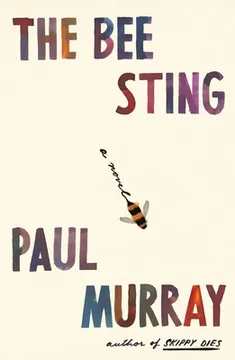


Plot Summary
The Bee Behind the Veil
A family murder in a nearby town gives Cass Barnes and her best friend, Elaine Comerford, fresh material for their jokes about their small Irish town. Their own families seem equally secure: Cass’s father, Dickie, runs a Volkswagen dealership, while Elaine’s father, Big Mike, has money and influence. Then the recession hollows out the business, and Cass begins to fear that Elaine will see her family’s decline.
When the girls find no photographs of her parents’ wedding, Elaine asks her father what happened. He reveals that a bee flew into Imelda’s veil and stung her eye on the way to church. The story punctures Imelda’s glamour, but Cass and Elaine’s shared laughter briefly makes their friendship feel unbreakable.
The bee is both an accident and a revealing intrusion: it gets beneath the carefully preserved image of Imelda as a flawless beauty, while the absent wedding photographs show how the family has edited its past. Cass’s delight at sharing the secret also contains anxiety. She wants Elaine’s closeness, but fears that the friendship depends on admiration, status, and the Barnes family’s vanished wealth. Their laughter creates intimacy without yet teaching either girl how to face what is painful rather than merely funny.
Poetry Opens a Door
When their regular English teacher becomes ill, Cass and Elaine meet Julie Grehan, a glamorous substitute who introduces them to poets whose lives include desire, depression, and suicide. The girls decide they want to become poets and order Grehan’s self-published collection.
Its raw, bodily poems unsettle Cass, who discovers an enigmatic dedication and leaves the book at the principal’s office. Grehan disappears from school, apparently after a complaint, though nobody explains what happened.
Meanwhile, Elaine’s attention shifts toward Grehan and away from Cass. When Grehan reads Cass’s school poem aloud, Elaine praises it with pointed coolness. Cass tries to tell her what she found in the book, but Elaine refuses to listen, and their shared future in Dublin begins to fracture.
Grehan’s poems expose the distance between a polished public self and the bodily, troubled person beneath it. Cass wants the book to provide glamorous access to her teacher’s private life, but instead encounters writing that resists being prettified. Her decision to take the book to the principal makes her both a curious student and an agent in Grehan’s removal, though the story withholds the precise cause. The episode also shifts the girls’ bond: each begins imagining a future shaped by someone other than the other.
The Garage Goes Dark
Dickie closes the dealership’s branch in the next town, and Imelda blames his gentle, bookish nature for the collapse. Cass’s guilt deepens because a school project she made with Dickie calculated the garage’s contribution to climate change.
At school, Elaine no longer invites Cass home or discusses their planned life together. Cass finds company instead in Sarah Jane Hinchy, once a target of their mockery, who explains college grants and offers practical help. Elaine turns to the Drain, the town’s underage pub, and arranges for Rowan Headley to meet Cass.
Rowan kisses her, but their relationship becomes a source of uncertainty rather than comfort. Elaine later draws Cass back into her circle, insisting she still belongs, while treating Dickie’s failure as his alone.
The business closure turns an economic crisis into a public judgment of the Barnes family. Cass absorbs that judgment as personal shame, then tries to manage it by hiding details from Elaine. Sarah Jane’s practical kindness gives Cass an alternative to the friendship’s old hierarchy, but Cass is not ready to relinquish the future she imagined with Elaine. Rowan offers romantic attention that Cass mistakes for security. Each relationship becomes a test of whether she can be valued without performing beauty, loyalty, or social ease.
The Floodwater Bunker
A severe flood closes the school and overwhelms the Drain, so Cass and her classmates gather in an abandoned stone shed they call the Bunker. Rowan brings Cass there, but their private moment is interrupted when Elaine arrives with friends.
As the group crowds into the damp shelter, the girls revive their old closeness. Richard, a handsome Polish mechanic Elaine met at the pub, joins them. When he tries to draw Cass and Elaine into a sexual encounter, the girls instead break into laughter, repeating words from their former teacher’s lessons.
Elaine admits she deliberately spilled iodine on Cass’s eczema when they first met, believing she could help. Cass accepts the confession, and their friendship briefly returns to its earliest, most trusting form.
The flooded landscape suspends ordinary rules without making the young people immune to danger. The Bunker is at once a shelter, a childhood play space, and a place where the girls test adult sexuality. Richard’s attempted arrangement brings their attention back to each other; laughter interrupts the pressure to perform desire. Elaine’s admission reframes their first meeting as a mistake born of concern, not cruelty. Cass can forgive her, but forgiveness cannot restore the future their friendship once promised.
The Death House Detour
After classes end, Cass, Elaine, and Richard set out to find the house where a local man murdered his wife and children. They search online for an image of the house, then drive through an estate while a Garda car watches them. They never locate the crime scene. Richard takes them instead to the Bunker, where he smokes with the girls and attempts to kiss them both.
Cass and Elaine turn the awkwardness into a private joke, laughing until Richard leaves them stranded. They run toward town together, briefly feeling like the girls who once planned to leave as a pair. At the Leaving Certificate exam, however, Cass watches Elaine write steadily while she herself cannot get her thoughts onto the page.
The failed search for the murder house is more than adolescent thrill-seeking: the girls approach a public horror while remaining unable to speak plainly about the injuries in their own lives. Richard’s presence gives them a chance to recognize that their connection is not reducible to a man’s attention, but the reunion is temporary. In the exam hall, the contrast between Elaine’s steady pen and Cass’s blank page turns separation into a practical fear. Their shared plans no longer guarantee shared futures.
Summer’s Bad Bargains
As the family’s finances worsen, Imelda sells her clothes and household goods, while Dickie works late and avoids arguing with her. Cass begins drinking with Elaine and other teenagers, then with older men who buy her drinks.
She lets some of them kiss her and sometimes cannot stop a man from grabbing her. Rowan tells her he loves her, but she has avoided him and cannot return his feelings. Elaine’s own family is also in turmoil: her mother discovers Big Mike with Augustina, the Brazilian housekeeper, and throws Augustina out.
During a rain-soaked night at the Bunker, Cass and Elaine briefly recover their closeness, but their school years end without restoring their old certainty. Cass fears she has lost both her friend and her chance to escape.
Cass’s drinking and unwanted encounters are not a simple rebellion against her parents. They are attempts to manage humiliation and loneliness by accepting forms of attention she can neither trust nor control. The contrast with Elaine matters: Elaine uses flirtation as a way to direct men’s pursuit, while Cass often feels swept along by it. Both households conceal disorder behind appearances, but Cass reads her family’s financial collapse as proof that she herself is becoming undesirable and trapped.
PJ’s Summer in the Woods
During a punishingly hot summer, Cass’s younger brother PJ stays out of the house by wandering the woods with Nev O’Connor, a demanding classmate who mocks his interests. Their Bunker becomes a play fort and a hiding place from Imelda’s threats to send PJ to boarding school. PJ’s feet have outgrown his shoes, but he conceals the pain because he fears becoming another expense.
Dickie and Victor begin preparing the shed as an emergency shelter, talking about drought, floods, and a failing power grid. PJ takes these warnings seriously, though he still hopes his father will turn the work into time together. At home, Dickie and Imelda’s arguments, and Cass’s withdrawal, leave him imagining that the family may soon split apart.
PJ’s games make the wilderness manageable, but they also reveal how little control he has at home. His growing feet become a concrete measure of need he hides to protect a family already under pressure. Dickie’s bunker project offers father and son a shared task, yet its apocalyptic purpose mirrors the child’s private fear that his family will disappear. PJ’s imagination is not merely escapism; it is his method of rehearsing threats adults refuse to explain.
Ears Demands Payment
Nev takes PJ to watch Augustina, the former housekeeper, in an unfinished estate house, and they see a tattooed man enter. The boys flee when he spots them. Later, an older teenager known as Ears accuses PJ’s father’s garage of cheating his mother out of repair money, beats PJ in an arcade, and demands 163 euros.
PJ is too ashamed to tell Dickie and starts selling his possessions. Online, his friend Ethan suggests that running away might frighten the family into changing. PJ packs supplies and plans to hide in the Bunker before travelling to Dublin. His plan depends on fear producing love, but he is still a child trying to solve adult problems with secrecy and borrowed advice.
PJ’s danger comes from more than Ears’s violence. The accusation attaches the family’s public financial ruin to the boy’s own body, leaving him both frightened and ashamed to ask his father for help. Selling toys gives him a fragile sense of agency, while the runaway plan transforms abandonment into a strategy: if he disappears, perhaps his parents will finally notice what they are losing. The logic is emotionally intelligible and dangerously naive.
Granddad Returns to Town
PJ’s grandfather, Maurice, unexpectedly returns from Portugal to receive a Lions Club honour. He brings gifts, including the new game PJ has wanted, and PJ takes the visit as proof that help is coming. Imelda makes the family dress for the dinner, hoping Maurice will rescue the business. Cass drinks heavily at the event and collapses during his speech, so the family takes her to hospital.
The next day, Cass receives excellent Leaving Certificate results and secures a place at Trinity with Maurice’s support. Imelda tells Maurice the family needs help, and he agrees to remain in Ireland. Yet the garage’s accounts contain a substantial unexplained gap, and Maurice has reason to suspect Dickie. The rescue arrives with a new threat attached.
Maurice’s return becomes a screen onto which each family member projects a different rescue. PJ imagines the money will end the threat of Ears and boarding school; Imelda sees a chance to preserve status; Cass’s exam success opens a route away. But the dinner’s public collapse and the missing accounts make rescue conditional. The episode exposes how material security has become the family’s substitute for direct communication: everyone hopes a cheque, a result, or a restored business can repair harms no one has named.
Imelda and the Footballer
Imelda grows up poor in Piggery Lane with an abusive father, a sick mother, and brothers who endure the same volatile home. After a gang threatens her, her aunt Rose takes her to live at a cottage where she heals neighbours and tells fortunes.
As a teenager, Imelda meets Frank Barnes, Dickie’s younger brother, a gifted footballer adored by the town. They fall in love, though Imelda remains reluctant to have sex before marriage. When Frank’s team loses a decisive match after he has been drinking, Maurice criticizes him and Frank’s confidence collapses.
Imelda tries to keep him from leaving for England, but his sudden death in a car crash ends their plans. Her father’s pressure and her own grief then bind her future to Frank’s older brother, Dickie.
Imelda’s childhood teaches her to read danger before it is spoken and to survive through beauty, compliance, and quick adaptation. Rose offers a rare alternative: care that does not demand submission. Frank’s popularity seems to promise escape, but his life is also claimed by his father, his team, and the town’s expectations. Imelda’s love is genuine, yet it becomes entangled with her need to leave the home that has defined her. Loss does not free her from that history; it rearranges its pressures.
A Wedding Built on Grief
After Frank dies, Imelda grieves at the Barnes home, where Dickie quietly stays beside her through the night. They begin a relationship while both are still overwhelmed by loss, and Imelda becomes pregnant. Dickie proposes marriage, presenting their union as a way to care for each other and the child. Imelda takes Rose’s vision of a sunny wedding and a ghost as confirmation that Frank somehow approves.
On the wedding day, a bee becomes trapped in her veil and stings her eye, so she keeps the veil on through the ceremony and reception. Years later, the missing wedding photographs become a family mystery. For Imelda, the marriage is at once a practical refuge, a promise, and an attempt to recover a life that has already vanished.
The marriage is not simply a consolation after Frank’s death. It is a decision made under grief, pregnancy, and pressure, then interpreted as fate because neither Imelda nor Dickie can bear to face its ambiguity. The bee repeats the book’s pattern of bodily accident disrupting an idealized story. Imelda’s veiled face preserves a public image while hiding panic and injury; the absent photographs extend that concealment across generations. The wedding offers stability, but it cannot erase the motives and losses that brought the couple to the altar.
Dickie’s Other Life
At Trinity, Dickie struggles to fit in until he meets Willie Laughton, an acerbic, brilliant student who introduces him to Dublin’s gay social world. Their friendship becomes a concealed love affair, giving Dickie a life beyond the car business his father expects him to inherit. When Frank visits, he confides that he may leave for England rather than marry Imelda immediately.
Dickie persuades him that marriage is the honourable choice, partly because he wants to remain in Dublin with Willie. After Frank dies, Dickie abandons college and Willie, then marries Imelda and takes over the family business. He tells himself that assuming Frank’s role is atonement. Years later, guilt still shapes his identity as a dependable husband and father.
Dickie’s central conflict is not simply between sexuality and convention. He wants intimacy with Willie, approval from Maurice, and the moral innocence of being dependable, but these desires cannot be reconciled by changing labels. His advice to Frank carries real care and self-interest at once. After Frank’s death, Dickie turns grief into a lifelong assignment: becoming the brother who should have survived. Duty gives him structure, but it also lets him avoid telling the truth about the choices that structured his life.
College Without a Safety Net
Cass and Elaine move into a shabby Dublin cottage to study at Trinity, with Maurice helping cover Cass’s costs. Their first weeks bring parties, societies, and the exhilaration of being far from home. Yet their closeness becomes harder to define.
Elaine begins dating Caleb, who treats their relationship as non-exclusive, while Cass conceals her growing attraction to Elaine. At a university lecture, environmental campaigner Willie describes his own painful lost love and argues that people hide behind identities and possessions.
Cass hears echoes of her father’s past without knowing the full connection. When Elaine is hurt by Caleb’s infidelity, Cass comforts her on the couch, and their tenderness approaches a confession neither girl makes. Cass wakes each morning intending to speak, then waits again.
Dublin gives Cass the freedom she wanted, but freedom does not remove the habits she brought with her. She still measures her worth through Elaine’s attention and treats silence as the safest way to preserve their bond. Elaine’s relationship with Caleb repeats a familiar pattern of performance and controlled desire, while Cass’s care becomes increasingly intimate. Willie’s lecture offers a vocabulary for masks, but Cass cannot yet use it to speak plainly about herself. The new city enlarges their choices without making choosing easier.
Ryszard in the Workshop
As the recession strains the dealership, Dickie hires Ryszard Brankowski, a Polish mechanic with an uncertain work history but evident skill. Parts and money begin disappearing, and several customers discover that their catalytic converters are missing after repairs.
Dickie hesitates to act, partly because he wants to defy Maurice’s distrust of employees and partly because Ryszard’s attention unsettles him. After a failed attempt to reconnect with Willie, Dickie returns to the garage and begins a secret sexual relationship with Ryszard.
Their encounters offer physical escape from his life at home, but Ryszard records them. He uses the footage to demand a large payment, and Dickie takes money from the company accounts to buy his silence. The hidden withdrawal becomes the gap Maurice later investigates.
Ryszard’s appeal lies partly in his refusal to treat Dickie as a moral problem. The affair lets Dickie experience desire without the language of commitment, but secrecy converts intimacy into leverage. His decision to steal from the business is framed in his mind as a practical expense, a continuation of the managerial role he has always played. The missing catalytic converters and missing money therefore mirror each other: damage hidden beneath a vehicle, and damage hidden beneath Dickie’s respectable life.
Willie at the Butterfly
After years of silence, Dickie finds a mass email from Willie and follows links to his public life as an environmental campaigner and candidate. Rather than contact him honestly, Dickie invents a Brazilian identity and begins an online correspondence about Dublin architecture. He hopes to meet Willie under that disguise, then reveal himself face to face.
During a conference in Dublin, he walks to the Butterfly, the bar where they once met, and sees Willie speaking with a younger man. Willie recognizes him, but a bouncer removes Dickie before they can talk. Dickie leaves without an apology or an explanation, then drives home flooded with grief. The failed reunion intensifies his sense that he has lost the life he might have lived.
Dickie’s scheme repeats the very concealment that shaped his earlier life: he wants the truth of his past without risking the vulnerability required to tell it. The false identity offers control, but also guarantees that any meeting begins with deception. Seeing Willie alive and changed collapses Dickie’s protected version of their separation. The bouncer’s intervention makes the rejection physical and public, yet Willie’s brief recognition leaves the wound open rather than resolved.
The Money in the Ledger
Maurice returns to Ireland and asks Big Mike to help assess the failing dealership. He discovers a large sum missing from the accounts and questions Dickie, who cannot explain the withdrawal without exposing Ryszard and the affair.
Imelda learns that Maurice suspects her husband, while Big Mike offers a compromise: Dickie can return to the business if he helps investigate, or accept Big Mike as its permanent chief executive. Dickie initially walks away relieved, imagining a fresh start beyond the garage.
Victor, however, keeps him working on an underground Hide in the woods, a more concealed version of the Bunker. When Ryszard contacts Dickie again and threatens to release the recordings unless paid, the old escape route becomes a present danger. Dickie and Victor begin preparing for a confrontation.
The missing money forces private shame into the public machinery of business, where it can no longer be managed by silence alone. Big Mike’s offer is genuinely useful and self-serving at once, while Dickie’s relief at losing the garage shows how much of his identity has depended on being needed there. The Hide promises protection from catastrophe, but its increasing secrecy also shelters Dickie from accountability. His practical preparations become inseparable from his fantasy that concealment can keep the family intact.
Rose and the Black Dog
Imelda begins meeting Big Mike in the countryside, where he confides his childhood poverty and offers to help Dickie. Their attraction grows, but Imelda hesitates to betray her marriage. She also returns to Rose, now in a nursing home after a stroke, and finds her aunt barely able to recognize her.
There she unexpectedly encounters Lar, her brother, who has returned after years away and tells her that their abusive father died. Lar says he has inherited Rose’s troubling visions and has seen the black dog associated with death. Imelda, still torn between her marriage and Mike, agrees to meet him, then rushes toward the woods during a storm after deciding she must confront Dickie. In the darkness, she sees the dog again.
Imelda’s present entanglements bring her back to the people and places she escaped, but return does not mean restoration. Rose’s failing memory makes the past both urgently present and impossible to recover; Lar’s appearance supplies family news too late to repair the years apart. Big Mike offers recognition and companionship, yet his own history of betrayal complicates the refuge he promises. The black dog gathers these strands into an omen without explaining whether it predicts death or merely gives fear a visible shape.
The Clearing at Night
Ryszard orders Dickie to leave cash at the old Bunker, where Dickie and Victor hide with loaded guns. Victor urges him to treat the blackmailer as an enemy, while Dickie struggles against the possibility of killing a man.
Meanwhile, Cass leaves her Dublin party after she drives PJ away, then discovers he has not reached the bus station and follows him home. The siblings cross the storm-dark woods together, uncertain of their route, as Dickie sees lights approaching through his rifle scope.
Imelda also enters the forest, intent on confronting her husband after accepting that their marriage may be ending. The siblings reach the Bunker and spot a grey squirrel, while Dickie raises his weapon. The book ends before he fires or the family reunites.
The final convergence makes the family’s separate forms of fear occupy the same physical landscape. Dickie believes protection may require violence; Imelda seeks a truth she has avoided; Cass and PJ discover that care can return after anger, though neither knows what awaits them. The Bunker, built to keep disaster outside, becomes the place where their hidden histories may collide. The unresolved final image refuses to turn love into a guarantee of safety: the reader is left at the instant before a choice becomes irreversible.
Analysis
The novel organizes family life around competing stories of what can be controlled. Dickie believes he can keep the household safe through steady work and silence. Imelda tries to escape childhood insecurity through beauty, possessions, and the promise of a more secure marriage. Cass imagines that leaving town will free her from her family’s history, while PJ turns that history into games and survival plans. Each strategy works briefly, then fails when the concealed cost becomes visible: the garage’s missing money, a hidden relationship, a child’s fear, a wedding memory no one has explained.
Nature is not simply an emblem of purity or doom. Floods, drought, disease, and invasive species are material pressures that expose how fragile the town’s systems are. Victor answers that fragility with preparation, but his bunker converts care into isolation and neighbors into potential threats. PJ’s objection to killing grey squirrels supplies the novel’s ethical counterweight: preventing harm can itself require harm, but the decision cannot be made clean by calling it necessary.
The book’s formal structure reinforces this conflict. Its shifting perspectives let a family member’s confident account be revised by another person’s memory. Imelda’s veil, Dickie’s self-invention, Elaine’s social performance, and Cass’s silence are different forms of concealment, not equivalent ones. The final storm brings these hidden lives into the same woods, but stops before anyone’s choice is known. That refusal is essential: the novel does not grant its characters an easy verdict or a tidy rescue. It leaves them at the threshold where love may demand truth, while fear insists that secrecy is the only protection.
Review Summary
Reviews for The Bee Sting are largely positive, averaging 3.92/5. Admirers praise Murray's masterful characterization, distinct narrative voices, and emotional depth across 650+ pages. The four Barnes family perspectives—each stylistically unique, particularly Imelda's unpunctuated stream-of-consciousness—are frequently highlighted. Common criticisms include excessive length, overuse of flashbacks, and a divisive, ambiguous ending that frustrates many readers while delighting others. The Irish economic crash backdrop and thematic richness around family dysfunction, secrets, and climate change earn consistent praise, with several reviewers calling it an instant classic.
People Also Read










Characters
Cass Barnes
The watchful daughterCass is the Barnes family’s intelligent, observant daughter, raised amid privilege that later collapses under recession. Her friendship with Elaine gives her a shared language for imagining escape, but also becomes the measure by which she judges her own desirability and worth. She is sensitive to injustice and environmental damage, yet that sensitivity can turn into guilt and paralysis. Cass wants to be seen without having to perform, but often chooses silence to protect the relationships she depends on. Her attention to small details, from a wedding photograph to a classmate’s expression, lets her notice what others conceal, while her own feelings remain difficult for her to name.
Dickie Barnes
The dutiful fatherDickie is a thoughtful, bookish man expected to inherit his father’s Volkswagen business. He prefers relationships to salesmanship and care to confrontation, qualities that make him humane but also leave him vulnerable to indecision. His identity is shaped by his adored younger brother, Frank, and by the belief that he must compensate for what the family has lost. As a husband and father he finds genuine happiness in ordinary domestic life, yet he keeps important parts of himself hidden. Dickie’s deepest habit is to treat silence as protection: from judgment, grief, and the consequences of choices he cannot undo.
Imelda Barnes
The beautiful survivorImelda is Cass and PJ’s mother, known in town for her beauty, sharp opinions, and love of clothes. She grew up poor in a volatile household and learned early to use charm as both shield and currency. Material possessions help her imagine that she has escaped the insecurity of childhood, so financial decline threatens more than comfort. Imelda can be careless with other people’s feelings, yet she is also resourceful, fiercely protective, and capable of tenderness. Her memories of love and loss shape how she reads her marriage, her children’s independence, and the possibility of beginning again.
PJ Barnes
The hopeful younger brotherPJ is Cass’s younger brother, a fact-loving boy who prefers games, animals, and the woods to the pressures inside his house. His curiosity can make him seem younger than he is, but he notices family tensions acutely and quietly tries to solve them. He worries about money, his changing body, his parents’ arguments, and the possibility of being sent away. Fantasy gives him a way to rehearse danger and imagine control. PJ’s sincerity is a strength, though it also leaves him exposed to bullies and to plans whose emotional logic is stronger than their practical sense.
Elaine Comerford
Cass’s magnetic best friendElaine is Cass’s closest friend from school, beautiful, socially confident, and determined to escape their town. She understands how appearance can open doors and uses attention from boys as something to organize rather than simply receive. Her ambitions shift from beauty competitions to poetry, parties, and new forms of identity, revealing both curiosity and restlessness. Elaine can be affectionate and fiercely loyal, but she can also treat people as supporting characters in the life she wants to build. Her connection with Cass is profound, though the two do not always want the same kind of closeness.
Maurice Barnes
The absent patriarchMaurice is Dickie and Frank’s wealthy, forceful father, founder of the family’s car business and a man who believes success comes from reading people and directing them. He prizes confidence, tradition, and public reputation, and tends to interpret gentleness as a lack of judgment. His expectations shape both sons in different ways. Maurice is generous when it reinforces the family’s standing, but his help carries an expectation that others will follow his plans. His relationship with Dickie is marked by authority, disappointment, and an uneasy dependence on the son he once chose to inherit the business.
Frank Barnes
The adored younger brotherFrank is Dickie’s younger brother, a charismatic footballer whose warmth makes him beloved by the town. He has an instinct for making people feel noticed, whether they are powerful, lonely, or simply nearby. Unlike Dickie, he seems to move through life by improvisation, but his ease masks pressure from his father and the expectations attached to his athletic talent. Frank loves Imelda and cares deeply for Dickie, though he struggles to decide what kind of adult life he wants. His presence shapes the family long after the brothers’ shared childhood ends.
Willie Laughton
The brilliant college friendWillie is an intellectually dazzling Trinity student, a gay man who uses wit, debate, and theatricality to control how others see him. His knowledge is real, but he also understands that performance can be a kind of armor. Dickie is drawn to his confidence and the alternative life he represents. Willie’s sharpness can wound, while his capacity for intimacy makes him more vulnerable than his public persona suggests. He cares about political and environmental questions and is capable of turning private experience into public argument, though he cannot decide what another person is ready to hear.
Victor McHugh
The survivalist builderVictor is a local handyman and Civil Defence volunteer who knows how to dig, repair, filter, and improvise. His eccentric habits and apocalyptic warnings make him an outsider in town, but Dickie values his practical skill and his willingness to discuss history. Victor sees preparation as a moral necessity, not a hobby, and imagines social collapse in stark terms of scarcity and threat. His expertise gives him influence over Dickie and PJ, especially in the woods. He is observant and helpful, but his certainty can turn complicated human problems into tactical ones.
Ryszard Brankowski
The enigmatic mechanicRyszard is a young Polish mechanic who arrives at the Barnes garage with an uncertain history and a conspicuous talent for repair work. His beauty, charm, and willingness to flatter Dickie make him difficult for the older man to read. Ryszard moves between apparent vulnerability and unnerving confidence, leaving others unsure what he wants or what he knows. He is alert to the imbalance of power between himself and his employer, and he understands that people often reveal more through what they try to hide than through what they say.
Rose
The seer and protectorRose is Imelda’s aunt, a healer and fortune-teller who lives simply and offers shelter when the girl’s home becomes dangerous. People seek her out for remedies, advice, and the possibility that she can see what is coming. Rose is strict but protective, and her care is expressed through practical acts as much as prophecy. She understands that knowledge can burden the person who receives it, so she does not always answer the questions put to her.
Big Mike Comerford
The ambitious local businessmanBig Mike is Elaine’s father, a farmer and businessman whose confidence has brought him both influence and financial risk. He is adept at presenting himself as a generous, practical man, and he understands how local reputation can be converted into leverage. His past is marked by poverty and a determination never to return to it. Mike can be charming and unexpectedly candid, but his desire to control outcomes often puts the people closest to him in an uncomfortable position.
Sarah Jane Hinchy
The overlooked classmateSarah Jane is one of Cass’s academically strongest classmates, originally dismissed by Cass and Elaine as a social loser. She is independent-minded, openly curious, and more comfortable challenging assumptions than fitting in. Her knowledge of college grants and willingness to help Cass provide a practical counterweight to the girls’ fantasies of escape. Sarah Jane is not interested in being admired on the same terms as Elaine; she builds her sense of self through study, convictions, and chosen affiliations.
Rowan Headley
Cass’s uncertain first boyfriendRowan is a boy from the local pub scene who becomes Cass’s first boyfriend. He is passionate about video games, music, and conspiracy theories, and can be both thoughtful and emotionally elusive. Rowan sometimes offers Cass an unexpected idea about memory or time, but he often fails to notice what she needs from him. His attention gives Cass a first experience of romantic intimacy, though it does not settle her deeper uncertainty about being wanted.
Nev O’Connor
PJ’s difficult companionNev is PJ’s classmate and frequent gaming companion, quick to complain and quicker to test social boundaries. He can be funny and engaging when he is interested, but his lack of empathy repeatedly leaves PJ embarrassed or hurt. Nev’s appetite for shock and sexual bravado contrasts with PJ’s gentler curiosity. Their friendship gives PJ company during a lonely summer, while showing how badly he wants a friend who will treat him with care.
Zargham
PJ’s former school friendZargham is PJ’s friend from school, a fellow gamer and imaginative collaborator. He enjoys speculative projects and shared jokes, and PJ values the ease of their earlier friendship. As Zargham seeks a different identity and new companions, PJ struggles to understand the distance between them. His importance lies in the friendship PJ longs to recover and in the painful fact that growing up does not always bring friends back in the same form.
Merle
The candid exchange studentMerle is a German exchange student at Trinity, studying theology and preparing for the priesthood. Her directness and attention to the world around her unsettle Cass, who is used to hiding feelings behind irony. Merle notices what others overlook, including Cass’s sadness, and asks questions without disguising her curiosity. She is socially awkward by Elaine’s standards but willing to risk embarrassment in order to connect.
Augustina
Elaine’s former housekeeperAugustina is a Brazilian housekeeper who once worked for the Comerford family and later lived in the unfinished estate. Her presence connects the family’s private choices to the town’s gossip and economic imbalance. She is mostly seen through the assumptions and projections of others, rather than given a voice of her own. That limited perspective makes her both vulnerable to other people’s plans and difficult for them to truly understand.
Joan Comerford
Big Mike’s watchful wifeJoan is Big Mike’s wife and Elaine’s mother. She comes from a family with money and has built a life around the security and standing that wealth can provide. Other townspeople describe her as restrained and difficult to read, but that judgment comes largely through gossip. Joan’s presence reminds the family that betrayal does not occur in private: marriages, household staff, and business arrangements are all watched and discussed in the town.
Ears
The threatening older boyEars is an older teenager known for his unusually large ears and violent temper. He accuses the Barnes garage of cheating his mother and turns the grievance into a threat against PJ. His role is brief but consequential: he makes the family’s financial reputation feel physically dangerous to a child who has no power to repair it.
Sean
The violent college encounterSean is a guard Dickie meets in a Dublin bar during his student years. Dickie initially mistakes their shared background for safety and accepts an invitation to drink. Sean’s presence marks the distance between attraction and trust, and contributes to Dickie’s fear of being exposed. He is not a continuing part of the family’s life, but the encounter shapes Dickie’s secrecy.
Julie Grehan
The provocative English teacherJulie Grehan is a substitute English teacher whose glamour and life outside the town fascinate Cass and Elaine. She introduces them to poets whose work refuses to separate beauty from suffering. Grehan encourages students to look closely at ordinary details and to write from their own lives. Her private poetry complicates the ideal image the girls build of her, making her both an inspiration and a test of their willingness to accept people as more than a public persona.
Plot Devices
The bee and the veil
A hidden wound resurfacesA bee trapped in Imelda’s wedding veil stings her eye, forcing her to keep the veil on through the ceremony and reception. Years later, the missing wedding photographs make the story a puzzle for Cass and Elaine. The incident links beauty, shame, and the family’s habit of concealing painful or ridiculous events. Its image returns in the novel’s repeated concern with what people cover, what they refuse to show, and what remains beneath a polished surface.
The Bunker and the Hide
A refuge becomes a trapThe abandoned stone shed in the Barnes woods begins as a childhood play space and teenage gathering place. Dickie and Victor later develop it into a survival shelter, then plan a more concealed underground Hide. For PJ, it is a route to safety and a place where he can be with his father. For Dickie, it becomes a way to prepare for collapse and evade the truth. Its physical transformation tracks the family’s growing urge to withdraw from a world they cannot control.
Red and grey squirrels
Nature mirrors moral choiceThe native red squirrel is threatened by the introduced grey, which carries a disease deadly to the red. Victor traps and kills grey squirrels as conservation work, while PJ objects that an animal should not die for something it did not choose. The cull gives the novel a concrete conflict about harm done in the name of preventing greater harm. Its moral logic later shadows Dickie’s thoughts about violence, protection, and whether a human life can be treated as a necessary sacrifice.
The missing money and recordings
Secrecy gains a priceDickie secretly takes a large sum from the company accounts to pay Ryszard, who has recorded their sexual encounters and threatens to expose them. The resulting gap brings Maurice’s scrutiny down on the garage and forces Dickie to choose between confession and concealment. The recordings turn private shame into a material threat, while the money makes the family business carry the cost of Dickie’s hidden life. Their return in the final sections propels him toward an armed confrontation.
Rose’s black dog
An omen crosses generationsImelda’s family remembers a black dog appearing before deaths, and Rose is known for visions that may foretell events. Years later, Lar says the same dog has appeared to him, and Imelda sees it in the storm-dark woods. The image links childhood terror, inherited belief, and present danger without confirming whether the dog is supernatural or a projection of fear. Its ambiguity preserves the novel’s tension between practical explanations and the characters’ sense that the past is returning.
Download PDF
Download EPUB
.epub digital book format is ideal for reading ebooks on phones, tablets, and e-readers.








