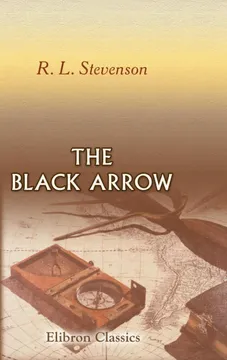


Plot Summary
Prologue
In Tunstall Forest, Sir Daniel Brackley3’s ward, young Richard Shelton,1 rides into a village already uneasy about its master’s shifting loyalties. At the house of Nick Appleyard,14 an old archer14 summoned to defend Sir Daniel3’s stronghold, a black arrow kills the veteran14 before Dick1’s eyes.
Its message claims the attack for John Amend-All4 and threatens Sir Daniel3’s men for their past abuses. A second warning appears at the church, naming more targets, including Dick’s father,15 Harry Shelton.15 The outlaw company has begun to collect its debts, and Dick1 is sent through dangerous country to deliver the news to his guardian.3
Appleyard’s death makes political violence personal before Dick understands its history. The old archer is not killed in battle but at home, while the men around him debate whether his service has earned him protection. The black arrow turns private grievance into public judgment: its written accusation gives the violence a rough civic language, even as its methods are brutal. Sir Daniel’s men call the attackers criminals, but the villagers remember burned homes and seized land. Dick stands between these accounts, loyal to the guardian who raised him and newly confronted with the possibility that loyalty may have sheltered injustice.
A Ward Meets Matcham
Dick1 reaches Kettley with news of the Black Arrow, but Sir Daniel3 refuses to join the battle until its outcome is clearer. There Dick1 encounters John Matcham,2 a slight young fugitive whom Sir Daniel3 has seized and forced into male clothing. Matcham2 asks for help reaching sanctuary at Holywood, and Dick1 gives him directions before realizing the youth may be lost in the fen.
When he finds Matcham2’s horse trapped in a bog, Dick1 kills it to end its suffering, then shares his own horse and walks beside him. Matcham2 admits that Sir Daniel3 has taken him as a valuable ward and marriage prize. Though Dick1 mocks Matcham2’s fear and tenderness, he swears to get him safely to the abbey.
Dick’s first consequential choice is an act of aid, but it grows from instinct rather than insight. He understands rank and obedience better than coercion: Sir Daniel is his guardian, so the ward’s complaints initially sound like an enemy’s version of events. Yet Dick risks his own safety to help Matcham, responding to visible vulnerability before he can settle the political facts. Their teasing exposes Dick’s narrow picture of manhood, which prizes fighting and dismisses emotional delicacy. Matcham, meanwhile, recognizes kindness and moral limits that Dick has not yet learned to name. The fen makes their trust physical: each depends on the other to cross ground neither can master alone.
Black Arrows in the Wood
After crossing the river under fire from John-a-Fenne, Dick1 and Matcham2 flee into the forest and hide among the ruins of Grimstone, a house Sir Daniel3’s men burned. They overhear Ellis Duckworth4 rallying outlaws against the knight,3 whose seizures and punishments have driven them from their homes.
When the Black Arrow company moves to ambush a small troop, Dick1 recognizes Sir Daniel3’s colors among the targets. Matcham2 urges him to continue toward safety, but Dick1 turns back to warn the men, despite the accusation that his guardian3 may have murdered his father.15
He reaches a lookout as the outlaws pick off the troop. Dick1’s warning cannot save Selden, who is shot while running for help; Ellis4 then recognizes Dick1 and orders that he be taken alive.
The ruined house gives the rebels’ grievance a visible history: the forest is not simply a refuge but a landscape shaped by confiscation and fire. Dick hears that history and still chooses to protect Sir Daniel’s men, not because he has disproved the charges, but because he considers abandonment in danger dishonorable. His instinct is generous and morally incomplete. The ambush tests that instinct against consequences he cannot control: he fails to save Selden, while his intervention exposes his own identity to Ellis. Matcham’s warnings sharpen the conflict between filial justice and inherited loyalty, but Dick is not ready to treat accusation as proof. His courage advances him into danger before his judgment can catch up.
The Leper Is Brackley
As the boys flee the ambush, Dick1 kills a forester who blocks their escape, then recoils when Matcham2 condemns the killing because the man had hesitated to shoot. Their quarrel leaves them exhausted and stranded overnight.
At dawn, a bell leads them to a veiled leper who silently tracks them through the forest. When he seizes Matcham,2 Dick1 prepares to shoot, but the supposed leper reveals himself as Sir Daniel in disguise. His army has been routed, and he has hidden beneath the frightening costume to pass the outlaws.
Sir Daniel3 brings the pair back to Tunstall, where Dick1 questions the household about his father’s15 death. The dying soldier Carter refuses to confess, and Sir Oliver’s9 alarm deepens Dick1’s suspicion that his guardian’s3 household has concealed the truth.
The disguise reverses the boys’ expectations: the figure they fear as an excluded sufferer is actually the powerful man who has made them afraid. Sir Daniel exploits the social reflex to avoid a leper, turning stigma into practical camouflage. Dick’s encounter with the forester also marks a moral crack in his self-image. He believed himself brave because he could act quickly; Matcham forces him to see that speed can become cruelty when an opponent is vulnerable. Back at the Moat House, silence becomes evidence without becoming certainty. Carter’s refusal and Sir Oliver’s distress do not yet prove a murder, but they make the household’s authority harder for Dick to trust.
The Trap Above Chapel
Sir Daniel3 gives Dick1 a solemn oath denying any part in Harry Shelton’s15 death, and Dick1 accepts it until Sir Oliver’s9 panic makes the denial suspect. The priest9 then swears he did not kill Harry,15 but his covert signals suggest he is hiding something.
Sir Daniel3 moves Dick1 into a chamber above the chapel, where a secret trapdoor reveals that someone intends to enter and kill him. Matcham2 arrives with a dagger and warns that the household is hunting him. In the dark, Dick1 discovers that Matcham2 is Joanna Sedley,2 the heiress2 Sir Daniel3 has abducted and promised in marriage.
They find a hidden passage beneath the room, but its exit is blocked. When Sir Daniel3’s men break in, Dick1 escapes down a rope into the moat, leaving Joanna2 behind and taking an arrow in the shoulder.
The revelation changes the emotional meaning of the journey without erasing its earlier intimacy: Dick has protected Joanna while believing she was a boy, and his affection has formed before social identity enters the picture. The secret room also makes the Moat House’s architecture an instrument of power. Sir Daniel’s authority is not merely spoken; it has hidden passages, locked chambers, and a planned murder behind it. Dick’s acceptance of the knight’s oath shows how badly he wants a trustworthy guardian, while Sir Oliver’s gestures puncture that wish. Escape costs Dick safety and separates him from Joanna, turning romantic attachment into a commitment tested by distance and danger.
Duckworth Takes Dick In
Wounded and alone, Dick1 finds Sir Daniel3’s messenger, Throgmorton, hanged in the forest and takes the letter intended for Lord Wensleydale. Ellis Duckworth’s4 men discover him near Tunstall, carry him to their leader,4 and nurse him back to strength.
Dick1 tells Ellis4 what happened at the Moat House and learns that Sir Daniel3 has made himself an enemy of the dispossessed. Ellis4 cannot attack the stronghold, so the rebels withdraw and watch the knight3 instead. Dick1 sends Sir Daniel3 a warning that he will expose him and defend Joanna2 from any new marriage.
Months pass. Lancaster regains power, and Dick,1 now working with the Black Arrow, follows Sir Daniel3’s secret nighttime visits to a seaside house. He learns that Lord Shoreby12 is involved and that Joanna2 is being held there.
Dick’s defection is not a sudden conversion to a party so much as the collapse of his belief that service guarantees reciprocal loyalty. Sir Daniel has tried to kill him, and the stolen letter gives him leverage against the knight, while Ellis offers a community bound by injury rather than birth. Yet the outlaws are not purified by their cause; their capacity for violence remains part of the bargain. Dick’s warning to Sir Daniel shows him beginning to claim agency over his own inheritance and love. The months-long shift in political fortune echoes the instability that once benefited his guardian. For Dick, however, changing sides now follows a moral and personal reckoning.
Foxham at the Seaside
Dick1 watches Sir Daniel3 meet Lord Shoreby12 near a walled house by the sea, then slips inside the garden and sees Joanna2 held with Dame Hatch. Unknown men are also watching the house, so Dick1 withdraws and summons reinforcements. His band attacks the watchers in the dark, only to discover that their leader is Lord Foxham,7 Joanna’s former guardian,7 whose men have come to recover her.
Dick1 and Foxham7 end the fight and agree to work together: Foxham7 will support Dick1’s claim to marry Joanna2 if they can free her. The land approaches are guarded, so Dick1’s companion Will Lawless5 proposes taking a ship by the harbor. Dick1 accepts the risk, organizing a sea approach while Foxham7 gathers his followers for a rescue attempt.
The mistaken fight is a compact portrait of a country where badges and loyalties are unreliable guides to character. Dick acts on incomplete information, and his attempt to protect Joanna nearly turns her allies into casualties. Foxham’s willingness to make peace converts a battlefield error into a working alliance, but the promise of marriage also reveals how women’s futures are negotiated among male guardians. Joanna’s safety is the immediate goal, while Dick’s desire to marry her is entangled with the same system of wardship that has endangered her. The decision to use the sea shifts the story from forest pursuit to a coordinated rescue, increasing both the scale of the risk and Dick’s responsibility for others.
The Good Hope Breaks
Lawless5 lures Skipper Arblaster13 away from the Good Hope, and Dick1’s men seize the unattended vessel. They sail through a winter storm to reach the coast behind Joanna’s2 guarded house. At the landing, arrows strike the party, wounding Lord Foxham7 and throwing the men into panic. They retreat aboard, but the ship is driven into dangerous waters; Lawless5 holds the helm while the mutinous crew nearly costs them the vessel.
The Good Hope finally grounds on a shoal, allowing the survivors to reach shore. Foxham7 gives Dick1 letters for his follower Hamley16 and for the young Duke of Gloucester,6 together with notes on the Lancastrian forces at Shoreby. The rescue has failed, but Dick1 now carries intelligence that may aid York’s campaign.
The Good Hope makes the cost of Dick’s leadership tangible. He can assemble a bold plan, but he cannot command weather, frightened men, or the consequences of taking another man’s livelihood. The crew’s panic mirrors the political disorder ashore: when authority weakens, fear quickly becomes accusation and violence. Lawless’s steadiness at the helm contrasts with his usual appetite for drink and mischief, showing that competence can emerge from a life the respectable world would dismiss. Foxham’s letters transform failure into a new obligation. Dick has not rescued Joanna, yet he must carry information that could affect the larger war, placing public duty and personal devotion in direct competition.
Friars in the Lion’s Den
Dick1 and Lawless5 disguise themselves as friars and enter Sir Daniel3’s crowded Shoreby mansion. A young noblewoman10 catches Dick1 spying and recognizes that he is no genuine monk, but she helps him reach Joanna.2 The lovers reunite, only to learn that Lord Shoreby’s12 wedding to Joanna2 is set for the next morning.
While Dick1 hides behind a tapestry, a spy searches the room and finds a tassel from his belt. Dick1 attacks and kills the spy before he can expose him, then discovers a letter showing that Shoreby12 is secretly corresponding with York’s Lord Wensleydale.
Lawless5 marks the body with a black arrow, drawing the household into alarm. Dick1 tries to leave the house by claiming he must pray over the corpse, but Sir Oliver9 recognizes him and keeps him under guard in the abbey church overnight.
The disguise enables access but also makes Dick dependent on the performance of a role he cannot fully inhabit. The young woman’s recognition shows that social intelligence can be as useful as arms; she sees through the costume and chooses to help. Dick’s reunion with Joanna gives him intimacy without security, since the wedding deadline is already fixed. Killing the spy protects their immediate plan, yet the act tightens the moral knot around Dick: the same dagger that once provoked his shame now becomes a tool of survival. Shoreby’s secret letter further complicates partisan identity, exposing political treachery within a court that treats marriage and allegiance as negotiable assets.
Black Arrows at the Altar
As Lord Shoreby’s12 wedding procession enters the abbey church, Ellis Duckworth’s4 archers fire from the gallery. Black arrows kill the bridegroom,12 wound Sir Daniel,3 and scatter the ceremony into panic.
Sir Oliver9 points to Dick1 and Lawless5 as conspirators, but Joanna2 and her companion10 testify that Dick1 entered the house to help her, not to arrange the attack. Earl Risingham11 takes the prisoners away from Sir Daniel3’s vengeance.
During questioning, Dick1 admits killing the spy and gives Risingham11 Shoreby’s letter, then reveals Sir Daniel’s earlier correspondence offering the earl’s estate to Lord Wensleydale. The evidence exposes Brackley’s3 divided loyalties. Risingham11 releases Dick1 and Lawless,5 although Dick1 must persuade him to spare Lawless5 as well.
The interrupted wedding turns the private threat against Joanna into a public political crisis. Shoreby’s death stops the forced marriage, but it does not produce simple justice: Dick is implicated because he was present, armed, and already known to consort with the rebels. Joanna’s testimony matters because she is no longer merely the object of competing guardians; she speaks as a witness with knowledge of Dick’s motives. The letters make paper a counterweight to force, allowing Dick to redirect a nobleman’s judgment without denying his own actions. His insistence on Lawless’s freedom also shows a growing ethic of obligation: he no longer treats a companion’s danger as expendable collateral.
Gloucester’s First Victory
After escaping Risingham’s11 house, Dick1 and Lawless5 are caught by Arblaster,13 whose ship they stole and lost. Dick1 frees himself by inventing a treasure story and overturning the table, but learns that Arblaster’s sailor Tom13 has died.
At St. Bride’s Cross, Dick1 finds the young Duke of Gloucester6 fighting off attackers and joins the unequal fight without knowing his identity. Once the duke’s6 troops arrive, Gloucester6 has the surviving assailants hanged. Dick1 gives him Foxham’s intelligence, and they launch a surprise attack on Shoreby before the Lancastrians can prepare.
Dick1 holds a narrow street against repeated assaults until Yorkist reinforcements arrive. Gloucester6 rewards him by knighting him on the battlefield, then orders him to pursue Earl Risingham11 and Sir Daniel3 as the town falls.
Dick’s rise in status is swift, but Stevenson makes its price visible before allowing it to feel like triumph. He escapes Arblaster through ingenuity, yet the news of Tom’s death exposes the human cost hidden inside the phrase military success. At the cross, Dick helps Gloucester because he sees a lone fighter in danger, not because he recognizes a patron. The duke’s immediate executions reveal a conception of authority founded on loyalty and punishment, while Dick’s knighthood rewards courage without certifying wisdom. The battle lets Dick act effectively under pressure, but it also binds him to a leader whose ruthlessness unsettles him. Recognition and moral unease arrive together.
Alicia Names the Cost
When Shoreby is sacked, Dick1 searches for Joanna2 and discovers that Sir Daniel3 has escaped toward the forest. He asks Gloucester6 for men to pursue, then uses the duke’s6 authority to save Arblaster13 from execution. The old skipper13 remains bitter about his lost ship and Tom, refusing Dick1’s attempt to settle the debt with a pardon.
On the trail, Dick1 finds Alicia Risingham,10 the earl’s injured niece,10 and carries her away from the fighting. Alicia10 believes Dick1’s stand in battle caused her uncle’s11 death and rejects his help. Her accusation reaches him because he has already begun to see that his choices produce victims beyond the battlefield. She eventually accepts food and company, but Dick1 makes clear that his promise belongs to Joanna.2
Alicia forces Dick to hear victory from the side that has lost someone. He cannot dismiss her grief as enemy propaganda because his own conscience has begun assembling evidence against his heroic self-image. Arblaster offers a parallel lesson: a life spared cannot restore a ship, a dead companion, or a ruined livelihood. Dick’s mercy has real value, but it does not erase what he has taken. Alicia’s refusal of food makes grief bodily and immediate, while Dick’s insistence on Joanna shows that compassion need not become romantic possession. He can care for Alicia without claiming her, a small but meaningful correction to the era’s habit of treating women as settlements between men.
Joanna Returns in Green
Dick1 follows Sir Daniel’s3 trail through the snow, but the knight3 splits his force and disappears into the forest. At night Dick1 leads a smaller party toward a camp where he finds Bennet Hatch,8 Sir Daniel’s wife,3 and Joanna,2 all disguised among a few attendants.
Hatch8 refuses to surrender; before Dick1 can decide whether to attack, Joanna2 runs to him. Sir Daniel’s3 reinforcements arrive, and Dick1’s scattered men flee, leaving him and Joanna2 to escape together. Alicia10 joins them after surviving the pursuit.
Dick1 admits that his rash command cost him his force, and he and Joanna2 head for Holywood, where Lord Foxham7 and York’s army are gathered. His knighthood now sits beside a humbling defeat, while his reunion with Joanna2 restores the personal purpose that the battle had obscured.
Dick’s failed raid is the necessary counterweight to his success at Shoreby. He mistakes urgency for strategy, commits too few men, and loses control as soon as Sir Daniel’s larger force appears. The lesson is not that courage is useless, but that courage without reserve or patience can spend other people’s lives. Joanna’s sudden return cuts through the military failure without pretending it repairs it. Alicia’s presence also shows that Dick’s obligations have multiplied: he cannot simply recover the woman he loves and forget the injured people the war has placed in his care. The walk toward Holywood becomes a movement away from self-display and toward a more accountable idea of service.
The Black Arrow Ends
Near Holywood, Dick1 meets Sir Daniel disguised as a pilgrim and learns that the defeated knight3 hopes to seek sanctuary before fleeing abroad. Dick1 refuses to let him enter York’s lines, but grants him freedom to escape elsewhere and forgives him for his father’s15 death and the attempt on his own life.
Sir Daniel3 turns away. From the ivy, Ellis Duckworth4 shoots him with a black arrow, killing him before Dick1 can intervene. Ellis4 admits that Dick1 chose mercy while he chose revenge, and says he will end the Black Arrow fellowship rather than continue its vendetta.
Dick1 cannot undo the killing, but he can recognize the hollow victory it gives Ellis.4 The feud that began with Appleyard’s14 death and a written list of targets ends with its avenger already asking for prayers.
The final confrontation separates justice from revenge without making either man morally clean. Dick’s mercy is an active boundary: he refuses sanctuary to a political enemy but will not personally become executioner. Ellis, who has spent years converting dispossession into a disciplined vendetta, cannot cross that final distance from grievance to release until he has killed Sir Daniel. The black arrow therefore changes meaning. It began as a public claim that the powerful would answer for their actions; now it also exposes how vengeance can outlive the justice it invokes. Dick’s prayer for Ellis acknowledges shared human fallibility, not equivalence between their choices. The fellowship dissolves because its founding purpose has consumed the people who carried it.
A Life Beyond the Forest
At Holywood, Lord Foxham7 arranges Dick1’s marriage to Joanna2 after settling the earlier claim involving Hamley.16 Gloucester6 offers Joanna2 a more advantageous match, but she chooses Dick,1 who has already declined the duke’s6 favor when it required abandoning Arblaster.13
Alicia10 is paired with Hamley, while the wounded Foxham7 recovers among his allies. Dick1 and Joanna2 marry as Gloucester’s6 army departs to continue the campaign. Lawless5 eventually enters the abbey and takes up religious life; Arblaster13 receives a pension but continues to mourn Tom.
Dick1 and Joanna2 leave political alarms behind and build a household in the forest where they first met. Their ending is modest beside the duke’s6 march toward power, but it is the life Dick1 has chosen for himself rather than one assigned by a guardian or purchased through rank.
The conclusion measures success by chosen attachments rather than by advancement. Dick’s political opportunities have been real, and his refusal of Gloucester’s favor costs him access to power, but the novel treats that refusal as coherent with the lessons he has learned about obligation. Joanna’s choice is equally important: she rejects a marriage selected for wealth or influence and names the partner she wants. The closing fates remain mixed rather than magically restorative. Arblaster is compensated but still grieves; Lawless finds a new vocation; war continues beyond the wedding. Dick and Joanna’s domestic peace is therefore not a claim that history has healed, but a deliberate shelter built within its reach.
Analysis
The Black Arrow sets private growth inside a civil war where political allegiance changes faster than the people living under it can adapt. Sir Daniel3’s talent is survival through flexibility: he changes sides, purchases legal advantage, and converts wardship into wealth. Dick1 inherits that unstable world but initially answers it with a simpler code, loyalty to the person who raised him3 and courage in the face of danger. His development depends on discovering that bravery is not the same as judgment. He can save Joanna,2 defend Gloucester6’s position, or spare an enemy, yet each action carries consequences he cannot control.
The novel’s strongest moral pressure comes from the distance between intention and result. Dick1 steals a ship to rescue Joanna,2 but the voyage ends in shipwreck and Arblaster13’s ruin. He fights for York and wins distinction, but Alicia10 experiences the same battle as the loss of her uncle.11 His remorse does not undo these harms; it changes how he understands responsibility. That distinction keeps his maturation from becoming a simple reward narrative. He learns to acknowledge injury without claiming that good motives absolve him.
The Black Arrow fellowship presents a harder version of the same problem. Its members have genuine grievances, and their written accusations expose abuses that official institutions have ignored. Yet Ellis4’s pursuit of revenge narrows the cause until violence becomes its own answer. Dick1’s decision to spare Sir Daniel3 marks a refusal to let inherited injury dictate his conduct, while Ellis4’s final shot shows how difficult it is to stop a movement organized around punishment.
The romance gives this political story an intimate counterpoint. Joanna2 is treated as property by competing guardians, but she chooses Dick1 for herself. Their marriage does not end the war or repair every loss. It represents a limited, deliberate freedom: a life built by mutual choice rather than purchased through rank, inheritance, or strategic marriage.
Review Summary
Reviews of The Black Arrow are largely positive, praising Stevenson's vivid characterizations, moral complexity, and exciting adventure set during the Wars of the Roses. Many readers appreciate the historical backdrop, fast-paced action, and protagonist Dick Shelton's coming-of-age journey. Some criticisms include the archaic pseudo-medieval dialogue, uneven pacing, and emotional detachment between reader and characters. Several reviewers note it as lesser compared to Treasure Island or Kidnapped, though many find it an underrated, engaging read that rewards patient, mature audiences.
People Also Read

Characters
Richard Shelton
The unseasoned heirHarry Shelton’s15 orphaned son and Sir Daniel’s3 ward, Dick begins with more courage than judgment. He trusts the man who raised him3 and understands honor chiefly as loyalty to companions in danger. His journey forces him to distinguish loyalty from obedience: evidence of his father’s15 death and Sir Daniel’s3 attempt on his life make inherited gratitude impossible to accept unexamined. Dick is brave, quick to help, and often impulsive, qualities that save lives in one moment and endanger them in the next. He is also capable of revising himself. Shame over violence, tenderness toward Joanna2, and accountability to people harmed by his choices gradually make him a more thoughtful leader.
Joanna Sedley
The resourceful heiressAn orphaned heiress whose marriage is treated as a valuable political asset, Joanna is intelligent, observant, and more resilient than the guardians who claim authority over her expect. She can endure fear without surrendering judgment, and she responds to Dick’s1 kindness with genuine affection rather than mere gratitude. Her friendship with Alicia10 gives her a bond outside the competition among male protectors. Joanna’s warmth is balanced by a clear sense of self: she understands the danger around her and can act decisively within narrow choices. Her story asks whether a young woman can claim authorship over her future in a world where wardship and marriage are instruments of power.
Sir Daniel Brackley
The shifting guardianA wealthy knight who profits from disputed inheritances, Sir Daniel is politically adaptable and personally dangerous. He can lead soldiers with energy, charm a household with generosity, and use legal influence as readily as armed force. His talent for survival has taught him to treat loyalty as temporary and people as resources, especially wards whose estates or marriages can enrich him. That pragmatism makes him formidable, but it also leaves him unable to inspire trust when fortune turns. To Dick1, Sir Daniel is both foster father and possible betrayer, a contradiction that makes the boy’s moral separation from him painful rather than simple.
Ellis Duckworth
The dispossessed rebelA former landholder driven into outlawry by Sir Daniel’s3 abuses, Ellis organizes the Black Arrow fellowship around shared injuries and a demand for reprisal. He is disciplined enough to command men and patient enough to wait for political opportunity, yet his justice is entangled with personal vengeance. He recognizes Dick’s1 connection to Harry Shelton15 and treats the young man as more than a useful weapon. Ellis’s cause gives the dispossessed a collective voice, but his commitment to revenge tests whether a movement can survive after its target is reached.
Will Lawless
The outlaw with many tradesA former friar, archer, sailor, and habitual thief, Lawless is a resourceful companion whose irreverence conceals practical skill. He can read a ship, improvise a disguise, and find shelter where a more respectable man sees only danger. His appetite for drink and self-interest repeatedly strains Dick’s1 trust, yet he is capable of steadiness when lives depend on him. Lawless complicates the novel’s moral categories: he is neither a reformed saint nor a mere rogue, but a survivor whose loyalty appears in deeds more reliably than in respectable manners.
Richard of Gloucester
The ruthless young dukeA young Yorkist commander marked by a bodily deformity and an intense hunger for distinction, Gloucester combines battlefield courage with a severe appetite for obedience. He rewards skill generously, but his authority rests on swift punishment and an expectation that others accept his risks as necessary. Dick1 admires his nerve while sensing the danger in his delight in command. Their relationship offers Dick1 a path toward rank and influence, but also a test of whether success is worth serving a leader whose ambition can make cruelty look like discipline.
Lord Foxham
Joanna’s former guardianA nobleman who has cared for Joanna2 and once held authority over her wardship, Foxham is more honorable than the men competing to control her future. He is practical, politically informed, and willing to recognize Dick’s1 courage even when Dick1 has fought against him. His promise to support the young couple is sincere, though it still comes through the language of guardianship and negotiated marriage. Foxham’s injury and military intelligence link Joanna’s2 private peril to the wider Yorkist campaign.
Bennet Hatch
Sir Daniel’s hard lieutenantSir Daniel’s3 trusted retainer and Dick’s1 early mentor in arms, Hatch is a capable soldier with a blunt understanding of the fear his master3 inspires. He is harsh toward enemies but protective toward those he regards as friends, giving Dick1 a first model of loyalty that is neither purely virtuous nor purely corrupt. Hatch recognizes danger earlier than Dick1 does and tries to warn him about Sir Daniel’s3 character. His divided position makes him a personal link between Dick’s1 childhood allegiance and his later resistance.
Sir Oliver Oates
The uneasy priestA priest and legal adviser in Sir Daniel’s3 household, Sir Oliver has spent years serving power while maintaining a cleric’s public role. He is learned, self-protective, and visibly troubled when asked to swear to matters he cannot honestly affirm. His fear does not make him innocent of complicity, but it shows the psychological cost of obeying a powerful patron while preserving a private conscience. Dick’s1 education under him makes the priest’s evasions especially painful.
Alicia Risingham
The grieving noblewomanThe niece of Earl Risingham11 and a close friend of Joanna2, Alicia is perceptive, spirited, and unafraid to challenge Dick’s1 account of himself. Her grief for her family makes her attentive to the human cost of political victories. She can be playful as well as sharp, but her humor does not erase her independence or anger. Alicia’s presence asks Dick1 to treat an injured opponent as a person rather than a consequence of his ambitions.
Earl Risingham
The Lancastrian judgeA powerful Lancastrian lord, Risingham tries to balance political loyalty with an individual commitment to fairness. He hears Dick’s1 case rather than handing him over to Sir Daniel3, and evidence of Brackley’s3 double dealing changes his judgment. His authority can protect the accused, but it also reflects a world where justice depends heavily on the character and interests of a noble patron.
Lord Shoreby
The political bridegroomA wealthy Lancastrian lord whose prospective marriage to Joanna2 is bound up with status and alliance, Shoreby is accustomed to influence and careful private dealings. His role shows how a woman’s inheritance can become part of political bargaining. Even among powerful allies, his choices sit within a culture of shifting loyalties, secret correspondence, and marriages arranged for advantage.
Skipper Arblaster
The wronged shipmasterA veteran seaman whose ship becomes part of Dick’s1 rescue plan, Arblaster is stubborn, proud of his trade, and vulnerable to drink without being foolish at heart. His losses give Dick1 a concrete measure of the harm caused by expedient decisions. Arblaster’s grief and resentment resist easy repayment, reminding Dick1 that good intentions do not restore what has been taken.
Nick Appleyard
The veteran archerAn old soldier of Agincourt, Appleyard is summoned to defend Tunstall while younger men ride to war. He is observant, skeptical of Sir Daniel’s3 power, and proud of an older standard of military skill. His knowledge of the forest makes him alert to threats others dismiss.
Sir Harry Shelton
Dick’s absent fatherDick’s1 dead father, Harry Shelton, survives in the story through accusations, memories, and the loyalty of people who knew him. His unresolved death gives Dick1 a claim to seek the truth and complicates his attachment to Sir Daniel3. Harry functions as both a personal loss and a measure of honor against which the living are judged.
Sir John Hamley
Foxham’s chosen suitorHamley is a kinsman of Lord Foxham7 and the man previously promised Joanna2 in marriage. His place in the arrangement shows that even well-intentioned guardians can treat marriage as a settled transaction. He remains connected to Foxham’s7 household and the political order surrounding Joanna2.
Plot Devices
The Black Arrows
A mark of outlaw justiceBlack-feathered arrows announce the Black Arrow fellowship’s attacks and carry written accusations against Sir Daniel3 and his followers. They make violence legible: each target is named as someone who has profited from dispossession or cruelty. Their repeated appearance creates suspense around who will be struck next, while their blunt verdict challenges official law, which has repeatedly protected the powerful. As the story develops, the arrows become a test of whether retaliation can produce justice without reproducing the abuses it condemns.
Wardship and marriage
Power over other futuresThe wardships of Dick1 and Joanna2 give adult guardians control over estates, legal standing, and marriage arrangements. Sir Daniel3 uses these rights to increase his wealth and political leverage, while Joanna’s2 competing guardians treat her marriage as a matter to settle between themselves. The device explains why a young person’s private wishes have so little force and why escape, alliances, and testimony become necessary. It also gives Dick’s1 eventual choice its weight: he must learn to distinguish a promise made on another person’s behalf from that person’s own consent.
Disguises and hidden routes
Escape through mistaken identityThe story repeatedly uses clothing and concealed architecture to let characters pass through hostile spaces. Joanna’s disguise as a boy2 enables her flight from Sir Daniel3; the knight3 later uses a leper’s clothing3 to cross the forest; Dick1 and Lawless5 enter Shoreby as friars. Secret passages, a concealed trapdoor, and a barred window turn the Moat House into both prison and escape route. These devices make appearance unreliable, but they also reveal how survival depends on knowledge, timing, and the ability to move through systems built to control you.
Letters and testimony
Evidence against changing loyaltiesLetters carried by messengers and taken from dead spies expose the private bargains behind public allegiance. Dick’s1 evidence against Sir Daniel3 persuades Earl Risingham11 that his own side may be betrayed, while Shoreby’s12 correspondence reveals another layer of political double dealing. Joanna’s2 testimony serves a different but related purpose: it establishes Dick’s1 motives when his presence and weapon make him look guilty. In a world where loyalties shift quickly and force often outruns law, written proof and personal witness can briefly restrain the power of accusation.
The Fen and winter forest
Terrain that tests judgmentThe marsh, river channels, dense forest, and winter snow continually turn travel into a test of attention and endurance. Dick1 and Joanna2 depend on improvised crossings, tracks, tree cover, and local knowledge to escape pursuit. The same terrain conceals the Black Arrow ambushes and later allows Sir Daniel3 to scatter his force. Weather also defeats Dick’s1 attempt to rescue Joanna2 by sea. The landscape is not a neutral backdrop: it gives tactical advantage to the observant, punishes haste, and repeatedly exposes the difference between courage and good judgment.
Download PDF
Download EPUB
.epub digital book format is ideal for reading ebooks on phones, tablets, and e-readers.








