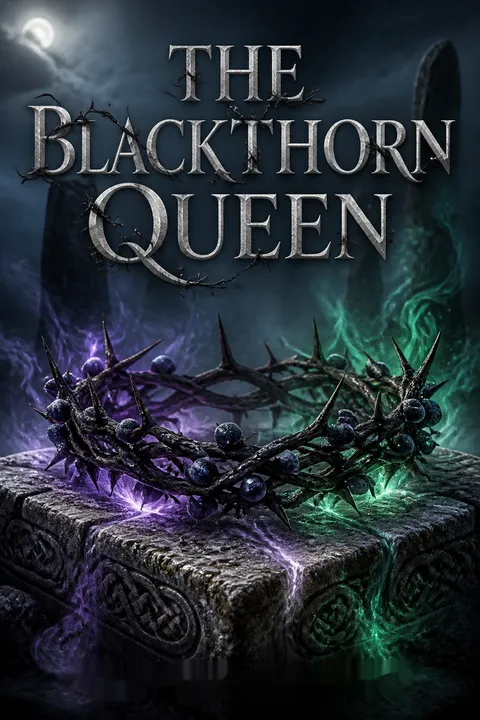


Plot Summary
A Crown Without Its Mind
Princess Cartimandua watches her father, Volixus, carried along the river toward the Three Sisters Henge, where the Brigantes bury their dead. Three days earlier, he had been vigorous; now his body bears the strange blue marks of poison. High Priestess Môd privately confirms that he was murdered and warns Cartimandua and her mother, Queen Morfudd, to trust no one.
During the funeral, Cartimandua steadies Morfudd and performs the rites that the grieving queen cannot manage. Her uncle Gallmaul steps forward to address the mourners, drawing a sharp look from Môd. As Volixus is lowered into his mound, Cartimandua decides that she must find his killer, even as grief threatens to overwhelm her.
The funeral makes political vulnerability bodily: Morfudd’s grief interrupts the work of queenship, while Cartimandua’s bleeding feet carry her through the public obligations her mother cannot fulfill. The ritual gives her a model of continuity, but the murder beneath it exposes a rupture no ceremony can mend. Cartimandua inherits not just a future crown but the practical labor her father performed unseen. Her vow of revenge begins as an attempt to restore order, yet it also puts her inside the dangerous system that took Volixus from her.
The Thorn in Her Heel
After greeting mourners alone, Cartimandua collapses with a blackthorn barb lodged in her foot. Prince Cormag of the Votadini finds her, carries her through the thicket, and brings her to his mother, Queen Mael Muire, a healer. Cartimandua fears the rival tribe may have poisoned her father, but Mael Muire removes the thorn and says the injury carries a warning to prepare for strife.
Cormag returns Cartimandua to her people, insisting that false motives surround her, including among those she trusts. The warning unsettles her because the Votadini are obvious suspects, yet their kindness complicates her judgment. She keeps the thorn, a small, sharp reminder that the enemy may not be where she expects.
The rescue shifts Cartimandua’s sense of danger from a simple division between friendly Brigantes and hostile Votadini. Mael Muire’s care is politically charged, but it is also real; Cormag’s tenderness makes suspicion harder without making it disappear. The thorn turns pain into evidence, giving Cartimandua a physical object around which she can organize grief and uncertainty. Her instinct to question even a healing draught shows how her father’s murder has changed ordinary trust into a calculation of risk.
Favors on the Racecourse
At the funeral games, Cartimandua discovers that every contest is also a courtship and political display. She gives Cormag her favor because refusing him would insult the Votadini, though she still hopes to marry Prince Venutiux of the allied Carvetti.
Cormag wins the horse race after King Cuneda’s maneuvering causes a dangerous crash, then advances through the fighting bouts. Cartimandua backs Queen Moirin, a skilled warrior, and challenges the games when a judge fails to recognize Moirin’s victory over Catell.
Venutiux wins several contests but grows jealous of Cartimandua’s attention to Cormag, while she resents his easy closeness with Princess Alys. Their mutual attraction survives, but the day reveals how duty and desire can look like betrayal to those watching.
The games make intimacy public and therefore political. A favor is not merely a token of affection: Cartimandua must use it to signal courtesy, manage tribal tensions, and protect her own prospects. Her defense of Moirin also shows that she will intervene when an unfair ruling threatens someone with less power. Meanwhile, Venutiux and Cartimandua read each other’s necessary performances as personal slights. The scene reveals the emotional cost of a court where private feeling is constantly interpreted as a public declaration.
The Goddess Names Rome
After a painful exchange with Venutiux at the closing feast, Cartimandua retreats to the Cailleach’s henge. A figure appears as the dark goddess and warns her that false hearts surround her, while a vision shows an eagle consumed by crows. Cartimandua reads the eagle as Rome, whose return could threaten every northern tribe.
Cormag finds her after the vision and admits that the Cailleach is his mother: he was conceived through a sacred union arranged because Mael Muire cannot bear an heir. He tells Cartimandua he was led to her, but does not ask her to trust him blindly. She returns to the feast with him, newly aware that her father’s murder may be only the first danger approaching.
The vision expands the novel’s scale from a succession crisis to a danger that could make tribal rivalry futile. The eagle and crows do not provide a neat prediction; they force Cartimandua to hold local suspicion beside a larger historical threat. Cormag’s parentage likewise unsettles the boundary between political lineage and divine authority. His revelation makes him more legible to Cartimandua without removing the risks of an alliance. Her choice to dance with him is a modest act of connection made under the shadow of forces neither can control.
Morfudd Chooses Gallmaul
The morning after the games, Cartimandua learns that Morfudd has married Gallmaul in a sunrise ceremony, rejecting King Cuneda’s offer to wed her. Morfudd and Gallmaul also intend Cartimandua to marry his son Cadoc, a match that would consolidate their family’s control. Cartimandua refuses, arguing that it does nothing to secure the Brigantes, but her mother has already made the decision.
Gallmaul then threatens Queen Mael Muire over the disputed Silver Vale, while reports place Parisii forces near Mydils Fort. Cartimandua visits Cormag to return his boots and learns that Silver Vale contains Votadini royal graves and sacred ground. She promises to discuss its status, recognizing that Gallmaul’s threats could turn suspicion into war.
Morfudd’s marriage is presented as protection, but it concentrates power in the hands of a man whose judgment Cartimandua distrusts. The queen’s attempt to secure her household narrows the Brigantes’ diplomatic options and makes the succession feel like a private family arrangement rather than a public responsibility. By contrast, Cartimandua’s conversation with Cormag reveals that Silver Vale is not simply a resource or border dispute; it is a landscape of memory and burial. Her growing political maturity depends on learning what territory means to the people who claim it.
Rigodonum Turns Against Gallmaul
Back at Rigodonum, Cartimandua finds her mother and Gallmaul neglecting the administration Volixus handled himself. She settles unpaid construction wages, studies her father’s records, and summons the Brigantes chieftains.
When Morfudd announces both the murder and her new marriage, the leaders object to Gallmaul’s presumption and demand action. Cartimandua answers their questions, reports the danger around Mydils Fort and Silver Vale, and wins their support by treating their concerns seriously.
The chieftains advise her to keep military command out of Gallmaul’s hands. Cartimandua also studies Volixus’s ledger, where scattered notes about gloves, Silver Vale, and Chieftain Rhys suggest that the clues to his death may lie among ordinary household details.
The chieftains’ respect grows from concrete competence, not inherited status alone. Cartimandua pays workers, reads accounts, and gives leaders usable information, while Gallmaul relies on bluster and Morfudd retreats from difficult decisions. The contrast presents rulership as maintenance as much as spectacle. Volixus’s ledger extends that idea into the mystery: a king’s routine records can preserve truths that ceremonial accounts of loyalty conceal. Cartimandua is beginning to occupy her father’s role before she possesses his title, and the political community notices.
A Dagger in the Dark
An unseen warning from the beings of the hollow hills wakes Cartimandua just before an assassin reaches her bed. She dodges his blade, fights back with a table, a flowerpot, and a small knife, then suffers a cut to her arm. Cadoc rushes in and saves her, while Catell throws the dagger that kills the attacker before he can escape.
The rescue leaves Cartimandua grateful but suspicious: the cousins’ late-night visit to the city explains their presence, yet their family has already pressed her toward marriage with Cadoc. The attacker carries no clear tribal mark, and his weapon disappears from the rocks below her window. Cartimandua begins to suspect someone inside the fort helped him enter.
The attack makes the court’s political danger physical and immediate. Cartimandua’s survival depends on improvised action, not the protective rituals or guards that should have made her safe. The cousins’ intervention complicates the evidence: they save her, yet they also belong to a family that stands to gain from her removal or submission. The missing weapon and absent guards turn the fort itself into a suspect space. Her ability to keep the event secret from the hollow-hill beings also shows that she possesses knowledge unavailable to the court around her.
Cuneda Binds the Carvetti
While Cartimandua investigates her father’s papers, Eddin arrives from the Carvetti with a reply to her conciliatory letter. He reports that King Cuneda has arranged an alliance with the Parisii by promising Venutiux to Princess Alys.
Cuneda’s decision is meant to punish the Brigantes for Morfudd’s rejection and Gallmaul’s presumption; Venutiux objected but could not undo it. The news wounds Cartimandua and removes the marriage she had hoped might strengthen both her heart and her tribe.
Before she can dwell on it, the priestess Môd examines the angry blisters spreading across Cartimandua’s hand. Cartimandua remembers handling new gloves in Volixus’s workroom, then giving them to stableboy Grahm. The clue turns her father’s disordered desk into the center of a new investigation.
Cuneda’s alliance shows how quickly personal affront can redirect the balance of power. Venutiux’s feelings matter, but they cannot override a king’s political decision, just as Cartimandua’s affection cannot make her free of dynastic calculation. The discovery of Cartimandua’s rash then shifts the story from inference to bodily evidence. Her hand has touched something dangerous, and the source lies in the household routine she had been trying to reconstruct. Grief and statecraft converge in a small, apparently discarded object.
The Gloves Kill Again
Môd identifies the new gloves in Volixus’s workroom as the likely source of the poison that killed him. Cartimandua realizes she handled them and passed them to Grahm, who was found dead in the stables with the gloves still on. The leatherworker’s mark links them to the same maker as the dead assassin’s new boots, tightening the connection between the attempted murder and the king’s death.
Conall takes the gloves to identify who ordered them, while Môd warns the household to conceal what they know. Cartimandua is devastated that her innocent gift cost Grahm his life. The evidence now points toward someone close enough to place a poisoned present on Volixus’s desk, not an enemy openly approaching the border.
The gloves make culpability tactile: Cartimandua’s attempt to prevent waste carries the poison from her father’s room to an unsuspecting stableboy. Her guilt is understandable but not equivalent to the murderer’s intent; the scene distinguishes accidental transmission from deliberate violence. The shared maker’s mark joins two attacks that had seemed separate, creating a material trail through the household. Môd’s insistence on secrecy recognizes that knowledge itself is now dangerous. Cartimandua must resist the urge to react before the person who commissioned the gloves knows she has found them.
Gallmaul Accuses the Crows
After Gallmaul rides out with his men, he returns with two captured Votadini and a commoner who claims they bragged about killing Volixus for Queen Mael Muire. The alleged killers deny it, and their story rests on an overheard tavern conversation rather than reliable proof. Gallmaul uses it to demand an assault on the Votadini capital.
He has also driven the Votadini from Silver Vale and claims their forces attacked the village of Whitam, though Cartimandua cannot reconcile his urgency with what she knows. The same day, Eddin’s report confirms that the Carvetti have allied with the Parisii. Cartimandua questions the prisoners and prepares to seek the assassin’s missing dagger, while the kingdom faces enemies on multiple fronts.
Gallmaul’s accusation offers the emotional satisfaction of a named enemy at the precise moment the Brigantes most need certainty. Its weakness is also its political utility: a dubious witness can turn grief into permission for war. Cartimandua recognizes that an easy explanation may be a trap, especially when the Parisii could benefit from Brigantes forces being drawn north. The new Carvetti alliance raises the cost of any misjudgment. The scene tests whether she can distinguish decisive action from action that merely feels decisive.
Ystradwel Names the Buyer
Cartimandua’s search for the missing assassin’s dagger leads her to find its Tectoverdi badger emblem, while a messenger confirms that Chieftain Brennan’s Mydils Fort is under Parisii attack. In the workroom, she discovers that Ystradwel bought the gloves and delivered them to Volixus, but the maid says Catell ordered her to do it and Gallmaul later made her carry them to the king.
Catell and Gallmaul have threatened Ystradwel’s ailing father, sexually assaulted her, and planned to marry her to Catell while forcing Cartimandua to marry Cadoc. A mountebank confirms that Catell bought nightroot poison. Môd and Cartimandua realize Gallmaul engineered the murder and tried to blame the Votadini.
Ystradwel’s confession reframes her silence as coerced survival rather than simple betrayal. The former hostage has been trapped again, this time by threats against her father and violence against her own body. The revelation makes Gallmaul’s marriage and his proposed matches part of a single project to capture the crown and control its heirs. The Tectoverdi dagger and the poison seller provide distinct forms of evidence, turning suspicion into a case. Cartimandua must now decide not only how to punish the conspirators, but how to protect a victim who helped carry the murder without knowing its purpose.
The Blackthorn Queen Rises
Cartimandua and Ystradwel return to the great hall with poisoned wine while a bard recounts a prince betrayed by his family. Gallmaul, Cadoc, and Catell drink; Cartimandua exposes the gloves and names the murder. She forces the remaining poison into Gallmaul, killing him.
Morfudd, overcome by guilt for taking her husband’s killer into her bed and household, drinks from the poisoned bottle and dies despite Cartimandua’s attempt to stop her. With both parents gone, Cartimandua becomes queen.
She learns that Gallmaul’s claims about the Votadini advance were false, cedes Silver Vale to Mael Muire, and offers Cormag marriage to repair the feud. He accepts for love as well as alliance. Their new bond begins as a Parisii attack on Mydils Fort demands her attention.
The climax turns the poison from a hidden instrument into a public judgment, but Cartimandua’s victory cannot preserve the family she hoped to defend. Gallmaul’s death is deliberate retribution; Morfudd’s death is a consequence Cartimandua cannot reverse. The distinction leaves the new queen with both authority and grief, rather than a clean triumph. Ceding Silver Vale rejects the logic that security requires possession of sacred ground, while the marriage proposal makes intimacy part of diplomacy without reducing it to diplomacy alone. The unresolved attack at Mydils keeps the ending open: Cartimandua has won the crown, not peace.
Analysis
The novel treats political competence as a form of care. Volixus’s authority rests not only on battlefield strength but on walls, wages, records, and the fragile agreements that keep neighboring peoples from fighting. Cartimandua inherits this invisible work while grieving the parent who taught it to her. The contrast with Morfudd and Gallmaul is not simply that one ruler is clever and another foolish: Morfudd’s longing for security makes her vulnerable to a man who presents possession as protection, while Gallmaul’s resentment turns kinship into a contest over who deserves the throne.
The mystery asks Cartimandua to separate evidence from the comfort of a convenient enemy. The Votadini history makes them plausible suspects, and Gallmaul exploits that plausibility to revive an old feud. Silver Vale complicates the conflict further because its wealth and its sacred burial grounds are inseparable. Returning it is therefore more than a diplomatic concession. It is Cartimandua’s refusal to mistake control of land for legitimate authority.
The story also makes female agency costly and specific. Cartimandua must rule through public gestures, while Ystradwel’s options have been narrowed by captivity and violence. Their positions differ, but both live under political systems that treat marriage and fertility as instruments of governance. Cartimandua’s final offer to Cormag is strategic, yet she insists that he choose her as a person, not merely as a route to peace. Her coronation resolves who leads the Brigantes, but the attack on Mydils and the threat of Rome remain beyond the frame. The ending grants her a beginning, not a settled kingdom.
Review Summary
The Blackthorn Queen receives mostly positive reviews, praised for its engaging storyline, well-developed characters, and vivid world-building. Readers appreciate the historical setting and political intrigue. Some criticize the predictable plot and slow pacing. The book is compared to popular series like Vikings and The Last Kingdom. Many reviewers express excitement for the next installment in the series. A few negative reviews mention formulaic writing and lack of originality. Overall, the book is well-received by fans of historical fantasy and Celtic-inspired fiction.
Characters
Cartimandua
The learning heirPrincess of the Brigantes and only child of Morfudd and Volixus, Cartimandua has been taught to think about rule as a daily responsibility to people, land, and alliances. She grieves intensely but tries to keep grief from disabling her judgment. Her father’s counsel, her grandfather’s lessons, and the goddesses’ signs all shape her, though she must decide what those teachings mean in a crisis. Her sharp wit can become impatience, especially with people she considers foolish, and her suspicion sometimes strains relationships she values. Beneath her guarded composure is a need to be seen as more than an heir: she wants affection that does not demand she surrender her political intelligence.
Volixus
The absent strategistKing consort of the Brigantes, husband to Morfudd and father to Cartimandua, Volixus is a practical strategist whose influence rests on judgment rather than the crown itself. He preserves peace when it serves his people and fights when it does not. He teaches Cartimandua that leadership demands both mental discipline and the willingness to bear others’ resentment. His building plans, records, and personal relationships reveal the many kinds of labor behind his rule. For Cartimandua, he is both a beloved parent and the standard against which she measures the people now competing to fill his place.
Morfudd
The grieving queenQueen of the Brigantes, Morfudd loves her family and people, but she is emotionally open and less practiced at political calculation than her late husband. Grief makes it difficult for her to fulfill public duties, and she seeks reassurance when the future feels unstable. Her warmth can draw people close, yet it also leaves her vulnerable to those who present personal comfort as protection. Her relationship with Cartimandua is affectionate but unequal in practical responsibility: her daughter often sees the political consequences before she does. Morfudd’s choices emerge from fear, desire, and a genuine wish to keep her household safe.
Cormag
The Votadini princeA prince raised among the Votadini, Cormag is known beyond his homeland by a degrading label tied to his unusual birth. He is reserved, observant, and more comfortable acting than performing friendliness for a crowd. His care for Cartimandua begins with practical help when she is injured, while his loyalty to his people keeps their political conflict present between them. As a child of the Cailleach, he belongs to a world where divine kinship and human politics overlap. His quiet manner can look like arrogance, but he values candor and wants affection to be chosen freely rather than granted only for strategic advantage.
Gallmaul
The ambitious uncleVolixus’s brother and a Tectoverdi chieftain, Gallmaul is boastful, socially confident, and eager to be treated as a leader. He likes forceful answers and resents the comparison with a brother whose judgment and popularity overshadow his own. His affection for his sons is real, though he pushes them toward power rather than independence. Gallmaul often mistakes access to Morfudd and proximity to the throne for a right to command. His appetite for recognition shapes his relations with the Brigantes chieftains, who have little reason to confuse his title with their trust.
Venutiux
The Carvetti second sonA younger prince of the Carvetti, Venutiux is handsome, socially adept, and more emotionally perceptive than his confident public manner suggests. Cartimandua has known him since childhood, and their shared grief over his mother’s death deepened their closeness. He wants the freedom to choose his own future, but his father’s authority and his position as a second son limit his choices. His jealousy of Cormag exposes how difficult it is for him to separate affection from the public competition surrounding Cartimandua.
Eddin, called Vellocatux
The dispossessed friendCartimandua’s childhood friend, Eddin is the son of a defeated king and now lives under Carvetti authority as Vellocatux. The imposed name and reduced status make him a reminder of what conquest costs beyond the battlefield. He retains his intelligence, loyalty, and warmth, but has learned to conceal anger when open protest would make his position worse. He cares deeply for Cartimandua and understands the dangers of the political world around her. His friendship is one of the few relationships in which she can remember herself before becoming the future queen.
Ystradwel
The displaced Setantii heirDaughter of the former Setantii king, Ystradwel lives at Rigodonum as Cartimandua’s maid, a political arrangement designed to keep her people subdued. She is disciplined, proud, and exacting about manners, using control and criticism to manage the anger her reduced status creates. Her relationship with Cartimandua carries both resentment and the possibility of understanding: they are close in age but occupy unequal positions. Ystradwel’s loyalty is difficult to read because she has been shaped by captivity, family obligation, and the uncertain future of her tribe.
Mael Muire
The Votadini healer-queenQueen of the Votadini and a priestess of the Cailleach, Mael Muire is a healer as well as a political leader. Her attention to Cartimandua’s injury demonstrates a capacity for care that survives the feud between their peoples. She protects her tribe’s sacred traditions and regards Silver Vale as more than disputed territory. Mael Muire is measured in public, difficult to provoke into an open display of emotion, and sharply aware of how words can threaten peace. Her position forces her to balance compassion with the history and security of the Crow People.
Môd
The Cailleach’s interpreterHigh priestess of the Cailleach, Môd guides the royal family through death rites and interprets the dark goddess’s warnings. She is blunt where others soften the truth and wary of political ambition disguised as protection. Môd does not claim that mortals can understand every divine purpose; instead, she asks Cartimandua to act with courage amid uncertainty. Her religious authority gives her unusual influence, but she uses it to question power rather than simply endorse it.
Onnen
The Brigantian high priestessHigh priestess of Brigantia, Onnen presides over the rites associated with birth, life, and the community’s shared identity. She is compassionate and steady, though her instinct to let the priestesses investigate can frustrate Cartimandua’s desire for immediate action. Onnen serves as a bridge between religious tradition and the needs of the ruling household. Her counsel reminds Cartimandua that public leadership must be guided by more than personal grief or political expediency.
Conall
The crown’s watchful guardChief guard and trusted companion of Volixus, Conall carries his loyalty forward to Cartimandua. He knows the military and intelligence networks that protect the Brigantes, and he offers practical advice rather than easy comfort. His warning that everyone around a future queen may want something from her reflects hard experience, not cynicism for its own sake. Conall respects Cartimandua’s judgment while trying to keep her physically safe in a court where even familiar corridors may conceal danger.
Verbia
The silent strategistCartimandua’s great-grandmother and a former priestess of the Cailleach, Verbia is old, frail, and frequently dismissed by the household. She communicates through fidchell, small gestures, and the deliberate placement of game pieces. Cartimandua recognizes that her apparent passivity hides a keen mind. Verbia’s advice rarely arrives as an explanation; instead, she makes Cartimandua work out the pattern herself. Her bond with her great-granddaughter offers a quiet alternative to the loud, status-conscious politics of the hall.
Cadoc
Gallmaul’s eldest sonGallmaul’s eldest son is physically strong and eager for his father’s approval, though he is neither subtle nor especially reflective. He tries to appear confident around Cartimandua and assumes that strength and family position make him a suitable match. His actions show how ambition can be inherited without the intelligence needed to govern. Cadoc is shaped by his father’s expectations and by a household where loyalty is often measured by obedience.
Catell
The favored younger cousinGallmaul’s younger son is sharp-tongued, self-assured, and accustomed to acting without regard for those beneath him. He takes pride in his archery and enjoys the privileges his family’s position provides. Unlike Cadoc, Catell is quick enough to read a room, though that awareness serves his own advantage. His treatment of Ystradwel reflects the entitlement cultivated within Gallmaul’s household.
Cuneda
The proud Carvetti kingKing of the Carvetti and father of Vortigiux and Venutiux, Cuneda is powerful, status-conscious, and accustomed to getting his way. He values alliance, but his pride makes perceived insults difficult to forget. He treats Eddin’s defeated lineage as a lesson in obedience and presses his sons to meet his expectations. His political choices can protect his tribe while inflicting needless wounds on those caught within them.
Queen Moirin
The warrior queenNew queen of the Damnonii, Moirin is a formidable fighter trained with the warrior women of Skye. She approaches courtship and rule with a confidence that challenges the expectations placed on royal women. Her humor helps Cartimandua step outside the suffocating competition for marriage, while her keen observations expose feelings Cartimandua would rather leave unnamed. Moirin’s relationship with her younger brother is affectionate and mutually respectful.
Alys
The Parisii princessDaughter of the Parisii king and queen, Alys is observant, socially skilled, and frank about the marriage politics surrounding royal women. She can tease Cartimandua and still offer sincere sympathy. Her position within a family whose succession is uncertain gives her reason to notice how women are assessed for beauty, fertility, and political usefulness. Alys uses charm as both a pleasure and a tool.
Chieftain Cam
The fallen Setantii kingYstradwel’s father and former king of the Setantii, Cam lost his crown after rebellion against the Brigantes. Age and illness have softened his public presence, but his history remains important to the uneasy relationship between his people and their conquerors. He loves his daughter and carries the memory of what his defeat cost.
Aedan
The candid young chieftainA young Brigantes chieftain, Aedan recognizes Cartimandua’s political ability and speaks more candidly than many older leaders. His support helps show that the next generation of chieftains may accept her authority. He is also aware that affection and marriage cannot be separated from the needs of the tribe.
Ulixes
The household keeperThe elderly housecarl of Rigodonum keeps the royal household running and remembers the family across generations. His affection for Verbia and Volixus gives him a perspective grounded in long service rather than ambition. Although age has weakened his body, he remains dependable and quietly useful.
Elspeth
The loyal kitchen maidA young kitchen maid in Rigodonum, Elspeth notices what powerful people say when they assume servants are not listening. Her loyalty to Cartimandua grows from a remembered act of kindness, and she repays it by sharing information that could put her at risk.
Grahm
Volixus’s stableboyA young groom who cares for Volixus’s horse, Grahm is earnest and devoted to his work. His ordinary kindness and attachment to the king’s horse make him part of the household’s grief, not merely a servant moving through the background.
Plot Devices
The Blackthorn Barb
A warning in the woundThe barb lodged in Cartimandua’s heel during the funeral procession is removed by Mael Muire, who interprets it as a sign that strife and concealed truths surround the princess. Cartimandua keeps the thorn and later uses it to secure her favor on Cormag’s arm. It links physical pain to political uncertainty without giving her a simple answer about whom to trust. The thorn’s meaning shifts as Cartimandua learns that danger can come from within her own household as readily as from a rival tribe.
The Three Sisters Henge
Ritual makes power visibleThe interconnected henges structure the Brigantes’ rites of birth, life, and death. Volixus’s funeral moves through these spaces, giving public form to grief and succession. The northern henge belongs to the Cailleach, where Cartimandua receives a vision of a burning eagle and crows. The site grounds the supernatural elements in the political world: its rites establish who may speak for the tribe, while its omens widen the danger beyond the immediate struggle for the crown.
Volixus’s Records
Household details become evidenceVolixus’s ledger and crowded workroom appear at first to be the unfinished remains of a busy ruler’s life. Cartimandua studies his entries while taking over the practical administration of Rigodonum, learning what his notes reveal about construction, expenses, visitors, and unresolved business. The workroom also contains the gloves that connect the king’s death to the poison plot. Its papers do not hand Cartimandua a full answer; they teach her to examine mundane details that others overlook.
The Poisoned Gloves
A gift conceals the murderA newly made pair of gloves is placed in Volixus’s workroom as a present. The poison coating their lining kills him after he wears them, while the gloves’ maker leaves a trace that later connects them to the assassin’s new boots. Cartimandua handles the gloves and passes them to Grahm, who dies wearing them, bringing the cost of the hidden weapon close to her. The discovery turns the investigation away from an obvious foreign enemy and toward people with access to the royal household.
Royal Favors and Marriages
Courtship becomes statecraftAt the funeral games, ribbons and tokens communicate attention between noblewomen and contestants, but their meaning extends beyond romance. Cartimandua gives Cormag her favor as a diplomatic courtesy, while her attachment to Venutiux makes the gesture emotionally costly. Later, Morfudd’s marriage and the proposed matches for Cartimandua and Ystradwel become tools for consolidating power. These customs show how women’s private choices are treated as public resources, even as the women themselves try to exercise agency within those constraints.
Download PDF
Download EPUB
.epub digital book format is ideal for reading ebooks on phones, tablets, and e-readers.








