

Key Takeaways
Use your gut as an alarm, not a verdict, in important relationships.
Two modes, one mind. The book contrasts the autopilot system, which produces quick emotional reactions, with the intentional system, which takes effort and supports deliberate reasoning. Autopilot is useful for routine tasks and urgent danger, but may treat criticism or disagreement like a physical threat. When the author’s supervisor criticized his teaching, his first impulse was to lash out, though that response would have cost him professionally and solved nothing. Build a pause into your response. Step back, name the reaction, and give yourself time to think. For intense anger, the book recommends waiting 20 to 30 minutes for the body’s arousal to settle. Intuition can help when experience has trained it against reliable feedback, but it is not proof that an interpretation is true.
The useful distinction is not reason versus emotion, as if one were pure and the other defective. It is between an immediate response and a response checked against the situation. That framing makes self-correction less like self-rejection: a strong feeling can be treated as a signal worth investigating without being obeyed. The limit is practical. Pausing cannot resolve every urgent choice, and careful analysis can also go wrong. The goal is not to replace intuition everywhere, but to notice when relationship stakes and emotional heat make a snap judgment especially costly.
Ask what was happening before deciding what kind of person someone is.
Behavior needs context. The fundamental attribution error is the tendency to explain another person’s actions through their character while explaining one’s own through circumstances. A driver who cuts someone off seems like a jerk, but when we cut someone off, we remember the missed turn or emergency. The author describes a CEO who fired an employee after a video call disconnected during an argument. Each person thought the other had hung up; the firing damaged morale and could not be undone. Test the story you tell. Consider alternative explanations, ask what happened, and look for a pattern before drawing a firm conclusion. The related group attribution error treats one person as representative of a group, while the ultimate attribution error excuses groups we favor and condemns groups we dislike.
Context is not acquittal. It is a way to make judgment more accurate before choosing a response, particularly when the cost of error falls on someone with less power. A manager can inquire before firing; a neighbor can ask before turning one incident into a character verdict. Repeated behavior still matters, and not every explanation deserves equal weight. The discipline is to keep both possibilities open, then update as evidence accumulates. That approach preserves accountability while reducing punishment based on a story that was never checked.
Audit your own credit before resentment turns teamwork into competition.
Self-assessment tilts inward. Illusory superiority means overrating one’s strengths and minimizing weaknesses. Egocentric bias makes people claim too much credit for shared successes and shift blame for failures. Social comparison bias adds rivalry with peers over status, possessions, or recognition. These habits can make coworkers feel unseen and friends feel diminished. The author’s workplace example shows how incentives can reinforce the problem: an engineering company changed its bonuses so that 30 percent reflected help given to other teams. For a project review, list what each person contributed, or ask team members to distribute credit among others rather than themselves. Outside work, question whether copying a neighbor’s purchase or achievement will actually improve your life, or simply raise the comparison stakes.
The account points to an important design principle: teams should not rely on each member’s private sense of fairness when contributions are hard to see. Making work visible and rewarding assistance can change the conditions that invite resentment. Yet numerical ratings are not automatically neutral. A measure can become a new target for competition if people learn to perform for the score rather than help the group. The strongest check combines transparent criteria with specific examples and room for correction, so credit is discussed as evidence rather than treated as a verdict.
Judge people by repeated evidence, not one trait or group label.
First impressions distort evaluation. The horns effect makes one disliked feature color a whole person negatively; the halo effect lets one admired feature inflate judgments of everything else. Both can interact with group identity. At a diversity conference in Columbus, only three of about 100 human-resources professionals said they would hire a University of Michigan fan, illustrating how even a sports rivalry can shape professional judgment. Similar distortions affect evaluations based on appearance, accent, or shared background. Use checks, not vibes. Make a prediction about someone’s performance and review it later. In hiring or evaluation, use job-relevant criteria and compare them with actual evidence. A single person is also a poor basis for conclusions about an entire group or profession.
This is a case where individual reflection and institutional procedure reinforce each other. A person can pause before acting on attraction or aversion, while an organization can reduce the influence of those impressions by using consistent criteria. The two approaches are not interchangeable: a rubric can still encode irrelevant assumptions, and good intentions do not guarantee fair outcomes. The practical question is whether the evidence used to judge someone actually predicts the decision being made. That question turns a vague appeal to fairness into something people can inspect and revise.
State feelings plainly, then ask the listener to explain what they heard.
Your message is not self-evident. The illusion of transparency is overestimating how clearly other people can read your thoughts and feelings. The curse of knowledge makes it hard to remember what a beginner does not know, while the false consensus effect makes people assume others share their views. George thought a date had gone well because Mary listened; Mary felt overwhelmed and was being polite. Their incompatible interpretations show how easily silence and indirect cues get misread. Close the loop. Explain what matters to you, ask what the other person understood, and paraphrase their words and likely feelings so they can correct you. The author and his wife found that their assumptions about each other’s signals were wrong 20 to 30 percent of the time.
Communication is better understood as a feedback loop than as a package sent intact from one mind to another. A speaker offers a message, the listener interprets it, and each person checks whether the meaning survived the trip. This is especially useful when emotions or expertise differ. Explicitness, however, is not a license to dominate the conversation with explanation. The check must run both ways: the speaker should make room for the listener’s account, including the possibility that the message was clear but unwelcome.
Treat emotional needs as real, even when they seem trivial to you.
Cool minds misread hot ones. The empathy gap is underestimating how strongly emotions affect other people and oneself, especially when comparing a calm state with an agitated one. In the book’s example, one spouse saw repeated coffee stains, dishes, and laundry as evidence of disrespect; the other treated them as minor lapses. Each misunderstood the emotional importance of the issue to the other. Perspective-taking and attentive listening can reveal what a behavior means to someone, rather than what it would mean to the listener. The chapter also explains the bystander effect: as more people witness a crisis, each may feel less responsible for helping. In a crowd, choose a specific person and request a specific action, such as calling emergency services.
Taking feelings seriously does not mean treating every feeling as an accurate account of events. It means recognizing that the feeling is part of the situation and may explain behavior that logic alone cannot. This distinction supports both compassion and boundaries: a partner’s concern deserves understanding, but understanding does not require agreeing to every demand. In emergencies, the same idea becomes operational. A vague appeal asks a crowd to care; a direct assignment gives one person a clear role and makes inaction harder to hide behind.
Pair bold ideas with a skeptic who wants the same outcome.
Different risk instincts can cooperate. Optimism bias is underestimating future dangers; pessimism bias is overestimating them. The book reports that about 80 percent of people show optimism bias. An optimistic cook named Chen borrowed $125,000 from friends to open a restaurant, relying on enthusiasm about his food without a solid business plan. The restaurant struggled, and the unpaid loans strained friendships. In contrast, the author and his more cautious wife learned to collaborate: he generated possibilities, she identified weaknesses, and they improved the strongest ideas together. Share the goal, not just the opinion. If people agree on what they are trying to achieve, collaboration can produce a better plan than splitting the difference between optimism and caution.
The story turns a personality clash into a division of useful labor. One person expands the option set; another tests whether the options survive contact with constraints. That partnership works best when skepticism is specific and constructive, not a blanket rejection, and when optimism remains open to revision. Neither temperament is a reliable forecast by itself. The method is most valuable when both people can separate a shared purpose from their preferred route to it, then treat criticism as an input to the plan rather than an attack on its creator.
Test both defiance and deference against evidence and your actual goals.
Opposite instincts can mislead. Reactance is the negative response people feel when they think their freedom is being limited; authority bias is giving an authority figure more trust or obedience than is warranted. Jeff resisted marriage partly because it felt conventional, then reconsidered its practical benefits and his relationship goals. Ryiadha, by contrast, trusted a specialist’s confident diagnosis and agreed to back surgery; her pain disappeared after an ergonomics expert changed her workstation. The book notes that a Mayo Clinic study found serious conditions misdiagnosed 21 percent of the time and incompletely diagnosed 66 percent of the time. When stakes are high, compare options, consider base rates, seek another perspective, and predict what each choice is likely to do.
The paired biases reveal that autonomy is not the same as opposition, and respect for expertise is not the same as surrendering judgment. A useful decision asks whether the choice serves a considered goal and whether the evidence supports the recommended path. This is particularly important in fields where the decision-maker lacks specialist knowledge. Skepticism should prompt verification, not automatic rejection; expertise should inform a choice, not end the inquiry. The balance is calibrated trust, with more checking when consequences are serious or difficult to reverse.
Trade fact-heavy arguments for curiosity when someone denies clear evidence.
Start with the person. EGRIP is the author’s method for helping someone reconsider a clearly false belief that conflicts with their own goals. Instead of leading with a pile of facts, identify the emotions underneath the belief, establish a genuinely shared goal, build trust, offer relevant information, and reinforce any sincere movement toward the evidence. At a party, Michelle tried to correct Mike’s false claim about Muslims and terrorism with statistics; the argument escalated and damaged the relationship. A more productive conversation would first explore his concern about safety, then connect the evidence to that shared concern. The method is not for disputes about values, preferences, or questions where reasonable people disagree about the facts.
The method treats persuasion as an exchange between people with motives, not merely a contest between statements. That is a strength: information is easier to consider when it is connected to a concern the listener recognizes as their own. It also carries an ethical risk. Empathy can become a technique for steering someone if shared goals are invented or praise is used to secure compliance. The safeguard is sincerity and reciprocity: the communicator should be willing to examine their own claims and make the evidence, rather than the desired conclusion, the point of the conversation.
In a crowd, assign one person one concrete act of help.
Responsibility can disappear in groups. The bystander effect describes how people become less likely to help when others are also present. Responsibility feels spread across the crowd, and people look to one another for cues about whether the situation is serious. The book applies this beyond emergencies: a general social-media post asking for support may prompt no one to act. Instead, identify the help needed and contact a particular person with a clear request. The author’s wife helped a pregnant friend organize named people to bring meals, watch the baby, and assist with yardwork. In an emergency, point to an individual and give a direct task, such as calling for help, rather than relying on the crowd to volunteer.
Specific requests reduce ambiguity about both responsibility and the next step. That is useful in a crisis, but also in ordinary relationships, where people may care and still fail to infer what support is wanted. The request should fit the person’s capacity and leave room for an honest refusal; clarity is not coercion. The deeper lesson is that good intentions do not automatically produce coordinated action. When help matters, define the task, identify who can do it, and make follow-through visible.
Analysis
The book’s central move is to shift relationship advice from authenticity to calibration. Feelings remain important, but they are treated as signals generated by a fast system, not as reliable summaries of another person’s motives or of the likely future. This gives the reader a practical role: notice a familiar reaction, identify what it could be missing, and build a procedure that makes a better response more likely. Pauses, predictions, checklists, outside perspectives, and explicit confirmation all perform the same function. They introduce feedback between an impression and a consequential action.
That approach is strongest when the book moves from individual character to shared systems. The workplace incentive change, the couple’s structured conversations, and the direct assignment of tasks to bystanders all show that debiasing is not merely a matter of becoming wiser inside one’s head. Environments can either reward snap judgments or make scrutiny and cooperation easier. This is a useful bridge between behavioral psychology and organizational design: a private intention is fragile, while a stable process can carry it through a stressful moment.
The account also deserves a careful reading of its explanatory claims. The two-system model is a practical map, not a literal division between an irrational brain and a rational one. Evolutionary explanations offered for particular biases are often plausible stories, not settled accounts of why they exist. Nor can every conflict be solved by slowing down or finding a shared goal. Some disputes concern incompatible values, power, or repeated misconduct, and treating them only as misperceptions could delay necessary boundaries. The book’s best tools therefore work as tests, not universal cures: gather context, check predictions, and keep updating. Its most durable lesson is that self-awareness alone is not correction. A person needs repeated practice and social arrangements that make correction possible.
Review Summary
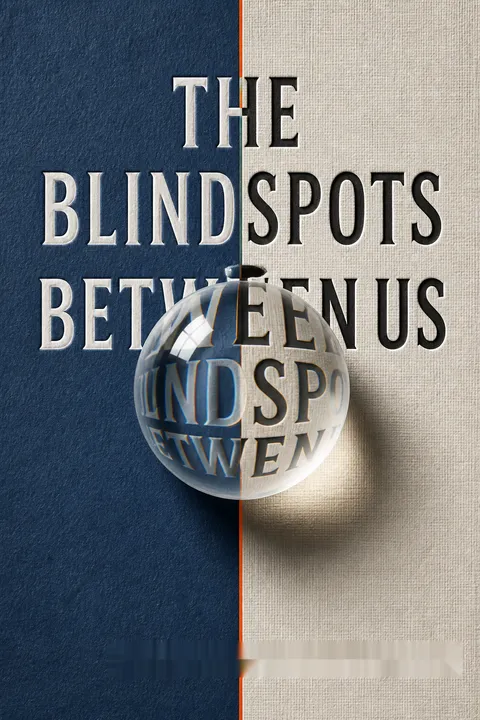
The Blindspots Between Us receives mostly positive reviews, praised for its insights on cognitive biases and practical strategies to improve relationships. Readers appreciate the scientific approach, relatable examples, and exercises for personal growth. The book is seen as valuable for various relationships, including personal and professional. Some criticisms mention repetitiveness and shallow content. Overall, reviewers find it helpful in understanding and addressing mental blindspots that affect interpersonal dynamics.
Glossary
Autopilot system
Fast intuitive responsesThe book’s term for rapid, largely automatic thinking, feeling, and behavior. It supports habits and quick reactions, including responses to perceived danger. It often works well in familiar situations, but can produce predictable errors when modern social situations trigger reactions better suited to immediate physical threats.
Intentional system
Deliberate reflective reasoningThe book’s term for conscious, effortful thinking used for complex reasoning, social judgment, and learning. It can examine and correct some autopilot reactions, but requires attention and can be mentally tiring. The author recommends deliberately engaging it when an intuitive response may harm an important relationship.
Debiasing
Reducing judgment errorsThe practice of identifying and reducing the effects of cognitive biases on decisions. In this book, it includes methods such as delaying reactions, considering alternative explanations, using probability and predictions, seeking outside perspectives, and setting policies for future behavior. Awareness alone is presented as insufficient without personal reflection and an implementation plan.
Fundamental attribution error
Ignoring situational explanationsThe tendency to explain another person’s behavior through their character while overlooking circumstances that may have shaped it. Someone who behaves rudely may be judged as a rude person, although the behavior could have an unusual explanation. The bias can lead to unfair judgments and relationship damage when conclusions are drawn from limited evidence.
Illusory superiority
Overrating personal qualitiesA bias in which people overestimate their positive qualities and discount their negative ones. It can create arrogance in close relationships, make people dismiss criticism, and distort judgments about work or politics. The book treats it as a specific form of overconfidence and recommends perspective-taking and alternative explanations as checks.
Illusion of transparency
Overestimating emotional visibilityThe mistaken belief that other people can readily perceive one’s thoughts, feelings, or intentions. People may rely on subtle cues and assume their meaning is obvious, while others interpret them differently or miss them entirely. The book recommends stating important messages explicitly and checking what the listener understood.
Empathy gap
Underestimating emotional influenceThe tendency to underestimate how strongly emotions affect other people and oneself, particularly when comparing a calm state with an emotionally aroused one. It helps explain why someone may be surprised by another person’s reaction or later regret words spoken during an argument. Perspective-taking and anticipating emotional states can help address it.
EGRIP
Empathetic evidence-based persuasionA method the author presents for discussing clearly false beliefs that conflict with a person’s goals. It begins by understanding the person’s emotions, establishes a genuine shared objective, builds rapport, introduces relevant information, and reinforces openness to evidence. The author cautions against using it for unsettled factual questions, value disputes, or personal preferences.
Reactance
Resistance to constrained choiceA negative emotional response to the perception that someone or something is limiting one’s freedom or choices. It may lead people to reject an option because an authority or social norm endorses it, even when the option serves their goals. The book recommends considering alternatives and the long-term effects of repeated reactions.
Authority bias
Excessive trust in authorityThe tendency to give authority figures more weight and obedience than the evidence warrants. It can make a confident recommendation seem more reliable than it is, even in consequential decisions such as medical treatment. The book suggests checking base rates, seeking another perspective, and considering how different choices are likely to turn out.
Bystander effect
Reduced helping in crowdsThe tendency for an individual to be less likely to help during an emergency when other potential helpers are present. Responsibility can feel distributed, and people may use the inaction of others as a cue that help is unnecessary. Directly assigning a specific task to a particular person can counter this tendency.
Optimism bias
Underestimating future risksThe tendency to underestimate the likelihood of negative future events. It can support action and exploration, but may also lead people to ignore costs, underestimate failure, or make promises they cannot keep. The book recommends checking optimistic plans with a more skeptical outside perspective and considering realistic alternatives.
Pessimism bias
Overestimating future risksThe tendency to overestimate future dangers. It can help people notice risks, but may also lead to discouraging others or abandoning worthwhile plans. The book distinguishes constructive criticism, which identifies specific improvements, from destructive criticism that simply dismisses an idea or attacks its proposer.
About the Author
Other books by Gleb Tsipursky

Download PDF
Download EPUB
.epub digital book format is ideal for reading ebooks on phones, tablets, and e-readers.








