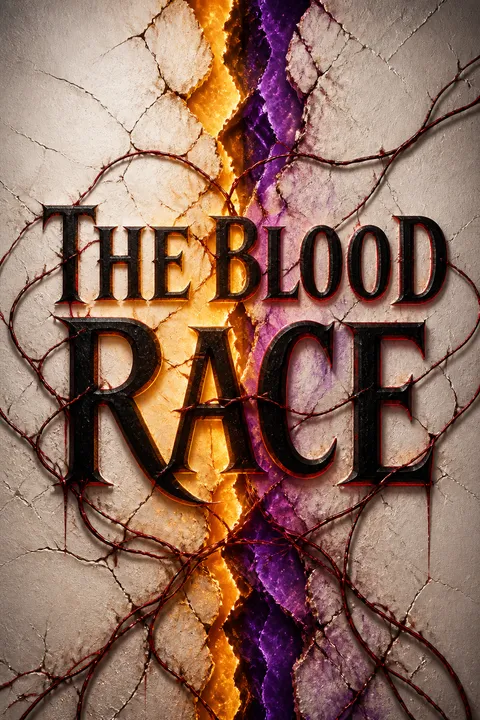


Plot Summary
Prologue
A young woman marked by dark bands remembers being treated as an omen and an unwanted child. A mysterious teacher tells her he has watched her since childhood and designed her for a purpose.
He describes her as one half of a divided soul, destined to begin a great change, and gives her a mission: find the other half. She does not know who she is or whether she can trust him, but his certainty places her life inside a future she cannot yet see.
The prologue makes identity a question before the main story has a name or setting. The marked girl has been defined by other people's fear, while the teacher offers a radically different account of her origin and purpose. His promise is both rescue and control: he gives her a destiny, but withholds the knowledge needed to judge it. That tension anticipates the novel's conflict between chosen purpose and personal agency. The divided soul is introduced not as a romantic guarantee, but as a mystery that will test whether recognition can survive mistrust, trauma, and moral failure.
The Race and the Dent
College student Ion drives his modified Mustang in a wager against Riley, a rival who is dating Mel, while his roommates West and Ruger ride along. Ion's concentration seems to push the car beyond its normal limits, letting him win, but the strange speed leaves him shaken. Distracted on the drive home, he crashes into the station wagon of the old neighbor next door.
In the morning, Ion approaches the neighbor's garden to apologize and meets the tattooed young woman who waters it. She says the man is a teacher called Sensei, not her father, and asks Ion to come back that evening. The accident gives Ion an obligation to cross the fence, though he has no idea that the neighbor has been watching him for years.
The opening turns a reckless stunt into an involuntary first encounter with the hidden world. Ion believes speed is the one arena in which he can beat Riley, yet his victory feels less like mastery than an episode of lost control. The crash converts that private anomaly into a social debt, forcing him to meet Sensei rather than seek answers on his own terms. The garden and its precise order contrast with Ion's damaged car and unsettled mind. This is a useful psychological setup: his first step toward self-knowledge comes through an error he must own, not through a heroic decision.
A Fist Through Glass
On campus, Mel flirts with Ion and suggests spending the evening together, but Riley corners them in the parking garage. He accuses Ion of hiding his origins and hints that Ion was expelled from a previous school after nearly killing someone. When Riley calls him a freak, Ion punches him with enough force to send him over a car and through another vehicle's windshield.
Mel drives the dazed, bleeding Ion home before security can reach him. He refuses to let her touch him, afraid that closeness might trigger another accident. Still, he goes next door to meet Sensei at the promised hour. Sensei dismisses insurance and asks Ion to repay the damage by planting tomatoes. After Ion returns home, Mel discovers the cut on his face has vanished.
Riley's provocation lands because it names the fear Ion has tried to contain: that his anger can turn physical and catastrophic. The punch is not merely a display of strength; it confirms that Ion cannot reliably distinguish intention from consequence. Mel's decision to help him complicates his instinct to push people away, while his warning that she should stay clear reveals care mixed with self-loathing. Sensei's modest repayment request also changes the scene's moral register. Instead of punishing Ion, he gives him work and an opening, implying that accountability can begin with repair before Ion understands the damage he is capable of causing.
The Wounded Hawk
At dawn, Ion returns to plant tomatoes under the young woman's watch. When a branch falls on Sensei's hawk and tears its wing, Ion ignores the bird's bite and heals the wound by running his thumb over it. The effort leaves him dizzy, and the bird disappears before he can explain what happened.
Trying to find the woman, Ion discovers that the arborvitae path has stretched into an impossible, looping tunnel. She later feeds him breakfast and tests his attention by turning up a song.
When Ion concentrates, its volume seems to change and then the music stops, though she has not touched the radio. She recognizes that his strange experiences are abilities rather than accidents and invites him back that night. Ion agrees, frightened by how much she already knows.
The garden becomes a small laboratory in which Ion's private suspicions acquire physical evidence. Healing the hawk reveals a capacity that is more than destructive, but it also costs him energy, so power arrives with bodily limits. The impossible tunnel and the altered music show that his perception can affect the environment, while the woman's calm questioning makes denial harder to maintain. Ion's fear does not vanish; he agrees to return despite it. The scene therefore defines courage as consent made under uncertainty, not confidence. His curiosity draws him toward the very explanation he has spent years avoiding.
The Door in the Closet
That night, the young woman, who calls herself Hawk, lets Ion ask questions until she places a knife before him and orders him to stab her palm. Ion obeys, horrified, and watches her wound close as blood retreats into her skin. Hawk then leads him through a dark utility closet.
They emerge in a vast cliffside refuge called the Dimension, where Sensei tells a gathering of young people that they are anomalies with abilities and a duty to protect the future. He explains that he created the refuge after seeing a coming darkness. Ion asks to stay because he wants to learn who he is. Sensei assigns Hawk to teach him, setting Ion on a path that he has chosen even though he does not yet understand its cost.
The knife test makes Ion confront the gap between his self-image and his actions. He can harm Hawk when she instructs him, which exposes how easily obedience and fear can override his moral judgment. The portal then widens the story from personal abnormality to collective purpose: Ion is not a lone malfunction but part of a community with a theory of history. Sensei's account offers belonging, yet it also asks the students to accept a future they cannot verify. Ion's choice to stay is meaningful because he has been offered a way out. He chooses inquiry over the safety of ignorance.
The Cliffside Initiation
Hawk explains the Dimension's strict code, including its ban on relationships, then orders Ion to walk backward off a cliff. He obeys, and she catches him in the form of a hawk before returning him to the ledge. Ion is initiated, renamed Icarus, and sent back to Los Angeles. Because time passes differently in the two worlds, he discovers that several days have gone by.
Mel is hurt that he vanished without explanation, especially after breaking up with Riley to be with him. At a bar, Ion drinks heavily and tells her about his powers and the Dimension. When Mel insists on seeing it, he takes her through the portal, violating the refuge's secrecy rule before he can think through the danger.
The cliff jump compresses the novel's central demand into a physical act: Icarus must move before certainty arrives. Hawk's rescue makes the risk survivable, but the renaming and code also show how the Dimension claims authority over the self. Time dilation immediately makes that claim costly in ordinary life. Icarus returns to find that absence has consequences for Mel, whose hurt is reasonable even when he cannot explain himself. Alcohol loosens the boundary he has promised to protect. His betrayal is therefore neither calculated villainy nor harmless mistake; it grows from loneliness, impaired judgment, and the desire to be understood.
The Unwanted Initiate
Hawk catches Icarus and Mel in the Dimension and treats the breach as a serious security failure. Fin tests Mel and finds that she has abilities of her own, so she is initiated and renamed Mala rather than sent back unaware.
Icarus is forbidden from resuming regular lessons until he proves trustworthy. Hawk gives him repetitive work, and he resents her discipline even as he slowly learns to focus. He eventually holds his breath through a thirty-minute pranayama and earns the chance to demonstrate his ability.
Meanwhile, Mala struggles with her new identity and with Icarus's refusal to tell her about the violent incident at his former school. Their fragile connection deteriorates just as she reveals that Riley has entered the Dimension too.
The consequences of Icarus's breach are deliberately uneven. Mel's abilities make her presence more than a security problem, but becoming Mala does not erase her attachment to her former life. Icarus, meanwhile, interprets chores as contempt because he wants recognition before he has demonstrated discipline. His eventual success in pranayama marks a shift from resentment to sustained effort, suggesting that control is practiced rather than bestowed. The relationship with Mala fails for a parallel reason: she offers trust, but Icarus withholds the story that most frightens him. Each character is learning that belonging cannot be secured by proximity alone.
Riley Enters the Dimension
Mala tells Icarus that Riley pressured her into bringing him through the portal, and that the rival who nearly died in the parking garage is a slider. She believes Riley used their relationship to reach Icarus and wants his blood. Hawk nevertheless tests Riley, who becomes Raiden in the Dimension, and sets him against Icarus in a channeling exercise.
Raiden forms energy with ease and begins draining Icarus's power. Icarus focuses on Raiden and pulls the energy back so forcefully that it crashes into his chest, breaks a rib, and punctures a lung. Hawk panics, and Fin helps carry Icarus to Hawk's apartment. She heals him there, but the injury exposes how dangerous her attempt to push him has become.
Raiden's arrival turns rivalry into an intimate threat. He has access to the same abilities as Icarus, but his control and confidence make Icarus's improvisation look dangerous. The training exercise crosses a boundary Hawk believed she could manage, and the injury forces her to confront the cost of treating a student as a problem to be accelerated. Icarus's first real success in channeling is inseparable from physical harm. The scene refuses a simple equation between progress and virtue: greater power can emerge through focus while still carrying the risk of aggression, overreach, and institutional failure.
Blood and the Sky
After healing Icarus, Hawk explains that a small blood exchange can temporarily entangle two sliders, allowing one to share the other's abilities. She and Icarus cut their palms, join their blood, and jump from her high apartment window. Icarus transforms into a hawk and follows her over the Dimension's cliffs, through a portal, and into the Los Angeles sky.
During their flight, he tells her how his uncontrolled strength fractured a former classmate's skull. Hawk, in turn, reveals that she was assaulted as a teenager and has spent decades feeling estranged from her human body. The flight makes their abilities a shared experience, and their confessions create an intimacy neither of them knows how to manage.
The blood exchange gives the novel's metaphysics an emotional form: connection is not an idea but a temporary sharing of bodily risk and sensation. Icarus experiences Hawk's freedom in flight, while she allows him access to a history she has kept sealed. Their disclosures are reciprocal but not symmetrical. His shame concerns harm he caused; hers concerns harm inflicted upon her. The scene does not claim that intimacy heals either wound. Instead, it creates a brief space in which each can be witnessed without being reduced to the worst event in their past. The resulting closeness increases both trust and vulnerability.
The Campus Inferno
Raiden provokes Icarus on campus, then turns his power against Mala, who is burned while trying to stop him. Icarus attacks Raiden, and their fight tears through the university with blasts that shatter glass, ignite a building, and send students fleeing. Mala helps Icarus escape through an interior closet and uses her car to get them away, but many witnesses see what the sliders can do.
Sensei responds by calling an emergency gathering. He announces that the portals will close in three dawns and that the students must leave Earth permanently, because investigators will hunt them and expose the rest of the group. Their secrecy has failed, and their home is no longer safe.
The campus fight converts hidden powers into public fact. Icarus and Mala are not simply defending themselves from Raiden; their actions make every nearby student a witness and thereby transform private danger into collective consequence. The inferno is a literal image of the uncontrolled force the code was meant to contain. Sensei's decision to close the portals is protective, but it also makes the students bear the cost of an exposure they did not all cause. The story's moral scale changes here: individual intentions still matter, yet consequences now spread beyond the person who acted.
Three Dawns to Leave
Sensei gives the students three dawns to decide whether to leave Earth or return home with their memories of the Dimension erased. Fin takes Hawk to Ireland to visit his parents and younger sisters, then says goodbye to his family without revealing the reason. The choice wounds him, but he returns to the Dimension.
He also tells Hawk that Sensei believes anyone may awaken if they truly believe in the hidden reality, suggesting that ordinary people might be brought into the refuge. Icarus acts on that possibility by bringing West and Ruger through the portal; they become Areos and Runner. When the last students leave Earth, Sensei seals the cavern, cutting them off from their former lives.
The evacuation gives the abstract cost of protection a face: Fin must leave the people he loves without being able to explain why. His return is not proof that attachment has weakened, but that he has chosen one form of responsibility over another. The possibility that belief can awaken abilities complicates the Dimension's hierarchy, while Icarus's recruitment of his roommates turns an intimate act of loyalty into an experiment in collective belonging. Sealing the portal makes the decision irreversible. The refuge becomes home not because the students stop grieving Earth, but because they can no longer return to it.
Raiden's Many Lives
After the portals close, Raiden faces a student trial for his violence and his history of killing sliders. The council orders a memory reading, but Mitsue cannot navigate Raiden's mind: it contains too many layers and memories for one person's life. Hawk realizes that Raiden has accumulated other sliders' abilities by taking their blood and lives.
In a private conversation, Raiden claims that Icarus is the Sunset named in the prophecy and that he sought Hawk as the other half. He wants their combined blood because it could give him power over the future. Hawk does not know whether to believe him, but his claim makes Icarus more than a troublesome new student. He is now a target tied to her own hidden identity.
Raiden's mind turns the novel's idea of identity into a horror of accumulation. He is not simply powerful; he has made other people's hard-won capacities part of himself through violence. The failed reading also exposes the limits of the Dimension's institutions: their tools cannot easily contain a person who has become a collection of histories. His claim about Icarus and Hawk reframes their closeness as cosmically consequential, but it remains a claim from an unreliable source. Hawk must decide how much to trust without surrendering judgment, a sharper challenge than any physical test she has faced.
The Prophecy's Ambush
Hawk sees Icarus reciting the prophecy alone, but she cannot bring herself to approach him. Raiden then ambushes her on the gathering platform, wounds her, and steals enough blood to prevent her from shifting. When Icarus arrives, Raiden uses Hawk as bait and explains that he needs both halves of the divided soul.
Icarus understands that their lives are linked and fights to stop him. Raiden's stolen abilities make him almost impossible to defeat, but Icarus catches a thrown dagger and drives it into his chest. When Raiden heals, Icarus pushes him over the ravine's edge. Icarus then shares his blood with Hawk and heals her wounds, saving her while taking responsibility for the killing.
The confrontation makes the prophecy bodily and immediate: Hawk's inability to shift strips away the form that has helped her survive, while Icarus must act without the reassurance of a teacher or a rulebook. Raiden's explanation turns their bond into both a vulnerability and a condition of survival. Icarus's victory is morally compromised from its first instant. He saves Hawk, but he also kills from hatred, a motive he later refuses to disguise. The scene advances their connection while making clear that recognition does not automatically produce virtue or shared judgment.
A Verdict at Dawn
At Raiden's trial, Hawk tries to explain that Icarus acted to save her and that Raiden had engineered the confrontation. The council demands narrow answers, and Icarus refuses to claim that he killed only for her sake. He admits that he hated Raiden, giving the council grounds to sentence him to die at dawn. Hawk later visits Icarus in his guarded room and realizes he knows they are the two halves of the prophecy.
He offers to let her take his life and absorb his blood, which could allow her to survive alone. Hawk refuses to save herself at his expense. They acknowledge their fear and kiss, then separate before the execution. At the platform, Icarus steps backward into the ravine, and the novel ends before revealing what follows.
The verdict tests whether a true account can survive an institution hungry for a clean moral category. Icarus's honesty is ethically serious, but it also erases the context that might have saved him; Hawk's fuller testimony arrives too late to undo the council's judgment. His proposed sacrifice offers a solution built on the same logic of blood and possession that made Raiden dangerous. Hawk refuses it, choosing a shared fate over survival purchased through his death. The final step remains unresolved, leaving the book's central question open: whether accepting one's identity means submitting to an ending or choosing what happens next.
Analysis
The Blood Race makes self-knowledge a problem of action rather than discovery alone. Icarus begins with a history he cannot explain and powers he cannot govern; the Dimension offers him language, teachers, and a community, but none can absolve him of what he does with that knowledge. His strength becomes more useful as he learns attention, yet the same emotional force that enables connection can also injure or kill. That tension keeps the supernatural system psychologically legible: power magnifies habits instead of replacing them.
Hawk's arc complicates the promise of a destined partnership. She has survived by treating discipline as armor and by keeping her past at a distance. Icarus unsettles that arrangement, but their recognition does not erase trauma or guarantee moral agreement. The prophecy gives them a shared horizon, not a shortcut around consent, accountability, or fear. Their divided identity can be read as an image of relational interdependence, but the novel resists the fantasy that another person will complete the self. Sensei explicitly locates responsibility within each person's own life even as he insists that their purposes are joined.
The community's rules create a second conflict. Secrecy protects the students until Raiden's violence makes secrecy untenable; then collective punishment forces everyone to pay for a few people's actions. Fin's farewell and Mala's grief make the cost concrete, while Icarus's friends entering the Dimension suggest that belonging may depend on belief as much as selection. The ending refuses to settle whether destiny saves the characters or merely gives their choices a larger consequence. Icarus's final step leaves the central ethical question unresolved: can someone accept responsibility for past harm without surrendering the possibility of becoming different?
Review Summary
Characters
Icarus, formerly Ion
Unruly gifted outsiderA college student with an unknown birthplace, a history of foster care, and abilities he has spent years trying to conceal. Ion becomes Icarus when he enters the Dimension, where Hawk trains him to control powers linked to focus, emotion, healing, and transformation. He is clever, competitive, and quick with deflection, but those habits cover a deep fear that his anger makes him dangerous to anyone who gets close. His curiosity is genuine, even when his choices are impulsive. What drives him is not simply power; he wants an account of himself that makes his past and his unexplained abilities intelligible.
Hawk, formerly Charlotte
Guarded ancient shifterA centuries-old student of Sensei who can transform into a hawk and has become a demanding, exacting teacher. Hawk values discipline because it gives her a sense of safety and purpose, yet her severity also protects old wounds she has never fully faced. She is wary of intimacy and uncomfortable in her human body, but she recognizes potential in Icarus before she is willing to trust him. Her careful control is both a hard-earned survival strategy and a barrier to accepting uncertainty. She wants to become the warrior Sensei believes she can be, though she has not yet decided what that identity requires of her.
Sensei
Enigmatic teacherA calm, perceptive mentor who watches over the students and teaches them to understand their unusual abilities. Sensei appears differently to different people, meeting each student through the image they can receive. He speaks in questions and rarely offers the simple certainty his students want, trusting them to test their beliefs through experience. His authority comes from knowledge of a future the others cannot see, but his withholding can feel like abandonment to those who depend on him. He seeks to prepare the students for a purpose larger than their individual lives while preserving their freedom to choose.
Mala, formerly Mel
Reluctant campus rebelA confident, popular student whose flirtation with Ion becomes complicated by his dangerous secret and his reluctance to trust her. Mel cares about honesty and connection, but she also wants to remain part of the ordinary life she understands. After entering the Dimension, she becomes Mala and must face abilities she never knew she possessed. She is perceptive enough to see that Ion's evasions conceal real fear, though she cannot make him confide in her. Her attachment to family and familiar routines gives her a different perspective on the cost of leaving Earth.
Raiden, formerly Riley
Rival with hidden intentA charismatic, competitive student who has long clashed with Ion and knows unsettling details about Ion's past. Riley's confidence makes him difficult to read, and his interest in control extends beyond winning races or romantic rivalries. As Raiden in the Dimension, he is placed under Mitsue's supervision and becomes part of the same community he once seemed to despise. He is patient when patience serves him and provocative when he wants someone else to lose control. His presence forces the students to confront how little they know about the people who enter their refuge.
Fin
Grounded channeling mentorAn Irish student skilled at channeling energy, Fin is Hawk's closest friend and often serves as a steady presence when her judgment falters. His humor softens his seriousness, while his care for his family gives him strong ties to ordinary life. He respects the Dimension's purpose but does not treat discipline as permission to stop feeling. Fin supports Hawk without always agreeing with her and helps Icarus when a training exercise goes wrong. His empathy makes him a bridge between the group's rules and the human costs those rules cannot erase.
Mitsue
Mind-reading dorm monitorA thoughtful student who monitors the dormitory and can read cognitive patterns. Mitsue is practical and observant, often tasked with assessing people whose abilities or conduct may pose a risk to the Dimension. His methodical approach gives structure to a community where powers can be difficult to measure, though Raiden's complex mind pushes his skills beyond familiar limits. He is not merely an examiner: his decisions are shaped by responsibility to his students and the need to keep the refuge secure.
Gaia
Young ritual guideThe youngest initiate, Gaia is already trusted to guide parts of the students' gatherings. Her small stature contrasts with the composure she brings to ritual and communal responsibility. She approaches the Dimension's traditions with seriousness, and her role shows that age does not map neatly onto ability or authority there. When asked to carry out a formal duty, she must balance the group's expectations with her own uncertainty.
West, later Areos
Skeptical careful thinkerIon's intelligent, cautious roommate, West prefers evidence, schedules, and ordinary explanations. He notices when Ion's behavior changes and presses him with questions rather than accepting convenient cover stories. His skepticism is not lack of curiosity; it reflects a desire to understand the risks before committing himself. In the Dimension, he becomes Areos and must adapt to a world that overturns his assumptions about what is possible.
Ruger, later Runner
Reckless loyal roommateIon's sociable, impulsive roommate, Ruger enjoys parties, cars, and teasing his friends. His easygoing manner can make him seem inattentive, but his loyalty is real, and he is willing to follow Ion into an unfamiliar world. Renamed Runner in the Dimension, he brings energy and humor to a group facing frightening changes. He is less inclined than West to interrogate every contradiction, which lets him respond quickly when action matters.
Plot Devices
The Dimension and its portals
A refuge between worldsThe Dimension is Sensei's cliffside refuge for people with unusual abilities. Students enter through ordinary-looking closets that become portals when properly focused, and they can move between the refuge and their natural worlds until the portals are sealed. Time does not pass at the same rate in both places, so a short stay in the Dimension can cost days on Earth. The refuge provides a setting for training, community, and secrecy, while its eventual closure turns protection into permanent separation from home.
Slider abilities
Thought made physicalSliders can shape reality through focus and intention, though particular abilities vary. Icarus can affect vehicles and objects, heal others, and eventually shift into hawk form; other students channel energy, grow plants, or read minds. Emotion can intensify these abilities, making poor control dangerous. Pranayama trains students to regulate breath and attention as a foundation for power. The system gives physical form to the characters' inner states, but it also makes discipline a practical necessity rather than a merely symbolic rule.
The split-soul prophecy
A map without instructionsA recurring prophecy describes a soul divided between a Sunrise and a Sunset, whose joined purpose may alter the universe's future. Students recite it at gatherings, and its words can appear visibly in the Dimension. The prophecy supplies a shared language for the group's mission but does not tell them how to fulfill it. Because its meaning is uncertain, characters repeatedly interpret it through hope, fear, and personal need. Its promise of a destined pair therefore creates pressure without removing the characters' responsibility for their choices.
Entangled slider blood
Shared power, shared stakesWhen two sliders combine blood, they can become temporarily entangled and share abilities, allowing Icarus to experience Hawk's transformation. The novel also establishes a more dangerous possibility: taking another slider's blood can connect a killer to that person's powers and identity. This mechanism turns blood into both a literal resource and a bond with moral consequences. It explains how Raiden accumulates abilities, why he pursues Icarus and Hawk, and why Icarus's choices can affect more than his own survival.
The code of conduct
Order under pressureThe students' code forbids revealing their abilities to ordinary people and restricts behavior that could disrupt training. It is meant to preserve focus and protect the Dimension, but its rules become difficult to apply when students are threatened or forced to choose between obedience and protecting someone they love. The public fight at the university makes secrecy impossible, and the council's response exposes the difference between keeping order and delivering justice. The code is therefore both a safeguard and a flawed human institution.
Download PDF
Download EPUB
.epub digital book format is ideal for reading ebooks on phones, tablets, and e-readers.








