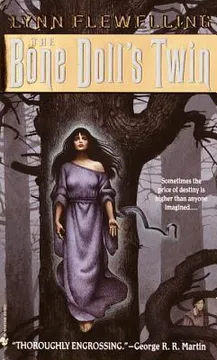


Plot Summary
Prologue
An old wizard, Arkoniel,2 remembers the cry of a newborn cut short by a choice he helped make. The deed helped raise Skala into a powerful realm, yet he still carries it as the stain beneath its success.
He recalls that he once believed prophecy could leave room for choice, and that he chose to trust the visions guiding him. The fragment opens with the consequence before the cause: a child’s death, preserved in one man’s memory, will shape the lives of the children who survive it.
The fragment gives the story a moral frame rather than a puzzle to solve. Arkoniel’s memory insists that political good and personal harm can occupy the same history: the country flourished, but its foundations include an infant’s death and the silence surrounding it. His emphasis on choice complicates the authority of prophecy. He has obeyed visions, yet he cannot use destiny to absolve himself. The image of the cry that remains after decades makes private guilt a counterarchive to official triumph, one that the coming story will gradually recover.
The Oracle Names a Queen
The wizard Iya3 travels to Afra with her apprentice, Arkoniel,2 carrying a clay bowl she has guarded for generations without knowing its purpose. The Oracle’s vision links the bowl to demons, the forbidden god of necromancy, a ruined Ero, and a future queen descended from Skala’s first royal line.
The queen’s face is not Princess Ariani’s,7 though Ariani7 is the line’s living heir. The Oracle also shows Iya3 a future school of wizards and gives her a number, 222. Iya3 leaves Afra convinced she must protect a child not yet born, while Arkoniel2 is left with a vision of himself holding a boy he cannot identify.
The prophecy gives Iya direction but not a clean plan. It identifies the child as politically necessary while withholding the practical and ethical costs of protecting her. That gap matters: Iya receives a mandate, then must translate it through her own judgment, and the child will bear the consequences of those interpretations. Arkoniel’s separate vision introduces a second line of uncertainty. He is not simply Iya’s instrument; his future relation to the child has already been marked, although neither wizard understands how. The bowl embodies inherited responsibility without explanation.
Twins, One Hidden
Ariani,7 the king’s half sister,7 goes into labor while Erius9 waits downstairs with his court wizard, Niryn,10 and armed guards. Iya,3 Arkoniel,2 the nurse Nari,12 and the hill witch Lhel4 attend her. Ariani7 gives birth to a girl1 first, but the second twin,6 a boy, draws breath before Lhel4 can prevent it.
Lhel4 kills him and uses her skin-binding magic to exchange pieces of the children’s flesh, making the living girl appear male and the dead boy6 appear female. The king9 inspects both infants and accepts the story that his nephew survived while a niece was stillborn. Ariani7 recognizes the dead child6 and understands that her family has deceived her.
The concealment succeeds politically by making bodies serve as evidence: Erius sees a boy and a dead girl, so the threatened heir disappears in plain sight. But the exchange does not erase the children’s identities or their bond; it transfers the danger into the household as a haunting. The adults’ secrecy protects the living child from a murderous succession policy, while depriving Ariani of the truth about what has been done to her babies. Lhel’s intervention is both rescue and violation, and the surviving child begins life inside that contradiction.
Ariani Sews Her Grief
After the birth, Ariani7 refuses to hold the child presented as her son and remains convinced she heard the dead twin6 cry. Nari12 nurses the baby and becomes his steady caregiver, while Duke Rhius8 tries healers and waits beside his wife.
A vision of Lhel4 eventually draws Ariani7 back to eating and sewing, but she makes a succession of dolls with no mouths, trying to quiet the crying she believes surrounds her. At the baby’s presentation, a cup of white wine appears red, and Nari12 later finds an infant handprint on the wall. Ariani,7 muddy from a secret trip outside, greets the omen with an unsettling calm and returns to her sewing.
Ariani’s dolls turn craft into a form of containment. She cannot speak openly about the birth, and her mouthless figures give physical shape to a grief she cannot communicate to the household. Nari’s care keeps the living infant alive, but it cannot repair the mother-child relationship fractured by deception. The red wine and bloody handprint make the spirit’s presence difficult to dismiss, yet the adults explain away what they can. The house therefore becomes a place where ordinary caretaking and supernatural danger coexist, each member seeing only part of what is happening.
The Keep Becomes a World
Rhius8 moves his family to a remote keep, where Tobin1 grows up among Nari,12 soldiers, and servants, with his father often away at war. He practices weapons with Captain Tharin11 and builds a miniature Ero from the stories his father shares. On a name-day visit to Alestun, Tobin1 reaches for a cloth doll, but Rhius8 snatches it away and gives him marbles instead after townspeople mock him.
Tobin1 learns to hide the wooden figures he loves and prays to become the warrior his father expects. His mother7 briefly begins teaching him letters and praising his carvings, giving him a rare glimpse of affection before the household’s fragile peace breaks.
Tobin’s childhood is shaped by a narrow lesson in what kinds of selves are permitted. His hands excel at modeling and carving, but his father’s reaction to the doll teaches him that tenderness and artistry can invite public shame. The miniature city offers imaginative access to a world he cannot enter, while the real town turns that desire into humiliation. His mother’s brief lessons suggest that connection is possible, but the adults’ secrecy prevents him from understanding why his life is so carefully restricted. He learns compliance before he learns the reasons for it.
The Tower Window
When Tobin1 is seven, King Erius9 arrives at the keep, and Ariani7 panics at the sight of his golden helmet. She drags Tobin1 into the forbidden watchtower, insisting that the king9 has found them. As she struggles to push him toward the open window, Tobin1 falls outward; someone pulls him back, but Ariani7 plunges to the riverbank and dies.
Rhius8 carries her body inside while the king9 orders the household away. Tobin1 withdraws into silence and cannot recall the fall clearly. He clings to Ariani’s ugly, faceless doll, then loses his voice altogether. Months later, a violent outburst in his toy room breaks through his buried memories and restores his speech.
The tower scene fuses the household’s hidden politics with Tobin’s first direct experience of mortal danger. He is not old enough to understand why his mother fears Erius, so her terror becomes indistinguishable from rejection. His later silence is not simple refusal; it shields him from memories he cannot yet organize. The doll becomes a portable remnant of a mother who was both frightening and briefly tender. When the memories return, the child’s recovery of speech also reopens the central question of what the adults concealed from him.
The Ghost Gets a Name
After his memories resurface, Tobin1 follows recurring dreams into the forest, carrying Ariani’s doll. He meets Lhel,4 the witch who helped with his birth, and she repairs the doll with his blood and hair. She explains that the haunting is the dead twin,6 whom Tobin1 must call Brother6 and care for.
The spirit6 appears as a ragged child who resembles Tobin,1 and the two establish a wary bond: Tobin1 can send him away, but cannot make him disappear forever. Lhel4 warns Tobin1 to keep the doll secret. He returns to the keep changed by the knowledge that the presence which frightened him is not an enemy to defeat but a lost child6 dependent on him.
Lhel changes the meaning of the haunting without making it harmless. Tobin’s fear becomes an obligation: the spirit is dangerous partly because it is abandoned, and the living child is asked to provide the relationship the dead one never had. The doll functions as both a magical anchor and a secret burden, tying the twins together through blood, hair, and borrowed flesh. Tobin’s decision to care for Brother is an early act of agency, but it is made under adult instruction and without full knowledge of the birth that created their predicament.
The Harriers Burn Wizards
As drought, plague, and Plenimaran raids deepen Skala’s distress, King Erius’s9 wizard Niryn10 gathers loyal magicians into the King’s Harriers. Iya3 and Arkoniel2 witness the Harriers execute priests, rebels, and two wizards by hanging and white flame. Years later, Iya3 visits Ero in disguise and is forced to register under the number 222.
A Harrier search spell in her room seeks a girl child, confirming that Niryn10 has glimpsed a threat to Erius’s9 male succession. Iya3 warns Rhius8 that the king’s9 faction is hunting for a concealed heir. Meanwhile, Arkoniel2 realizes his vision of holding a child concerns Tobin1 and returns to the keep, no longer willing to leave the boy’s care solely to Iya.3
The Harriers turn wizardry from a dispersed source of knowledge into an institution of surveillance and punishment. Their executions make Iya’s vision of a united Orëska politically urgent, but also show how easily unity can become coercion when it serves a ruler. The number 222 is both a mark imposed by the state and a confirmation of the Oracle’s pattern, so Iya reads even a tool of control as a summons to resist. Arkoniel’s return marks a moral shift: he stops treating distance as protection when he understands what absence has cost.
Arkoniel Chooses the Keep
Arkoniel2 reaches the keep and encounters the spirit6 face to face after it frightens his horse and breaks his wrist. Tobin1 stops Brother6 from attacking him, but refuses to explain how. Rhius8 resents the wizard’s long absence; still, he agrees that Arkoniel2 may stay, teach Tobin,1 and bring in one boy as a companion.
Arkoniel2 persuades the duke to repair the decaying keep and let Tobin1 learn from its craftsmen, then asks Iya3 to find a suitable child. He also discovers that Lhel4 has remained nearby, secretly watching over Tobin.1 Under her instruction, Arkoniel2 begins learning unfamiliar blood and spirit magic, though he keeps the witch’s presence from Rhius8 and the household.
Arkoniel’s appointment is more than a tutoring arrangement: it is an attempt to give Tobin the social experiences that political caution has withheld. The repairs make the keep livable, while the proposed companion offers a peer rather than another adult guardian. Yet every improvement is negotiated against fear of discovery. Arkoniel’s apprenticeship to Lhel further unsettles the boundary between approved magic and forbidden practice. His growing willingness to learn from her challenges the Orëska habit of treating unfamiliar traditions as dangerous before understanding them.
Ki Joins the Keep
Iya3 chooses Ki,5 a quick-witted son of a poor knight, to accompany Tobin.1 Though he fears the keep’s ghost,6 Ki5 stays and soon becomes Tobin’s1 closest friend, sparring with him, sharing stories of his crowded family, and drawing him into ordinary boyhood. Tobin1 confides that he knows Lhel,4 but not the doll’s secret.
The boys eventually find the witch together; when a catamount attacks, Lhel4 kills it and praises them as future warriors. Rhius8 later approves Ki5 as Tobin’s1 squire. Their bond helps Tobin1 laugh and explore, while Arkoniel2 continues studying with Lhel4 and the absent duke returns briefly before riding back to the war.
Ki’s presence changes Tobin’s world through ordinary friction and play rather than magic. Their friendship gives Tobin a peer who can challenge his skills, tease him, and share physical space without treating him as a fragile political object. Ki also brings a wider social world into the keep through stories of siblings and poverty. Their bond is reciprocal: Tobin offers rank and protection, Ki offers companionship and practical confidence. Lhel’s prophecy of their partnership lends the friendship political weight, but its emotional force comes from the boys’ earned trust.
Rhius Comes Home in Ashes
Rhius8 dies in a disastrous battle in Mycena, where Tharin11 believes the king’s9 orders placed the duke’s cavalry in needless danger. Tharin11 returns to the keep with Rhius’s8 ashes, sword, and signet ring. Tobin1 cannot cry at first; Ki5 and the household grieve around him while Brother6 leaves a root at the shrine.
During the vigil, Tharin11 swears to protect Tobin1 and reveals that Rhius’s8 last charge was for Tobin1 to rule Skala. The next morning, Tharin11 warns Arkoniel2 that Erius9 may have engineered the duke’s death. With Rhius8 gone, Tobin1 loses his chief protector just as the king9 is preparing to draw him into court.
Rhius’s death turns a future political struggle into an immediate problem of guardianship. Tobin inherits not only lands but the consequences of his father’s choices, while his grief arrives first as numbness rather than tears. Tharin’s suspicion gives the king’s earlier actions a darker possible pattern, though no proof is available. His oath fills the practical gap left by Rhius, but it cannot restore the duke’s power or freedom of movement. The root Brother leaves at the shrine connects private mourning to the unresolved bond between the twins.
Orun Claims the Heir
Lord Orun16 arrives with royal soldiers and orders Tobin1 to leave immediately for Ero, where he is to join the Royal Companions and live under Orun’s16 guardianship. Tobin1 refuses to be hurried, and Brother6 disrupts the hall until the boy can impose order and secure one night to prepare.
On the journey, Tobin1 sees the capital’s poverty and plague scars before its palaces. He carries Rhius’s8 ashes to the royal tomb and places them beside Ariani’s7 body. Tharin11 and Ki5 are allowed to remain with him, but the move separates Tobin1 from the keep, Nari,12 and the familiar life that made him feel safe.
Orun’s appointment makes the king’s protection look like a form of possession. Tobin is publicly treated as a beloved nephew while being removed from the loyal household that has raised him. His brief defiance matters because he has rarely been allowed to set terms; he uses courtesy and Brother’s power to claim time rather than provoke open resistance. The journey also corrects his imagined geography. Ero is not simply the miniature city his father made, but a place of bodily poverty and visible state authority, with the family tomb at its heart.
The Palace Tests Tobin
At the Old Palace, Tobin1 meets his cousin Prince Korin13 and the other Companions, while Porion15 recognizes Ki’s5 bond as Tobin’s1 squire and knights him. A staged ghost test sends the boys into the sealed old throne room. Tobin1 glimpses Queen Tamír19 offering him the ancient royal sword and sees the missing prophecy tablet, though the others dismiss the vision as a clever performance.
Later, Niryn10 identifies Tobin1 as next in succession after Korin13 and warns him against anyone who opposes Erius.9 The wizard misstates the history of King Pelis, and Brother6 confirms that Pelis’s effigy is absent from the tomb. Tobin1 leaves wary of Niryn’s10 polished certainty.
The palace makes belonging conditional on performance. Tobin must prove courage before peers who treat fear as a weakness, while Ki’s knighthood depends on an old custom that Orun tried to override. The vision in the sealed chamber gives Tobin a private encounter with the queens whose authority has been suppressed, yet he cannot make anyone else accept what he saw. Niryn’s manipulation works similarly: he offers Tobin status while revising history and demanding loyalty. The boy’s uncertainty becomes a useful defense, because he notices contradictions even when he cannot yet explain their political meaning.
A Ring Beneath the Tree
Tharin11 shows Tobin1 his parents’ former house, where the empty birth chamber deepens the boy’s sense of estrangement. In his father’s rooms, however, Tobin1 finds his old carvings carefully kept, and finally weeps in Tharin11 and Ki’s5 arms. He also discovers his mother’s7 betrothal ring beneath the dead chestnut tree, where Brother6 points him to a hidden hollow.
At court, Tobin1 and Ki5 excel at weapons practice but attract resentment from better-born youths. Ki5 is mocked as a poor man’s grass knight, while Tobin’s1 lack of court polish and refusal to abandon plain training clothes make him an easy target. The ring gives Tobin1 a tangible link to loving parents he barely knew.
The ring is a small object with unusually dense emotional work. It joins Ariani and Rhius as a loving couple, contradicting Tobin’s memory of their cold, fractured household, and it makes inheritance feel personal rather than merely legal. The preserved carvings offer another form of recognition: his father valued the artistic skill that Tobin had learned to hide. At court, however, inherited status does not erase class distinctions or social cruelty. Tobin and Ki enter the same institution with unequal protection, and their friendship cannot prevent others from exploiting that imbalance.
Ki Takes the Blow
Mago and Arius repeatedly insult Ki’s5 family and station, then provoke him in the stables by repeating a sexual rumor about Tharin11 and Rhius8 and insinuating that Tobin1 and Ki5 share the same relationship. Ki5 punches Mago and immediately regrets giving his enemies a public offense to use against him.
Tharin11 recognizes that Orun16 may have encouraged the provocation to weaken Ki’s5 position beside Tobin.1 At the temple, Tobin1 must administer ten lashes. He spaces them as instructed, but several draw blood; afterward, he breaks custom by pulling Ki5 upright and accepting his apology standing. Tobin1 then defeats Alben in the practice ring and warns the faction not to mistake restraint for weakness.
The punishment forces both boys to navigate the difference between private loyalty and public ritual. Ki accepts the lashes to keep his place at Tobin’s side, while Tobin performs the role of master but refuses to let the ritual erase their equality. His choice to help Ki stand is a small breach with institutional meaning. The episode also exposes how gossip functions as political leverage: the insult is designed not merely to wound but to make Ki appear unsuitable and Tobin incapable of governing him. Their closeness becomes both refuge and target.
Blood on Tobin’s Skin
Tobin’s1 stomach pains worsen during training, and blood appears on his skin beneath his clothes. Believing he has contracted the Red and Black Death, he fears the palace will be sealed and his friends infected. A vision from Brother6 and Lhel’s4 earlier warning make him decide not to tell anyone.
While Ki5 is away, Tobin1 takes his father’s sword, slips from the Palace through Korin’s13 connecting passage, and rides west alone. Brother6 delivers Ariani’s doll to Ki,5 who realizes Tobin1 is in danger and follows him on horseback. The two journeys split the boys: Tobin1 seeks the witch who can explain the blood, while Ki5 pursues him without knowing whether he is too late.
Tobin’s flight shows how secrecy has become his learned response to danger. He believes disclosure would expose Ki and the household, so he accepts the risk of traveling alone while ill. His fear of plague is historically grounded in the city’s visible deaths, which makes the false diagnosis emotionally credible even as the blood has another cause. Brother’s delivery of the doll is a rare act of cooperation, but it does not erase the spirit’s opacity. Ki’s pursuit demonstrates that the bond Tobin tried to protect by silence is strong enough to cross that silence.
The Face in the Spring
Lhel4 meets Tobin1 on the road and tells him the blood is not plague. Arkoniel2 arrives and explains that an old magic is failing. In the spring’s reflection, Lhel4 shows Tobin1 her true face: she was born a girl, and the skin binding made her appear male so Erius9 would not kill her as a rival heir.
The dead twin,6 whose body supplied the binding, was made to appear the stillborn girl. Iya,3 Arkoniel,2 and Rhius8 all knew the secret and acted to preserve the child named Tobin1 until she could claim Skala’s throne. Tobin1 rejects the revelation, insisting that his life, training, and sense of self cannot simply be reassigned.
The revelation separates bodily history from lived identity without making either unreal. Tobin’s memories, skills, loyalties, and name are not erased by the discovery that the body was magically altered; this is why the reflection offers recognition as well as shock. Yet the adults’ secrecy has left Tobin with no language for the change now arriving through puberty. The prophecy promises political restoration, but its immediate cost is intimate: the child must absorb a truth chosen for her before she could consent. Her resistance is a defense of continuity, not ignorance.
Bone Seals the Binding
Lhel4 explains that the binding has weakened with Tobin’s1 first menstrual bleeding and must be renewed before it is time for her to live openly as a girl. She uses a fragment of Brother’s6 bone, drawn from the doll, to restore the spell. Tobin1 sees the spirit6 suffer as Lhel4 stitches the two twins together again, and begs inwardly for the pain to stop.
Ki5 reaches the clearing, but Arkoniel2 knocks him unconscious rather than let him witness the secret. Tobin1 glimpses a western harbor during the spell, then wakes still in the body and voice the world knows as male. The danger is contained for now, but her identity, the prophecy, and the coming revelation remain unresolved.
The ending is a temporary repair, not a resolution. Lhel prevents the secret from surfacing before Tobin is ready, but the spell’s restoration repeats the original bargain by using Brother’s remains and linking the twins through pain. Tobin’s compassion for the spirit complicates the adults’ practical language of protection: what keeps her safe also injures the child whose body sustains the disguise. Ki’s exclusion preserves the secret at the cost of trust, while the harbor vision offers a direction without an explanation. The novel closes with Tobin returned to concealment, now conscious of its price.
Analysis
The novel makes secrecy both a defense and a form of harm. Iya,3 Arkoniel,2 Rhius,8 and Lhel4 conceal Tobin1’s history because Erius9’s succession policy makes discovery dangerous. Their caution is not baseless: the Harriers burn dissenters, search for a girl heir, and turn wizardry into state surveillance. Yet Tobin1 grows up without the knowledge needed to interpret his own body, his mother’s7 behavior, or the spirit that follows him.6 The protection works by withholding the very context that might make him feel secure.
The book also treats identity as lived continuity rather than a fact supplied by authority. When Tobin1 sees his face in the spring, he rejects the adults’ assumption that the revelation should instantly reorder his self-understanding. His training, artistic skill, memories, and loyalties remain his. The scene does not make the prophecy irrelevant; it shows the danger of using a political destiny to overrule a person’s experience. The adults may know what the kingdom needs, but Tobin1 must still live inside the choices they made for him.
Brother6 is the story’s sharpest image of protection’s collateral cost. The dead twin6 begins as a threat because he is unbound and abandoned, then becomes a dependent companion whose wellbeing rests on Tobin.1 The doll keeps him close, but the renewed skin binding uses his remains again and leaves him visibly suffering. Lhel4’s claim that the dead cannot feel pain conflicts with Tobin1’s perception, and the narrative gives weight to the child’s empathy rather than dismissing it as ignorance.
Against courtly rank, the keep’s everyday relationships offer another model of authority. Nari12 cares through routine, Tharin11 earns trust through steady service, and Ki5 treats Tobin1 as a friend before he treats him as a prince. Their loyalty is meaningful precisely because it is not secured by prophecy or title. The ending offers no political victory: Tobin1 returns to concealment, Ki5 remains outside the secret, and the larger conflict with Erius9 is still ahead. The achievement is narrower and more human. Tobin1 knows more about the forces shaping him, but must carry that knowledge without yet being free to act on it.
Review Summary
The Bone Doll's Twin receives strong praise for its atmospheric writing, rich character development, and thoughtful exploration of gender identity. Readers consistently highlight the compelling gothic tone, morally complex characters, and the nuanced portrayal of protagonist Tobin's unusual childhood. Common criticisms include slow pacing, an abrupt cliffhanger ending, and some feeling the book functions more as a lengthy prologue than a standalone story. The handling of gender themes draws mixed reactions, with some finding it groundbreaking and others noting dated elements. Most readers express intent to continue the trilogy.
Characters
Tobin
Isolated royal heirTobin is the young nephew of King Erius9, raised in a remote keep under the care of his father, Duke Rhius8, Nari12, and a household of soldiers. He is serious, observant, and more comfortable shaping wax or wood than putting his thoughts on paper. His world has been deliberately narrowed, so he watches faces closely and learns to read danger before anyone explains it. He admires warriors and wants to earn his father’s pride, but his artistic instincts and tenderness toward vulnerable people keep complicating that ideal. His guardedness is not coldness; it is the habit of a child who has learned that adults keep important truths from him.
Arkoniel
Wizard and reluctant tutorArkoniel is Iya’s3 gifted apprentice, a curious and compassionate wizard who prefers creating new spells to accepting the limits of old ones. He has spent much of his life traveling with his teacher and carries a deep sense of responsibility for the choices made around Tobin’s1 birth. He is more emotionally responsive than Iya3, which makes him sensitive to the loneliness the child endures, but his good intentions do not always make him a good judge of what Tobin1 needs. His work as a tutor tests his patience and his loyalty, while his growing study of Lhel’s4 magic challenges the boundaries of his education.
Iya
Guardian of the bowlIya is a centuries-old Orëska wizard and the current Guardian of a dangerous, unexplained clay bowl. She is disciplined, politically cautious, and accustomed to making decisions on a scale that outlasts ordinary lives. Her trust in visions gives her purpose, but can also distance her from the immediate needs of the people those visions affect. She values Arkoniel2 as a student and chosen successor, and sees the creation of a united wizard community as a defense against tyranny. Her sternness grows from responsibility rather than indifference, though others sometimes experience it as emotional distance.
Lhel
Outlaw forest witchLhel is a hill witch whose knowledge of blood, flesh, spirits, and natural cycles belongs to a tradition the court distrusts and the Orëska do not understand. Blunt, earthy, and difficult to read, she acts from obligations to her goddess and to the dead, not from Skalan political custom. She can be teasing and physically confident, but also bears the cost of being isolated from her own people. Her dealings with Iya3 and Arkoniel2 expose the arrogance that can accompany institutional magic. She is both a teacher and a keeper of dangerous knowledge.
Ki
Tobin’s loyal companionKi is the son of a poor country knight, raised in a loud, crowded household and trained to fight among many siblings. Quick to laugh and quick to act, he brings Tobin1 a kind of ordinary childhood the remote keep could not provide. His courage is practical rather than polished: he will stand between a friend and danger before he has time to consider the cost. At court, his low status makes him vulnerable to snobbery, but he keeps his dignity by focusing on service and friendship. He is also honest enough to challenge Tobin1, even when that honesty risks embarrassment.
Brother
Unquiet child spiritBrother is a childlike spirit whose presence haunts Tobin’s1 home and follows him into the royal court. He can move objects, frighten animals, and appear to Tobin1 in a form resembling the boy, but his motives are difficult to interpret. His actions range from destructive to protective, and he communicates only in brief, cryptic flashes. The household fears him as a demon, while Tobin1 gradually learns to regard him as a being who is lonely and dependent. Brother’s silence keeps him both a character and a mystery.
Ariani
Tobin’s troubled motherAriani is the king’s half sister9, a princess raised beneath the shadow of a dangerous family history. She is talented with her hands, skilled on horseback, and once known for making beautiful dolls. After the birth of her children, grief and mental distress fracture her relationship with her household. Her moments of tenderness with Tobin1 are real, but unpredictable, leaving the child unable to reconcile affection with fear. Ariani’s isolation is intensified by the secrets others keep from her. Her story reveals how royal power can make private suffering both politically consequential and nearly impossible to treat.
Rhius
Duke and devoted fatherRhius is a powerful landholder and experienced warrior, married to Ariani7 and father to Tobin1. He loves his family, but repeatedly chooses secrecy and physical isolation as the safest way to protect them. His devotion is visible in his attention to Tobin’s1 education, his miniature city, and the promise of future military service. Grief and political pressure make him withdrawn, and his judgment is shaped by the constant threat posed by Erius9. Rhius understands the court’s danger better than Tobin1 does, yet the protection he provides also deprives his child of ordinary freedom.
Erius
Usurper kingErius is Skala’s king, a handsome and capable ruler whose public warmth makes his political ruthlessness harder to read. He has displaced the traditional female line of succession and relies increasingly on Niryn10 and the Harriers to guard his authority. His rule is not depicted as uniformly incompetent; he leads armies and retains loyalty among many nobles. That complexity makes him dangerous, because his actions can be defended as security measures even when they threaten his own kin. He regards family affection and political control as compatible, a belief that shapes the peril around Tobin1.
Niryn
King’s wizard and enforcerNiryn is Erius’s9 court wizard and the organizer of the King’s Harriers. He is controlled, observant, and adept at presenting coercion as loyal service. His interest in dreams and signs gives him a political vocabulary for pursuing rivals, while his carefully composed manner conceals how far his ambitions extend. He seeks to gather wizards under the crown, directly opposing Iya’s3 vision of an independent confederation. Tobin1 senses that Niryn is testing him, though he does not yet understand what the wizard suspects. Niryn’s calm makes his power feel more bureaucratic than theatrical.
Tharin
Warrior and steadfast protectorTharin is Rhius’s8 longtime friend, an accomplished soldier, and Tobin’s1 weapons instructor. He combines discipline with a quiet gentleness that makes him a secure adult presence in the keep. His loyalty is personal rather than merely formal; he serves because he loves Rhius8 and cares for Tobin1. Tharin understands both military danger and the compromises demanded by court life, though he is not always free to explain them. His respect for Tobin1 grows from the child’s effort and courage, not from rank alone. He also gives Ki5 a model of honorable service.
Nari
Tobin’s steadfast nurseNari is Tobin’s1 nurse and one of the few people who has cared for him consistently since infancy. She is practical, affectionate, and fiercely protective, often trying to keep him safe by limiting his freedom. Her loyalty to Iya3 and the Rhius8 household makes her a keeper of secrets she did not choose. She knows the cost of Tobin’s1 isolation but cannot easily challenge the political fears that created it. Her everyday acts of feeding, teaching, and comforting give the keep a domestic warmth the larger royal world lacks.
Korin
Heir to EriusKorin is Erius’s9 only surviving son and Tobin’s1 cousin. He is a skilled young warrior, generous in his welcome, and capable of genuine warmth toward the new Companion. Yet he drinks heavily and chafes at being kept from the war because he is the sole heir. His moods can shift from playful leadership to self-pity, revealing the cost of being treated as a dynastic necessity. Korin is not simply a rival to Tobin1; he offers a possible friendship within the palace, though their futures are shaped by different expectations.
Mynir
The duke’s loyal stewardMynir is Rhius’s8 elderly steward, a careful, dependable presence in the keep. He helps maintain the household and protects its secrets without seeking recognition. His practical loyalty extends to Tobin1, whose upbringing he quietly supports. As the keep is repaired, he takes pride in restoring it to a proper home. His service represents the kind of continuity that political upheaval often overlooks: the person who keeps rooms, routines, and obligations intact while the powerful make decisions elsewhere.
Master Porion
Master of the CompanionsPorion oversees the training and conduct of the Royal Companions. He is demanding, practical, and committed to rules that keep privileged boys from turning rivalry into unchecked violence. His judgments are stern, but he recognizes courage and skill wherever they appear, including in Ki5, whose background differs from the other squires. Porion provides Tobin1 with a fairer authority than Orun16 and helps make the palace’s military training a place where ability can earn respect.
Lord Orun
Tobin’s court guardianOrun is a senior courtier and royal kinsman entrusted with Tobin’s1 guardianship and estates. He favors ceremony, status, and the management of other people, treating Ki5 and Tharin11 as socially beneath him. His manner is smooth rather than openly violent, but his attempts to influence Tobin’s1 household and squire make him difficult to trust. Orun understands that information and access are forms of power. His presence exposes how a royal ward can be surrounded by polite language while losing control over his own choices.
Eyoli
A hidden wizard spyEyoli is a mind-clouder with a talent for passing unnoticed among people who underestimate him. Once a street child who used his limited gift to survive, he is recruited by Iya3 and sent to observe Orun’s16 circle. He is not a powerful wizard in the conventional sense, but his modest ability makes him unusually useful as an infiltrator. His loyalty grows from Iya’s3 recognition of his potential and the possibility of a safer future for vulnerable children.
Ahra
Ki’s warrior sisterAhra is Ki’s5 half sister, a capable fighter who serves with a company guarding the coast. Blunt and self-assured, she represents the women warriors whose opportunities have been curtailed under Erius9. Her visit brings news from Ki’s5 family and confirms that the king’s9 restrictions affect people far beyond the palace. She is affectionate toward her brother without becoming sentimental, and Tobin’s1 meeting with her broadens his understanding of who can serve as a soldier.
Queen Tamír
A queen in the royal tombQueen Tamír is one of Skala’s royal ancestors, remembered as a woman whose death is bound to a succession struggle. Her likeness appears among the queens in the tomb and in the miniature figures Tobin1 studies. The story around her gives Tobin1 an early way to understand how the throne has passed between women and men. Her presence in the old palace links the living child to an interrupted political history.
Ranai
A veteran wizardRanai is an elderly wizard who fought in the Great War and bears lasting injuries from a necromancer’s demon. She has withdrawn to a coastal village, wanting peace after a lifetime of service. Her dreams of a sorrowful queen connect her to Iya’s3 prophecy, but the Harriers’ violence has made her cautious. Ranai’s reluctance shows how fear can silence even those who understand the danger.
Plot Devices
The Oracle’s Prophecy
A throne hidden in visionsAt Afra, the Oracle links a bowl, a coming queen, the destruction of Ero, and a future gathering of wizards. The prophecy gives Iya3 a reason to protect a child and later helps her interpret the Harriers’ interest in a girl heir. Its images are incomplete, so characters must decide whether a vision is a command, a warning, or a possibility. The prophecy drives the political plot but does not remove responsibility from the people acting in its name.
The Bone Doll
A spirit held by kinshipAriani’s7 crude doll contains the dead twin’s6 remains and is strengthened with hair and blood. Lhel’s4 magic makes it a focus through which Tobin1 can summon and dismiss Brother6. The doll is not merely a container for magic: it gives Tobin1 a way to approach a spirit6 whose anger comes from abandonment. Its concealment becomes increasingly dangerous as Tobin1 enters a court where any link to forbidden magic could be used against him.
Skin Binding
A child protected by disguiseLhel4 exchanges pieces of flesh between the living and dead twins6, causing the living child to appear male and the dead child6 to appear female. The binding is physical magic, not a surface illusion, which allows it to withstand ordinary scrutiny. It protects the royal heir from Erius’s9 succession policy but imposes a lasting cost on both twins. When the magic begins to fail as Tobin1 matures, the secret becomes an immediate bodily crisis rather than a distant political possibility.
The Harrier Number
Registration disguised as orderThe Harriers require wizards entering Ero to register and wear numbered badges. Iya3 receives 222, the number from her vision, while seeing how the system marks and monitors the people it claims to protect. The badge turns an abstract threat into a visible mechanism of state control. Its coincidence with the prophecy makes Iya3 interpret a coercive device as confirmation that Illior’s larger design remains in motion.
The Miniature Ero
A city built from memoryRhius8 builds Tobin1 a model of Ero and teaches him its streets, palaces, temples, and royal history. Tobin1 uses it as both a toy and his only detailed map of a city he cannot visit. It preserves his father’s affection and gives him a framework for understanding the capital when he finally arrives. The model’s limits matter too: it cannot show the poverty, disease, court factions, or emotional danger that Tobin1 encounters in the real city.
Download PDF
Download EPUB
.epub digital book format is ideal for reading ebooks on phones, tablets, and e-readers.








