

Key Takeaways
Treat the book as a cabinet of beliefs, not a reliable map of fate.
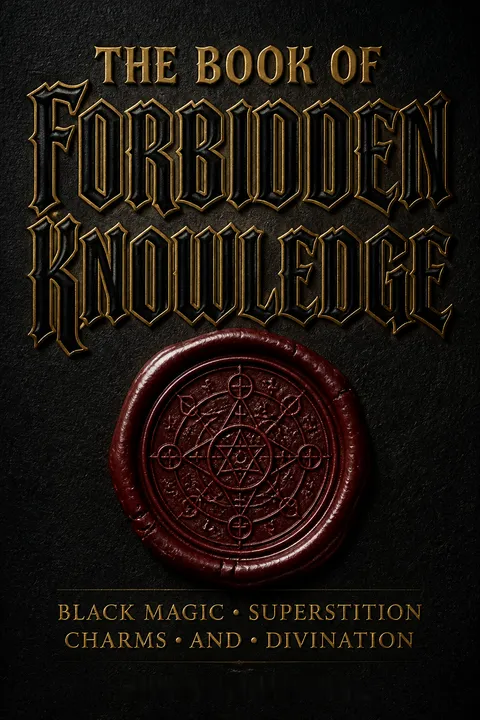
A shelf, not a system. Published in 1910, this compendium gathers love divinations, astrology, protective charms, folk medicine, mediumship, hypnosis, stage tricks, and advice on saving money. It offers no single test for deciding which claims deserve belief. Some rituals promise certain predictions; other sections explain how apparent spirit phenomena can be produced by human ingenuity.
Contradiction is part of it. The book presents occult practices as powerful, then supplies naturalistic explanations for some marvels. Its most useful reading is therefore comparative: notice how people sought certainty, comfort, or entertainment, while separating a reported belief from a demonstrated effect.
What's striking is that the book preserves two ways of meeting uncertainty: enchantment and investigation. Its charms give the unknown a procedure, while its explanations of stage effects invite scrutiny. That tension makes the collection more revealing than a consistent manual would be. It documents how a claim can feel persuasive because it is vivid, repeated, or emotionally useful, even when the evidence is thin. The reader's best tool is not blanket cynicism, but asking what kind of claim is being made and what would count as proof.
Turn dream rituals into prompts for reflection, not certificates of the future.
Dreams as messages. The book offers many ways to dream of a future spouse, including sleeping with a keepsake beneath the pillow or following a prescribed bedtime ritual. Its more elaborate account says a person seeking an oracle should be rested, avoid heavy food and drink, keep a clean room, and concentrate on a question. It sorts certain dreams into types, including those seen in the interval between sleep and waking.
Stories make them convincing. A peasant supposedly found hidden coins after a dream directed him to a stone. In another tale, a dream led a man to discover his murdered companion. Such accounts are memorable, but the book supplies no way to distinguish prediction from coincidence, selective recall, or a story polished after the event.
Dreams can be psychologically meaningful without being supernatural forecasts. Sleep research connects dreaming with memory and emotion, which makes a quiet bedtime question potentially useful as a way to notice what occupies the mind. The distinction matters: reflection asks what a dream might reveal about present concerns; prophecy claims knowledge of an external future. Anecdotes tend to preserve striking hits and discard ordinary misses, so their narrative force can exceed their evidential force. The ritual may help a person attend to a question, but the answer still needs waking-world verification.
Don't let a birthday or weekday pre-write someone's life.
Calendars assign destinies. The book lists dates supposedly unlucky for men and women, then names fortunate birthdays and narrow hours for love or marriage. It also gives weekdays fixed personalities: Sunday promises wealth and long life, while Tuesday is associated with danger. In a particularly sweeping forecast, it says women face a consequential thirty-first year and men a consequential forty-second.
The rule weakens itself. The text also says that effort and perseverance can overcome a planet's malign influence. That admission sits uneasily beside the precise tables, which offer confident predictions without explaining how they were tested. Their specificity can make them look authoritative, but precision is not the same as demonstrated accuracy.
A precise prediction can shape behavior even when its basis is arbitrary. Someone warned that a birthday makes marriage unlucky may approach relationships with suspicion, then interpret ordinary conflict as confirmation. This is a self-fulfilling pathway, not evidence that the calendar caused the outcome. The book's own appeal to diligence points toward a more useful model: choices, circumstances, and relationships affect life in ways that can be examined. A date may be personally meaningful, but it should not be mistaken for a diagnosis of character or a forecast.
Anagrams reveal the interpreter's ingenuity, not your destiny.
Names become puzzles. The book calls fortune-telling through rearranged names Metragrammatism. It claims that a name's letters can disclose the bearer's fate, using famous figures as demonstrations. Napoleon's name, for instance, is rearranged into a phrase pointing toward Elba, the place of his exile. Because the event is already known, the example reads as prophecy after the fact.
Flexible rules invite results. The text permits certain letters to be substituted and even allows letters to be added or removed when a name will not produce the desired phrase. That freedom makes it easy to find a fitting message among many possible arrangements. The exercise may entertain, but it does not establish that names predict events.
This is a compact lesson in hindsight bias: once an outcome is known, people can search backward for a pattern that appears to anticipate it. Flexible rules enlarge the search space, making a meaningful-looking match more likely. The same habit appears in many forms of pattern recognition, from reading significance into coincidences to selecting only the data that support a favored theory. The anagrams are clever wordplay, and that is their genuine achievement. Treating them as evidence requires a rule fixed in advance and predictions that could clearly fail.
Read omens as prompts to inspect causes, not forecasts.
Some signs have causes. The book describes Second Sight as involuntary visions of distant or future events, such as seeing an absent traveler injured or a funeral that has not yet occurred. It also reports a traditional belief that the time of a vision indicates how soon its event will happen. Alongside these claims sit everyday omens about salt, animals, new moons, and visitors.
Observation differs from symbolism. The text itself suggests that walking under a ladder is unwise partly because an object may fall. It also notes that bees stay near their hives when storms approach. These are practical cues tied to possible physical causes. A magpie's number, by contrast, is assigned a meaning by custom, not shown to predict an event.
The useful distinction is between a signal with a plausible mechanism and a symbol whose meaning rests on tradition. Clouds, animal behavior, or an unstable ladder can prompt observation of the environment. A rabbit crossing a path has no comparable predictive link in the book's account. This does not make folklore worthless: a saying can preserve communal memory or offer a small ritual of reassurance. But practical attention should follow evidence about causes, while symbolic interpretations remain cultural stories rather than reliable forecasts.
Let charms comfort you, but never substitute them for evidence-based care.
Objects carry reassurance. The book recommends talismans for love, protection, and confidence, and catalogs charms for theft, travel, illness, and luck. It even tells of a talisman fixed to a floor that supposedly drove away beetles, which returned when a servant removed it. In its discussion of the evil eye, the text offers a more psychological explanation: wearing a charm may help by shifting the wearer's thoughts from negative to positive.
Comfort is not a cure. These claims are not established by the stories provided. The same section includes remedies and instructions involving hazardous substances, animal parts, and risky procedures. They should be treated as historical folklore, not medical guidance. A protective object may be personally meaningful, but an illness or injury calls for safe, appropriate care.
A charm can have a real effect on how its wearer feels without having the supernatural power attributed to it. Rituals may focus attention, soothe anxiety, or make a person feel less alone; those benefits should not be confused with proof that an object prevents theft, illness, or danger. This distinction respects the human purpose of ritual while protecting practical judgment. The book's mixture of comfort objects and dangerous remedies also shows why historical interest needs a safety filter: an old instruction can be culturally revealing and still be unsafe to follow.
A séance reflects the group's expectations as well as its claimed spirits.
A circle is carefully staged. The book describes a spirit-circle, a group assembled to seek communication with the dead. It recommends three to twelve participants, contrasting temperaments, repeated seating arrangements, subdued light, a quiet room, and sessions of about an hour or more. Its explanation is that the participants combine their magnetisms into a force that helps spirits communicate.
The medium sets limits. The text also says that whatever a spirit communicates is constrained by the medium's own intelligence and capacities. That qualification complicates the promise of direct contact: the message passes through a human mind, which can shape what is perceived and expressed. The rules show how strongly the book values atmosphere, cooperation, and shared attention.
Even without accepting the proposed spiritual mechanism, the circle's structure is socially informative. A stable group, shared focus, dim light, and quiet can heighten expectation and make ambiguous sounds or movements feel significant. Group attention can also encourage participants to interpret an event in similar ways. These dynamics help explain why séance experiences may feel powerful and communal. They do not settle what caused any particular experience. The book's point that a medium's capacities shape the message is especially useful because it acknowledges that testimony is filtered through a person.
Treat hypnosis as focused suggestion, not supernatural command.
Attention is the proposed mechanism. In its account of mesmerism, the book says hypnosis depends chiefly on suggestion and the subject's expectation, rather than a special power in the operator. A quiet room, steady attention, repeated assurances of drowsiness, and a confident manner are presented as ways to encourage the state. It calls rapport the subject's focused connection with the hypnotist, whose suggestions remain especially salient.
Influence has limits. The book describes people as differing in their willingness to be influenced and says a spirit or operator cannot create intelligence beyond the medium's normal capacity. Its own claims of control over movement should not be taken as proof of unlimited power. Hypnosis is not a license to override another person's agency, and any real practice requires informed consent.
The account is valuable where it shifts attention from mystical force to expectation, concentration, and social interaction. Suggestion can affect experience, but it does not turn another person into a puppet. Individual differences, context, and consent matter, and the book's theatrical language about control can obscure those boundaries. A sound reading keeps the explanatory insight while rejecting the coercive implication. This is also a broader lesson about authority: confidence can shape what someone expects, but confidence alone cannot guarantee that a claim is true or that compliance is appropriate.
When a marvel depends on darkness, inspect the ropes and hands.
The trick has a method. The book dismantles performances associated with the Davenport Brothers, who appeared bound while instruments sounded and moved in a dark cabinet. Its explanation describes performers loosening knots, using their hands briefly, and returning them to the ropes before the lights came back. Darkness, echoes, fast movement, and an investigator's divided attention helped disguise the actions.
A second marvel is simpler still. In the arm-writing account, a performer marks skin with the end of a match, then rubs the area so the letters appear red. The apparent spirit writing is therefore presented as a physical effect, not supernatural evidence. The book's explanations do not prove that every séance is fraudulent; they show why extraordinary demonstrations need controlled inspection.
The shift from astonishment to mechanism is the book's clearest exercise in skepticism. A performance can exploit attention, darkness, expectation, and the audience's limited access to what is happening. Once a mechanism is proposed, the next step is not automatic belief in the debunking, but testing it under conditions that prevent the trick. That is the difference between a plausible explanation and a demonstrated one. The approach also preserves the artistry: deception can be technically impressive even when its claim to supernatural power is not credible.
Apply the book's soundest spell: account for time, money, and promises.
The practical chapter changes the subject. After spells and omens, the book argues that financial stability depends on steady work, restraint, and attention to small expenses. It advises keeping a daily record of income and outgoings, warning that minor purchases can accumulate into a meaningful sum. It also treats punctual repayment as essential: reliable borrowers preserve the trust that lets friends extend credit again.
Time belongs in the ledger. The text says that idleness has a cost beyond whatever a person spends while idle, because missed work means missed earnings. It urges people to prepare, maintain their business, and avoid postponing tasks that can be done now. These are concrete habits, unlike the volume's predictions about lucky hours.
This practical advice is the collection's strongest counterweight to fatalism. A ledger makes vague impressions measurable, while punctuality turns private reliability into social trust. Both ideas remain useful because they connect behavior with observable consequences. The chapter's emphasis on individual diligence, however, is incomplete as a general account of wealth: effort cannot erase every constraint or guarantee prosperity. Its soundest lesson is narrower and more defensible. Track what can be tracked, honor commitments, and distinguish controllable habits from promised outcomes.
Analysis
This 1910 compendium is less a coherent occult doctrine than a record of competing ways to make uncertainty feel manageable. Its recipes and calendars turn chance into procedure: choose a date, prepare an object, repeat words, and await a sign. Its narratives then make those procedures memorable through vivid outcomes, from a dream-guided discovery to a prediction attached to a famous name. But the book also invites a different posture. It explains how darkness, knots, distraction, and a small physical trick can manufacture apparent marvels. That contrast makes the collection most valuable as an object of study, not as a manual of dependable knowledge.
Its evidence is uneven by design. Anecdotes stand in for systematic tests, prediction rules can be adjusted to fit their results, and the collection offers no count of failed forecasts. At the same time, practical observations sometimes sit beside arbitrary symbolism. A storm-sensitive animal and a rabbit crossing a path are treated within the same broad world of signs, although they do not have the same kind of causal connection. Readers gain a useful habit by asking whether a claim is observable, testable, and able to fail.
The book also reveals the social uses of belief. Love divinations address romantic uncertainty; protective charms offer a feeling of agency; séance rules organize a group around shared attention. Yet its advice often assumes that other people can be manipulated, whether through hypnotic suggestion or love charms. That makes consent an essential modern lens. Its predictions also assign different destinies to men and women, frequently defining women's prospects through marriage. The practical counsel on records, work, and repayment is more grounded, though its faith in diligence can understate structural limits.
The enduring value is therefore double. The volume preserves how people converted hope, fear, and entertainment into rituals, while its own debunking passages demonstrate the importance of asking how an effect was produced. It rewards curiosity, provided curiosity is paired with skepticism and care.
Review Summary
The Book of Forbidden Knowledge receives mixed reviews, with an average rating of 3.43/5. Readers appreciate its historical value and potential for research, especially for writers interested in occult history. However, many find the content disappointing, describing it as a collection of outdated superstitions and folk beliefs rather than truly "forbidden" knowledge. Some enjoy it as a novelty item or conversation piece, while others criticize its organization and relevance to modern practices. The book's value seems to lie more in its historical context than practical application.
Glossary
Metragrammatism
name-based anagram divinationA method of fortune-telling that rearranges the letters of a person's name into a phrase believed to describe that person's character or future. The book illustrates it with famous figures and allows some spelling substitutions or letter changes when a phrase is difficult to form. Those flexible rules make the method entertaining but do not establish predictive accuracy.
Second Sight
visions of distant eventsA purported ability to perceive distant or future events as though they were occurring in the present. The book describes visions of accidents, weddings, and funerals that appear involuntarily, and reports a tradition linking the time of a vision to the time before its fulfillment. These are accounts of belief, not verified evidence of precognition.
spirit-circle
group seeking spirit contactA gathering arranged to seek communication with spirits of the dead. The book recommends a small, stable group, a quiet and subdued room, and participants with contrasting temperaments. It claims that their combined magnetism enables communication and develops mediumship, while also acknowledging that any message is limited by the medium's own abilities.
rapport
focused hypnotic connectionIn the book's account of hypnosis, rapport is the state in which a subject's attention is fixed especially on the hypnotist, making that person's suggestions more influential than those of others. The text says this connection can be redirected by suggestion. The term describes the book's theory of attention and influence, not proof of unlimited control.
Electrical Psychology
suggestion through bodily influenceA term used for a procedure that combines physical contact, pressure on the hand, eye contact, and forceful verbal suggestion to produce claimed changes in movement or sensation. The book presents the operator's confidence and the subject's responsiveness as important. Its use of electrical language does not establish that electricity is the mechanism.
spiritual magnetism
claimed force among participantsThe book's proposed force formed from the combined influence of people attending a spirit-circle. It claims that this force helps spirits communicate and can develop latent mediumistic abilities. The account treats temperament, room conditions, and the medium's capacities as relevant, but offers no independent measurement showing that such a spiritual force exists.
FAQ
1. What is "The Book of Forbidden Knowledge" by Johnson Smith & Company about?
- Comprehensive Occult Guide: The book is a compendium of black magic, superstition, charms, divination, and various occult practices, offering both historical context and practical instructions.
- Wide Range of Topics: It covers divination, dream interpretation, lucky and unlucky days, talismans, spells, omens, spirit mediumship, mesmerism, and more.
- Practical and Historical: The text blends practical how-to guides with folklore, superstitions, and explanations of mystical beliefs from different cultures and eras.
- Focus on Everyday Magic: Many sections provide rituals and charms for love, luck, health, protection, and fortune-telling, making it a manual for those interested in folk magic and esoteric traditions.
2. Why should I read "The Book of Forbidden Knowledge" by Johnson Smith & Company?
- Historical Curiosity: The book offers a fascinating look into the beliefs, superstitions, and magical practices that shaped past societies and continue to influence modern occultism.
- Practical Occult Techniques: Readers interested in folk magic, divination, or the occult will find a trove of rituals, spells, and methods to experiment with or study.
- Cultural Insight: It provides insight into how people historically coped with uncertainty, sought love, protected themselves, and interpreted omens.
- Entertaining and Educational: The blend of practical advice, strange remedies, and curious anecdotes makes for both an entertaining and educational read.
3. What are the key takeaways from "The Book of Forbidden Knowledge" by Johnson Smith & Company?
- Power of Belief: Many rituals and charms rely on faith, concentration, and the psychological impact of belief, highlighting the mind’s role in magical thinking.
- Detailed Rituals and Spells: The book provides step-by-step instructions for a variety of magical operations, from love charms to methods for recovering stolen goods.
- Superstitions and Omens: It catalogs a wide array of superstitions, omens, and their supposed meanings, reflecting the human desire to find patterns and meaning in everyday events.
- Blend of Science and Magic: Some sections, like those on mesmerism and electrical psychology, straddle the line between early scientific thought and magical practice.
4. What are the main types of divination and fortune-telling methods described in "The Book of Forbidden Knowledge"?
- Dream Divination: The book details rituals to induce prophetic dreams, such as fasting on midsummer eve or using specific objects under the pillow.
- Metragrammatism (Name Transposition): It explains how rearranging the letters of a person’s name can reveal their fate or character, with historical examples.
- Astrological Timing: Lists of lucky and unlucky days, as well as fortunate hours, are provided for various life events, based on astrological principles.
- Physical Omens and Signs: The text interprets bodily features (like eyes), dreams, and everyday occurrences (like dropped pins or animal behavior) as indicators of future events.
5. How does "The Book of Forbidden Knowledge" by Johnson Smith & Company instruct readers to use dreams for divination?
- Preparation for True Dreams: The book advises maintaining purity of body and mind, abstaining from heavy food and drink, and creating a consecrated sleeping environment.
- Use of Magical Objects: It describes making rings or images under specific astrological conditions and placing them under the pillow to induce prophetic dreams.
- Dream Rituals: Several rituals are given, such as reciting verses while tying garters or using slices of bridal cake to dream of a future spouse.
- Types of Dreams: The text categorizes dreams into four types, including those seen between sleeping and waking, and those whose interpretation is revealed within the dream itself.
6. What are some of the most notable spells, charms, and talismans in "The Book of Forbidden Knowledge" by Johnson Smith & Company?
- Love and Attraction Spells: Instructions include writing names in blood, using rose rituals, and carrying specific animal parts to attract or bind a lover.
- Protection Talismans: The book details how to create talismans for love, victory over enemies, protection in battle, and repelling insects or reptiles, often with specific materials and astrological timing.
- Healing and Practical Charms: Remedies for toothache, wounds, and even making oneself invisible are included, often involving unusual ingredients like bat eyes or human bones.
- Counteracting Evil: Charms and prayers are provided to overcome evil influences, bad luck, and the "evil eye," often involving recitation of biblical or mystical passages.
7. How does "The Book of Forbidden Knowledge" by Johnson Smith & Company explain lucky and unlucky days, and how should readers use this information?
- Detailed Calendars: The book provides extensive lists of unlucky days for men and women, as well as fortunate days and hours for love, marriage, and business.
- Astrological Influence: These days are determined by the positions of stars and planets, reflecting traditional astrological beliefs.
- Practical Advice: Readers are advised to avoid important undertakings on unlucky days and to time significant events, like signing papers or getting married, according to the provided tables.
- Life Events and Timing: The text claims that certain ages (31 for women, 42 for men) are especially significant, and offers guidance on how to maximize luck and avoid misfortune.
8. What are some of the most interesting superstitions and omens described in "The Book of Forbidden Knowledge" by Johnson Smith & Company?
- Animal Omens: The behavior of cats, dogs, birds, and insects is interpreted as signs of luck, death, or fortune (e.g., a black cat crossing your path is lucky).
- Household Signs: Spilling salt, breaking mirrors, or hearing a cricket in the house are all given specific meanings, often with rituals to avert bad luck.
- Physical Features: The book interprets eye shapes, spots, and movements as indicators of personality and fate.
- Everyday Actions: Actions like putting on clothes inside out, meeting a funeral on the way to a wedding, or seeing a shooting star are all loaded with meaning.
9. How does "The Book of Forbidden Knowledge" by Johnson Smith & Company approach spirit mediumship and communication with the dead?
- Spirit Circles: The book outlines how to form a spirit circle, emphasizing the importance of mixed temperaments, moral character, and a harmonious environment.
- Preparation and Conduct: Detailed instructions are given for seating, lighting, and conduct during séances, including the use of tables as conductors and the avoidance of disturbances.
- Role of Impressions: Participants are encouraged to follow spiritual impressions, such as changing seats or withdrawing if they feel compelled.
- Development of Mediumship: The text stresses patience and experimentation, noting that not all circles will produce results and that mediumship is shaped by both the medium and the spirits.
10. What methods of mesmerism and hypnotism are described in "The Book of Forbidden Knowledge" by Johnson Smith & Company?
- Verbal Suggestion: The book emphasizes the power of suggestion and the subject’s belief in the operator’s ability to induce hypnosis.
- Physical Techniques: Several methods are described, such as having the subject stare at a bright object or the operator’s fingers, and using downward brushing motions over the eyelids.
- Creating Rapport: The importance of establishing a psychological connection (rapport) between operator and subject is highlighted for successful hypnosis.
- Practical Applications: The text provides step-by-step instructions for inducing sleep, immobilizing limbs, and controlling the subject’s actions, with advice on handling resistant individuals.
11. What are some of the most unusual or advanced magical techniques in "The Book of Forbidden Knowledge" by Johnson Smith & Company?
- Becoming Invisible: The book claims that carrying the right eye of a bat can render a person invisible.
- Opening Locks and Understanding Birds: Instructions are given for making powders to open locks and for using animal parts (like a vulture’s tongue) to understand bird language.
- Treasure Finding: A magnetic compass, prepared with specific materials and engraved with planetary symbols, is said to locate hidden metals underground.
- Spirit Mysteries and Tricks: The book explains the methods behind famous spirit medium tricks, such as the Davenport Brothers’ cabinet performances and the "writing on the arm" illusion.
12. What are the best quotes from "The Book of Forbidden Knowledge" by Johnson Smith & Company and what do they mean?
- "There is a tide in the affairs of men, which, taken at the flood, leads on to fortune." – This quote, borrowed from Shakespeare, emphasizes the importance of seizing opportunities at the right moment, a recurring theme in the book’s advice on timing and luck.
- "Diligence is the mother of good luck." – The book often stresses that effort and industry, not just magic or superstition, are key to success and happiness.
- "He that rises late must trot hard all day, and shall scarce overtake his business at night, for laziness travels so slow that poverty soon overtakes him." – This proverb underlines the value of hard work and discipline, blending practical wisdom with the book’s magical content.
- "Faith and concentration of thought are positively needful to accomplish aught in drawing others to you or making them think of you." – The book repeatedly highlights the psychological power of belief and focused intention in both magic and daily life.
Download PDF
Download EPUB
.epub digital book format is ideal for reading ebooks on phones, tablets, and e-readers.








