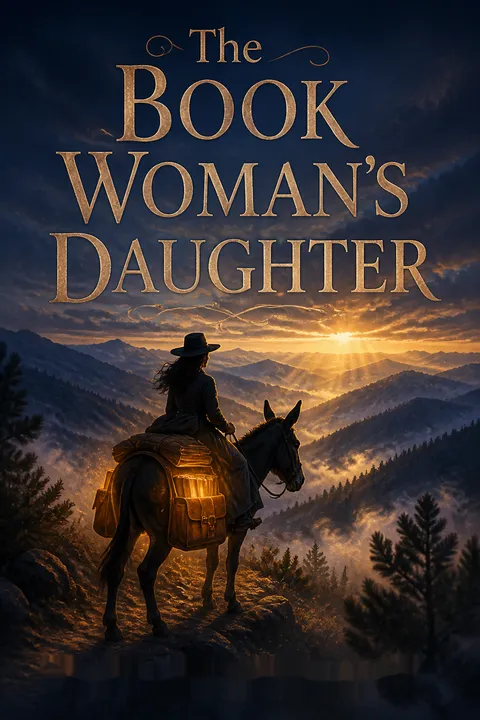


Plot Summary
Prologue
The opening looks back on Cussy Mary Lovett, the blue-skinned Kentucky librarian remembered as the Book Woman, and insists that her story belongs to a larger web of lives in the hills.
The main narrative then shifts to 1953, where her daughter Honey faces a new struggle: the same laws that punished her parents now threaten to decide whether she may live freely at all.
The frame gives Honey a legacy before she has the power to claim it. Cussy is remembered not only for her work but for the stories her work made possible, suggesting that history survives through people who carry it forward. That inheritance is both shelter and burden: Honey must live under the same prejudices that shaped her mother’s life, yet she also inherits her mother’s practical faith in books, readers, and service. The framing prepares the reader to see Honey’s coming-of-age not as escape from the past, but as an effort to continue its unfinished work.
A Daughter Sent Away
At sixteen, Honey Lovett watches a lawman arrive at her hidden Cumberland Forest home to take her parents to court. Her mother, Cussy, is blue-skinned because of a hereditary blood condition; her father, Jackson, is white. Kentucky has already separated them once for marrying across its racial laws, imprisoned Jackson, and banished him from the state.
Now the couple faces renewed punishment, and Honey could be sent to a juvenile labor institution if she remains with them. They send her toward Troublesome Creek, where an elderly family friend can shelter her. Honey rides out on Junia, the mule who has protected her since childhood, then witnesses the lawman break Cussy’s arm and beat Jackson before driving them away.
The opening crisis makes law a physical force rather than a distant abstraction: it separates a family, injures Cussy, and turns a child’s home into a place she must flee. Honey’s departure is meant to protect her, but it also transfers the burden of survival onto her. Her gloves, rifle, and mule serve as practical defenses in a world where official authority does not protect her family. The scene establishes the novel’s central contradiction: the state claims to preserve moral order while using violence against people whose only offense is loving one another.
Pearl’s Broken Ladder
On the trail to Troublesome, Honey meets Pearl Grant, a nineteen-year-old fire lookout who has won a job men believed belonged to them. Honey helps Pearl reach her tower, where they find its stairs cut away and a hostile message painted on the door. Pearl refuses to abandon the post, and Honey offers her grandparents’ cabin until repairs can be made.
As snow closes in, Junia bolts back toward Honey’s parents, forcing the girls to ride home together. The cabin is empty. Honey searches the rooms, hoping Cussy and Jackson have returned, but their absence confirms the separation is real. Pearl stays with her through the storm, giving Honey her first companionship on a day that has stripped away her parents and home.
Pearl’s damaged tower and Honey’s forced departure mirror one another: both women have been told that their place is somewhere else. Their first bond comes not from easy similarity but from recognizing each other’s exposed position. Pearl has institutional authority as a lookout, yet men try to deny her access to the very structure she has earned. Honey has been educated at home, but her family’s secrecy has limited her social world. Their alliance begins as practical aid, then opens a possibility neither has had much room to imagine: a female friendship built on mutual respect rather than supervision.
The Mule’s Disguise
When a county social worker arrives with an order sending Honey to the House of Reform, moonshiner Devil John Smith recognizes the danger. He introduces Honey and Pearl as his daughters, while his son Carson supports the story when the sheriff questions him. Their quick deception buys Honey time, and the social worker leaves without taking either girl.
The next day Honey reaches Loretta Adams, the ninety-one-year-old friend who has cared for her during visits over the years. At a Knott County hearing, Loretta agrees to become Honey’s guardian, and Honey confirms that this is what she wants. Judge Norton grants the arrangement after consulting the judge in Leslie County. Honey is safe for now, though court supervision remains in force.
The rescue depends on a community network that is morally distinct from the state’s official one. Devil John’s lie is not presented as a general rejection of law; it answers a specific injustice by preventing a child from being confined for her parents’ relationship. Honey’s first courtroom experience also matters because the judge asks what she wants, a question rarely directed to her elsewhere. Her answer does not erase the power imbalance, but it gives her a first small foothold in her own case. Loretta’s guardianship provides temporary protection, while the judge’s warning keeps that protection precarious.
Loretta’s Empty Chair
Loretta welcomes Honey, shares her home and memories of the Moonlight Schools, and promises to stand by her at court. Soon her strength fails. Honey searches for medical help, but the doctor and frontier nurse are away; by the time nurse Amara Ballard reaches Loretta, her heart is failing. Loretta dies after asking Honey to keep her Bible.
Honey arranges the burial herself, afraid that public attention could bring the state back to claim her. The next day Loretta’s nephew, Alonzo, admits he has sold the cabin to pay his debts, despite Loretta’s wish that Honey always have a home there. Honey forgives him, gathers Loretta’s treasured belongings, and returns to her grandparents’ remote homestead.
Loretta’s death removes more than a guardian: it takes away the household in which Honey could be a child rather than a defendant or worker. Her private burial shows how fear makes even mourning a calculated risk. Alonzo’s sale repeats the novel’s pattern of vulnerable people losing control over home and property, but his remorse complicates a simple division between victim and villain. Honey’s forgiveness is not denial of the harm; she preserves Loretta’s ethic of care even while refusing to surrender her own needs. The move back to the homestead turns independence from an aspiration into a daily material problem.
Books Become a Livelihood
At the library, Honey sees an opening for an assistant outreach librarian and persuades director Eula Foster to hire her. She will carry books through the hills as her mother once did, earning wages that can keep her housed and help her avoid the House of Reform. Francis Moore, a young clerk at the Company store, draws her attention, and Honey begins to imagine a life that includes ordinary courtship.
But when Loretta’s death leaves her without a guardian, Devil John and attorney Bob Morgan urge her to marry Carson as a way to become legally independent. Honey refuses: Carson is a dear friend, not a husband she loves. Reading about a boy who won emancipation, she asks Morgan to seek the same legal freedom for her.
Honey’s job converts inherited knowledge into material leverage. The books are not simply comfort or symbols of education; their delivery pays her wages, gives her a public role, and creates evidence that she can support herself. Her refusal of Carson is equally concrete. Marriage could solve an immediate legal danger, but it would exchange state control for dependence on a husband. Honey’s insistence on choosing whether and whom to marry marks a crucial shift from survival through concealment toward self-determination. The emancipation case begins because she can name the injustice and point to a working alternative.
The Well and the Mine
On her new book route, Honey meets Bonnie Powell, a widowed miner raising a young son. Male miners punish Bonnie for working underground by cutting her hair and threatening further violence; the mine boss pressures her to accommodate their harassment if she wants to keep her job. At another stop, Honey finds toddler Johnnie Gillis trapped in a well.
She secures a rope to Junia and lowers herself inside, then guides the mule as she and the child are pulled to safety. Johnnie’s mother, Guyla Belle, thanks her, but Perry Gillis arrives and strikes Guyla when he learns the boy fell. Honey later sees Perry threaten his wife again and learns he resents her books and her contact with Honey. She continues visiting despite the danger.
The route brings Honey into homes and workplaces where hardship is not merely economic. Bonnie and Guyla face different forms of coercion, but both are treated as if their labor and bodies belong to men who control wages, marriage, or domestic space. Honey’s rescue of Johnnie shows her mother’s lessons becoming action: observation, preparation, and care for another person. Yet saving the child does not resolve the household’s danger. By continuing to bring Guyla books, Honey offers a connection beyond Perry’s control, while exposing herself to retaliation. The library route becomes both a service and a fragile channel of solidarity.
Behind Prison Bars
Amara offers to drive Honey to visit her parents. Before the trip, Honey learns that Johnnie needs care after his fall and pneumonia, delaying her journey. She returns to Amara’s home later and witnesses Perry assault Guyla again, then leaves with Doc, the local physician, to visit Cussy in prison.
Guards have restrained Cussy in a wheelchair, and her arm remains broken. Honey discovers that prison authorities have forcibly sterilized her mother and removed her undergarments, while doctors subject her to further scrutiny because of her blue skin.
Honey nearly lunges at the guards before Doc stops her. The captain ends the visit. On the long ride home, Doc promises to seek a medical examination and appeal to the governor, while Honey decides she must keep fighting for freedom.
The prison visit exposes the state’s deepest intrusion: punishment reaches beyond confinement into Cussy’s reproductive future and bodily dignity. Honey’s anger is immediate and protective, but the guards use her protest as a reason to end the visit, demonstrating how institutions can convert resistance into further isolation. Doc’s intervention offers a route through professional and political channels, though no quick remedy is promised. Honey’s recognition that the same system could target her gives the emancipation struggle new urgency. Her fight is no longer only about choosing her work and home; it concerns whether she can retain authority over her own body.
A Fire Above the Holler
Pearl tells Honey that Perry Gillis has been pursuing her and blaming Robbie Hardin’s earlier sabotage on someone else. Honey explains that Perry has beaten Guyla, threatened her, and tried to stop the book deliveries. Pearl recognizes the danger after Perry twists her arm when she rejects him.
At a pajama party in the tower, the women share music, drink, and the stories that shaped them: Honey speaks of Carson’s marriage proposal, while Pearl reveals that a barn fire killed her sweetheart and two friends.
That night Perry and Robbie lock the women inside and ignite a fire beneath the cab. Pearl breaks through the trapdoor with an ax while Honey radios for help. They escape smoke and flame, but Sheriff Buckner dismisses their evidence and refuses to arrest his relatives.
The fire turns the threat against women from harassment into attempted murder, while exposing how family ties compromise the local law. Pearl’s memory of the barn fire makes the assault especially cruel: her old survivor guilt is deliberately echoed by a new blaze she cannot prevent from starting. Honey and Pearl survive because they cooperate under pressure, not because an authority arrives in time. Their party briefly creates a space for pleasure and disclosure, but the attack reveals how quickly that space can be invaded. The sheriff’s refusal to act confirms that safety must come from witnesses and allies, not simply from official recognition.
Tommie Turns on Perry
At the courthouse on the day set for Honey’s emancipation hearing, Perry taunts Bonnie and attacks her. Wrenna Abbott gives a warning call to Tommie, her fiercely protective rooster, who launches himself at Perry and badly wounds him.
The hearing is postponed, but Honey tells Morgan what she knows about Perry’s violence and Guyla’s disappearance. State police search the Gillis home. Johnnie, bruised and terrified, indicates that his mother is in the well, and officers break through its concrete cover.
Honey identifies Guyla’s body. Perry is arrested at the hospital and later dies from his injuries. The discovery confirms Honey’s fears and gives Guyla a burial, but it leaves Johnnie bereaved and Honey haunted by the violence she has witnessed.
Tommie’s attack is not a clean triumph of justice. The rooster responds to Wrenna’s signal after Perry assaults Bonnie, but the ensuing violence is chaotic and lethal. The local law has repeatedly ignored warning signs, so justice arrives through a child’s bond with an animal and the accumulated testimony of women who were dismissed. Honey’s role changes from suspecting danger to helping establish what happened to Guyla. That act gives the truth a public record, but it cannot restore the dead or undo Johnnie’s trauma. The scene refuses an easy distinction between protection and revenge.
The Evidence of Work
In the weeks before the rescheduled hearing, Honey keeps delivering books, saves her pay stubs, and pays for a headstone for Loretta. She learns that Cussy’s health has improved in prison, where she has become a librarian and may earn an early sentence reduction. Jackson remains isolated during a polio outbreak, but Morgan confirms that he is well.
Honey also discovers that Perry had terrorized Wrenna before his death; the girl fled into the woods believing he could still reach her. Meanwhile, Honey’s nightmares persist, and she worries that Perry’s relatives and the sheriff may retaliate. Pearl returns to the homestead, and the women reaffirm their bond. Honey enters court carrying the evidence of a life she has built herself.
This interval makes endurance visible through ordinary acts: a paycheck saved, a grave marker purchased, books delivered on schedule. Those details counter the state’s depiction of Honey as irresponsible or immoral with evidence of care and competence. Cussy’s prison librarianship parallels Honey’s work outside, showing that books can sustain purpose even under confinement, though they do not erase coercion. Wrenna’s fear also demonstrates that an abuser’s death does not instantly end the threat in a survivor’s mind. The hearing will judge Honey’s capacity for independence, but the narrative has already shown that she is carrying responsibility for herself and others.
Honey Wins Her Freedom
At the hearing, Social Services argues that Honey belongs in the House of Reform, citing her association with Devil John, her visits to Guyla, and the drinking at Pearl’s party. Morgan calls Amara, ranger R.C. Cole, and librarian Eula Foster.
Their testimony establishes Honey’s care for Loretta, her rescue of Johnnie, the danger Perry posed, and her good work as a librarian. When Judge Norton asks Honey to explain herself, she describes her home, her wages, her animals, and the book route she maintains.
She argues that a girl allowed to marry young should also be allowed to live independently. The judge grants emancipation. Honey accepts a date with Francis, and Eula apologizes and affirms that Honey should continue her mother’s library work.
The ruling rests on more than a technical argument. Honey turns the state’s own categories of respectability against it by demonstrating work, household responsibility, and community service without accepting marriage as the price of freedom. Witnesses give those actions social weight, particularly after the state has tried to isolate her as a dangerous child. Judge Norton’s decision does not repair her parents’ imprisonment or guarantee safety from prejudice, but it recognizes Honey as a person capable of directing her own life. Her first date with Francis is therefore modest and consequential: a choice made freely, after the law has tried to make choice conditional.
Analysis
The novel makes freedom a material question before it makes it a legal one. Honey must have somewhere to sleep, a way to earn money, safe access to her parents, and enough social support to withstand the people who want to define her as a problem. The court’s threat of the House of Reform is not abstract: it would take her labor and restrict her life until adulthood. The proposed marriage to Carson exposes the perverse terms available to a girl. The law recognizes her capacity to marry before it recognizes her capacity to live independently, so Honey’s emancipation argument challenges not only an individual ruling but the assumptions underneath it.
Books operate in several registers at once. They offer pleasure and imaginative company to isolated readers, create Honey’s paid work, connect women across scattered homes, and supply precedents through which she can think about law. Yet the book route is never presented as a magical cure. Guyla’s reading cannot by itself free her from Perry, and Cussy’s skill as a librarian does not prevent the state from sterilizing her. Books matter because people use them: Cussy teaches, Honey delivers, patrons request, and witnesses eventually attest to what Honey has done.
The women’s friendships become a counter-institution. Pearl, Bonnie, Amara, Loretta, and Honey possess different kinds of knowledge, from medical practice and forest work to child care, mining, and literacy. Their shared recognition fills gaps left by courts, employers, and sheriffs. But the story resists easy triumph. Guyla’s death and Wrenna’s continued fear show that survival does not undo violence. Honey wins a meaningful form of legal independence, not immunity from racism, sexism, or retaliation. Her ending is therefore a beginning: she can choose a date and continue the book route, while the larger struggle remains visible in the lives around her.
Review Summary
The Book Woman's Daughter is a beloved sequel set in 1950s Kentucky, following Honey Lovett as she becomes a packhorse librarian like her mother. Readers praise the strong female characters, vivid Appalachian setting, and themes of literacy and independence. The novel explores racism, misogyny, and injustice while celebrating resilience and sisterhood. Many found it as engaging as its predecessor, with some noting repetition and predictability. Overall, it's a heartwarming, informative historical fiction that resonates with book lovers.
People Also Read








Characters
Honey Lovett
The next Book WomanHoney is the sixteen-year-old daughter of Cussy Mary Lovett and Jackson Lovett, raised in isolation in Kentucky’s hills. Her blue hands and feet reflect her family’s hereditary methemoglobinemia, a condition others treat as a mark of shame. Her mother teaches her to read, write, observe nature, and travel safely, while her parents’ history makes her wary of authority and of strangers’ reactions. Honey is thoughtful and capable, but grief, inexperience, and the need to conceal her family leave her vulnerable. She wants education, meaningful work, and the right to choose her own future. Her instinct to help other women grows from both compassion and the knowledge that silence has often been demanded of people like her.
Cussy Mary Lovett
Honey’s bookwoman motherKnown in the hills as the Book Woman, Cussy is a former Pack Horse librarian and Honey’s devoted mother. Her blue skin comes from the same hereditary condition Honey carries, and her marriage to Jackson has brought the family into conflict with Kentucky’s anti-miscegenation laws. Cussy teaches Honey practical skills alongside literacy, passing on a respect for books, animals, and the people who live beyond the main roads. She is protective without being timid, and her experience has taught her how to adapt when open defiance would endanger her family. Her work is remembered by patrons who connect books with care, dignity, and the possibility of a wider life.
Jackson Lovett
Honey’s steadfast fatherJackson is Honey’s father and Cussy’s husband. He is white, but he has been punished under Kentucky’s racial laws for loving and marrying Cussy. His earlier imprisonment and banishment shape the family’s secrecy and his determination to keep Honey protected. Jackson supports Cussy’s work and shares her commitment to their daughter’s education, while his practical knowledge of horses, tools, and survival helps sustain their isolated household. He is affectionate and cautious, aware that good intentions cannot always shield his family from lawmen. His bond with Honey is warm and trusting, even when distance and circumstance prevent him from guiding her directly.
Pearl Grant
The fearless fire lookoutPearl is a nineteen-year-old Forest Service lookout assigned to a tower above Troublesome Creek. She comes from Somerset and carries a confidence shaped by formal training, independence, and a determination to claim a job men consider theirs. Her modern clothes and familiarity with telephones, records, and television contrast with Honey’s sheltered life, but Pearl is not untouched by grief. She has lost people she loved and bears guilt about what she could not prevent. She becomes Honey’s closest friend in the hills, offering practical help, candid companionship, and a model of a woman who can insist on occupying space others try to deny her.
Loretta Adams
Honey’s chosen guardianLoretta, called Retta by Honey, is a ninety-one-year-old family friend who has helped care for Honey since childhood. She is a skilled seamstress, a steady presence, and a woman with a strong sense of humor and an unexpectedly bold streak. Her home holds the warmth of long familiarity, and her affection for Honey is expressed through practical care, quilts, food, and the stories she shares. Loretta’s life includes her own pursuit of literacy through Kentucky’s Moonlight Schools, giving her a personal connection to education even when she jokes about preferring the Bible to library books.
Junia
Honey’s stubborn protectorJunia is the gray mule who carried Cussy on her book route and now travels with Honey. Ornery, strong-willed, and quick to signal danger, she has protected Honey from animals and helped her navigate difficult mountain paths. She is not a reliable mount in the conventional sense: she stops, bolts, and chooses her own course. Yet Honey understands her signals and depends on her loyalty. Junia links Honey’s childhood to her mother’s work, making the new book route feel like a continuation rather than an imitation.
Devil John Smith
A moonshiner allyDevil John is a longtime friend of Cussy and Jackson and a respected presence in Troublesome, despite his moonshining. He is observant, resourceful, and protective of the families who have depended on Cussy’s library visits. When Honey is threatened, he understands how to use local knowledge and quick thinking to shield her. His generosity is balanced by caution: he knows that standing openly against the law can endanger those he is trying to help.
Carson Smith
Honey’s loyal childhood friendCarson is Devil John’s son and one of Honey’s oldest friends. He is warmhearted, playful, and willing to make sacrifices for people he loves. His closeness to Honey comes from years of shared childhood and family ties, while his feelings are complicated by the practical dangers surrounding her. Carson also has his own romantic hopes and ambitions, making him more than a simple rescuer. He represents the comfort of familiar affection, but Honey’s decisions require her to distinguish gratitude from romantic choice.
Amara Ballard
A frontier nurse on horsebackAmara is a young nurse with the Frontier Nursing Service who travels through the hills to care for families with limited access to medical help. She treats Loretta, Johnnie Gillis, and other patients while balancing a demanding route and scarce resources. Amara is direct, competent, and compassionate, though repeated exposure to domestic violence leaves her frustrated by the limits of what medical care can change. Her work places her beside Honey at moments when illness, poverty, and danger converge.
Bonnie Powell
A widowed woman minerBonnie is a young widow and mother who works in the coal mines to support her son. She is lively, frank, and fond of books, but her humor coexists with grief for her husband and the physical danger of her workplace. Male miners and supervisors treat her presence as a provocation, subjecting her to harassment and intimidation. Bonnie refuses to let that treatment erase her need to earn a living. She recognizes Honey as a peer and speaks plainly about the compromises women are pressured to make.
Guyla Belle Gillis
A mother seeking refugeGuyla Belle is Perry Gillis’s wife and the mother of their young son, Johnnie. Originally from North Carolina, she lives far from family support and has little money of her own. She is drawn to the books Honey brings, finding in them a rare private space beyond the demands of her household. Guyla Belle is grateful and tender with her son, but fear and isolation narrow her choices. Her circumstances reveal how difficult it can be to leave a violent home when safety, income, and kinship are all uncertain.
Perry Gillis
A coercive mine workerPerry is a coal miner, Guyla Belle’s husband, and Johnnie’s father. He uses anger and intimidation to control people around him, and he resents any influence that might give his wife or other women greater independence. His family connections offer him local protection, while his mine work and exhaustion become part of how he explains his behavior. Perry is a dangerous presence in the lives of Honey, Bonnie, Pearl, Guyla Belle, and Wrenna.
Wrenna Abbott
A roaming, watchful childWrenna is a ten-year-old girl being raised by her great-grandmother, Emma McCain, after losing much of her family. She roams the hills with Tommie, her protective white rooster, and is more at ease outdoors than in a classroom. Wrenna is watchful, guarded, and deeply attached to the animal who keeps her company. Adults often misunderstand her independence as disobedience, but she has learned to read danger in ways that make sense within her unsettled life.
Tommie
Wrenna’s vigilant roosterTommie is Wrenna’s white rooster and constant companion. He responds to her calls, warns of danger, and stays close enough to guide her through the hills. His behavior is more than comic or decorative: Wrenna relies on him for protection, and their shared signals offer a language that outsiders often cannot read. Tommie’s fierce loyalty makes him a memorable counterpoint to the human authorities who repeatedly fail to protect vulnerable people.
Bob Morgan
Honey’s court-appointed lawyerBob Morgan is the lawyer assigned to represent Honey’s interests. He understands the limits of the legal system but listens when Honey challenges its assumptions. At first, his work is focused on securing a guardian and avoiding the House of Reform. As Honey demonstrates her independence, he becomes willing to pursue a less conventional legal remedy. Morgan is cautious and procedural, but he respects his client’s intelligence and increasingly allows her own reasoning to shape the case.
Eula Foster
The library directorEula Foster directs the Troublesome Creek library and once worked with Cussy. Her relationship with the Book Woman began with friction, but books and experience changed her understanding. Eula values literacy and the library’s responsibility to people who cannot reach its branch. She is conscientious about hiring and community opinion, sometimes cautious in ways that leave her susceptible to pressure. Her position connects Honey’s family legacy to the library’s renewed outreach service.
Judge Norton
A judge who listensJudge Norton presides over Honey’s guardianship and emancipation proceedings. He is a young judge whose earlier life was influenced by the books Cussy brought to his school. His courtroom manner can be brisk and intimidating, but he is willing to ask Honey directly what she wants and to weigh evidence beyond the state’s accusations. His history with the Book Woman gives him a personal connection to the effects of reading, without making his decisions automatic or sentimental.
Alonzo
Loretta’s troubled nephewAlonzo is Loretta’s nephew, a grieving man whose drinking and financial trouble affect his judgment. He has known Honey for years and carries affection for his aunt, but he is unreliable when obligations become difficult. His relationship with Honey mixes genuine remorse with harm she cannot simply overlook.
R.C. Cole
Pearl’s forest ranger allyR.C. is a Forest Service ranger who oversees the lookout assignment and supports Pearl’s work. He respects her qualifications and tries to address the sabotage of her tower, though his authority cannot overcome every local obstacle. He provides Honey and Pearl with a crucial witness to their treatment by the sheriff.
Emma McCain
A traditional hill healerEmma is Wrenna’s great-grandmother, a respected granny woman who tends the sick with herbs and traditional remedies. She is observant, protective, and deeply rooted in local custom. Honey visits her as both a librarian and a young woman who has learned to value the knowledge held in the hills.
Plot Devices
The Pack Horse Library
Books carried into the hillsThe library outreach route gives Honey both a livelihood and a way to reach people isolated by distance, poverty, illness, or domestic control. Its practical structure shapes the plot: Honey collects and sorts materials at a church outpost, rides Junia between homes, and learns what her patrons need. The books lead her to Bonnie, Guyla Belle, and other readers, creating relationships that later provide testimony and mutual support. The route also extends Cussy’s earlier work, making literacy a family inheritance that Honey can adapt for her own independence.
Blue skin
A visible mark of prejudiceHoney’s blue hands and feet result from hereditary methemoglobinemia, but people around her confuse difference with moral defect. Gloves let her conceal the color when needed, while fear and anger make it more visible. The condition explains the family’s isolation and the legal scrutiny Cussy and Jackson face, but the novel does not treat it as a defect to be cured. Its recurring visibility tests who sees Honey as a person and who reduces her to a category imposed by prejudice.
The emancipation case
A legal path beyond marriageHoney finds the precedent for emancipation in an old newspaper account about a boy who gained legal adulthood while still a minor. The case gives her language for an alternative to two forms of control: confinement in the House of Reform or an early marriage arranged for protection. Her job, home, pay stubs, and care for others become evidence that she can support herself. The legal device moves from a newspaper discovery to a challenge in court, where Honey’s own argument becomes central.
Animal warnings
Protection beyond the lawJunia’s brays, Tommie’s calls, and the animals’ reactions to people provide warnings that human authorities often ignore. Honey has learned to watch animals because Cussy taught her that their behavior can reveal danger. Junia protects Honey and helps rescue Johnnie, while Tommie and Wrenna communicate through repeated calls. The animals are not infallible substitutes for human care, but their loyalty exposes the failure of systems that dismiss women and children when they report threats.
FAQ
Synopsis & Basic Details
What is The Book Woman's Daughter about?
- A daughter's fight for freedom: The story follows Honey Lovett, the daughter of the famed "Book Woman," as she navigates a world that seeks to confine her due to her mixed-race heritage and her parents' defiance of miscegenation laws.
- Legacy of literacy and love: Honey continues her mother's work as a book woman, delivering reading materials to isolated communities, while also fighting for her own independence and the right to choose her own path.
- Themes of prejudice and resilience: The novel explores themes of prejudice, societal injustice, and the power of literacy to empower individuals and communities, set against the backdrop of 1950s Kentucky.
Why should I read The Book Woman's Daughter?
- Compelling character journey: Readers will be drawn to Honey's resilience and determination as she faces seemingly insurmountable obstacles, making her a relatable and inspiring protagonist.
- Exploration of social issues: The novel tackles important social issues such as racism, prejudice, and the fight for equality, prompting reflection and discussion about these topics.
- Celebration of literacy and community: The story highlights the transformative power of books and the importance of community, reminding readers of the value of education and human connection.
What is the background of The Book Woman's Daughter?
- Historical context of miscegenation laws: The story is set in 1953 Kentucky, where miscegenation laws prohibited interracial marriage, creating a hostile environment for families like the Lovetts.
- The Pack Horse Library Project: The novel references the historical Pack Horse Library Project, a WPA initiative that employed women to deliver books to remote areas of Kentucky, highlighting the importance of literacy and education.
- Cultural context of Appalachia: The story is set in the Appalachian region of Kentucky, a place with a rich cultural heritage and a history of isolation and poverty, which shapes the characters' lives and experiences.
What are the most memorable quotes in The Book Woman's Daughter?
- "Show me a family of readers, and I will show you the people who move the world.": This quote, attributed to Napoleon Bonaparte, emphasizes the transformative power of literacy and its ability to empower individuals and communities.
- "You can sure 'nough have yourself one foot on foreign soil, but the other is always pointed home.": This quote, spoken by Papa, highlights the deep connection to the land and the pull of home, even when one is forced to leave.
- "Books'll save you": This recurring phrase underscores the importance of books as a source of comfort, hope, and empowerment, particularly for those facing adversity.
What writing style, narrative choices, and literary techniques does Kim Michele Richardson use?
- First-person perspective: The story is told from Honey's point of view, allowing readers to connect with her thoughts, feelings, and experiences on a personal level.
- Vivid descriptions of nature: Richardson uses rich, evocative language to describe the natural beauty of the Appalachian landscape, creating a strong sense of place and atmosphere.
- Use of dialect and regional language: The author incorporates Appalachian dialect and regional language, adding authenticity and depth to the characters and their conversations.
Hidden Details & Subtle Connections
What are some minor details that add significant meaning?
- The color blue: The recurring motif of the color blue, representing the Lovett family's unique skin tone, symbolizes their difference and the prejudice they face, but also their resilience and strength.
- The names Mary and Angeline: Honey's middle names, Mary and Angeline, connect her to her mother and her first mother, highlighting the importance of family and legacy in her life.
- The .22 rifle: The .22 rifle that Papa packs for Honey's journey symbolizes her need for protection and self-reliance in a dangerous world, foreshadowing her need to defend herself.
What are some subtle foreshadowing and callbacks?
- The broken arm: The lawman breaking Mama's arm foreshadows the violence and injustice that Honey will face, and the physical and emotional scars that will remain.
- The missing boot: Honey losing her boot on the mountain path foreshadows her journey of loss and the challenges she will face, and the need to find her own footing.
- The recurring phrase "Don't take much for a Blue": This phrase, repeated throughout the novel, foreshadows the prejudice and discrimination that Honey and her family face, and the constant threat of violence and injustice.
What are some unexpected character connections?
- Pearl and R.C.: The connection between Pearl and R.C., the former fire tower lookout, reveals a shared history and a sense of community among those who work in the remote areas of Kentucky.
- Honey and Devil John: The friendship between Honey and Devil John, a moonshiner, highlights the unexpected alliances that can form in the face of adversity, and the importance of loyalty and trust.
- Honey and the "fotched-on women": Honey's complex feelings about the "fotched-on women" who teach in the settlement schools reveal her internal conflict between her own education and the outside world.
Who are the most significant supporting characters?
- Pearl Grant: As a fellow outsider and a strong, independent woman, Pearl provides Honey with a sense of camaraderie and support, and a glimpse of a different path.
- Devil John: As a loyal family friend, Devil John offers Honey guidance and protection, and his knowledge of the land and its people proves invaluable.
- Miss Loretta: As Honey's guardian, Miss Loretta provides her with a sense of stability and belonging, and her wisdom and kindness offer comfort and support.
Psychological, Emotional, & Relational Analysis
What are some unspoken motivations of the characters?
- Mama's desire to protect Honey: Cussy Mary's unspoken motivation is to protect Honey from the prejudice and violence she has faced, even if it means sacrificing her own freedom.
- Papa's guilt and responsibility: Jackson's unspoken motivation is to atone for the pain and suffering he has caused his family by defying the miscegenation laws, and to ensure Honey's safety.
- Pearl's need for connection: Pearl's unspoken motivation is to find a sense of belonging and connection after experiencing loss and isolation, which she finds in her friendship with Honey.
What psychological complexities do the characters exhibit?
- Honey's internal conflict: Honey struggles with her desire for independence and her fear of being alone, torn between her need for freedom and her longing for family and belonging.
- Pearl's trauma and resilience: Pearl grapples with the trauma of her past, using her job as a fire lookout as a way to cope with her grief and find purpose in her life.
- Devil John's hidden depths: Devil John's gruff exterior hides a deep sense of loyalty and compassion, and his willingness to help Honey reveals a more complex character than his moonshiner persona suggests.
What are the major emotional turning points?
- The arrest of Honey's parents: This event marks a major emotional turning point, forcing Honey to confront the harsh realities of her world and embark on a journey of self-discovery.
- The fire at Pearl's cab: This event highlights the danger and violence that Honey and Pearl face, strengthening their bond and resolve to fight for justice.
- The granting of Honey's emancipation: This moment marks a major emotional turning point, offering Honey a sense of hope and freedom, and a chance to forge her own path.
How do relationship dynamics evolve?
- Honey and Pearl's friendship: Their relationship evolves from a chance encounter to a deep bond of sisterhood, as they support each other through challenges and celebrate their shared love of books and freedom.
- Honey and Devil John's bond: Their relationship deepens as Devil John becomes a trusted mentor and protector, offering Honey guidance and support in her journey.
- Honey and Carson's connection: Their relationship shifts from childhood friendship to a complex dynamic of obligation and unrequited love, as Honey struggles to reconcile her desire for independence with Carson's offer of marriage.
Interpretation & Debate
Which parts of the story remain ambiguous or open-ended?
- The fate of Guyla Belle: The story leaves Guyla Belle's fate ambiguous, leaving readers to wonder if she escaped her abusive husband or if she was harmed, highlighting the vulnerability of women in such situations.
- The future of the Lovett family: The novel ends with Honey's emancipation, but the future of her parents remains uncertain, leaving readers to ponder the long-term consequences of their imprisonment and the challenges they will face upon release.
- The long-term impact of prejudice: The novel leaves open the question of whether the prejudice and discrimination that Honey faces will ever truly disappear, prompting readers to consider the ongoing struggle for equality and justice.
What are some debatable, controversial scenes or moments in The Book Woman's Daughter?
- Honey's decision to reject Carson's proposal: Some readers may debate whether Honey made the right decision in rejecting Carson's proposal, given the safety and security it offered, while others will applaud her for choosing independence.
- The portrayal of the sheriff: The sheriff's character is complex and controversial, as he represents the systemic prejudice and injustice that Honey faces, but also the limitations of the law in protecting vulnerable individuals.
- The use of violence and graphic descriptions: The novel contains scenes of violence and graphic descriptions, which may be disturbing to some readers, but are used to highlight the harsh realities of the characters' lives.
The Book Woman's Daughter Ending Explained: How It Ends & What It Means
- Honey's emancipation: The ending sees Honey achieve her emancipation, a legal declaration of her independence, symbolizing her triumph over the oppressive forces that sought to control her.
- A bittersweet victory: While Honey achieves her freedom, the ending is bittersweet, as she is still separated from her parents and must navigate a world that is still fraught with prejudice and injustice.
- Hope for the future: The ending offers a sense of hope for the future, as Honey embraces her role as a book woman and continues her mother's legacy of spreading literacy and empowerment, suggesting that change is possible, even in the face of adversity.
The Book Woman of Troublesome Creek Series

About the Author
Other books by Kim Michele Richardson

Download PDF
Download EPUB
.epub digital book format is ideal for reading ebooks on phones, tablets, and e-readers.








