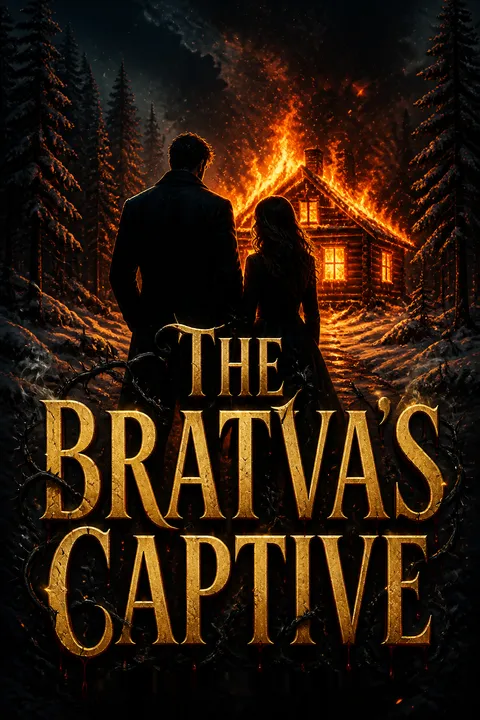


Plot Summary
Prologue
Maksym, an enforcer in a Russian Bratva, wakes in America from recurring memories of Yuri Baranov’s men beating him in a cell. During his captivity, a hidden visitor brought him water and comfort, but he never knew who she was. After his rescue, his beloved Taya could no longer reach the man he had become, and they separated.
Now, while Maksym visits friends with their young children, his Bratva leader Demyan brings him devastating news: Taya has been murdered outside the hospital where she worked. Maksym returns to Russia determined to find the killer, though his body and mind are still recovering from torture.
The opening binds two kinds of captivity together. Maksym has escaped the physical cell, but his nightmares and damaged intimacy show that release is not the same as recovery. Taya’s death then converts grief into a mission, giving him a reason to act while also narrowing his ability to see anyone beyond the enemy. The quiet image of Demyan’s family offers a possible future that Maksym wants but cannot yet imagine for himself. His absent, unknown visitor is planted as a counterweight to the violence: care has already reached him, though he cannot recognize its source.
A Star Beneath the Arm
Two months after Taya’s murder, Maksym turns recovery into preparation, training through the pain of his broken leg and taking a Bratva post as its executioner. He believes the attackers belong to Yuri Baranov’s rival organization, the Thieves, but has no proof. Demyan’s wife, Larissa, uses her hacking skills to uncover security footage of Taya’s killing.
The masked assailant bears a distinctive six-pointed star tattoo, and Yuri’s car appears nearby. Larissa also finds that Yuri has a daughter, Olena, studying in Moscow. Maksym sees a route to the man he wants: take Olena, draw Yuri out, and make him answer for Taya. His plan turns a bereaved man’s search for justice into a new kidnapping.
Maksym’s recovery is organized around usefulness rather than healing. Training and execution give him a structure that resembles control, but each depends on keeping grief active. The tattoo and car footage provide evidence, yet the evidence also becomes permission for collective punishment: Olena is made to stand in for a father whose guilt has not been established. Larissa’s role matters because information is not neutral here. Her technical skill helps the Bratva see what happened, while Maksym’s interpretation converts what they see into a personal campaign. His first post-trauma choice is not to seek connection, but to regain agency through force.
The Café Goes Silent
Olena, a guarded university student working at a café, has learned to live inside her father’s rules: bodyguards follow her, her location is monitored, and ordinary invitations from classmates rarely become real plans. Maksym arrives just as her guard steps outside to take a call. He charms her long enough to learn when her shift ends, then uses her stumble to seize her.
Olena sees her guard and driver dead, while Maksym’s accomplices clear the scene. He carries her into a waiting car and has her drugged. The sedative triggers a dangerous reaction, so the Bratva doctor intervenes at their compound. Olena wakes in Maksym’s custody, where he strips and restrains her, making clear that his revenge plan has begun at her expense.
Olena’s apparent freedom is already circumscribed before Maksym arrives. Her father’s surveillance protects her from some dangers while denying her ordinary independence, which makes the sudden attention of a stranger feel briefly like possibility. The reversal is brutal: a flirtation becomes an abduction, and the deaths of her guards remove the last visible boundary between her life and Bratva violence. Maksym’s own history of captivity does not stop him from reproducing coercion against her. The scene establishes the novel’s central moral tension: attraction and protection can coexist with real control, but neither makes the initial harm disappear.
A Prisoner Learns the Rules
Once Olena recovers, Maksym takes her before Demyan and the Bratva inner circle. She describes what little she knows: her father’s trafficking operation, a rival prisoner who died in his custody, and her own lack of loyalty to Yuri. Scars across her abdomen show that Yuri’s enemies have already used her as collateral.
Maksym records a threat for Yuri, presenting Olena as leverage, but her account unsettles his assumption that she is simply her father’s possession. Back in private, he tries to enforce obedience through restraints and punishment, while Olena resists with sharp questions and plans to escape. Their struggle is not a settled romance: Maksym controls her choices, and Olena’s flashes of compliance do not erase her fear or anger.
The interrogation gives Olena a voice without giving her power. Her information is limited, but her claim of independence disrupts the simple enemy-family division Maksym needs for revenge. Her scars make that disruption physical: she has suffered from the same criminal world he wants to punish, though not in the same way. Maksym responds by tightening control, trying to turn uncertainty into a hierarchy he can manage. The novel’s erotic power dynamic grows out of this imbalance, so the distinction between chosen play and imposed captivity remains ethically unstable. Olena’s resistance is psychologically important because she continues to judge him, even when she must adapt to survive him.
The Rope at Midnight
An intruder slips into Olena’s room and wraps a rope around her throat. Maksym breaks through the locked door, but the attacker escapes through the bathroom window while Maksym cuts Olena free. Her sudden choking panic continues after the immediate danger passes, and she clings to the man who kidnapped her because he is the only person there to steady her breathing.
That night, Maksym wakes from a nightmare with his hand around her throat. Olena backs away, then recognizes that his terror is real and tries to comfort him. She offers to return to Yuri as a spy, but Maksym refuses to trust her with that risk. He decides they must leave the compound for a more secure hideout, taking her farther from help as well as from the unseen attacker.
The rescue does not transform Maksym into a safe person; it exposes how quickly protection and danger can occupy the same room. Olena’s body reacts to the intruder with panic, then to Maksym’s nightmare with the same loss of control. Her willingness to comfort him comes from empathy, but it also begins a bond built under conditions she did not choose. Maksym’s refusal of her spying offer is partly protective and partly possessive: he decides what risks she may take. The episode complicates simple categories of captor and rescuer without resolving them. Trust begins not as proof of his goodness, but as a momentary dependence neither character can fully control.
The Angel’s Familiar Hands
At Maksym’s remote cabin, Olena sees him wake from another prison nightmare and brings him water. The gesture unlocks his memory: her rose scent, her whispered Russian, and the gentle visits he once dismissed as hallucinations. Olena confirms that she sneaked into Yuri’s cell to comfort the prisoner, then was told he had died.
Maksym recognizes her as the unknown visitor who helped him endure torture. The revelation overturns his reason for taking her, but it does not undo what he has done. They choose intimacy, and Maksym begins to see her as a person he must protect rather than leverage. Before they can decide what that means, they smell smoke and discover the cabin surrounded by deliberately set flames.
Recognition changes the meaning of their relationship without changing its history. Olena was once an anonymous source of care to Maksym, while he was an unseen sufferer to her; now each person stands before the other with the knowledge of that earlier connection. The reversal exposes the limits of Maksym’s enemy logic: he has harmed the very person whose compassion helped him survive. Their intimacy follows recognition, but it cannot retroactively make captivity consensual. The fire interrupts any private resolution and forces their bond into the external conflict. Care becomes both emotionally significant and practically dangerous, since the person Maksym wants to protect is now the person most directly exposed to his enemies.
Istra Burns Behind Them
Maksym and Olena escape the burning cabin with Shepherd, the stray dog they found and kept as a guard. The fire destroys Maksym’s former home, which he had emptied after Taya’s death, but he risks himself to carry Olena through the smoke. They flee on foot and reach Boris and Sylvia, an elderly couple who call the fire service and shelter them overnight.
The next morning, Olena remembers the tattoo on the person who followed them through the woods. It matches a mark she saw on one of Maksym’s men at the interrogation. The clue turns suspicion inward. Maksym returns to the compound with Olena, knowing Yuri may still be hunting her and that someone within his own organization may have exposed their location.
The fire destroys more than a useful hideout. It burns the last physical shelter Maksym shared with Taya, making grief impossible to keep separate from the present. Olena’s decision to help him escape, rather than save herself alone, marks a shift from enforced proximity toward active alliance. Yet the tattoo clue prevents their closeness from becoming a refuge. Danger now comes from within the group that claims to protect them, so belonging itself becomes suspect. Boris and Sylvia offer ordinary hospitality without demanding allegiance, briefly modeling care outside the Bratva’s hierarchy. Their kindness matters because it allows the protagonists to imagine safety, even as the couple’s warning suggests how difficult that safety will be.
A Traitor Inside the Circle
Maksym returns with Olena to the compound and confronts Demyan with her account of the tattooed pursuer. He suspects Vladak, a Bratva member, though he has not proved who set the fire. The men recreate the threat video for Yuri, while Olena watches the gathering and notices hostility in one member’s face.
Days pass without an attack, and Maksym and Olena fall into a guarded domestic rhythm of meals, books, and sleep. He tells her about his orphan childhood and training under the former leader Dimitri. The calm cannot hold: Olena asks about a photograph in Maksym’s wallet, and he refuses to explain the woman pictured there. His sudden withdrawal leaves her feeling disposable again and turns her thoughts toward escape.
Suspicion changes the compound from a fortress into a social puzzle. Maksym’s confidence in brotherhood is tested, but he still lacks the evidence needed to separate loyalty from betrayal. Meanwhile, the quiet routine with Olena gives both characters a glimpse of ordinary life, making the later rupture sharper. Maksym’s account of orphanhood explains why the Bratva functions as family for him, but it also shows how identity can become fused with the institution that formed it. Olena’s question about the photograph is a bid for reciprocal knowledge, not mere curiosity. His refusal reveals that physical intimacy has advanced faster than emotional disclosure, and she responds by reclaiming the choice to leave.
The Photograph He Hides
After Maksym shuts down Olena’s questions about the woman in his photograph, Olena decides that whatever they have cannot become a free or mutual relationship. When Maksym leaves the apartment to respond to Demyan’s urgent report, she takes money and cards from his wallet and slips out.
She finds Larissa in the elevator and asks for help escaping; Larissa, who had known Maksym planned the abduction, listens despite the risk of disobeying Demyan. Meanwhile, Maksym discovers Olena is gone and finds Filip, the Bratva computer expert, in his apartment.
He beats and restrains Filip, who admits his allegiance lies elsewhere. As Yuri’s armed men converge on the compound, Larissa leads Olena toward an exit, but Olena sees the approaching attack and runs toward her father to stop the shooting.
Olena’s departure is not a simple rejection of Maksym; it is an attempt to recover agency from a relationship shaped by confinement. The photograph becomes the surface of a deeper problem: he asks for obedience while withholding the history that might let her understand him. Larissa’s choice to help illustrates a conflict between loyalty to her husband and sympathy for a woman she knows has been taken. Filip’s exposure confirms that Olena’s suspicions were not paranoia, though the exact network of betrayal remains murky. Olena’s return to Yuri is a desperate intervention to prevent more deaths, not proof that she has chosen her father’s side. Her attempt to control the violence instead places her directly in his hands.
A Daughter Runs Back
Olena reaches Yuri and persuades him to call off the attack, but he treats her return as an opportunity to interrogate her, not a homecoming. During the retreat, Maksym is wounded and sees Olena leave with her father. Yuri demands information about the Bratva and threatens her with the same fate as her mother, revealing that his affection has always been conditional on loyalty.
He accuses Olena of betraying him and has her taken to the cell where Maksym was tortured. There, he orders his men to force answers from her. A member of the Thieves, disguised among the guards, avoids meeting her eyes. Olena realizes she is alone inside the place that shaped Maksym’s nightmares, but refuses to give her father what he wants.
Yuri’s treatment of Olena exposes the structure beneath his paternal image: protection was another form of possession, and affection disappears when she ceases to be useful. Her intervention at the compound is an ethical choice to limit bloodshed, but Yuri interprets it as a chance to extract information. The cell reverses the earlier power arrangement. Olena now occupies the space where Maksym was broken, and her understanding of his trauma becomes immediate rather than imagined. Her refusal to cooperate is not evidence that she feels no fear; it is a deliberate attempt to preserve a self that her father has repeatedly treated as expendable. The hidden ally plants a narrow possibility of escape.
Blood at the Prison Door
Maksym survives his wound and follows Yuri’s men to their base with Demyan, Nicolai, and other Bratva allies. They disguise themselves in the clothing of fallen attackers and slip into the prison cell where Olena is restrained. Maksym poses as one of Yuri’s men, using the threat of assault to hide his identity and pass her the keys and a knife.
When he gives the signal, the infiltrators attack. Olena uses the blade against one guard while Maksym and his allies fight through the others. Maksym finds the men who tortured him and kills them in the same room where they held him. Demyan captures Yuri and brings him to the cell. Olena chooses not to kill her father herself, leaving the final decision to Maksym.
The rescue turns the prison into a site of both recovery and repetition. Maksym returns to the room where he lost control, but this time he enters with allies and a plan. Olena is not merely carried out: she accepts the knife and fights, taking part in her own escape. Their teamwork revises the earlier captivity dynamic, though it cannot erase it. Maksym’s revenge is bodily and immediate, aimed at the men who made his trauma. Yuri’s capture poses a different question: whether justice can be distinguished from retaliation when the victim holds the weapon. Olena’s choice to leave the execution to Maksym protects her from becoming the instrument of her father’s violence, while still demanding that he end the threat.
Names Left Behind
Maksym kills Yuri after Olena entrusts the decision to him, then admits that revenge no longer gives him what he needs. He wants to leave Russia and the role that has made violence his daily work. Before they depart, Nicolai reveals that he and Olena share a mother: she had him with a Bratva leader before reuniting with Yuri, who later killed her.
With their father and the Thieves’ leadership removed, Olena and Maksym still cannot safely remain in Russia. They take new identities and leave for the United States, where Nicolai can return to his father’s Bratva. Maksym cannot wholly sever his ties to the brotherhood, but he can relinquish his Russian post and imagine a life no longer organized around Taya’s death.
The aftermath gives Olena a family history that Yuri deliberately obscured, but the discovery is not a tidy repair: it confirms that her mother’s life and death were shaped by the same criminal rivalries surrounding her now. Nicolai’s kinship creates a connection that does not depend on Yuri’s authority, broadening Olena’s sense of belonging. For Maksym, the decisive change is not the killing itself but the recognition that he no longer wants vengeance to govern his future. Leaving Russia cannot erase his past or fully remove him from the Bratva, yet it changes the scale of his responsibility. The couple’s second chance begins with limits acknowledged, not with a claim that violence has left no mark.
Epilogue
Six months later, Olena lives under the name Laina in the United States, studies international relations, and has found a close friendship with Marissa, a younger Bratva daughter. Maksym, now known as Rafael, mentors recruits and has stepped back from the burdens he carried in Russia.
When Marissa draws Laina into a prank escape, Maksym and Nicolai catch them before the trouble grows. At home, Maksym surprises Laina with a puppy and a marriage proposal. She accepts, and the Bratva celebrates around them. Their life is not outside the organization, but it is a life they have chosen together, with new names and room for a future beyond revenge.
The epilogue tests the couple’s new life through small choices rather than another crisis. Laina’s studies give her a vocation separate from both her father’s power and Maksym’s violence; her friendship with Marissa offers the female companionship she lacked in Moscow. Maksym remains connected to the Bratva, so the ending does not pretend that reinvention means total escape. Instead, he changes his role and makes a domestic commitment that differs from his earlier claim of ownership. The puppy and proposal translate protection into shared care, though the book retains the couple’s dominant-submissive language as part of their chosen intimacy. Their future rests on changed circumstances and ongoing choice, not on forgetting what happened.
Analysis
The novel builds its romance inside a criminal world where protection and possession are often made to look alike. Maksym’s trauma gives context to his rigid need for control, but context is not absolution: he abducts Olena, kills her guards, and makes choices for her. Olena’s movement from captive to ally is therefore most convincing when she acts independently, reads the people around her, offers information, escapes, and finally fights her way out of Yuri’s cell. Her compassion toward Maksym matters because it is not simple submission; she recognizes his suffering while continuing to judge his conduct.
The book’s central psychological pattern is repetition with revision. Maksym returns to the site of his torture, but this time with allies and a plan. Olena enters the cell that haunted his memory, but she is not reduced to a silent witness. Their eventual partnership revises earlier power imbalances without erasing them. The recurring nightmares make trauma more than backstory: it interrupts sleep, speech, and intimacy, and it gives the characters a shared language before either can explain the past directly.
The Bratva functions as both family and trap. It offers Maksym loyalty and identity after orphanhood, yet its codes also normalize violence and make leaving difficult. Olena’s father uses the same language of protection to enforce surveillance and obedience. The contrast between these criminal households is not a contrast between innocence and corruption; it is a contrast in how power is exercised and what room it leaves for choice. The ending does not claim that a new country erases the past. Instead, Maksym changes his role, Olena pursues an education, and both accept that their future must be chosen repeatedly. The story’s most durable promise is not that love heals trauma by itself, but that tenderness can become credible when it accompanies accountability, agency, and a willingness to leave familiar forms of violence behind.
Review Summary
The Bratva's Captive receives mostly positive reviews, with readers praising its intense storyline, complex characters, and steamy romance. Many appreciate the emotional depth and character development, particularly of Maksym and Olena. The book is noted for its dark themes, captivating plot twists, and passionate scenes. Some readers found it too intense or had issues with the power dynamics. Overall, it's considered a compelling addition to the Wicked Doms series, with strong writing and a satisfying conclusion.
People Also Read

Characters
Maksym Alexeev
Traumatized Bratva enforcerMaksym is a physically imposing member of the Bratva whose work requires him to interrogate and execute enemies. Years of loyalty to his brotherhood have trained him to treat endurance as virtue, while childhood orphanhood helps explain why that brotherhood feels like family. Torture has left him with nightmares, pain, and difficulty speaking about vulnerability. He can be exacting and controlling, yet he also longs for domestic tenderness and a future he cannot easily reconcile with his violent occupation. His attraction to power exchange gives him a language for desire, but his habits of command complicate his ability to distinguish intimacy from control. What drives him is loyalty, grief, and a deep fear of being powerless again.
Olena Baranova
Sheltered, stubborn daughterOlena is a university student who has spent years under her father’s surveillance, with guards, location tracking, and little room for ordinary friendships. Her apparent innocence hides a sharp observer’s mind: she notices details, reads people quickly, and can improvise when danger closes in. She is impulsive and often speaks before weighing the consequences, but that same refusal to become silent helps her resist being reduced to a bargaining chip. Olena wants a life built around her own decisions, education, and relationships. Her curiosity about Maksym reflects both attraction and a desire to understand the person controlling her. She can be compassionate without being naïve, and her moral concern for others persists even when self-preservation would be easier.
Demyan
Bratva leader and brotherDemyan leads Maksym’s Bratva and is one of the few people Maksym trusts as family. He is disciplined, politically cautious, and responsible for balancing personal loyalty against the survival of the brotherhood. His marriage to Larissa has softened his private life, but his authority remains firm, especially when security is at stake. Demyan gives Maksym room to grieve while still challenging his judgment when revenge threatens to endanger everyone. He is a leader accustomed to making decisions in which every option carries a cost.
Larissa
Hacker and uneasy allyLarissa is Demyan’s wife and the Bratva’s gifted hacker. Her technical skill lets her uncover evidence others cannot, but her curiosity often pushes her beyond the boundaries Demyan sets. Having once experienced captivity herself, she recognizes the danger Olena faces and is willing to risk her standing to help. Larissa’s warmth and defiance make her a counterpoint to the men’s rigid hierarchy. She is both an insider and someone who remembers what it feels like to be powerless within that system.
Yuri Baranov
Controlling Bratva patriarchYuri is Olena’s father and the pakhan of the Thieves, a rival criminal organization. He keeps his daughter isolated from the details of his work, presenting surveillance as protection and obedience as family loyalty. His authority depends on fear, secrecy, and the belief that everyone around him is expendable. Olena’s limited knowledge of his activities reflects the way he controls not only her movements but also her access to the truth. He is a source of both inherited danger and the constraints against which she tries to build an independent life.
Taya
Maksym’s first great loveTaya is Maksym’s childhood sweetheart and the woman with whom he hoped to build a quiet life away from the Bratva’s daily violence. She works as a nurse’s aide and represents a form of intimacy grounded in tenderness rather than domination. Her relationship with Maksym shows what he values beneath his hardened role: loyalty, home, and the possibility of family. The distance between them also reveals how profoundly his work and trauma can damage the life he wants to protect.
Nicolai
Young Bratva operativeNicolai is a young Russian-born recruit with former spetsnaz training and a reputation for discipline. Demyan mentors him, and Maksym regards him as a capable addition to the Bratva’s inner circle. His experience of personal loss gives him an understanding of grief that does not require many words. Nicolai is observant, loyal, and useful in both intelligence work and physical danger, but he has a history beyond the organization that shaped his current role.
Filip
Bratva computer expertFilip is the group’s computer specialist and a confident operator who is used to handling information for the Bratva. He is competitive when Larissa demonstrates greater technical skill, and his pride can make him impatient with criticism. Because digital evidence and secure communications matter so much to the group, Filip occupies a position of trust as well as practical influence. His work places him close to the decisions that shape the conflict.
Vladak
Bratva inner-circle memberVladak belongs to the Bratva circle around Maksym and Demyan. His imposing presence and visible tattoos make him one of the men Olena notices during her brief exposure to the organization. As a member of a tightly bonded group, he represents how difficult it is for an outsider to distinguish ordinary loyalty from hidden motives.
Doctor Rothsky
Bratva’s discreet physicianRothsky is the doctor trusted by the Bratva to treat injuries and keep its secrets. He is practical, discreet, and willing to question Maksym when a medical decision could endanger Olena. His presence provides a rare professional voice inside a group accustomed to solving problems through force.
Shepherd
Stray cabin guardianShepherd is a young, neglected shepherd dog Maksym finds near the cabin in Istra. Olena quickly responds to him with affection, while Maksym initially insists that the dog is there to guard rather than be a pet. His loyalty gives the isolated pair an extra watchful presence and a small shared responsibility.
Maiya
Olena’s college classmateMaiya is a cheerful classmate who invites Olena to a party and tries to connect with her in an ordinary student way. Her invitation highlights how much Olena’s father’s security rules have narrowed her social life. Maiya is a brief but useful glimpse of the friendships Olena might have had without constant surveillance.
Boris
Rural host in IstraBoris is an elderly man living near the cabin with his wife. When Maksym and Olena arrive fleeing the fire, he opens his home and contacts the fire service. His steady, practical response offers a brief encounter with hospitality that is not governed by Bratva loyalties.
Sylvia
Watchful rural hostSylvia is Boris’s wife, a perceptive older woman who shelters the exhausted fugitives. She recognizes that their story is incomplete and warns Maksym that caring for Olena means keeping her away from Bratva life. Her kindness comes with clear-eyed judgment rather than naïve trust.
Plot Devices
The Six-Pointed Star
A mark linking rival crewsLarissa finds a small six-pointed star tattoo in archived footage of Taya’s murder. Because the mark is associated with the Thieves, it turns a killing that appears to be a random robbery into evidence of an organized attack. The symbol also becomes a way for Olena to identify a possible pursuer after the cabin fire. Its meaning is useful but not conclusive: a tattoo can establish affiliation, not by itself prove who ordered a crime or which individual acted. That uncertainty drives Maksym to look beyond the obvious enemy and consider the possibility of betrayal inside his own Bratva.
The Threat Video
A daughter used as leverageMaksym records a message to Yuri while holding Olena captive, threatening her unless Yuri surrenders himself. The video is intended to force Yuri to respond and give Maksym access to the man he blames for Taya’s murder. Its disappearance and later replacement create practical questions about who can access Bratva communications. The device also makes Olena’s status brutally clear: Maksym is not merely hiding her, he is presenting her to her father as a bargaining instrument. The recording’s usefulness depends on Yuri caring enough to act, while the act of making it helps deepen the conflict between Maksym’s stated revenge and the person Olena is.
The Rose-Scented Memory
A buried bond comes into focusMaksym’s recurring prison dreams contain sensations he cannot place: the scent of roses, water offered to his lips, and a soft voice speaking Russian. At the remote cabin, Olena repeats the same gestures when she wakes him from a nightmare. He recognizes that she was the visitor who secretly comforted him while he was imprisoned. This sensory link converts an apparently accidental encounter between captor and captive into a relationship with a hidden past. It does not excuse Maksym’s abduction or erase Olena’s injuries. Instead, it gives both characters a reason to reinterpret their connection and asks whether a past act of compassion can influence what they choose in the present.
The Burned Cabin
Safety collapses into flightMaksym takes Olena to his isolated cabin in Istra, believing its distance from the compound will make it harder for enemies to reach them. The cabin also carries his memories of a life with Taya, so it is emotionally exposed even before the fire. When an attacker sets it alight, the pair lose their shelter and must escape on foot with Shepherd. Olena’s memory of a tattoo on the pursuer turns their flight into an investigation of the Bratva itself. The cabin therefore serves as both a temporary refuge and a pressure point: its destruction removes the fantasy that distance alone can protect them.
Masks in the Cell
A rescue hidden as assaultAt Yuri’s prison, Maksym and his allies disguise themselves as members of the Thieves so they can reach Olena without triggering an immediate attack. Maksym pretends to threaten her, concealing his identity and the keys he is trying to pass her. Nicolai and the other infiltrators use the confusion to take positions, and Maksym gives Olena a knife before the group turns on the guards. The disguise weaponizes the enemy’s expectations and forces Olena to act before she can know the whole plan. The scene also transforms the cell from a place where Maksym was helpless into a place where the two of them fight their way out together.
Download PDF
Download EPUB
.epub digital book format is ideal for reading ebooks on phones, tablets, and e-readers.








