

Plot Summary
A Boy Taken East
At Višegrad, the Drina cuts through a narrow mountain valley, and a ferry is the only dependable crossing. In 1516, Ottoman soldiers force a ten-year-old Christian boy from Sokolovići into the Sultan’s service, carrying him away from a mother who follows the convoy until the river stops her.
The boy, Mehmed Pasha Sokolli, grows into one of the Empire’s most powerful statesmen, but the helpless crossing remains lodged in his memory. Years later, he orders a stone bridge built over the river to join the broken road between Bosnia and the East.
The town’s children inherit stories of its construction, including the sacrifice of twins and the milk-like stains on its piers. Their legends make the bridge both a road and a shared, contested memory.
The chronicle begins with forced movement, not with the bridge as a finished monument. Mehmed’s ascent does not erase the child’s original dispossession; his public act of construction is also an attempt to answer a private wound. Yet the bridge cannot repair the family separation that produced it. The children’s competing legends show how a single structure gathers different communities’ histories without reconciling them. Its permanence is therefore never neutral: each generation inherits both a practical crossing and an argument over what the crossing means.
The Bridge Demands Blood
The vizier’s agents arrive under Abidaga, whose harsh supervision turns the project into years of unpaid labor for Christian peasants. When workers begin secretly damaging the construction, local resistance gathers around Radisav, a village man who hopes sabotage will stop the bridge.
Guards capture him on a raft, and Abidaga tortures him for names before ordering him impaled in public. Radisav refuses to expose others; his agonizing death makes him a martyr to the laborers, who later bribe the executioner to bury his body in secret.
Abidaga’s own theft of the project funds is eventually reported to Mehmed Pasha, who removes him. Under the more honest Arif Beg, workers are paid and the building resumes, though fear and legend continue to cling to the site.
The bridge’s first social meaning is not unity but coercion. Abidaga treats the state’s monumental ambition as a test of his own status, converting public labor into private enrichment and terror. Radisav’s refusal to inform protects the fragile network of workers, while his burial gives that network a ritual form of solidarity. The tale of the bridge’s supernatural demand for sacrifice grows from real violence, not from mere superstition. Andrić makes legend a communal method for recording what official power would rather present as orderly construction.
Stone Outlasts Its Patron
Arif Beg’s administration brings skilled masons, cranes, and stone blocks into the river’s shifting current. During construction, the Arab, a young assistant mason, is crushed when a suspended block falls into place; his friend Mastro Antonio gives him a dignified burial, but work continues.
After five years, the eleven arches and the central kapia stand finished beside a spacious caravanserai. A public celebration lets the townspeople cross freely, eat, and dance on the structure they had once feared and mocked.
Mehmed Pasha does not live long enough to enjoy his legacy: a knife-wielding dervish kills him outside a mosque. News reaches Višegrad slowly, but trade and settlement soon gather around the bridge, whose usefulness no longer depends on its patron being alive.
Completion does not cancel the cost of construction; the dead assistant remains part of the structure’s human history even as the feast celebrates its beauty. The crowd’s movement across the new arches turns an imposed project into a public space, though not into a simple reconciliation between rulers and subjects. Mehmed’s assassination sharpens the contrast between a mortal benefactor and a work designed to outlast him. The bridge becomes a civic inheritance that can serve people who neither chose its origins nor share one account of them.
Floodwater Takes the Town
After Ottoman revenues from Hungary disappear, the free caravanserai loses the income that maintained it. Dauthodja Mutavelić spends his own money trying to preserve the building, but after his death it falls into ruin. The bridge, needing less care, continues to carry the town through repeated floods.
In the great inundation of the eighteenth century, the Drina and Rzav surge over the bridge and drown the lower town. Residents escape uphill together, and leaders from Muslim, Christian, and Jewish communities coordinate shelter while the water hides the roadway.
When the flood recedes, the bridge stands, but homes and shops are wrecked. Kosta Baranac, whose speculative stock of plums and walnuts is lost, cannot bear his ruin and dies that winter. The townspeople rebuild, then return to the kapia and gradually turn disaster into memory.
The ruined han and the surviving bridge separate institutional upkeep from structural endurance. Dauthodja’s efforts are ethically admirable but cannot replace the distant economic system that once funded the foundation. In the flood, shared danger briefly makes religious distinctions less decisive, yet that solidarity is practical and temporary rather than a lasting political settlement. Kosta’s collapse shows how private calculation can fail when nature overwhelms the market itself. The bridge’s survival offers a usable measure of continuity, but it does not restore what the water has taken.
Heads Above the Kapia
When Serbia rises against Ottoman rule, Višegrad becomes a watched frontier town. Turkish soldiers build a wooden blockhouse across the kapia, turning the bridge’s gathering place into a checkpoint.
Its first victims are Jelisije, an elderly Serbian pilgrim, and Mile, a young mill worker seized after singing a rebel song; both are executed despite their powerlessness to affect the revolt. The blockhouse later displays the heads of suspected rebels, including the innocent priest Pop Mihailo. Hairuddin, the executioner, dislikes unauthorized cruelty but cannot stop the machinery of repression.
Once the rebellion subsides, the blockhouse burns in an accidental fire, exposing the kapia again. The structure resumes its old social life, while the generation that remembers the executions carries the bridge’s bloodstained history into family warnings and curses.
The blockhouse is a political intervention in the bridge’s ordinary use: it replaces lingering, conversation, and commerce with inspection and public punishment. Jelisije and Mile are especially revealing because their vulnerability, rather than proven political importance, makes them available as examples. Hairuddin’s limited objection to excess does not make him innocent; it shows how personal restraint can coexist with participation in an institution of terror. The blockhouse’s burning restores the architecture, not the lives or trust destroyed beneath it.
Fata’s Final Crossing
Fata Osmanagić, the brilliant daughter of Avdaga, has long rejected suitors, including Nailbeg Hamzić of Nezuke. Her father, indebted to Nailbeg’s family and bound by his own word, accepts the match without asking what she wants. Fata outwardly prepares her trousseau, but privately decides she will not enter her husband’s household.
On the wedding day, the procession reaches the kapia and pauses before the steep road to Nezuke. Fata asks her younger brother to shorten her stirrups, then leaps from her horse over the parapet into the Drina. The current returns her body the next day. She is buried near Velje Lug; Avdaga withdraws from public life and dies that winter. Nailbeg marries another woman, while the town preserves Fata in song.
Fata’s crisis is created by two forms of obligation that cannot coexist: her father’s public promise and her own refusal to surrender her will. Because reputation and family honor are treated as binding law, she finds no socially imaginable route to renegotiate the arrangement. Her leap is an act of agency only in the most devastating sense, and the community’s song risks transforming her particular suffering into a beautiful legend. The bridge’s ceremonial role in weddings makes it the exact place where private resistance becomes irreversible public fact.
The New Cross on Stone
In 1878, as Austria-Hungary prepares to occupy Bosnia, a visiting mufti urges Višegrad’s Muslims to resist. Alihodja Mutevelić opposes an uprising he believes will only bring needless defeat. When the Austrians approach, the fanatic Osman Effendi Karamanli orders Alihodja nailed by his ear to an old beam on the kapia, then flees with his men.
Austrian soldiers release the injured hodja and post a proclamation promising order and protection. Alihodja reads enough to understand that Ottoman rule has ended, and the new words feel like a break through the bridge itself.
The next day, representatives of the town’s Muslim, Christian, and Jewish communities wait on the kapia for the Austrian commander. He passes their welcome with brusque impatience, making clear that the new power will not be shaped by local ceremony.
Alihodja’s opposition to resistance is not consent to Austrian rule; he recognizes that military courage cannot reverse a political transfer already decided elsewhere. Karamanli’s attack turns a strategic disagreement into bodily humiliation, while the Austrian rescue offers physical relief without restoring the old order. The proclamation’s language of equal rights arrives beside artillery and occupation, making benevolent assurances inseparable from coercive authority. The commander’s disregard for the local notables further exposes the gap between official promises and the people’s limited power to negotiate their future.
The Han Becomes Barracks
Under Austrian administration, officials survey land, number houses, regulate trade, and reshape Višegrad’s streets. Their methods are quieter than Ottoman violence, but their plans steadily alter the town. Shemsibeg Branković refuses new clothes, schooling, or contact with the authorities, retreating to his estate as the world around him changes.
He dies without returning to the market. The abandoned Stone Han, once Mehmed Pasha’s caravanserai, is dismantled and replaced with military barracks. The bridge gains lamps, municipal cleaning, and new visitors, including Austrian women, while old residents adapt unevenly.
Alihodja fights to keep his shop from demolition and resists the habits of the new administration. The townspeople continue meeting on the kapia, but the structures beside it increasingly announce that the town’s future is being planned by outsiders.
Occupation advances through ordinary procedures as much as through soldiers. Measurement, regulation, and construction recast authority as administration, a form of power that is less spectacular than execution but more deeply embedded in daily routine. Shemsibeg’s withdrawal preserves a sense of moral refusal while also isolating him from the society he hopes to defend. Replacing the han with barracks is more than architectural change: a place built to shelter travelers becomes a place built to house the occupying force. The bridge remains open, but the institutions around it change its meaning.
A Hand of Thirty-One
Milan Glasičanin, a landowner consumed by gambling, meets a calm stranger who joins a card game at a local inn and repeatedly wins. Later, the stranger finds Milan outside his home and draws him to the empty kapia for another game.
Milan loses his cash, then his horses, livestock, fields, and houses. The final wager is his life against everything he has lost. When Milan draws beyond the winning total, the cards and stranger vanish before he can leap into the river. Fever leaves him physically and psychologically altered, and he never gambles again.
The next day, Bukus Gaon, a poor Jewish youth, discovers a ducat wedged between the kapia’s stones. He breaks the Sabbath to retrieve it, gambles with it, and becomes a vagabond gambler, as the town links both fates to the bridge.
The kapia’s openness to leisure also makes it a stage for compulsions that ordinary social rules cannot contain. Milan experiences gambling as a force that overrides choice, then explains his survival through supernatural intervention because that story is easier to bear than his own loss of control. Bukus’s parallel beginning shows how a single found coin can turn aspiration into a destructive identity. The two episodes resist a simple moral lesson: luck may look like fate, but the people caught in it still suffer material consequences.
Lotte’s Bright Hotel
As occupation brings contractors, soldiers, and new trade to Višegrad, Lotte Zahler turns her hotel beside the bridge into the town’s liveliest meeting place. Her husband Zahler owns the business, but Lotte manages its guests, handles drunken disputes, and quietly sends money and advice to poor relatives in Galicia.
She can soothe the local men who spend freely in hopes of winning her affection, while keeping a precise distance from them. Her hotel becomes a crossroads for gambling, business, and social change; nearby, the railway contractors and new businesses draw money into the town.
Lotte’s private accounts reveal the less glamorous labor beneath her public charm: she supports an extended family and tries to make each person more secure. The bridge’s arch, visible from her small office, becomes a steady presence in a life built around managing instability.
Lotte’s power depends on reading what people want without surrendering herself to their fantasies. Her hotel converts desire into income, but she uses that income for a larger and less visible project: sustaining relatives whose prospects depend on her. This makes her a counterpoint to men who treat money, romance, or politics as a game of immediate gratification. Her apparent ease conceals demanding emotional and financial labor. The bridge in her window provides not sentimental comfort but a reliable visual form against which she measures a life that is constantly being negotiated.
Ćorkan Walks the Parapet
Salko Ćorkan, the town’s one-eyed drifter, earns drinks by entertaining wealthy young men, who turn his longing into a running joke. After he becomes infatuated with Paša, a beautiful seamstress, they encourage him to imagine that she has chosen him, then laugh when she marries the prosperous Hadji Omer.
One winter night, the drinkers taunt Ćorkan into walking the bridge’s narrow, ice-covered parapet. He begins in danger, then finds a rhythm and dances above the river, carried by a fantasy of travel, inheritance, and Paša waiting for him.
He reaches the far end safely, and the crowd celebrates his feat as entertainment. The children who witness it remember a different image: the town fool briefly moving as if the limits placed on him had lifted.
The joke depends on the class difference between the men who control the evening and the poor man whose feelings they use for sport. Ćorkan’s imagination is both his shelter and the instrument through which the crowd manipulates him. Yet the parapet walk briefly alters the power relation: the spectators must watch his balance rather than direct his performance. The scene does not erase his poverty or make his fantasy true. It gives him a moment of bodily skill and self-possession that the town’s ordinary hierarchy cannot quite contain.
The Guard’s Spring Fever
During an insurgency against Austrian conscription, Gregor Fedun, a young Ruthenian soldier, guards the bridge with a local auxiliary. Spring and a passing Turkish girl distract him from the patrol’s duty. The girl is Jelenka, disguised as a Muslim woman while helping her lover, the bandit Jakov Čekrlija, cross the bridge toward Serbia.
Once Jakov is discovered elsewhere in town, officials interrogate Fedun and Jelenka. She calmly admits that she chose the guard she thought easiest to deceive; Fedun accepts responsibility for neglecting his post.
Facing a court-martial and convinced he has disgraced himself, he shoots himself in the barracks. Pop Nikola insists that the young Christian be buried in the cemetery and conducts the service despite objections about suicide. The episode remains in local memory as the cost of one distracted moment under military discipline.
Fedun’s failure is small in its immediate cause and absolute in its consequence. The story places youthful desire inside an institution that interprets attention as duty and error as moral identity. Jelenka, by contrast, acts strategically, accepting danger to protect the man she loves; her calm testimony makes visible the unequal risks each character takes. Pop Nikola’s burial decision refuses to reduce Fedun to his final act. His compassion offers a local ethical judgment against a system that can punish but cannot restore.
Rails and Powder Charges
Austrian engineers repair the bridge, bring clean water across it, and build the railway that redirects travel and commerce through the station on the Drina’s right bank. The old road across the bridge loses its importance, though most townspeople accept the faster journey without dwelling on what has been displaced.
Alihodja warns that the new machinery serves purposes beyond convenience. In 1908, Austria annexes Bosnia, and the army secretly hollows out the bridge’s central pier and plants explosives there.
Alihodja questions a visiting Muslim sergeant-major, who confirms enough to deepen his fear but refuses to explain further. The crisis passes without war, yet the garrison grows and the mine remains. What once joined the Ottoman Empire’s eastern and western territories is now both bypassed by the railway and held ready for military demolition.
Modernization arrives as a double movement: infrastructure improves daily life while making the bridge less central to commerce and more vulnerable to strategic calculation. Alihodja’s suspicion is not simply nostalgia; he notices that technical systems are built for uses that local people cannot control. The railway’s efficiency narrows the bridge’s practical role, while the hidden explosives give military power the ability to erase its symbolic one. The crisis subsides, but its material preparation persists, showing how political danger can remain stored beneath an apparently peaceful surface.
Students Under the Stars
By 1913, students returning from Sarajevo, Vienna, and Prague fill the kapia with arguments about national unity, socialism, religion, and freedom. Toma Galus imagines a South Slav state capable of replacing the empires; Fehim Bahtijarević listens skeptically, aware that his Muslim community’s old position cannot be recovered by slogans.
Janko Stiković, a student and aspiring writer, debates politics while concealing his vanity and his brief affair with schoolmistress Zorka. Nikola Glasičanin, poor and in love with Zorka, tells Stiković that his ideals serve his ego as much as the nation.
Later, Glasičanin offers Zorka a plan to marry and emigrate to America, where they might build a life beyond Bosnia’s mounting tensions. She asks for time, still unable to release her attachment to Stiković.
The students’ political language opens real horizons, but the novel refuses to equate eloquence with ethical maturity. Galus’s vision gives collective longing a grand vocabulary; Fehim’s silence registers the historical losses that universal national formulas may conceal. Stiković’s romantic and political performances share a hunger for recognition, while Glasičanin’s practical offer grows from genuine care but cannot command Zorka’s feelings. Public liberation and private freedom therefore remain distinct problems. The kapia hosts both, without guaranteeing that either can be achieved.
Vidovdan Ends in Arrests
On Vidovdan in June 1914, gendarmes break up the Serbian gathering at Mezalin after Archduke Franz Ferdinand is assassinated in Sarajevo. Arrests begin, and Glasičanin tells Zorka that he and several friends will flee to Serbia; she cannot give him the answer he wants before he leaves.
Authorities then unleash local auxiliaries against Serbs. Pavle Ranković’s appeal for protection is rejected, while Alihodja persuades several Muslim leaders not to join the anti-Serbian militia. Three men are hanged near the bridge after a summary trial.
As artillery closes in, Pavle is held hostage to protect the mined crossing, and Lotte leads her family across the river to safety. Away from her hotel and accounts, the usually commanding businesswoman suffers a breakdown. The town’s familiar routines have given way to arrests, flight, and fear.
The assassination does not create Višegrad’s divisions, but it gives state power permission to turn them into a system of persecution. Pavle’s appeal shows how civic respectability and long service offer no protection once authorities stop treating law as binding. Alihodja’s refusal to enlist among the persecutors is a moral decision made under pressure, not a claim that he can control events. Lotte’s collapse reveals the cost of being the person who holds everyone else together. The bridge, once a path of escape and reunion, becomes a guarded military asset.
The Seventh Pier Falls
Serbian batteries bombard Višegrad, and shells strike the bridge without bringing it down. The Austrian army withdraws during a rainy night, leaving the town exposed. At daybreak, Alihodja hides inside his shop as the charge planted in the central pier detonates.
A stone from the blast crashes through his roof. When armed Serbian fighters enter the square, their leader rebukes him for leaving the shop open; Alihodja shuts it and sees that the bridge’s middle span has vanished.
He climbs toward home, refusing to look back, while remembering the repairs, pipes, lamps, and military preparations that preceded the explosion. His failing heart stops him on the slope. The bridge no longer joins its banks, and Alihodja dies with the sight of its severed arches fixed in his mind.
The blast resolves the chronicle’s central tension by proving that stone endurance is not the same as immunity. The bridge outlasted floods, rulers, and generations, but a military decision could make its permanence irrelevant in an instant. Alihodja’s death gathers the novel’s individual and collective losses without turning him into a triumphant symbol: he is exhausted, wounded by change, and still capable of recognizing what has happened. The ending leaves both the damaged structure and the people who inherit its history unfinished.
Analysis
The novel’s structure is a chronicle rather than a conventional plot centered on one protagonist. Across several centuries, political regimes change, families vanish, and individual dramas flare briefly around the bridge, while the Drina and the stone crossing provide a durable frame. That form changes how readers understand character: people are not merely agents pursuing private goals but temporary inhabitants of institutions, customs, and inherited stories that exceed their lifetimes.
The bridge offers real material benefits, but its origin is inseparable from coercion. Mehmed Pasha’s generosity grows from the memory of being taken from home, and the workers who build his monument experience that same imperial order as violence. The structure can serve many communities without dissolving their differences. At the kapia, Muslims, Christians, and Jews share space, trade, and sometimes mutual aid, but political crises repeatedly turn religious identity into a boundary enforced by authorities and neighbors alike.
Andrić also contrasts two kinds of change. Floods and political violence arrive as shocks; Austrian modernization advances through surveys, regulations, railways, lamps, and water pipes. The latter can make life safer or faster, yet it rearranges habits and dependencies in ways the townspeople cannot direct. Alihodja’s suspicion is therefore not simply resistance to novelty. He notices that technical improvement is connected to military and administrative purposes, culminating in explosives hidden inside the bridge.
The novel’s emotional power comes from the uneven scale between public history and private experience. Fata’s impossible choice, Ćorkan’s precarious exhilaration, Fedun’s shame, Lotte’s collapse, and Pavle’s helplessness are not side decorations to political history. They show what large systems feel like from inside a single body or household. The final destruction does not invalidate the bridge’s centuries of service, but it denies the comforting idea that endurance guarantees safety. What remains is a broken structure, a town shaped by repeated loss, and the human need to turn experience into stories that can be carried forward.
Review Summary
The Bridge on the Drina is praised for its epic historical scope, spanning centuries of Balkan history through the lens of a single bridge. Readers appreciate Andrić's vivid characters, cultural insights, and philosophical reflections on time and humanity. The novel's unconventional structure, blending fact and fiction, polarizes some readers. Many find it deeply moving and relevant to understanding Balkan conflicts, while others struggle with its pacing. The book is widely regarded as a masterpiece of Balkan literature, though some criticize its portrayal of ethnic tensions.
Characters
Mehmed Pasha Sokolli
The homesick builderBorn a Christian peasant in Bosnia and taken as a child into Ottoman service, Mehmed Pasha rises to the highest ranks of imperial power. The memory of the Drina crossing remains a private measure of the distance between his origin and his adopted world. Building a bridge at Višegrad lets him serve the Empire while honoring the place from which he was removed. He embodies the novel’s tension between personal ambition and historical force: his achievement is generous in practical effect, yet it is also enabled by a system that took him from his family. His authority can command stone, labor, and officials, but cannot undo the rupture that first shaped him.
Alihodja Mutevelić
The stubborn witnessA Muslim shopkeeper and member of the family traditionally responsible for Mehmed Pasha’s foundation, Alihodja is independent, sharp-tongued, and difficult to persuade. He opposes futile rebellion against the Austrians, not because he welcomes foreign rule, but because he understands how badly organized resistance can punish ordinary people. He distrusts the new authorities’ promises and reads their engineering projects as signs of purposes hidden from the townspeople. His skepticism sometimes makes him seem merely obstinate, yet it also gives him a clear moral sight: he refuses to confuse official order with justice or convenience with safety. The bridge is bound to his identity, memory, and sense of responsibility.
Salko Ćorkan
The town’s dreamerKnown as the One-Eyed Ćorkan, Salko is an orphaned drifter of Romani and Anatolian parentage who survives on odd jobs, free drinks, and the town’s appetite for entertainment. He is easy to mock because he is poor, trusting, and hungry for romance, but his inner life is far larger than the role others assign him. Songs, drink, and imagined love let him inhabit possibilities unavailable in his daily circumstances. His vulnerability makes him a target for the wealthy young men who turn his feelings into a joke. At rare moments, however, his body seems to escape the limits of his social position, revealing the grace and courage concealed beneath his comic reputation.
Lotte Zahler
The hotel’s quiet powerLotte runs the social heart of Višegrad’s Austrian-era hotel, managing customers whose drinking, gambling, and romantic fantasies can turn unruly. She is perceptive, witty, and commercially disciplined, offering warmth without allowing guests to mistake it for possession. Behind the public ease, she keeps accounts, makes investments, and supports relatives in Galicia with money and practical counsel. Her competence is not effortless charm but sustained labor that others rarely notice. Lotte’s private commitments complicate the image of the calculating businesswoman: she earns from people’s appetites while directing much of her effort toward the security and advancement of a family scattered far beyond the town.
Fata Osmanagić
The proud young daughterFata is the only daughter of the respected Avdaga Osmanagić, celebrated for beauty, quick intelligence, and a wit that makes her difficult to approach. She has a strong sense of family honor, but that sense does not erase her private judgment or her awareness of the future being arranged around her. Her father’s authority and her own pride are intertwined, which makes open disagreement emotionally costly. Fata’s story asks what agency can mean in a community where promises between men govern a woman’s marriage. She is not simply an emblem of beauty or defiance; she is a young person whose thoughts are more expansive than the choices her social world readily permits.
Nikola Glasičanin
The practical idealistA sensitive young clerk from a declining landowning family, Nikola feels the limits of his prospects with unusual intensity. His work measuring timber and entering figures gives him a close view of economic life, while his reading and political conversations expose him to grand theories that he doubts can solve immediate human problems. He is jealous, observant, and capable of deep affection, qualities that can make his insight both penetrating and personal. His practical outlook is not cynicism: he tries to imagine a safer future and to act on it. Yet love cannot be reduced to a sound plan, and his desire to protect Zorka confronts the distance between good intentions and another person’s freedom.
Zorka
The wounded schoolmistressA young teacher and orphan raised by relatives in Višegrad, Zorka is inexperienced in love but neither foolish nor emotionally passive. She longs for a relationship in which desire, tenderness, and respect belong together, and she struggles when another person’s conduct does not match the meaning she has given it. Shame makes it hard for her to seek help, so she initially carries her confusion alone. Nikola’s careful attention offers a form of human support, but gratitude and safety do not automatically become love. Her inner life exposes how public ideals of freedom can coexist with intimate dependence, uncertainty, and the difficulty of choosing a future.
Radisav
The laborers’ resisterA Christian peasant from Unište, Radisav is observant and more politically capable than his modest appearance suggests. Forced to labor on the bridge, he quietly recruits workers to sabotage the construction, believing that the project will consume the strength of poor families. His resistance is rooted less in abstract politics than in the immediate demands of land, food, and survival. He understands the danger of organizing against Ottoman authority but concludes that passive endurance is already destroying his community. Radisav’s courage is disciplined and protective rather than grandstanding, making him an important figure in the workers’ shared memory.
Abidaga
The brutal overseerMehmed Pasha’s representative at the bridge works, Abidaga is feared for his violence and proud of his reputation for severity. He treats obedience as proof of his competence and sees delay as a threat to his standing with the vizier. His obsession with control masks a deep fear of disgrace, so he punishes workers and subordinates with escalating force. The project gives him an opportunity to convert public responsibility into private advantage. Abidaga represents an administration in which corruption can hide behind exaggerated zeal, and in which fear is used to make exploitation look like efficiency.
Avdaga Osmanagić
Fata’s proud fatherA wealthy, outspoken merchant with a generous reputation, Avdaga is respected for his boldness in business and his willingness to state opinions others avoid. His asthma gives his physical presence an air of strain, but it does not soften his conviction that a promise must be kept. He loves his daughter deeply and sees her as closely bound to himself, which makes it difficult for him to recognize how his public commitments constrain her. Avdaga’s authority is personal rather than bureaucratic: it rests on reputation, kinship, and the moral weight of his word.
Pop Nikola
The town’s steady priestA Serbian Orthodox priest, Pop Nikola earns unusual respect across Višegrad’s religious communities through fairness, good sense, and a generous nature. He has known danger and conflict, yet he does not let old grievances determine every new encounter. His friendship with the Muslim hodja Mula Ibrahim shows how responsibility for a divided town can create practical trust without erasing difference. Pop Nikola’s authority comes from service and character more than scholarship or office. He can calm frightened people, offer hospitality, and make humane judgments when formal rules provide little guidance.
Milan Glasičanin
The compulsive gamblerA landowner and father, Milan is drawn to gambling with an intensity that repeatedly drains his money and unsettles his life. His compulsion is at odds with the town’s usual vices, which makes him seem both conspicuous and difficult for others to understand. He knows the risks, tries at times to resist, and nevertheless returns to the game. The gap between what he intends and what he does gives his story its psychological force. Milan’s experience also reveals how the kapia can transform ordinary recreation into a private arena where a person risks more than he can afford.
Gregor Fedun
The earnest young guardA strong, gentle Ruthenian soldier, Fedun has chosen to remain in Bosnia rather than return to his poor family home. He takes military duties seriously and hopes his service will let him send money to those he has left behind. Yet he is young enough to be swept up by spring, loneliness, and the attention of a passing girl. His earnestness makes him vulnerable to the rigid standards of the institution he serves: he is inclined to judge a lapse not as a mistake but as a verdict on his whole character. Fedun’s story explores the collision between human impulse and military discipline.
Jelenka
The fugitive’s accompliceA village woman from Upper Lijeska, Jelenka helps the bandit Jakov Čekrlija hide and attempts to guide him across the guarded bridge. She disguises him as an elderly Muslim woman and uses the guards’ attention to her as part of her plan. When questioned, she gives a controlled account of what she chooses to reveal and refuses to help the authorities identify others. Her courage is practical, rooted in attachment and clear judgment rather than public declarations. Jelenka’s actions show how people with little formal power can still shape the movement of events through nerve, timing, and local knowledge.
Toma Galus
The fervent studentThe son of an Austrian official and a Bosnian Serbian mother, Toma Galus grows up between cultural inheritances and embraces the language of South Slav national liberation. He is a capable student, voracious reader, and confident speaker whose ideas combine serious political hopes with the exhilaration of youth. He believes a future state could let the region contribute to the wider world on its own terms. His conviction gives energy to the kapia’s late-night discussions, even as the people around him question whether national unity can overcome class divisions, historical losses, or entrenched institutions.
Fehim Bahtijarević
The reserved Muslim studentA young man from a prominent Muslim family, Fehim is quiet, controlled, and difficult to draw into another person’s certainty. He plans to study Oriental languages, a choice that leads his friend Toma Galus to challenge what it means for a former ruling class to adapt to new times. Fehim’s restraint is not lack of thought; his silence registers the historical and social pressures that broad nationalist language can overlook. He carries his judgments inward rather than turning them into speeches, embodying a form of reflection that resists the easy promises of political enthusiasm.
Pavle Ranković
The careful Serbian merchantA successful merchant and community representative, Pavle has built his standing through thrift, calculation, and an effort to stay in good terms with both his neighbors and the authorities. He tries to navigate political pressure without abandoning his family or the commercial world he has spent years creating. His careful habits make him a model of practical success in quieter times, but they also leave him exposed when political violence makes ordinary prudence useless. Pavle embodies the anxiety of people who believe that steady work and civic respectability should protect them from upheaval.
Plot Devices
The Drina Bridge
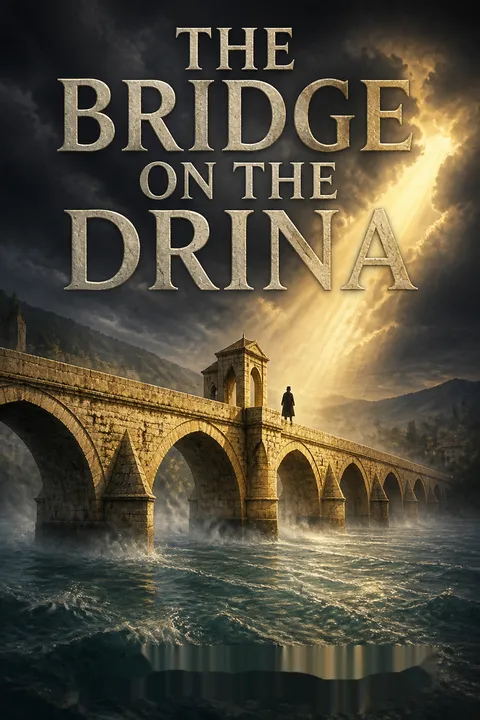
A changing measure of powerThe bridge joins the banks of the Drina and gives Višegrad its economic and social center. Its history gathers together Mehmed Pasha’s private memory, forced labor, communal legends, floods, military occupation, new transport routes, and the violence of war. It is neither a passive backdrop nor a personified hero: its importance changes according to who controls passage and what the surrounding political world requires of it. Its apparent endurance gives townspeople a language for continuity, even as its destruction proves that durable stone can be made vulnerable by deliberate force.
The Kapia
The town’s public heartThe widened central terrace is where people meet, trade, flirt, argue, hear news, and watch major events unfold. It brings private lives into contact with public history: Fata’s wedding procession pauses there, soldiers inspect travelers there, and generations of young people debate their futures there. Because the kapia is both a crossing and a place to linger, it makes the bridge part of daily life rather than a remote monument. Its changing use allows the chronicle to show political transformation through concrete alterations in where people can gather and what they can safely say.
Local legends
Memory shaped into mythStories about sacrificed twins, a supernatural figure inside the bridge, Radisav’s grave, and a holy defender of the crossing give each community a way to interpret history. These tales are not reliable records of events, but they preserve emotional knowledge that official accounts omit: the fear of forced labor, the grief of families, and the hope that the powerless may one day be protected. The legends change as they pass between generations, blending what happened with what people need to believe. Their persistence shows how the town makes sense of violence without ever agreeing on a single shared version.
Imperial proclamations
Power disguised as reassurancePublic notices announce political changes in the language of protection, order, and prosperity. For Alihodja, the grand abstractions are less convincing than the material consequences he can observe: new troops, laws, taxes, and restrictions. The proclamations connect Višegrad to decisions made far away, while their formal language makes those decisions sound consensual and inevitable. Repeated notices also create a visual motif on the kapia, where the Ottoman inscription remains beside words issued by successive authorities. Their placement turns the bridge into a public bulletin board for powers that claim the town without truly consulting it.
The railway and mine
Progress with a hidden chargeThe railway speeds travel and redirects commerce away from the bridge, making the old crossing less essential to the wider world. The Austrian military later conceals explosives in a central pier, converting the bridge from a route into a potential target. These two devices express different forms of modern planning: one reorganizes everyday movement, while the other prepares for destruction. Alihodja recognizes that both belong to systems whose full purposes are beyond the townspeople’s control. The mine pays off the earlier warning that state infrastructure can transform, isolate, and finally damage the structure it once maintained.
Bosnian Trilogy Series
Download PDF
Download EPUB
.epub digital book format is ideal for reading ebooks on phones, tablets, and e-readers.








