

Key Takeaways
Trust Christ's tenderness when guilt makes you feel beyond repair
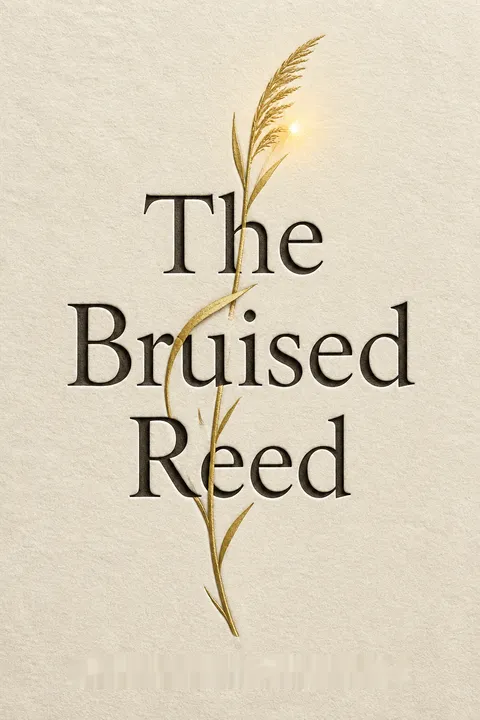
A bruised reed is not discarded. Sibbes uses this image from Isaiah for a person made painfully aware of sin and need, who cannot rescue themselves but still longs for mercy. Christ, he argues, does not merely spare such people; he cares for and restores them. The image directly challenges the belief that shame or weakness makes someone unfit to approach God. The distressed person is invited to bring their wounds to Christ rather than hide them or accept despair's verdict.
Mercy belongs to Christ's mission. Sibbes points to Jesus welcoming burdened people, healing the brokenhearted, and praying for his followers. He also emphasizes that Christian hope rests not on the sufferer's worthiness but on God's love expressed through Christ. For Sibbes, the Father, Son, and Spirit act together in redemption, so mercy is not a reluctant exception to God's character.
What's striking is how this account separates a person's need from their eligibility for care. In contemporary discussions of shame, a similar distinction appears between judging a harmful action and condemning the whole self. That difference can make repair possible: a person who feels irredeemable is more likely to conceal than to seek help. Sibbes offers a theological ground for refusing that collapse. The image is not a substitute for accountability, however. Its force lies in making restoration possible, not in declaring every action harmless.
Let sorrow expose sin without treating suffering as proof of faith
Bruising means awakened need. For Sibbes, hardship matters spiritually when it turns attention toward sin and the need for mercy. Pain by itself does not prove that someone is repentant, nor does everyone experience conviction in the same way. He describes this humbling as useful because it can puncture self-sufficiency and make Christ's mercy precious. The biblical figures he invokes include Peter, who wept after denying Jesus, and Paul, whose weakness challenged his pride.
Do not measure grief by intensity. Sibbes warns against prescribing a fixed amount of sorrow. Bodily illness or sudden distress can overwhelm a person's ability to feel or express spiritual concern. He urges charitable judgment of those who are suffering, and cautions that pressing a troubled person too long can deepen despair. The relevant question is not whether pain feels sufficiently severe, but whether it turns a person toward mercy and away from sin.
This is a useful distinction between suffering as an event and suffering as an interpretation. A crisis may reveal dependence, but pain does not automatically produce insight, virtue, or healing. Modern trauma-informed care likewise warns against assigning moral or spiritual meaning to distress before listening to the person experiencing it. Sibbes's refusal to set a universal threshold for sorrow is therefore important. His language of bruising can still be misused if hardship is treated as something people must endure to become worthy of comfort.
Treat conflicted, unfinished faith as life that deserves tending
Smoking flax is a small, smoky flame. Sibbes uses the image for grace that is present but weak, clouded by fear, doubt, and remaining sin. He argues that a small beginning can be genuine even when it is far from mature. The disciples pleading for help while afraid, and Peter failing Jesus before being restored, show how weakness and faith can coexist. A person's imperfect prayer or uncertain trust does not automatically mean that spiritual life is absent.
Look for growth, not polish. Sibbes compares grace to a seed that takes time to become visible and insists that Christ values people in light of what he is forming in them. This is not permission to settle for stagnation. The spark is precious because it is meant to be fed and grow, not because smoke is the goal. Weakness calls for support and further effort, not contempt or premature dismissal.
The image captures a familiar problem in development: early competence is hard to recognize because it arrives mixed with error. In education, a learner's hesitant attempt can be evidence of engagement rather than failure. The same interpretive generosity can help people continue practicing instead of withdrawing at the first sign of inconsistency. But encouragement works best when it is specific. Calling every impulse a sign of growth would blur the distinction Sibbes makes between a struggling person who wants change and someone who defends harmful behavior.
Judge grace by its direction, not by today's emotional weather
A dark feeling is not a final verdict. Sibbes warns that fear can obscure a person's perception of their own faith, just as disturbed water hides what lies beneath it. He advises looking for both weakness and signs of spiritual life: desire for goodness, grief over wrongdoing, openness to correction, and a tendency to turn toward God. A person should not conclude that grace is absent merely because it feels faint today or because another believer seems more confident.
The covenant of grace asks for truth, not a quota. Sibbes contrasts it with the covenant of works, which demands perfect obedience without supplying strength. Under grace, imperfect but sincere obedience is accepted through Christ. This does not make conduct irrelevant: Sibbes distinguishes an unwanted lapse from a settled defense of sin. The test is not flawless performance, but a sincere direction toward Christ and a willingness to be changed.
Sibbes anticipates a problem familiar to anyone who relies on momentary feelings as evidence: moods fluctuate, and attention tends to magnify whatever supports the current fear. His counsel to examine patterns rather than a single emotional snapshot is psychologically astute. At the same time, inward signs can become another checklist for anxious self-surveillance. The outward reference point matters: Sibbes anchors assurance in Christ and the promise of grace, not solely in a person's ability to diagnose their own interior state.
Keep praying and obeying before your feelings catch up
Do not wait for perfect readiness. Sibbes urges Christians to continue in prayer and other duties even when distracted, reluctant, or disappointed by their performance. He believes that desire itself can be offered to God, and that practice can strengthen the very capacities that feel weak. His examples include the apostle Paul pressing on despite conflict within himself and the disciples praying despite fear. The effort is not a way to earn acceptance; it is a response made possible by grace.
Make room for real limits. Sibbes distinguishes spiritual reluctance from bodily incapacity. A sick person may need rest, and a distressed person may need time to settle before acting. For ordinary resistance, however, he warns that avoidance can make future effort harder. He describes obedience as rowing against a current: each neglected stroke can increase the distance. Help is expected along the way, not necessarily before the first step.
The practical insight resembles behavioral activation, a therapeutic approach in which manageable action can precede improved mood rather than waiting for motivation to arrive first. Sibbes's account adds a relational dimension: action is not self-salvation, but participation in a source of help beyond the self. That qualification also prevents the advice from becoming a blanket demand to push through illness or exhaustion. The useful distinction is between a difficult but possible next step and a genuine limit that calls for care.
Give struggling people patient help without excusing harmful choices
Mercy should match the person. Sibbes tells ministers and fellow Christians to avoid making secondary matters into tests of salvation, to speak plainly, and to encourage beginners before loading them with extra demands. He compares fragile believers to delicate objects that need careful handling. People in authority, too, should use power for restoration rather than humiliation, especially when someone is already humbled.
Tenderness is not permissiveness. Sibbes also rejects the idea that kindness means overlooking every wrong. A person who recognizes a failing and wants to change needs a different response from someone who defends wrongdoing or exploits others. Some situations call for gentle guidance; others require direct correction. The aim is to help someone become better, not to protect a harmful pattern. Sibbes's governing rule is discernment: apply truth in a way suited to the person's condition and the harm involved.
This is a sophisticated account of care because it treats kindness as a practice of discernment, not as a fixed tone. Similar distinctions guide good teaching and restorative approaches: support lowers the cost of admitting difficulty, while clear boundaries protect people from harm. The challenge is that observers can misread who is fragile and who is evasive, especially when power is unequal. Sibbes's emphasis on humility and self-examination helps, but wise correction also requires attention to consequences, not only the intentions of the person giving it.
Let assurance fuel spiritual practice instead of replacing it
Grace is tended through means. Sibbes warns that Christ's gentleness should not become an excuse for neglect. He names prayer, Scripture, worship, and fellowship as ways spiritual life is nourished. In his reading of Paul's warning not to quench the Spirit, discouragement and neglect can smother a person's attention to grace, while shared worship and encouragement can rekindle it. Christians are called to act, but their effort depends on Christ's continuing help.
Confidence and diligence belong together. Sibbes argues that belief in eventual victory should motivate effort, as confidence in a fruitful harvest would not make a farmer abandon the field. He also says that spiritual practice does not produce grace by human power alone. Rather, it is a means through which Christ strengthens people. Mercy therefore answers despair and presumption alike: it gives a reason to keep working, without making success a personal achievement.
The account avoids two opposite traps: passivity, where promised help becomes a reason to do nothing, and perfectionism, where effort is treated as proof of personal worth. In systems language, Sibbes is describing both dependence on a sustaining resource and the repeated practices that keep a capacity active. A limitation is that the same practice can become compulsive if a distressed person uses it to chase certainty. The intended role of prayer and worship here is nourishment, not a ritual for controlling every doubt.
Bring judgment and desire together under Christ's rule
Judgment means an inward government. Sibbes uses the term for Christ's rule over understanding, will, and affection. Grace changes not only what a person believes but what they come to value and choose. Sound judgment helps distinguish good from evil, while renewed desire gives that judgment force in practice. He compares knowledge that never changes conduct to a guide whose directions are understood but ignored.
Pardon and change belong together. Sibbes insists that Christ is both the one who forgives sin and the one who helps people resist it. A person should seek pardon after failure and seek renewed strength to live differently. This is not a claim that moral improvement earns forgiveness. Rather, acceptance through Christ is the foundation for obedience, and obedience is evidence of a life being reshaped. The desired result is not forced conformity but a willing allegiance formed by love.
This passage treats ethical change as more than acquiring information. Contemporary moral psychology similarly recognizes that judgment, motivation, habits, and social context interact; knowing what is right does not guarantee doing it. Sibbes's theological account adds that transformation involves both instruction and a changed disposition. That is a strong explanation of why moralizing alone often fails. It also raises a practical question: a person's conduct is visible, but motives are harder to assess, so discernment should be cautious about claiming certainty over another's inward state.
Fight with hope because Christ supplies the strength your struggle lacks
Conflict does not mean defeat. Sibbes expects resistance from sin and temptation, and rejects the idea that a quiet inner life is the only sign of spiritual health. He describes victory in degrees: resisting even when one is shaken, gaining the upper hand through struggle, and finally reaching complete freedom. A setback can expose hidden weakness and send a person back to Christ for pardon and help. The decisive strength, in Sibbes's account, comes from Christ rather than self-confidence.
Hope reaches beyond the present struggle. Sibbes applies this confidence to individual Christians and to the church: apparent weakness does not settle the final outcome. His argument rests on Christ's victory and the promise that grace will overcome what now opposes it. This expectation is meant to sustain action and courage, not guarantee that every conflict ends quickly or that every visible institution succeeds. The task is to resist, seek help, and keep faith while change remains incomplete.
The central move is to separate the certainty of ultimate hope from the speed of present improvement. That can protect people from treating a relapse as proof that all progress was false. It also reframes dependence as a source of agency: needing help does not make effort pointless. Sibbes's confidence in the church's eventual triumph is a theological conviction, not a forecast that can be verified from short-term events. Readers can draw courage from the distinction without turning it into a claim that every setback conceals imminent success.
Analysis
The Bruised Reed is Puritan pastoral theology organized around a single biblical image that keeps changing scale. At first, the reed names a distressed person who fears that weakness disqualifies them from mercy. The smoking wick then extends the image to a faith that is present but obscured by doubt and sin. Finally, the discussion turns toward an inward government that grows from fragile beginnings into a settled pattern of judgment and action. This progression makes the book more than reassurance: its comfort has a direction, from being received by mercy to being formed by it.
Sibbes's most psychologically perceptive move is to distinguish a person's present feeling from the deeper direction of their life. Fear may hide spiritual vitality; grief over wrongdoing may coexist with hope; and resistance to sin can itself be evidence that a person is not indifferent to it. This resembles modern efforts to distinguish transient emotional states from enduring values and behavior. Yet introspection is a risky instrument. A reader inclined to scrupulosity may convert every sign of grace into another test to pass. Sibbes counters that danger by locating assurance chiefly in Christ and the covenant of grace, although his many diagnostic signs can still invite anxious self-monitoring.
The book also gives mercy a social and institutional consequence. Those who depend on compassion should treat the weak with patience, speak clearly, and use authority for restoration. Yet mercy must be discerning: protecting a vulnerable person is not the same as excusing abuse or entrenched wrongdoing. That tension is one of the work's strongest practical contributions. Its theology insists that kindness and moral seriousness are not rivals. Finally, its promised victory should be read at the scale Sibbes intends: a theological assurance about Christ's rule, not a guarantee of immediate personal success or uninterrupted institutional flourishing. The result is a demanding comfort, one that permits weakness without making peace with it.
Review Summary
The Bruised Reed receives overwhelmingly positive reviews (4.44/5) for its comforting exploration of Isaiah 42:3, emphasizing Christ's tender care for struggling believers. Readers praise Sibbes' pastoral wisdom in showing how God preserves even the weakest faith, never breaking "bruised reeds" or quenching "smoking flax." The book encourages Christians experiencing discouragement, sin struggles, or spiritual weakness. Reviewers appreciate the balance between acknowledging human frailty and calling believers to faithful obedience. Though some find the Puritan prose dense, most consider it a treasured, quotable classic worth repeated reading, comparable to "Gentle and Lowly."
People Also Read




Glossary
bruised reed
person humbled by needSibbes's image for a person made aware of sin, suffering, and inability to rescue themselves, who longs for mercy. The image does not mean that every sufferer is spiritually repentant. It describes someone whose distress turns them toward Christ, and it emphasizes that Christ tends rather than rejects people in this condition.
smoking flax
weak, living graceAn image for a small beginning of spiritual life that is mixed with doubt, weakness, and remaining sin. Sibbes argues that such weakness does not prove grace is absent. The spark should be cherished and strengthened, while its continuing smoke reminds the believer that growth and struggle remain necessary.
covenant of grace
acceptance through ChristSibbes's term for God's gracious relationship with believers through Christ. In this covenant, acceptance does not depend on perfect personal obedience. Christ's righteousness grounds the believer's hope, while sincere, imperfect obedience is received and spiritual growth is pursued through divine help.
covenant of works
perfect obedience requiredSibbes's contrast to the covenant of grace. It describes the law's demand for complete obedience, without the strength to fulfill that demand, and its condemnation of failure. The contrast helps explain why a troubled believer should seek comfort in Christ rather than treat imperfect conduct as grounds for earning acceptance.
judgment unto victory
grace's growing ruleSibbes's interpretation of Christ establishing a governing order in a believer's understanding, will, and affections until it overcomes resistance. This rule includes clearer moral judgment and a growing ability to act on it. The phrase also expresses Sibbes's confidence that Christ's work in believers and the church will ultimately prevail.
sins of infirmity
unwanted failures amid struggleSibbes's term for failings connected with weakness, immaturity, limited ability, or sudden temptation, which a person grieves and seeks to correct. He distinguishes these from willful, defended wrongdoing. In his account, sincere resistance and a general desire for good matter, even when a person falls short.
Download PDF
Download EPUB
.epub digital book format is ideal for reading ebooks on phones, tablets, and e-readers.








