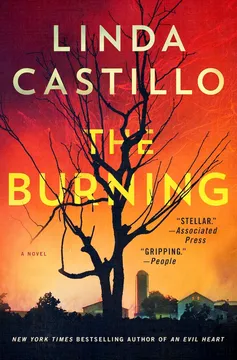


Plot Summary
Prologue
After a night drinking at a bar, Milan Swanz accepts a ride from a stranger on a snowy road. A hidden passenger slips a strap around his throat and strangles him until he loses consciousness.
Milan wakes bound upright in the woods, wired to a post and surrounded by fuel-soaked wood. Two men work without speaking. One throws a lit lighter into the kindling, and Milan burns alive. The method is deliberate, public, and cruel, but the men leave no explanation.
The prologue makes the victim’s helplessness immediate, then withholds the killers’ identities and reasons. Milan’s brief trust in a stranger becomes the opening vulnerability of the case: a ride offered as ordinary kindness turns into a trap. The men’s calm coordination also distinguishes this killing from an impulsive act of rage. Their silence and ritualized preparation imply that they believe the execution has a purpose beyond simply removing Milan. By showing the crime before introducing the investigators, the story makes the reader confront its physical horror first, then follow Kate as she tries to give that horror a motive.
Smoke Beyond Dogleg Road
On a snowy night, Painters Mill officers Chuck Skidmore, known as Skid, and rookie Mona Kurtz hear a scream while parked near a covered bridge. Following the smoke into the woods, they find a man wired to a post above a towering fire. They cannot reach him until Kate Burkholder, the town’s police chief and a former Amish resident, arrives with tools and helps pull the body from the embers.
The man is already dead. The bindings and the officers’ account of the scream convince Kate that someone burned him alive, not merely concealed a corpse in a fire. She seals the clearing, starts the search, and summons outside investigators.
The discovery forces Kate to move from routine policing into a case whose brutality resists familiar explanations. Skid and Mona’s interrupted intimacy gives way to professional urgency, while their failure to reach the victim in time leaves them carrying the scene’s helplessness into the investigation. Kate’s first choices establish her priorities: she risks entering the heat to recover the body, then turns immediately toward evidence preservation. Her past in the Amish community is not yet an answer, but it gives her access to meanings outsiders may miss. The crime is both a death and a message, and the search begins with that unsettling double possibility.
A Wallet in the Ashes
At the scene, the coroner recovers a partly intact wallet from the victim’s clothing. Kate recognizes the name on the driver’s license: Milan Swanz, a local Amish man she knew from school and had arrested. She tells Milan’s ex-wife, Bertha, and his parents, Orla and Ella Mae, about his death.
Their restrained reactions strike her as unusual, and their accounts conflict over who wanted the divorce. Bertha describes Milan as an unreliable drinker who neglected his family; his mother blames Bertha and the bishop for Milan’s troubles. Both households point Kate toward former disputes, including Milan’s work at a cabinet shop and his conflicts with neighbors.
Identification gives the corpse a social world, but it does not make that world emotionally simple. Bertha’s apparent composure and the parents’ competing defenses suggest that Milan’s death arrives after years of damage rather than within a stable family bond. Their accounts are not neutral testimony: each speaker manages shame, loyalty, resentment, or grief by shaping the story of who Milan was. Kate notices these distortions without treating them as proof of guilt. In a close-knit community, private injuries become public knowledge unevenly, and the first interviews reveal how much the investigation must separate what people know from what they can bear to say.
The Broken Wrist
The autopsy gives Kate evidence that the scene alone could not provide. Milan’s wrist is fractured, his hyoid bone is broken, and the marks on his skin suggest restraint and possible strangulation. The coroner cannot yet say whether Milan breathed during the fire, but the injuries strengthen the theory that he was subdued before being bound to the post.
Kate and BCI agent John Tomasetti question Gideon Stutzman, Milan’s former employer, and his son Noah. They learn Milan was fired after clashing with a customer, and that the cabinet shop had burned months earlier. Noah confirms the heater involved belonged to Milan, deepening suspicion without proving arson or murder.
Forensic evidence shifts the case from a grotesque scene toward a sequence of bodily events: Milan was restrained, likely overpowered, and then burned. The broken hyoid echoes the prologue’s strangling, while the fractured wrist gives physical weight to the struggle the witnesses could not see. At the cabinet shop, suspicion grows from an older grievance, but the fire’s accidental ruling warns against confusing motive with evidence. Kate and Tomasetti must hold several explanations open at once. The story’s investigative logic depends on resisting the desire to let one vivid detail, whether a burn or a feud, settle the case prematurely.
Names in Milan’s Notebook
A search of Milan’s shabby trailer turns up no obvious sign of a struggle, but Kate finds a notebook containing five addresses. One belongs to her brother Jacob, while others connect to the Amish bishop, a deacon, Noah Stutzman, and Milan’s neighbor Lester Yoder. The list makes Kate question whether Milan was keeping track of people he resented.
At McNarie’s bar, she learns Milan drank there on the night he died and spoke privately with an unfamiliar man dressed in dark, Amish-like clothing. A red-haired patron remembers little else, but her description gives Kate a possible final companion and a reason to keep searching beyond the known feuds.
The notebook changes the investigation’s geography: the case enters Kate’s own family and the institutions that shaped her childhood. Yet an address list is inherently ambiguous. It might record work, grievance, or something more threatening, and Kate knows that interpreting it too quickly could damage people who are already vulnerable to suspicion. The unknown man at the bar adds a second kind of uncertainty, one grounded in a witness’s partial memory rather than an object. Together, the list and the vague sighting show how the investigation advances through fragments. Kate’s task is not simply to collect them, but to avoid turning incomplete information into a convenient story.
Milan’s Private Cruelties
Milan’s childhood friend Clarence Raber tells Kate that he ended their friendship after seeing Milan handle his young son Aaron so roughly that the boy later appeared with a broken arm. Clarence also confirms Milan had a temper and became especially volatile when drinking. Kate returns to Bertha, who admits Milan struck her and that she had begun a relationship with Lester before the divorce was final.
Bertha had concealed both facts during their first interview, fearing community judgment. She also shares a rumor that Milan and Clarence attacked Bishop David Troyer and his wife. Kate now sees a pattern of abuse and retaliation, but that pattern multiplies possible motives rather than identifying a killer.
The revelations complicate the easy division between respectable community and troubled outsider. Milan’s conduct injured those closest to him, while Bertha’s silence reflects the social cost of seeking help in a culture where family matters are often kept inside the community. Clarence’s break with Milan is a moral choice with personal consequences, not merely useful testimony. Bertha, meanwhile, is both a possible suspect and someone harmed by Milan. The book insists that investigators must recognize victimization without letting it erase the victim’s humanity, or let sympathy become a substitute for proof. Each newly exposed secret makes the community’s silence more legible and its suspicions harder to sort.
Jacob’s Barnside Secret
Jim Bogart tells BCI that he saw Jacob arguing fiercely with Milan while Milan worked on a fence at the family farm. The report puts Kate’s brother under scrutiny and gives BCI agent Neil Chambers grounds to challenge Kate’s objectivity. When she confronts Jacob, he finally explains that he found Milan alone with his eleven-year-old son James in a barn loft, behaving inappropriately.
Jacob says he interrupted before Milan assaulted the boy, then chased him off the property and threatened to tell the bishop. The confrontation explains the argument and gives Jacob a powerful motive, but Kate believes his account. Her loyalty now has to withstand the appearance of a cover-up.
Jacob’s secret exposes the costs of protecting a child within a community that discourages disclosure to outsiders. His silence is meant to shield James, but it also leaves Kate unable to distinguish privacy from concealment. The case turns sharply inward: her brother’s moral outrage is understandable, yet it could also have become violence. Chambers treats their relationship as a procedural vulnerability, and the public may do the same. Kate must hold two positions at once, sister and investigator, without pretending they cancel each other out. Her certainty about Jacob’s character cannot replace corroboration, especially when the child’s safety and the justice process both depend on careful truth-telling.
A Warning at the Fence
Returning alone to Dogleg Road, Kate finds an unfamiliar car and follows footprints into the woods. A masked man ambushes her, chokes her, takes her weapon, phone, and radio, then handcuffs her to a fence. He calls Milan wicked and frames his death as a sacrifice, warning Kate to keep silent.
Skid eventually finds her and frees her, but the attack confirms that someone is watching the investigation. At a late-night debriefing, Chambers and Mayor Auggie Brock use Kate’s family connection and the attack’s publicity to remove her from fieldwork, leaving her on limited duty. Tomasetti supports her, but institutional trust has fractured.
The attacker’s language reframes violence as moral labor, a claim that makes the case more frightening than an ordinary threat. He does not merely want Kate injured; he wants her to accept his judgment and carry the burden of silence. Her survival depends on procedure and a colleague’s timely arrival, yet the institution responds to the attack by restricting her rather than protecting her investigative role. That choice sharpens the tension between impartiality and competence. Kate’s connection to Jacob is real, but so is her expertise and her access to Amish testimony. The chapter shows how organizations can mistake the appearance of neutrality for the conditions needed to discover truth.
Freda Names the Schwertlers
Before dawn, Kate and Tomasetti press Bishop Troyer about Milan’s past attack on him and Freda. The bishop admits Milan cut his beard and hair with a knife, while Freda reveals that elders also knew Milan had abused Bertha and the children. After the couple withholds more, Freda follows Kate outside and describes rumors of Schwertler Anabaptists, men said to punish wrongdoers beyond the law.
She recalls an Amish man in Indiana who was believed to have been murdered and hidden as a suicide. The story is unverified, but Freda points Kate toward Isaiah Hofer, a Hutterite living near Dundee, turning local folklore into a lead she can test.
Freda’s disclosure emerges from a conflict between communal loyalty and the fear that silence enables further harm. The bishop’s refusal to speak is not proof of complicity; it reflects his conviction that some matters belong to the church rather than the police. Freda crosses that boundary because the present killing has made the old story newly dangerous. The Schwertlers may be folklore, a distorted memory, or a real network, and Kate cannot yet tell which. Their possible existence raises an uncomfortable question: when formal justice fails, who claims the right to punish? The narrative makes that claim dangerous precisely because it can borrow the language of protection.
Hofer’s Dark Warning
Kate finds Isaiah Hofer at a Hutterite quarry near Dundee. He confirms that the Schwertler name belongs to obscure Anabaptist history but offers no practical help, instead warning her that people who pursue the group may be destroyed. His knowledge and menace unsettle her. Jacob, meanwhile, denies knowing anything about the Schwertlers, though Kate senses he is withholding something.
At the Amish and Mennonite Heritage Center, director Dan Neufeld explains that the historical Schwertlers challenged pacifism and that Balthasar Hubmaier was burned at the stake, while his wife Elizabeth drowned. The old executions provide a possible historical pattern, but not proof that a modern group exists.
Hofer makes the legend feel less like harmless folklore without making it verifiable. His warning is strategically vague: it creates fear, but also demonstrates how a threat can control inquiry without revealing the threatened party’s identity. The historical lesson from Neufeld adds context while resisting an easy equation between past and present. Hubmaier’s execution and Elizabeth’s drowning resemble later crimes in method, but resemblance is not causality. Jacob’s denial further complicates Kate’s family ties, suggesting that inherited knowledge may be protected by silence. The section asks readers to notice how history can serve both as evidence and as a screen onto which people project present-day motives.
The Second Attempt
After leaving the heritage center, Kate hears movement in the back seat of her Explorer. A hidden attacker loops a belt around her throat and tries to choke her while she drives. She fires, crashes into a tree, and cuts the belt with her folding knife before she loses consciousness. The attacker escapes into the woods.
The break-in tool found at the scene shows the vehicle was entered deliberately, and Tomasetti recognizes that the assault was planned. The next morning, Jacob visits Kate and admits Milan had been about to assault James; he also reveals that Bertha once believed something bad would happen to Milan. Kate now has both a personal warning and a stronger reason to revisit Bertha’s account.
The second attack converts the threat from a demand for silence into an attempt to kill, proving that Kate’s pursuit has touched something active and organized. Her survival depends on an ordinary tool she carries for work, a practical counterweight to the attacker’s control. Yet the crash also leaves her physically vulnerable and emotionally exposed to Tomasetti’s fear of losing her. Jacob’s later confession and Bertha’s ominous remark arrive as clues, but neither supplies a complete explanation. Their value lies in changing Kate’s questions. The sequence links bodily danger to investigative knowledge: every time she gets closer, someone tries to make the act of knowing itself feel fatal.
Two Strangers Took Milan
Kate returns to Bertha’s home and learns Lester Yoder is there. Bertha initially erupts when Kate asks about her warning that Milan would suffer harm, but settles enough to explain what happened. After Milan assaulted her in the kitchen, two unidentified men arrived, helped her into a chair, and took Milan away. They wore plain, dark, Amish-like clothing and spoke quietly in English.
Bertha says Milan went with them, though he seemed to understand he had little choice. She also recalls Milan later visiting for his tools, nervous after an argument with Jacob. The strangers connect Milan’s private violence to an organized intervention, but Bertha cannot identify them or say where they took him.
Bertha’s account complicates both the murder timeline and the meaning of rescue. The men first appear as protectors of a woman in immediate danger, yet they remove Milan without lawful process and leave no clear record. Their quiet manner and Bertha’s uncertainty prevent the scene from becoming a simple heroic intervention. Her testimony also reveals how coercion can appear as an alternative to helplessness when a community has failed to protect her. Kate’s position is delicate: she must treat Bertha’s suffering seriously while testing the account as evidence. The episode gives the shadow organization a possible method, people learning of abuse through local knowledge and acting outside the institutions meant to address it.
The Warrant for Jacob
Kate brings her findings to the task force, naming Bertha and Lester, the Stutzmans, Jacob, the unknown bar patron, and Hofer as possible leads. She argues that the burning may imitate Anabaptist history, but Chambers dismisses the theory. While the team debates her removal, officers receive a warrant for Jacob’s arrest.
The case against him includes Bogart’s report, an anonymous claim placing him near Dogleg Road, and his recent purchases of pallets and diesel fuel. The purchases have ordinary farm uses, but their timing looks damning. Kate has already disclosed Jacob’s conflict with Milan, yet the arrest lands as both a procedural decision and a betrayal of her belief in her brother.
The arrest demonstrates how circumstantial evidence becomes persuasive when it forms a coherent-looking pattern. Jacob had motive, access to materials used in the crime, and an argument with Milan, but each fact has an alternative explanation. Chambers’s confidence in the warrant contrasts with Kate’s intimate knowledge of farm life and her brother, though her closeness could also distort judgment. The plot refuses to let either perspective settle the question. By placing the warrant announcement inside Kate’s own briefing, the story makes institutional power feel personal: the team acts while she is present, but not as a trusted participant. Her exclusion heightens the risk that a plausible narrative will harden before it is tested.
Hofer in the Old Footage
With Tomasetti’s ViCAP search, Kate finds older homicides involving Amish and Mennonite victims. One case concerns Lena Stoltzfus, an Amish woman first thought to have drowned herself, then found to have been strangled and weighted with a concrete block. While studying a local podcaster’s footage from the scene, Kate spots a man in the background whose clothing and stride resemble Hofer.
The video places him in Lancaster County when Lena died. The parallel to Elizabeth Hubmaier’s drowning strengthens Kate’s theory that someone is reenacting historical punishments against people considered dangerous to the community. She decides to confront Hofer, despite being sidelined and despite Tomasetti warning her against going alone.
The cold case widens the story beyond Painters Mill and gives the historical motif a second, more persuasive instance. Lena’s drowning echoes an execution from Anabaptist history, while the video supplies a possible human link between locations. Still, the evidence is visual and circumstantial; Kate recognizes a resemblance, not a confirmed identity. The choice to act alone is driven by urgency and by distrust of a task force that has already arrested Jacob. Her decision is understandable but costly, revealing the thin boundary between professional persistence and self-endangerment. The chapter’s suspense comes from a pattern that feels increasingly real while remaining just uncertain enough to demand verification.
The Quarry’s Edge
At the closed quarry, Kate finds Hofer’s office nearly emptied. A backhoe shoves Tomasetti’s Tahoe into a stone wall while another vehicle strikes Kate and throws her onto the gravel. Hofer disarms her, binds her hands, and drives her to the quarry edge. He admits that Milan’s conduct reached the group by word of mouth and treats the killing as a kind of spiritual judgment.
Kate names Lena’s murder and challenges his logic. When Hofer prepares to weight her with a rock, Kate bolts. They struggle near the drop and plunge into the water. She cuts herself free, reaches shore, and stabs Clarence Raber when he approaches under the guise of helping. Then she returns to find Tomasetti alive, trapped in the crushed Tahoe, and pries him free.
The climax brings the story’s competing forms of justice into direct physical conflict. Hofer’s certainty depends on declaring some people beyond redemption, then presenting murder as a path to salvation. Kate rejects that logic even when her own life is in his hands. Her escape is not a triumph of strength alone: she uses a knife, recognizes Raber’s danger, and refuses to leave Tomasetti behind. The wrecked Tahoe makes the cost of the investigation visible, while Hofer’s fall into the quarry leaves the group’s larger structure unresolved. Kate survives, but survival does not supply the courtroom answers or moral closure that the killers’ ritual claims to provide.
Jacob Comes Home
At the hospital, officers report that Hofer’s body was found in the quarry and that Raber survived his wounds and was arrested after trying to reach Kate’s rental vehicle. The backhoe operator is dead, and Tomasetti has a broken arm. Chambers and Sheriff Rasmussen apologize for sidelining Kate and for arresting Jacob on a case that does not hold.
Jacob is released, though the investigation into the wider network remains open and investigators still need to establish who else was involved. Kate and Tomasetti return to their farm bruised and shaken. In the epilogue, a blizzard closes around their home as they share food, talk about Kate’s fear of losing him, and cautiously consider starting a family.
The final movement resolves the personal and procedural consequences that the climax cannot settle. Jacob’s release confirms that the evidence against him was not enough, while the investigation’s remaining gaps preserve the threat of the group beyond Hofer and Raber. Kate and Tomasetti’s recovery is not a victory speech; it is a return to shared domestic acts after a rupture that exposed their dependence on each other. Their tentative discussion of children reframes vulnerability as a choice rather than merely a danger. The novel closes with a future they cannot guarantee, but can consider together. That modest hope is earned because neither character mistakes love for safety.
Epilogue
As a blizzard gathers, Kate returns to the farmhouse and finds Tomasetti preparing bread and wine despite his broken arm. She admits that the worst part of her ordeal was not the cold or the violence, but believing he might be dead. Tomasetti suggests they have room in their lives to consider a child.
Kate agrees that it is a serious step, and they decide to think it through together. The storm keeps the couple indoors, offering no certainty about what comes next, only the warmth of a shared home and a future they are willing to imagine.
The epilogue shifts from the case’s public violence to the private meaning of surviving it. Kate names her terror in relational terms: she feared not only death, but the loss of Tomasetti. His suggestion of a family does not resolve her anxiety about danger; it asks whether danger should have the final say over their choices. The storm makes the farmhouse a temporary refuge, while the broken arm keeps the recent violence physically present. Their decision is deliberately provisional. They do not promise an uncomplicated future, only that they will consider it together, turning intimacy into a practice of shared risk.
Analysis
The Burning examines how a community’s commitment to privacy can shelter people from outside judgment while also leaving the vulnerable without protection. The Amish characters do not function as a single moral bloc. Bertha’s silence, Jacob’s refusal to expose his son, the bishop’s restraint, and Freda’s decision to speak arise from different forms of loyalty and fear. Kate knows the culture from within, but her knowledge does not make her immune to its pressures or to the procedural demands placed on her as a police chief.
Milan’s history is deliberately uncomfortable. He abused and frightened people, yet his behavior cannot make his execution lawful or righteous. The killers exploit that distinction, presenting their violence as a spiritual service to those they deem beyond redemption. Their claimed mission resembles justice only in its attention to wrongdoing; it lacks accountability, evidence, proportion, and the possibility of error. The historical references sharpen this critique. Remembering persecution can preserve a community’s identity, but inherited stories can also be distorted into permission for fresh violence.
Kate’s professional and personal conflicts repeatedly test whether she can keep affection from becoming certainty. She believes Jacob is not a murderer, but must still examine the facts that make him look guilty. Her colleagues’ decision to sideline her reflects legitimate concern about bias, yet their distrust also blinds them to her distinctive access and judgment. The novel therefore treats impartiality not as emotional detachment, but as a discipline of testing one’s own assumptions while remaining answerable to evidence.
The resolution offers neither a full dismantling of the suspected network nor a clean return to safety. Hofer is dead, Raber is in custody, and the larger structure remains uncertain. Kate and Tomasetti’s final conversation answers a different question: whether fear should prevent them from imagining a family. Their tentative openness does not deny the danger they face. It insists that a life organized around preventing harm must still make room for chosen attachment, care, and an uncertain future.
Review Summary
The Burning is the 16th installment in the Kate Burkholder series, receiving an overall rating of 4.29/5. Readers praise its gripping pace, dark atmosphere, and the gruesome central mystery of an Amish man burned at the stake. Highlights include Kate's Amish background, her dynamic with husband Tomasetti, and fascinating Anabaptist history. Some critics note Kate makes implausibly reckless decisions and recovers too quickly from injuries. Most agree it's a compelling, action-packed thriller that fans of police procedurals and strong female leads will thoroughly enjoy.
Characters
Kate Burkholder
Amish-born police chiefKate is the police chief of Painters Mill, Ohio, and was raised Amish before leaving the community at eighteen. Her fluency in Amish customs and relationships makes her unusually effective at investigating crimes in the area, but it also entangles her professional work with family history. She is direct, persistent, and attentive to the small inconsistencies people reveal when they think they are protecting someone. Her marriage to BCI agent John Tomasetti gives her a rare source of emotional steadiness, though their work repeatedly places both at risk. Kate’s central tension is not whether she cares about the community, but how to serve it without confusing belonging, loyalty, and evidence.
John Tomasetti
BCI agent and husbandJohn Tomasetti is a seasoned agent with the Ohio Bureau of Criminal Investigation and Kate’s husband. A former Cleveland detective, he brings forensic experience, investigative discipline, and a dry humor that can ease pressure without trivializing a victim. His marriage to Kate is new, and both are still learning how to balance shared work with the fear that one may lose the other. Tomasetti’s past includes profound personal loss, which makes Kate’s exposure to violence especially difficult for him. He supports her judgment while recognizing that persistence can become self-endangerment, and he often has to decide when to stand beside her and when to urge caution.
Milan Swanz
Estranged Amish fatherMilan Swanz is an Amish man whose life has grown increasingly distant from the community around him. He is a former cabinetmaker, a father of four, and a difficult presence in the lives of his family, friends, and employers. People describe his drinking, temper, and repeated conflicts in different ways, often through their own guilt or resentment. His troubled reputation creates a wide field of possible grievances, but it cannot itself establish what happened to him. Milan’s role in the story challenges the simple division between a worthy victim and an unworthy one: harmful conduct matters, but it does not make violence against him self-justifying.
Bertha Swanz
Milan’s ex-wifeBertha is Milan’s ex-wife and the mother of their four children. She works as a waitress and tries to provide stability while navigating the constraints of Amish life after divorce. Her first interviews with Kate are guarded, shaped by fear of judgment and by a long habit of keeping painful family matters private. Bertha is perceptive about Milan’s behavior, but her anger and secrecy make her testimony difficult to assess. She is neither simply an informant nor merely a suspect: she is a person trying to protect her children and preserve a life in a community where asking outsiders for help can carry a lasting cost.
Jacob Burkholder
Kate’s Amish brotherJacob is Kate’s older brother, an Amish farmer, and a father devoted to his children. He is disciplined, reserved, and strongly guided by the moral expectations of his faith. His relationship with Kate carries the distance created by her departure from the Amish community, alongside a continuing affection neither sibling has fully lost. Jacob’s instinct to protect his family makes him reluctant to share painful information, particularly when it concerns his son. That protective silence can look like evasion to police, even when it arises from care. He represents the difficult point where family loyalty and cooperation with law enforcement meet.
Isaiah Hofer
Hutterite quarry managerIsaiah Hofer is a Hutterite who manages a quarry near Dundee. He is articulate, physically imposing, and more comfortable discussing religious history than explaining his own knowledge of it. His manner can shift from genial to unsettling, leaving Kate unsure whether he is offering insight or trying to control the conversation. Hofer’s interest in Anabaptist belief and the meaning of violence places him at the edge of the case’s central mystery. He is difficult to read because he combines intellectual confidence with deliberate evasiveness, making every encounter with him feel like a test of what Kate believes she can safely infer.
Clarence Raber
Milan’s childhood friendClarence grew up alongside Milan and remembers their shared mischief as Amish teenagers. He works at a grain elevator and presents himself as affable and cooperative when Kate questions him. His friendship ended after he witnessed Milan handle a child roughly, a rupture that shows Clarence’s capacity to draw a moral boundary even when it costs him a lifelong companion. His memories help Kate understand Milan’s temper and family relationships, though he has reasons to avoid discussing their final estrangement.
Lester Yoder
Neighbor and widowerLester is Bertha’s widowed neighbor and a farmer whose past disagreements with Milan give him a place in the investigation. He is also romantically involved with Bertha, a relationship they keep private because of the community’s judgment. Lester appears more comfortable offering practical help than explaining himself, and his quiet demeanor makes it hard to tell whether he is simply cautious or withholding something. His role ties together the private life of Bertha’s household and the public list of Milan’s grievances.
David Troyer
Amish bishopDavid Troyer is the elderly bishop of the Painters Mill Amish church district. His authority rests on religious leadership and a deep knowledge of the community, but he is also wary of exposing Amish matters to outsiders. He believes in restraint and in the church’s right to handle its own conflicts, a position that can protect privacy while leaving abuse unreported. Kate’s history with him gives their exchanges a personal edge: he remembers her as the girl who left, while she approaches him as a police chief who needs facts.
Freda Troyer
Bishop’s outspoken wifeFreda is David Troyer’s sharp-minded wife, an elder in the community whose candor contrasts with her husband’s reserve. She is protective of the Amish, but she is not willing to let that loyalty erase the harm Milan caused. Freda remembers old stories other people dismiss as rumor and understands how collective silence can protect the wrong person. Her willingness to speak with Kate is measured rather than impulsive: she knows that sharing certain knowledge may have consequences, yet she chooses to act when she believes a danger has returned.
Mona Kurtz
Painters Mill rookie officerMona is the first female officer in the Painters Mill department and a capable rookie with a strong appetite for action. She helps Skid discover the burning victim and remains engaged well beyond the end of her shift. Her confidence is tempered by the physical shock of the scene, but she continues to perform the practical work the investigation requires. Mona’s willingness to assist Kate behind the scenes shows loyalty to her chief and an emerging understanding of how institutional politics can interfere with police work.
Chuck Skidmore
Veteran Painters Mill officerChuck Skidmore, usually called Skid, is a Painters Mill officer whose irreverence can give way to serious focus when a crisis begins. He and Mona discover the fire and try to reach the victim before Kate arrives. Skid is shaken by the scene, but he follows procedure, helps recover the body, and later finds Kate after she is attacked. His humor is a way of handling pressure, not a sign that he fails to grasp the weight of the work.
Mike Rasmussen
Holmes County sheriffMike Rasmussen is the Holmes County sheriff and a longtime professional colleague of Kate’s. He is practical, experienced, and willing to lend deputies and resources when Painters Mill faces a serious case. As outside pressure builds, Mike must balance his trust in Kate with the appearance of impartiality demanded by BCI and local officials. His role shows how a relationship built over years can be tested by institutional caution, especially when a suspect is related to the lead investigator.
Neil Chambers
Hard-edged BCI agentNeil Chambers is the BCI agent who presses concerns about Kate’s connection to Jacob and pushes for her removal from the case. He is blunt, confident, and attentive to how the investigation will appear to the public and to other agencies. His skepticism is not wholly baseless: the risk of a conflict is real. But his reliance on procedure and optics can cause him to discount Kate’s local knowledge and the trust she has earned among Amish residents.
Auggie Brock
Painters Mill mayorAuggie Brock is Painters Mill’s mayor and Kate’s political supervisor. He is personable and generally supportive, but the murder’s publicity makes him anxious about tourism, public confidence, and the department’s reputation. His instinct is to manage appearances, sometimes at the expense of trusting Kate’s judgment. Auggie’s position exposes the tension between protecting a town’s image and backing the investigator best equipped to understand its people.
Gideon Stutzman
Milan’s former employerGideon owns the cabinet shop where Milan once worked. He values reliability and the survival of his business, and describes Milan as skilled but difficult to depend on. Gideon is cautious about criticizing a dead Amish man, even when the shop’s fire and Milan’s dismissal become relevant to the investigation.
Noah Stutzman
Cabinetmaker’s resentful sonNoah is Gideon’s large, forceful son and an influential presence at the family cabinet shop. He remembers Milan as mean and careless, and he carries more resentment toward him than his father openly does. His account adds a personal edge to the dispute over Milan’s firing and the earlier workshop fire.
Dan Neufeld
Anabaptist history directorDan Neufeld directs the Amish and Mennonite Heritage Center and studies Anabaptist history. He is curious, welcoming, and careful to distinguish documented history from speculation. His explanation of the Schwertlers and the executions of Balthasar and Elizabeth Hubmaier gives Kate historical context without claiming that an old movement explains a modern crime.
Jim Bogart
Hostile local witnessJim Bogart is a local resident with a history of conflict with Kate after she arrested him for impaired driving. He reports seeing Jacob argue with Milan, but his personal grievance gives Kate reason to scrutinize his account. Bogart’s testimony is consequential even though it does not, by itself, establish what happened.
Plot Devices
The Burning Post
Makes violence a messageMilan’s binding to a post and death by fire turn the crime scene into a deliberate display. The injuries and the officers’ report that they heard a scream suggest he was alive when the fire began. The method points Kate toward questions of ritual, intimidation, and historical memory, while also generating an abundance of physical evidence. Its meaning remains uncertain until the investigation connects the local murder to stories about Anabaptist persecution and punishments. The device makes the case more than a search for a killer: Kate must determine what the killer wanted the community to understand.
The Address Notebook
Maps Milan’s grievancesKate finds a list of five addresses in Milan’s trailer, including the homes of her brother, the bishop, a church deacon, a former employer’s son, and a neighbor. The addresses initially look like a practical record of casual work, but each person has some history with Milan. This device gives the investigation a concrete route through Painters Mill while creating a conflict of interest for Kate. The list is suggestive, not conclusive: it identifies connections, not culpability. Its presence forces Kate to investigate people she knows and to consider whether she can remain trusted by both her colleagues and the Amish community.
The Schwertler Legend
Turns history into motiveFreda Troyer’s account of a hidden group of punitive Anabaptists gives Kate a possible framework for Milan’s unusual death. Dan Neufeld’s historical explanation of the Schwertlers and the executions of Balthasar and Elizabeth Hubmaier adds real historical parallels, while Hofer’s evasive warnings make the possibility feel immediate. The legend can explain why a killer might treat violence as religious judgment, but it does not prove that a present-day group exists or that its members committed the murder. It functions as both lead and danger: a way to connect scattered crimes, and a tempting story that Kate must test rather than simply believe.
The Lena Stoltzfus Case
Links crimes across statesA ViCAP search leads Kate to the unsolved drowning of Lena Stoltzfus, an Amish woman whose death was initially treated as suicide. Investigators later found evidence of strangulation and a concrete block, a method that recalls the execution of Elizabeth Hubmaier. A podcaster’s old footage appears to show Hofer near the scene in Pennsylvania, giving Kate a possible link between the cold case and Milan’s murder. The connection remains circumstantial, but it widens the investigation beyond Holmes County and strengthens the possibility of repeated, historically themed killings.

Download PDF
Download EPUB
.epub digital book format is ideal for reading ebooks on phones, tablets, and e-readers.








