

Key Takeaways
Measure your life by the ripples you start, not the attention you receive.
Small causes travel. The book borrows the butterfly effect, the idea that a tiny change at the start of a process can contribute to a much larger result. It uses this as a lens for human choices: an action may matter far beyond the moment or the people who witness it. The point is not that every small act predictably changes history, but that its full reach can be impossible to see.
Impact hides in hindsight. The book’s stories follow chains of influence across years and generations. A modest decision can become one link in a sequence whose consequences are visible only much later, if they are visible at all.
The image gives moral weight to actions that otherwise seem too ordinary to count. It also invites a useful distinction: influence is not the same as control. People can choose care, effort, or courage, but they cannot know which choice will become pivotal or guarantee a particular outcome. That uncertainty strengthens the practical message. A worthwhile act need not come with proof of its eventual impact. The metaphor is most persuasive as a reason to take small choices seriously, not as a claim that each choice causes a dramatic historical event.
Treat brief encounters as consequential, because small acts enter long chains.
Importance is easy to misjudge. In the conversation that frames the book, an older mentor asks the narrator to notice how people rank their time. A visit to a sick friend may feel more significant than fishing, while a short exchange with a shop clerk may seem trivial. The mentor challenges that ranking: the importance of an interaction cannot always be measured by its length or apparent stakes.
Ordinary contact counts. The book applies the idea to work, family, and community. A salesperson’s casual conversation, a team member’s conduct when not in the spotlight, or a teenager’s choice during leisure may shape what comes next. The practical invitation is to bring attention and decency to encounters whose consequences are not yet apparent.
This reframes attentiveness as a form of responsibility. People often reserve their best focus for meetings labeled important, overlooking the everyday exchanges that build trust, reputation, and a sense of belonging. The book’s examples suggest that significance is partly unknowable in advance, so treating people well cannot depend on predicting their future usefulness. At the same time, equal moral regard does not mean every interaction has equal consequences. The stronger lesson is to avoid dismissing a person or moment simply because it looks small from the outside.
When retreat and endurance both fail, a bold move can reset the odds.
Gettysburg under pressure. The book recounts Colonel Joshua Lawrence Chamberlain and the 20th Maine defending the Union line at Little Round Top. After repeated Confederate assaults, the regiment had suffered heavy losses and was nearly out of ammunition. With another attack coming, Chamberlain chose a bayonet charge rather than waiting behind the wall or pulling back. The narrative says the Confederate force turned, and the remaining roughly 80 Union soldiers captured more than 400 opponents.
The hinge can look unlikely. The book treats this decision as a turning point, then imagines a much larger chain of consequences if the Union position had fallen. Its central point is that a choice made under severe constraint can alter what becomes possible afterward.
The episode makes a compelling case for initiative when familiar options have stopped working. Chamberlain’s decision changes the meaning of the situation for both sides: the attackers face an unexpected advance rather than the exhausted defense they anticipated. Yet the story should not be reduced to a rule that boldness wins. The charge is presented as a high-risk response in a particular battle, not as a universal strategy. Its wider value lies in asking whether apparent impossibility reflects genuine lack of options or simply the limits of the current plan.
Build the habit of acting before a crisis makes hesitation costly.
Character shows under strain. The book portrays Chamberlain as a teacher turned officer who had no deep tactical résumé, but who refused to accept passivity as his only alternative. His regiment had been battered, ammunition was scarce, and support had failed. In that moment, he had to make a decision with incomplete information and no comfortable option.
Readiness is practiced beforehand. The story suggests that decisive action does not appear from nowhere. A person’s habits of responsibility and persistence shape what feels possible under pressure. The book applies this beyond battle, pointing to choices at work, on a team, and in a young person’s daily life. Small acts of initiative can prepare someone to respond when the stakes rise.
The story links agency to preparation rather than mere confidence. Under pressure, people tend to rely on the responses already available to them, so repeated practice in noticing problems and taking responsibility can widen their repertoire. Still, action is not automatically wiser than restraint. A sound decision must account for evidence, consequences, and the people who bear the risk. Chamberlain’s example is strongest as a reminder not to confuse hesitation with prudence, while leaving room for judgment about when action is justified.
Trace achievement through its chain of teachers, sponsors, and workers.
A discovery has predecessors. The book links George Washington Carver, Henry Wallace, and Norman Borlaug. As a young student, Wallace joined Carver on plant-focused outings. Wallace later became a vice president and, as the book tells it, used his influence to establish a Mexican research station and hire Borlaug. Borlaug developed crops suited to difficult growing conditions, and the book credits his work with helping prevent famine for more than two billion people.
Credit travels upstream. The chain does not erase Borlaug’s work; it reveals the support and inspiration that helped make it possible. The book asks readers to look beyond the most visible name and notice the relationships, institutions, and earlier contributions behind a celebrated result.
This account makes achievement feel less like a solo performance and more like a relay: ideas, resources, and opportunities pass between people. That perspective can improve how organizations assign credit, because visible outcomes often depend on teachers, funders, colleagues, and infrastructure. It also complicates the urge to name one person as the sole cause of a vast social benefit. The chain is a powerful reminder to search for overlooked contributors, although a long chain alone cannot establish exactly how much each person changed the final outcome.
Give vulnerable people a future, even when the return is invisible.
A rescue begins the chain. In the book’s account, a farmer named Moses and his wife, Susan, respond after raiders abduct Mary Washington and her infant son, George. Susan organizes a search, and Moses trades the only horse left on their farm for the baby. The couple take him in, raise him, and promise him an education. That child becomes George Washington Carver, whose later work the book connects to Wallace and Borlaug.
Care changes what can happen. Moses and Susan could not have known the reach of the life they were protecting. Their action mattered first because a child needed safety, not because it promised a historic payoff. The story makes their commitment an essential, if easily overlooked, link in the larger chain.
The story places care at the beginning of public consequence. It resists the idea that influence belongs only to people with titles, inventions, or formal authority: a household’s decision can change the possibilities available to a child. Its deepest force is not the later fame attached to Carver, but the choice to protect someone whose future was unknown. That distinction matters. If care is valued only when it produces a celebrated figure, ordinary people without famous outcomes become invisible again, which would undercut the story’s own lesson.
Make purpose a daily lens, not a performance reserved for big moments.
Purpose changes the scale. The mentor in the opening conversation calls for a life of permanent purpose: a steady awareness that actions matter, rather than a sense of significance reserved for exceptional deeds. The book connects this outlook to being a better parent, partner, friend, colleague, and teammate. It also argues that someone’s contribution is not limited to formal achievements or public recognition.
Small standards accumulate. A team member who does not start, a teenager making choices in private, or a worker speaking with someone outside a major meeting can still affect the people around them. The useful question is not whether an action looks impressive, but whether it reflects the kind of influence a person wants to have.
This is a practical antidote to the fantasy that meaningful lives are built only through grand gestures. A daily standard gives purpose a behavioral form: how someone listens, follows through, or treats people when no reward is obvious. The framing can also make ordinary work feel connected to a larger whole. Its caution is that constant scrutiny of every action can become exhausting. Purpose works best as a compass for choices, not as a demand to assign cosmic significance to every passing thought.
Do today's useful work without needing to see its final beneficiary.
The chain has no clear endpoint. After tracing influence from Carver to Wallace to Borlaug, the book asks where responsibility for the resulting benefits really begins. The same question applies to the rescue of Carver as a baby and to Chamberlain’s decision at Gettysburg. Each account contains earlier causes and later consequences, making any single person an incomplete answer.
Act without a receipt. The book argues that choices made now can shape the lives of people not yet born. Since those future beneficiaries cannot be identified in advance, waiting for visible proof of impact makes action dependent on information no one can have. The practical response is to do the next responsible thing, even when its full reach remains unknown.
This turns uncertainty into a reason for contribution rather than a reason for fatalism. It also offers a healthier boundary: people are responsible for the quality of their choices, not for mastering every consequence that follows. That balance prevents the message from becoming either self-importance, as though one person controls history, or cynicism, as though an unseen effect does not count. The book’s most durable idea may be this modest one: meaningful effort can be worthwhile before its eventual beneficiaries are known.
Analysis
The book is a short inspirational argument built from nested stories rather than a sustained empirical case. Its core move is to make the butterfly effect a moral metaphor: because consequences travel through chains too long to see, ordinary choices deserve serious attention. Chamberlain’s battlefield decision supplies the dramatic hinge, while the Carver, Wallace, and Borlaug sequence shifts the focus from a lone hero to mentorship, institutional support, and scientific work. Moses and Susan’s rescue of the infant Carver bring the argument back to private care. Together, the stories make a memorable case that influence can begin far from public recognition.
The metaphor is strongest when it encourages humility about what an action might set in motion. It is less precise when the book treats scientific sensitivity to initial conditions as proof that any human action can produce vast historical effects. In chaos theory, sensitive dependence describes how small differences in initial conditions can lead to divergent outcomes in certain systems. It does not mean every small event creates a predictable large result, or that a particular person can be shown to have caused a distant event merely by tracing a plausible chain.
That distinction matters especially in the Gettysburg narrative. The book presents a sequence from Chamberlain’s decision to Union victory, the outcome of the Civil War, and later American capacity in global conflicts. These claims are powerful as counterfactual storytelling, but counterfactual history cannot establish that the proposed alternative would certainly have occurred. The Borlaug narrative likewise draws attention to overlooked contributors, while its vast life-saving attribution is difficult to assign to one person alone. The book does not need certainty at every link to retain its value. Its most defensible lesson is not that every act changes the world dramatically, but that consequences are interdependent, credit is often incomplete, and a choice’s importance cannot always be judged at the moment it is made.
Review Summary
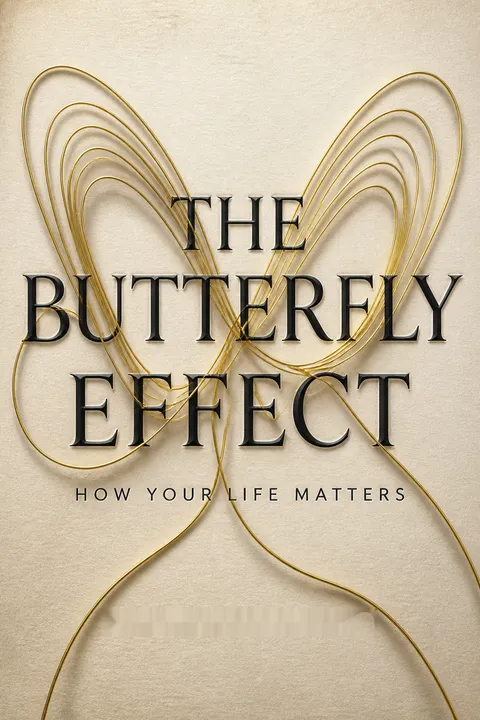
The Butterfly Effect is a short, inspirational book by Andy Andrews that emphasizes how every action matters and can have far-reaching consequences. Many reviewers found it thought-provoking and uplifting, appreciating its historical examples and powerful message. Some felt it was too brief or simplistic, while others praised its ability to encourage readers to recognize their potential impact. The book's attractive design and quick readability were noted, with several suggesting it as a meaningful gift for various occasions.
People Also Read


Glossary
The Butterfly Effect
Small causes, large consequencesThe book uses this idea to describe how a small initial event can contribute to a much larger chain of consequences. It applies the image to human action, arguing that choices may affect people and events far beyond their immediate setting. The metaphor emphasizes uncertainty about an action’s eventual reach.
The Law of Sensitive Dependence Upon Initial Conditions
Sensitivity to starting conditionsThe book identifies this as the scientific name for the principle behind the butterfly effect. It describes how a system’s later behavior can depend strongly on its starting conditions, so a small initial difference may contribute to a substantially different outcome. The book uses this scientific concept to frame its argument about human influence.
life of permanent purpose
Purpose in daily choicesThe book’s phrase for living with an ongoing awareness that actions matter, including ordinary interactions that seem minor or private. Rather than reserving purpose for major achievements, this outlook asks people to bring care and responsibility to daily roles, relationships, and decisions, even when the consequences are not yet visible.
FAQ
What's "The Butterfly Effect: How Your Life Matters" about?
- Concept of the Butterfly Effect: The book explores the idea that small actions can have significant impacts over time, akin to a butterfly flapping its wings and eventually causing a hurricane.
- Historical Examples: It uses historical anecdotes, such as Joshua Lawrence Chamberlain's actions during the Civil War, to illustrate how individual decisions can shape the course of history.
- Personal Impact: The narrative emphasizes that every person's actions matter and can influence the world in unforeseen ways.
- Purpose and Meaning: The book encourages readers to live with purpose, understanding that their lives have a lasting impact on others and the world.
Why should I read "The Butterfly Effect: How Your Life Matters"?
- Inspiration and Motivation: The book provides motivational stories that inspire readers to recognize the significance of their actions.
- Perspective Shift: It offers a new perspective on how seemingly small decisions can lead to monumental changes.
- Empowerment: Readers are empowered to live purposefully, knowing their actions contribute to a larger narrative.
- Practical Wisdom: The book combines storytelling with practical advice on how to live a life of permanent purpose.
What are the key takeaways of "The Butterfly Effect: How Your Life Matters"?
- Every Action Matters: The central message is that every action, no matter how small, has the potential to create significant change.
- Historical Impact: The book illustrates how historical figures' decisions have had long-lasting effects, encouraging readers to consider their own potential impact.
- Living with Purpose: It stresses the importance of living with intention and understanding the broader implications of one's actions.
- Interconnectedness: The narrative highlights the interconnectedness of human actions and their cumulative effects on the world.
What is the Butterfly Effect as explained in the book?
- Initial Concept: The Butterfly Effect is the idea that small actions can lead to significant consequences, initially proposed by Edward Lorenz.
- Scientific Validation: Though initially dismissed, the concept was later validated by physicists and is now known as The Law of Sensitive Dependence Upon Initial Conditions.
- Application to People: The book extends this concept to human actions, suggesting that every decision can have far-reaching effects.
- Illustrative Examples: Through stories like that of Joshua Lawrence Chamberlain, the book demonstrates how individual actions can alter history.
How does the story of Joshua Lawrence Chamberlain illustrate the Butterfly Effect?
- Civil War Context: Chamberlain was a Union Army Colonel during the Civil War, tasked with holding a critical position at Gettysburg.
- Decisive Action: Despite overwhelming odds, he ordered a charge that turned the tide of the battle, impacting the outcome of the war.
- Historical Consequences: Historians suggest that his actions contributed to the Union's victory, which had global implications, including the eventual defeat of Nazi Germany.
- Ripple Effect: Chamberlain's story exemplifies how one person's decision can have a profound and lasting impact on the world.
What role does Norman Borlaug play in the book's narrative?
- Agricultural Innovations: Borlaug developed high-yield, disease-resistant crops that thrived in arid climates, preventing famine.
- Global Impact: His work is credited with saving over two billion lives, showcasing the Butterfly Effect in action.
- Chain of Influence: The book traces Borlaug's influence back to Henry Wallace and George Washington Carver, illustrating interconnected actions.
- Recognition: While Borlaug received accolades, the book highlights the contributions of others who influenced his path.
How does the book connect George Washington Carver to the Butterfly Effect?
- Mentorship Role: Carver mentored a young Henry Wallace, instilling in him a love for plants and their potential.
- Indirect Influence: Wallace later became Vice President and initiated programs that led to Borlaug's agricultural breakthroughs.
- Legacy of Actions: Carver's influence on Wallace exemplifies how mentorship and guidance can have far-reaching effects.
- Broader Implications: The book uses Carver's story to demonstrate how seemingly small interactions can lead to monumental outcomes.
What are the best quotes from "The Butterfly Effect: How Your Life Matters" and what do they mean?
- "With a little perspective, you can live a life of permanent purpose." This quote emphasizes the importance of understanding the broader impact of one's actions.
- "Every move we make and every action we take, matters not just for us, but for all of us … and for all time." It highlights the interconnectedness of human actions and their lasting significance.
- "You have been created in order that you might make a difference." This quote encourages readers to recognize their unique potential to influence the world.
- "Your life … And what you do with it today … MATTERS FOREVER." It serves as a reminder of the enduring impact of one's choices and actions.
How does the book suggest individuals can live a life of permanent purpose?
- Awareness of Impact: By understanding that every action has potential consequences, individuals can make more intentional choices.
- Purposeful Living: The book encourages readers to align their actions with their values and goals, creating a meaningful life.
- Influence on Others: It suggests that by living purposefully, individuals can positively influence those around them and contribute to a better world.
- Continuous Reflection: Regular reflection on one's actions and their impact can help maintain a life of permanent purpose.
What historical examples does the book use to illustrate its concepts?
- Joshua Lawrence Chamberlain: His decisive action at Gettysburg is used to show how individual decisions can change history.
- Norman Borlaug: His agricultural innovations demonstrate the global impact of scientific advancements.
- George Washington Carver: His mentorship of Henry Wallace illustrates the long-term effects of guidance and education.
- Moses and Susan Carver: Their rescue and upbringing of George Washington Carver highlight the ripple effects of compassion and action.
How does the book address the interconnectedness of human actions?
- Chain Reactions: It illustrates how one person's actions can set off a chain of events affecting countless others.
- Historical Connections: By tracing the influence of figures like Carver and Borlaug, the book shows how interconnected actions shape history.
- Personal Responsibility: Readers are encouraged to consider how their actions contribute to a larger narrative and affect others.
- Global Perspective: The book emphasizes that individual actions have global implications, reinforcing the idea of a shared human experience.
What is the significance of the book's title, "The Butterfly Effect: How Your Life Matters"?
- Metaphorical Meaning: The title refers to the concept that small actions can lead to significant changes, akin to a butterfly causing a hurricane.
- Personal Relevance: It underscores the idea that every person's life and actions have meaning and impact.
- Encouragement to Act: The title serves as a call to action, urging readers to recognize their potential to influence the world.
- Universal Message: It conveys a message of empowerment, suggesting that everyone has the ability to make a difference.
Download PDF
Download EPUB
.epub digital book format is ideal for reading ebooks on phones, tablets, and e-readers.








