

Plot Summary
Cats, Cameras, and Clues
Mayville Heights librarian Kathleen Paulson is helping photographer Ruby Blackthorne make a tourist calendar starring Kathleen's extraordinary cats, Owen and Hercules. While they pose, Kathleen meets cabaret singer Emme Finley and her assistant, Miranda Moore. Emme confides that she hopes to return to college and move toward musical theater, while Miranda shows Kathleen a bracelet inherited from the father she never knew.
The women look strikingly alike, though Emme wears a small beauty mark that Miranda does not. The next day, Kathleen sees Emme arguing in the library parking lot with a bearded stranger. He leaves before she can identify him, but the brief confrontation gives the singer's plans and private life an uneasy edge.
The opening gives its cozy world an unusual double focus: domestic familiarity and unexplained capability. Kathleen treats the cats' invisibility and wall-walking as private facts to manage, while the town treats them as charming personalities. The calendar project links art to civic livelihood, so the festival's visitors matter beyond spectacle. Emme's wish to return to school introduces a question of self-authorship, and Miranda's heirloom quietly anchors her to an absent family history. Their resemblance is first a social curiosity, but the misplaced beauty mark gives it the potential to become evidence. The argument adds pressure without yet telling Kathleen what kind.
The Wrong Woman
At a nighttime photo shoot by the marina, Owen and Hercules keep staring toward the riverbank until Hercules leads Ruby to a body among the bushes. Kathleen recognizes the striped dress and sweater Emme had worn, but a green heeled shoe contradicts what Emme told her about wearing heels only for performances. Kathleen remembers Miranda's similar shoes.
Ruby confirms that Emme had a small tattoo on her shoulder and a beauty mark beside her mouth; neither is on the dead woman's body. The victim is Miranda, not Emme. Marcus Gordon, the detective and Kathleen's partner, secures the scene while Ruby and Kathleen absorb the loss of someone they had only recently come to know.
The discovery turns likeness from a matter of styling into a threat to identity. Kathleen does not identify Miranda through a dramatic revelation, but by comparing ordinary details she has actually noticed: footwear, tattoo, and mole. That method suits her librarian's attention to particulars and gives observation a moral dimension, since getting the identity wrong would compound the dead woman's erasure. The cats lead the humans to the body, yet cannot explain it. Their silent concern intensifies the scene without supplying supernatural answers. Grief arrives before certainty about cause, leaving Kathleen and Ruby caught between wanting the victim to be someone else and wanting Miranda's death to mean something other than chance.
Ami's Unfinished Appeal
Marcus begins gathering evidence, but he gives Kathleen little information while the cause of death awaits official confirmation. The festival organizers decide to continue and dedicate the final concert to Miranda; Emme, overwhelmed by grief, leaves town.
Ruby learns that Miranda's gold bracelet is missing and tells Kathleen that Emme had a volatile former boyfriend, Derrick Clifton, who may have been nearby. Ami Lester, Everett Henderson's granddaughter and Miranda's friend, asks Kathleen to investigate because festival performers may speak more freely to her than to police.
Kathleen initially refuses, wary of damaging her relationship with Marcus. Rebecca, who helped raise Ami and trusts Kathleen's judgment, urges her to decide for herself. Kathleen agrees to listen and share anything useful with Marcus, but promises no results.
Kathleen's reluctant commitment is less a rejection of law enforcement than a negotiation between intimacy and responsibility. She knows that amateur investigation has previously strained her relationship with Marcus, so her hesitation is informed rather than timid. Ami reframes the problem: Miranda risks being reduced to an outsider whose death receives less attention than the festival's disruption. The missing bracelet makes that concern concrete, while Emme's departure leaves both emotional and evidentiary gaps. Rebecca's intervention matters because it does not demand a heroic identity from Kathleen; it reminds her that people already rely on her particular skill of listening. Her agreement is therefore bounded, relational work, not a claim to replace the police.
Hercules Hitches a Ride
During a later photo shoot, Hercules slips through the windows of a stranger's car and hides behind a guitar case. Kathleen retrieves him from Jack Spector, a member of Emme's backup band, and learns that Jack had argued with Emme about abandoning her plans for college.
He had encouraged her to pursue the change because her decision had pushed him to take his own songwriting seriously. Jack says Miranda supported Emme's education, while Emme's sister and manager, Nora Finley, favored returning to familiar cabaret work.
He also confirms he was in St. Paul when Miranda died. Marcus later tells Kathleen that witnesses independently place Derrick at a bar during the killing, weakening the obvious theory that Emme's former boyfriend attacked Miranda.
Hercules's impulsive trespass functions as more than comic business: it brings Kathleen into contact with someone outside the police's immediate circle and opens a view of Emme's professional pressures. Jack's account complicates the simple opposition between supportive friends and obstructive ones. He has an interest in Emme's choice, but it is an interest born of his own stalled creative life, not obvious self-protection. His alibi narrows the suspect field, while Marcus's confirmation about Derrick shows that the detective is sharing what he can, even as Kathleen's inquiry runs alongside his. The cats' powers repeatedly create access, but Kathleen must still interpret what people reveal.
Emme Behind the Door
Kathleen spots Derrick Clifton at Fern's diner, follows him to a motel, and discovers Emme staying there with him. Emme had not truly ended the relationship; she had let others believe she left town because she needed time to grieve and decide whether to return to school.
She and Derrick describe a night in Chicago when someone appeared to lure Derrick to a club, where photographs showed him kissing a woman who seemed to be Emme. Emme remembers little after leaving with Miranda, and the images damaged her public-service campaign, relationship, and college prospects.
Derrick suspects someone arranged the encounter to hurt Emme. Kathleen advises Emme to give the police the hostile fan messages Miranda had saved, then leaves without learning who engineered the photographs.
The motel scene separates concealment from coercion. Emme is hiding, but she is not being held there; Derrick's presence is a source of support rather than a threat. That distinction corrects the town's easy story about an angry ex and lets Kathleen judge behavior instead of reputation. The old photographs create a second mystery nested inside the murder: someone manipulated an intimate encounter and then profited from its public damage. Emme's memory gap makes her vulnerable to other people's accounts of her own actions, a problem that parallels the danger of confusing her with Miranda. Kathleen's request to preserve fan messages is a modest investigative move, grounded in uncertainty rather than accusation.
The Photographer's Buyer
Kathleen interrupts Alec Kane while he is photographing Nora, hoping the older sister will lead him to Emme. Marcus discovers Alec has fourteen unpaid parking tickets and brings him to the station, but releases him after confirming his alibi: he was in Chicago when Miranda was killed. Kathleen then learns Alec took the club photographs and sold them to an anonymous buyer who had first tipped him off to Emme's whereabouts.
He admits the pictures showed Emme with Derrick, and suggests Emme's agent, Lucie Pope, might benefit if the singer abandoned college. Lucie denies wanting that outcome, supplies an alibi of her own, and points Kathleen toward Miranda's troubled family. The photographs now look deliberate, but their buyer remains hidden.
Alec's mix of talent, ambition, and poor judgment makes him a useful witness without making him a reliable interpreter. He understands the market for celebrity images but has not considered how easily his work can become a weapon. His arrest arises from unpaid tickets, not the murder, a small reminder that police attention can uncover unrelated vulnerabilities. The anonymous buyer converts a seemingly ordinary paparazzi transaction into a chain of agency: the photographer captured the image, but someone else selected and deployed it. Lucie's denial does not resolve the question, yet her redirection toward family widens the inquiry. The section distinguishes access to evidence from understanding its motive.
Miranda in the Photograph
At home, Kathleen enlarges the club images beside Emme's official headshot and notices the beauty mark sits slightly too high. The woman kissing Derrick was Miranda, made to resemble her friend. Emme returns to Mayville Heights and explains that Miranda had a university registrar job lined up and hoped to study accounting, while Emme's return to college would also have given Nora room for a life beyond managing her sister.
Emme shares an old photograph of Miranda's stepbrothers, Brent and Nick. Kathleen recognizes Brent as the aggressive diner customer Eric once expelled for grabbing a waitress. Miranda had asked librarian Mary Lowe how to reach the Riverwalk shortly before her death, suggesting she had plans of her own.
The beauty mark is a small, embodied detail that defeats the authority of a supposedly damning image. A photograph appears to fix identity, but here it has been staged through makeup, clothing, and public expectation. Kathleen's recognition depends on having paid attention to Emme's face in person, not on technical expertise. The revelation also alters the moral meaning of Miranda's choices: her new job and study plans suggest a future distinct from Emme's, while her willingness to impersonate her friend remains unexplained. Brent's recognition supplies a credible family lead, but the Riverwalk question gives Miranda an independent last intention. The dead woman is becoming a person, not merely a plot clue.
Brent's Empty Room
Kathleen follows Brent's truck to a shabby motel after seeing him linger near the storage business where she visits Taylor King. She and Owen slip into his room while the cleaner is away, searching for Miranda's missing bracelet and finding none.
A discarded receipt for beer and pizza in Minneapolis, dated the night Miranda died, appears to give Brent an alibi. Owen turns invisible to distract Brent and his drinking companion, letting Kathleen escape before they return to the room.
Marcus later confirms Brent was arrested in Minneapolis that night after a drunken argument, independently clearing him of the murder. But Brent's interest in buying a new truck and his history of taking money from Miranda keep Kathleen wondering whether he knows something about Nora's schemes.
The motel break-in shows Kathleen's curiosity crossing from conversation into genuine risk. Her motive is not professional pride; the missing bracelet and Brent's evasiveness make the possibility of a family connection hard to ignore. Owen's invisibility provides the escape, but it does not make the investigation safe or legitimate. The receipt first seems like a clue Kathleen has earned, then Marcus verifies it through a separate arrest record, restoring the difference between a suspicion and an alibi. Brent's innocence does not make him harmless or trustworthy. The episode preserves the mystery's moral complexity: a person can exploit Miranda and still not be her killer.
The Wedding Nearly Breaks
As Roma Davidson's wedding approaches, her adult daughter Olivia resists joining the family celebration, insisting that marriage to Eddie will change a life that was already good.
During an argument at Wisteria Hill, Sydney hears only that Roma's happiest years were when she and Olivia were alone, then disappears into the carriage house. Olivia realizes where she has gone and finds her trapped on an unstable hayloft. Kathleen uses a rope and heavy chain as a counterweight to lower Sydney and Olivia, but the structure collapses just after Marcus arrives.
He shields Olivia as Kathleen protects Sydney. Lucy, the feral colony's matriarch, had alerted Marcus by crying at the house. The family survives, and Olivia begins to accept Sydney as a sister.
This domestic crisis echoes the murder plot without duplicating it: both turn on what people hear, what they conceal, and who is left exposed when relationships change. Sydney mistakes a remembered past for a rejection of her future, while Olivia's resistance masks fear of losing her place with Roma. Kathleen's rescue is practical and collaborative, using the old carriage house's chain and her own nerve rather than extraordinary powers. Marcus's arrival and Lucy's warning make care a network rather than a solitary feat. The near collapse forces Olivia to act as the sister Sydney needs before either can comfortably name that bond.
Two Alibis Collapse
After recovering, Kathleen studies Ruby's earlier marina photographs and spots Nora at a bank ATM in the evening, contradicting Nora's claim that she spent the night with Emme. Kathleen calls Emme, who admits she was with Derrick at the motel while Miranda was dying. Nora had offered to claim Emme was with her to protect the singer's reputation, but that lie also concealed Nora's absence.
Meanwhile, security specialist Gavin Solomon traces the anonymous emails sent to Alec back to Nora. The two discoveries converge: Nora was positioned to manipulate Emme's career and had hidden her own movements. Kathleen understands that the person who supplied the photographs and the person who lied about Emme's alibi are likely the same.
The breakthrough depends on evidence that was not created to solve the crime. Ruby's calendar photographs preserve a background detail that Nora did not know Kathleen could later inspect, while Gavin's technical work reveals the sender behind a separate chain of messages. The convergence matters because neither clue alone proves murder; together they expose a pattern of controlled appearances. Emme's confession also complicates the emotional stakes: Nora's lie was partly protective, which helps explain why the family trusted her, but protection has become a means of managing another adult's life. Kathleen moves from intuition to testable inference, preparing to confront rather than merely suspect.
Nora's Last Performance
Ruby asks Kathleen to bring Hercules to the Stratton Theatre for more photographs, but Nora is waiting with a gun and Ruby is absent. Nora wears Miranda's missing bracelet and admits she arranged the club photographs, using medication to impair Emme and Derrick's memories.
She pressured Miranda to impersonate Emme, then killed her when Miranda planned to confess. Miranda had taken money from a previous employer to bail out Brent and replace it; Nora also discovered Miranda knew about kickbacks Nora took from clubs tied to Emme's bookings.
Kathleen refuses to be marched away. Hercules attacks when Nora reaches for him, and Kathleen strikes Nora with a backpack before escaping into the basement. She knocks Nora unconscious with a roll of wallpaper and binds her. Marcus arrives after marina security footage places Nora with Miranda.
Nora's revelation recasts care as a form of possession. She has built her identity around managing Emme's career and believes keeping her sister close justifies manipulation, financial exploitation, and finally violence. Miranda's own wrongdoing, taking money to help Brent, gives Nora leverage but does not erase Miranda's effort to repair the harm. The missing bracelet becomes more than evidence: Nora wears the inheritance Miranda valued as a trophy of control. Kathleen survives through improvisation, attention, and Hercules's loyalty, not through a sudden mastery of force. Marcus's independent footage corroborates the confession and keeps the resolution anchored in evidence rather than Kathleen's private certainty.
Music After the Murder
Nora is hospitalized with a concussion under police guard, while Emme visits Kathleen and struggles with what she has learned about both her sister and Miranda. Kathleen reminds her that Miranda was trying to correct her mistake, and Derrick stays beside Emme as she grieves.
At the festival's closing concert, Emme returns to sing with Ruby and Ami, honoring Miranda rather than retreating from music. The next evening, Olivia wears her bridesmaid dress and Sydney gives Roma a handmade blue garter.
Roma and Eddie marry at Wisteria Hill, joining Olivia and Sydney in the family ceremony. Kathleen watches Marcus beside her and sees how the people she loves have made room for one another. The investigation ends not with certainty about grief, but with people choosing to remain present.
The ending refuses to make justice an emotional cure. Nora is in custody and Miranda's murder has an answer, yet Emme still must mourn someone she discovers she did not fully understand. Her return to the stage is a decision to keep pursuing a life Miranda supported, not proof that grief has passed. Roma's wedding gives the book a second form of closure: Olivia's earlier fear has become participation, and Sydney's gift makes their newly chosen kinship visible. These scenes connect private loyalty to public ritual. The concert and wedding do not erase betrayal or loss; they show people rebuilding trust through acts of attendance.
Analysis
The novel builds its mystery around the unstable boundary between appearance and knowledge. Miranda can be mistaken for Emme because they resemble one another, but the deeper deception is social: people accept the photograph, the public scandal, and Nora's account because each fits an already available story. Kathleen's method counters that reflex through slow attention. A shoe, a beauty mark, an ATM image, and an old receipt matter because she remembers where each came from and tests it against other evidence. The cats extend this method into a lightly magical register, giving Kathleen access without turning intuition into omniscience.
The murder also asks what care becomes when it is fused with control. Nora's identity as Emme's protector lets her rationalize interference in Emme's career and the exploitation of Miranda's loyalty. Miranda, meanwhile, is neither spotless victim nor disposable assistant: she makes a serious mistake with money, then tries to repair it. The story grants her moral agency without suggesting that her mistake warrants her death. In that sense, the investigation is also an effort to restore the victim's complexity after others have reduced her to a lookalike, a helper, or a source of cash.
The parallel wedding plot gives the book a softer but structurally important counterpoint. Olivia's resistance and Sydney's fear arise from the same problem as the mystery, though at gentler stakes: people interpret partial evidence as proof that they no longer belong. The rescue forces Olivia to act on the kinship she had resisted, while the wedding makes that choice public. The concert does something similar for Emme, who returns to music without pretending that grief has ended. The novel's resolution therefore rests less on perfect emotional repair than on accountable action: crimes are exposed, families speak honestly, and people choose to stay connected despite what has changed.
Review Summary
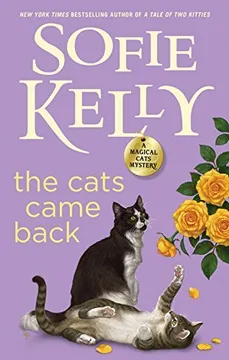
The Cats Came Back is a beloved cozy mystery featuring librarian Kathleen Paulson and her magical cats, Owen and Hercules. Readers praise the well-developed characters, engaging plot, and the cats' charming personalities. The story revolves around a music festival and a murder investigation, with Kathleen and her feline companions working to solve the case. While some readers found the mystery predictable, many enjoyed the small-town setting and ongoing character relationships. The series' blend of mystery, humor, and magical elements continues to delight fans.
Characters
Kathleen Paulson
The reluctant librarianKathleen is the head librarian in Mayville Heights, a transplanted Bostonian who has made a home among its artists, eccentrics, and old families. She reads people with the attentiveness she brings to books, remembering small details that others dismiss. Her curiosity repeatedly draws her into Marcus's investigations, although she understands the strain this can put on their relationship. Kathleen is not fearless; she weighs consequences, worries about the people she may hurt, and sometimes proceeds despite that worry. Her tenderness shows in practical gestures, from feeding cats to making food for friends. She values belonging, but does not confuse loyalty with silence, and her choices are driven by a desire to ensure that vulnerable people are not overlooked.
Owen
The vanishing tabbyOwen is a gray-and-white tabby who can disappear at will and has a talent for appearing wherever curiosity leads him. He is a hunter, a food enthusiast, and a shameless thief of objects that catch his attention. His attachment to Kathleen is expressed through watchfulness and physical closeness, though he resists being managed. Owen often notices what interests the humans and acts on it before they understand why. His mischievousness supplies comedy, but his loyalty becomes practical in dangerous moments. He and his brother share a quiet form of communication that Kathleen recognizes without claiming to understand.
Hercules
The wall-walking tuxedoHercules, Owen's black-and-white brother, can pass through walls, doors, and windows. He is more orderly than Owen, particularly about food and cleanliness, and often watches conversations with an air of careful concentration. His curiosity can become recklessness, as when he slips into a stranger's car, but it also brings Kathleen to useful people and places. Hercules is affectionate in his own terms, nudging Kathleen and settling close when she is upset. His unusual abilities are a secret she protects, while his steady presence makes him an active companion rather than a pet who merely observes.
Marcus Gordon
The careful detectiveMarcus is a Mayville Heights detective and Kathleen's romantic partner. Practical, observant, and committed to evidence, he must balance the demands of his cases with a relationship involving someone who cannot help noticing clues. His reserve is professional rather than indifferent, though Kathleen sometimes feels the distance when he withholds details. He respects her judgment even when he warns her away from danger, and he has learned that trying to change her would damage the relationship he wants. His care appears in concrete acts: checking on her, sharing information when he can, and showing up when she is in trouble.
Emme Finley
The ambitious cabaret singerEmme is a gifted Chicago cabaret singer whose warm presence makes her popular with collaborators and fans. She is considering a return to college and a move toward musical theater, partly because she wants a more expansive artistic life. Emme's loyalty to the people close to her is genuine, but she can be slow to challenge the stories they tell about her or the expectations attached to her public image. Her grief for Miranda is sharpened by their sisterlike closeness and by the abrupt loss of a shared future. She responds to pressure by withdrawing, then works to reclaim her choices when she can face them.
Miranda Moore
Emme's steadfast friendMiranda is Emme's childhood friend and trusted assistant, a quiet, capable woman with a gift for numbers and a habit of remembering what other people need. She grew up with complicated family ties and found in Emme a source of enduring companionship. Miranda is practical and generous, sometimes to the point of taking responsibility for problems that belong to others. She hopes to build a more independent future through work and study, even while supporting Emme's ambitions. Her reserve can make her easy to overlook beside a charismatic friend, but her care is expressed through reliable, concrete acts rather than performance.
Nora Finley
Emme's protective managerNora is Emme's older sister and professional manager, a meticulous organizer who prefers plans to uncertainty. She has spent years helping guide Emme's career and can be intensely protective of her younger sister. Nora's competence and attention to detail make her useful in the demanding world around a touring performer, but her sense of responsibility can crowd out other people's independence. She is reserved in company and rarely gives away more than she intends. Her relationship with Emme is shaped by shared loss and a long history of caregiving, which makes the boundary between support and control especially difficult to see.
Ruby Blackthorne
The observant photographerRuby is a photographer and artist whose work promotes Mayville Heights and its creative community. She has an easy rapport with animals, including Kathleen's unusually capable cats, and knows how to coax them into images without trying to control them physically. Ruby's friendship with Emme and Miranda makes the murder personal, while her own history of loss makes the discovery especially painful. She is candid, warm, and artistically self-assured, but grief can leave her searching for ways to be useful. Her photographs preserve seemingly incidental details, giving her creative work an unexpected role in Kathleen's inquiry.
Ami Lester
The determined young friendAmi is Everett Henderson's granddaughter and a singer in the summer festival. She became friends with Miranda through music and shared television enthusiasms, and she takes the loss seriously enough to challenge Kathleen to investigate. Ami is direct, emotionally perceptive, and unwilling to let a newcomer to town be forgotten. Her closeness to her grandmother figure Rebecca gives her a secure base, but she is learning to advocate beyond the family circle. Ami's insistence is not a demand for certainty; it comes from wanting someone to keep asking questions.
Derrick Clifton
Emme's complicated partnerDerrick is Emme's former boyfriend, a musician with a rough reputation and a history of acting impulsively when someone is mistreated. His relationship with Emme has been interrupted by poor judgment and outside pressure, but their affection remains visible. He encourages her artistic ambitions and supports her through grief without claiming to decide her future. Derrick is quick to anger at injustice, a trait that can make him look dangerous before anyone knows the context. Kathleen's willingness to judge his conduct directly rather than accept his reputation allows his loyalty and flaws to coexist.
Jack Spector
The aspiring songwriterJack plays with Emme's backup band and has spent years writing songs without believing he could pursue them seriously. Emme's decision to change direction encourages him to take his own work more seriously, making him invested in her plans. He is candid about their disagreement and does not pretend his concern is entirely detached from his own experience. Jack's kindness toward animals makes him receptive when Kathleen retrieves Hercules from his car. He provides a view of Emme's professional circle beyond the relationships defined by family or romance.
Lucie Pope
The practical music agentLucie is Emme's agent, a business-minded representative who understands the financial stakes of a performing career. She speaks plainly about opportunities and is willing to discuss the consequences of Emme's possible return to school. Lucie denies having a reason to interfere with Emme's plans and offers an alibi when Kathleen asks about her. Her pragmatism makes her a plausible person for Kathleen to question, but she does not fit the easy portrait of a ruthless manager willing to sacrifice a client.
Brent Pearson
Miranda's needy stepbrotherBrent is one of Miranda's stepbrothers, an inconsistent worker whose financial troubles have repeatedly drawn on her generosity. He is abrasive and entitled in public, as Kathleen sees when he mistreats a waitress. His interest in a new truck and his evasiveness make him look suspicious, but his behavior is not proof of murder. Brent represents the exhausting family obligations Miranda has carried, and his presence in Mayville Heights gives Kathleen a reason to look beyond the festival's performers.
Roma Davidson
The veterinarian brideRoma is a veterinarian, Kathleen's close friend, and a devoted caretaker of Mayville Heights' feral cats. She is direct, capable, and more vulnerable about love than her practical competence might suggest. Her engagement to Eddie brings happiness but also forces a change in the family life she shares with her adult daughter, Olivia. Roma's protective instincts extend to animals, children, and friends, sometimes making her reluctant to ask for what she wants. She values chosen family and believes care is proven by showing up, even when relationships are messy.
Olivia
Roma's unsettled daughterOlivia is Roma's adult daughter, a biologist and commercial diver who works away from Mayville Heights. She has long been close to her mother, and Roma's marriage to Eddie unsettles the family arrangement she has known. Olivia initially expresses her fear as irritation and resistance, especially around Sydney, her future stepsister. Beneath that defensiveness is a wish to preserve her place in Roma's life. Olivia is resourceful under pressure and capable of revising her stance when she sees how her behavior affects a child.
Sydney Sweeney
The hopeful stepdaughterSydney is Eddie's ten-year-old daughter, lively, perceptive, and eager for Roma to become her stepmother. She wants the wedding to feel like a genuine joining of families, which is why Olivia's hesitation hurts her so deeply. Sydney's imagination is full of adventures, jokes, and plans, but she can misunderstand adult conflict when she hears only part of it. She is brave when someone helps her feel safe and quick to offer affection once a relationship begins to mend.
Maggie Adams
The steady artist friendMaggie is a fiber artist, tai chi instructor, and one of Kathleen's closest friends. She is generous with practical help, whether she is organizing a wedding celebration or making time for someone who needs company. Her humor can puncture tension, but she takes friendship seriously and notices when Kathleen is withholding a worry. Maggie's confidence in her own creative process is balanced by an instinct for collaboration. She and Kathleen have built a chosen-family bond through shared work, meals, and the ordinary rituals of a small town.
Rebecca Henderson
Ami's trusted anchorRebecca is Everett's partner and a deeply trusted presence in Ami's life. Her bond with Ami grew beyond formal family arrangements into genuine, enduring care. Rebecca is gentle but not passive; she knows when to ask Kathleen for help and when to let her make the decision herself. She also supports the community's practical needs, including the feral cats and the wedding preparations. Rebecca's faith in people is warm rather than naïve, grounded in long experience with the families around her.
Michel Demarque
The charismatic conductorMichel, whom Kathleen calls Uncle Mickey, is a celebrated conductor and family friend who comes to Mayville Heights for the music festival. He is theatrical, charming, and a gifted storyteller, but also attentive to the people working around him. His longstanding affection for Kathleen's mother is known to their families and gently entertains Kathleen. Michel's recollections of the festival provide a view of Miranda's ordinary plans and demeanor, while his presence connects the town's local artistic life to a wider musical world.
Gavin Solomon
The security specialistGavin is a security expert Kathleen met through library work. He is charming and flirtatious, but his technical competence is real. When Kathleen asks for help tracing emails, he applies his digital skills and offers a useful result without demanding payment. His polished manner makes Marcus wary, though Kathleen knows Gavin can be helpful while remaining difficult to read.
Eddie Sweeney
Roma's devoted fiancéEddie is Roma's partner and Sydney's father. Warm, playful, and devoted to his daughter, he makes a serious effort to build a stable family with Roma. His affection shows in humor as much as declarations, and he understands that marrying Roma means embracing the people she loves.
Alec Kane
The hungry photographerAlec is a Chicago photographer hoping to build a celebrity portfolio and land better work. He is skilled with a camera but immature about privacy and the consequences of selling images. His admiration for Emme blurs into intrusive behavior, though he is not indifferent to her talent or grief.
Everett Henderson
The town's generous benefactorEverett is Ami's grandfather, a local business leader who supports the library, the arts, and projects that benefit Mayville Heights. He is stubborn about his garden and deeply attached to the town's history. His generosity helps sustain the festival and the community spaces where its characters meet.
Ethan Paulson
Kathleen's musician brotherEthan is Kathleen's younger brother, a drummer and teacher in Boston. He is affectionate, teasing, and well connected in the music world. When Kathleen asks about Emme's agent, his knowledge helps her find someone to question.
Plot Devices
The magical cats
Unusual investigative accessOwen can become invisible and Hercules can pass through solid barriers. Their abilities remain a secret from most people, so Kathleen must use them carefully rather than explain away what they do. The cats attract Ruby's camera, lead her to Miranda's body, and create unexpected access to people and places. Owen's invisibility later helps Kathleen escape Brent's motel room, while Hercules's actions bring her to Jack and help her survive Nora's attack. Their powers make the cozy setting gently uncanny, but they do not solve the case by themselves. Kathleen still has to observe details, ask questions, and judge the answers.
The staged club photographs
A manufactured public scandalImages of Emme with Derrick appear to show the singer drinking and rekindling a romance, damaging her public-service work and disrupting her plans for school. The photographs are not what they seem: Miranda has been disguised as Emme, and someone has arranged the encounter to manipulate the singer's life. The images become both a clue to the murder and a record of how a person's public identity can be manufactured. Their visual evidence seems convincing until Kathleen compares the beauty mark in the photos with Emme's actual face.
The missing bracelet
A personal clue becomes evidenceMiranda's gold bracelet is an inheritance from the father she never knew, making its absence after her death emotionally significant as well as suspicious. Ruby notices it is missing, and Kathleen later sees it on Nora's wrist during the confrontation. The object links Miranda's private history to the person who has taken control of her story. It also gives the investigation a concrete detail that can be noticed before its meaning is known.
The email trail
Anonymous influence made traceableAlec's anonymous buyer contacts him by email to obtain the photographs and directs him toward Emme's location. The messages give the transaction a digital trail that Kathleen cannot interpret alone, so she asks security specialist Gavin Solomon to trace them. His work identifies the account behind the correspondence and connects the manufactured scandal to the investigation. The emails show how a private act of manipulation can travel through intermediaries while appearing to have no visible author.
Download PDF
Download EPUB
.epub digital book format is ideal for reading ebooks on phones, tablets, and e-readers.








