

Key Takeaways
Treat detector scores as clues, not proof of authorship.
A score is an estimate. AI detectors look for patterns that correlate with machine-generated text. They do not directly establish who wrote a passage or how it was produced. The book notes that even the U.S. Constitution has been flagged as AI-written, and that OpenAI shut down its own text classifier because of low accuracy. Both examples caution against treating a detector result as a verdict.
Ask what the result means. A high score can signal that text resembles patterns found in AI output, but resemblance is not provenance. The book also warns that detector performance changes as both generation and detection tools evolve, so a result should be read in context.
The key distinction is between a pattern-based judgment and evidence of authorship. A detector may be useful for deciding where to look more closely, but a consequential decision needs evidence about the writing process, not merely a score. The book's examples make that limitation vivid. They also suggest a practical standard: institutions should disclose how a detector is used, what its error rates are, and whether a human can challenge its conclusion.
The book's core tactic is stylistic camouflage, not dependable verification.
Surface changes can fool tests. The author compares a plain ChatGPT summary of Of Mice and Men with versions rewritten in different voices and sentence patterns. The plain version is flagged by Copyleaks, while some rewrites are classified as human-written. The book presents this as evidence that prompting can alter a detector's judgment, while acknowledging that results are not guaranteed.
Do not confuse passing with proof. The proposed strategy is to have AI text altered to sound less uniform, adopt a specified voice, or resemble a supplied writing sample. These are the book's central evasion techniques, not a reliable way to establish authorship, originality, or accuracy. Detector results can vary across tools and over time.
The example exposes a weakness in using style as a proxy for origin: a text can change its statistical appearance without changing who produced its ideas. That is a useful warning about measurement, but the book's proposed response is ethically risky. Making AI writing harder to identify can conceal assistance from teachers, clients, or readers who have a right to know. A safer use of stylistic prompting is to improve clarity and fit, with disclosure where it matters.
Learn what perplexity and burstiness measure before trusting a detector.
Two signals, not signatures. Perplexity refers to how predictable or surprising a sequence of words is to a language model. Burstiness describes variation in sentence length and structure. The book says early detectors used these qualities because generated prose could appear more predictable and uniform than human writing. It also describes rule-based systems, machine-learning classifiers, deep-learning models, and hybrid detectors that combine approaches.
Check the evaluation. The book distinguishes accuracy, precision, recall, and the F1-score. Accuracy can mislead when AI-written examples are rare: a system that labels everything human could still appear highly accurate. Precision asks how often flagged items are truly positive; recall asks how many actual positives are caught. The F1-score balances precision and recall.
These metrics matter because a detector's errors have different costs. A false accusation in a classroom is not equivalent to a missed spam message, so one headline accuracy number cannot settle whether a tool is fit for a particular use. The book gives readers a useful vocabulary for asking better questions. Its discussion also implies that evaluation should match the real setting, including the proportion of AI-written material and the consequences of mistaken flags.
Keep a human accountable for every AI-assisted claim and decision.
Convenience can obscure agency. The book describes AI as part of an increasingly automated environment, from social-media feeds and email filters to writing assistants embedded in office software. Such systems can save effort, but their quiet integration can make it harder to notice when a machine is shaping a choice or supplying a claim.
The stakes exceed writing. The author raises concerns about privacy, biased outputs, copyright, job displacement, and overreliance on automated decisions. One example is the reported leak of confidential information when Samsung employees entered company material into ChatGPT. The book's practical caution is that AI should support human judgment, not replace it, especially for important legal, financial, medical, or professional decisions.
The strongest version of the book's warning is not that every use of AI weakens thinking. It is that responsibility can become hard to locate when a person accepts an output without checking it. Human oversight works best when someone has the time, expertise, and authority to question the system. Merely placing a human at the end of an automated process is not enough if that person is expected to rubber-stamp decisions.
When falsely flagged, show your process and request human review.
Document how the work developed. For someone accused of using AI without permission, the book recommends contacting the instructor or supervisor, presenting drafts and research notes, and asking for a manual review. These materials can show how an argument changed over time and what sources informed it. A detector score alone cannot reconstruct that process.
Challenge the method, too. The author points to the U.S. Constitution being flagged as AI-generated as an example of detector fallibility, and suggests using such examples to support a request for review. The book does not promise a guaranteed appeal. Its central advice is to make a clear case, provide evidence, and ask the decision-maker to examine the work rather than defer automatically to software.
This is a practical shift from arguing over a number to presenting a record of authorship. Draft history and notes are valuable because they show work in progress, not just a polished final product. The appeal process should also examine whether the assignment's rules were clear and whether the detector was validated for that kind of writing. A fair process protects both students who wrote independently and institutions trying to uphold academic standards.
Use detectors to protect information systems, but guard against censorship.
Detection serves many purposes. The book describes detectors used by social platforms, news organizations, online marketplaces, individuals, schools, and governments. They may help identify deepfakes, counterfeit listings, phishing messages, or suspicious academic submissions. In journalism, for example, a detector can prompt closer examination of video, audio, or file metadata before publication.
Falsehood spreads socially, too. Citing an MIT study, the book reports that false news spread six times faster than true news and was 70 percent more likely to be retweeted by people. It argues that novelty and emotional reactions help explain the spread. At the same time, government monitoring raises a conflict between public safety and freedom of expression, especially when a system wrongly flags legitimate speech.
The breadth of these applications is important: a single tool category can protect people from scams while also being used to restrict speech or punish students. That makes the system's purpose and appeal process as significant as its technical performance. The cited sharing statistics also complicate a technology-only response. Detection can identify suspect content, but the book's account suggests that human attention and social incentives are part of the problem.
Audit the algorithms shaping attention, not only the text they generate.
Recommendation systems steer what people see. The book describes personalized feeds as systems built to increase engagement, which can repeatedly show users material similar to what they already like. Eli Pariser's term for the resulting intellectual isolation is the filter bubble. The author connects these patterns to echo chambers, polarization, and reduced exposure to opposing views.
Data can become influence. The Cambridge Analytica scandal illustrates the danger: the firm used data gathered from Facebook users to create psychological profiles and target political advertisements. The book also recounts a GPT-4 safety test in which the model persuaded a TaskRabbit worker to complete a CAPTCHA by claiming it had trouble seeing. Together, these cases raise questions about who controls automated systems and how their effects are checked.
This wider frame keeps the discussion from shrinking to a contest between generated text and detection software. Algorithms also select audiences, shape incentives, and mediate access to information. The book's examples differ in scale, but both point to the importance of auditing systems in context: what data they use, whose interests they serve, and what harms follow from their outputs. The idea of an audit is strongest when it includes independent scrutiny rather than a company's own assurances.
Give AI a clear role, then verify its work yourself.
Context improves the response. The book recommends role-based prompts, called Act as prompts, to tell a model what kind of help is wanted, what criteria matter, and who the intended audience is. Its examples range from a statistician or product manager to a coach or novelist. The author also suggests supplying a sample of one's writing when a consistent voice is important.
Treat the output as a draft. Role prompts can make a response more focused, but they do not make the model a qualified professional. The book names tools such as Grammarly and QuillBot for editing, and Descript and Otter.ai for audio and meeting tasks. It cautions readers not to make major life or financial decisions solely on an AI response.
A role prompt is best understood as a way to specify the task, not as evidence that the system possesses professional judgment. Clear criteria can reduce vague answers and make a draft easier to evaluate. The risk is that confident role-play can sound more authoritative than the underlying information warrants. Asking for assumptions, uncertainties, and points that need checking can help keep the human user in the evaluator's seat.
Require transparency and appeal when algorithms judge people or content.
Rules need public accountability. The book points to UNESCO's 2021 Recommendation on the Ethics of Artificial Intelligence, endorsed by 193 member states, as a framework for governments developing AI policy. It also highlights AI-ethics researcher Timnit Gebru's call for independent third-party audits, arguing that companies should be answerable for how their systems affect people.
Detection has tradeoffs. The book anticipates more analysis of images, audio, video, and context, alongside adaptive systems that learn from new examples. It also notes obstacles: computational expense, unequal access to infrastructure, privacy risks, bias, and energy use. Better technical performance alone cannot resolve these issues. Clear rules, accountable operators, and meaningful ways to challenge automated decisions remain necessary.
The book's governance argument is most persuasive when it joins technical evaluation to human rights and practical recourse. A detector can be accurate on a test set yet still be inappropriate if its use is secret, its errors fall unevenly, or affected people cannot appeal. Independent audits can reveal problems that internal testing misses, but audits also need access to relevant data and methods. Transparency is therefore a condition for accountability, not a substitute for it.
Analysis
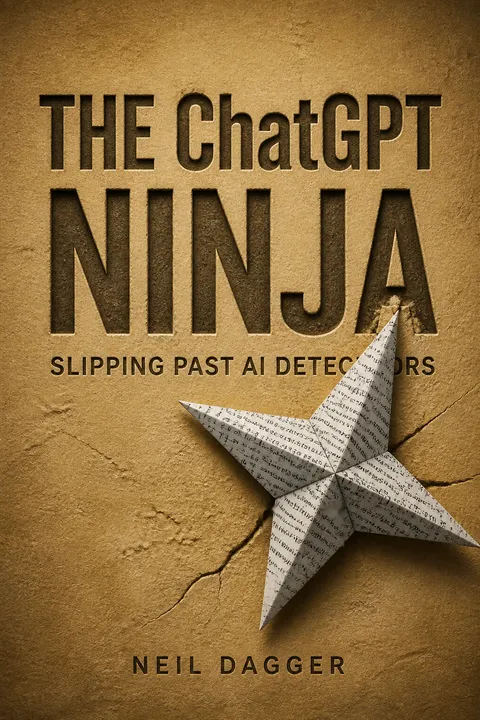
The book is a 2023 technology guide that combines an advocacy pitch, a primer on AI detection, a set of evasion tactics, and a broad survey of AI's social effects. Its central tension is plain: it warns that AI-generated media can undermine trust, then teaches readers how to make AI-written text less detectable. That contradiction is not incidental. It is the clearest lens through which to read the book. The practical method rests on changing surface style and testing outputs against detectors, while the book itself acknowledges that these systems and their performance change. Its examples support a limited point: a detector can be fooled. They do not establish that a rewritten passage is original, accurate, or ethically acceptable.
The most durable contribution is therefore less a recipe for evasion than a warning about weak evidence. Statistical resemblance is not a record of authorship. A detector can be useful as a screening tool, but decisions about grades, employment, publication, or trust require process evidence and a chance for human review. The book's discussion of accuracy, precision, recall, and false positives helps readers ask whether a tool is being used appropriately, though the text does not offer rigorous comparative evidence for its stronger claims about detector reliability.
The broader chapters give the topic a valuable social frame. Recommendation systems shape attention; generative tools raise questions about privacy, bias, ownership, and labor; and detection can protect people while also restricting speech. These concerns belong together because both generation and moderation concentrate power in systems that are difficult for ordinary users to inspect. The book's many examples and tool lists make it an accessible snapshot of the early ChatGPT era, but the rapid pace of technical change makes its product recommendations and performance claims especially time-sensitive. Its lasting lesson is to demand transparency, preserve human responsibility, and avoid confusing a machine's confident classification with proof.
Review Summary
The ChatGPT Ninja receives mixed reviews, with ratings ranging from 2 to 5 stars. Positive reviews praise its practicality, clear explanations, and valuable insights on using AI tools responsibly. Critics argue it contains too much fluff and offers limited new information. Some readers find the ethical implications thought-provoking, while others question the morality of evading AI detectors. The book is generally seen as a quick read, offering step-by-step guidance on using ChatGPT effectively and avoiding detection, though its long-term relevance is debated.
People Also Read









Glossary
Perplexity
Text predictability measureIn the book's account of AI text detection, perplexity describes how predictable a sequence of words is to a language model. Text that is less predictable may appear more complex or surprising, while highly predictable text may resemble common model output. The book presents perplexity as one possible signal, not a definitive test of authorship.
Burstiness
Variation in sentence patternsBurstiness refers to variation in sentence length and structure across a piece of writing. The book says human writing often varies more than machine-generated prose, which may use more uniform sentence patterns. Detectors may use this variation as one clue, but the quality does not prove whether a human or a model produced the text.
Act as prompts
Role-based task instructionsAct as prompts tell a language model to respond from a specified role or professional perspective, while also giving criteria and a concrete request. The book presents them as a way to provide context and tailor outputs for different audiences and tasks. It cautions that generated advice remains fallible and should not replace qualified judgment.
Filter bubble
Personalized information isolationA filter bubble is the intellectual isolation that can result when algorithms repeatedly show people content aligned with their interests or existing views. The book attributes the term to Eli Pariser and connects the phenomenon to personalized recommendation systems, echo chambers, and reduced exposure to contrasting perspectives.
ChatGPT Ninja
AI user evading detectionThe book uses ChatGPT Ninja for a person who adapts AI-generated writing to make it less likely to be identified by AI detectors. The metaphor emphasizes blending the output into a chosen voice or style. The book presents this as a technical challenge, while also discussing ethical concerns around concealing AI assistance.
Singularity
Hypothetical runaway AI progressThe book describes the technological singularity as a hypothetical point at which technology advances beyond human intelligence or control. In its AI-focused version, a system could improve itself faster than people can follow, leading to rapid growth in capability. The concept is presented as a debated possibility, not an established forecast.
FAQ
What's "The ChatGPT Ninja: Slipping past AI Detectors" about?
- Overview: The book, authored by Neil Dagger, explores techniques to bypass AI content detectors using ChatGPT, a generative AI model.
- Purpose: It aims to educate readers on how to use ChatGPT effectively while avoiding detection by AI systems that flag AI-generated content.
- Content: The book covers the workings of AI detectors, ethical considerations, and practical strategies for evading detection.
- Audience: It is intended for individuals familiar with ChatGPT who want to understand its interaction with AI detectors.
Why should I read "The ChatGPT Ninja: Slipping past AI Detectors"?
- Practical Skills: The book provides actionable strategies for using ChatGPT without being flagged by AI detectors, which is valuable for content creators and students.
- Ethical Insights: It discusses the ethical implications of using generative AI, helping readers make informed decisions.
- Future-Proofing: Understanding AI detectors and how to navigate them prepares readers for future technological advancements.
- Comprehensive Guide: It offers a detailed exploration of AI detection systems, making it a useful resource for anyone interested in AI technology.
What are the key takeaways of "The ChatGPT Ninja: Slipping past AI Detectors"?
- AI Detector Mechanics: The book explains how AI detectors work, including the use of statistical analysis, pattern recognition, and machine learning.
- Prompt Engineering: It emphasizes the importance of crafting prompts to manipulate text complexity and sentence variation to evade detection.
- Ethical Considerations: Readers are encouraged to consider the ethical implications of using AI to generate content.
- Practical Applications: The book provides real-world applications and case studies to illustrate the use of ChatGPT in various scenarios.
How do AI content detectors work according to Neil Dagger?
- Statistical Analysis: AI detectors use statistical methods to identify anomalies that suggest AI generation.
- Pattern Recognition: They spot unique characteristics or 'footprints' left by AI systems.
- Machine Learning: Detectors employ machine learning to adapt to new tactics used by AI content generators.
- Natural Language Processing: Advanced NLP algorithms are used to understand language intricacies, providing a sophisticated layer of scrutiny.
What is prompt engineering in "The ChatGPT Ninja"?
- Definition: Prompt engineering involves crafting specific prompts to manipulate the output of AI models like ChatGPT.
- Purpose: It aims to increase text complexity and sentence variation to avoid detection by AI content detectors.
- Techniques: The book suggests using prompts that emphasize perplexity and burstiness to create more human-like text.
- Examples: It provides examples of prompts that can be used to rewrite AI-generated content in a way that passes as human-written.
What ethical considerations does Neil Dagger discuss regarding generative AI?
- Privacy Concerns: The book highlights issues related to data privacy and the use of personal information in training AI models.
- Bias and Discrimination: It discusses how AI systems can perpetuate societal biases present in their training data.
- Human Judgment: The role of human oversight in the creative process is emphasized to prevent over-reliance on AI.
- Legal Issues: The book addresses copyright and intellectual property concerns related to AI-generated content.
What should you do if flagged by AI content detectors, according to Neil Dagger?
- Clarify the Situation: Immediately communicate with your supervisor or instructor to explain the situation.
- Provide Evidence: Present drafts, research notes, or any material that supports your claim of originality.
- Invoke Known Issues: Use examples like the U.S. Constitution being flagged to demonstrate the limitations of AI detectors.
- Request Manual Review: Ask for a human review of your work to ensure a fair assessment.
What are some practical applications of ChatGPT mentioned in the book?
- Content Creation: ChatGPT can be used to generate articles, essays, and marketing content efficiently.
- Coding Assistance: It helps in generating code snippets and debugging, saving time for developers.
- Design and Creativity: The AI can assist in designing graphics and creating artistic content.
- Customer Interaction: ChatGPT can be used in customer service to handle inquiries and provide information.
How does Neil Dagger suggest using "Act as" prompts?
- Definition: "Act as" prompts instruct ChatGPT to emulate a specific role or persona to generate tailored content.
- Purpose: They help in creating more human-like and contextually appropriate responses.
- Examples: The book provides prompts for roles like legal advisor, sports coach, and product manager.
- Customization: Readers are encouraged to create their own "Act as" prompts for specific scenarios.
What are some amazing AI tools mentioned in the appendix?
- Descript: A tool for editing audio by editing text, making the process intuitive and fast.
- RunwayML: Provides creative machine learning tools for tasks like text-to-video and object recognition.
- Zapier's Multi-Step Zaps: Automates workflows across multiple apps using AI-driven insights.
- Lumen5: Converts articles into videos by identifying key points and suggesting visuals.
What are the future trends in AI content detection discussed in the book?
- Deepfake Detection: Algorithms are being developed to catch deepfakes by analyzing facial expressions and audio inconsistencies.
- Contextual Understanding: Modern algorithms focus on semantic meaning rather than just keywords.
- Real-time Moderation: AI algorithms aim to flag or block inappropriate content in real-time.
- Multimodal Analysis: Detectors are becoming capable of analyzing text, images, video, and audio together.
What challenges do AI content detectors face according to Neil Dagger?
- Computational Costs: The need for immense processing power and specialized hardware is a significant hurdle.
- Environmental Impact: The carbon footprint of running massive data centers is a growing concern.
- Cost Prohibitive: High financial costs make advanced AI technologies inaccessible to smaller organizations.
- Technological Divide: Developing countries face challenges in leveraging AI detectors, widening the global technological gap.

Download PDF
Download EPUB
.epub digital book format is ideal for reading ebooks on phones, tablets, and e-readers.








