

Key Takeaways
Don't let a successful career consume the family it is meant to support.
The warning arrives at breakfast. Mark Christopher has the title, income, and admiration he once chased. Then, on Father’s Day, his two sons bring him homemade cards before he leaves for golf. He suddenly sees how much of their childhood he has missed while working and pursuing his own activities. He resigns from his executive job, even after his employer offers him a major promotion and more than double his income.
Time is the real cost. Mark admits that money has not replaced him at family dinners, ball games, or the moments when his sons wanted to play. His decision is not simply to quit a demanding employer. He also gives up teaching and golf, recognizing that he has helped crowd out his family himself.
The scene makes an abstract tradeoff painfully legible: income is measurable, while missed years are not recoverable. Research on work-family conflict similarly distinguishes material provision from emotional availability. The story’s strength is that Mark does not blame only his employer; he names his own choices, including leisure pursuits. Still, the lesson is not that ambition is inherently selfish. Families may depend on demanding work, and caregiving itself can require sacrifice. The useful question is more precise: are the costs of a career being chosen deliberately, or merely paid without discussion?
Treat your long-delayed calling as a wager, not a guarantee.
The lighthouse is a beginning, not a promise. Mark leaves insurance to write, then moves with Louise and their sons into a New Hampshire home with a converted lighthouse studio. The place connects him to a dream encouraged by his mother, who died just after he finished high school. Grief had pushed him away from writing and into sales; now he is trying again.
The work takes longer than planned. Mark expects to finish his book in ten months, but spends nearly twenty months drafting and revising it. He also tries to keep the family life he left his job to protect: gardening, coaching baseball, and exploring New Hampshire with Louise and the boys. The story presents a calling as real work, not an instant rescue from ordinary responsibilities.
The lighthouse gives the career change a memorable image, but the more important detail is the labor inside it: revision, uncertainty, and an effort to stay present at home. This resembles the distinction between intrinsic motivation and fantasy. A personally meaningful goal can sustain effort, but meaning does not guarantee income or success. The narrative is strongest when it treats the decision as a risk shared by a family, not a heroic solo leap. A sound version of the lesson includes honest financial planning and agreement about who bears the downside.
Keep working after rejection, but change tactics before you run out.
Four publishers say no. Mark’s manuscript, A Better Way to Live, is rejected by four major publishers. Meanwhile, the family’s savings shrink, mortgage payments fall behind, and Mark takes jobs at a sawmill and then a gas station. Louise becomes a waitress. They sell Mark’s prized first editions to raise money, but he refuses to call his former employer and ask for his old position.
Persistence includes adaptation. After the first four submissions fail, Louise suggests trying smaller publishers. Mark sends the manuscript to Charles Bergen, who offers to publish it. The sequence does not show that effort guarantees a happy ending. It shows that continuing toward a goal can mean changing the route, accepting unglamorous work, and relying on a partner’s judgment rather than simply repeating the same attempt.
This is a useful correction to the romantic myth that persistence means refusing to reconsider. Mark’s eventual success follows both endurance and a tactical shift toward a smaller publisher. In decision science, sunk-cost thinking can make people persist with a failing method just because they have already invested in it. The story avoids that trap by letting Louise identify a different path. Its less comfortable point is that their family absorbs real financial strain. Perseverance is admirable, but it is not automatically wise unless the people sharing the risk have a voice.
Success can rebuild the trap you escaped in a more flattering form.
The bestseller brings a new workload. A Better Way to Live initially attracts little notice, then sells rapidly through word of mouth. Mark receives thousands of letters, and a reader’s account of being helped out of despair persuades him to accept media attention. The book grows into a major success, and the family’s financial insecurity eases.
Fame takes his time again. Interviews, publicity, and mail fill the lighthouse. Mark’s family trips stop, and the roses around the home suffer while he works. He once left corporate life to be with his family, but recognition and a sense of responsibility to readers begin consuming that time. Louise finally arranges a vacation, reminding him that success cannot be measured only by sales or public affection.
The reversal is one of the book’s sharpest observations: an escape from one demanding system can lead into another, especially when the new work feels noble. The letters matter, and responding to readers is a sincere form of service. Yet good intentions do not erase opportunity costs. This resembles role expansion in organizational psychology: people can become overcommitted precisely because each role feels meaningful. The practical safeguard is not cynicism about success, but explicit limits. A life designed around family needs recurring protected time, not merely the promise to return to it when the work slows.
Give children your presence, not just the life you can afford.
The tour repeats the old pattern. Mark’s paperback success leads to a forty-eight-day promotional tour through twenty-four cities. Before he leaves, he practices pitching with his younger son, Todd, who wants to try a new position in Little League. Their afternoon sessions become a treasured routine, and Todd promises to pitch a no-hit game for his father.
The victory exposes the absence. While Mark is away, Todd achieves the no-hitter. He is proud, but tells Louise that the game does not mean as much because his father was not there. The boy sends the game ball to Mark with a loving inscription. The moment echoes the Father’s Day awakening: providing for a family and being physically present in its defining moments are not interchangeable.
The baseball becomes a concrete measure of relational presence. Developmental psychology emphasizes that children value shared attention and reliable involvement, not only resources or praise. Mark’s coaching also shows how ordinary practice can become a durable memory because it is repeated, personal, and shared. The story should not be read as a demand that parents attend every event; work, illness, and distance can make that impossible. Its more humane point is that children notice patterns. When absence is unavoidable, explanation, connection, and deliberate time together still matter.
Use choice to change today's conduct, not deny life's constraints.
Choice is the book’s central idea. In his speech, Mark argues that people can mistake their present circumstances for proof that no alternatives exist. He offers a practical way to begin again: meet a new day with gratitude, stop expecting possessions or a new career to create inner happiness, do the work at hand with care, and take worthwhile risks rather than letting fear decide.
The point is practice. Mark’s message is not simply to want success. He urges readers to behave differently in the situations already before them, while treating kindness and service as part of a good life. His language rests on Christian faith and the belief that people have God-given abilities. The book’s strongest version of choice means recognizing some room to act, then using it, not pretending everyone controls every circumstance.
The idea aligns with self-determination theory, which links well-being to autonomy, competence, and connection with others. Mark’s advice touches all three: choosing a direction, developing skill through work, and directing care outward. The book also correctly distinguishes happiness from endless acquisition. Its limits deserve notice: poverty, illness, discrimination, and coercion can sharply restrict available options. A focus on agency is empowering when it helps people find genuine next steps; it becomes unfair when used to blame people for conditions they did not choose.
A burst of fame can collapse when private character is neglected.
Alexander Anthony is Mark’s cautionary mirror. Anthony wrote a celebrated success book, became famous, and enjoyed public adoration. While away from his wife and son on a promotional tour, he began drinking heavily and having affairs. His wife divorced him, and he lost contact with his son. After learning that the boy had died in the Korean War, Anthony withdrew from public life and lived in isolation.
The Century Plant makes the warning visible. Anthony compares sudden fame to a desert plant that grows quietly, flowers spectacularly, then dies. He believes his own success outpaced his ability to manage it. His story argues that public achievement cannot substitute for fidelity, self-command, and care for close relationships. Mark’s own choices make the comparison unsettling rather than merely historical.
Anthony complicates the standard success story by asking whether achievement can be integrated into a livable identity. His collapse is not caused by fame alone; he describes his own conduct, substance use, and inability to bear the consequences. That distinction matters, because treating success as inherently corrupting would evade personal responsibility. The plant metaphor also risks making a complex life sound inevitable, as if a peak must be followed by ruin. The more useful warning is that visibility magnifies habits and vulnerabilities that were already present.
Love can make sacrifice meaningful, but it cannot make loss simple.
The story turns Mark’s principle into a literal dilemma. On a flight, Anthony appears and tells him that Todd will die before the year ends unless Mark agrees to take his place. Mark has until the night of his Yankee Stadium speech to signal his decision: a red tie means he will sacrifice his life for his son. He wears one, and delivers the speech without remembering what he said.
The ending offers a miracle. Near Christmas, a final message says that the schedule has changed and Mark may remain with his family. Anthony, who had died decades earlier, appears to have served as a messenger; the message also credits Joshua Croydon, the lighthouse’s former owner, with helping. The closing scene returns Mark to Anthony’s burned cabin, where Todd finds a charred baseball marked with the word “Love.”
The supernatural plot converts the book’s language of choice into a test of parental love, and the ruined baseball links Anthony’s grief to Mark’s family life. As a fable, the ending offers emotional release: the threat is real within the story, yet the family is spared. As practical guidance, it must be handled differently. No parent should be asked to prove love through self-destruction, and no promise of divine intervention can be treated as evidence. The scene works best as an image of devotion, not a rule for real crises.
Let inspiration open a door, then do the hard walking yourself.
A book can help without fixing a life. Mark receives thousands of letters from readers who say his book gave them renewed hope. One woman describes reading it while despairing after a divorce and custody loss; its message helped her see a reason to continue. Anthony challenges Mark, arguing that such encouragement may fade when readers encounter fresh setbacks.
Mark argues for the value of one life changed. He does not claim a book can rescue everyone or eliminate hardship. He says that helping even one person recover enough hope to act is worthwhile. That distinction fits the book’s larger message: words can remind someone that options exist, but the person must choose and practice a different way of living.
This exchange gives the book a more credible account of influence than the claim that advice transforms everyone who reads it. In education and psychotherapy, encouragement can support change, but it is most useful when it strengthens a person’s own capacity to act rather than replacing it. The reader’s letter is powerful evidence of meaning, though it cannot establish how often such effects last. Anthony’s skepticism therefore improves the argument: inspiration matters, but its value is tested in ordinary decisions after the emotional lift has passed.
Analysis
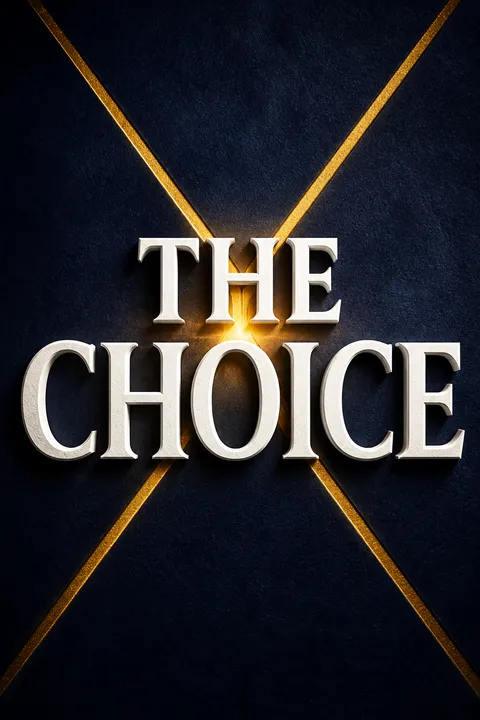
The Choice is a self-help fable built around a career reversal, a publishing success story, and a supernatural family crisis. Its plot makes an abstract claim about agency concrete: Mark first chooses to leave a prestigious job, then finds that success can recreate the very absence he hoped to escape. That repetition is the book’s most perceptive structural move. It shows that changing a job title does not automatically change the pattern of attention that shaped the old life.
The competing measures of success give the narrative tension. Mark values professional achievement, income, family presence, and service to readers, but these goods compete for finite time. His story suggests that a person must keep choosing among them, rather than assume one achievement will settle the question. The advice to work excellently and take risks sits uneasily beside the warning not to let work consume family life. That tension is not a flaw to erase. It asks the reader to distinguish commitment from unbounded availability.
The book’s account of choice is morally energizing, especially when a person has mistaken discouragement for proof of incapacity. Yet agency is not the same as control. People face unequal resources, obligations, health, and social barriers, so the promise of choice is most defensible when understood as finding available actions within limits, not claiming that every outcome is freely chosen.
The Anthony subplot sharpens the warning about success without self-governance, while its miraculous resolution shifts the book from practical advice into religious parable. That ending provides consolation but cannot serve as a reliable model for real danger or sacrifice. The durable insight is less supernatural: public achievement is fragile, family time is finite, and encouragement has value when it helps someone take the next honest step.
Review Summary
The Choice is a highly rated motivational book by Og Mandino that explores themes of personal growth, family, and the power of choice. Readers appreciate its engaging storytelling, life-changing messages, and thought-provoking ideas. The book follows Mark Christopher, who leaves a successful career to pursue writing and family life. While some find the writing style dated or cheesy, many praise its ability to inspire and encourage reflection on one's priorities and life decisions. The book's emphasis on making conscious choices resonates with readers seeking personal transformation.
People Also Read







Glossary
Choice
Agency through available optionsThe book’s central principle that people may have meaningful options even when they feel trapped by failure or discouragement. Recognizing an option can reopen action, such as changing one’s conduct at work, pursuing a neglected goal, or cultivating gratitude. The principle encourages agency, while not implying that people control every circumstance or outcome.
picturization
Mental rehearsal of successA visualization technique Mark says he learned from success writers. A person imagines a goal as already achieved and holds that image in mind. Mark uses it to picture a better golf swing, and says he has also applied the technique to more important aims. The book presents it as a way to focus intention.
Tower of Success
Mark’s lighthouse writing studioThe name Louise gives the converted lighthouse beside the Christopher family home in New Hampshire. It is where Mark writes A Better Way to Live and later works amid books, family reminders, and the correspondence his success brings. The tower symbolizes his writing ambition, but also the risk of withdrawing from family life into work.
Century Plant
Metaphor for brief fameAlexander Anthony’s image for a person whose rise to public prominence is followed by a rapid fall. He describes a plant that grows for years, flowers briefly, then withers, and compares it to his own abrupt success and collapse. The metaphor warns that achievement without the capacity to manage its consequences may not endure.
FAQ
1. What is "The Choice: A Surprising New Message of Hope" by Og Mandino about?
- A story of transformation: The book follows Mark Christopher, a successful insurance executive, who chooses to leave his high-powered career to pursue a more meaningful life as a writer and family man.
- Exploration of life choices: It delves into the concept of choice, emphasizing that everyone has the power to change their life by making conscious decisions.
- Blending fiction and inspiration: While the narrative is fictional, it is written in a memoir style and incorporates Og Mandino’s signature motivational and self-help principles.
- Themes of success and fulfillment: The book contrasts material success with personal happiness, family, and spiritual fulfillment, ultimately advocating for a “better way to live.”
2. Why should I read "The Choice" by Og Mandino?
- Universal relevance: The book addresses common struggles—work-life balance, purpose, and the pursuit of happiness—that resonate with many readers.
- Practical inspiration: Og Mandino offers actionable advice and timeless wisdom on how to make better choices and live a more fulfilling life.
- Emotional storytelling: The narrative is engaging and relatable, making the lessons memorable and impactful.
- Encouragement for change: Readers seeking motivation to make significant life changes or to reevaluate their priorities will find the book especially valuable.
3. What are the key takeaways from "The Choice" by Og Mandino?
- Power of choice: The central message is that everyone has options and the ability to choose a better path, regardless of their current circumstances.
- Success redefined: True success is not just about career achievements or wealth, but about relationships, personal growth, and inner peace.
- Importance of family and time: The book highlights the irreplaceable value of time spent with loved ones and the dangers of neglecting family for professional pursuits.
- Resilience and faith: Perseverance through setbacks, faith in oneself and in a higher power, and the willingness to start over are essential for a meaningful life.
4. Who is the main character in "The Choice" and what is his journey?
- Mark Christopher’s background: He is a high-achieving insurance executive, known as “Mr. Success,” who appears to have it all.
- Catalyst for change: A Father’s Day morning with his sons makes him realize how much he’s missed in their lives, prompting a dramatic life change.
- Pursuit of writing: Mark resigns from his job, moves his family to a rural home with a lighthouse, and commits to writing a book on success.
- Struggles and triumphs: He faces financial hardship, repeated rejection, and self-doubt before his book is finally published and becomes a bestseller, leading to new challenges and choices.
5. What is Og Mandino’s definition of “choice” in "The Choice"?
- Choice as empowerment: Mandino defines choice as the key to unlocking a better life, emphasizing that people are not victims of circumstance but have agency.
- Awareness of options: Many people live in unhappiness because they are unaware they have choices; recognizing options is the first step to change.
- Daily and life-altering decisions: The book distinguishes between routine choices and pivotal decisions that shape one’s destiny.
- Responsibility and freedom: With the power to choose comes the responsibility to make decisions aligned with one’s values and desired outcomes.
6. What are the main success principles or methods presented in "The Choice"?
- Adopt a positive mindset: Choose gratitude, happiness, and faith in oneself each day, regardless of external circumstances.
- Do more than expected: Approach every task, no matter how small, with excellence and enthusiasm, as if it were a stepping stone to greater things.
- Embrace risk and opportunity: Don’t let fear or caution prevent you from pursuing dreams or making necessary changes.
- Prioritize relationships: Value time with family and loved ones above material pursuits, recognizing that true wealth lies in meaningful connections.
7. How does "The Choice" by Og Mandino address the concept of success versus happiness?
- Material vs. personal fulfillment: The book contrasts outward success (money, status) with inner fulfillment (joy, peace, love).
- Consequences of imbalance: Mark’s initial focus on career leads to neglect of his family and personal well-being, illustrating the emptiness of one-sided success.
- Redefining achievement: True achievement is presented as a balanced life where professional goals support, rather than undermine, happiness and relationships.
- Happiness as a choice: The narrative asserts that happiness is not found in external circumstances but is a conscious choice and a byproduct of living in alignment with one’s values.
8. What role does faith and spirituality play in "The Choice"?
- Faith as foundation: The book frequently references God, prayer, and spiritual principles as sources of strength and guidance.
- Spiritual tests and miracles: Mark’s journey includes moments of despair, prayer, and what is presented as divine intervention or miracles.
- Purpose and meaning: Spirituality is intertwined with the search for meaning, suggesting that fulfillment comes from serving others and living according to higher principles.
- Acceptance and surrender: The narrative encourages trusting in a greater plan, especially when facing uncertainty or hardship.
9. What is the significance of the “A. B. Salom”/Absalom subplot in "The Choice"?
- Mysterious messenger: A. B. Salom (Absalom) sends cryptic messages to Mark, warning him of an impending, life-altering choice involving his son’s life.
- Test of ultimate choice: Mark is told he can save his son’s life by sacrificing his own, forcing him to confront the depth of his love and the meaning of self-sacrifice.
- Symbolic meaning: The Absalom reference alludes to the biblical story of King David and his son, highlighting themes of parental love, loss, and the pain of difficult choices.
- Resolution and miracle: The subplot culminates in a message of grace and reprieve, reinforcing the book’s themes of faith, hope, and the power of love.
10. What are the best quotes from "The Choice" by Og Mandino and what do they mean?
- “Choice! The key is choice. You have options.” – Emphasizes personal agency and the power to change one’s life.
- “I am bigger than anything that can happen to me.” – Encourages resilience and self-mastery in the face of adversity.
- “There is a better way to live.” – The book’s central affirmation, urging readers to seek and choose a more fulfilling path.
- “I choose a better way to live!” – A call to action, reminding readers that happiness and success are the results of conscious decisions.
11. How does "The Choice" by Og Mandino use storytelling to teach its lessons?
- Relatable protagonist: The fictional memoir format allows readers to see themselves in Mark’s struggles and triumphs.
- Emotional engagement: The narrative evokes empathy, making the lessons more impactful than abstract advice.
- Real-life challenges: The story includes financial hardship, rejection, family dynamics, and moral dilemmas, grounding the principles in reality.
- Transformation arc: Mark’s journey from “Mr. Success” to a fulfilled family man and bestselling author illustrates the book’s teachings in action.
12. Who should read "The Choice" by Og Mandino, and what kind of impact can it have?
- Anyone at a crossroads: Those facing major life decisions or feeling stuck in unfulfilling routines will find guidance and encouragement.
- Readers seeking motivation: The book is ideal for individuals looking for inspiration to pursue their dreams or make positive changes.
- Fans of self-help and inspirational literature: Those who appreciate Og Mandino’s other works or similar authors will resonate with the message.
- Potential for life change: Many readers have credited Mandino’s books with helping them reevaluate their priorities, overcome adversity, and find greater happiness and purpose.
About the Author




Download PDF
Download EPUB
.epub digital book format is ideal for reading ebooks on phones, tablets, and e-readers.








