Plot Summary
Saltus: Shadows and Spectacle
The journey to Saltus is a passage through Severian's memories and the present's harsh realities. He and Jonas, his enigmatic companion, enter a village alive with anticipation for executions and a fair. Severian's role as torturer brings both respect and unease, and the town's social order is revealed through the innkeeper's eager deference. The shadow of Vodalus, the rebel Severian once idolized, lingers in his thoughts, blurring the line between past and present. The fair's preparations, the mingling of soldiers and villagers, and the undercurrent of violence set the stage for Severian's internal conflict—his longing for lost innocence and the burden of his profession. The chapter pulses with nostalgia, regret, and the inexorable pull of fate.
The Sealed House Unveiled
The village's tradition of walling up traitors comes to life as the townsfolk break into Barnoch's sealed house. Severian, both participant and observer, is forced to confront the reality of his duties as a torturer. The spectacle is both macabre and communal, with the alcalde orchestrating the event for maximum effect. When Barnoch, a follower of Vodalus, is dragged out—pale, hairless, and broken—Severian's empathy and guilt surface. He recognizes in Barnoch a reflection of his own past hopes and the futility of rebellion. The crowd's bloodlust and the ritualized violence highlight the thin veneer of civilization. Severian's encounter with Agia, a figure from his past, reignites old wounds and propels him into a search for meaning amid chaos.
Agia's Return and the Green Man
Agia's fleeting appearance at the fair sends Severian into a frantic search, underscoring his unresolved feelings and the tangled web of his past. His quest leads him to the tent of the green man, a chained being from the future who claims to be sustained by sunlight and symbiotic plants. Their conversation is a meditation on time, evolution, and the possibility of renewal for Urth. The green man's prophecy—that Agia is "above ground" and that Barnoch's rescue is imminent—offers both hope and warning. Severian's act of kindness, giving the green man a whetstone to aid his escape, is a rare moment of compassion. The encounter is tinged with melancholy, as Severian glimpses a future where humanity has changed beyond recognition.
Execution and Innocence
The public execution of Morwenna, accused of murder, is a spectacle of ritual and cruelty. Severian, performing his duty, is torn between professional detachment and personal doubt. The branding, breaking, and beheading are carried out with precision, but the crowd's reactions—ranging from bloodthirsty excitement to Eusebia's twisted joy—expose the darkness at the heart of justice. Morwenna's final words, her forgiveness, and the revelation of her innocence by Eusebia, who poisoned her out of jealousy, leave Severian shaken. The chapter is a meditation on guilt, the limits of knowledge, and the impossibility of true justice. Severian's role as executioner becomes a burden he cannot escape, and the emotional toll is profound.
The Letter from Thecla
In the aftermath of the executions, Severian receives a letter purportedly from Thecla, the woman he loved and lost. The letter, filled with longing and confessions, promises a reunion in a hidden mine. Driven by hope and desperation, Severian embarks on a reckless journey, only to find himself ensnared in a trap set by Agia. The descent into the mine is both literal and symbolic—a plunge into darkness, memory, and the unknown. The letter's revelations about Thecla's escape and the machinations of the powerful hint at the larger forces shaping Severian's fate. The chapter is suffused with longing, betrayal, and the inexorable pull of the past.
The Mine of Blue Light
Deep within the mine, Severian is attacked by man-apes—grotesque, luminous creatures that embody the degeneration of humanity. Outnumbered and wounded, he is saved by the Claw of the Conciliator, a mysterious gem that emits a healing blue light. The man-apes, awed by the Claw, become docile, and Severian glimpses in them a possible future for mankind. The encounter is both terrifying and revelatory, as Severian recognizes the cyclical nature of evolution and decline. The Claw's power is both a blessing and a curse, offering hope but also deepening Severian's sense of responsibility. The mine becomes a crucible, forging Severian's identity as both destroyer and healer.
The Claw's Power Awakened
Emerging from the mine, Severian is ambushed by Agia and her assassins. The ensuing battle is chaotic, with the intervention of a wounded man-ape and the timely arrival of Jonas. The Claw's power is invoked again, healing wounds and inspiring awe. Severian's confrontation with Agia is fraught with unresolved desire and moral ambiguity—he cannot bring himself to kill her, despite her attempts on his life. The Claw becomes a symbol of Severian's dual nature: capable of both violence and mercy. The chapter is a turning point, as Severian's choices begin to define him more than his past or his profession.
Assassins in the Night
Severian and Jonas are abducted by Vodalus's cultists and taken through a landscape of death and decay to the rebel's forest stronghold. The journey is a passage through the detritus of civilization—ruined cities, unburied corpses, and ancient trees. Vodalus, once an ideal, is revealed as a pragmatic and charismatic leader, offering Severian a place in his cause. The chapter explores themes of loyalty, disillusionment, and the seductive power of rebellion. Severian's oath to Vodalus is both a betrayal of his guild and an assertion of agency. The forest, ancient and indifferent, becomes a symbol of endurance and the futility of human ambition.
Vodalus in the Forest
In Vodalus's camp, Severian participates in a ritual feast involving the flesh of Thecla, preserved and prepared with the alzabo drug. The ceremony is both horrific and transcendent, as Severian absorbs Thecla's memories and personality, experiencing her life and death from within. The merging of identities is both a gift and a torment, blurring the boundaries between self and other. Vodalus entrusts Severian with a secret mission to the House Absolute, the seat of power, and gives him a coded message to deliver. The chapter is a meditation on memory, identity, and the cost of knowledge. Severian emerges changed, haunted by Thecla and bound to a destiny he cannot yet comprehend.
The Feast of Memory
The effects of the alzabo feast linger, as Severian struggles to distinguish his own thoughts from Thecla's. The merging of memories is both intoxicating and destabilizing, offering insights into the court, the House Absolute, and the nature of power. Severian's journey northward is marked by encounters with danger—monstrous notules, predatory creatures of darkness, and the ever-present threat of pursuit. The Claw's power is invoked again, healing wounds and reviving the dead. The chapter is a meditation on the persistence of the past, the permeability of identity, and the burden of memory. Severian's quest becomes both external and internal, a search for meaning amid chaos.
The House Absolute's Labyrinth
Severian and Jonas are captured by the Autarch's praetorians and taken into the labyrinthine House Absolute. The palace is a place of beauty and terror, filled with secret gardens, living statues, and hidden chambers. Imprisoned in the antechamber, a vast communal cell, Severian encounters a microcosm of society—prisoners who have forgotten their crimes, children born in captivity, and the slow erosion of hope. Jonas's true nature is revealed: he is part man, part machine, a relic of a forgotten age. The chapter is a meditation on confinement, the passage of time, and the fragility of identity. Severian's perfect memory becomes both a gift and a curse, as he relives every loss and failure.
The Antechamber of Despair
The antechamber becomes a crucible for Severian and Jonas, as they confront the reality of their imprisonment and the limits of their power. Jonas's mechanical nature is laid bare, and his longing for Jolenta becomes a symbol of unattainable desire. The prisoners' stories, their rituals, and their fading memories create a tapestry of suffering and endurance. Severian's attempt to use the Claw to escape is thwarted, and the arrival of Hethor, a deranged former sailor, adds to the sense of claustrophobia and madness. The chapter is a meditation on the persistence of hope, the inevitability of decay, and the possibility of redemption.
Jonas: Man and Machine
As Jonas's condition deteriorates, Severian reads to him from Thecla's brown book—a tale of creation, loss, and the search for meaning. The story within a story mirrors Severian's own journey, exploring themes of ambition, failure, and the longing for connection. Jonas's confession of his origins—a crash-landed sailor, rebuilt with metal and flesh—underscores the novel's preoccupation with memory, identity, and the passage of time. The chapter is suffused with melancholy, as Jonas prepares to leave Severian and seek repair among the stars. The boundaries between man and machine, past and present, self and other, blur and dissolve.
The Play and the Riot
Reunited with Dorcas, Jolenta, and the troupe, Severian participates in Dr. Talos's allegorical play, a performance that mirrors and distorts the events of the narrative. The play's themes—creation, fall, and renewal—echo Severian's own journey. The performance descends into chaos as Baldanders, the giant, goes berserk, attacking the audience and revealing the presence of monstrous hierodules—alien beings who manipulate events from behind the scenes. The riot is both literal and symbolic, a rupture in the fabric of order and meaning. Severian's flight through the gardens is a passage through memory, loss, and the relentless approach of destiny.
Jolenta's Unmasking
Jolenta, once the embodiment of artificial beauty, is revealed as a construct—her glamour fading, her body failing. The witches, Cumaean and Merryn, explain the nature of her transformation and the impossibility of restoring her. Jolenta's suffering becomes a meditation on the cost of desire, the impermanence of beauty, and the cruelty of those who shape others for their own ends. Severian's compassion is tested, and his inability to save Jolenta is a source of guilt and sorrow. The chapter is a requiem for lost illusions and the inevitability of decay.
The Witch's Summoning
In the ruins of an ancient city, Severian, Dorcas, and Hildegrin participate in a ritual led by the Cumaean witch. The ceremony summons the past, resurrecting the city's dead and the legendary Apu-Punchau. The boundaries between time and space dissolve, and Severian glimpses the cyclical nature of history, the persistence of memory, and the possibility of renewal. The ritual is both awe-inspiring and terrifying, a confrontation with the unknown and the unknowable. The chapter is a meditation on the power of myth, the fragility of reality, and the longing for transcendence.
The Undine's Temptation
On the banks of a river, Severian is called by an undine—a giant, seductive sea-woman who offers him love, power, and escape from his burdens. The encounter is both erotic and terrifying, a confrontation with the forces of nature and the unconscious. The undine's promises are both alluring and dangerous, and Severian's resistance is as much a matter of circumstance as will. The episode is a meditation on temptation, the limits of desire, and the inescapability of fate. The undine's departure leaves Severian shaken, and the world seems both more mysterious and more perilous.
The Last Gate: Parting
The journey ends in loss and uncertainty. Jolenta dies, her beauty stripped away, a victim of others' desires and her own longing. Severian, Dorcas, and Hildegrin part ways with the witches, each carrying the weight of memory and regret. The mountains loom ahead, promising new challenges and revelations. Severian's quest is unresolved, his identity fractured by the memories he carries and the choices he has made. The chapter is a meditation on parting, the persistence of the past, and the hope for renewal. The road to Thrax, and to Severian's destiny, remains open—a path through darkness toward the possibility of light.
Characters
Severian
Severian is the protagonist and narrator, a journeyman of the guild of torturers whose perfect memory is both a gift and a curse. His journey is one of exile, self-discovery, and moral ambiguity. Severian is defined by his compassion, his capacity for violence, and his longing for connection. His relationships—with Thecla, Dorcas, Jonas, Vodalus, and others—shape his identity and challenge his beliefs. Psychologically, Severian is marked by guilt, nostalgia, and a yearning for redemption. His development is a gradual awakening to the complexity of justice, the limits of knowledge, and the possibility of grace. Severian's story is a meditation on the burden of memory, the search for meaning, and the hope for transformation.
Jonas
Jonas is Severian's enigmatic friend, a traveler whose origins are gradually revealed to be both human and mechanical. His metal hand and hidden body parts symbolize his fractured identity and the dislocation of memory. Jonas is gentle, wise, and haunted by longing—especially for Jolenta, whose beauty he cannot possess. His journey is one of self-discovery and loss, culminating in his departure to seek repair among the stars. Psychologically, Jonas embodies the themes of alienation, the passage of time, and the search for wholeness. His relationship with Severian is one of mutual respect, affection, and shared suffering.
Dorcas
Dorcas is a woman resurrected from the dead, whose past is shrouded in mystery and whose innocence is both a strength and a vulnerability. She is gentle, compassionate, and haunted by dreams of water, loss, and exile. Dorcas's relationship with Severian is marked by tenderness, desire, and the shared burden of memory. Her gradual recovery of her past is a source of both hope and sorrow. Psychologically, Dorcas represents the longing for innocence, the pain of self-discovery, and the possibility of redemption. Her presence grounds Severian and offers a counterpoint to the violence and chaos of his world.
Jolenta
Jolenta is a woman transformed by magic and science into an object of irresistible beauty. Her allure is both a blessing and a curse, attracting desire and envy in equal measure. As her glamour fades, Jolenta is revealed as a victim—of Dr. Talos, of the witches, and of her own longing for love and admiration. Psychologically, Jolenta embodies the themes of artificiality, the impermanence of beauty, and the cruelty of those who shape others for their own ends. Her decline and death are a meditation on the cost of desire and the inevitability of decay.
Vodalus
Vodalus is the leader of a rebellion against the Autarch, a figure of romance and danger in Severian's imagination. Charismatic, pragmatic, and ruthless, Vodalus offers Severian a place in his cause but is ultimately revealed as a man shaped by circumstance and necessity. Psychologically, Vodalus represents the allure of rebellion, the seduction of power, and the disillusionment that comes with the loss of innocence. His relationship with Severian is fraught with admiration, betrayal, and the recognition of shared humanity.
Thecla
Thecla is an exultant woman imprisoned and executed by Severian, whose memories and personality are absorbed by him through the alzabo feast. She is intelligent, cultured, and tragic—a symbol of lost innocence and the cost of power. Psychologically, Thecla represents the persistence of the past, the permeability of identity, and the longing for connection. Her presence within Severian is both a gift and a torment, shaping his choices and deepening his understanding of suffering.
Dr. Talos
Dr. Talos is a cunning, resourceful, and amoral figure—a physician, playwright, and manipulator. He shapes those around him for his own ends, creating Jolenta's beauty and orchestrating the troupe's performances. Psychologically, Dr. Talos embodies the themes of artifice, control, and the dangers of unchecked ambition. His relationship with Baldanders is complex, blending dependence, dominance, and a perverse form of affection.
Baldanders
Baldanders is a giant of immense strength and limited intellect, loyal to Dr. Talos and driven by a mysterious purpose. His outbursts of violence and moments of gentleness reveal a being at war with himself and the world. Psychologically, Baldanders represents the primal forces of growth, change, and destruction. His relationship with Dr. Talos is both filial and adversarial, a reflection of the novel's preoccupation with power and dependency.
Agia
Agia is a woman from Severian's past, whose beauty, cunning, and ruthlessness make her both a rival and an object of desire. Her attempts to manipulate and destroy Severian are driven by jealousy, ambition, and a twisted form of love. Psychologically, Agia embodies the dangers of obsession, the complexity of desire, and the impossibility of escape from the past. Her relationship with Severian is marked by attraction, betrayal, and the recognition of shared vulnerability.
The Autarch
The Autarch is the enigmatic ruler of the Commonwealth, a figure of immense power and inscrutable motives. His presence is felt throughout the narrative, shaping events from behind the scenes. Psychologically, the Autarch represents the ambiguity of authority, the burden of leadership, and the impossibility of true knowledge. His interactions with Severian are marked by manipulation, revelation, and the suggestion of a larger destiny.
Plot Devices
Memory as Narrative Structure
The novel's structure is governed by Severian's eidetic memory, which allows for a non-linear, recursive narrative. Events are recounted with vivid detail, but the boundaries between past and present, dream and reality, are porous. This device creates a sense of inevitability and fatalism, as Severian is both narrator and prisoner of his own recollections. The blending of memories—especially after the alzabo feast—blurs the distinction between self and other, past and present, and deepens the novel's exploration of identity.
Foreshadowing and Prophecy
The narrative is rich with foreshadowing, from the green man's predictions to the undine's promises and the witches' rituals. These glimpses of possible futures create a sense of destiny and the cyclical nature of history. The Claw's miracles, the recurrence of lost loves, and the repetition of archetypal events all suggest that Severian's journey is both unique and part of a larger pattern. The use of prophecy heightens the tension between free will and fate.
Allegory and Performance
The inclusion of Dr. Talos's allegorical play within the narrative serves as both commentary and foreshadowing. The play's themes—creation, fall, and renewal—echo Severian's own journey and the novel's preoccupation with the cyclical nature of history. The performance's descent into chaos mirrors the breakdown of order in the world outside, and the blurring of roles underscores the instability of identity. The play within the play is a meta-narrative device that deepens the novel's exploration of artifice, truth, and the search for meaning.
The Claw of the Conciliator
The Claw is both a literal object and a symbol of Severian's dual nature as destroyer and healer. Its miracles are ambiguous, often coinciding with Severian's acts of mercy or desperation. The Claw's power is both a blessing and a burden, offering hope but also deepening Severian's sense of responsibility. Its origins and purpose are shrouded in mystery, and its effects are as much psychological as physical. The Claw is a focal point for the novel's themes of redemption, transformation, and the possibility of grace.
The House Absolute and the Second House
The House Absolute, with its secret gardens, hidden chambers, and living statues, is both a physical and psychological labyrinth. The Second House, a palace within a palace, mirrors the layers of memory, identity, and deception that define Severian's journey. The settings are both beautiful and terrifying, offering moments of revelation and despair. The labyrinth is a metaphor for the search for meaning, the inescapability of the past, and the complexity of the self.
Analysis
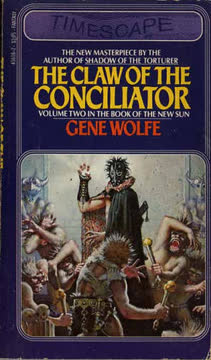
Gene Wolfe's The Claw of the Conciliator is a masterwork of speculative fiction, blending science fiction, fantasy, and philosophical inquiry into a narrative of profound emotional and intellectual depth. At its core, the novel is a meditation on memory, identity, and the search for meaning in a world marked by decay and transformation. Severian's journey is both external and internal—a quest through ruined cities, ancient forests, and labyrinthine palaces, but also a passage through the landscapes of memory, guilt, and longing. The novel's structure, shaped by Severian's perfect recollection, blurs the boundaries between past and present, self and other, reality and dream. The Claw, as both object and symbol, embodies the possibility of redemption and the ambiguity of power. The merging of identities—through the alzabo feast, the absorption of Thecla's memories, and the encounters with beings from the future—challenges the notion of a stable self and invites readers to question the nature of consciousness and the persistence of the past. The novel's use of allegory, prophecy, and performance deepens its exploration of fate, free will, and the cyclical nature of history. In a modern context, The Claw of the Conciliator speaks to the anxieties of a world in decline, the longing for renewal, and the hope that even in the darkest times, grace and transformation are possible. Wolfe's prose is dense, allusive, and richly textured, demanding attentive reading and rewarding it with layers of meaning. The novel's lessons are both timeless and timely: that justice is fraught with ambiguity, that memory is both a burden and a gift, and that the search for meaning is the defining task of the human spirit.
Last updated:
Review Summary
The Claw of the Conciliator by Gene Wolfe elicits polarized reactions. Many praise its stunning prose, intricate world-building, and complex narrative layers requiring multiple readings to fully appreciate. Readers admire the dreamlike quality, mythological allusions, and science-fantasy blend set in Earth's distant future. However, critics find it obtuse, slow-paced, and excessively cryptic, with an unlikable protagonist and problematic gender dynamics. The unreliable narrator and deliberately obscure storytelling frustrate some while fascinating others. Most agree it's challenging, literary science fiction demanding patience and intellectual engagement rather than straightforward plot progression.