

Key Takeaways
Treat childhood as an apprenticeship in culture, not a customer-service role.
Children must learn the rules. Sax uses enculturation to mean acquiring the knowledge, habits, and social rules needed to participate in a culture. Humans have unusually long childhoods, he argues, partly because learning these things takes years. Children are not born knowing how to share, repair harm, or treat others respectfully; adults have to teach them.
The teaching job has shifted. Sax describes schools that once spent early grades on social habits as increasingly focused on academic basics. In his opening examples, an eight-year-old gets the final say on which school to attend, while a teenager dismisses her mother at the airport. In both cases, parents struggle to act as guides. When adults step back, peers and popular culture still teach children, just by different standards.
What's useful here is the reminder that education includes social inheritance, not only academic instruction. A classroom can teach reading while leaving children to learn conflict, courtesy, and responsibility from their peers. Yet treating culture as a fixed package adults simply transmit can obscure how societies change, and how children help improve them. The goal need not be unquestioning conformity. It can be to make norms explicit, explain their purpose, and invite age-appropriate scrutiny, so that children inherit both a moral vocabulary and the capacity to revise it.
Make parental authority the child's anchor, not a contest of control.
Authority means being a guide. Sax distinguishes parental authority from discipline: it is the importance a parent holds in a child's life, especially compared with same-age peers. A parent can exercise it without being harsh. The point is to remain responsible for boundaries and to teach how to behave, rather than treating a child's preference as the final verdict.
Connection makes limits credible. Sax tells of parents who kept a Breathalyzer visible at parties to discourage teenage drinking. Their house became a place where teens could avoid pressure by pointing to a clear family rule. He also argues that shared pleasures, such as a family trip or dinner, help children value time with adults. Authority built only through punishment is brittle; guidance is more persuasive when it sits inside a relationship the child trusts.
This idea has a close connection to attachment theory: a dependable adult can serve as a secure base from which a young person explores the wider world. The distinction between authority and domination matters. A child who can disagree respectfully is not necessarily challenging the parent's legitimacy; that can be a sign of growing judgment. The practical test is whether adults retain responsibility for safety and values while making room for a child's developing voice. Peer friendships are essential, but they cannot carry the full burden of guidance that Sax assigns to adults.
Set family rules around food, movement, and sleep before habits set.
Health depends on daily patterns. Sax links rising childhood weight and falling fitness to food, activity, and sleep, areas where parents can shape routines. In his figures, obesity among American children aged 5 to 11 rose from 4 percent in the early 1970s to 19.6 percent in 2008. Separately, the share of 12-to-15-year-olds meeting a minimum fitness standard fell from 52.4 percent in 1999-2000 to 42.2 percent in 2012.
Choices need structure. Sax recommends regular meals with nutritious food, less reliance on snacks and sugary drinks, more outdoor movement, and enough sleep. He notes that American children were spending extensive time on screens, while devices in bedrooms could keep them awake. His point is not that one food or screen explains weight. It is that children cannot reliably build healthy routines if adults leave every choice to immediate preference.
The strength of this section is its attention to interacting routines. Sleep can influence appetite and energy, while screen habits can displace both rest and movement; a single-focus campaign may miss those links. But weight is not a character score, and parental rules cannot erase the effects of food access, neighborhood safety, disability, or family work schedules. The most constructive reading is to shape a healthier default without shaming a child's body. Shared walks, predictable meals, and screen-free sleep spaces can support health while keeping the emphasis on well-being rather than appearance.
Check sleep, screens, and context before labeling ordinary struggle a disorder.
Symptoms need context. Sax recounts Dylan, a boy whose attention and school behavior worsened while he played video games late into the night. After his parents moved the console out of his bedroom and limited play, his sleep and school performance improved. Sax argues that sleep loss can resemble attention problems, and that some ordinary tantrums or defiance may be treated as illnesses before family routines are examined.
The numbers prompt questions. He cites a fortyfold increase in American childhood bipolar diagnoses from 1994 to 2003 and reports that American teenagers were nearly fourteen times as likely as British teenagers to have taken ADHD medication in the comparisons he discusses. These differences raise legitimate questions about diagnosis and practice, but they do not establish that a particular child has been misdiagnosed.
The valuable principle is diagnostic humility: behavior has multiple possible causes, so sleep, learning demands, stress, and home conditions belong in a careful assessment. Cross-national prescribing gaps are a signal to investigate, not proof that one country's clinicians are right and another's wrong. ADHD and other psychiatric conditions are real, and appropriate treatment can matter greatly. Sax's anecdotes cannot settle an individual diagnosis. Families should seek qualified evaluation, ask what evidence supports a label, and discuss benefits, risks, and non-medication supports without assuming either that medication is the answer or that it is inherently suspect.
Train self-control, because grades alone poorly predict adult well-being.
Character predicts more than scores. Sax draws on research on Conscientiousness, a personality dimension that includes traits such as self-control, honesty, and perseverance. He highlights longitudinal findings in which childhood self-control predicted later health, financial stability, and life satisfaction, even after researchers accounted for factors such as intelligence and socioeconomic status. In one example, self-control measured around age 11 was associated with outcomes in adulthood around age 32.
Practice builds the skill. Sax suggests making expectations concrete: chores before screens, or vegetables before dessert. The aim is not obedience for its own sake. Repeated actions give children practice pausing, keeping commitments, and tolerating frustration. He also stresses that adults teach these habits partly by example. Rules lose force if parents demand restraint from children while modeling its opposite.
The argument usefully redirects parental attention from a narrow scoreboard to capacities that travel across settings. Self-regulation supports learning, health decisions, and relationships, which helps explain why it can predict broad outcomes. Still, a predictor is not a destiny, and correlation does not show that parenting alone produced the result. Temperament, resources, and opportunity matter too. Self-control is best understood as a developable capacity, not a measure of moral worth. A child who struggles may need clearer routines, support, or evaluation, rather than being described as lazy or deficient.
Be both loving and firm, rather than choosing between the two.
The middle ground has evidence. Sax summarizes Diana Baumrind's parenting research with three plain-language categories: “Too Hard” parents are harsh and unkind; “Too Soft” parents offer warmth but enforce few rules; “Just Right” parents show affection while setting fair, consistent limits. He cites studies associating the last style with better outcomes, including school engagement and lower rates of risky behavior.
Consistency is not cruelty. Sax rejects the fear that firm parenting automatically produces a later burst of reckless behavior. He recommends clear rules for young children and explanations for teenagers, while cautioning against turning explanations into negotiations. A parent might hear a teenager's objections and still decide that a family commitment or safety boundary stands. The balance is not between love and authority. It is between responsible guidance and either harshness or abdication.
This framing is strongest when strictness means predictable boundaries, not control over every preference. Developmental research often distinguishes demandingness from responsiveness: children need both guidance and evidence that their perspective is heard. Sax's contrast counters the false choice between being liked and being responsible, but it can be misused if parental certainty becomes an excuse to silence a child. A useful household rule should be explainable in terms of safety, care, or shared obligations, and it should be revisited as the child gains maturity.
Teach humility through useful work and honest encounters with limits.
Contribution punctures entitlement. Sax describes the Phillips family, who required their four sons to spend time on household and property chores despite being able to hire help. Their son Andrew also spent a summer cleaning a fishing boat rather than resting on his status as a promising athlete. The intended lesson was practical as well as moral: work has dignity, and a person's life is larger than personal achievement.
Humility is not self-belittlement. Sax defines it as giving sustained attention to other people, rather than assuming one's own importance. He also recommends gratitude and limits on social media, which he sees as encouraging self-display. Chores, service, and exposure to unfamiliar lives can help children practice responsibility and notice needs beyond their own. The aim is perspective, not humiliation or denial of real strengths.
Useful work can teach more than a lecture because it gives children a real stake in a shared outcome. It also connects humility to competence: a young person who can cook, clean, repair, or help is less dependent on status to feel capable. Yet chores are not automatically character-building; unfairly assigned labor can breed resentment, and service can become another résumé line. The distinction lies in participation and purpose. When children contribute as members of a household, they learn that care is reciprocal and that ordinary tasks deserve respect.
Protect enjoyable family time from screens, schedules, and peer monopolies.
Connection needs actual time. Sax cites a survey in which American mothers ranked time with children fourteenth among fifteen activities for enjoyment. He contrasts this with French mothers, who reported a more positive relationship between time with children and enjoyment. He also tells of Kayden, an unhappy eight-year-old newly living with his father. A day of tubing on a snowy hill gave them a shared pleasure and changed the tone of their relationship.
Plan for enjoyment. Sax recommends meals without screens, conversation in the car, and simple activities that both parent and child can enjoy. He warns that packed schedules can make family time seem like the least important commitment. The point is not to manufacture constant entertainment. It is to create unhurried occasions where adults and children can listen, laugh, and know one another.
Small recurring rituals can matter because relationships are maintained through attention, not merely affection or good intentions. A device-free meal or walk creates a low-pressure setting where conversation can emerge without being forced. Still, the survey Sax cites cannot prove that children cause mothers' lower enjoyment; time pressure and unequal caregiving labor may help explain the pattern. Nor can every family easily reduce work or extracurricular demands. The adaptable principle is to protect some dependable, pleasant time together, even if it is brief and ordinary.
Prepare children for meaningful lives, not just prestigious admissions.
The career script is too narrow. Sax calls the familiar chain of good grades, selective college, and secure job the “middle-class script.” It treats achievement as a reliable route to fulfillment, though none of those milestones guarantees a satisfying life. He argues that education should prepare young people for life, including uncertainty, disappointment, and the possibility of changing direction.
Give success a larger purpose. A headmaster Sax met described a worthwhile life in terms of work that matters, loving relationships, and commitment to something beyond oneself. Sax also recounts thirteen-year-old Willy Phillips surviving a plane crash that killed his father. Injured, Willy managed to signal rescuers. Sax presents the episode as a stark image of courage under pressure, and argues that character matters more than credentials when life departs from the plan.
This conclusion challenges the idea that a prestigious destination can substitute for a reason to travel. A young person needs not only options, but a framework for deciding which options are worth pursuing and when to change course. Parents can offer moral language and examples without prescribing one career, religion, or life path. The plane-crash story is emotionally powerful, but a single survivor's response cannot prove that a particular parenting method caused courage. Its broader value is to ask what capacities families hope to cultivate before hardship arrives.
Analysis
The book's central claim is that many parents have mistaken respect for autonomy for withdrawal from responsibility. Sax makes that claim vivid by moving from small domestic scenes, a child dictating dinner, a teenager dismissing a parent, a gamer staying awake, to larger concerns about health, medication, education, and resilience. The scale is part of the argument: ordinary routines are not trivial when they teach children what deserves attention and who is responsible for limits.
Its most durable contribution is the distinction between authority and harshness. The adult's role is neither to dominate nor to compete for a child's affection, but to remain a reliable guide while teaching habits that make future independence possible. The emphasis on self-control, family connection, and purposeful activity gives parents concrete alternatives to simply demanding better outcomes.
The evidence, however, varies in strength. Longitudinal associations between childhood self-control and adult outcomes are more informative than a clinical anecdote, but neither alone proves that a particular parenting style caused the result. Cross-country differences in diagnoses or school performance also cannot be attributed to family authority without accounting for diagnostic rules, services, economic conditions, and institutions. Sax sometimes draws broad cultural conclusions from a striking case or comparison, and his language can make complex disability or family problems sound like failures of parental resolve.
A careful reader can keep the practical core while narrowing the claims. Treat sleep, boundaries, shared time, and responsibility as conditions that can support development, not as guaranteed cures. Take children's symptoms seriously, but investigate the setting in which they appear. And understand authority as accountable leadership: adults set limits where needed, explain their reasons, and change course when evidence or a child's growing competence warrants it. That interpretation preserves the book's challenge without reducing every difficulty to permissive parenting.
Review Summary
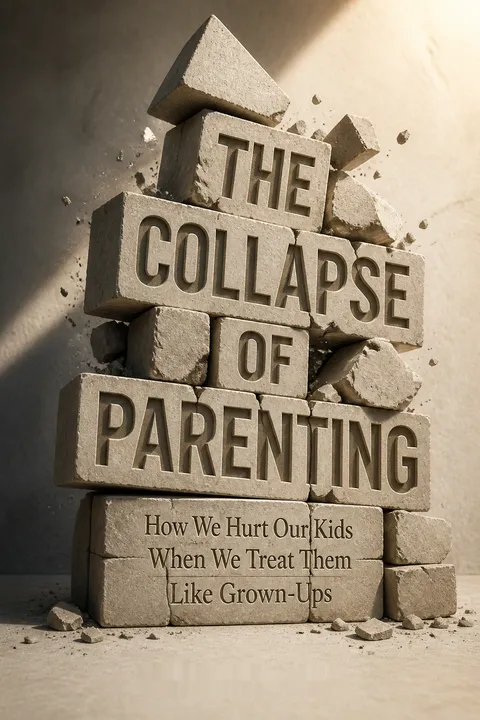
The Collapse of Parenting receives mostly positive reviews, with readers praising its insights on modern parenting challenges. Many appreciate Sax's emphasis on teaching self-control, humility, and respect. Critics argue the book is overly nostalgic and judgmental. Supporters find the advice practical and well-researched, while detractors feel it lacks nuance. Overall, readers value the book's perspective on establishing parental authority and fostering strong family relationships, though some disagree with specific recommendations or the author's tone.
People Also Read








Glossary
Enculturation
Learning a culture's practicesThe process of acquiring the knowledge, customs, skills, and standards of behavior needed to participate in a particular culture. Sax argues that childhood and adolescence give humans an extended period to learn these practices from adults. When families, schools, and communities fail to teach them, children still learn norms, often from peers and popular culture.
Parental authority
A parent's guiding importanceSax uses this term primarily to mean the value a child places on a parent's judgment and guidance relative to the opinions of same-age peers. It is not simply a parent's power to punish. In his account, authority gives adults the standing to teach behavior, set boundaries, and pass on values while maintaining a close relationship.
Role confusion
Uncertainty about parental responsibilitySax's description of parents' uncertainty about what authority they should exercise and how to exercise it. The term draws on sociologist Norbert Elias's concept of Statusunsicherheit. In the book, this uncertainty appears when parents treat children's preferences as decisive, hesitate to set limits, or try to act as a child's friend rather than responsible adult.
Conscientiousness
Dependability and self-regulationOne dimension in the Big Five model of personality, which Sax associates with traits including self-control, honesty, responsibility, and perseverance. He emphasizes research linking childhood self-control and adult Conscientiousness with health, financial stability, and life satisfaction. The term describes a cluster of tendencies, not a guarantee of success or a judgment of a person's worth.
“Just Right” parenting
Warmth plus consistent limitsSax's plain-language label for a parenting style that combines affection with fair, consistent enforcement of rules. It adapts Diana Baumrind's distinction between authoritative, authoritarian, and permissive styles. “Just Right” parents are neither harsh and unresponsive nor loving without boundaries; they maintain expectations while adjusting them reasonably to the situation and the child's age.
The middle-class script
Grades to college to careerSax's label for the assumed sequence in which academic success leads to selective college admission, which leads to a good job and then a good life. He argues that each step is uncertain and that the sequence leaves out character, purpose, relationships, and the ability to change direction after disappointment.
The medicalization of misbehavior
Treating behavior as illnessSax's term for interpreting some children's defiance, inattention, or emotional outbursts primarily through psychiatric diagnoses and medication, rather than first examining behavior, family routines, sleep, and expectations. It expresses his concern that responsibility can shift from adults and children to clinicians. It does not mean that psychiatric disorders are unreal or that medication is never appropriate.
FAQ
What's The Collapse of Parenting about?
- Focus on Parenting Issues: The book examines the decline of parental authority and its negative impact on children, highlighting how parents have increasingly allowed children to make adult decisions.
- Cultural Context: Leonard Sax explores cultural shifts that have contributed to this collapse, such as the rise of a "culture of disrespect" among children, leading to less resilience and more fragility.
- Solutions Offered: It is divided into two parts: the first outlines the problems, and the second provides actionable solutions for parents to regain authority and instill values.
Why should I read The Collapse of Parenting?
- Expert Insights: Written by Dr. Leonard Sax, a family physician and psychologist, the book is based on extensive clinical experience and research.
- Practical Solutions: Offers practical advice for parents to improve their parenting skills and foster better relationships with their children.
- Cultural Awareness: Helps readers understand broader cultural issues affecting parenting today, equipping them to navigate these challenges effectively.
What are the key takeaways of The Collapse of Parenting?
- Parental Authority Matters: Strong parental authority is crucial for healthy child development, as abdication can lead to struggles with self-control and resilience.
- Self-Control is Key: Self-control is highlighted as the best predictor of future success and happiness, more so than IQ or academic performance.
- Cultural Shift: The shift towards valuing children's opinions over parental guidance has led to negative outcomes, including increased anxiety and depression among youth.
What are the best quotes from The Collapse of Parenting and what do they mean?
- “We are what we repeatedly do.”: Emphasizes the importance of habits in shaping character, suggesting that consistent virtuous behavior leads to a virtuous character.
- “Train up a child in the way he should go, and when he is old he will not depart from it.”: Underscores the importance of instilling values and virtues in children from a young age.
- “The culture of disrespect is not essential to creativity.”: Challenges the notion that rebellion is necessary for creativity, suggesting respect and authority can coexist with innovation.
What problems does The Collapse of Parenting identify?
- Loss of Parental Authority: A significant transfer of authority from parents to children has led to a decline in respect for parental guidance.
- Increased Fragility: Children today are more fragile and less resilient, linked to a lack of self-control and inability to cope with failure.
- Cultural Disrespect: A pervasive culture of disrespect among children is evident in media portrayals and social behaviors.
What solutions does The Collapse of Parenting propose?
- Teach Self-Control: Emphasizes teaching self-control as a foundational skill, suggesting methods like enforcing rules around chores and screen time.
- Prioritize Family Time: Advocates for prioritizing family meals and activities over peer interactions to instill values and ensure children feel secure.
- Set Clear Expectations: Encourages setting clear rules and expectations for behavior, reinforcing parental authority and accountability.
How does The Collapse of Parenting address the issue of medication for children?
- Medicalization of Misbehavior: Argues against the trend of medicalizing normal childhood behaviors, suggesting many issues could be addressed through better parenting.
- Focus on Self-Control: Emphasizes teaching self-control as a first step before considering medication for behavioral issues like ADHD.
- Caution Against Overmedication: Warns against overmedicating children, highlighting potential side effects and advocating for behavioral interventions first.
What role does culture play in parenting according to The Collapse of Parenting?
- Cultural Expectations: Discusses how cultural shifts have changed parenting expectations, leading to a decline in parental authority.
- Peer Influence: Highlights the significant influence of peers on children's behavior and values, often prioritizing peer approval over parental guidance.
- Media Impact: Points out that media often promotes disrespect and undermines parental authority, contributing to parenting challenges.
How can parents implement the advice from The Collapse of Parenting?
- Start Small: Advises beginning with gradual changes, such as establishing family meals or setting screen time limits.
- Be Consistent: Emphasizes the importance of consistency in enforcing rules and expectations.
- Engage with Children: Encourages active engagement in discussions about values and expectations to reinforce the parent-child bond.
What misconceptions about parenting does The Collapse of Parenting address?
- Strict vs. Loving: Challenges the misconception that parents must choose between being strict or loving, advocating for a balance of both.
- Fear of Rebound Behavior: Counters the fear that strict parenting leads to rebellion, presenting evidence that authoritative parenting leads to better outcomes.
- Popularity Concerns: Addresses the fear that enforcing rules will make children unpopular, arguing that values and family connections are more important.
How does The Collapse of Parenting define "Just Right" parenting?
- Balanced Approach: Characterized by a balance of strictness and love, allowing parents to set clear boundaries while nurturing emotional needs.
- Encouraging Independence: Fosters independence without sacrificing respect and responsibility, guiding children toward fulfilling activities.
- Building Strong Relationships: Engages in meaningful conversations, helping children develop critical thinking and respectful disagreement.
How does The Collapse of Parenting suggest parents can instill humility in their children?
- Assigning Chores: Recommends assigning household chores to teach the value of hard work and responsibility.
- Limiting Social Media: Advises limiting social media use, which often promotes self-promotion over humility.
- Modeling Behavior: Encourages parents to model humility by demonstrating interest in others and the importance of listening.
About the Author

Download PDF
Download EPUB
.epub digital book format is ideal for reading ebooks on phones, tablets, and e-readers.








