

Plot Summary
The Scout Finds Cego
Murray Pearson has spent a decade scouting the Underground for fighters to bring to the Citadel, returning each year with recruits who fail its Trials. At Thaloo’s slave Circle, he watches a seemingly blind, half-starved boy defeat a larger opponent by grappling and choking him unconscious.
The boy’s stillness and precise movement stand apart from the bouts Murray has grown to despise, where strong, well-fed children batter weaker ones for patrons’ profit.
Murray’s own past as a celebrated Knight makes the spectacle harder to bear: he once believed combat protected ordinary people, but now he doubts what the Citadel’s victories serve. He leaves without approaching the boy, yet the unexpected performance gives his failing mission a reason to continue.
Murray’s disillusionment is not simple nostalgia for his athletic prime. The slave Circle forces him to compare combat as a disciplined practice with combat as a market spectacle. Cego’s restraint matters because it interrupts the expected equation between strength and brutality. Murray sees a technical possibility, but also a moral one: the boy has not yet been trained to confuse victory with cruelty. The scene establishes a tension between the Citadel’s official purpose and the institutions that claim to serve it, while making Cego’s unexplained competence the narrative’s first concrete disturbance.
A Name Earned in Darkness
Cego wakes in a cell beneath Thaloo’s compound, where a lone spectral light burns his eyes. He trains himself to endure it, but keeps them shut when guards arrive, letting his captors believe he is blind. The nickname Cego, meaning blind, becomes another disguise. Thaloo discovers the deception while processing him, brands him for sale, and assigns him to Tasker Ozark’s Circle Crew Nine.
Ozark’s drills exhaust the boys without teaching them sound technique; when Cego drops from a hanging rope to spare a smaller, sobbing bunkmate, the crew punishes him by taking his bed and making him clean their chamber pot. He accepts the humiliation, waiting for a chance to understand this brutal place before choosing how to resist it.
Cego’s feigned blindness is an early act of agency within a system designed to remove agency. He cannot escape his captors, but he can control what they believe they know about him. The cell’s light becomes both a physical ordeal and a test of adaptation: he trains his eyes rather than surrendering them. His deliberate fall from the rope complicates the idea of strength as dominance. Yet the crew’s retaliation shows the social cost of mercy when a group has been taught that scarcity makes every kindness a threat.
The Island He Remembers
In memories that return in fragments, Cego recalls an island where he trained beneath Farmer, a demanding old master, alongside his brothers Silas and Sam. They ran across black sand, grappled in an ironwood Circle, and watched glowing plankton trace a route over the sea that Farmer called the Path.
When Silas swam away, Cego and Sam were left with grief and questions their teacher answered only through training. Later, Sam doubted that the Path led anywhere and left the island before Farmer judged him ready; Cego followed. These memories give Cego a home he cannot explain to anyone in the Underground. Farmer’s principles, especially the duty to protect others, remain the only map he can carry.
The island memories supply Cego with an ethical vocabulary before he can explain his history. Farmer teaches through bodily repetition, so Cego remembers the Codes less as doctrine than as movement, breath, and habit. Silas’s departure leaves an absence that Cego tries to overcome by following rather than waiting, while Sam’s doubt reveals that loyalty and belief do not mature at the same pace. The Path operates as a family story and a physical horizon, binding the boys’ ordinary childhood to the larger mystery of where they came from.
Grinder Meets His Match
After being brought into Crew Nine, Cego fights with his eyes open for the first time in Thaloo’s Circle. The spectral light steadies his breathing, but the crowd’s demand for a bloody finish tempts him to hurt his fallen opponent. Remembering the frightened boy beneath him, Cego chooses a choke that ends the bout without leaving a lasting injury.
His wins raise his sale value, and his bunkmates gradually stop stealing his food. The turning point comes against Grinder, Thaloo’s powerful in-house fighter: Cego weathers a punishing ground attack, escapes, and finishes with a liver strike and choke. Murray, watching, pays Thaloo for the right to take Cego, but Thaloo demands one price: Murray must fight the Dragoon.
Cego’s first open-eyed victories test more than technique. The auralite Circle amplifies the crowd’s influence, making the desire to please spectators feel like his own impulse. He recognizes fear beneath their appetite for violence and refuses to mistake that pressure for moral permission. His victory over Grinder demonstrates endurance, but it also gives Murray a practical opening to intervene. The price Thaloo names turns Cego’s possible rescue into a wager on Murray’s own body, linking the boy’s freedom to an aging fighter’s decision to return.
Weep Cannot Be Saved
As the Lampai bout approaches, Ozark punishes Crew Nine for losing his share of Cego’s sale. He orders Cego to fight Weep, the smallest boy, after drugging him with a neurogen that leaves him barely conscious. A spectral appears in the yard and helps Weep recover enough to move. Cego quietly guides the boy through a staged exchange, giving him the opening to take Cego’s back and choke him unconscious.
While Cego lies paralyzed by the drug, Ozark orders Weep to keep fighting Shiar. Shiar ignores the boy’s helplessness and kicks him until he dies. Dozer carries Weep away. Cego wakes on the dirt, unable to intervene, and leaves Thaloo’s with grief and guilt that no victory can undo.
The scene turns Cego’s ethic into a painful limit: choosing to protect someone does not guarantee the power to protect them. He can guide Weep’s technique, but he cannot control Ozark’s rules or Shiar’s cruelty once the drug incapacitates him. The spectral offers a brief counterforce, not a rescue. Cego’s guilt arises from helplessness, while the reader can see that the violence is engineered by adults who turn children into commodities. Weep’s death makes the cost of the Circle system intimate and irreversible.
Murray Returns to Lampai
Murray prepares for the Dragoon with his old friend Anderson, a former Knight who now tends a bar, and Anderson’s wife Leyna, another veteran of the Lyceum. Training exposes how much age and injury have taken from Murray, but it also restores a purpose he thought he had lost. At Lampai, he abandons Anderson’s cautious plan and attacks the Dragoon head-on.
The larger fighter blinds Murray with an illegal eye attack and damages his arm, then hammers his legs with kicks. Murray keeps advancing, takes the Dragoon down, and secures mount. When the Dragoon reaches for his eye again, Murray breaks his fingers and batters him until the Circle’s light dies. Murray wins, badly injured, and Thaloo must release Cego.
Murray’s return is a recovery of choice, not of youth. He cannot restore his damaged body, and his victory depends on accepting that limitation rather than pretending it has vanished. The Dragoon’s foul tactics expose the gap between formal rules and actual conduct, while Murray’s response risks mirroring the brutality he condemns. His choice to fight is nevertheless distinct from his old service: this time he has named the person he is protecting, and the bargain gives his action a human scale the Citadel’s slogans have lost.
The Surface Is Ash
Murray takes Cego toward the Surface through the enormous Lift, showing him a rare view of the Underground before they rise. Cego expects the bright world he remembers from the island; instead, an onyx storm pelts the Lift, and he sees a grey sky over a bleak landscape.
In Mercuri, Murray introduces him to training partners Masa and Mune, twin Grievar who help prepare him for the Lyceum Trials. Cego studies unfamiliar Circle alloys, learns the effects of their light, and works through the Combat Codes with Murray.
A visit through the neglected dregs shows him hungry residents waiting at a failing courthouse while the illuminated districts prosper. The new world offers training and opportunity, but its inequalities resemble the Underground in a different uniform.
The Surface does not confirm Cego’s idealized memory of home. Its grey weather and unequal districts make arrival feel like another displacement, not a return. Murray’s tour gives the political order material form: the bright arrays mark privilege, while the courthouse’s decay makes justice visible as a broken promise. At the same time, training with the twins gives Cego a path into a community beyond Thaloo’s control. His education is practical and ethical at once, as he learns that the same combat skill can be shaped by different institutions.
The Trials Become Real
The Lyceum’s Trials place Cego inside simulated ordeals without telling him they are simulations. On a frozen tundra, he finds a warm gi, uses it to reach a green Circle, and tries to throw a masked Guardian who repeatedly defeats him. He escapes the Guardian’s grips by abandoning the gi, then is pinned beneath the opponent’s weight.
In a second arena, the same figure demands a strike; the crowd’s force and the fighter’s perfect counters overwhelm Cego. When Cego removes the mask, he recoils from the face beneath it and is knocked unconscious. Murray watches from the control room, knowing the Sim can leave lasting mental damage. Cego’s board remains active, however, and he advances to the final stage.
The Trials test Cego by making uncertainty visceral. His first solution, sacrificing warmth to gain mobility, is intelligent but incomplete; the Guardian counters him, showing that ingenuity cannot guarantee control. In the arena, the crowd recreates the coercion he faced in Thaloo’s Circle, while the mask removal weaponizes curiosity against him. Murray’s awareness of the Sim sharpens the ethical imbalance: the judges know the environment is artificial, but Cego experiences its pain as real. Advancement comes with a psychological cost rather than a clean triumph.
The Island Answers Back
Cego wakes in the island home he remembers, with Arry at his side and Farmer waiting in the Circle. Farmer repeats a parable and assigns familiar chores: carrying mud, polishing the Circle, and gathering sprouts from the cliffs. Cego understands that the place is another Trial, yet every detail feels more vivid than the grey world outside it.
Rather than answer Farmer’s question directly, Cego recognizes that the boy in the parable is sitting inside a Circle. Farmer then tests him in a grappling exchange and chokes him unconscious. Cego wakes in the medward, where Murray confirms he passed. The class selection places him second, with Dozer twelfth and Knees eleventh, but Shiar also qualifies.
The island Trial is difficult because its emotional truth exceeds its apparent reality. Cego does not solve it by rejecting his memories as false; he uses them to understand the question being posed. His answer reframes home as a place of practice and relation, not merely geography. The final sparring exchange lets him respond to Farmer through the language they share, technique. His high placement validates his ability, but the selection also reunites him with the boys he cares about while placing Shiar close enough to revive old injuries.
The Whelps Take Shape
At the Lyceum, captains choose teams from the new class. Cego selects Dozer, then takes overlooked students including Joba, a huge, silent boy, and Abel, a small Kirothian with a gift for stories. He also gets Solara Halberd, who insists on being called Sol and refuses to be treated as a family ornament.
Shiar recruits Knees for the rival Jackals, leaving Cego’s friend withdrawn after the Trials. The Whelps settle into an old, mismatched dorm and begin classes in striking, grappling, physical conditioning, and Circle alloys.
Their first inter-level challenge teaches them that team standings carry consequences for advancement. Cego wins a grueling bout against Gunnar Cavanaugh with a triangle choke, while Sol and the others begin to develop distinct roles.
Team selection turns admission into a social test. Cego makes a strategic choice by taking Dozer, but Shiar’s selection of Knees converts friendship into an unresolved injury. The Whelps’ mismatched composition becomes a countermodel to the Lyceum’s inherited hierarchy: they need one another precisely because their abilities differ. Sol’s expertise and Joba’s quiet presence complicate assumptions about who leads, while Cego’s first challenge win confirms that technique learned outside elite institutions can hold its own. Yet the team’s success depends on cooperation, not individual exception.
A Trade for Knees
Cego learns that a defending team can invoke a trade clause after accepting a challenge, so the Whelps begin planning how to recover Knees from Shiar’s Jackals. Sol calculates the standings and warns that the plan carries real risk. To look vulnerable, the team stages injuries: Cego breaks Dozer’s jaw during pad work, Abel gives Joba a sickness that sends him vomiting through the dining hall, and Cego lets Shiar dislocate his elbow during grappling practice.
The performance works too well. The Jab Mantis, Burning Fists, and Jackals all challenge the Whelps. The team must choose between accepting every bout while injured or declining two and risking its honor and position. Cego urges them to accept all three; the others vote with him.
The operation reverses the logic of the Lyceum’s ranking system: apparent weakness becomes a tactical resource, but only because the team deliberately trusts one another with real pain. Cego’s plan asks his friends to risk more than points, and Sol’s insistence on evaluating consequences prevents his moral confidence from becoming recklessness. Their final vote matters because honor is not imposed by Cego’s authority; the team chooses the risk together. The scheme also echoes the exploitative systems they oppose, forcing them to use deception without losing sight of whom they are trying to bring home.
The Cradle Exposed
While the Whelps prepare for their challenges, Murray follows Aon Farstead’s lead to the Codex and meets Zero, a bit-minder who designed the Citadel’s simulations. Zero explains that the Trial Sim was only one part of a larger program called the Cradle, built to develop Grievar from infancy inside a simulated world. Cego was one of its early subjects.
A flaw released him into the real world, and the program’s designers assumed he had been eliminated. Murray realizes Cego’s island memories explain his uncanny navigation of the final Trial, but the revelation also means the Citadel may see the boy as failed property. Murray returns to the Lyceum with the truth, determined to protect Cego before Command can decide what to do with him.
The Cradle revelation reclassifies Cego’s memories without making them emotionally meaningless. The island was simulated, but his attachments, lessons, and bodily knowledge shaped a real person. Zero’s language reduces children to probabilities and assets, exposing a technocratic form of violence that resembles Thaloo’s market with more sophisticated tools. Murray’s shock also implicates him: by rescuing Cego, he has returned the boy to the institution that created him. His next obligation is therefore not simply to train Cego, but to oppose the machinery that claims ownership over his life.
Cego Loses the Circle
The Whelps’ first challenge pits Cego against Gryfin Thurgood, a heavily trained purelight. Fighting in an onyx Circle, Cego absorbs Gryfin’s punishing clinch attacks and begins answering with escalating blows. The alloy’s influence blurs his sense of time and self; he keeps battering Gryfin after the buzzer, leaving the boy close to death and suspended in a medical vat.
Murray pulls Cego from the arena, and Xenalia treats his injuries. When Cego wakes, he cannot remember the assault. Murray tells him what happened and explains that the Cradle made him for combat. Cego takes the revelation as a sentence, not an excuse, and leaves the preparation room determined to return to the remaining challenges.
The onyx Circle externalizes a danger Cego has previously resisted: the collapse of the distinction between disciplined action and compulsion. The violence is not a hidden revelation of his authentic self, but neither can he dismiss its consequences. Gryfin’s survival is uncertain, and Cego must face responsibility without access to memory. Murray’s explanation offers context while threatening to reduce Cego to his design. Cego’s choice to continue fighting is therefore unstable: it may express agency, but he is also responding to the identity the Cradle assigned him.
The Whelps Face the Jackals
In the final challenge, the Whelps meet the Jackals, with Knees fighting Dozer and Sol facing Tegan Masterton while Cego enters another onyx Circle against Shiar. Cego attacks before the signal, breaks Shiar’s arm and leg, then clamps a choke around his throat. As Shiar’s heartbeat falters, a spectral brighter than the arena’s lights descends.
It burns Cego’s arm and overwhelms the Circle’s dark influence, forcing him to release Shiar. Sol wins her bout, and the exhausted fight between Knees and Dozer ends with the Whelps victorious. Their trade clause brings Knees back to their team. Shiar survives, while Cego’s arm bears a strange, living mark that none of the Lyceum’s teachers can explain.
The intervention does not erase Cego’s violence; it interrupts it at the last possible moment and leaves a physical cost. The spectral functions as an external limit where Cego’s self-command has failed, complicating any easy claim that moral discipline alone can overcome coercion or altered perception. The team’s victory is collective: Sol’s precision, the friends’ hard-won reunion, and Cego’s fight all contribute. Knees returns, but recovery is not complete. The living mark and Shiar’s survival preserve the consequences of the fight rather than converting them into a clean moral victory.
Silas Stands in the Circle
Three weeks after the challenge, the Lyceum watches a broadcast of the contest for the Auralite Spine, where Mercuri’s champion Artemis Halberd fights for control of the borderland. Artemis loses and dies in the Circle.
Sol turns away from the screen, insisting that her father had become a tool of the Citadel, but Cego helps her face the grief beneath her anger. Then the broadcast identifies Artemis’s opponent: Silas, the older brother Cego remembers leaving the island along the Path.
Cego recognizes Silas’s familiar, amused expression and collapses beside Sol in disbelief. The man who once shaped Cego’s childhood now stands in the world as Mercuri’s conqueror. Sol loses her father, and Cego discovers that one of his deepest memories has returned in a form he cannot reconcile.
The broadcast joins two private losses to public spectacle. Sol must grieve a father whose political role had already estranged him, while Cego sees his childhood brother recast as a lethal figure in the nation’s contest for territory. Their responses differ: Sol initially protects herself with accusation, and Cego is stunned into recognition. Neither can reduce the event to propaganda or family feeling alone. The Circle makes intimate history visible to the whole nation, turning the broadcast into a collision between kinship and the political uses of combat.
Farmer Never Left
Murray confronts High Commander Memnon about the Cradle. Memnon admits that Coach, Murray’s former mentor, opposed the program until he learned the bit-minders needed a guide inside it. Coach entered the Sim in a stasis vat and became Farmer, the teacher who raised Cego and his brothers there. Murray understands that Coach’s apparent disappearance was a sacrifice made to teach the children within the experiment.
Back at the Lyceum, Cego spends a rare sunny day with the Whelps. They have advanced to Level Two, and Knees has regained some of his old mischief. As the team turns a patch of grass into a playful obstacle course, Cego runs toward them, still carrying revelations about his origin and brother that have no easy answer.
Memnon’s disclosure revises Murray’s understanding of abandonment: Coach did not simply reject the Citadel, but entered its most troubling project in an attempt to preserve humane teaching within it. That choice does not absolve the institution or remove the costs of the experiment. The ending places this knowledge beside the Whelps’ ordinary play, insisting that Cego’s future is not exhausted by his engineered origin or Silas’s return. Their advancement offers a fragile community, not a solution. The final run is a modest assertion of life beyond the roles designed for them.
A Path Still Open
On a rare clear day, Cego wakes outdoors to Dozer, Knees, Sol, Abel, and Joba gathered around him. The team has reached Level Two, though its members know stronger rivals and fresh recruits await them. Cego joins their rolling contest across the grass, moving with the same practiced instinct that carried him through Circles and Trials, but now among friends rather than captors or judges.
Their laughter and rough play offer a brief contrast to the violence and institutional control that have shaped the year. The story closes before Cego learns what Silas’s return means or whether the Citadel can be changed. For now, he has a team, a place to train, and a next step he chooses himself.
The closing scene deliberately withholds resolution from the largest political and familial conflicts. Instead, it gives Cego a concrete, temporary form of belonging: peers who know his history and still invite him into play. The clear weather does not promise that Mercuri has changed; it makes a short interval of ease visible against the city’s usual gloom. Cego’s movement matters because it is neither a compelled bout nor a test. It is an action chosen within a group, suggesting that agency may begin in ordinary shared life before it can reshape institutions.
Analysis
The novel makes combat a social institution before it makes it a sport. In Thaloo’s Circle, children fight because adults have converted their bodies into saleable prospects. At the Citadel, the same capacity is wrapped in national honor, academic selection, and technological innovation. The resemblance matters: both systems claim to direct Grievar toward a meaningful purpose, while reserving the power to decide what a life is worth. Murray’s return to Lampai gives this critique a personal form. He cannot defeat the system by winning one bout, but he can choose whom his strength serves.
Cego’s central struggle is more complicated than resisting violence. He is exceptionally capable of it, and his training makes force feel as natural as breathing. The Combat Codes offer an alternative not by denying that capacity, but by insisting that technique includes judgment. His restraint against opponents is meaningful precisely because it is not weakness. Yet the onyx Circle and the Cradle reveal the limits of individual self-command: institutions can shape attention, memory, and impulse, then call the outcome destiny. Cego’s most frightening moment is therefore not evidence that he was born evil. It is evidence that people with power designed conditions in which his agency could be compromised.
The book also treats belonging as a practice rather than a bloodline. Dozer, Knees, Sol, Abel, Joba, and Cego become a team by learning how each person can contribute, not by sharing ancestry or identical strengths. Their loyalty does not undo inequality, and their victories do not free every child trapped in the Underground. Still, the Whelps create a small alternative to the systems around them: they make decisions together, recognize limits, and take risks for one another. The final sunny day offers no settled future. It offers something more modest and credible, a community in which Cego can move without being reduced to a weapon, a statistic, or a national symbol.
Review Summary
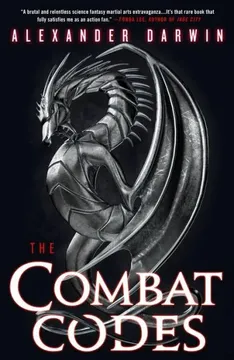
The Combat Codes is a martial arts-inspired sci-fi/fantasy novel that has garnered praise for its well-written fight scenes and compelling characters. Set in a dystopian world where conflicts are resolved through single combat, the story follows Cego, a young fighter, and his mentor Murray. Readers appreciated the unique blend of genres, the exploration of themes like honor and friendship, and the author's authentic portrayal of martial arts. While some found the pacing uneven and world-building lacking, most reviewers enjoyed the book's action-packed narrative and looked forward to the sequel.
People Also Read
Characters
Cego
The searching young fighterA thirteen-year-old Grievar with golden eyes, Cego is first known in the Underground by a nickname associated with blindness. He is observant, physically disciplined, and unusually attentive to the fear and motives of people around him. His training under Farmer gives him a precise technical foundation and a moral code that resists the violence expected of him. Cego is also curious about the world beyond the Circle, from the routines of harvesters to the workings of unfamiliar technology. He wants to understand where he belongs, but does not readily accept the identities other people assign him. His defining tension is between exceptional capacity for combat and a persistent effort to make combat serve protection rather than domination.
Murray Pearson
The fallen Knight turned ScoutOnce a celebrated Grievar Knight, Murray is now an aging Scout tasked with recruiting fighters from the Underground. He carries old injuries, a failed international bout, and a deep suspicion of the Citadel’s compromises. His cynicism is not indifference: he still longs to believe that a fighter’s strength can protect people beyond the Circle. Cego’s restraint awakens that belief, and Murray risks his career and body to secure the boy’s future. He is blunt, proud, and often uncomfortable with vulnerability, but his loyalty to old friends and willingness to act against his superiors reveal a conscience that has survived institutional disappointment.
Farmer
Cego’s island teacherThe old master who raises and trains Cego and his brothers on the island, Farmer teaches through repetition, combat, and questions rather than easy explanations. He expects discipline but also insists that a fighter understand why and for whom he acts. His lessons shape Cego’s breathing, technique, patience, and instinct to protect weaker opponents. Farmer’s sternness can leave the boys searching for answers he will not give directly, yet his care is expressed in the rigor with which he prepares them. To Cego, he is the source of both martial knowledge and the idea that home can be more than one place.
Dozer
The generous powerhouseA broad, strong lacklight from Crew Nine, Dozer talks loudly about becoming a Knight even when others treat that dream as impossible. His confidence can look like bluster, but beneath it is a hunger to be judged by what he can learn and do, not by the purity of his ancestry. Cego’s teaching helps him discover that strength depends on technique and commitment, not size alone. Dozer is loyal, warmhearted, and prone to comic misunderstandings, making him an emotional anchor for the Whelps. He is also capable of taking risks for friends, even when the odds and his own body argue against it.
Knees
The sharp-eyed VenturianA scar-faced Venturian boy from Crew Nine, Knees survives through quick movement, skepticism, and a sharp sense of humor. He is less physically imposing than Dozer but watches people and tactics closely, often spotting dangers before others do. Cego’s arrival initially makes him defensive, yet he becomes a student of the techniques Cego shares. Knees is wary of grand promises and understands how class and bloodline limit a lacklight’s chances. His friendship with Cego and Dozer is built on practical loyalty rather than sentimentality, and his dry wit helps keep their group grounded.
Solara Halberd
The disciplined champion’s daughterKnown as Sol, Solara is the daughter of Artemis Halberd and one of the Lyceum’s strongest new students. She is organized, highly knowledgeable, and technically exact, but her pride can make her defensive when others presume to evaluate her. Sol dislikes being treated as a symbol of her father’s reputation and resists the expectations attached to her family name. Her competence is matched by a dry wit and a willingness to stand up to bullies, though she rarely presents herself as sentimental. Within the Whelps, she becomes a strategist and a reliable partner whose intelligence is demonstrated in the Circle as clearly as in the classroom.
Shiar Shankspar
The ruthless purelight rivalShiar is an ambitious purelight boy who believes his bloodline entitles him to the Lyceum and a place among Mercuri’s elite. He reads weakness as an invitation and uses insults, intimidation, and violence to secure status. His upbringing has taught him to equate victory with worth, leaving little room for empathy or self-questioning. In Thaloo’s Circle, he turns that worldview against the other boys, particularly those whose ancestry he considers inferior. Shiar is socially perceptive and strategically patient when it serves him, but his contempt makes him careless about the damage he inflicts and the enemies he creates.
Silas
Cego’s absent elder brotherThe eldest of Cego’s brothers, Silas is a powerful fighter and a gifted swimmer who leaves the island by following the glowing Path. His competence makes him both a model and a difficult standard for Cego, who remembers the older boy as demanding and sometimes mocking. Silas is gentler with Sam, which sharpens the complicated feelings Cego carries after his departure. Though absent from most of Cego’s remembered childhood, Silas remains a central figure in the younger boy’s understanding of family, training, and the unknown world beyond the island.
Sam
Cego’s restless younger brotherThe youngest brother, Sam is curious, impulsive, and easily distracted by the island’s tide pools and creatures. He looks up to Silas and feels his absence intensely, though he struggles to say what that loss means. Unlike Cego, Sam questions the purpose of their training and whether the Path leads anywhere. His doubts do not make him weak; they show a child trying to understand a life whose rules have been handed to him without explanation.
Weep
The smallest boy in Crew NineA frail, frightened boy in Thaloo’s crew, Weep is mocked for his size and tears. Cego notices that he keeps trying even when training leaves him exhausted, and teaches him how to use leverage rather than brute force. Weep’s tentative confidence grows through practice and the rare experience of being treated as capable. His presence reveals how the Circle’s hierarchy preys on children least able to defend themselves.
Murray Pearson
The fallen Knight turned ScoutMurray’s significance also lies in how he learns to act again after years of defeat. He begins by hiding from his former reputation and resenting the Scout role, then accepts that duty can be chosen afresh rather than inherited from a title. His friendship with Anderson and Leyna gives him a history beyond the Citadel’s politics, while his relationship with Cego forces him to consider the human consequences of the systems he serves. Murray’s courage is imperfect and sometimes anger-driven, but he is willing to risk comfort and status when someone needs his protection.
Thaloo
The slave Circle proprietorThaloo owns the Underground fighting den where children are trained and sold to patrons. He presents exploitation as a way for Grievar boys to find their purpose, dressing profit in the language of destiny. His intelligence lies in reading incentives and bargaining, not in fighting. Thaloo is neither a simple brute nor a benevolent guardian; he sees himself as a necessary broker in a system that rewards him for turning vulnerable children into valuable fighters.
Tasker Ozark
Crew Nine’s cruel trainerOzark runs Crew Nine’s drills and measures success by the sale value of the boys he trains. He uses exhaustion and humiliation as tools, offering little technical instruction because he is paid to produce short-term results. His own limited prospects as a fighter feed his resentment and need for control. Ozark’s robotic voice box gives him an odd comic quality, but his decisions are dangerous precisely because he can make cruelty sound like routine procedure.
Anderson
Murray’s retired training partnerAnderson, once a formidable Knight, now runs the Bat and lives quietly in Farmoss with his wife, Leyna. He retains the technical skill to push Murray through a punishing training camp and understands the grief behind Murray’s long withdrawal. His easy humor conceals a clear-eyed view of how age and institutional change affect former fighters. Anderson represents a possible life beyond the Circle, though he does not ask Murray to choose it.
Leyna
The former Knight and hostLeyna is Anderson’s wife and a former Lyceum student and Knight. Warm, direct, and physically confident, she welcomes Cego into her home and feeds him after months of deprivation. Her garden and knowledge of the Underground’s plants offer Cego an education outside combat. Leyna remembers the older traditions without pretending the present is simple, and her care gives the boy a brief experience of safety that is not conditional on winning.
Commander Aon Farstead
The blind keeper of the CodesAon is the aged Commander of the Lyceum, a blind Grievar who teaches the Combat Codes and believes their purpose cannot be separated from history. He speaks quietly but carries authority earned through decades of teaching and service across national borders. Aon listens for changes others dismiss, including signs that the Citadel stands at a moral crossroads. His patience with students contrasts with his frustration at commanders who treat the Codes as expendable.
Callen Albright
The ambitious Scout CommanderCallen leads the Citadel’s Scouts and comes from the powerful Albright family. Young, polished, and politically assured, he favors efficient recruitment and treats the Grievar program as a competitive national asset. He regards Murray’s methods as embarrassing and Cego’s lacklight origins as evidence of poor judgment. Callen is skilled at wielding institutional status, but his certainty makes him dismissive of people and traditions that cannot be measured by immediate results.
High Commander Memnon
The burdened Citadel leaderMemnon heads the Citadel and carries responsibility for Mercuri’s military position, its citizens, and its aging institutions. He is disciplined, physically formidable, and genuinely worried about the nation’s declining resources. Those pressures make him susceptible to arguments that extraordinary measures are necessary. Memnon knows the Combat Codes but believes command requires compromises that individual fighters can refuse. His strained relationship with Murray reflects a deeper disagreement over whether national survival justifies violating the principles meant to define Grievar service.
Kōri Shimo
The unnervingly calm top studentKōri is a quiet, athletic student who earns the top place in the Trials despite lacking the conspicuous polish of the Twelve’s heirs. He spends long periods sitting in stillness and gives little indication of what he is thinking. His blank composure unsettles the other students, especially when his capacity for violence becomes apparent. Kōri’s presence suggests that the Lyceum’s challenges can produce dangers not captured by family reputation or visible confidence.
Xenalia
The precise young clericXenalia is a novice cleric studying Grievar injuries and rehabilitation at the Lyceum’s medward. She speaks with exactness and initially describes fighters as research subjects rather than people, but she is genuinely curious and takes her work seriously. Her Observer spectral accompanies her during examinations. Cego’s questions encourage her to translate medical concepts rather than dismiss him, and her technical expertise makes her an important source of knowledge when the students are injured.
Zero
The bit-minder in the CodexZero is a bit-minder who communicates with Murray from a life-support tube inside Mercuri’s Codex. It treats bodies and histories as data, challenging Murray’s belief that physical agency is the foundation of freedom. Zero is neither openly hostile nor humane in the ordinary sense; its calm is the calm of a system that has trained itself to see people as variables. Its knowledge makes it a crucial source on the Citadel’s technology and its ambitions.
Gryfin Thurgood
The polished purelight contenderGryfin comes from one of Mercuri’s elite Grievar families and embodies the physical advantages and confident presentation of a carefully bred fighter. He is popular among the purelights and trained to attack with strength, speed, and a punishing clinch. Unlike Shiar, he is not chiefly defined by taunting weaker students, though he benefits from a system that privileges his ancestry. His rivalry with Cego brings the Lyceum’s ideals of equal standing into direct contact with inherited advantage.
Artemis Halberd
Mercuri’s celebrated championArtemis is Mercuri’s most famous active Knight and Sol’s father. His victories make him a national symbol, but his demanding career keeps him away from his daughter for long stretches. Sol resists being defined through his reputation, even as his approval and attention matter deeply to her. Artemis’s public identity as champion and his private role as a father create a painful distance that shapes how Sol approaches both achievement and loyalty.
Abel
The resourceful Kirothian WhelpAbel is a small, agile Grievar from Mercuri’s Karsh district, with Kirothian family roots and a lively, distinctive way of speaking. He is quick to gather knowledge and eager to help his friends, whether by sharing cultural stories or finding an unconventional practical solution. Abel’s speed makes him a useful teammate against larger opponents, while his warmth helps make the Whelps feel like a community rather than a collection of competitors.
Joba Maglin
The smiling giantJoba is an enormous, unusually young boy recruited from Mercuri’s outer rings. He does not speak, communicating through expression and gesture, and keeps a broad smile even during difficult training. His size makes him formidable, but his quiet steadiness and willingness to trust his teammates matter just as much. Joba’s treatment exposes how the Citadel can recruit children as specimens, while his friendships show that he is more than the measurements displayed on a lightboard.
Plot Devices
The Combat Codes
A moral fighting frameworkThe Combat Codes are teachings passed down among Grievar, combining tactical principles with obligations about why and how to fight. Farmer teaches Cego to apply them through breath, leverage, patience, and restraint; Murray returns to them when deciding whether to risk himself for a child. Their importance is contested at the Citadel, where commanders increasingly favor technologies and results over inherited doctrine. The Codes are not a guarantee of ethical conduct, as fighters can cite or ignore them, but they give characters a way to evaluate choices beyond victory, prestige, and national advantage.
Spectrals and Circles
Light that alters combatSpectrals gather around Circles, whose different elemental alloys shape the light that reaches a fighter. Auralite can intensify the crowd’s influence, rubellium encourages confidence, emeralyis can lure fighters toward novelty, and onyx can distort the experience of time and self. Biometrics on lightboards make a combatant’s physical state visible to spectators. The Circles are both technical environments and psychological pressures, so a fighter must learn to distinguish personal judgment from the influence of the alloy and audience. Cego’s sensitivity to this system is central to his training and his most dangerous bouts.
The Sim and Cradle
Technology that shapes GrievarThe Sim creates immersive combat environments for Knight training and Lyceum Trials, making pain and danger feel real while sparing the body some physical injury. Its use can still leave severe mental harm. The Cradle is a more ambitious program that raises Grievar children within a simulated world from infancy, attempting to shape their development toward combat. Cego’s familiarity with the island Trial and the life he remembers there become crucial evidence of the program. The device exposes the Citadel’s willingness to treat children as engineered assets and raises questions about whether simulated experience can make a life less real.
The Team Challenge System
Rankings turn choices into stakesLyceum teams challenge one another in a series of bouts to gain or lose points. Refusing a challenge also carries a penalty, and defending teams can sometimes invoke a trade clause to exchange a rival’s team member if they win. Cego uses those rules to devise a plan for bringing Knees back from the Jackals: the Whelps make themselves look vulnerable enough to attract challenges, then accept several rather than retreat. The system teaches students to make calculated risks, but it also reproduces the Lyceum’s larger hierarchy by turning injuries, alliances, and friendships into measurable advantages.
Flux Tattoos and Biometrics
Identity made visibleFlux tattoos shift under spectral light and can mark achievements, team membership, or a fighter’s changing status. In Thaloo’s Circle, a brand displays a boy’s sale value, reducing identity to price. At the Lyceum, new students receive team marks, while lightboards broadcast heart rates, injuries, and other biometric data. The systems make bodies legible to institutions and spectators, allowing fighters to be evaluated, ranked, and traded. Cego’s changing marks complicate that function: the tattoos begin as labels imposed by others, then become signs of personal history that cannot be neatly categorized.
Download PDF
Download EPUB
.epub digital book format is ideal for reading ebooks on phones, tablets, and e-readers.








