

Key Takeaways
Treat identity as larger than one lifetime, while holding the evidence lightly
A method becomes a worldview. Cannon traces her approach to a 1968 hypnosis session in which a client unexpectedly described another life. She later developed a rapid, imagery-based induction and worked for what she called a deep somnambulist trance. In this state, she asked to speak with the client’s subconscious, which she described as a record keeper able to identify the life most relevant to a present concern. The book’s central proposal is that a person’s identity extends beyond the biography they consciously remember.
Experience is not proof. Cannon reports frequent successful regressions and recurring accounts, but these remain personal testimony, not independently verified evidence of reincarnation. The method is presented as a way to explore meaning, memory, and identity, not as an established map of the afterlife.
What's compelling is the book's insistence that an unexpected story can become a useful route into a person's present concerns. Narrative therapy similarly explores how people organize experience into stories, then tests whether a different interpretation changes how they live. That practical value does not establish that the story is literally a past life. Hypnosis can increase suggestibility, and a client's imagery may reflect expectations, culture, or the questions asked. Keeping emotional insight separate from historical proof allows readers to take the experience seriously without treating every detail as fact.
Explore what symptoms mean to you without mistaking metaphor for diagnosis
Stories can shift suffering. Cannon proposes that symptoms may carry symbolic meaning or connect, in her account, to traumatic experiences in other lives. She describes a doctor whose asthma reportedly eased after a regression to a life involving harmful mine dust, and a traveler whose migraines stopped after she understood her longing for a past home as grief over leaving Indonesia. Other cases link body pain to burdens, fear, or guilt. These examples illustrate her therapeutic approach: explore the story attached to a symptom, then ask what change or understanding might help.
Care still needs evidence. The book itself says its medical anecdotes do not replace a physician’s advice. Cannon’s explanations are interpretations, not demonstrated causes. She also acknowledges that the same symptom can have different explanations for different people.
The strongest version of this idea is that symptoms can carry personal meaning alongside biological causes. A patient's account of pain, fear, and life context can improve communication and make care feel less mechanical. But metaphor becomes risky when it implies that illness is a message, punishment, or result of moral failure. Asthma, cancer, and infertility require evidence-based assessment. The book's own medical disclaimer matters: symbolic exploration may complement appropriate care, but it cannot establish why a disease occurred or justify delaying treatment.
Treat trance-recovered history as testimony, not archaeological proof
Lost worlds recur. Many sessions produce stories of Atlantis, ancient Egypt, hidden libraries, powerful crystals, and knowledge concealed after civilizations misused it. In one account, a woman recalls serving in an Egyptian healing temple, where gold and crystals supposedly helped channel energy. Another subject describes an underground city built to preserve records during a planetary catastrophe. Cannon connects these stories to the idea that valuable knowledge can be hidden, forgotten, or lost, then recovered through the subconscious.
Accounts do not agree. The regressions offer different explanations for the Sphinx, pyramids, tunnels, and buried records. Some claims align loosely with familiar myths or symbols, while others contradict one another or lack physical confirmation. The book presents them as possible history, but the sessions alone cannot establish dates, locations, or events.
These narratives have value as modern mythmaking: they give shape to recurring fears about lost knowledge, technological arrogance, and the destruction of cultural memory. They also show how people use ancient settings to make present anxieties legible. Historical claims require a different standard. Archaeology relies on material evidence, dating, and independent corroboration, none of which a hypnotic recollection supplies by itself. Readers can appreciate the stories as imaginative or spiritual testimony while resisting the leap from vivid detail to verified history.
Let unfamiliar lives widen identity without turning difference into destiny
The self travels widely. Cannon’s clients describe lives as dolphins, energy beings, extraterrestrials, and inhabitants of planets unlike Earth. One man recalls a peaceful existence as a dolphin before entering human life; another describes a world with a purple sun, where people could create objects through thought. The book treats such stories as evidence that souls may learn through many forms, not only human bodies. It also portrays some newcomers to Earth as feeling out of place, struggling with its conflict, density, and social demands.
Belonging becomes a question. In this framework, karma is the consequence that can bind a soul to further lives, while some visitors claim protection from that cycle. These are spiritual explanations, not established accounts of identity or reincarnation.
The reports of feeling alien or out of place can resonate even without a literal extraterrestrial origin. They offer language for alienation, sensory difference, or a mismatch between personal values and one's surroundings. That language can comfort, but it can also harden into a special-status identity that separates someone from ordinary relationships. The most constructive reading treats these stories as invitations to examine belonging and responsibility, rather than as proof that a person is biologically or spiritually superior to those around them.
Your sleeping mind may rehearse care, but dreams cannot certify the dead
Sleep has a second life. Cannon argues that the spirit remains active while the body rests, visiting other realms, learning, or helping others. A hospice nurse named Patricia describes returning in sleep to a luminous home and guiding confused spirits toward a passage home. In Cannon’s account, people who die may be frightened or disoriented, and helpers offer comfort before other guides take over. She also says some people rehearse the transition before death and that “contracts” shape when a person leaves.
Comfort is not confirmation. This model makes the nurse’s waking work with dying people feel continuous with her nighttime purpose. But reports of helping the dead, planned deaths, or spiritual rehearsal cannot verify what happens after death or determine why a tragedy occurred.
The image of a hospice worker carrying compassion into dreams is emotionally coherent: caregiving can shape what a person dreams about, values, and remembers. It also offers a humane alternative to imagining death as abandonment. Yet claims that victims agreed to die, or that a catastrophe was rehearsed, risk imposing meaning on people who cannot confirm it and on families in grief. Such beliefs may comfort some readers, but they should not be used to explain away preventable harm or assign responsibility to the dead.
Demand evidence before turning portals and time slips into history
Boundaries may be crossings. Several clients describe portals as openings between dimensions, sometimes disguised as natural features or visible only to certain observers. A woman in one session says she guarded a portal that transported visitors between galaxies. Another account places a passage near Australia’s Uluru. Cannon also relays a time traveler’s claim that portals were used in a secret wartime experiment, and recounts reports of people experiencing missing time or seeing an earlier version of a familiar road.
A compelling report remains a report. These stories connect strange experiences through a shared model of overlapping realities. The book does not provide independently testable evidence for the portals, time travel, or the alleged Philadelphia Experiment. Nor does a vivid memory distinguish a physical event from a dream, misperception, or reconstructed account.
The portal idea offers a tidy framework for experiences that otherwise feel fragmented: missing time, unfamiliar places, or sudden changes in perception. It can help a person describe an event without dismissing their fear or curiosity. But explanatory neatness is not corroboration. Claims about secret experiments and physical gateways require records, artifacts, and witnesses whose accounts can be checked independently. The distinction matters especially when historical anecdotes are repeated as fact. A careful reader can preserve the question while withholding the conclusion.
Use attention as creative power, without assuming thought controls events
Creation begins with focus. Cannon describes beings who create environments through thought, sometimes alone and sometimes as a group. In one session, a man recalls building worlds and landscapes with other energy beings; in another, an entity explains that images and intention can shape a reality. The book extends this idea to Earth, presenting it as a shared creation sustained by collective consciousness. It urges readers to focus on the conditions they want, such as peace, rather than feeding attention to fear and conflict.
Influence has limits. The book treats thoughts as powerful and potentially material. In ordinary life, attention and group coordination can affect decisions and behavior, but they do not guarantee control over illness, conflict, weather, or planetary events.
The practical kernel is strong: attention influences what people notice, discuss, and choose, while groups can coordinate around shared aims. That is a plausible route from intention to social change. The leap from personal focus to literal creation of external events is much larger. When outcomes are outside an individual's control, the claim can unfairly imply that suffering reflects faulty thinking. The most useful interpretation preserves agency without promising omnipotence: focus can guide action, but it cannot replace material resources, collective institutions, or chance.
See identity as layered while protecting the person living in the body
A life may have facets. The book distinguishes ordinary walk-ins, where one soul is said to replace another, from more complex accounts of multiple aspects sharing a life. Michelle’s session describes three soul facets associated with different stages of her life, including changes around ages ten and twenty-one. Bobbi’s account describes a nonhuman visitor joining a body after a childhood encounter, while the original soul supposedly rests. A “holding soul” is another proposed role: a temporary presence that keeps a body functioning while its usual spirit recovers.
These accounts explain difficult lives. Cannon uses them to interpret trauma, discontinuity, and sudden personal change. They are spiritual models, not clinical diagnoses. The book does not show that distinct personalities or memory gaps demonstrate that several souls occupy one body.
Layered identity can be a helpful metaphor for how people change across development, relationships, and crises. It may also describe a felt discontinuity without forcing a single, simple story onto it. But trauma-related memory gaps and shifts in identity deserve careful, qualified assessment, not automatic supernatural labeling. The book's language may feel affirming to some readers, yet it can also obscure established psychological explanations. Respect for the person's experience should include protecting their autonomy and avoiding claims about who is inside their body.
Prepare for change through compassion, not predictions of cosmic catastrophe
A new world is promised. Across the book, subjects describe Earth changing frequency and entering a higher dimension, sometimes called the New Earth. The proposed transition involves altered bodies, greater sensitivity, and a division between people ready to move and those who remain in a more difficult reality. One account says a collective shift could be managed without most people noticing; others describe a dramatic separation. The practical message repeated throughout is to cultivate love, reduce harm, and help others become less fearful.
Forecasts are not a timetable. The sessions include confident predictions about planetary transformation and dates, but they supply no reliable way to verify or time such events. The ethical advice to practice compassion does not depend on accepting the prophecy.
The New Earth story combines hope with urgency, a potent structure that can motivate ethical change. Its strongest element is the insistence that care for others and the living planet matters now. Its weakest is the promise of a coming divide between the enlightened and those left behind, which can encourage fatalism or spiritual hierarchy. Predictions should be assessed separately from values. Compassion, ecological responsibility, and community support remain worthwhile whether or not a dimensional transformation occurs.
Analysis
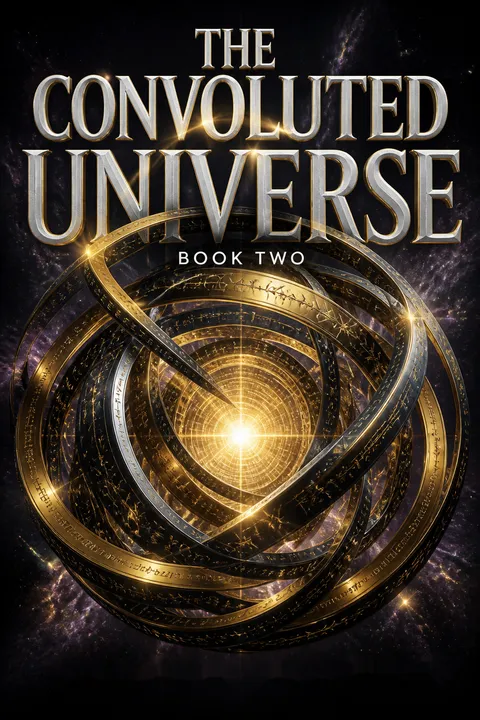
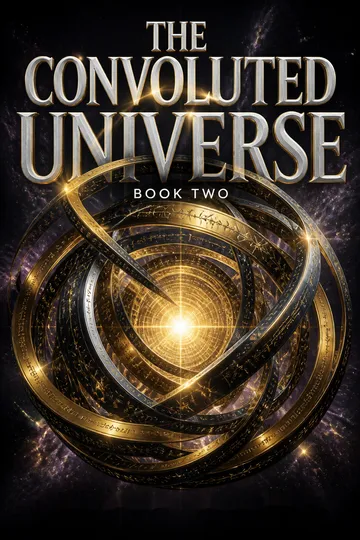
The Convoluted Universe, Book Two is a sprawling collection of hypnosis transcripts, case narratives, and metaphysical speculation. Its structure is cumulative rather than argumentative: a session introduces an unfamiliar claim, and later sessions supply apparent echoes. This gives the book the feel of field reporting across a hidden cosmos. Its most distinctive narrative device is the shift from conventional past-life therapy to reports of alien lives, ancient civilizations, portals, sleep-state work, collective creation, and a coming planetary transformation.
The book’s value is clearest when separated into three layers. First is the therapeutic story: clients reinterpret symptoms, fear, grief, and alienation through a narrative that feels meaningful to them. Second is the metaphysical model: reincarnation, karma, soul facets, and multiple dimensions. Third are empirical-sounding claims about Egypt, Mars, secret technology, DNA, and future events. The layers do not have the same evidentiary status. A participant’s relief may be genuine without proving the literal truth of the story that produced it. Hypnotic recall is vulnerable to suggestion and reconstructive memory, so vividness, emotional intensity, and agreement between stories are not equivalent to independent verification.
The text sometimes recognizes these limits, especially in its medical disclaimer and occasional acknowledgment that accounts may be inaccurate. Yet its narrative voice often presents extraordinary interpretations with greater confidence than the evidence warrants. That tension is central, not incidental. Readers can engage the book as a record of spiritual meaning-making and as an imaginative cosmology, while resisting its use as medical guidance or established history.
Its most durable practical contribution is ethical rather than cosmological: take suffering seriously, remain curious about the stories people use to understand themselves, and orient attention toward compassion. Those principles survive even if the universe described in the sessions remains unverified.
Review Summary
The Convoluted Universe - Book Two receives overwhelmingly positive reviews, averaging 4.66 stars. Readers praise its mind-expanding metaphysical content about ascension, consciousness, and spiritual evolution gathered through hypnotic regression sessions. Chapter 30 on "The New Earth" is frequently highlighted as particularly valuable, discussing the 2012 shift and dimensional ascension. Reviewers appreciate the practical tips for spiritual preparation, including energizing water and food through intention. Some find the material repetitive or difficult to comprehend, and a few question the validity of information that sometimes contradicts itself. The audiobook narration receives criticism for being choppy and lacking vocal range.
People Also Read


Glossary
Somnambulist trance
Deep hypnotic stateCannon's term for what she considers the deepest level of hypnosis. She believes this state quiets conscious interference and gives the subconscious greater freedom to produce memories or answers. Her technique aims to reach it through rapid induction and visualization. The term describes her method and interpretation, not a guarantee that material recalled in trance is historically accurate.
Subconscious
Body monitor and record keeperCannon uses this term for a part of the mind that regulates bodily processes and, in her model, stores information from present life, past lives, and spiritual existence. She reports that it can be addressed directly during hypnosis and may speak about the client in the third person. This is her specialized definition, broader than the term's ordinary psychological use.
Imprinting
Borrowed life experienceA process described in the book in which a soul receives the memories and experiences of a life it did not personally live. Cannon says these memories can provide background for an incarnation and may include emotions, making an imprint difficult to distinguish from an actual past-life memory through regression alone.
Walk-in
Soul replacement in a bodyA reported event in which one soul leaves a living body and another takes its place, usually without the body's death. Cannon distinguishes this from cases where several facets of one larger soul share a life, or where a temporary helper is said to support a person without permanently replacing them.
Soul facets
Aspects of a larger soulCannon's term for distinct aspects or segments of a larger soul that may participate in different periods or experiences within one person's life. In one account, three facets are associated with different developmental stages. The idea differs from a simple walk-in because the facets are described as parts of one whole, not unrelated souls.
Holding soul
Temporary spiritual caretakerA soul described as temporarily supporting a living body while its usual occupant is said to rest or recover. The account proposes that the helper can maintain the person's functioning and may later leave when the original presence returns. This is presented as a spiritual explanation, not a clinically established process.
Portal
Passage between realitiesA described opening or transit point connecting different dimensions, locations, or times. In the book, some portals are said to allow passage, while other structures function more like windows for observation. Accounts include gateways disguised as natural features and routes used by alleged travelers from other worlds or times.
New Earth
Higher-frequency planetary realityThe book's name for a proposed future version or dimension of Earth, associated with a shift in planetary frequency, changes in human bodies, and a more harmonious way of life. The sessions differ on how the transition occurs and who experiences it. It is a spiritual prediction, not an established scientific forecast.
Dreamer
Consciousness sustaining realityA concept in which a larger consciousness sustains a shared reality, while individuals also shape smaller realities through their thoughts and actions. The model compares waking life to a collectively maintained dream. It is offered as a metaphysical interpretation of creation, not as a demonstrated account of how the physical universe operates.
Convoluted Universe Series

About the Author
Download PDF
Download EPUB
.epub digital book format is ideal for reading ebooks on phones, tablets, and e-readers.








