

Plot Summary
Prologue
Jenny Cooper1 first encounters death as a child, watching her grandmother close the eyes of her dead grandfather and reject her mother’s attempt at comfort. Years later, her grandmother dies in the same bed, leaving Jenny1 with a lasting sense that grief uncovers truths families would rather keep buried.
When her marriage collapses and her ex-husband9 serves her divorce papers, that old fear of what death might reveal helps pull her back from suicide. Six months later, still recovering from panic and despair, she begins a new job as a coroner.
The childhood scenes give Jenny a private theory of death before she has the professional authority to investigate it: the dead cannot speak, but the living become less able to hide what they know. Her grandmother’s rejection of comfort makes family grief feel charged with accusation rather than tenderness. This memory is not simply atmospheric backstory. It explains why Jenny is drawn to cases in which institutions and relatives have accepted an answer too quickly. Her later career turns an old, frightening intuition into public duty, though the prologue also warns that the work will reopen wounds she has only recently learned to contain.
The Locked Drawer
On her first day as Severn Vale’s coroner, Jenny Cooper1 finds a stale office, unfinished files, and a recording from Simone Wills,6 the mother of Danny,2 a fourteen-year-old who died in custody. His inquest ended with a suicide verdict under Jenny’s1 predecessor, Harry Marshall.4
Another file is hidden in a locked drawer: Katy Taylor’s3 death certificate, signed without an inquest, despite her body being found away from home after an apparent heroin overdose. The post-mortem report is missing.
Coroner’s officer Alison Trent5 defends Marshall’s4 informal habits, while Jenny1 insists she will bring the office under one roof and follow procedure. The concealed file gives Jenny1 more than a disorganized caseload. It shows that the office may have left two families without answers.
Jenny’s first exercise of authority is administrative, but the locked drawer makes procedure morally consequential. A missing report and an unheld inquest are not abstract failures: they decide which deaths receive public attention and which families must live with an official account they cannot test. Alison’s loyalty to Marshall introduces a conflict between personal trust and institutional scrutiny. Jenny begins by asserting control over her office, yet the case files quickly reveal that control is not the same as knowledge. Her new job offers a structure she hopes will steady her life, while its first discovery pulls her toward exactly the emotional disorder she hoped to leave behind.
Simone's Unheard Warnings
Journalist Tara Collins7 questions whether Marshall4 properly investigated Danny’s2 death, and Jenny1 reads the file more closely. Danny2 had been placed under observation after threatening self-harm, then spent days isolated in a secure unit.
His mother6 had called the centre repeatedly, worried that his mental state was deteriorating, but the director12 said the calls never reached her. Jenny1 visits Simone,6 who explains that Danny2 had become withdrawn, burned his arms, and feared custody after being sentenced.
She had not been allowed to visit or speak with him before he died. Simone6 also says Marshall4 had promised to investigate thoroughly, then stopped contacting her before the inquest. Jenny1 cannot yet prove misconduct, but she agrees to identify what the hearing failed to ask.
Simone’s account complicates the convenient division between a troubled child and an efficient institution. Danny’s criminal record does not cancel the significance of his fear, and his mother’s chaotic life does not make her warnings irrelevant. Jenny recognizes how easily professionals can use a parent’s social status to discount her knowledge, a pattern familiar from her former work in childcare law. Simone, meanwhile, is not an idealized witness: she carries guilt and anger, and her memories are shaped by both. The important shift is that Jenny stops treating the inquest as settled paperwork. She begins to consider how a formally complete process can still exclude the evidence that matters most.
Katy's Missing Questions
Jenny1 visits Katy’s3 parents, Andy22 and Claire Taylor,23 and learns that their daughter had recently served time at Portshead Farm, the same centre where Danny2 died. Katy3 had returned home briefly, then disappeared; her parents assumed drugs and old associates had drawn her away.
Andy22 says police quickly classified her death as an overdose and did not ask who had been with her. Claire23 resists another official inquiry, believing Marshall4 had already promised there would be no inquest.
Jenny1 finds that Katy’s3 location, her possible prostitution, and the circumstances of the overdose were barely examined. She revokes Marshall’s4 certificate and opens an inquest. Local authority lawyer Frank Grantham13 warns her against upsetting public services, but Jenny1 schedules the hearing anyway.
Katy’s family exposes a second kind of abandonment: not the visible confinement of custody, but the quiet narrowing of an investigation once a young drug user is judged predictable. Andy and Claire’s grief does not translate into a demand for spectacle. Claire wants her daughter left undisturbed, while Jenny believes the absence of inquiry itself is unjust. Their disagreement forces Jenny to distinguish compassion from avoidance. Grantham’s warning reveals how a close network of officials can treat institutional calm as a public good, even when that calm depends on asking fewer questions. Jenny’s decision to hold an inquest converts a private procedural correction into a challenge to the district’s habits of mutual accommodation.
The Grave Opens
At Katy’s3 inquest, a forensic pathologist finds no clear way to establish whether she injected herself or received the heroin from someone else. Her parents are distressed when Jenny1 explains that further tests may require exhumation, but Jenny1 orders it.
The examination by Professor Lloyd19 reveals a chipped tooth, torn shoulder ligaments, and a patch of hair pulled from Katy’s3 scalp. Hair analysis shows regular cocaine and cannabis use but no earlier heroin use, while the dose in her body was enormous.
Lloyd19 concludes that someone likely restrained and struck her before administering the fatal drug. Jenny’s1 findings turn a neglected overdose inquiry into a suspected murder investigation. The police request an adjournment, and Tara,7 who has been pursuing the case, is arrested on a fraud charge.
The exhumation makes the conflict between care and truth painfully literal. Claire’s wish to protect Katy’s body is understandable, but the physical evidence hidden within it is the only route beyond a verdict built on assumption. The forensic findings do not restore Katy’s voice; they make her injuries legible to institutions that had not looked carefully enough the first time. Jenny’s choice therefore carries a cost that cannot be softened by good intentions. The police adjournment and Tara’s arrest introduce competing forms of power: one formally authorized, the other apparently punitive. The case now asks whether evidence can survive the systems that decide who is allowed to gather it.
Portshead's Closed Doors
Jenny1 seeks permission to reopen Danny’s2 inquest, relying on evidence that his family’s social worker18 tried to secure a psychiatric assessment before custody. The Attorney General grants leave, but Jenny1 must conduct the hearing in a formal courtroom and under close scrutiny.
Before it begins, she visits Portshead Farm. Director Elaine Lewis12 resists access, yet Jenny1 inspects the tiny cells, observation rooms, and camera system. She discovers that the centre had no psychiatrist available during Danny’s2 admission, even though he had been placed on suicide watch.
A young detainee is now receiving psychiatric care after a suicide attempt, underscoring what Danny2 did not receive. At home, Jenny’s1 teenage son10 Ross10 is caught using cannabis at school, intensifying her fear that her own instability has damaged him.
The visit gives Jenny a material understanding of what the paperwork concealed: a child’s world reduced to a locked room, monitored routines, and privileges earned through compliance. Her inspection also exposes the gap between a procedure designed to prevent physical self-harm and care that might address why a child wants to hurt himself. Ross’s crisis turns this issue inward. Jenny must investigate a system that failed a frightened boy while fearing that her own illness has failed her son. That parallel increases her empathy but also threatens her detachment. Her authority is newly real, yet each personal identification risks becoming a vulnerability that opponents can use against her.
The Tender Behind the Verdict
At the first hearing into Danny’s2 death, Simone6 and social worker Ruth Turner18 describe warnings that he needed psychiatric help. Nurse Linda Raven says Portshead followed its procedures, while defence counsel argues that no one could have known Danny2 was at risk.
Evidence about the faulty corridor camera also proves uncertain. Jenny’s1 assistant Alison5 then produces a confidential UKAM tender for a new secure centre worth millions. The document makes the stakes of a finding against the company clearer, but does not yet prove corruption.
On the next sitting, Ministry official Simon Moreton25 warns Jenny1 that exposing the tender could cost her career and invokes her undisclosed psychiatric history. Her panic overwhelms her, and she collapses. The hearing is adjourned while she seeks treatment.
The tender links one child’s death to a business model without automatically proving that the business caused it. That distinction matters: Jenny must resist both institutional denial and the temptation to treat motive as evidence. Moreton’s threat is effective because it targets a vulnerability Jenny has concealed, turning professional independence into a test of whether she can withstand personal exposure. Her collapse is not simply a setback in the investigation. It shows how the state can discipline an investigator through the same language of fitness and risk that supposedly protects the public. The hearing’s central question becomes whether procedure can remain impartial when those controlling its conditions have something to lose.
Two Children, One Warning
During the adjournment, Jenny1 and Tara7 search for Hayley Johnson,16 a young woman who knew Katy.3 Hayley16 recalls Katy3 describing Danny2 as frightened and troubled by a staff member at Portshead; Danny2 had spoken of finding a knife to defend himself.
Jenny1 then confronts Justin Bennett,17 the Youth Offending Team worker. Justin17 admits that Katy3 told him this before she disappeared, and that he passed the information to Marshall.4 Marshall4 had wanted to speak with Katy3 himself.
The disclosure places a warning about Danny’s2 treatment in Marshall’s4 hands before the original inquest, and suggests that Katy3 may have known more than the official record shows. Jenny1 now has a specific lead inside Portshead, but no name for the staff member or proof of what happened.
The connection between the teenagers emerges not through a grand revelation but through a chain of imperfect disclosure. Katy confided in a caseworker, the caseworker told Marshall, and Marshall’s response remains unclear. Each adult held only a fragment, and each delay reduced the chance that a vulnerable young person could be heard in time. Hayley’s memory is partial, Justin’s professional caution has left gaps, and Jenny must treat their accounts as leads rather than conclusions. This sequence also changes Katy’s role in the investigation: she was not merely a second victim whose death exposed bad procedure. She may have carried the only surviving account of Danny’s fear inside the centre.
The Coroner Is Silenced
Jenny1 presses pathologist Nick Peterson11 about his sparse reports, but he refuses to revisit Danny’s2 case. Her relationship with Steve Painter,8 the neighbour who has helped her feel less alone, becomes another weakness when police find marijuana at her home and charge him with supplying it and her with allowing the premises to be used.
The Ministry suspends Jenny,1 and she comes close to taking her own life. Professor Lloyd19 contacts her, however, and explains that Katy’s3 injuries resemble control-and-restraint techniques used in secure institutions.
Jenny1 returns to Alison,5 who agrees to help despite her own grief and fear. Their next step is to obtain Peterson’s11 original autopsy records. Jenny’s1 professional authority has been stripped away, but the forensic possibility gives her a reason to keep investigating.
Jenny’s crisis brings her private dependency and public duty into direct collision. Medication has helped her function, but secrecy around it gives her opponents leverage, while her need for intimacy with Steve exposes her to a separate accusation. The charge is not merely an obstacle; it repeats the story that she is unreliable and unable to govern herself. Her near-suicidal retreat makes the choice to continue less triumphal than costly. Lloyd’s insight offers a concrete evidentiary path, and Alison’s return matters because it is an act of conscience rather than uncomplicated loyalty. Jenny does not become fearless. She chooses to act while fear, shame, and uncertainty remain active.
Files Beneath the Mortuary
Alison5 and Jenny1 fail to obtain Peterson’s11 dictation tapes through official channels, so Tara7 brings in a teenage computer expert to access the hospital files. They find a second report on Danny, written after Marshall4 requested a re-examination.
It records bruising and a bald patch consistent with forceful restraint, findings absent from the report used at the inquest. A separate discovery explains Marshall’s4 retreat: photographs show him with a young male companion, and his note to Grantham suggests the images were sent as leverage.
Jenny1 believes the threat of exposure helped silence Marshall4 after he learned of Danny’s2 injuries. The documents do not yet identify the killer, but they show that evidence was withheld and that someone had means to pressure the coroner.
The digital records transform suspicion into a documentary contradiction: Peterson saw injuries that the public record omitted. The photographs add a different kind of evidence, one that explains vulnerability without establishing every motive or action. Jenny must avoid reducing Marshall to either a saint or a coward. His private life may have been used to coerce him, but his choices still shaped what Danny’s family learned. The hacker’s access also mirrors the investigation’s larger problem: official systems contain the truth, yet access is controlled by the same institutions under scrutiny. Discovery is therefore not enough. Jenny must decide how to use evidence without turning the dead and their families into material for spectacle.
A Beating Cannot Bury It
After Jenny1 drafts a report threatening to expose the cover-up, two men break into Melin Bach, beat her, and demand she abandon the case. Steve8 finds her injured, and Jenny1 gives Detective Sergeant Owen Williams15 the evidence she has gathered.
Williams15 sees grounds for a wider inquiry and keeps it with his Welsh team rather than the Bristol police. The local prosecution service drops the charges against Jenny,1 allowing her to seek reinstatement.
She persuades Moreton25 to restore her to office, then arranges a new hearing in Chepstow, beyond the reach of the local authority’s usual control. She summons the officials who avoided the first hearing. The assault confirms the danger, but it also gives Jenny1 an independent police ally and a venue where she can resume the inquest.
The attack makes the threat physical, but it does not answer who ordered it. Jenny’s decision to involve Williams is therefore a tactical choice, not proof that every suspicion is correct. His jurisdiction offers a way around local entanglements, while his eagerness to challenge English institutions carries its own risk of bias. Jenny must also negotiate her reinstatement by presenting herself as controlled and professionally reliable, even after the system used her illness to remove her. Her struggle is no longer only to expose misconduct. She has to rebuild the conditions under which evidence can be heard, including a courtroom, witnesses, and an authority willing to protect the process.
The Nurse Behind Both
At the resumed hearing, Justin17 confirms that Katy3 told him Danny2 feared a staff member and intended to defend himself. Peterson11 admits Marshall4 asked him to examine Danny again and that he later concealed the findings at Marshall’s4 request.
When pressured to answer questions, CCTV operator Darren Hogg reveals that the camera worked and that nurse Sean Loughlin14 entered Danny’s2 cell during the night. Hogg says the director12 ordered him to report the camera faulty and conceal Loughlin’s14 presence.
A young man, Mark Clayton,21 identifies himself as someone Marshall4 had paid for sex and recounts Marshall4 naming Loughlin14 as Danny’s2 killer. Hogg then admits Loughlin14 drove the blue Vectra linked to Katy.3 The jury finds Danny2 unlawfully killed by Loughlin,14 who restrained him and staged the hanging.
The climax succeeds because separate evidentiary strands finally converge: the suppressed examination, Katy’s warning, the camera, the staff member’s access, and the car. No single witness is fully reliable or sufficient, so Jenny’s achievement lies in making their contradictions test one another. Mark Clayton’s testimony also changes the meaning of Marshall’s silence. His vulnerability was real, but it did not erase the investigative work he had done before retreating. The jury’s finding is precise about the mechanism of Danny’s death and gives Simone an answer, though not restoration. The courtroom does not defeat the private prison system outright. It establishes a public record that the system had worked to prevent.
The Stream and the Future
After the hearing, DNA evidence from hairs in Loughlin’s14 car supports the murder case against him. At Melin Bach, Steve8 challenges Jenny’s1 habit of treating solitude as safety and invites her into the stream beside her home. She hesitates, then enters the water. In therapy, she reaches further into the childhood memory that has haunted her: she hears her grandfather shouting at a door, though she still cannot explain what happened.
She recognizes that treatment is helping without imagining the past can be repaired. Ross10 is due to stay with her for the summer, and Jenny1 is preparing to be his mother without demanding that either of them become someone else. Her work has not cured her, but she is less willing to disappear from her own life.
The personal ending refuses to equate professional success with psychological cure. The evidence against Loughlin advances beyond the courtroom, but Jenny’s deepest fear remains only partly understood. Entering the stream is a modest act with unusual weight: she allows another person’s invitation to matter without surrendering her independence. Therapy offers a new fragment, not a complete explanation, and the story treats that incompleteness honestly. Ross’s planned visit makes the future practical rather than symbolic. Jenny can try again as a parent through shared time, not through a perfect account of past mistakes. Her recovery begins to look less like mastery and more like the ability to remain present.
Epilogue
Sean Loughlin14 is convicted of Katy’s3 murder and pleads guilty to Danny’s2 manslaughter, receiving a life sentence with a minimum term of twenty-five years. Kevin Stewart is imprisoned for perverting the course of justice, while the Crown declines to prosecute several other Portshead staff.
Elaine Lewis12 remains in the United States, and no documentary proof of Grantham’s13 alleged corruption is found; UKAM proceeds with its new centre. Tara7 is cleared of fraud, and a later inquest into Harry Marshall’s4 death returns an open verdict. At Katy’s3 reinterment, Marshall’s widow24 reads a passage he had loved. The legal cases yield convictions, but the institution that enabled them continues.
The epilogue gives the criminal investigation a firm result while resisting the comfort of a total cleanup. Loughlin is punished, and Tara is vindicated, but UKAM still builds its facility, Lewis remains beyond reach, and the suspected land deal is never proved. The open verdict on Marshall preserves the distinction between a compelling interpretation and an established fact. His widow’s reading at Katy’s reinterment offers a quiet act of public mourning without resolving the private damage around him. By placing institutional continuity beside individual convictions, the ending asks readers to measure justice not only by who is sentenced, but by what structures remain in place afterward.
Analysis
The novel’s central question is not simply who killed Danny Wills2 and Katy Taylor,3 but how an official account becomes believable when those responsible for testing it have reasons to stop. Jenny’s1 office sits between family grief, forensic medicine, policing, local government, and private incarceration. Each institution can point to a boundary of responsibility: the pathologist11 reports cause, the police allocate scarce resources, the prison follows protocol, the social worker18 carries too many cases, and the coroner inherits what remains. The deaths emerge from these separations as much as from one person’s violence.
Jenny’s1 insistence on procedure is therefore double-edged. A fresh inquest gives families a public hearing, but rules can also be used to adjourn, delay, or restrict what becomes evidence. Her authority is real enough to summon witnesses and order an exhumation, yet vulnerable to political supervision and scrutiny of her mental health. The story does not present her emotional involvement as pure virtue. Anger helps her resist intimidation, but it also tempts her to overreach and risks making her case easier to dismiss. Her growth consists less in becoming detached than in learning to distinguish an instinct from a finding and to build proof from the testimony of imperfect people.
The teenagers are repeatedly reduced to categories: offender, addict, prostitute, suicide risk. Their conduct is real, but those labels let adults stop asking what fear or coercion lies beneath it. Danny’s2 aggression and Katy’s3 drug use make them easy to treat as predictable losses. The forensic discoveries restore no lives; they do restore specificity, showing that a child’s body can contradict a story designed to close a file.
The ending is intentionally uneven. Loughlin14 is convicted and Tara7 is cleared, but UKAM continues its expansion, the suspected corruption remains unproved, and Marshall’s4 death receives an open verdict. The book’s measure of justice is thus neither total victory nor cynical futility. It is the act of making suppressed facts public, while recognizing that exposure can change an account without immediately changing the institution that produced it.
Review Summary
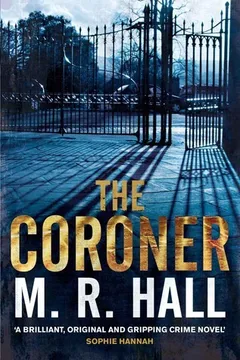
The Coroner is the first in M.R. Hall's Jenny Cooper series, receiving mixed reviews averaging 3.71/5. Readers appreciate the unique coroner perspective and Jenny's complex, flawed characterisation—a divorced, anxiety-ridden pill-dependent protagonist investigating suppressed deaths at a youth detention facility. Many found the first two-thirds slow but the courtroom climax compelling. Common criticisms include repetitive depictions of Jenny's drug dependency, one-dimensional supporting characters, and excessive length. Most readers willing to persist found the conspiracy plot rewarding enough to continue the series.
Characters
Jenny Cooper
The searching coronerJenny is a forty-two-year-old lawyer beginning again after divorce, a mental-health crisis, and the loss of daily life with her teenage son10. She chooses the coroner’s office because its work seems orderly and independent, but she is quickly drawn toward cases where official explanations have protected institutions rather than families. Her professional strengths are persistence, legal precision, and a strong instinct for neglected people. Those same qualities can become liabilities when she identifies too closely with a victim or lets anger outrun proof. Jenny’s panic, medication dependence, and fear of an obscured childhood trauma are not separate from her work; they shape how she reads danger and how hard she fights to remain present.
Danny Wills
The boy behind the verdictDanny is a fourteen-year-old from a poor, unstable household whose early criminal record makes adults quick to see him as threatening rather than frightened. He is Simone’s6 eldest child and has grown up around shifting partners, younger siblings, and the pressure to earn status among other boys. His aggression and bravado coexist with a child’s need for safety, attention, and belonging. Those competing needs are central to how others interpret his behavior: some regard his threats as manipulation, while people who know him sense despair beneath them. Danny’s story tests whether institutions can recognize vulnerability when it arrives in an angry, difficult form.
Katy Taylor
The overlooked witnessKaty is a fifteen-year-old from a comparatively stable home whose drug use and offending pull her into a world her parents cannot control. She is Andy22 and Claire’s23 daughter, capable of keeping her bedroom orderly even as her life becomes increasingly dangerous. Her shifts between family loyalty and street independence suggest a young person trying to preserve more than one identity at once. Katy has known Danny2 since childhood and, during their shared time in custody, notices a fear in him that others have minimized. Her importance lies not only in what happened to her, but in the small piece of information she tries to pass to an adult.
Harry Marshall
The cautious predecessorHarry is the long-serving coroner whose files and decisions shape Jenny’s1 first investigations. A family man with four daughters, he is remembered as compassionate toward bereaved relatives and reluctant to subject them to hearings he considers fruitless. His approach grows from humane concern, but informality and personal trust also leave him vulnerable to missed evidence and pressure. Harry’s professional identity rests on balancing truth with the consequences of public scrutiny; when those duties collide, his choices become difficult for others to interpret. His papers provide Jenny1 with both a record of careful attention and signs that he may have stopped short when the stakes became personal.
Alison Trent
The grieving coroner's officerAlison is Jenny’s1 experienced coroner’s officer, a former CID detective who knows the local police and public-service network well. She begins wary of Jenny’s1 reforms and protective of Harry4, whose friendship mattered deeply to her. Alison’s knowledge of local practice is valuable, but loyalty and grief make her slow to question the man she trusted. Beneath her procedural competence is a person struggling to reconcile affection, resentment, and professional duty. She can be defensive and guarded, yet she is also capable of revising her position when evidence demands it. Her relationship with Jenny1 develops through hard conversations in which neither woman can rely on easy reassurance.
Simone Wills
Danny's fiercely grieving motherSimone is a young mother of six whose poverty, drug use, and unstable relationships make her an easy target for public judgment. She loves Danny2 but knows she could not give him the security he needed, and that knowledge fuels both guilt and anger. Her account of his fear is specific, even when professionals treat her as unreliable. Simone resists being turned into a respectable symbol of grief; she remains blunt, defensive, and absorbed in the pressures of her surviving children. Her insistence that officials answer for Danny’s2 treatment comes from a mother’s conviction that his difficult behavior never made him disposable.
Tara Collins
The relentless local reporterTara is a Bristol Evening Post journalist who follows Danny’s2 death because she remembers him as more than the criminal label attached to him. She is energetic, confrontational, and willing to pursue leads that officials dismiss. Her reporting opens doors Jenny1 cannot easily reach, particularly among young people and street contacts. Tara also carries a volatile streak: she can threaten, speculate, and blur the line between persistence and recklessness. Her belief that hidden connections must be exposed often proves useful, but Jenny1 has reason to question how much of Tara’s information is verifiable. Their uneasy alliance depends on shared purpose rather than uncomplicated trust.
Steve Painter
The self-sufficient neighbourSteve is a former architecture student who lives on a smallholding near Jenny’s1 cottage, growing food and working the land. He values independence and has built a life that keeps conventional ambition at a distance, though his abandoned studies suggest he has not entirely stopped wanting more. His ease with solitude contrasts with Jenny’s1 fear of being alone. He offers her practical help, companionship, and attraction, but his resistance to commitment creates friction. Steve is neither a rescuer nor a simple romantic answer. His presence gives Jenny1 a chance to experience closeness without pretending that either of them has solved the other’s problems.
David Cooper
Jenny's controlling ex-husbandDavid is a successful heart surgeon and Ross’s father10. He prizes discipline, achievement, and control, and often treats disagreement as evidence that someone else is being irrational. His affair ended his marriage to Jenny1, but he still judges her choices and worries about her reliability as a parent. David genuinely cares about Ross10, yet his concern tends to arrive as pressure to meet his own standards. His polished home and professional authority sharpen the contrast between the life he considers secure and the independent, untidy life Jenny1 is trying to build.
Ross Cooper
Jenny's uncertain teenage sonRoss is Jenny1 and David’s9 fifteen-year-old son, living mainly with his father9 while navigating exams, parental separation, and competing expectations about his future. He is guarded with Jenny1 and often avoids emotional exposure through silence or sarcasm. His cannabis use and school difficulties suggest a teenager seeking escape before he can clearly explain what troubles him. Ross cares about both parents but does not want to be managed as a problem they can solve without listening. His relationship with Jenny1 carries her deepest fear of having failed, while his own uncertainty makes room for a more honest connection.
Nick Peterson
The overburdened pathologistPeterson is Severn Vale’s hospital pathologist, an athletic, intelligent man handling an exhausting caseload with too little administrative support. He is used to a local system built on phone calls and trust, and initially regards Jenny’s1 demands for written reports as needless disruption. His professional pride and social position make his decisions difficult to read. He knows the bodies and the limits of forensic evidence, but the pressure to process cases quickly can narrow what he chooses to examine or record. Jenny’s1 questions force him to confront the distance between an initial finding and a complete investigation.
Elaine Lewis
The polished prison directorElaine directs Portshead Farm, a private secure training centre, and presents its operations as controlled, compliant, and professionally managed. She is composed under questioning and skilled at translating human failures into procedural language. Her priorities reflect the demands of running a large institution under contract, where reputation and performance matter alongside the care of children. Elaine does not see herself as careless; she trusts systems designed to contain risk. That confidence becomes unsettling when the people inside those systems describe unmet needs and missing oversight.
Frank Grantham
The local authority powerbrokerGrantham heads the local authority’s legal department and assumes that the coroner’s office should cooperate with the district’s other public services. He is well connected, accustomed to influence, and irritated by Jenny’s1 insistence that her office is independent. His concern for institutional harmony may look like sensible administration to him, but it can also shade into protection of powerful acquaintances. Grantham’s confidence depends on knowing how local networks work and expecting others to respect their unwritten rules.
Sean Loughlin
A Portshead medical workerLoughlin works as a nurse within Portshead Farm’s medical operation. His position gives him access to young detainees and places him within the institution’s routines of observation, discipline, and treatment. Staff and trainees know him through the centre’s closed environment, where authority is concentrated and outside scrutiny is limited. His role puts him near the questions Jenny1 raises about restraint, medication, and the care of vulnerable children.
Owen Williams
The Welsh investigatorDetective Sergeant Williams works in the Welsh police force and takes Jenny’s1 assault seriously enough to consider a broader inquiry. He is practical, direct, and keen to pursue a case that will challenge the neighboring English authorities. His local knowledge and willingness to act give Jenny1 a route outside the network surrounding Severn Vale. Williams’s impatience with English institutions can be an asset, but it also means Jenny1 must keep his enthusiasm from outrunning evidence.
Hayley Johnson
Katy's streetwise friendHayley is an eighteen-year-old who knows Katy3 from the street and understands the social rules that keep young women from talking freely to officials. She is wary of police and initially treats Jenny’s1 questions as a possible trap. Her memories are incomplete, but she can describe Katy’s3 time in custody and her association with Danny2. Hayley’s guardedness is not indifference; it reflects the risks of speaking in a world where information can invite retaliation.
Justin Bennett
The cautious youth workerJustin works for the Youth Offending Team and has dealt with both Katy3 and Danny2. He wants young offenders to trust him, but his reluctance to probe can leave important facts unrecorded. He follows a professional culture of forms, contracts, and careful boundaries, even when a young person’s warning calls for more decisive action. Justin’s conscientiousness is real but limited by fear of overstepping and by the demands of a heavy caseload.
Ruth Turner
The overloaded social workerRuth is the Wills6 family’s social worker, responsible for supporting a household with many children and escalating concerns about Danny2. She recognizes that he may need psychiatric help and tries to secure an assessment before he enters custody. Her workload and the fragmented system make persistence difficult, and she is aware of what she failed to follow through. Ruth’s testimony carries both professional knowledge and regret.
Professor Lloyd
The forensic second opinionProfessor Lloyd is a Home Office pathologist whose expertise is sought when Jenny1 needs an independent examination of Katy’s3 remains. He is curious, precise, and willing to follow physical details beyond a routine cause-of-death finding. His professional confidence allows him to explain technical evidence in terms a jury can understand. He also knows that challenging a colleague’s work has consequences, so his candor reflects a deliberate choice to put forensic responsibility ahead of professional comfort.
Terry Ryan
Danny's former cell neighbourTerry is a teenage burglar who occupied a room beside Danny2 at Portshead Farm. He is streetwise, guarded, and unwilling to risk his standing among other detainees by identifying people involved in drugs or violence. His recollections offer small, uncertain glimpses of Danny’s2 last evening rather than a complete account.
Mark Clayton
The reluctant young witnessMark is a young man who knew Harry Marshall4 through a private arrangement. He is uncomfortable in public and understands that his connection to the former coroner may expose him to judgment. His testimony depends on recalling a difficult personal history despite the shame and attention surrounding it.
Andy Taylor
Katy's determined fatherAndy is a construction worker and Katy’s father3. He and Claire23 tried to keep their daughter safe while her drug use and offending increasingly escaped their control. Andy tends to explain and organize when grief threatens to overwhelm him, but anger rises when officials imply the family should have prevented what happened. His insistence that responsibility belongs beyond the home makes him an important counterweight to the tendency to blame parents.
Claire Taylor
Katy's grieving motherClaire is Katy’s mother3, withdrawn by grief and physically weakened by the strain of losing her daughter. She wants the official process to stop because each new inquiry makes the loss immediate again. Her resistance is not ignorance; she has spent years trying to reach a daughter whose behavior she could not control. The tidy room Katy3 left behind preserves Claire’s sense that the child she loved still existed alongside the troubled teenager.
Mary Marshall
Harry's guarded widowMary is Harry’s wife4 and the mother of their four daughters. She protects the family’s privacy and prefers to remember Harry4 as principled, even when Jenny’s1 questions unsettle that account. Her religious convictions shape her understanding of moral failure and death, while her restraint makes it difficult to know what she suspects or fears.
Simon Moreton
The ministry's enforcerMoreton oversees the Coroners’ Service for the Ministry of Justice and intervenes when Jenny’s1 inquiry threatens politically sensitive information. He speaks in the language of fitness, proportionality, and public administration, but uses Jenny’s private medical history as leverage. His role embodies the pressure placed on an ostensibly independent office by the department that supervises it.
Plot Devices
The coroner's inquest
Public truth under oathThe inquest is the story’s main investigative structure. Unlike a criminal trial, it lets Jenny1 question witnesses directly and assemble how a death occurred, but its authority is limited by rules about evidence, police investigations, and prior verdicts. That makes every procedural decision consequential: Jenny1 must decide whether to reopen cases, adjourn for police work, or risk appearing biased. The hearings also expose how official explanations gain legitimacy. Witnesses can be sworn and still evasive, while a family’s testimony can be discounted unless the coroner makes room for it.
The second post-mortems
Bodies preserve contradictionsThe repeated examinations of Katy3 and Danny2 distinguish an assumed cause of death from a complete account of what happened. Katy’s3 damaged tooth, shoulder ligaments, missing hair, and unusual heroin exposure point toward an assault. Peterson’s11 later examination of Danny2 records injuries consistent with restraint, contradicting the report used at the first inquest. These findings give Jenny1 forensic grounds to challenge official conclusions, while also showing how evidence can be lost through rushed work or deliberately incomplete reporting.
The UKAM tender
Profit shadows the inquiryThe confidential tender for a new secure training centre gives the investigation a financial and political dimension. UKAM’s large prospective contract makes its reputation valuable, especially when evidence raises questions about safety and drugs inside Portshead Farm. The tender is not proof of a corrupt bargain, and the epilogue leaves the suspected land deal unsubstantiated. Its function is to show why an institution might resist scrutiny and to make Jenny’s1 use of the document professionally dangerous.
Marshall's hidden evidence
Private shame becomes leverageMarshall’s4 locked files, second post-mortem report, recorded-mail receipt, and hotel photographs create a trail of evidence about his final weeks. The photographs suggest that intimate material was used to pressure him, while his papers show he had obtained information about Danny’s2 injuries. The device complicates his character: compassion and courage coexist with concealment and fear. Jenny1 must handle this material carefully because exposing it could harm his family without necessarily advancing the cases.
Jenny's panic and memory
Private fear tests public dutyJenny’s1 medication, panic attacks, and missing childhood memory run alongside the investigations rather than serving as a separate subplot. Stress makes driving, court appearances, and confinement physically difficult, while opponents use her medical history to question her fitness. Her treatment gradually allows her to function, but the final therapy sessions reveal only a fragment of the past, not a neat explanation. This device keeps her determination from becoming invulnerability and makes professional independence a personal as well as legal struggle.
Download PDF
Download EPUB
.epub digital book format is ideal for reading ebooks on phones, tablets, and e-readers.








