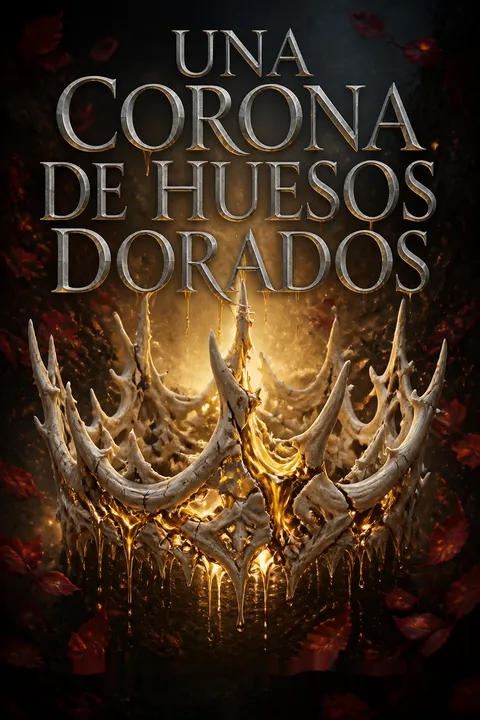


Plot Summary
The Temple's New Queen
At the Chambers of Nyktos,13 Queen Eloana4 removes her crown and names Poppy1 the rightful Queen of Atlantia after Poppy's1 blood reveals an ancient power. The wolven bonds that once tied their people to the royal line break, and the animals turn instinctively toward Poppy.1 When Casteel2 approaches, Kieran3 and the other wolven mistake him for a threat until Poppy1 commands them to stand down.
She has just defended herself from Atlantian guards who accused her of being a Soul Eater and pelted her with stones. Her silver-lit power killed several attackers without her touching them. Before she can understand what she has become, Casteel2 recognizes that the attack was organized and orders Alastir,6 his family's trusted adviser,6 seized.
The first crisis makes Poppy's inheritance physical before it becomes political. The wolven respond to her before she can choose a title, while her command over them proves that authority is not simply bestowed by a crown. Her terror at harming people matters as much as the spectacle of her power. Casteel's approach also exposes a new fault line: the bond that once defined his relationship with Kieran no longer governs their loyalties. Poppy must now navigate power that can protect her and devastate others, without yet knowing how much of it she can control.
The Crown Guard Turns
Casteel2 orders the guards to hold Alastir6 while the royal family investigates, but the old adviser6 reveals his allegiance with a command of his own. Armed conspirators attack the Temple. They shoot Jasper,17 Kieran,3 and Casteel2 with bolts coated in shadowshade, a toxin that paralyzes and hardens the body. Poppy1 watches her husband2 and friends turn gray and stone-still, believing Casteel2 dead.
Grief releases the power already stirring inside her. She kills the masked attackers with Casteel's2 sword and her eather, crushing bodies with silver cords that tear through the Temple. Alastir6 watches without fear, insisting that Poppy1 is the threat he meant to stop. Before she can reach him, a blow to her head plunges her into darkness.
The attack converts a disputed claim into a bodily emergency. Poppy's power erupts not from ambition but from the belief that Casteel has died, and that distinction troubles her afterward. Alastir's calm makes his betrayal more dangerous: he sees himself as a guardian of the kingdom, so moral certainty licenses brutality. The scene also establishes the cost of Poppy's untrained force. It can save her from attackers, but it nearly destroys the very people she means to protect, turning control into an urgent ethical problem.
Bones Beneath Skotos
Poppy1 wakes chained among ancient skeletons in a crypt and learns from Commander Jansen7 that the bones can suppress her powers. Jansen7 then changes his face into Beckett's,8 revealing himself as a changeling who had impersonated the young wolven8 to lure her into the Temple. The real Beckett8 died when he woke from the sleeping draft meant to keep him out of the plan.
Alastir6 visits and explains that he believes Poppy1 descends from the dangerous King Malec, and that a prophecy marks her as a destroyer. He admits he helped bring the Craven to the inn where Poppy's parents24 died, though he claims another figure led them there. His plan is to hand Poppy1 to the Ascended, expecting her resistance to get her killed.
The crypt turns history into a weapon: bone restraints literally suppress Poppy while Alastir's inherited narratives try to define her morally. Jansen's impersonation shows how trust can be exploited at the level of face and feeling, while Beckett's death exposes the human cost of a cause that calls itself necessary. Poppy's captivity also forces her to consider whether her power might become monstrous. The prophecy gives Alastir a rationale, but not an excuse. The difference between ancestry and choice becomes the central question he refuses to let her answer for herself.
Blood on the Wasteland
Alastir's6 followers drug Poppy1 and carry her to ruined Castle Bauer in the Wastelands, where they intend to trade her to the Ascended. Casteel,2 Kieran,3 Valyn,5 and their allies arrive first, killing the masked conspirators and freeing her from the bone bindings. Poppy1 learns that Casteel2 used compulsion to identify the traitors and track her.
She also learns that Alastir6 has been captured. Casteel2 is still furious, but Poppy1 sees that he has been searching for her without pause. When she confronts Jansen,7 she fulfills her promise and kills the changeling7 herself. Before the group can leave the ruins, a crossbow bolt strikes Poppy1 in the chest. Her heart stops as Casteel2 catches her, and he refuses to accept her death.
Rescue restores Poppy's agency, but it does not restore safety. She chooses to kill Jansen, taking back the power he denied her, then is struck down before the group can escape. Casteel's search demonstrates devotion through action rather than promise, while his decision to save her sets up a perilous reversal of the Ascension that has defined his own trauma. The abrupt return of violence also prevents revenge from functioning as closure. Poppy's survival will depend on a choice Casteel makes for both of them.
A Heart Restarted
As Poppy1 fades, Casteel2 drains what remains of her blood and gives her his own, choosing to Ascend her rather than lose her. She dies, then wakes in a hunting cabin consumed by bloodlust and nearly attacks Kieran.3 Casteel2 feeds her from his wrist until she recognizes him, and his blood restores her memories and steadies her hunger.
Yet she has no fangs, can walk in sunlight, and retains her emotions. She has not become an ordinary vampry. Poppy1 tells Casteel2 she loves him, and he admits he had feared she could not love him after his original deception. Their reunion gives them a private moment of safety, but neither can explain what Poppy1 has become or how much her power will change.
Casteel's rescue is an act of love and a violation of uncertainty: he chooses for Poppy because the alternative is watching her die. Her survival therefore carries both gratitude and a new question about autonomy. The bloodlust briefly makes her frightening to herself, but Casteel's patience and familiar voice help her return to personhood. Their mutual declaration of love repairs an emotional silence, not the wider danger. Poppy remains herself while becoming something unknown, complicating the assumption that transformation must erase identity.
Alastir Pays in Blood
Casteel2 and Poppy1 return to Atlantia through the Skotos Mountains, where the golden trees have turned crimson after her near-death. At the Temple of Saion, Casteel2 lets Poppy1 face Alastir,6 who is held with the surviving conspirators. She kills him with the bloodstone dagger Vikter gave her, then watches the wolven answer Kieran's3 howl and devour the condemned.
The death ends Alastir's6 immediate threat, but not the damage he caused. Poppy1 now knows he betrayed her parents24 and left her at the inn during the Craven attack. Casteel's parents4 acknowledge that they trusted Alastir's6 claim that his actions served Atlantia, while Poppy1 sees that protection of a kingdom can become a cover for vengeance and power.
Poppy's execution of Alastir is not presented as clean justice. It gives her agency over the man who helped destroy her family, but it cannot restore her parents or erase the years shaped by his lie. The bloodstone dagger links present action to Vikter's earlier effort to teach her self-defense, making her survival a continuity rather than a sudden gift. The wolven's response turns private revenge into a public act of allegiance. At the same time, the royal parents' complicity in trusting Alastir shows that good intentions do not neutralize the consequences of political convenience.
The City Calls Her Queen
As Poppy1 enters Saion's Cove, Atlantian residents greet Casteel2 with relief and then recognize her as their Liessa,1 their Queen.1 Soon afterward, a father begs Poppy1 to help his daughter Marji, gravely injured in a carriage accident. The Healer believes the child is already beyond help, but Poppy1 kneels beside the family and channels memories of her marriage into the girl's still body.
Silver light surrounds Marji, who wakes and reaches for her mother. The watching crowd bows, and even the Healer acknowledges what happened. Poppy1 has not merely eased pain; she has brought the child back from the edge of death. The event deepens the public belief that she is divine, while Poppy1 herself remains unsure what her power means.
The healing scene offers a counterweight to Poppy's destructive outburst in the Temple. Her power again exceeds ordinary healing, but this time it preserves a child and gives a family its future back. Crucially, Poppy does not claim certainty about what she has done. The public's reverence risks turning her into another symbol others can use, yet the act itself grows from compassion rather than a demand for authority. The contrast between the Healer's professional certainty and Poppy's willingness to try also questions when expertise becomes resignation.
Faces Made of Dirt
At Jasper's17 home, faceless attackers wearing Descenter masks ambush Poppy1 and Kieran.3 Her bloodstone dagger destroys them, revealing that the creatures are Gyrms, magical beings made from soil and eather rather than living people.
Their human masks belong to the ancient Unseen, a secret order once created to defend Atlantia and later turned against its rulers. King Valyn5 explains that the Unseen have been causing fires, crop destruction, and vandalism to inflame unrest.
The attack connects the conspiracy at the Temple to a broader movement that wants to stop Poppy's1 claim. As Poppy1 and Casteel2 investigate, his parents4 reveal that Alastir6 had identified her as descended from Malec, and the changing blood trees signal that Atlantia's old divine order may be returning.
The faceless Gyrms externalize a political danger that has no living conscience to negotiate with. Yet the Unseen behind them are not supernatural abstractions; they are people using fear and staged disorder to weaken a society from within. The historical account complicates simple divisions between protection and oppression, since the same secret order once served a legitimate purpose. Poppy's ability to read this strategy comes partly from her experience under the Ascended, where manufactured fear kept people divided. She recognizes that violence can be organized long before it appears in the open.
A Crown She Didn't Seek
Casteel's parents4 confirm that Poppy1 resembles Malec and carries powers associated with him, though she initially believes he is her father. Queen Eloana4 explains that Atlantia's leaders are preparing to invade Solis, and that they will kill every Ascended, even if some could control their bloodlust. Poppy1 argues that the people of Solis are victims, not the enemy, and that negotiation must be attempted before war.
Eloana4 gives her only days to decide whether to claim the Crown, warning that refusing it could split Atlantia. Poppy1 fears being trapped again by a role she never chose, but begins to understand that ruling might let her protect both kingdoms rather than abandon Casteel's2 people to a more vengeful ruler.
The throne becomes a moral dilemma rather than a reward. Poppy's fear is rooted in a life where other people assigned her identities, while her willingness to consider the Crown comes from recognizing that refusal also has consequences for others. Eloana's argument is deliberately unsentimental: suffering does not automatically make Poppy uniquely entitled to avoid responsibility. Yet the Queen's plan to destroy all Ascended places Poppy's brother and other potentially redeemable people at risk. The conflict is between competing duties, not between courage and cowardice.
Ian Comes to Spessa's End
Vonetta16 returns from Spessa's End with news that Ian,9 Poppy's older brother,9 has arrived with soldiers and a message from the Blood Crown. Ian9 is an Ascended, but he appears healthy and speaks with the controlled warmth Poppy1 remembers. He insists she needs rescuing, then privately warns her that the Revenants cannot be defeated without Nyktos's13 guards.
Poppy1 realizes that Ian9 is still himself beneath his performance and chooses not to kill him, despite having a clear chance. His warning confirms the scale of the threat and gives Poppy1 a reason to seek the Crown: she can try to prevent a war that would kill Ian9 and countless others. At Stygian Bay, she tells Casteel2 she will accept the throne by choice.
Ian's arrival transforms a political question into a personal test. Poppy has prepared herself to find her brother morally lost, yet his private warning suggests that some part of him survives under the Ascended role. Choosing not to kill him is not simple forgiveness; it is a calculated refusal to trigger war before she understands the threat. Her decision to claim the Crown follows from that restraint. The book links leadership to the capacity to delay vengeance, even when the person spared may still be dangerous.
The Equal Crest
On the road to Evaemon, Unseen fighters and Gyrms ambush the group. Poppy1 uses her eather to crush and burn the attackers, this time consciously stopping when the threat is gone. At the capital, Casteel2 and Poppy1 are crowned before the Council of Elders. Poppy1 asks that the royal crest show the sword and arrow as equals, rejecting the old design that made one symbol dominant.
The people gather to hear Willa15 introduce the new rulers,1 then answer with cheers, howls, and a vow of loyalty. In the Council's first meeting, Poppy1 and Casteel2 propose an ultimatum to the Blood Crown rather than immediate war. Willa15 warns them that an old prophecy concerns a greater danger rising against gods and mortals.
The crest change is a small political act with a precise symbolic consequence: Poppy refuses to encode unequal authority into the image of her marriage. The coronation does not erase her uncertainty, but it makes responsibility public and shared. Her controlled use of force on the road contrasts with the Temple massacre, demonstrating that power can be directed without becoming an uncontrollable identity. The Council scene adds friction: Poppy's legitimacy is recognized, but her policy is not universally trusted. The prophecy widens the horizon beyond the immediate conflict without resolving its meaning.
The Road to Iliseeum
Jasper17 explains that Iliseeum lies beyond the Mountains of Nyktos13 and can be reached through old tunnels beneath Evaemon, a route Casteel2 and Kieran3 explored as boys without understanding where it led. The Council reluctantly supports the journey. On the way, Poppy1 visits Atlantian museums and learns how much history the Ascended erased, including the truth that Nyktos13 had a Consort and could take wolf form.
Willa,15 an Elder and Seer, tells Poppy1 that the prophecy does not name her as the conspirator her enemies fear. She is one of two figures who may stand between an awakened threat and devastation. Poppy1 and Casteel2 enter the tunnels with Kieran3 and a small party, knowing that their mission may awaken a god or lead them into danger.
The tunnel is both geography and inheritance: the princes' childhood curiosity has unknowingly preserved a route to the realm their history denied. The museum shows how control of the past shapes political reality, while Willa's prophecy destabilizes the simpler prophecy used to condemn Poppy. Her future is not fixed, but the warning is not dismissible. The journey also reveals a limit in Poppy's new authority: even a queen cannot convert incomplete knowledge into certainty. She must act while history remains contested.
The God Who Woke
After a tunnel collapse nearly drops Vonetta16 into a lower cavern, Poppy1 uses silver eather to lift her safely. Beyond the Mountains of Nyktos,13 the group crosses Iliseeum's guarded boundary and fights skeleton soldiers whose weapons are made of shadowstone.
Poppy1 burns the soldiers and smoke-serpents with controlled silver fire. A draken14 named Nektas14 awakens from the statue that had concealed him, then leads them to Nyktos's13 Temple. The King of Gods is already intermittently awake.
He explains that a blood treaty prevents gods from freely intervening in the mortal realm, but confirms that Revenants are an unnatural corruption of life and death. He refuses direct aid and tells Poppy1 that her power is already hers. The group returns without the promised army, but with a warning about the stakes.
The first journey to Iliseeum answers one question while multiplying others. Poppy can command eather with intention, rescuing Vonetta and defeating the dead soldiers, yet the ancient world's power remains governed by rules she does not control. Nyktos's refusal is not indifference; it is a consequence of a treaty designed to prevent divine power from repeating older catastrophes. The Revenants represent a violation of that boundary. Poppy returns with no easy solution, only a sharper understanding that her own choices must carry the burden the gods will not take.
The Queen's Real Name
Poppy,1 Casteel,2 and their allies reach Castle Redrock early, but a Handmaiden captures them in the tunnels and reveals that the Blood Crown expected their arrival. In the Great Hall, Poppy1 reunites with Tawny,10 who has not Ascended, and faces Ian,9 Queen Ileana, and the supposedly missing Prince Malik.12
Malik12 stands with the Queen and speaks as her ally. Ileana reveals that she is Isbeth,11 Malec's former lover, and claims Poppy1 as her daughter. She says Poppy1 was meant to marry Malik12 and claim Atlantia in her name.
Isbeth11 rejects Poppy1 and Casteel's2 ultimatum, demands Atlantia's submission, and demonstrates that her Revenants can return after fatal wounds. Her story reveals a personal vendetta rooted in betrayal, but does not excuse the atrocities she has built into her reign.
The reveal collapses Poppy's public and private histories into one confrontation. The woman who once comforted her now claims biological motherhood, while the brother she hoped to save stands on the enemy's side. Isbeth's grief is real, but she has converted it into a political system that consumes children and subjects whole populations to fear. The distinction between pain and moral authority becomes crucial: being wronged explains her hatred, but cannot make her victims responsible for repairing it. Malik's allegiance also turns Casteel's long search into a fresh wound.
The Headless Message
When Isbeth11 orders Ian9 killed, Poppy1 watches a knight behead her brother.9 Isbeth11 then tortures Poppy1 with invisible force and takes Casteel2 after he offers himself in her place. Tawny10 is wounded with a shadowstone arrow, while Lyra20 dies protecting the others. Poppy1 nearly tears apart the village outside Oak Ambler, then stops when she sees the civilians trapped at its gates.
Back in Atlantia, Nektas14 reveals that Poppy's father24 is Ires,24 Malec's twin, and that Isbeth11 may still have Ires24 and Nektas's14 daughter captive. Poppy1 summons the draken,14 promising to fight beside them rather than command them as tools. She returns to Oak Ambler, beheads King Jalara, and sends Isbeth11 his crown with a threat: release Casteel2 or face war.
The ending gives Poppy the power to annihilate her enemies and makes restraint her first proof of rule. Her rage nearly consumes innocent villagers, but she recognizes them as people trapped by the same regime she opposes. The cost is devastating: Ian is dead, Casteel is captive, Tawny is gravely wounded, and Lyra has fallen. Poppy's lineage shifts again, from Malec's presumed daughter to Ires's child, widening the conflict into a rescue of her father and a draken family. Her final violence is strategic and personal, not a resolution. The Crown now has a god and an army, but the war remains ahead.
Analysis
The novel's central problem is the difference between inherited power and chosen conduct. Poppy's1 blood gives her an authority the wolven recognize, a claim the Crown cannot simply erase, and the capacity to injure or restore life. Yet blood is never treated as an adequate moral explanation. Alastir6 assumes ancestry predicts violence; Isbeth11 assumes lineage can be arranged into political obedience. Poppy1 resists both by judging actions rather than bloodlines, even when grief nearly turns her into the weapon her enemies predict.
The romance with Casteel2 functions as a counterweight to coercive rule, but not as an escape from it. He saves Poppy1 by making a choice she cannot consent to while dying, then spends the aftermath affirming her agency. His own history makes that tension especially sharp: he knows what it means to be treated as an instrument, yet his fear for Poppy1 can make him want to protect her by limiting her risk. Their love becomes most credible when they argue, negotiate, and let the other act.
Political legitimacy is also shown as an ethical practice rather than a blood right alone. Poppy's1 equal crest, her willingness to hear the Council, and her refusal to kill civilians distinguish her from rulers who mistake control for stability. Still, the ending refuses a comforting equation between good intentions and peaceful outcomes. The draken14 answer her call, Jalara dies, Casteel2 remains captive, and war approaches. Poppy1 has not solved the violence inherited from two kingdoms; she has accepted responsibility for deciding what kind of violence can be justified, and what must never be repeated.
Review Summary
The Crown of Gilded Bones received mixed reviews, with many praising its intense plot twists, expanded world-building, and steamy romance. Fans enjoyed the character development, especially Poppy's growth, and the engaging banter between characters. However, some criticized the slow pacing, repetitive dialogue, and excessive information dumping. The book's ending left readers eagerly anticipating the next installment, despite concerns about the series' length. Overall, it was considered an improvement from the previous books, with increased action and revelations that kept readers engaged.
People Also Read
Characters
Poppy
Reluctant crown-bearerPoppy is observant, stubborn, and hungry for the freedom denied to her as the Maiden. She notices social details other people dismiss, from the mechanics of power to the discomfort hidden beneath polite speech. Her compassion is active: she risks herself to ease pain and refuses to treat strangers as expendable. At the same time, she has a capacity for frightening force, and she worries that anger might turn her into the monster others expect. Her deepest struggle is not whether she can wield power, but whether she can use it without surrendering her judgment or becoming someone else's instrument.
Casteel Da'Neer
Devoted Atlantian princeCasteel is a prince, fighter, and Poppy's husband1, shaped by years of captivity and the need to protect his family. He hides pain behind wit and confidence, but his loyalty is unmistakable in what he is willing to risk for the people he loves. His devotion to Poppy1 is intense without being merely possessive: he supports her right to choose, even when her choices frighten him. He struggles with guilt over his past deceptions and with the belief that survival has made him unworthy of love. Poppy's1 acceptance challenges that belief without erasing what happened to him.
Kieran
Wolven confidantKieran is Casteel's2 closest friend and a wolven warrior whose dry humor often conceals a watchful, protective nature. His loyalty to Casteel2 predates any supernatural bond, and he values that choice more than instinctive obligation. Poppy1 becomes part of that loyalty, though he sometimes overprotects her and must learn that keeping her safe cannot mean keeping her powerless. He is perceptive about political danger and emotional cost, but grief from an earlier love has taught him not to mistake a short life for a reason to withhold attachment.
Queen Eloana
Grieving Atlantian queenEloana is Casteel's mother2 and a ruler who has carried centuries of war, loss, and responsibility. Her composure is real, but grief often presses through it, especially when her sons are at risk. She believes deeply in protecting Atlantia, though that instinct can lead her toward hard choices and secrecy. Eloana is capable of revising her view when confronted with Poppy's1 character, and she respects courage even when she disagrees with its conclusions. Her relationship with Poppy1 is shaped by difficult history, but also by the possibility of honest, unsentimental trust.
King Valyn
Battle-tested kingValyn is Casteel's father2 and Atlantia's reigning king, a measured leader whose restraint often hides strong feelings. He values security and is more willing than his wife4 or son2 to consider force as a political tool. His concern for his family is genuine, but he is also accustomed to making choices whose consequences fall on other people. Valyn respects directness and competence, and he understands that rule demands both sacrifice and humility. His bond with Casteel2 carries affection as well as unresolved strain.
Alastir Davenwell
Crown's old adviserAlastir is a senior wolven adviser who has spent much of his life protecting Atlantia and its secrets. He is shaped by duty, suspicion, and a belief that the kingdom must survive even at terrible personal cost. His affection for Casteel's family2 is genuine, but it does not prevent him from treating people as risks to be managed. He trusts inherited history and warnings, sometimes more than the person before him. That tension makes him both a valued counselor and a figure whose certainty can become dangerous.
Commander Jansen
Royal Guard commanderJansen is a high-ranking figure in the Royal Guard, skilled at concealment and accustomed to moving through dangerous political spaces. He is calculating, quick to improvise, and confident that duty can justify extreme choices.
Beckett
Young wolven companionBeckett is a playful young wolven whose curiosity and energy make him an easy presence among the travelers. His youth and trustfulness contrast with the older characters' suspicion, and his friendship with Quentyn gives him a place in the wider community.
Ian Balfour
Poppy's older brotherIan is Poppy's older brother1, remembered as patient, imaginative, and protective. He once made up stories to ease her loneliness and gave her a model of affection that did not depend on blood. The possibility that he has changed places pressure on Poppy's1 love for him, but her bond to Ian is rooted in shared childhood rather than biology. He is also a survivor of a brutal political world, forced to navigate danger with more caution than Poppy1 can see.
Tawny
Poppy's steadfast friendTawny is Poppy's closest friend1 from her years in Solis, warm, funny, and unafraid to challenge her. Their friendship offered Poppy1 a rare space for ordinary companionship and candid affection. Tawny is perceptive enough to notice danger even when she cannot speak freely about it, and her loyalty gives Poppy1 a connection to the life she had before Atlantia.
Queen Isbeth
Solis's iron-willed queenIsbeth rules Solis with careful ceremony and a talent for making authority appear protective. She is intelligent, emotionally disciplined, and skilled at reading what other people need to believe. Her private grief and attachments complicate the polished public persona, but they do not soften her ambition. Isbeth understands how symbols, lineage, and fear can govern a population as effectively as armies. She views love as something that can be used to bind people, and her refusal to accept loss shapes the way she seeks control.
Prince Malik
Casteel's missing elder brotherMalik is Casteel's older brother2 and the heir his family once expected to rule Atlantia. His long absence has shaped Casteel's2 choices and his parents' grief4. Malik is associated with the gentler future Casteel2 hoped to recover, though his years away have made him difficult for his family to understand. He remains central to the royal family's sense of duty and to the question of what survival does to a person.
Nyktos
King of the godsNyktos is the Primal King of Gods, a power tied to life, death, and the boundaries between realms. He is reserved, formidable, and unwilling to intervene casually in mortal affairs. His authority is tempered by ancient treaties and the memory of divine catastrophes. Nyktos treats Poppy1 as a blood relative rather than a supplicant, but offers no simple rescue. He represents both the source of her power and the limits placed on its use.
Nektas
Ancient draken guardianNektas is an ancient draken who guards Nyktos13 and understands the old bloodlines better than most living beings. He is blunt, observant, and protective of the sleeping gods and their kin. His knowledge helps Poppy1 understand the inheritance behind her power, though he reveals it carefully and expects her to accept the weight of her choices.
Willa Colyns
Seer with a scandalous penWilla is an Elder of Atlantia, a changeling, and a writer whose appetite for experience matches her sharp intelligence. She is irreverent toward convention and does not confuse age with wisdom. Willa's sight makes her attentive to hidden possibilities, but she does not claim that every future is fixed. She offers Poppy1 insight without trying to dictate her choices, blending humor, candor, and an unsettling awareness of history.
Vonetta
Wolven ally and sisterVonetta is Kieran's sister3, a skilled wolven fighter with a direct manner and a fierce loyalty to her family. She is practical, quick to challenge assumptions, and willing to stand beside Poppy1 without treating her as fragile. Her humor is dry, but her concern is sincere. Vonetta's friendship gives Poppy1 a place among the wolven that is personal rather than ceremonial.
Jasper
Wolven elder and fatherJasper is Kieran3 and Vonetta's father16, an experienced wolven with deep knowledge of Atlantian history and its hidden geography. His bluntness is balanced by affection for his family and a pragmatic sense of danger. He is willing to question the official version of history and help the younger generation act on what they discover.
Hisa Fa'Mar
Crown Guard commanderHisa is a trusted Atlantian commander responsible for the Crown Guard. She is disciplined, observant, and willing to raise practical concerns when a plan puts the rulers at risk. Her loyalty is not blind obedience; she expects leaders to understand the consequences of their decisions and to protect those serving them.
Delano
White wolven protectorDelano is a pale-haired wolven who often serves as a quiet escort and protector. His gentleness toward Poppy1 coexists with serious combat skill, and he is attentive to the emotional currents around him. Delano values friendship and community, giving him a steady presence amid the group's arguments and dangers.
Lyra
Wolven warriorLyra is a capable wolven fighter whose confidence and skill are evident in both social and dangerous settings. She does not hide her judgment or surrender her agency to tradition. Her connections to Kieran3 and the wolven community make her part of Poppy's1 expanding circle of allies.
Emil
Quick-witted Atlantian allyEmil is an Atlantian fighter and Casteel's friend2, known for irreverence, loyalty, and a talent for lightening tense moments. Beneath his jokes is a dependable combatant who takes risks for the group. He is also comfortable enough with Casteel2 to challenge him openly.
Naill
Steady Atlantian fighterNaill is a calm, capable Atlantian who serves alongside Casteel's group2. His steadiness makes him valuable in combat and in moments when others are overwhelmed. He is loyal without theatricality and brings practical knowledge of the systems that keep Atlantian life functioning.
Gianna Davenwell
Wolven heir and allyGianna is Alastir's great-niece6, a striking and reserved wolven who has long known Casteel2. She is thoughtful about her family's political expectations and prefers honest relationships to arrangements made for influence.
Ires
Lost Primal fatherIres is a son of Nyktos13 and brother to Malec, a Primal god with the ability to shift into a great cat. His disappearance from Iliseeum binds Poppy's1 personal history to the larger conflict between the Blood Crown and the gods. He is defined by absence in this story, but that absence carries the possibility of rescue and a more complete account of Poppy's1 origins.
Plot Devices
Primal eather
Power that answers intentEather is divine power that Poppy1 can direct through mental images and instinct. It can heal, command wolven, crush attackers, and produce silver fire. The same force can protect a child or devastate a crowd, making intention and restraint essential parts of its use. It also reveals Poppy's1 ancestry to those who recognize its signature. As her understanding grows, she learns that the power is not a separate entity inside her, but something she must choose how to wield.
Wolven notam
A bond that changes allegianceThe notam is an instinctive connection between wolven and those they are bound to protect. When Poppy's1 divine blood awakens, the old bonds to Atlantian rulers break and the wolven respond to her instead. The connection later lets her sense individual wolven imprints and communicate with them through thought. It is more than a magical tracking system: it forces Casteel2 and Kieran3 to distinguish chosen loyalty from inherited obligation.
The bone restraints
A prison for divine powerAncient deity bones joined to roots form restraints that tighten when a captive struggles and suppress the Primal notam. Alastir's6 allies use them to immobilize Poppy1 and prepare her for delivery to the Ascended. The restraints also foreshadow the history of imprisoned gods and the limits of ordinary weapons. Poppy's1 time chained among the dead makes the old magic personal, while the danger of using the same bones later becomes a recurring threat.
Gyrms and Revenants
Two forms of manufactured terrorGyrms are animated from soil and eather, used as expendable soldiers, and destroyed when their magic is pierced. Revenants are different: they are born from mortal children with a rare trait and can return after fatal injuries. The first threat appears in masks that resemble those of the Unseen, while the second is revealed as the Blood Crown's nearly unstoppable force. Their contrast matters: one is disposable magic, the other a living person transformed into a weapon.
The crossed royal crest
A symbol of equal ruleAtlantia's crest combines a sun, sword, and arrow, but the old design makes the sword dominant. Poppy1 asks that the arrow and sword cross equally when she and Casteel2 take the throne. The change is practical as well as symbolic: banners, armor, saddles, and other royal marks must be remade. It signals that their marriage is not a hierarchy and that Poppy's1 authority does not depend on being absorbed into Casteel's2 rule.
FAQ
Synopsis & Basic Details
What is The Crown of Gilded Bones about?
- Poppy's Royal Revelation: The Crown of Gilded Bones plunges Poppy into Atlantian society as Prince Casteel's wife, where her true heritage as a descendant of the King of Gods, Nyktos, is unveiled, shattering existing power structures and binding the wolven to her. This revelation forces her to confront her destiny as the rightful Queen of Atlantia, a role she never sought.
- Betrayal and Power's Price: The narrative explores deep-seated betrayals, particularly from trusted Atlantian figures like Alastir, who conspire against Poppy due to ancient prophecies and fears of her burgeoning, unpredictable powers. Poppy is captured and nearly killed, forcing her to embrace her destructive capabilities and question the nature of her own identity.
- War on the Horizon: As Poppy and Casteel navigate shifting loyalties and uncover the true, horrifying nature of the Blood Crown's immortal Revenant army, they must decide whether to prevent an all-out war through negotiation or embrace their roles as leaders willing to make ultimate sacrifices, including awakening ancient gods, to protect their people and reclaim what was lost.
Why should I read The Crown of Gilded Bones?
- Deep Emotional Resonance: The novel delves into profound emotional complexities, exploring themes of trauma, identity, and the burden of destiny through Poppy's raw internal struggles and Casteel's unwavering devotion. Readers will connect with their journey of healing and mutual support amidst chaos, as seen when Casteel comforts Poppy after her nightmare: "I'm okay, Poppy. Trust me when I say that."
- Intricate World-Building Expansion: Jennifer L. Armentrout significantly expands the lore of the Blood and Ash universe, revealing hidden realms like Iliseeum and the Shadowlands, introducing new bloodlines like the Draken and Revenants, and recontextualizing ancient prophecies. This enriches the world, offering fresh perspectives on its history and magic.
- Action-Packed Character Growth: Beyond the intense battles and political intrigue, the book showcases remarkable character development, particularly Poppy's transformation from a sheltered Maiden to a powerful, self-assured Queen. Her journey is marked by her willingness to confront uncomfortable truths and wield her formidable powers, as she declares, "I am ready to do whatever needs to be done."
What is the background of The Crown of Gilded Bones?
- Ancient Atlantian History: The story is steeped in the ancient history of Atlantia, revealing a past where deities, children of the gods, once ruled and interacted with mortals, leading to conflicts and the eventual "sleep" of the gods. This history, often distorted or forgotten, directly impacts current events, particularly Poppy's divine heritage and the motivations of various factions.
- Political and Social Strife: Atlantia faces internal political tensions due to the long reign of Casteel's parents and growing concerns about overpopulation and dwindling resources. This internal unrest is exploited by external threats like the Unseen, who manipulate fear and prejudice to destabilize the kingdom, creating a volatile backdrop for Poppy's ascension.
- Supernatural Bloodlines and Magic: The world is defined by diverse supernatural bloodlines—Atlantians, wolven, changelings, and now revealed deities, Revenants, and draken—each with unique abilities and societal roles. The concept of "eather" (magic) as the essence of gods and the source of these powers is central, explaining phenomena from healing to destructive force, and shaping the very landscape, as seen with the blood trees.
What are the most memorable quotes in The Crown of Gilded Bones?
- "You are my everything. There is nothing greater than her, and I do mean nothing.": Casteel's declaration to his father about Poppy's paramount importance, even above the kingdom, encapsulates his fierce devotion and the central theme of love as salvation. This quote defines his unwavering loyalty and willingness to sacrifice everything for Poppy.
- "I am the Queen of Flesh and Fire, and the gods' guards ride with me. Tell the Blood Queen to prepare for war.": This powerful statement by Poppy at the novel's climax signifies her full embrace of her identity and power. It's a defiant declaration of war, showcasing her transformation from a reluctant Maiden to a formidable ruler ready to reclaim what was taken.
- "You always had the power in you.": This recurring phrase, spoken by both the injured child Poppy healed and later by Nyktos, symbolizes Poppy's inherent strength and destiny. It highlights her journey of self-discovery, emphasizing that her power was always within her, waiting to be fully realized, rather than being externally bestowed.
What writing style, narrative choices, and literary techniques does Jennifer L. Armentrout use?
- First-Person, Sensory-Rich Narrative: The story is told from Poppy's first-person perspective, immersing the reader directly in her thoughts, emotions, and sensory experiences. Armentrout frequently employs vivid sensory details, especially taste and smell, to convey emotions and connections, such as Poppy "tasting" Casteel's sincerity like vanilla or feeling the "tartness of confusion."
- Emotional Pacing and High Stakes: Armentrout maintains a relentless, high-stakes pace, often shifting from intimate emotional moments to explosive action sequences. This keeps the reader engaged, mirroring Poppy's constant state of urgency and danger, while allowing for deep dives into character psychology.
- Symbolism and Foreshadowing: The author heavily utilizes symbolism, such as the changing Atlantian crest representing equality, the blood trees signifying divine presence, and Poppy's scars as marks of survival. Subtle foreshadowing, like the early mentions of the "cave cat" or the mist's reaction to Poppy, builds suspense and rewards attentive readers with later revelations.
Hidden Details & Subtle Connections
What are some minor details that add significant meaning?
- The Atlantian Crest's Evolution: The detail of the Atlantian crest changing from a dominant sword over an arrow (Malec's choice) to an equal crossing (Poppy's demand) subtly symbolizes the shift from patriarchal, aggressive rule to a balanced, collaborative leadership. This small change reflects Poppy's core belief in equality and partnership, even in power.
- Casteel's "Thing" Trauma: Casteel's confession that he sometimes felt like "a thing" when imprisoned by the Ascended, and how hearing "Cas" reminded him he was real, reveals the profound psychological scars of his torture. This detail deepens his character, explaining his fierce protectiveness and why Poppy's love is so vital to his healing.
- The Caged Cave Cat's Identity: The seemingly random detail of a caged "cave cat" in Castle Redrock, which Poppy instinctively tries to free, is a subtle foreshadowing of her true father, Ires, who could shift into a large gray cat. This minor interaction hints at a deeper, unrecognized connection and the hidden history of the gods.
What are some subtle foreshadowing and callbacks?
- The Mist's Reaction to Poppy: Early in the book, Poppy notices the mist in the Skotos Mountains reacting to her presence, parting and thinning. This subtle detail foreshadows her divine heritage and unique connection to the land and its magic, later confirmed by Casteel and Jasper as the mist recognizing her "blood."
- Willa's Red Pearl Encounter: Willa's seemingly random presence at the Red Pearl and her decision to send Poppy to Casteel's room is a subtle callback to her role as a Seer and Elder. It foreshadows her deeper knowledge of destiny and her active, albeit hidden, role in guiding events, as she later reveals she "knew" Poppy was the Maiden and Casteel was seeking "to live."
- The "You always had the power in you" Echo: The phrase first spoken by the child Poppy healed, and later by Nyktos, serves as a powerful callback that reinforces Poppy's inherent divine nature. It subtly suggests that her abilities weren't merely awakened but were always a part of her, waiting for the right circumstances to manifest fully.
What are some unexpected character connections?
- Willa Colyns as an Atlantian Elder and Seer: The revelation that Miss Willa, the author of Poppy's scandalous "sex diary," is actually Wilhelmina Colyns, an ancient changeling and Atlantian Elder, is a highly unexpected connection. This links a seemingly frivolous detail to a significant figure of power and ancient knowledge, adding a layer of humor and intrigue to the Council.
- Perry and Raul's Familiarity with Casteel: The casual, almost teasing banter between Casteel and stablehands Perry and Raul, who are revealed to be Atlantians and trusted friends, highlights Casteel's grounded nature and deep connections with his people, contrasting sharply with the formality expected of a Prince. This unexpected familiarity humanizes Casteel and shows his true loyalty lies beyond titles.
- Gianna Davenwell's Unfulfilled Role: The introduction of Gianna, Alastir's great-niece and the wolven Casteel was expected to marry, creates an unexpected connection that could have been a source of conflict. However, her character is quickly established as a loyal Atlantian who shares Poppy's values, subverting the potential love-triangle trope and reinforcing the idea that true alliances are based on character, not arranged marriages.
Who are the most significant supporting characters?
- Kieran: Beyond his role as Casteel's best friend, Kieran becomes Poppy's primary confidante and a crucial bridge to the wolven. His evolving telepathic bond with Poppy, his dry wit, and his unwavering loyalty make him an indispensable emotional anchor and strategic advisor, especially after the breaking of his bond with Casteel.
- Vonetta: Kieran's sister, Vonetta, emerges as a strong, capable warrior and a loyal friend to Poppy. Her practical nature, fighting prowess, and emotional support, particularly after Ian's death and Tawny's injury, highlight the strength of female bonds and the resilience of the Atlantian people.
- Eloana and Valyn Da'Neer: Casteel's parents, the former King and Queen, are significant for their complex roles as both victims of past betrayals and perpetrators of hidden truths. Their initial distrust of Poppy, followed by their eventual acceptance and support, showcases the burdens of leadership and the difficult choices made for the kingdom's survival, adding depth to the royal family dynamics.
Psychological, Emotional, & Relational Analysis
What are some unspoken motivations of the characters?
- Eloana's Hidden Shame: Queen Eloana's initial coldness and later confession reveal her unspoken motivation: deep-seated shame and ego stemming from Malik's betrayal and Isbeth's "victory." She withheld the truth about Isbeth's identity and nature not just for the kingdom's safety, but to hide her personal humiliation, impacting her relationship with Casteel and Poppy.
- Alastir's Twisted Righteousness: Alastir's motivations, while seemingly for Atlantia's protection, are subtly revealed to be rooted in a twisted sense of righteousness and a desire for personal influence. His willingness to sacrifice innocents and betray Casteel stems from a fanatical adherence to his interpretation of prophecy and a hunger for power that would be lost with Poppy's true ascension.
- Malik's Complex Betrayal: Malik's alliance with Isbeth is driven by more than just manipulation; his unspoken motivation is likely a profound sense of brokenness and resentment from his long imprisonment. His cold demeanor and willingness to betray his brother suggest a deep psychological scarring that has twisted his former self, making him a tragic figure.
What psychological complexities do the characters exhibit?
- Poppy's Identity Fragmentation: Poppy grapples with a fragmented identity, constantly questioning who she is beyond the labels imposed on her (Maiden, Princess, Queen, Deity). Her psychological complexity lies in reconciling her past trauma and forced helplessness with her burgeoning power and destiny, leading to moments of self-doubt and fierce determination, as she states, "I am not the sum of the blood that courses through my veins."
- Casteel's Enduring Trauma: Casteel exhibits deep psychological trauma from his decades of imprisonment and torture, manifesting as a fear of becoming a "thing" and an intense need to protect those he loves. His complexity lies in his ability to channel this pain into fierce loyalty and love, while constantly battling the shadows of his past, making his vulnerability a core aspect of his strength.
- Isbeth's Cycle of Vengeance: Isbeth's character is a study in the psychological toll of prolonged grief and betrayal, leading to a destructive cycle of vengeance. Her inability to move past her past suffering, and her twisted love for Malec and Poppy, reveal a complex villain driven by profound emotional wounds, making her actions both horrifying and tragically understandable.
What are the major emotional turning points?
- Poppy's Power Unleashed at the Temple: The initial attack on Poppy at the Chambers of Nyktos, leading to her uncontrolled power surge and the breaking of the wolven bonds, is a major emotional turning point. It forces Poppy to confront the terrifying extent of her abilities and the reality of her divine heritage, shattering her perception of herself and her place in the world.
- Ian's Execution and Casteel's Capture: The brutal, public execution of Ian and Casteel's subsequent capture by Isbeth serve as a devastating emotional turning point for Poppy. This double loss unleashes her raw, untamed rage and grief, pushing her to fully embrace her destructive power and commit to an all-out war, transforming her into the "Bringer of Death and Destruction."
- Poppy's Acceptance of Godhood: Poppy's realization and acceptance of her true nature as a god, not just a deity, after her conversation with Nektas, marks a pivotal emotional shift. This epiphany, fueled by the need to save Casteel and defeat Isbeth, allows her to shed lingering doubts and fully step into her power, culminating in her summoning of the draken.
How do relationship dynamics evolve?
- Poppy and Casteel: From Captor/Captive to Heartmates: Their relationship undergoes a profound evolution, starting as a strategic alliance born of capture and evolving into a deep, unconditional love. They become each other's "home" and "shelter," sharing vulnerabilities and traumas, as seen in Casteel's confession of feeling like a "thing" and Poppy's unwavering support, solidifying their bond as true heartmates.
- Poppy and Eloana: From Distrust to Understanding: The dynamic between Poppy and Casteel's mother shifts from initial shock and veiled hostility to a fragile understanding and mutual respect. Eloana's eventual apology and shared grief over Malik, coupled with Poppy's empathy, pave the way for a complex, yet potentially strong, mother-daughter-in-law bond, despite past deceptions.
- Poppy and Kieran: From Guard to Telepathic Confidante: Kieran's relationship with Poppy deepens significantly, moving beyond his initial role as Casteel's loyal guard to becoming Poppy's trusted advisor and telepathic confidante. The breaking of his bond with Casteel and its shift to Poppy creates a unique, intimate connection, highlighting his unwavering loyalty and acceptance of her true nature.
Interpretation & Debate
Which parts of the story remain ambiguous or open-ended?
- The Full Extent of Poppy's Powers: While Poppy's ability to heal, destroy, and summon draken is established, the precise limits and nuances of her "god" powers remain ambiguous. The narrative leaves open questions about whether she can truly "play god" by resurrecting souls from the Vale, or if her abilities will continue to evolve in unforeseen ways, hinting at future developments.
- The Fate of Tawny and Malik: The condition of Tawny, wounded by shadowstone and not fully healed by Poppy, leaves her ultimate fate ambiguous, raising questions about the limitations of
Download PDF
Download EPUB
.epub digital book format is ideal for reading ebooks on phones, tablets, and e-readers.








