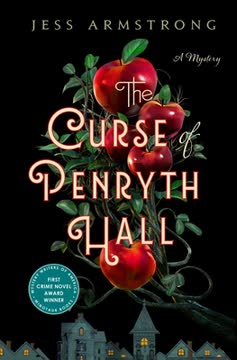
Plot Summary
Reluctant Return to Cornwall
Ruby Vaughn, a sharp-tongued American exile, is sent by her eccentric employer, Mr. Owen, to deliver a mysterious trunk of books to a remote Cornish village. The errand drags her back to Penryth Hall, the estate of her former best friend and secret love, Tamsyn, now married to the brooding Sir Edward Chenowyth. Ruby's arrival is fraught with emotional baggage—her unresolved feelings for Tamsyn, the pain of past betrayals, and the suffocating weight of postwar trauma. The Cornish countryside, with its wild beauty and superstitious air, only deepens Ruby's sense of foreboding. She is determined to keep her visit brief, but the ghosts of her past and the secrets of Penryth Hall quickly entangle her in a web she cannot escape.
Shadows of Old Love
Ruby's reunion with Tamsyn is bittersweet, marked by awkwardness and the ache of what might have been. Tamsyn, now a mother, is a shadow of her former self—her vibrancy dulled by an unhappy marriage and mysterious bruises. The two women circle each other warily, their conversations laced with nostalgia, guilt, and unspoken longing. Ruby senses that Tamsyn is in trouble, but old wounds and pride keep them from true honesty. The estate itself feels haunted, not just by legend but by the emotional residue of their lost intimacy. As Ruby tries to reconnect, she is drawn into the undercurrents of Tamsyn's troubled life, setting the stage for the unraveling of both their secrets.
The Pellar's Folklore
Ruby meets Ruan Kivell, the enigmatic local "Pellar"—a folk healer and rumored witch. Their first encounter is charged with both skepticism and fascination. Ruan's stories of ancient curses and local legends unsettle Ruby, who prides herself on her rationality. Yet, his presence is magnetic, and his knowledge of the land and its people is profound. The villagers' reverence and fear of Ruan hint at the deep-rooted superstitions that govern life in Lothlel Green. Ruby's delivery of the forbidden books to Ruan cements their uneasy alliance, even as she remains wary of his otherworldly reputation. The stage is set for a collision between reason and folklore, with Ruby caught in the middle.
A Dreadful Discovery
The tranquility of Penryth Hall is shattered when Sir Edward is found brutally murdered in the orchard, his body mutilated in a manner echoing an old family curse. The household is thrown into chaos, and suspicion falls on everyone—servants, villagers, even Tamsyn. Ruby, haunted by a nightmare that eerily mirrors the crime, is both a witness and a potential suspect. The local constable and Ruan Kivell investigate, but the villagers are quick to blame supernatural forces. Ruby's rational mind is tested as she confronts the possibility that her own actions, or dreams, might be connected to the violence. The murder becomes the catalyst for buried secrets to rise, and for Ruby's own sense of self to unravel.
The Curse Awakens
As news of the murder spreads, the village is gripped by panic. The ancient "Curse of Penryth Hall" is invoked, and the bells—silent for decades—toll once more. Ruby is swept up in a maelstrom of suspicion, both as an outsider and as a woman with a scandalous past. The villagers' fear turns violent, culminating in a mob attack that nearly kills her. Ruan intervenes, saving her life and deepening their complicated bond. The line between reality and legend blurs, and Ruby is forced to confront the possibility that the curse is more than just a story. The atmosphere grows increasingly claustrophobic, as trust erodes and danger closes in from all sides.
Suspicions and Secrets
Ruby, battered but undeterred, begins her own investigation into Edward's death. She uncovers a web of secrets: Tamsyn's unhappy marriage, Edward's infidelities, a string of jilted lovers, and the existence of a blackmail scheme. The local women, especially Nellie Smythe, emerge as both victims and suspects, their lives shaped by Edward's cruelty. Ruby's conversations with the housekeeper, Mrs. Penrose, and the village doctor reveal a pattern of violence and cover-up stretching back decades. The past and present intertwine, and Ruby realizes that the curse may be a convenient mask for very human malice. Her determination to protect Tamsyn and her son grows, even as the danger intensifies.
The Witch in the Woods
A strange woman in black appears at the village crossroads, asking for Ruan. Her presence stirs old fears and rumors of the "White Witch of Launceton," a legendary figure tied to the original curse. Ruan is unsettled by her arrival, and Ruby senses that the woman's warnings are personal. The witch's cryptic message—"Look to the heir"—haunts Ruby, hinting at a hidden lineage and a deeper motive for the murders. The boundaries between sanity and madness, magic and reality, grow ever thinner. Ruby's skepticism is tested as she is drawn into the heart of the village's oldest and darkest secrets.
Poisoned Pasts
A new wave of violence strikes: Nellie Smythe and Ruby herself are both poisoned, barely surviving thanks to Ruan's intervention. The poison—water hemlock, mistaken for parsnip—links the attacks to the household's food and to the earlier murder. Ruby's investigation uncovers evidence of blackmail, hidden parentage, and a long-lost heir to the Chenowyth title. The vicar emerges as a blackmailer, exploiting secrets for his own gain. The past—especially the tragic story of George Martin, Tamsyn's former lover—casts a long shadow, and Ruby realizes that the key to the present lies in unraveling the mysteries of thirty years before.
Mob Justice and Mercy
The village's fear boils over into mob violence, but Ruby's compassion and Ruan's authority prevent further bloodshed. The true nature of justice—legal, personal, and supernatural—is debated as the community seeks someone to blame. Ruby's own sense of guilt and responsibility deepens, especially as she confronts her feelings for both Tamsyn and Ruan. The lines between victim and perpetrator blur, and the need for mercy becomes as urgent as the need for truth. The cost of vengeance, and the possibility of forgiveness, become central themes as the story hurtles toward its climax.
The Heir's Hidden Truth
Ruby and Mr. Owen uncover the parish records, revealing that George Martin was the legitimate heir to Penryth Hall—a secret that could have upended the entire village. The vicar's blackmail, Edward's desperation, and the tangled relationships among the villagers all come into focus. The curse, it turns out, is a smokescreen for greed, jealousy, and the pain of lost love. The true motive for the murders is revealed to be both personal and generational, rooted in the sins and secrets of the past. Ruby's understanding of herself and her place in this web of history is forever changed.
Madness in the Nursery
The final confrontation unfolds in the nursery, where Alice Martin—driven mad by grief over her lost son, George—attempts to kidnap Tamsyn's child, believing him to be her own grandson. The scene is a fever dream of violence, love, and desperation. Tamsyn is bound and nearly killed; Ruby risks her life to intervene. Ruan's presence, and his strange power, help defuse the situation. The truth of Alice's actions—her role in the poisonings, the murders, and the attempted abductions—is laid bare. The curse is revealed as a human tragedy, not a supernatural one, born of heartbreak and the failure of justice.
The Wraith Unmasked
Alice confesses to the murders, her madness a product of loss and the corrosive power of secrets. She is not a monster, but a woman broken by grief and the failures of those around her. Tamsyn, in an act of radical mercy, offers Alice a chance at escape, but Alice chooses death—leaping from the nursery window rather than face the consequences. The cycle of violence is broken, not by vengeance, but by understanding and forgiveness. The villagers, left to make sense of the tragedy, cling to the myth of the curse, unwilling to face the more painful human truths.
Grief and Forgiveness
In the wake of Alice's death, the survivors are left to pick up the pieces. Tamsyn, freed from her marriage and the threat to her child, chooses to seek her own identity apart from Ruby or any man. Ruby, changed by her ordeal, must reckon with her own capacity for love, forgiveness, and self-knowledge. Ruan, too, is altered—his role as Pellar both a burden and a gift. The village returns to its routines, but nothing is the same. The story's true resolution lies not in punishment, but in the possibility of healing and new beginnings.
A Separate Sort of Love
Tamsyn and Ruby share a final, honest conversation about their past, their love, and the need to forge their own paths. Tamsyn decides to raise her son on her own, seeking a life defined by her own choices rather than the expectations of others. Ruby, too, embraces her independence, recognizing that her journey is far from over. The love between them is acknowledged, but it is a love that must change shape—no longer romantic, but rooted in mutual respect and understanding. The possibility of happiness, for both women, lies in self-acceptance and the courage to move forward.
The Pellar's Farewell
In the aftermath, Ruby and Ruan share a moment of connection that transcends words. Their relationship, forged in crisis, is marked by mutual recognition and the promise of something more. Ruan's role as Pellar is both a blessing and a curse, but with Ruby he finds a kindred spirit. The village, still clinging to its superstitions, is left to its own devices, but Ruby and Ruan look to the future with hope. The story ends not with a grand romance, but with the quiet possibility of love, healing, and the acceptance of life's mysteries.
Homeward, Changed Forever
Ruby returns to Exeter, forever changed by her experiences at Penryth Hall. She is welcomed home by Mr. Owen and Mrs. Penrose, who has joined her as housekeeper. The past is not forgotten, but it no longer holds her captive. Letters from Ruan hint at the enduring connection between them, and Ruby contemplates new adventures. The story closes with a sense of hard-won peace, the knowledge that curses are made—and broken—by human hands, and the hope that even the most haunted hearts can find their way home.
Characters
Ruby Vaughn
Ruby is an American expatriate, exiled by scandal and war, who has remade herself as a fiercely independent woman in post-WWI England. Her relationship with Tamsyn is the emotional core of the novel—marked by longing, regret, and the ache of lost love. Ruby's wit and skepticism are both armor and vulnerability; she is drawn to mystery, but haunted by her own traumas and failures. Her psychological journey is one of self-forgiveness and the search for belonging. Ruby's outsider status makes her both a target and a catalyst, and her determination to protect Tamsyn and uncover the truth drives the narrative. By the end, Ruby has learned to accept her own complexity, embracing both love and solitude.
Tamsyn Chenowyth
Tamsyn is Ruby's former best friend and secret love, now trapped in a loveless marriage to Sir Edward. She is gentle, creative, and deeply scarred by loss and betrayal. Tamsyn's psychological arc is one of awakening—moving from passivity and self-sacrifice to a hard-won sense of agency. Her relationship with Ruby is fraught with unresolved emotion, but ultimately she chooses to define herself on her own terms, as a mother and as a woman. Tamsyn's forgiveness of Alice, and her decision to let go of both Ruby and the past, mark her as a character of quiet strength and resilience.
Ruan Kivell
Ruan is the local Pellar—a folk healer, rumored witch, and war veteran. He is both respected and feared by the villagers, and his connection to the land and its legends is profound. Ruan's psychological complexity lies in his struggle with his own power and the expectations placed upon him. He is drawn to Ruby as an equal, someone who challenges his beliefs and shares his outsider status. Ruan's role as both investigator and spiritual guide is central to the plot, and his moments of vulnerability reveal a deep longing for connection. His final bond with Ruby is one of mutual recognition and hope.
Alice Martin
Alice is a seemingly kind village woman whose grief over the loss of her son, George, curdles into madness and violence. Her psychological unraveling is both terrifying and deeply human—she is not a monster, but a woman destroyed by loss and the failures of justice. Alice's actions—murder, poisoning, attempted abduction—are driven by a desperate need to reclaim what was taken from her. Her final act, choosing death over punishment, is both a surrender and a plea for mercy. Alice embodies the novel's themes of grief, vengeance, and the limits of forgiveness.
Mrs. Penrose
Mrs. Penrose is the heart of Penryth Hall, a housekeeper whose loyalty to Tamsyn and the household is unwavering. She is a keeper of secrets, a source of comfort, and, in her own way, a protector. Her belief in the old ways and her attempts at charmwork add both humor and pathos. Mrs. Penrose's psychological role is that of the surrogate mother, offering stability in a world of chaos. Her eventual move to Exeter with Ruby signals the possibility of new beginnings and the enduring power of chosen family.
Sir Edward Chenowyth
Edward is the embodiment of toxic masculinity—cruel, entitled, and ultimately a victim of his own sins. His murder is the catalyst for the novel's events, and his legacy of violence and betrayal haunts every character. Edward's psychological role is that of the abuser whose power is both real and illusory; his death exposes the rot at the heart of Penryth Hall and the community. He is both a symbol and a casualty of the old order.
Nellie Smythe
Nellie is one of Edward's many mistresses, left impoverished and stigmatized by his abandonment. Her resilience and honesty make her both a suspect and a source of truth. Nellie's psychological journey is one of survival—navigating shame, poverty, and the threat of violence. Her near-death by poisoning and her eventual rescue highlight the vulnerability of women in a patriarchal society. Nellie's story is a counterpoint to Tamsyn's, showing the different ways women endure and resist.
Mr. Owen
Mr. Owen is Ruby's employer and confidant, a bookseller with a taste for adventure and a heart full of secrets. He is both comic relief and emotional anchor, offering wisdom, support, and the occasional nudge toward danger. Mr. Owen's psychological role is that of the benevolent patriarch—flawed, but loving. His relationship with Ruby is one of mutual respect and affection, and his presence grounds the novel's more fantastical elements in warmth and humanity.
Reverend Fortescue
The vicar is a figure of authority whose piety masks greed and malice. His role as blackmailer and moral arbiter exposes the hypocrisy at the heart of the village. Fortescue's psychological function is to embody the dangers of unchecked power and the ease with which virtue can be weaponized. His eventual downfall is a moment of justice, but also a reminder of the community's complicity in its own corruption.
George Martin
George is the ghost at the heart of the novel—a man whose love for Tamsyn and secret parentage set the stage for the murders. His death, initially ruled a suicide, is revealed to be a murder, and his absence haunts both Tamsyn and Alice. George's psychological role is that of the lost future, the possibility of happiness denied by circumstance and cruelty. His legacy is both a wound and a warning.
Plot Devices
The Curse as Red Herring
The titular "Curse of Penryth Hall" is a classic gothic device, used to deflect suspicion from the real, human causes of violence. The curse is invoked to explain away murder, to justify fear, and to maintain the status quo. Throughout the novel, the curse serves as both a plot engine and a commentary on the dangers of superstition. It allows the true killer to operate in plain sight, and it challenges the characters—especially Ruby—to question the stories they tell themselves. The eventual unmasking of the curse as a human tragedy, not a supernatural one, is both a narrative twist and a thematic revelation.
Dual Investigations
The novel employs a dual structure: Ruby's rational, outsider investigation and Ruan's intuitive, folkloric approach. Their methods—interviews, document searches, folk rituals—complement and challenge each other. This device allows for both suspense and character development, as each is forced to confront their own biases and limitations. The interplay between logic and magic, skepticism and belief, is central to the novel's tension and resolution.
Foreshadowing through Dreams
Ruby's dreams are both prophetic and misleading, blurring the line between reality and imagination. Her nightmares foreshadow key events—the murder, the abduction, the final confrontation—but also reflect her own guilt and trauma. This device heightens suspense and deepens psychological complexity, as Ruby must learn to trust her instincts without succumbing to paranoia. The dreams also serve as a metaphor for the buried truths that haunt every character.
Hidden Lineage and Secret Heirs
The revelation of George Martin as the true heir to Penryth Hall is a classic gothic twist, linking the present murders to the sins of the past. The device of hidden parentage, blackmail, and disputed inheritance provides motive for multiple characters and ties together the novel's disparate threads. The search for the heir is both a literal and symbolic quest for justice, identity, and closure.
Mercy and Moral Ambiguity
The novel repeatedly subverts the expectation of legal justice—mob violence is averted, the true killer is offered mercy, and the community chooses to believe in the curse rather than face the truth. This device forces the characters (and readers) to grapple with the limits of forgiveness, the cost of vengeance, and the possibility of redemption. The resolution is not tidy, but it is emotionally honest, reflecting the complexities of real human lives.
Analysis
Jess Armstrong's The Curse of Penryth Hall is a masterful blend of gothic mystery, psychological drama, and feminist reimagining. At its heart, the novel interrogates the stories we tell to make sense of suffering—curses, legends, and the lies of polite society—and exposes the very human pain beneath them. The "curse" is revealed as a mask for generational trauma, misogyny, and the corrosive effects of secrecy and grief. Armstrong's characters are richly drawn, their relationships fraught with longing, regret, and the desperate need for connection. The novel's structure—alternating between investigation, confession, and dream—mirrors the process of healing: nonlinear, painful, and ultimately transformative. The lessons are clear: that justice is complicated, that forgiveness is both necessary and costly, and that true freedom comes from facing the past with open eyes. In the end, The Curse of Penryth Hall is less about solving a murder than about breaking the cycles—of violence, silence, and self-betrayal—that haunt us all.
Last updated:
Review Summary
The Curse of Penryth Hall receives mixed reviews averaging 3.58/5 stars. Positive reviews praise its atmospheric gothic setting, compelling mystery, and protagonist Ruby Vaughn's character. Readers appreciate the Cornwall folklore, the dynamic between Ruby and folk healer Ruan Kivell, and the blend of supernatural elements with traditional mystery. Common criticisms include underdeveloped character relationships, particularly between Ruby and Tamsyn, confusing plot elements, overly complex vocabulary, and inconsistent pacing. Several reviewers note Ruby's backstory feels incomplete, as if missing from an earlier book. Many hope for a sequel to continue Ruby's adventures.