

Plot Summary
Walsh Builds His Exit
Carl Walsh arrives at an isolated Dales house with an expensive Porsche, a heavy suitcase, and a weekend course for aspiring private investigators. The chef he hired is absent, so Jack Miller takes his place and impresses Walsh with a perfect omelette. Walsh has chosen the house for its poor phone signal, stocked woodshed, and distance from help.
He dismisses the coming snow, though he has checked the forecast and expects the storm to assist his plans. An envelope arrives, and its contents plainly unsettle him. He puts the letter away, then drops a glass when an icy draft crosses the room. The welcome weekend looks convincing; the real purpose, hidden in the luggage and Walsh’s careful preparations, is still unknown.
Walsh’s opening performance turns hospitality into camouflage. The luxury car and polished course promise a man who has mastered his life, while the remote house, the unexamined letter, and the heavy case disclose how much effort that confidence requires. His attention to Jack’s competence also shows a habit of treating people as pieces in a plan. The coming storm is not merely atmosphere: Walsh expects to use isolation as an instrument. His self-assurance is therefore double-edged, built on preparation but vulnerable to the one force he cannot fully manage.
A Parcel Finds Harvey
Elsewhere in the Dales, Marina and Harvey White celebrate Harvey’s release from prison and their new identities as Harold and Karen Taylor. They have bought a secluded house and believe their past cannot reach them. A delivery man brings a parcel addressed only to the owner. Harvey hesitates, then accepts it and finds a bottle of whisky inside.
He recognizes the significance, but drinks with Marina rather than explaining his fear. Outside, the delivery man phones an unseen contact and confirms that Harvey is there. The Whites have mistaken a new address for safety. The bottle is not a welcome gift but a signal that someone has found them, and their quiet beginning is already under threat.
The scene makes intimacy and concealment coexist uneasily. Marina understands their new life as a shared refuge; Harvey knows that the name change cannot erase what he has done. His choice to open the bottle and toast their future is less evidence of confidence than an effort to preserve the moment before fear overtakes it. The anonymous delivery works because it is ordinary enough to pass through a front door. The threat enters not as a dramatic chase, but as a parcel accepted by people eager to believe they are finally unobserved.
Grace Finds the Coursers
Gamekeeper Grace Black finds fresh tracks and blood on a farm estate after hare coursers race away in a white van and red four-wheel drive. One of their dogs has fled, so Grace follows its prints instead of ignoring the animal. She tells her father, Arthur, and contacts DCI Harry Grimm, who sends constable Jadyn Okri to help.
In the frozen woods, Jadyn uses Arthur’s strongly scented Bovril to coax the frightened grey Whippet from its hiding place. Grace takes it in, and Jadyn offers to keep it warm at the police office. Meanwhile, snow begins to close roads across the Dales. The search for the abandoned dog brings the team together just as the weather begins to isolate them.
Grace’s first response is practical compassion, not a desire to catch the coursers at any cost. She knows enough to recognize the danger of confronting them, yet refuses to let their discarded dog become another casualty. Jadyn’s improvised use of Bovril turns an eccentric local habit into care that the frightened animal can accept. Their choices establish the team’s moral scale: enforcement matters, but so does attention to vulnerable lives that a criminal act leaves behind. The storm then multiplies the consequences of every decision, making distance and delay dangerous.
Thomas Takes the Quad
A neighbour, Pat Mason, reports shouting, gunfire, and fifteen-year-old Thomas Cowper speeding away from his family farm on a quad bike. Harry and community officer Liz Coates find Thomas’s father, Brian, hostile and controlling, his wife Jane visibly afraid, and a chained dog in the kitchen. Brian admits taking Thomas’s guitar and firing his shotgun, though he first claims he was shooting at crows.
Harry confiscates the gun and licence. Liz follows Thomas’s tracks to a woodland shelter stocked with food, a sleeping bag, and bottles of homemade liquor, but he has moved on. Jane later searches for him and discovers he has gone into the snowbound fells on another quad. Harry calls mountain rescue.
Thomas’s flight begins as a family conflict but quickly becomes a survival emergency. Brian treats his son’s interests in music and wildlife as disobedience, while Jane’s hesitation suggests that the household’s danger is larger than a single argument. Harry’s seizure of the shotgun is a concrete limit placed on Brian’s authority, but it cannot recover Thomas in the worsening weather. The hidden shelter complicates the image of a reckless runaway: Thomas has prepared for the outdoors, yet his access to dangerous homemade alcohol makes his independence precarious.
Jameson Joins the Game
Retired DCI Peter Jameson drives from Somerset to Walsh’s course, partly because he is bored and partly because he has not found a way to live with his wife Ellen’s death. He arrives late after a long, snowy journey and meets the other attendees: Kirsty Cropper, ex-soldier Scott Williams, doctor Tony Pearson, and wealthy couple Hazeem and Yalina Rasheed.
Walsh welcomes them with drinks, dinner, and boasts about his investigative career. He then announces a murder-mystery exercise, complete with a starter pistol and character envelopes. Jameson slips easily into teaching the group how to inspect a scene, noticing a moved table and open window. His old professional instincts return before he understands why they will matter.
Jameson’s arrival gives the course a participant who cannot quite treat investigation as entertainment. His grief has made ordinary pastimes feel empty, but the mock crime scene restores a familiar structure: observe, compare, ask what does not fit. Walsh’s theatrical confidence contrasts with Jameson’s disciplined attention to small changes. The contrast also exposes a psychological tension in retirement. Jameson has left the job, but not the habits through which he understands himself. His expertise is both a source of purpose and a reminder of the life he has lost.
The Knife Beneath the Hat
After the starter pistol sounds, the attendees enter the lounge and find Walsh sprawled by the fire in gloves and a large hat. Jameson points out that the open window and shifted furniture deserve scrutiny, and the group takes turns examining the room alone. Tony goes last. He returns pale and insists that Walsh is truly dead, with a knife protruding from his back.
Jameson checks the body and sees the blade. Harry arrives through the storm with Liz, while Jameson preserves the scene and identifies Tony as the first person to report the death. A staged exercise has become a police investigation, and everyone who entered the lounge had an opportunity to alter the scene.
The transition from game to apparent homicide depends on a breach of trust. Walsh has trained the guests to look at a fictional victim, so the real report of death arrives inside a frame they already accept. Jameson’s insistence on basic scene discipline becomes essential precisely because the group has been invited to touch, inspect, and interpret. The knife does not immediately reveal a killer; it expands suspicion to everyone present. In this setting, expertise cannot guarantee certainty. It can only preserve the differences between what people saw and what they were told.
Everyone Wants Walsh
Harry interviews the attendees while the storm prevents outside forensic help. Scott admits that a contractor hired him because Walsh had blackmailed the client after investigating workplace theft. Hazeem and Yalina reveal that Walsh used an assumed name to exploit their sister Aamina, then extorted her with explicit photographs; she later died by suicide.
Jameson explains that grief brought him to the course, not a dispute with Walsh. Tony’s story unravels when Harry questions how he checked the supposed corpse’s pulse. Tony confesses he is a mathematics teacher, not a doctor, and that Walsh blackmailed him over gambling debts to make the death report convincing. The guests are not simply students. Several have come to confront Walsh.
The interviews replace the mystery of who entered the room with a more disturbing question: how many lives has Walsh organized around their secrets? Each guest’s motive grows from a different injury, from financial coercion to bereavement and exploitation. Their shared presence is not proof of a shared conspiracy, but it reveals how Walsh’s public identity as an investigator conceals predatory methods. Tony’s false profession shows that blackmail has reached into the mechanics of the apparent murder itself. Harry must separate justified anger from evidence of violence.
A Body Made of Rubber
Comparing Kirsty’s photographs with the lounge, Harry realizes the knife was absent while Walsh was still speaking to the group. Jameson notices that a heavy suitcase has vanished from the cupboard where he first stumbled over it, then traces matching scratches across the lounge floor to a case hidden behind the desk.
Tony admits Walsh hired him to impersonate a doctor and make the guests believe a death had occurred. Harry removes the hat and discovers that the stabbed body is a medical manikin. Walsh had switched places with it and escaped through the open window. A cigarette butt and fresh tracks suggest someone later entered the house to search Walsh’s room, but the man himself is gone.
The reveal turns physical evidence into a critique of performed authority. The guests trusted Tony because he appeared to possess medical expertise, and they trusted the body because the setting supplied the expected signs of death. Jameson’s habit of noticing absent and misplaced objects breaks that spell. The suitcase, scratches, and photographs expose not one lie but an engineered chain of assumptions. Walsh’s escape is clever, yet its success depends on other people doing the work of believing him. The deception makes the investigators participants in the disappearance before they know they have been recruited.
The Whites Are Found
While Harry untangles Walsh’s disappearance, constable Jen Blades drives through the blizzard to a reported break-in at Blean Lane. Her vehicle gets stuck, so she carries the Whippet and walks the last stretch. Inside, she finds Harvey dead and several attackers dead, with Marina gravely injured.
Marina says she and Harvey are the Whites, not the Taylors, and explains that the gang found them after Harvey’s release from prison. Jen warms Marina by the stove, gives what aid she can, and struggles to get an ambulance through the storm. Marina’s survival turns an apparent isolated home invasion into evidence of a wider revenge attack. Jen radios the information back to the team.
Jen’s journey makes care an act of endurance rather than sentiment. She must navigate a storm, leave her vehicle, and enter a house where violence has already overwhelmed its occupants. Marina’s insistence on her true name is an effort to recover agency while her body is failing; identity is the only testimony she can still control. The revelation also links the isolated Dales crime to Harvey’s earlier life. The setting’s apparent remoteness has not protected the Whites, and the delayed ambulance makes institutional distance painfully tangible.
Strangers Bring Their Violence
Four battered strangers arrive at Walsh’s house claiming their Jeep crashed. Their leader, Patrick Nicholls, insists they need shelter, but Harry spots injuries inconsistent with the undamaged vehicle and keeps them away from the lounge and its evidence.
The group is given the reading room and first aid, while Jameson and Liz watch them. Harry follows boot prints from Walsh’s ransacked bedroom to an old fire escape, but finds no clear trail beyond it.
Then Nicholls and an accomplice seize Harry and Jameson, take their communications equipment, and confine the others upstairs. Harry learns that the group’s injured woman has been killed, confirming that this is no simple roadside accident. With the storm blocking help, the manor becomes a trap.
The newcomers exploit the same social reflex Walsh has used: people in distress are usually offered shelter before they are interrogated. Harry’s suspicion comes from discrepancies, not instinct alone, yet the evidence is insufficient to stop the group entering. Once inside, the house’s rooms become instruments of control, dividing witnesses and cutting them off from help. The storm makes the officers’ authority unusually fragile; their badges cannot summon immediate backup. Violence now occupies the same manor that had staged a fictional crime, collapsing the distance between performance and real danger.
Two Trails Cross
Mountain rescue volunteers find Thomas in a snow hole after his quad runs out of fuel. His sleeping bag and shelter kept him alive, but he is drunk from Brian’s homemade spirit. Nearby, Jadyn and Matt discover Walsh, badly injured beside a crashed quad bike, and see a Jeep fleeing through the snow.
Harry, meanwhile, uses clues in the house to realize that the chef is not Jack Miller but his brother Oli, who came with their mother Kirsty to pursue Walsh and recover the evidence he carries. Jack has taken the Jeep, chased Walsh, and seized Walsh’s hard drive. Harry reaches Matt over a shortwave radio, linking the searches just as Nicholls’s crew closes in on the manor.
The two searches converge around the consequences of secrecy. Thomas’s improvised shelter shows competence, but his father’s illicit liquor has endangered him in the cold. Walsh’s escape plan likewise fails at the point where another person can read and intercept it. Harry’s deduction about the brothers depends on mundane inconsistencies, including a missing belt and a familiar pattern of movement. In all three cases, survival or escape rests on practical knowledge, but knowledge does not make anyone invulnerable. The storm exposes the cost of people’s private schemes to everyone around them.
A Shot at the Door
When Nicholls discovers that Harry has reached the mountain rescue team by radio, he shoots him in the foot and tries to use him as a hostage. Jack returns with Walsh’s hard drive, and Nicholls fires at him, but Harry tackles the gunman before he can shoot again. Matt and Jadyn rush in and help restrain Nicholls and his surviving accomplice.
Harry secures the hard drive and directs the officers to separate Jack, Oli, and Kirsty for questioning. Walsh remains alive, though badly injured, and the storm has ended his clean escape. Marina is also alive under police protection, while Harvey is dead. The immediate threats are contained, but the evidence on Walsh’s drive promises a much larger reckoning.
The climax brings the book’s competing forms of force into direct contact. Nicholls uses a gun and confinement to make people obey; Harry, wounded and outnumbered, relies on timing, judgment, and trust in his colleagues. Jack’s return with the drive complicates any simple distinction between justice and revenge: the evidence matters, but his pursuit of Walsh has also put lives at risk. The arrest does not repair the losses already suffered. It does, however, interrupt the chain of private violence and place the hidden evidence within reach of public accountability.
The Dales Settle
A few days later, Harry sits with Grace and his friend Dave Calvert at the Fountain Inn, his wounded foot still throbbing. Thomas has been brought safely off the moors, and Grace plans to offer him work experience as a gamekeeper, giving his interest in wildlife a future beyond Brian’s farm. Police have removed Brian’s shotgun, licence, still, and homemade alcohol.
Marina is protected while investigators pursue the attackers and the evidence linking them to Harvey. Walsh’s recovered hard drive is expected to expose his blackmail and support a long prison sentence. Dave surprises Harry by considering work as a community support officer. Back at home, Harry reads an uncertain message from Jameson, whose next step remains unresolved.
The resolution favors modest forms of repair over a neat restoration. Thomas receives a possible path toward the life he wanted, but his family’s damage is not erased by one offer of work. Marina survives, yet protection and investigation cannot return Harvey to her. Harry’s community gains practical changes: Brian loses the weapons and equipment that enabled harm, while Dave considers joining the local service. Jameson’s message leaves grief and vocation open rather than solved. The Dales are quieter, but quiet here means a pause in violence, not proof that every wound has closed.
Analysis
The novel builds its suspense by making several kinds of secrecy occupy the same stormbound landscape. Walsh’s course turns investigation into performance: the guests are trained to examine a staged crime, then discover that their trust in a doctor, a corpse, and a host has been manipulated. Harry counters this not through sudden brilliance but through disciplined attention to discrepancies: a missing suitcase, scratches on the floor, a knife absent from a photograph, a vanished vehicle. Observation becomes an ethical practice because it prevents confidence from substituting for proof.
The parallel stories widen that concern beyond the manor. Harvey and Marina have changed their names, but not the consequences of Harvey’s former life. Thomas wants to leave his father’s farm, yet the homemade liquor and family violence make escape hazardous. The guests’ grievances against Walsh arise from different forms of exploitation, and their anger is understandable even when their methods risk becoming another form of private coercion. The book repeatedly asks whether knowing someone’s secret grants the right to punish them.
Its answer is less a moral pronouncement than a contrast in action. Walsh hoards information to control people. Harry and his team gather it to protect them, preserve evidence, and bring dangerous conduct into public view. The rescue volunteers, Grace’s care for the abandoned dog, and Jen’s effort to keep Marina alive show that justice in this story is also ordinary service under difficult conditions. The storm does not make people good or bad; it strips away convenience and reveals what they will do when help is far away. Resolution brings arrests, evidence, and new possibilities for Thomas, but grief remains, Marina’s future is uncertain, and Jameson has not yet chosen his next life. The ending offers accountability and companionship, not the fiction that every loss can be repaired.
Review Summary
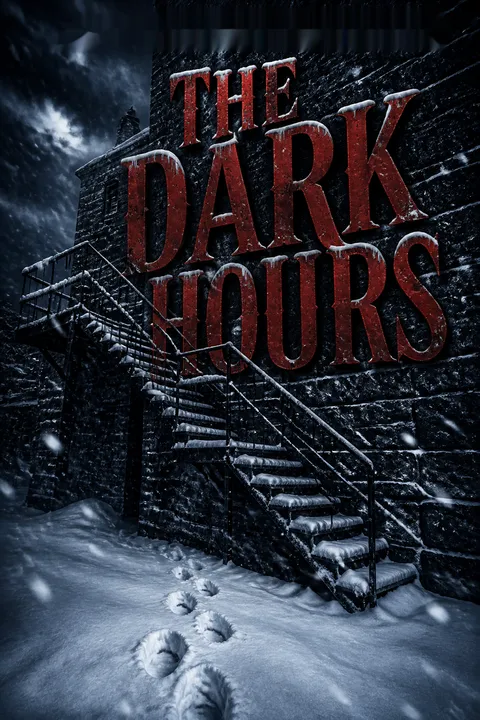
The Dark Hours is highly praised by readers as an excellent addition to the DCI Harry Grimm series. Set during a snowstorm in the Yorkshire Dales, the book features multiple intertwining plotlines and complex character development. Many reviewers appreciate the vivid descriptions of the setting and the author's ability to maintain high-quality storytelling throughout the series. While some readers found the plot convoluted, most enjoyed the suspenseful atmosphere and the way the various threads come together. The book is recommended for fans of crime thrillers and locked-room mysteries.
Characters
Harry Grimm
Scarred local detectiveA detective chief inspector newly settled in the Dales, Harry combines hard-earned police judgment with the instincts of a former soldier. His scars and his father’s recent murder belong to a past that no longer wholly governs him, though danger can still pull him back toward old habits. He leads a small team whose local knowledge often matters as much as formal procedure. Harry is alert to discrepancies, particularly the gap between what people say and what the physical evidence permits. His growing contentment with Grace and his home gives him something to protect, but does not blunt his readiness to act when others are in danger.
Carl Walsh
Polished PI and hostA celebrated private investigator, podcaster, and crime writer, Walsh cultivates charm, wealth, and expertise. He understands how people respond to status and uses that understanding to control a room. His confidence is not mere showmanship: he plans carefully, values secrecy, and treats information as a resource. The distance between his public reputation and private methods drives the central mystery. Walsh is surrounded by people who believe he has harmed them, yet he continues to behave as though he alone controls the terms of every encounter.
Grace Black
Fierce Dales gamekeeperGrace works outdoors in the Dales, managing land and wildlife with patience and technical skill. She respects animals enough to avoid careless shots and refuses to ignore a frightened dog abandoned by coursers. Her quick temper can put her at risk, something her father often warns her about, but it also comes from an unwillingness to accept cruelty as inevitable. Grace’s relationship with Harry is affectionate and direct. She values competence over status and offers people practical help, as when she sees a possible future in gamekeeping for Thomas.
Peter Jameson
Retired detective in griefA retired detective chief inspector and Harry’s former mentor, Jameson is trying to build a life after losing his wife, Ellen. He has tested hobbies and found little that can replace the structure and purpose of police work. His dry humor often covers discomfort, but close observation remains second nature. At Walsh’s course, he quickly begins teaching the others how to read a crime scene. The old professional self is still present, though his visit also exposes his uncertainty about what should come next.
Marina White
Loyal, watchful partnerMarina has built her identity around her long devotion to Harvey, even as his criminal history shapes the life they share. After years of separation, she approaches their reunion with warmth and hope, but she is not naïve about his past. Her desire for a quiet life exists beside a keen awareness that the safety they have arranged may be fragile. Marina’s voice and choices reveal both the emotional cost of loving someone with dangerous secrets and the strength required to keep acting when fear closes in.
Harvey White
Ex-con seeking quietHarvey has recently left prison after an eight-year sentence and hopes to begin again with Marina under assumed names. Their marriage has survived distance and his repeated involvement in crime, though he is clear-eyed about the danger his old life carries. His care for Marina is genuine, but so is his instinct for suspicion. Harvey wants safety without fully escaping the consequences of his past, a contradiction that makes their new home feel less like a clean beginning than a temporary shelter.
Thomas Cowper
Farm boy seeking another lifeFifteen-year-old Thomas loves music, wildlife, and his ferrets, interests that clash with his father’s demands that he work on the farm. He is resourceful enough to build a shelter and prepare for cold weather, but his independence is mixed with youthful risk-taking. Thomas does not run from all responsibility; he is trying to imagine a future that belongs to him. His conflict with Brian shows how a child’s practical competence can coexist with vulnerability, especially when family authority is enforced through intimidation.
Jadyn Okri
Eager new constableA young police constable newly settled nearer the Dales, Jadyn is keen to learn the community and prove himself. His enthusiasm sometimes runs ahead of experience, but it is grounded in a sincere wish to help. He joins the mountain rescue team and embraces its demanding work, while his developing relationship with fellow officer Jen adds a personal reason to put down roots. Jadyn’s willingness to improvise, including using Arthur’s Bovril to lure a dog, makes him resourceful without making him a show-off.
Liz Coates
Resourceful community officerLiz is a police community support officer with strong local knowledge and a talent for staying useful under pressure. She rides an off-road motorcycle, follows tracks through difficult terrain, and notices details others might overlook. Her role is less formal than Harry’s, but she is not merely an assistant: her observations shape the investigation, and her willingness to challenge a theory helps keep it honest. Liz balances confidence with practical caution and understands how to work as part of a close-knit team.
Jen Blades
Driven local constableA dedicated constable and determined runner, Jen is comfortable with physical hardship and quick to accept responsibility. She trains Harry despite his complaints, then drives into a blizzard when an injured woman needs help. Her growing closeness with Jadyn remains discreet at work, partly because she takes professional boundaries seriously. Jen’s composure is not fearlessness; it is the ability to act while frightened, making her particularly effective when weather and distance leave others unable to respond.
Matt Dinsdale
Rescue team sergeantHarry’s detective sergeant and an experienced mountain rescue volunteer, Matt is practical, steady, and familiar with the hazards of the local landscape. He can tease Harry about his fitness, but his humor does not diminish his seriousness when a search begins. Matt knows how to coordinate volunteers and make sound decisions in bad conditions. His leadership gives Jadyn a model of service that relies on preparation and teamwork rather than bravado.
Kirsty Cropper
Office manager, capable investigatorKirsty is an office manager who has discovered a talent for finding people after helping someone close to her. She attends Walsh’s course hoping to turn that ability into meaningful work. Observant and self-contained, she tends to keep her history private, especially when it involves shame or danger. Her interest in investigation comes from a desire to protect people from exploitation, not from fascination with crime for its own sake.
Jack Miller
Substitute country chefA talented young chef, Jack steps in when Walsh’s original cook is unavailable. He is confident in the kitchen and comfortable working in the remote house, though he appears to carry concerns beyond the weekend’s catering. Jack is protective of those close to him and is not content to remain a bystander when he believes someone has been wronged. His choices reveal the risks of letting personal justice outrun the law.
Oli Miller
Young man with a stakeOli is connected to the course through a deeply personal history and shares Jack’s concern about Walsh. He is more cautious than his brother, warning against choices that could draw them into danger. Oli’s loyalty to his family sits beside a desire to expose wrongdoing, leaving him caught between restraint and action. He shows how long-term harm can shape a person’s sense of justice before they have any experience of the law.
Scott Williams
Ex-soldier on assignmentScott is a former soldier who has not yet found a satisfying civilian direction. He is disciplined, physically capable, and sparing with personal information. His reserve can look like arrogance, but it also reflects habits formed in a world where disclosure has consequences. Scott accepts work that draws him into Walsh’s orbit, testing the boundary between using his skills and becoming the kind of enforcer he might once have resisted.
Hazeem Rasheed
Husband seeking accountabilityHazeem attends the course with his wife, Yalina, carrying anger over the suffering of someone they loved. He is articulate and controlled until grief and distrust break through. His reluctance to involve the police comes from painful experiences of being dismissed, not from indifference to justice. Hazeem wants wrongdoing exposed, but he must reckon with the difference between accountability and revenge.
Yalina Rasheed
Sister pursuing justiceYalina is Hazeem’s wife and the sister of a woman whose experience of exploitation has shaped the couple’s choices. She is guarded at first, then determined to make the truth known despite the pain of recounting it. Her composure is not detachment; it is a way of carrying grief without letting it silence her. Yalina wants the person responsible held to account and understands that justice requires evidence as well as anger.
Tony Pearson
Compromised mathematics teacherTony presents himself as a doctor attending Walsh’s course, but his real life is governed by gambling and the debts it has created. He is nervous, defensive, and increasingly unable to maintain the role expected of him. Tony’s weakness is not a lack of intelligence; it is the belief that hiding a problem can keep it from harming the people he loves. His predicament shows how coercion can turn a private failing into someone else’s tool.
Brian Cowper
Volatile, controlling farmerBrian is a farmer who expects his son to follow his wishes and treats disagreement as defiance. He is quick to shout, dismissive of Thomas’s interests, and careless with the fear he creates in his household. His attachment to authority appears stronger than his ability to understand the people around him. Brian’s behavior makes the family conflict more than a routine argument, while his illegal home distilling adds another risk to an already unstable home.
Jane Cowper
Worried farmer's wifeJane is Thomas’s mother and Brian’s wife. She speaks gently about her son’s music and talents, but often falls quiet when Brian is present. Her concern for Thomas drives her to search for him herself, despite the storm and the danger of going alone. Jane’s care is unmistakable, though she has learned to navigate a household where open disagreement carries a cost.
Pat Mason
Watchful neighboring widowPat is the Cowpers’ outspoken neighbor, a widow who has lived in the Dales for years. She hears the family’s arguments and calls the police when Thomas flees, but she is also tempted to intervene directly. Her bluntness masks a strong protective impulse, and the paintings left by her late husband keep his memory present in her home. Pat is willing to challenge people who intimidate others, even when Harry has to remind her to stay safe.
Dave Calvert
Local friend with plansDave is Harry’s local friend, a fisherman and former offshore worker with a quick wit. He is candid about the people he dislikes and more thoughtful than his jokes first suggest. Having saved enough money to choose what comes next, he considers becoming a community support officer. His decision reflects the book’s interest in service as a practical second beginning.
Plot Devices
The Dales blizzard
Isolation and pressureThe severe storm closes roads, delays forensic and medical help, and forces the police, rescuers, guests, and attackers to share limited shelter. It turns the landscape into a physical obstacle, making every search slower and every mistake more dangerous. Walsh expects the weather to help him disappear, while Harry and the rescue team must use local knowledge and shortwave communication to counter its effects.
The murder mystery
A staged false deathWalsh’s course includes a mock murder scene, a starter pistol, and private inspections by the attendees. He uses that familiar performance to make a medical manikin appear to be his stabbed body and arranges for Tony to report the death. The device exploits the guests’ willingness to follow a scenario and the police response to a credible report, buying Walsh time to escape.
Walsh’s hard drive
A portable blackmail archiveWalsh keeps sensitive material about people he has investigated or exploited on a small drive. He threatens to expose its contents if anything happens to it, making the archive both leverage and protection. Jack pursues Walsh to recover it, and Harry secures it after the confrontation. Its contents promise to turn a series of private grievances into evidence for a broader investigation.
The shortwave radio
A lifeline through the stormThe isolated house has a shortwave set because ordinary phone service is unreliable. When Nicholls takes Harry’s phone and police radio, Harry uses the house set to search for another signal and reaches Jadyn and Matt’s mountain rescue channel. That contact links the separate searches and brings help toward the manor, though it also alerts Nicholls that Harry has acted.
Brian’s home still
A family danger and clueBrian’s illegal alcohol-making equipment sits among pipes, urns, and bottles around the farm. Thomas’s interference with the still contributes to a blast heard by the neighbor, while the homemade spirit later leaves him dangerously drunk in the snow. The equipment also gives Harry and the rescue team a concrete way to identify what Thomas has been drinking and to curb Brian’s control over the household.
Download PDF
Download EPUB
.epub digital book format is ideal for reading ebooks on phones, tablets, and e-readers.








