

Plot Summary
The Pen on the Bedside
Nineteen-year-old Mackenzie has spent a year as Professor Paxton Kassell’s secret lover, mistaking his attention for devotion until jealousy and control take over. When she tries to end the relationship, Paxton dismisses her, then forces himself on her as she repeatedly resists. His hand closes around her throat.
Reaching blindly across the bedside table, Mackenzie finds the pen she had used for college work and drives it into his neck. Paxton collapses, bleeding, while she lies stunned before fleeing his apartment. She calls the person she trusts most, her mother Lucia, and admits she may have killed him. What began as an attempt to reclaim her choices becomes a desperate escape from the consequences of defending herself.
The opening makes the distinction between desire and consent physically unavoidable. Mackenzie’s past attraction to Paxton does not soften the force of his present coercion; the pen turns an ordinary study object into the only means of stopping him. Her shock afterward matters as much as the violence: she experiences survival not as triumph but as a new source of guilt. The scene establishes the novel’s central tension between a woman’s agency and the institutions that may punish her for exercising it.
A Castle for Cover
Lucia takes Mackenzie away from their old life rather than risk a self-defense case that she believes would leave her daughter imprisoned. She destroys Mackenzie’s old phone and brings her to Verona Falls University, a secluded, extravagantly wealthy campus in the Adirondacks.
Their safety is tied to Lucia marrying the dean, Nataniele Rossi, an old acquaintance whose interest in her is not welcome. His son Domenic, a senior student, meets Mackenzie with contempt and calls her and her mother opportunists.
A fellow student, Camile, warns that Domenic and his close friends are known as the Devils. Mackenzie also sees Nataniele seize Lucia’s wrist and kiss her against her will. The castle-like refuge offers comfort and protection, but its first promise is already compromised by coercion.
Verona Falls is introduced as sanctuary and enclosure at once. Its cameras, fencing, wealth, and private rules promise to hide Mackenzie, while Lucia’s bargain places both women under a man’s control. Mackenzie’s guilt makes her willing to accept a refuge she distrusts, and Lucia’s determination to protect her daughter makes the marriage seem necessary. The contrast between the institution’s polished grandeur and the violence in its private rooms signals that protection here may be another form of captivity.
The Devils’ First Lessons
Mackenzie’s first days reveal that Verona Falls has rules beyond its printed schedule. Domenic insults her, invades her room, and uses his father’s authority to intimidate her. Kirill, a scarred Russian student, provokes her at dinner, while Valentino, a tattooed athlete, alternates flirtation with apparent kindness.
The university separates men’s and women’s curricula: the women are prepared for domestic roles, the men for business and power. Mackenzie finds a small foothold through Camile, who explains the social hierarchy and urges caution around the three friends.
At a campus bar, Mackenzie drinks champagne, dances, and loses track of the night. Valentino helps Camile get her back to her room. The next morning, Mackenzie fears something happened, but later learns she was not sexually assaulted.
The university’s gendered education gives institutional form to the control Mackenzie has already encountered in intimate relationships. The Devils embody different routes into that system: Domenic wields status, Kirill unsettles through threat, and Valentino makes danger feel companionable. Mackenzie’s need for friendship and protection makes her vulnerable to each. Camile offers a counterweight, though her warnings cannot remove the fact that Mackenzie has arrived with no safe community and few choices.
A Meadow Without Witnesses
Valentino draws Mackenzie to his room, where their encounter becomes intensely sexual; when she asks him to stop short of sex, he does, then leaves her wondering whether he wants anything beyond her body. She later discovers he has not contacted her, and his casual attention stings more than she expects.
In the library, Kirill traps her in a chair and challenges her suspicion that he drugged her champagne. He insists he did not, then takes her to a secluded flower-filled clearing, where he touches her and brings her to orgasm before leaving abruptly.
Mackenzie is both unsettled and drawn in. She turns twenty with the Devils’ lavish party, then opens Valentino’s gift: a flash drive containing footage of their private encounter, recorded without her consent.
The sequence complicates Mackenzie’s desire without making it a substitute for consent. She chooses some intimacy, sets limits, and still finds the men’s behavior invasive and manipulative. The recording is a sharp escalation: the private encounter she experienced as hers has been converted into material the men control. Attraction and violation coexist, forcing Mackenzie to question whether pleasure can make a relationship safe, and whether her own participation will be used to discredit her objections.
The Den’s Red Light
Mackenzie follows Valentino’s recording to the Devils’ basement den and finds Domenic, Kirill, and Valentino watching it together while masturbating. Her outrage is real, but so is the unwanted pull of seeing how intensely they desire her.
The men joke about her objections and press for access to her body; she refuses Domenic, then escapes after provoking him by touching him through his clothes. Later, after learning about the university’s fighting tradition, she watches Kirill take a brutal match against Louis Laurant.
Camile then reveals that the students come from powerful criminal families and that Verona Falls launders their money. Mackenzie confronts Lucia, who admits her late husband was involved in criminal business and left debts that made their lives dangerous.
The den literalizes the novel’s power imbalance: Mackenzie’s image is projected above the men who control the room, while her protest becomes part of their spectacle. Her desire does not erase the violation, but it complicates her ability to name what she wants. The fight and Camile’s explanation widen the danger from individual men to an entire criminal institution. Mackenzie’s family history, which she had understood as respectable hardship, now appears shaped by secrets she was never allowed to examine.
Blood on the Duchess
After her confrontation with Lucia, Mackenzie enters the Devils’ den and finds Domenic cutting the inside of his thigh. His self-inflicted wounds expose a pain he hides beneath cruelty and swagger.
Their argument turns into a violent, mutually chosen sexual encounter, and Domenic smears his blood across Mackenzie’s face as a possessive mark. She leaves shaken, then suffers an epileptic seizure in the corridor. Camile helps her back to her room, where Mackenzie admits her condition and explains what happened with Domenic.
Camile urges her to avoid the Devils, but Mackenzie cannot dismiss the intensity of the encounter or the vulnerability she witnessed. She has learned that Domenic’s aggression conceals real distress, though that knowledge does not make him safe.
The blood-marking scene makes intimacy inseparable from danger. Mackenzie recognizes Domenic’s suffering, but recognition risks turning her into the person responsible for containing it. Her seizure, worsened by stress and disrupted routines, makes the costs of the campus’s emotional volatility concrete. Camile’s concern offers an alternative model of care: one based on protection and honesty rather than possession. Mackenzie’s attraction to Domenic persists, but the scene leaves her with a clearer sense of how easily empathy can become entanglement.
Verity’s Stolen Champagne
Domenic learns that Verity, the social queen who resents Mackenzie, put a drug in Mackenzie’s champagne on her first night. He is furious that she acted without the Devils’ permission, and he tells Mackenzie the truth. The three men retaliate by cutting Verity’s long hair into a humiliating mess, then give Mackenzie Verity’s cap as a visible sign of their protection.
In the cafeteria, students watch Mackenzie sit with the Devils, and the social order shifts in her favor. Domenic calls her his to hate, play with, and protect, a claim that excites and alarms her. Their punishment of Verity gives Mackenzie relief, but it also shows that the Devils answer harm with their own arbitrary violence.
The revelation recasts Mackenzie’s first drunken night as the result of deliberate sabotage, not merely her own poor judgment. The Devils’ intervention appears protective, yet their response reproduces the same coercive logic that made the campus dangerous: power determines punishment, with no impartial process. Mackenzie gains status by being claimed, not by becoming independent of the group. The scene therefore makes protection seductive while exposing its price: safety is offered as ownership.
Four in the Den
As Lucia’s wedding approaches, Mackenzie questions whether she should continue with the Devils, while Camile warns that Domenic is especially dangerous. Mackenzie nevertheless chooses a sexual encounter with all three men in the den.
They take turns touching and entering her, and she experiences the encounter as both overwhelming pleasure and a new bond among them. The next day she sees Lucia, who insists the marriage to Nataniele is necessary for their security and confirms she intends to go through with it.
Mackenzie also tries to repair her friendship with Camile, admitting enough about the relationship to expose the rift between them. Meanwhile, Domenic remains divided: he wants Mackenzie gone to preserve his mother’s place in his life, yet desire and attachment have begun to interfere with that plan.
The group encounter marks a shift from isolated flirtations to a shared sexual arrangement, but it does not settle the question of consent or trust. Mackenzie’s choice is genuine within the moment, yet it unfolds inside a system where the men hold social power and have already violated her privacy. Her renewed connection with them is therefore not a clean romantic resolution. The approaching wedding presses her into a family structure she distrusts, while Domenic’s grief makes his desire inseparable from resistance to his father’s new marriage.
The Wedding Screen
On the wedding morning, Mackenzie and Lucia prepare together, and the ceremony begins with Domenic beside Nataniele. Before the vows, the chapel projector changes from its planned music to a recording of Lucia and Nataniele discussing Mackenzie’s father.
Lucia admits she arranged his killing because his criminal dealings and debts had put the family in danger; she also reveals that the expected life-insurance money never came. Nataniele assures her the truth will remain hidden. Mackenzie realizes that the Devils have used the recording to destroy the wedding and to punish her, then staggers away from her mother.
The shock triggers an epileptic seizure in the chapel. Valentino and Kirill rush to help, Lucia identifies Mackenzie’s condition, and Domenic hears that Mackenzie may have stopped breathing as someone calls emergency services.
The wedding exposes the cost of treating secrecy as protection. Lucia’s attempt to shield Mackenzie from her father’s criminal world becomes part of the betrayal, and the recording transforms their private history into public spectacle. Domenic’s revenge has achieved its immediate aim, but the physical crisis makes the damage impossible to control. The ending refuses a romantic or moral resolution: Mackenzie’s safety is uncertain, the family bond is shattered, and the Devils’ new attachment is tested at the moment it becomes most consequential.
The Duchess Falls
As the recording continues, Nataniele tries to stop the projection, but the revelation has already reached the guests. Lucia calls after Mackenzie and tries to explain herself; Mackenzie cannot bear to hear more. She backs away from the altar, disoriented, then collapses and begins convulsing.
The wedding ends not with vows but with the Devils kneeling beside her. Valentino fears she has stopped breathing, Kirill calls her name, and Domenic stands frozen as Lucia tells them Mackenzie is epileptic.
The book closes before medical help arrives or Mackenzie regains consciousness. Her mother’s marriage remains unmade, her trust in Lucia has been broken, and the men who had treated her as their shared possession must confront how little control they have over whether she survives.
The final image strips the Devils of the power they have relied on throughout the story. They can control rooms, reputations, and social rules, but they cannot command Mackenzie’s body to recover or undo the disclosure that precipitated the crisis. The unresolved seizure is not simply a cliffhanger; it suspends the characters inside the consequences of their choices. The book ends with care required from people whose earlier versions of care were possessive, punitive, or concealed.
Analysis
The novel places Mackenzie inside overlapping systems of coercion: Paxton’s private control, Verona Falls’ gender hierarchy, the criminal families’ social order, and the Devils’ possessive approach to desire. These systems differ in scale, but each asks Mackenzie to trade autonomy for safety or belonging. Her attraction to the Devils is not presented as proof that their behavior is harmless; instead, the story makes desire and danger occupy the same space, forcing her to negotiate limits under unequal conditions.
The setting makes that imbalance concrete. Verona Falls looks like a privileged university, yet it functions as a closed world where money launders criminal influence and violence is treated as tradition. Mackenzie’s arrival seems to solve the immediate danger of prosecution, but the bargain that protects her also binds Lucia to Nataniele and exposes her daughter to the Devils’ power. The institution’s polished surface is therefore part of its mechanism, not a contradiction of it.
Grief links Mackenzie and Domenic, but it does not make them equivalent. Mackenzie’s mourning and guilt turn inward; Domenic converts pain into aggression and self-harm. Their attraction allows each to recognize the other’s damage, yet recognition is not the same as repair. Camile offers the story’s clearest alternative: concern that names danger without claiming ownership. The ending leaves this alternative and the family’s secrets unresolved. Lucia’s confession destroys Mackenzie’s trust just as the wedding is meant to formalize a new household, while Mackenzie’s seizure interrupts any possibility of immediate reconciliation. The final crisis asks whether the Devils can move from wanting Mackenzie as their Duchess to caring for her as a person, but the book stops before that answer arrives.
Review Summary
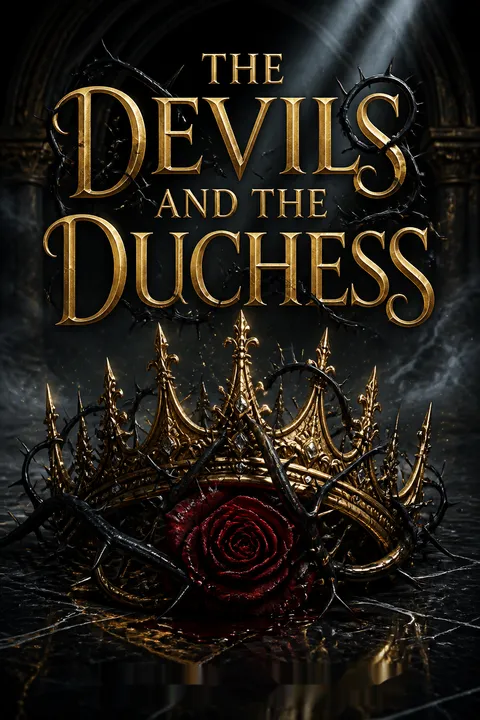
The Devils and The Duchess receives mixed reviews with an overall 3.99 rating. Readers note it's a dark, bully reverse harem romance set at a mafia college, featuring intense spice and a major cliffhanger ending. Many praise the addictive, unhinged drama and hate-sex dynamics, while critics cite poor character development, unrealistic scenarios, questionable consent issues, and a frustratingly naive protagonist who repeatedly forgives her bullies. Common complaints include rushed plot points, excessive body betrayal tropes, and the main character's poor treatment of her friend. Despite flaws, many readers found it binge-worthy and immediately downloaded the sequel.
Characters
Mackenzie Kingsland
The fugitive newcomerMackenzie is a nineteen-year-old college student grieving her father and managing epilepsy while trying to regain control of her own life. She is observant, guarded, and prone to blaming herself when the people around her make harmful choices. Her attraction to the Devils complicates her instinct for self-protection, especially because she is lonely and desperate to belong. Yoga, meditation, and her bond with her mother help her regulate fear, but the secrets surrounding her family and her new home repeatedly unsettle that balance. Mackenzie is not simply a passive target: she confronts people, sets limits, and makes choices, even when those choices carry consequences she cannot yet foresee.
Domenic Rossi
The grieving heirDomenic is the dean’s son, a senior student, and the most openly hostile of the three Devils toward Mackenzie. He resents the prospect of his father remarrying and fears that a new family will erase the memory of his mother. His cruelty functions as armor: he provokes people, controls social situations, and hides his distress rather than risk being seen as vulnerable. His anger and attraction to Mackenzie feed each other, producing an unstable mixture of rejection, possessiveness, and desire. He is accustomed to power, but his grief and self-destructive behavior suggest that dominance does not give him mastery over himself.
Kirill
The scarred provocateurKirill is a Russian student with a hard-edged reputation, conspicuous tattoos, and a taste for testing people’s limits. He performs confidence through teasing, physical bravado, and combat, but his background has left him carrying fear and shame he works hard to conceal. His attention to Mackenzie shifts between intimidation and surprising tenderness, though he often frames desire as a game he expects to control. Kirill belongs to a powerful family and is under pressure to prove himself. His role among the Devils is both entertainer and enforcer, but the persona he presents does not account for the vulnerability beneath it.
Valentino
The charming athleteValentino, often called Tino, is a tattooed athlete whose warmth and easy confidence make him the most approachable of the Devils at first. He can comfort Mackenzie and respect a stated limit, but he also treats intimacy as part of the group’s shared play and is willing to cross serious boundaries. His humor and physical ease obscure a complicated family background and the pain he carries from a violent attack that ended his hopes of a sports career. Valentino wants connection, but his loyalty to the Devils often outweighs his judgment about what Mackenzie needs.
Lucia Kingsland
The protective motherLucia is Mackenzie’s beautiful, devoted mother, determined to keep her daughter safe after bereavement and financial danger have narrowed their choices. She acts decisively under pressure and believes that security, a new identity, and a powerful marriage can give Mackenzie a future. Her protective instincts also lead her to conceal important parts of their family history. Lucia’s love is real, but her decisions reveal how fear can turn secrecy into a substitute for trust. Her relationship with Mackenzie is close, tender, and strained by the unequal knowledge each woman carries.
Nataniele Rossi
The powerful deanNataniele is the wealthy dean of Verona Falls University and Domenic’s father. Polished, charismatic, and accustomed to having his wishes obeyed, he offers Lucia and Mackenzie protection in exchange for marriage. His public authority gives the campus an orderly face, while his private behavior reveals a more controlling man. He expects loyalty and uses the family structure he is building to reinforce his influence. Nataniele’s relationship with Domenic is shaped by grief and resentment, while his arrangement with Lucia is based more on security and shared history than on open affection.
Camile
Mackenzie’s wary friendCamile is the first student to offer Mackenzie genuine friendship and a frank account of Verona Falls’ social rules. Warm, perceptive, and protective, she recognizes the danger in the Devils before Mackenzie is ready to accept it. Her own family belongs to the university’s criminal elite, so she understands the expectations placed on women there. Camile wants Mackenzie to stay safe, but she also respects her enough to speak honestly when Mackenzie makes choices she fears will hurt her.
Verity
The status-seeking rivalVerity is a fashionable, socially powerful student who is accustomed to drawing the Devils’ attention. She treats Mackenzie as a threat to her position and uses gossip and humiliation to assert control. Beneath her polished presentation is a willingness to take risks to keep the people around her close. Verity understands that status at Verona Falls is a form of protection, and she competes for it through the same tactics the campus rewards.
Paxton Kassell
The coercive professorPaxton is a thirty-five-year-old professor who begins a secret relationship with Mackenzie when she is eighteen. He first presents his attention as admiration, then uses jealousy, manipulation, and threats to restrict her independence. His position of authority lets him frame control as intimacy, making him a formative source of Mackenzie’s distrust.
Mackenzie’s father
The absent family patriarchMackenzie’s father is remembered by his daughter as loving and generous, though she gradually questions how much she knew about his work and the pressures on the family. His death leaves Lucia and Mackenzie grieving and financially exposed. His memory shapes Mackenzie’s understanding of home, loyalty, and the past.
Louis Laurant
The Viper fighterLouis is one of the Laurant twins and a prominent student associated with the Vipers, the Devils’ rivals. He is a skilled fighter whose match with Kirill demonstrates the university’s brutal combat culture.
Mattheo Laurant
The other Laurant twinMattheo is Louis’s identical twin and part of the Vipers, a rival group at Verona Falls. His presence helps establish that the Devils’ influence exists within a larger network of powerful student factions.
Vladimir
The combat instructorVladimir oversees the university’s bare-knuckle fighting matches. His calm officiating helps normalize violence as a campus tradition rather than treating it as an emergency.
Miss Davies
The crime-scene lecturerMiss Davies is a confident former DEA agent who teaches students about criminal investigations and mistakes that expose offenders. Her authority and self-possession offer Mackenzie a rare example of a woman who commands a room on her own terms.
Plot Devices
Verona Falls University
A gilded criminal refugeThe secluded university gives Lucia and Mackenzie shelter from the police while placing them inside a community built around organized crime. Its wealth, fencing, cameras, gendered education, and student fighting rituals create an enclosed social world where ordinary rules have limited force. Verona Falls functions as both refuge and trap: it offers the protection Mackenzie needs, but also makes her dependent on powerful people whose interests conflict with her independence.
The Duchess
A nickname turned claimDomenic first uses the Duchess nickname to mock Mackenzie’s reserved bearing and presumed privilege. Valentino and Kirill adopt it, and the students begin to treat it as a marker of her connection to the Devils. The name shifts from insult to social currency, helping Mackenzie gain protection and status while also suggesting that the men have a claim over her. It captures the novel’s tension between chosen identity and the labels imposed by others.
Hidden recordings
Private life made leverageThe flash drive containing a recording of Valentino and Mackenzie turns a private sexual encounter into a weapon the Devils can replay and share. Later, a separate recording of Lucia and Nataniele discussing Mackenzie’s father is used to disrupt the wedding. In both cases, surveillance makes intimate speech and behavior available to people who can control the audience. The device links personal violation to public power and shows how evidence can expose truth while still being used as coercion.
Mackenzie’s epilepsy
A body under stressMackenzie’s epilepsy is a recurring physical reality she tries to manage through medication, rest, yoga, and careful habits. Grief, fear, poor sleep, and alcohol can disrupt that routine. Because she keeps her condition private, the people around her often fail to understand the risk their behavior creates. Her seizures make the emotional pressure of Verona Falls tangible and turn the final crisis into a direct consequence of the world the characters have built around her.

Download PDF
Download EPUB
.epub digital book format is ideal for reading ebooks on phones, tablets, and e-readers.








