

Key Takeaways
Treat cleanliness as a cultural rule, not a timeless biological fact
Clean depends on context. A modern North American might shower daily and use deodorant; a seventeenth-century French aristocrat might change his linen shirt every day but rarely wash his body. A Roman could spend hours bathing with others, scraping oil and sweat from the skin with a metal tool. Each considered his own custom civilized. Ashenburg’s German-born grandmother kept a northern European habit of washing her house thoroughly but bathing less often. As a child, Ashenburg found her smell familiar and comforting. Only later did she learn to label it unpleasant by modern standards.
Noses learn their norms. Communities teach people which bodily smells signal health, shame, attraction, or danger. Cleanliness is not imaginary, but its standards change with custom, technology, religion, and daily life.
The history separates two questions that are often blurred: what washing does for the body, and what a community decides a clean person should look and smell like. That distinction helps explain why a smell can feel intimate or comforting in one setting and offensive in another. Social norms are learned through repetition, family, and advertising, so they can feel like instinct. Still, cultural variation does not make every hygiene practice equally safe. The useful lesson is not to dismiss cleanliness, but to ask which practices address a real need and which mainly enforce belonging.
Read a society’s bathhouses as civic institutions, not just places to wash
Rome bathed together. Greek bathing was often modest and tied to exercise, health, or ritual. Romans made the bath a daily social destination. Visitors exercised, scraped sweat and oil from their skin with a strigil, soaked in pools of different temperatures, and might then eat, talk, flirt, or conduct business. Soap was not central to the routine.
The bath marked Roman life. By the first century BC, Rome had around 170 public baths. Later imperial complexes added gardens, libraries, meeting rooms, and food stalls, admitting rich and poor, men and women, and enslaved and free people, though status still shaped access to services. The baths were also political displays: emperors built them to demonstrate that Roman power could deliver comfort and public grandeur.
Rome’s baths show how infrastructure can become a social institution rather than a mere convenience. A shared setting created opportunities for contact across social groups, while its architecture and services also advertised imperial capacity. That combination remains familiar wherever public amenities double as civic symbols. The account also resists a simple story of egalitarian bathing: shared entry did not erase wealth, gender rules, or dependence on enslaved labor. Public access can widen participation without dissolving the hierarchy built into the society around it.
Trace religion, infrastructure, and plague before calling medieval Europe uniformly filthy
Bathing rose and fell. Roman baths did not vanish everywhere at once. In the West, political disruption and broken water systems made large bathhouses difficult to maintain. Some Christians also distrusted bathing as a source of vanity or sexual temptation. A small number of ascetics practiced alousia, a deliberate refusal to wash as a sign of devotion. Yet ordinary Christians continued to value washing, and baths survived longer in the Byzantine East and Muslim Spain, where public bathhouses were common.
A revival met a disaster. Crusaders brought Europeans renewed interest in the hamam, a steam bath derived from Roman and Byzantine traditions. Medieval bathhouses spread, but after the Black Death, physicians wrongly warned that warm water opened the skin to plague. Fear helped close many baths, setting the stage for centuries of European avoidance.
This sequence is a reminder that cultural change rarely has one cause. Religious suspicion mattered, but so did the practical cost of maintaining water systems; later, medical explanations helped turn fear into policy. The plague theory was mistaken, yet it was persuasive because it offered a visible mechanism for an invisible threat. That pattern recurs in public health: people seek explanations that fit the science available to them, even when that science is incomplete. Historical humility means judging past beliefs carefully without pretending modern knowledge arrived all at once.
When water seemed dangerous, clean linen became a technology
Dry washing had a rationale. From roughly the sixteenth through the mid-eighteenth centuries, many Europeans feared that bathing softened the body and let disease enter through open pores. Doctors sometimes recommended keeping those pores sealed. Instead of washing their bodies, people cleaned visible areas, changed linen, and used perfume. Linen was believed to absorb sweat and bodily impurities, making a fresh shirt seem more effective than a bath.
The shirt showed status. At the French court, Louis XIV could change shirts several times a day without bathing. Fresh linen became a visible signal of refinement, and fashion increasingly displayed it at collars, cuffs, and sleeves. The standard was not simply a failure to discover soap and water. It was a different theory of the body, reinforced by medical advice, social custom, and the labor required to carry and heat bathwater.
The linen era demonstrates how a mistaken theory can produce a coherent everyday practice. Clean shirts were not a sham: they absorbed sweat and could be laundered, but they also let people avoid a feared exposure to water. Material culture often makes belief practical. The same principle applies beyond hygiene: people build routines around what they think is risky, then treat the routine as evidence that the belief was right. The historical lesson is not that washing is optional in every setting, but that common sense is frequently a product of the science and tools available.
A new ideal of nature made water respectable again
Water returned through health. In the eighteenth century, advocates promoted cold baths, sea bathing, and mineral springs as ways to strengthen or heal the body. Their medical claims were often exaggerated, but they helped make immersion acceptable again. Rousseau added a cultural argument: children should be gradually accustomed to cold water as part of a natural, less artificial upbringing. As ideas about pores and perspiration changed, washing seemed less like an invitation to illness.
Cleanliness became elegance. Beau Brummell, a celebrated early nineteenth-century dandy, made meticulous washing part of the image of a gentleman. His daily grooming routine lasted hours, and his plain clothes made neatness more visible. By connecting cleanliness to self-command and good taste, Brummell helped turn the previously suspect habit into a social expectation.
The comeback of bathing was not a sudden scientific correction. Medical authority, changing ideas about nature, fashionable behavior, and new expectations of personal presentation reinforced one another. Brummell’s example is especially revealing: restraint in clothing made cleanliness itself the display. This resembles status signals in many fields, where seeming effortless depends on substantial hidden labor. Yet the ideal was easier to perform for people with time, privacy, servants, and water. A standard can appear purely personal while quietly depending on resources that are unequally distributed.
Make sanitation convenient before blaming people for living without it
Public health changed the stakes. Industrial cities crowded people into homes without reliable water, toilets, or ventilation. Edwin Chadwick’s 1842 report described these conditions and helped press Britain toward sanitary reform. Cities began building public baths and washhouses, including facilities that charged low fees. Medical theories also shifted: the old fear of water gave way to new claims that washing helped the skin function properly, though some early explanations were wrong.
Access did not guarantee use. Bathhouses could be expensive to maintain, awkward to reach, or socially uncomfortable. Many working-class people feared illness from bathing or saw no reason to spend scarce time there. In Germany, elaborate civic bathhouses often attracted the middle classes more than the poor. The shower offered a cheaper alternative, but institutional settings and timed visits did not make it appealing to everyone.
The public bath movement exposes a common policy mistake: treating a resource as useful does not mean people will use it under any conditions. Cost, convenience, privacy, trust, and dignity shape uptake as much as technical availability. The same insight matters in designing clinics, transit, and sanitation systems. At the same time, Ashenburg’s account shows why public infrastructure matters: individual habits cannot compensate for unsafe water or overcrowded housing. Effective reform has to improve conditions and understand how people experience the proposed solution.
America made washing a civic credential as well as a domestic convenience
Convenience helped, but culture mattered. American hotels offered private baths before most homes did, and water-cure enthusiasts promoted water as healthy. During the Civil War, the Union Sanitary Commission supplied soldiers with grooming tools and made cleanliness part of military discipline. Disease deaths in the Union army were lower relative to battle deaths than in the earlier Mexican-American War. After the war, plumbing, affordable fixtures, and public health campaigns helped bring bathrooms into more homes.
Reform also policed belonging. Booker T. Washington promoted bathing and toothbrush use at Tuskegee as practical preparation for self-reliance, while many white reformers treated cleanliness as proof of civilization. Immigrants and Black Americans faced scrutiny that connected hygiene to racial and class prejudice. The same practice could offer health and dignity while being used to judge groups unfairly.
American cleanliness gained force because several systems converged: hotels made bathing attractive, wartime sanitation made it patriotic, and domestic plumbing made it easier. But hygiene also became a social test administered unequally. Washington’s emphasis on self-care offered students useful skills in a hostile society, while reformers’ language often implied that marginalized people needed moral correction. This dual role matters in any public campaign. A health message can widen access, but it can also shame people for conditions created by poverty or discrimination.
Advertising turned unseen odors into emergencies for love and work
The threat became personal. Early twentieth-century ads argued that a person might offend others without noticing. Listerine, originally an antiseptic, was sold as a remedy for halitosis and linked bad breath to failed courtship and lost opportunities. The campaign helped raise annual company profits from about $115,000 in 1921 to more than $8 million in 1928. Odorono deodorant ads similarly warned women that underarm odor could go unnoticed by them but noticed by everyone else.
Products sold certainty. Soap and deodorant advertising promised more than cleanliness: they offered confidence, romance, social acceptance, and professional success. The claim that a private smell could secretly ruin a life made consumers responsible for constant self-monitoring. Hygiene became a market in which the problem was often difficult to verify, but the product was easy to buy.
These campaigns illustrate how marketing can transform a sensory uncertainty into a commercial problem. A person cannot easily assess their own breath or body odor, so reassurance becomes difficult to disprove and repeated purchasing can seem prudent. This is a powerful model for selling solutions to risks that are private, intermittent, and socially consequential. Yet advertising did not invent every concern from nothing: close workplaces and changing social expectations made odor more noticeable. The critical question is whether a product addresses a shared practical concern or inflates anxiety to sell control.
Keep useful handwashing, but question the fantasy of a perfectly controlled body
The bathroom became a shrine. In 1956, anthropologist Horace Miner satirized American bathroom rituals by describing the Nacirema, a name that spells American backward. His account made ordinary grooming look like an elaborate religion. The joke fits a culture where bathrooms became larger and more luxurious: by 2005, nearly one in four newly built U.S. homes had at least three. Meanwhile, advertising kept adding standards for breath, skin, teeth, and scent.
Hygiene has limits. The book distinguishes useful precautions, especially handwashing to reduce infection, from the belief that every natural smell or microbe is dangerous. The Hygiene Hypothesis suggests that some early exposure to microbes may help shape immune development, though it remains a hypothesis and has counterevidence. This does not mean dirt is harmless. It does mean that cleanliness is not a simple contest to eliminate every organism or bodily trace.
The modern bathroom gathers two impulses: sensible protection from infection and a desire to make the body predictable. Those aims should not be confused. Handwashing addresses a clear route of disease transmission, while aggressive deodorizing or constant disinfection may serve appearance, anxiety, or convenience instead. The Hygiene Hypothesis adds a useful caution against treating all microbial contact as equivalent, but it does not justify romanticizing unsafe conditions. A practical standard asks what risk a habit reduces, for whom, and at what cost in water, money, and attention.
Analysis
Ashenburg’s history is compelling because it makes the bathroom a lens on much larger changes: religious ideas about the body, medical theories of disease, public infrastructure, class relations, gender expectations, and consumer culture. Its strongest argument is not that modern people wash too much or that earlier people were secretly just as clean. It is that cleanliness has no single, stable meaning. Romans sought a social bath; early modern elites trusted linen; nineteenth-century reformers linked washing to sanitation and civic order; twentieth-century advertisers made odor an invisible threat. Each practice made sense inside a particular world.
The chronology also unsettles a triumphalist account of progress. Plumbing can make bathing possible without making it desirable, and an available public bath can still feel costly, exposed, or stigmatizing. Conversely, a practice can be medically mistaken and socially powerful, as when fear of open pores helped displace water. The book’s attention to those mechanisms is more illuminating than a simple catalogue of bathing customs. Its Western focus is a deliberate boundary, but the contrasts with Muslim, Jewish, and Asian practices reveal that boundary’s consequences. Western travelers often treated their own habits as normal and other people’s washing as strange, while those travelers themselves were judged dirty. That reversal makes hygiene a particularly clear example of how cultural superiority gets built through everyday details.
A useful qualification is that cultural relativity does not erase material effects. Clean water, sewer systems, and handwashing can prevent illness, while lack of access can harm people regardless of their beliefs. The book is most persuasive when it holds both truths together: hygiene has practical value, and the standards attached to it are historically produced. Its lasting question is not whether a society should be clean, but how it decides what counts as clean, who bears the cost, and whose bodies become evidence of social failure.
Review Summary
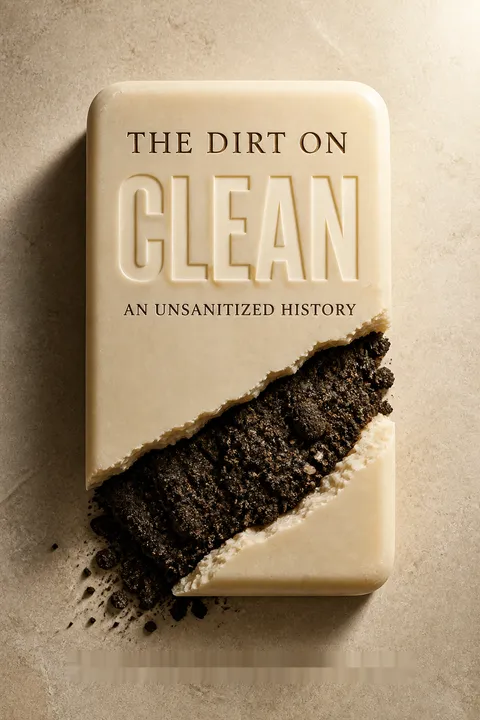
The Dirt on Clean is a fascinating history of Western bathing and hygiene practices from ancient Rome to modern times. Readers praise Ashenburg's engaging writing style and wealth of interesting anecdotes, though some note gaps in coverage of non-Western cultures. The book explores changing attitudes toward cleanliness, from fear of bathing to modern obsession with hygiene products. While occasionally academic in tone, it provides an entertaining look at how standards of cleanliness have evolved over time, challenging readers to reconsider their own notions of what it means to be clean.
People Also Read


Glossary
strigil
Oil and sweat scraperA curved metal implement used by Greek and Roman bathers to scrape oil, sweat, and dirt from the body. Athletes commonly applied oil before exercise, then used a strigil afterward to remove the mixture of oil, dust, and perspiration. Romans often followed scraping with rinsing and sometimes massage or another application of oil.
hypocaust
Underfloor heating systemA Roman heating system that warmed bathhouse floors and walls by circulating hot air from a furnace through cavities beneath the floor and behind the walls. The technology helped make large, heated public baths possible. Bath rooms were arranged according to their desired temperatures, with the hottest spaces closest to the furnace.
alousia
Ascetic refusal to washA Christian ascetic practice, especially associated with some Eastern monks, hermits, and saints, in which a person deliberately avoided washing. Dirtiness could serve as a visible rejection of vanity and worldly comfort, while baptism was treated as the spiritually meaningful washing. It represented an extreme ideal, not the ordinary hygiene routine of all Christians.
hamam
Turkish steam bathA public bath tradition descended from Roman and Byzantine bathing practices and adopted by the Turks. A hamam typically used heated rooms and basins rather than communal pools. Bath attendants soaped and scrubbed customers, often with a coarse mitt. The hamam helped carry bathing customs back into medieval Europe after many Western Roman baths had fallen into disuse.
balneum
Ordinary Roman bathhouseA Latin term for a relatively modest Roman bathhouse, distinguished in the book from the grand imperial thermae. A balneum served neighborhood customers and offered the essential bathing facilities without the vast scale and additional amenities of imperial complexes. The distinction captures the difference between everyday bathing provision and monumental public display.
thermae
Imperial Roman bath complexThe term used for Rome’s large, government-sponsored bath complexes. Beyond hot and cold bathing, thermae could include exercise areas, gardens, libraries, meeting rooms, and places to buy food. Emperors built them as public amenities and demonstrations of power, though access to special rooms and services still reflected social differences.
hydropathy
Water-based healing systemA nineteenth-century approach to treating illness with water, often cold water, wet wraps, baths, and showers. Its advocate Vincenz Priessnitz opened a treatment centre in Silesia, and the practice became popular in the United States. Hydropathy’s medical claims were often unsupported, but it encouraged people to regard water as beneficial and helped normalize bathing.
miasmatic theory
Disease from foul airA long-standing theory that disease spread through bad smells, stagnant air, and decaying matter. It encouraged public reforms such as waste removal, ventilation, and cleaner streets. Although later displaced by germ theory, miasmatic thinking shaped nineteenth-century sanitation campaigns and helped make cleanliness a public health concern.
Hygiene Hypothesis
Microbial exposure and immunityA hypothesis associated with epidemiologist D. P. Strachan, who proposed that early contact with infections and microbes may help shape immune development and reduce some allergic responses. Research discussed in the book linked factors such as larger families, farm life, and early daycare with lower allergy rates. The hypothesis remained unsettled and had counterevidence.
Nacirema
Satirical name for AmericansThe name in anthropologist Horace Miner’s 1956 satire, which spells American backward. Miner described familiar American health and grooming routines as if they belonged to a strange society, including the bathroom as a private ritual center. The device exposes how everyday customs can look exotic when viewed from a deliberately unfamiliar perspective.
FAQ
What's The Dirt on Clean about?
- Historical exploration: The Dirt on Clean by Katherine Ashenburg examines the evolution of personal hygiene practices over 28 centuries, highlighting how different cultures and societies have defined cleanliness.
- Cultural relativity: The book emphasizes that cleanliness is not a universal standard but varies significantly across cultures and historical periods, illustrating changing perceptions of hygiene.
- Broader connections: It connects cleanliness to social status, sexuality, and cultural identity, revealing how these factors influence our understanding of what it means to be clean.
Why should I read The Dirt on Clean?
- Engaging narrative: Katherine Ashenburg presents a lively and well-researched account that is both entertaining and educational, appealing to a wide audience.
- Challenge assumptions: The book encourages readers to reconsider their own hygiene practices and cultural norms, prompting reflection on personal habits.
- Rich historical context: With a wealth of anecdotes and historical context, it provides a fascinating look at how our ancestors lived and their attitudes toward hygiene.
What are the key takeaways of The Dirt on Clean?
- Cultural construction: Cleanliness is culturally constructed, with definitions varying widely across different cultures and historical contexts.
- Evolution of practices: The book traces the development of bathing and cleanliness from ancient civilizations to modern times, highlighting significant shifts in attitudes and practices.
- Interplay with identity: It discusses how notions of cleanliness intersect with issues of class, gender, and morality, revealing deeper societal implications.
What are the best quotes from The Dirt on Clean and what do they mean?
- “Every culture defines it for itself”: This quote underscores the idea that cleanliness is subjective and shaped by cultural norms, rather than a fixed standard.
- “The scent of one another’s bodies was the ocean our ancestors swam in”: Reflects how past societies were accustomed to natural body odors, contrasting sharply with modern aversions.
- “Dirt is matter in the wrong place”: Highlights the subjective nature of cleanliness and how societal norms dictate what is considered dirty.
How does Katherine Ashenburg connect cleanliness to social movements in The Dirt on Clean?
- Social marker: Cleanliness has historically been used to signify social status and civility, often serving as a tool for social control.
- Sexuality intersection: The book explores how notions of cleanliness are intertwined with sexual morality, influencing societal attitudes toward bodies and intimacy.
- Revolutionary theme: Cleanliness has been a recurring theme in social movements, where the push for hygiene often coincides with broader calls for reform and progress.
What historical periods does The Dirt on Clean cover?
- Ancient civilizations: Begins with the Greeks and Romans, detailing their bathing practices and societal norms regarding cleanliness.
- Medieval to Renaissance: Examines the drastic changes in hygiene practices during the Middle Ages and the Renaissance, including the decline of public baths.
- Modern era: Progresses into the 20th century, discussing the rise of personal hygiene products and the cultural shifts shaping contemporary cleanliness standards.
How does The Dirt on Clean address the concept of body odor?
- Cultural perceptions: Ashenburg argues that body odor has been perceived differently across cultures and times, with many societies historically accepting natural scents.
- Adaptation to smells: The quote “where all stink, no one smells” illustrates how people adapt to the odors of their environment, making them less sensitive to body odor.
- Modern aversion: Critiques the contemporary obsession with masking body odor through products, suggesting this reflects deeper societal anxieties about the body.
What role does water play in the history of cleanliness according to The Dirt on Clean?
- Symbol of purity: Water is often associated with spiritual cleansing and renewal across various cultures and religions, serving as a powerful symbol.
- Technological advancements: Discusses how advancements in plumbing and water access have transformed bathing practices, making cleanliness more attainable.
- Changing attitudes: Highlights the fluctuating views on bathing, from the Roman embrace of communal baths to the later aversion to water during the Middle Ages.
How does Katherine Ashenburg use anecdotes to illustrate her points in The Dirt on Clean?
- Personal stories: Shares her own experiences and those of others to provide relatable context, making historical practices more tangible for readers.
- Historical figures: Anecdotes about notable figures and their hygiene habits highlight the absurdities and contradictions in societal norms regarding cleanliness.
- Cultural observations: Includes observations from travelers and historians to illustrate how perceptions of cleanliness have varied across cultures and time periods.
How does The Dirt on Clean compare hygiene practices across different cultures?
- Diverse practices: Highlights vast differences in hygiene practices around the world, from communal baths in Japan to private rituals in Western societies.
- Geographical influence: Discusses how geographical and climatic factors shape hygiene practices, such as public baths in warmer climates versus private habits in colder regions.
- Social implications: Examines how cultural attitudes towards cleanliness reflect broader social hierarchies and power dynamics, affecting marginalized communities.
What technological advancements in plumbing are discussed in The Dirt on Clean?
- Modern plumbing introduction: Details innovations that made indoor plumbing and modern bathrooms possible, significantly changing hygiene practices.
- Public health impact: Emphasizes how improved plumbing systems contributed to public health by reducing disease spread associated with poor sanitation.
- Cultural shifts: Discusses how modern plumbing shifted bathing from a communal activity to a private one, reflecting changing societal norms around privacy.
How does The Dirt on Clean address the relationship between cleanliness and social class?
- Class marker: Explores how cleanliness has historically been used as a marker of social class, with wealthier individuals having better access to bathing facilities.
- Stigmatization: Discusses how societal attitudes towards cleanliness have often stigmatized the poor, associating dirtiness with moral failing.
- Public health initiatives: Examines how initiatives aimed at improving hygiene among lower classes have sometimes been met with resistance, reflecting societal tensions.
Download PDF
Download EPUB
.epub digital book format is ideal for reading ebooks on phones, tablets, and e-readers.








