

Plot Summary
Prologue
In old age, Magda2 dreams that she cannot unlock her front door for rescuers waiting outside. The dream returns her to Emerence,1 the formidable housekeeper1 who once let Magda2 into a home she had guarded from everyone. Magda2 understands the rescue as a betrayal: she meant to save Emerence,1 but believed her own judgment outweighed the other woman’s1 wishes.
The opening frames the story as a confession. Magda2 does not claim innocence or ask for absolution. She sets out to explain how affection, pride, and a failure to stay beside someone in her hour of need became, in her mind, a kind of killing.
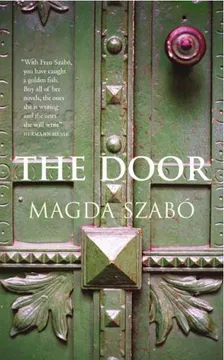
The locked door makes guilt physical: Magda can see the people who might help, yet cannot reach them. This image reverses the novel’s central act of entry, when Emerence chooses to open her guarded home to Magda. Magda’s confession also unsettles the usual division between rescue and harm. She does not deny that she intended to save Emerence; she insists that intention cannot erase the cost of overriding another person’s will. By beginning with judgment rather than chronology, the narrative asks readers to assess not only what happened, but who had the right to decide what survival should mean.
Emerence Sets the Terms
Magda2 has just moved into a larger home with her husband,3 and a revived writing career leaves her unable to manage the household alone. A former classmate recommends Emerence,1 a powerful, veiled caretaker1 known for relentless work and a fierce independence.
Their first meeting turns the usual hiring arrangement upside down: Emerence1 questions whether Magda2 and her husband3 are decent employers, refuses to name her wage before seeing the workload, and decides when she will begin. She addresses the husband3 as master but gives Magda2 no title, keeping her at a distance. Magda2 is unsettled by the older woman’s1 authority, yet accepts her conditions because she needs the time and order Emerence1 can provide.
The hiring scene introduces a relationship in which economic need does not automatically confer authority. Magda expects to evaluate a potential employee, but Emerence reverses the scrutiny and makes respectability a condition of service. Her insistence on choosing the terms protects a person whose labor has often been commanded by others. Magda’s acceptance is practical, not yet intimate: she needs domestic support to write, while Emerence treats work as a commitment she controls. The imbalance in their titles also signals a deeper asymmetry. The husband is assigned a familiar place in Emerence’s social world; Magda must wait until the older woman decides who she is.
The Locked Neighbor
Emerence1 works whenever she chooses, sometimes appearing late at night to scrub until dawn, and she rejects praise or gifts as if accepting them would place her in debt. When Magda2 asks her to receive a parcel outside working hours, Emerence1 angrily sends her away. Later, Magda2 discovers the package safely stored in the pantry beside sliced chicken Emerence1 has secretly prepared.
The gesture confuses rather than reassures her. Neighbors explain that Emerence1 never admits visitors into her home, keeps its shutters closed, and even receives relatives on the porch. Stories of a murdered cat help explain her fierce protection of animals, but Magda2 still mistakes privacy for evidence of a hidden crime.
Emerence’s care is legible through action but deliberately difficult to claim. She can reject Magda at the threshold and still protect her from a missed delivery, because assistance does not require emotional surrender. Magda interprets the unspoken gift as a puzzle to solve, and the neighbors’ rumors encourage her to treat privacy as suspicious. This habit of inference will matter later: Magda repeatedly substitutes a plausible account for the truth when Emerence refuses to explain herself. The locked home is not merely a mystery to be opened. It is the boundary around a life Emerence has learned to preserve by refusing other people’s right to inspect it.
A Story After Surgery
When Magda’s husband3 undergoes a dangerous operation for a lung abscess, she keeps the crisis from Emerence,1 assuming the older woman1 is not emotionally invested. Emerence1 confronts her for being excluded, then brings her spiced wine and stays beside her until she sleeps.
During that night, she recounts her childhood in rural Hungary: her father died when she was three; war took her stepfather; and, while she ran to fetch water, lightning killed her young twin siblings. Her mother, overwhelmed by the sight, threw herself into a well. Emerence1 did not call for help in time. A Swedish church relief parcel, whose only remaining gift to her was a sequined evening dress, later hardened her rejection of organized religion.
Emerence’s story joins two kinds of failure: Magda assumes that care is unwanted, while the child Emerence remembers being unable to act in the instant when help might have mattered. The parallel is not exact, but it gives Magda a glimpse of the older woman’s emotional history without making that history available for easy interpretation. Emerence’s account of the twins explains her terror of storms, while the humiliating charity parcel explains why religious generosity can feel like an insult when it ignores what a person actually needs. Her fierce practical compassion is not a simple rejection of faith. It is a moral system built from loss, labor, and distrust of institutions that presume to know best.
Viola Chooses Emerence
On Christmas, Magda2 and her recovering husband3 find a puppy4 buried in snow and carry him home, intending to find him another owner. Emerence1 immediately warms him, nurses him through weeks of illness, and names him Viola,4 teaching him manners and taking him along on her rounds. The dog4 soon obeys her more readily than either of his nominal owners.
When Emerence1 brings him home drunk after sharing food and beer with him, Magda2 forbids another visit. Viola4 rebels, drags Magda2 through the snow to find Emerence,1 and performs a solemn apology under her direction. The episode leaves Magda2 bruised and angry, but confirms that Viola4 has chosen Emerence1 as his true mistress.
Viola makes visible what Magda has not yet learned to read: Emerence’s attachment is not a service performed for an employer but a relationship that demands loyalty and gives it back. The dog’s dependence complicates the household’s claim of ownership, since the people who rescued him do not provide the attention he receives from Emerence. Her harsh discipline and extravagant tenderness coexist, unsettling Magda’s wish to sort affection into acceptable forms. The episode also turns the dog into a mediator between the women. He brings them into one another’s routines, while his refusal to obey Magda demonstrates that emotional bonds cannot be assigned by contract.
The Feast That Failed
Emerence1 asks to use Magda’s2 home for a private visitor she cannot receive on her porch. Magda2 agrees, and her husband3 treats the arrangement as an amusing oddity. Emerence1 carries in her own fine dishes and prepares an elaborate meal, but the expected guest cancels. Viola4 climbs onto the table and eats the roast; Emerence1 beats him with a serving fork, then kisses him as he cowers.
Magda,2 furious at the ruined room and confused by Emerence’s1 tears, returns the untouched food. Emerence1 dumps the feast and smashes the bottles. That night Magda2 goes back, accepts a meal in Emerence’s home, and earns a promise the older woman1 will remember her kindness.
The feast exposes the difference between Magda’s practical reading of events and Emerence’s private emotional stakes. Magda sees wasted food and damage to her mother’s furnishings; Emerence experiences a rejection so severe that the meal becomes a ritual of injury. Her sudden violence toward Viola and equally sudden tenderness reveal grief displaced onto the one creature who will remain with her. Magda cannot repair the loss by returning the food, but her later willingness to sit and eat with Emerence offers a form of company without demanding an explanation. Their bond advances through a modest act of participation, not through the confession Magda keeps hoping to extract.
The Chipped Little Dog
Emerence’s1 affection grows into a dawn Mother’s Day ritual, when she dresses Viola4 in a hat and flowers so he can honor Magda.2 Later, she fills Magda’s2 apartment with discarded objects she has cleaned and repaired, including a damaged plaster dog. Magda2 hides the statue and calls it false, but Emerence1 recognizes that Magda2 is also protecting her husband3 from an argument.
She leaves the household and sends word through her nephew6 that she will not return. Magda2 and her husband3 discover that neither the apartment nor their work functions without her. Magda2 finally asks Emerence1 to come back and promises to keep the dog; Emerence1 returns, then smashes the statue herself.
The conflict is not really about taste. Emerence gives gifts as a child might, choosing what seems beautiful or lovable rather than what an adult collector would value. Magda’s attempt to defend her aesthetic judgment conceals a more compromising motive: she has used a critical label to avoid confronting her fear of upsetting her husband. Emerence sees that evasion and names the cowardice beneath it. Her departure makes Magda recognize a dependence she had mistaken for convenience. The broken statue then restores a measure of equality: Emerence returns on terms Magda has accepted, but refuses to let the gift remain a permanent test of gratitude.
Polett’s Last Choice
Polett,9 an impoverished neighbor who speaks French and once worked as a governess, dies by suicide in her garden. Magda2 expects Emerence1 to be shocked, but learns that Polett9 had discussed her plans with her friend.1 Emerence1 helped arrange the clothing and letter, believing that food, company, and even a kitten could not answer Polett’s9 loneliness.
She refuses to call this indifference: to restrain someone who no longer wants life would, in her view, be another form of control. Emerence1 recalls her own first love, a baker torn apart by a mob after sharing bread with civilians. Her account leaves Magda2 facing a moral question she cannot settle with religious convention alone.
Emerence’s response is deliberately unsettling because she refuses the consoling story that love always saves. She and the other women offered Polett material help and companionship, yet Emerence believes those gifts could not substitute for the life Polett had chosen to relinquish. Her practical involvement challenges Magda’s instinct to equate care with intervention. The memory of the baker sharpens this ethic: crowds and authorities can destroy an innocent person while claiming to defend order. Emerence’s compassion extends to the suffering person rather than to the rules that explain what others ought to do. Magda is left with a difficult distinction between respecting agency and abandoning someone.
Mercy Without Allegiance
As Magda2 argues for the promises of postwar political change, Emerence1 rejects every regime and class that claims authority over ordinary people. She measures character by work, not slogans, and distrusts priests, officials, doctors, and educated professionals alike.
Her indifference is not passivity: she has hidden people hunted by opposing forces, including a wounded German and a Russian soldier, and protected a neighbor targeted by the state. She refuses to distinguish the deserving from the guilty before offering shelter.
These revelations alter Magda’s2 view of Emerence’s1 political ignorance. The older woman1 has understood the violence of power intimately, but will not let any faction recruit her compassion as proof of its righteousness.
Emerence’s refusal to choose a political camp is neither conventional neutrality nor lack of moral judgment. She judges institutions by what they do to vulnerable bodies, then acts locally to prevent the immediate harm she can reach. By hiding enemies from one another, she rejects the political demand that compassion be rationed according to allegiance. Her anti-intellectualism is more complicated: she possesses keen intelligence but refuses the social ascent offered through formal education, which she associates with people who issue orders while others perform the labor. Magda’s arguments about history cannot absorb this ethic because Emerence’s unit of moral accounting is the person at the door, not the collective represented by a flag.
The Village and the Child
When Magda2 travels to Emerence’s1 birthplace without her, she follows instructions to inspect the family graves, the old house, and the end of a railway goods platform. Relatives tell her that Emerence1 once brought a small girl, Eva,10 to the village. Back in Budapest, Emerence1 explains that Eva10 was a Jewish baby entrusted to her by the Grossmans10 as they fled persecution.
Emerence1 arranged for her to be raised safely by family, then reunited her with the Grossmans,10 who later settled abroad and sent money. She also reveals that the platform recalls a beloved heifer she once called Viola,4 which leapt from a departing train after Emerence1 called to it and broke its legs.
The journey corrects Magda’s assumption that Emerence’s guardedness conceals greed or a simple refusal of intimacy. Her locked home contains not stolen property but the traces of a history in which care repeatedly required concealment, separation, and silence. Eva’s childhood links Emerence’s own shame in the village to a deliberate act of protection during the persecution of Jewish families. The heifer’s death gives a second meaning to the name Viola: love can summon the beloved toward danger even when the caller means no harm. Emerence’s lesson is severe because it comes from experience. She has learned to distrust the belief that affection alone can keep another being safe.
The Dancing Forest
Magda2 invites Emerence1 to a film location, hoping the machinery of production will help her understand creative work. Emerence1 watches a romantic scene made to look spontaneous through cranes, a helicopter, and a wind machine. Instead of being impressed, she condemns the manufactured movement of the trees as deception.
Her anger unsettles Magda,2 who realizes that Emerence1 is comparing the staged forest with a moment in her own past when nature seemed to move of its own accord. The visit reveals the older woman’s1 exacting demand: art must make its effect feel lived rather than assembled. Magda2 cannot explain the difference to her, but carries the criticism into her understanding of what genuine creation requires.
Emerence’s judgment is not a rejection of art so much as a demand that its formal devices answer to emotional truth. She recognizes the production’s machinery and refuses to confuse a convincing effect with an authentic experience. Her objection also hints at an intimate memory she cannot yet disclose, making the trees a boundary between the visible technique of art and the private event that gives it force. For Magda, the encounter reverses the usual hierarchy between cultivated artist and unschooled observer. Emerence may not read books, but she can identify when representation has become a substitute for the reality it claims to move.
The Will and the Lover
On Palm Sunday, Emerence1 summons Magda2 to witness her will, using Viola4 to bring her back when she initially refuses to come. She assigns her money to her nephew6 for a family crypt and leaves her household possessions to Magda.2 The announcement follows news that the lawyer’s son, the man Emerence1 loved, has died.
She reveals that she hid him during the war and later hoped he might choose her, but he returned only to seek refuge and political help. He never promised love, yet her disappointment shaped her distrust of education and public life. The disclosure makes Magda2 one of the few people entrusted with Emerence’s1 unvarnished history.
The will turns inheritance into a language Emerence can use without surrendering her independence. She directs money toward honoring the dead, gives Magda objects rather than a conventional declaration of kinship, and explains the loss that helped form her suspicion of intellectual power. Her love for the lawyer’s son is neither romantic triumph nor simple victimhood: Emerence knows he made no promise, but cannot make that knowledge cancel her desire. By entrusting the story to Magda, she offers intimacy on strict terms. The narrator is allowed to know what happened, but not to rewrite its meaning into a sentimental account of a love that was never returned.
Inside the Forbidden Home
On Good Friday, after Emerence1 rebukes Magda’s2 religious observance and exposes the rigid routines that govern her life, a storm drives the frightened Viola4 toward Emerence’s locked door. Emerence1 opens it and lets Magda2 inside for the first time. The immaculate kitchen contains a massive safe blocking access to a second room, while nine rescued cats hide around the furniture.
Emerence1 explains that she kept them indoors after cats she loved were killed, and asks Magda2 to arrange humane euthanasia if she dies before them. She also reveals a photograph of the lawyer’s son among the images pinned to a dressmaker’s dummy. The secret room remains sealed, but Magda2 has finally seen the household Emerence1 protects.
The open door is a gift and a burden at once. Emerence permits entry not because Magda has solved her mystery, but because she has earned a narrow form of trust and can be entrusted with the cats’ future. The spotless kitchen and hidden animals complicate the image of a merely eccentric recluse: this is a carefully maintained refuge built around beings others abandoned. The safe’s obstruction preserves another boundary even in the moment of revelation. Emerence offers Magda knowledge without offering total access. The scene also makes care concrete and uncomfortable. Magda is not simply asked to love the cats; she is given responsibility for deciding when their suffering should end.
Snow Beneath the Window
Years pass, and Emerence1 continues to care for Magda2 and her husband3 while insisting that their relationship remain within boundaries she controls. At Christmas, the couple gives her a television. Soon afterward, Magda2 sees Emerence1 clearing snow outside, still working while the new set waits unused.
Magda2 understands that the gift has added an obligation rather than eased her workload, but stays inside. That winter, Emerence1 develops a severe cough and refuses doctors or rest, insisting she must clear the streets.
At the same time, Magda’s2 writing finally receives public recognition, bringing interviews, travel, and a major literary prize. The household’s dependable routine begins to fracture just as Magda’s2 career reaches its high point.
The television scene is a small, consequential failure of attention. Magda and her husband offer an object they imagine as comfort, but do not ask whether Emerence has time to use it. The gift exposes a broader asymmetry: Magda’s public success depends on domestic labor whose demands she can acknowledge without taking over. Emerence’s refusal to rest makes that dependence visible, but Magda is already being pulled toward the recognition she has waited years to receive. The two women’s lives move in opposite directions. Magda’s world opens outward, while Emerence’s physical strength narrows, and the narrator’s awareness arrives too late to alter what she sees.
The Rescue at the Door
When Emerence1 disappears behind her door for weeks, neighbors fear she is dying and plan to force their way in. Magda2 persuades her to pass out a dead cat, intending to let the waiting doctor12 seize her. But Emerence1 opens the door only far enough to hand over the animal, and the rescue becomes a struggle.
A recent stroke has left her partly paralyzed; the neighbors finally break the lock and carry her out. Magda,2 summoned to a television appearance, leaves before she can stay beside her. Decontamination workers find the flat fouled by waste and rotting food, scatter the cats, and destroy much of the home. Magda2 returns to discover the door torn away and Emerence1 taken to hospital.
Magda’s choice is the novel’s central ethical breach because rescue is achieved by turning Emerence’s trust into an instrument. The stroke makes intervention urgent, but the method strips the older woman of control over the one place she has kept beyond public reach. Magda tries to preserve her secret and her dignity, yet leaves at the moment when presence matters more than intention. The decontamination is not incidental damage: it converts private incapacity into public spectacle and destroys the material world that helped Emerence remain herself. The scene refuses an easy verdict. Magda prevents an unattended death, but also makes survival arrive through humiliation.
A Mercy Built on Lies
At the hospital, Magda2 sees Emerence1 without her headscarf and recognizes the beauty the older woman1 had concealed. On the day Magda2 receives her literary prize, she tries to clean the ruined flat, but officials have already burned the contaminated furniture. Emerence1 improves physically yet refuses to see Magda.2
When Magda2 returns from a required trip to Athens, she tells Emerence1 that the home has been restored and the cats are safe. Emerence1 believes her, thanks her, and briefly receives her affection. Magda2 soon realizes the supposed amnesia is an act: Emerence1 remembers the breach but cannot bear to ask what became of her home and animals. Her temporary reconciliation rests on a lie.
Magda’s lie is an attempt to give Emerence back a world that no longer exists. It temporarily succeeds because it answers the older woman’s deepest fear: that her private shame has become public knowledge. Yet the comfort depends on Magda exercising the same authority that caused the injury, deciding which truth Emerence can bear and when she should hear it. The prize ceremony intensifies the irony. Public recognition arrives while the private person who enabled Magda’s work lies in a hospital bed, unable to trust her. Their reunion offers tenderness, but not repair. It postpones the reckoning by converting care into a carefully managed fiction.
The Truth Breaks the Truce
As doctors prepare Emerence1 to leave the hospital, the Lieutenant Colonel5 tells her what happened to the flat and the animals. Magda2 then admits that she went to Athens while Emerence1 remained critically ill. Emerence1 rejects Magda’s2 offer to care for her, condemning the rescue that exposed her helplessness and the absence that followed it.
She had intended to return home, but the revelation sends her into a desperate attempt to leave the hospital. A second embolism strikes as she falls, this time stopping her heart. Viola4 reacts before the people around him understand she is gone. Magda2 reaches the hospital too late to restore the dignity she believes she took from Emerence.1
The truth destroys the fragile truce because it restores Emerence’s own account of what survival cost. Her anger is not simply a refusal of help. She understands that Magda’s rescue preserved her body while removing the home, animals, and public identity through which she had organized her life. The Athens trip deepens the wound: Magda’s obligations were real, but she chose the public role over remaining with the person whose trust she had invoked. Emerence’s collapse makes the consequences irreversible, not because anger itself is fatal, but because the imagined return home can no longer be separated from what she has lost. Magda’s guilt becomes permanent precisely where explanation cannot undo action.
What the Inheritance Cannot Save
Emerence’s1 funeral draws the whole neighborhood, and even the priest honors a woman who had rejected organized religion but practiced care across every boundary. The promised crypt is still to be built, while Viola4 stops barking after days of grief.
Magda2 enters the sealed inner room with the Lieutenant Colonel5 and finds exquisite furniture reduced to dust by woodworm. The inheritance contains no usable treasure. Afterward, the residents divide Emerence’s1 duties among themselves, and Adélka8 becomes caretaker.
Magda2 recognizes that the neighborhood needs what Emerence1 gave, but no replacement can reproduce her. Her husband3 urges her to hire Sutu,7 whose practical competence may help Magda2 return to writing, while Viola4 presses his head against him.
The funeral gathers the many communities Emerence had served without belonging fully to any of them. The priest’s presence does not erase her rejection of the Church; it acknowledges that lived compassion can exceed institutional categories. The decayed salon gives a physical form to memory’s limits: the furniture survived behind the safe, but secrecy could not preserve it forever. The neighbors can redistribute labor, yet the work they inherit is not the same as Emerence’s attention to particular people and animals. Magda’s eventual need to employ Sutu marks a practical continuation rather than a replacement. The novel ends its social story by showing that grief must still make room for ordinary work.
Epilogue
Magda’s2 recurring dream returns her to the locked entrance, with the ambulance waiting beyond the reinforced glass. She turns the key but cannot make the door open. The final image leaves her at the threshold between intention and consequence.
The rescuers remain visible, the past remains reachable in memory, and neither fact gives Magda2 the power to change what happened. Her confession has made the story speakable, but not reversible.
The ending refuses the comfort of confession as cure. Magda can narrate the sequence, admit her choices, and understand Emerence more deeply than she did while they were alive together; none of those acts can restore the lost home or make the final hours happen differently. The dream’s locked door therefore measures not ignorance but helpless knowledge. Magda knows what the rescuers need and knows why Emerence once opened her own door. Yet the key turns without release. The image leaves readers with a distinction central to the novel: remorse may sharpen moral understanding, but understanding is not the same as repair.
Analysis
The novel’s deepest question is not whether Magda2 loves Emerence,1 but whether love grants the right to overrule another person. Emerence1 makes care tangible through food, labor, rescued animals, and attention to neighbors. She does not offer the emotional transparency Magda2 expects in return. This mismatch makes their bond both sustaining and dangerous: Magda2 interprets silence, while Emerence1 treats unsolicited inquiry as an intrusion into the life she has fought to govern.
Their conflict takes place within a history of coercion. Emerence1 has endured war, class dependence, religious humiliation, political violence, and intimate betrayal. Her distrust is not merely eccentricity; it is an acquired defense against institutions and individuals who confuse power with moral authority. Yet her independence has a cost. When her body fails, the locked home that protected her also prevents timely aid. The neighbors’ intervention is medically necessary, but its public, procedural aftermath destroys the privacy and dignity she had preserved.
Magda’s2 writing career sharpens the irony. Her work depends on Emerence’s1 domestic labor, while her public recognition draws her away at the moment that labor becomes a plea for reciprocal attention. Magda’s2 failure is not that she lacks affection or good intentions. It is that she repeatedly treats understanding as something she can secure through interpretation, and rescue as proof that her choice was right. The novel refuses to let intention settle the moral account.
The door joins these tensions. Emerence1 opens it by choice once, giving Magda2 access to the cats and the life hidden behind the public caretaker.1 Later, others force it open to save her, turning a private crisis into a spectacle. Magda’s2 recurring dream preserves the difference between remorse and repair: the key still turns, but knowledge cannot reopen the past. The novel suggests that ethical care requires more than benevolence. It requires attention to another person’s terms, and the humility to recognize when help has become a form of possession.
Review Summary
The Door is a haunting, character-driven novel exploring the complex relationship between two women in communist-era Hungary. Reviews frequently praise Magda Szabó's masterful prose and the unforgettable character of Emerence—a fierce, enigmatic housekeeper of almost mythological proportions. Many readers found the slow reveal of Emerence's tragic past deeply moving, while others felt the novel became repetitive. Critics debated the relationship's emotional authenticity, with some viewing it as profound and others as troublingly co-dependent. Overall, most agreed the novel provokes lasting reflection on friendship, dignity, and betrayal.
People Also Read






Characters
Emerence
The guarded caretakerEmerence is a formidable Budapest housekeeper whose physical strength, immaculate standards, and relentless work make her indispensable to the neighborhood. She gives food, finds homes for abandoned animals, and responds to suffering with practical action rather than comforting language. At the same time, she guards her home and history with uncompromising force, refusing gifts and resisting anyone who assumes a right to her confidence. Her judgments can be harsh, her affection eccentric, and her loyalty demanding. She distrusts institutions that claim moral authority while ignoring the needs of individuals. Emerence’s central tension is between an immense capacity to care and an equally strong need to remain self-governing.
Magda
The writer who confessesMagda is a busy writer whose revived career makes domestic help essential, but whose work also trains her to interpret life through language and explanation. She is sociable and emotionally curious, often wanting closeness to be named and understood. Emerence1 challenges that habit by offering care without disclosure and setting limits Magda cannot simply talk away. Magda is intelligent and capable of self-criticism, yet she can mistake intention for justification and insight for action. Her relationship with Emerence1 forces her to confront the distance between recognizing another person’s needs and accepting that person’s authority over them. She is also the narrator, recalling events through guilt rather than claiming a neutral account.
Magda’s husband
The reserved partnerMagda’s husband is a reserved academic whose orderly habits and dry humor contrast with his wife’s2 restless emotional curiosity. He initially finds Emerence’s1 presence disruptive, but he learns to read her nonverbal signals and comes to respect her work. His own serious illness brings Emerence’s1 care into the marriage, while his recovery allows him to observe the couple’s conflicts from a steadier distance. He tends to favor practical boundaries and can see patterns Magda2 resists, especially when she confuses her feelings with the whole story.
Viola
The chosen companionViola is the rescued mixed-breed dog who becomes part of Magda2 and her husband’s3 household, then forms his deepest attachment with Emerence1. He learns an elaborate repertoire of habits and signals, responding to her authority with a trust that borders on human understanding. His loyalties unsettle Magda2, who discovers that rescue does not grant ownership of affection. Viola also connects Emerence’s guarded home to the outside household, serving as the one familiar creature who crosses her threshold. Through his behavior, the novel gives emotional knowledge a form that does not depend on speech.
The Lieutenant Colonel
Emerence’s trusted officerThe Lieutenant Colonel is a police officer who first encounters Emerence1 during an investigation and gradually becomes one of her most trusted friends. His humor disarms her suspicion, and he understands that official procedure cannot always explain the human circumstances behind a report. He helps protect her from malicious accusations and later takes responsibility for practical matters she cannot manage alone. His relationship with Emerence1 rests on mutual respect rather than easy intimacy; he knows that her trust has limits, and he does not demand that she remove them.
Józsi’s son
The loyal nephewEmerence’s nephew1 visits regularly, accepts that she will receive him only on the porch, and remains fond of her despite her unpredictability. He and his wife are saving for a home and travel, while Emerence1 helps them financially and presses them to have a larger family. He is more willing than Magda2 to accept that his aunt cannot be persuaded into changing her habits. His practical loyalty makes him important to Emerence’s1 plans, but he does not presume that kinship gives him access to the life she keeps private.
Sutu
The blunt greengrocerSutu runs the neighborhood produce stall and belongs to Emerence’s1 oldest circle of friends. She is direct, resilient, and less inclined than Magda2 to soften hard truths. Her familiarity with Emerence1 is built through years of shared work and practical support, not through unrestricted access to her confidences. Sutu understands the demands of keeping the neighborhood functioning and is willing to make difficult proposals when others prefer hope. Her clear-eyed temperament offers a counterpoint to Magda’s2 self-questioning and Adélka’s8 more openly sentimental manner.
Adélka
The devoted widowAdélka, a laboratory technician’s widow, is one of Emerence’s1 familiar companions. She brings concern, food, and conversation to the neighborhood, though Emerence1 sometimes finds her talkative and intrusive. Adélka’s willingness to help is genuine, but her emotional responses are more openly expressive than Emerence’s1 guarded style. She connects Magda2 to the older woman’s1 social circle and shows how care in this community is distributed among people with very different temperaments.
Polett
The lonely ironerPolett is an elderly, impoverished woman who earns money by ironing and retains traces of an earlier, more cultivated life as a governess and language teacher. She speaks French and often shares memories with Emerence1, who listens even when she cannot follow every detail. Polett’s quietness and isolation make her difficult for her friends to understand fully. Her relationship with Emerence1 reveals that practical kindness, even when sincere and sustained, cannot always meet another person’s deepest need.
Eva Grossman
The protected childEva is a Jewish child entrusted to Emerence1 during a period of persecution. As a little girl, she depends intensely on Emerence1, who helps secure her safety when her parents must flee. Eva later lives abroad and maintains a connection with Emerence1 through letters, parcels, and financial support. Her place in Emerence’s1 life is defined by a history Magda2 initially knows only in fragments, making Eva a reminder that the old woman’s1 guardedness conceals bonds as well as wounds.
Mr Brodarics
The conscientious neighborMr Brodarics is a respected resident of the villa where Emerence1 works and lives. He trusts her competence and takes part in the neighborhood’s efforts to respond when she becomes ill. His concern reflects the community’s reliance on her and its growing difficulty accepting that she may need help herself.
The doctor
The reluctant intervenerThe doctor is a neighbor who tries to provide medical care when Emerence1 becomes seriously ill. He recognizes the danger of leaving her unattended, but his professional duty brings him into conflict with her determination to keep outsiders from her home. His presence represents the necessary, imperfect intervention that the neighbors can no longer avoid.
The handyman
The neighborhood witnessThe handyman lives in Emerence’s1 building and performs repairs and odd jobs for the residents. He knows the stories circulating about her and helps the neighborhood respond to practical problems. His long familiarity offers a view of how thoroughly Emerence1 has shaped the routines around her.
Plot Devices
Emerence’s Door
Privacy with a costThe locked door to Emerence’s1 home gives physical form to her insistence that care does not entitle others to inspect her life. Neighbors, relatives, and friends are usually received on the porch, and Magda2 must earn the rare permission to enter. The boundary protects both cherished belongings and vulnerable animals, but it also prevents help from reaching Emerence1 when illness leaves her unable to care for herself. When others force the door, they save her life while destroying her control over the home. The recurring door therefore carries the story’s central conflict between respect for autonomy and the obligation to intervene.
Viola
A bond beyond ownershipThe rescued dog gives the novel a visible measure of attachment that Magda2 cannot control or explain away. Though Magda2 and her husband3 bring him home, Viola chooses Emerence1 as his central companion and follows her rules with unusual intelligence. His loyalties bring the women together, expose Magda’s2 jealousy, and carry emotional news that people around him do not immediately understand. The name also links him to an animal in Emerence’s1 past, joining present affection to earlier loss. Viola’s devotion shows how trust can be communicated through repeated care rather than declarations.
The Crypt
A plan to honor the deadEmerence1 saves money to build an elaborate family crypt, intending to gather relatives whose graves have been neglected and to claim a place among them herself. The plan gives her work and saving a purpose that outlasts ordinary consumption. It also reveals that her apparent independence does not mean indifference to kinship or memory. The crypt becomes an inheritance project, entrusted to her nephew6, and a measure of the difference between her view of the dead and Magda’s2. For Emerence1, the dead deserve honor even if they cannot feel it; remembrance is an obligation carried by the living.
The Christening Bowl
Care made visibleEmerence1 carries meals to sick or struggling neighbors in a distinctive christening bowl, turning a domestic object into a reliable instrument of community care. The bowl also carries a more troubling history for Magda2, who suspects it may have come from the belongings of a Jewish family forced from its home. Her suspicion is wrong, but the moment reveals how incomplete knowledge shapes their relationship. Objects in Emerence’s1 household often function as evidence of affection, survival, or memory, even when Magda2 cannot identify their history. The bowl links practical generosity with the difficulty of judging a past one has only partly seen.
Storms
Trauma opens the thresholdEmerence’s1 fear of storms begins in the childhood lightning strike that killed her twin siblings, an event followed by her mother’s suicide. Thunder repeatedly interrupts her routines and gives Magda2 clues to a past Emerence1 otherwise refuses to discuss. During the decisive storm, the frightened Viola4 seeks shelter and Emerence1 opens her home to Magda2 for the first time. Weather therefore acts as both memory and pressure: it recalls the catastrophe that shaped Emerence1 and precipitates an act of trust in the present.
Download PDF
Download EPUB
.epub digital book format is ideal for reading ebooks on phones, tablets, and e-readers.








