

Key Takeaways
Dopamine drives the chase, not just the pleasure of getting the reward
Desire starts before reward. Hronis opens with a small habit that grew around a new café below her clinic. A warm doughnut was a treat at first; soon, the afternoon hour, the display window, and thoughts of new flavours prompted the urge to return. Dopamine helps reinforce rewarding experiences, but it also helps motivate us to seek them again. It is involved in memory and movement as well, which help turn a remembered reward into a repeated action.
Not simply a pleasure chemical. Dopamine is essential to ordinary brain and body functions, including movement and learning. The same system that helps people pursue food, safety, and social rewards can also reinforce habits that conflict with their intentions. The aim is not to eliminate dopamine, but to notice when a learned pursuit is crowding out other choices.
The distinction between wanting and enjoying is crucial. A person can feel strongly pulled toward a reward even when the reward itself has become underwhelming, which helps explain why compulsive checking or consumption may persist after its fun has faded. In learning science, dopamine is often discussed as part of how the brain updates expectations about rewards, not as a direct meter of happiness. That makes the café story more than a food anecdote: cues and anticipation can become powerful. Still, dopamine is only one contributor to behaviour. Stress, sleep, social context, and opportunity also shape the pull.
Distrust dopamine fixes that promise a 24-hour reset
The molecule is not the target. A dopamine detox cannot literally remove dopamine from the body. The term is sometimes used informally for a break from a behaviour, such as scrolling or drinking, but it can imply that dopamine itself is toxic or can be switched off. Neither is true. The brain needs dopamine for functions that have nothing to do with pleasure, including movement and memory.
A day is not a cure. Hronis argues that a brief fast cannot reliably reset the brain or deliver lasting change. In a study she discusses, stimulant medication did not improve the accuracy of arithmetic answers among participants without ADHD, and people spent more time and made more moves solving the problems. Medication can help many people with ADHD, but it is not a general productivity shortcut. Stopping alcohol or drugs can be medically dangerous; serious dependence requires professional guidance.
This correction matters because chemical explanations can make ordinary habits sound like diseases and drastic abstinence sound like treatment. A temporary screen break may still be useful: it can reveal routines, triggers, and discomfort that constant access conceals. Its value lies in observation and changed behaviour, not in purging a neurotransmitter. The medication example also illustrates a wider scientific lesson: feeling more alert is not the same as performing better. Individual diagnoses and treatment decisions belong with qualified clinicians, not viral claims or self-experimentation.
Watch for unpredictable rewards that keep you checking, swiping, or playing
Uncertainty sustains pursuit. Social platforms, gambling, and some shopping features can make rewards unpredictable. A refreshed feed might contain something fascinating or dull; a post might attract a burst of likes, or almost none. That uncertainty encourages another check. Hronis calls this intermittent reinforcement: a behaviour is rewarded at irregular intervals, which can keep it going because the next reward might arrive soon.
Near wins still pull. A gambler who nearly matches a winning combination may feel encouraged to continue, although each machine spin is random and the near miss does not make a win more likely. Fast play, immediate results, lights, and sounds add to the pull. Australia’s gambling losses are estimated in the book at about $25 billion a year. The same lesson applies beyond casinos: frictionless design and variable feedback can turn a brief intention into a long session.
The account shifts attention from personal weakness to the design of the situation. That is a useful move: self-control is harder when rewards are easy to reach and their timing is uncertain. Behavioural science has long shown that intermittent schedules can maintain persistent responding, and digital products can reproduce that pattern at scale. Yet design does not determine every user’s outcome. The practical implication is neither panic nor helplessness, but informed boundaries: reduce exposure to cues, add a pause before access, and recognise that a near miss is not evidence of impending success.
Make room for pleasure without asking it to supply your whole sense of fulfilment
Two kinds of happiness. Hronis distinguishes hedonic happiness, the enjoyment or relief of immediate pleasure, from eudaimonic happiness, the satisfaction of living in ways that feel meaningful. Her client Garry had money, parties, and luxury, yet felt lonely and directionless; reconnecting with his cultural community added a sense of contribution. Sandra found purpose in social work but was exhausted, so art and comedy gave her space for enjoyment. Neither needed to abandon the life they already had.
Pleasure can be healthy. The goal is a personally workable mix, not a life without treats. Music, exercise, and time with people one cares about can engage several sources of wellbeing, including dopamine, endorphins, and oxytocin. A rewarding life is not a choice between doughnuts and duty. It involves noticing when one kind of satisfaction is taking up all the room.
This framework resists two familiar traps: treating pleasure as shallow, and treating purpose as an obligation to be productive or self-sacrificing. The cases show that a person can need more meaning or more rest, depending on the imbalance. Research on wellbeing also distinguishes positive feelings from meaning and engagement, while finding that these dimensions can reinforce one another. A caution is warranted: community, family, or service can be sources of pressure as well as purpose. Meaning is not automatically healthy; it must fit the person and leave room for recovery.
Choose values you genuinely endorse, not merely the life others applaud
Values point; goals finish. Values are enduring beliefs about what matters, such as creativity, family, or health. A goal, such as attending a class or calling a relative, is a specific action that can express one. Hronis suggests imagining an older future self and asking what kind of person or life would feel worth looking back on, then narrowing a long list of possible values to a manageable few.
Inherited priorities need inspection. Belinda built her identity around the long hours and career success praised by her family and workplace. Severe stress and burnout forced her to reconsider whether that ambition was truly hers. Ben, meanwhile, was pursuing his father’s accounting path and athletic success while feeling disconnected from his own interests. Family and cultural values can be deeply meaningful, but it helps to distinguish chosen commitments from expectations accepted by default.
Values clarification is powerful because it turns vague dissatisfaction into a question about direction: what matters enough to shape a choice? The future-self exercise can help people see beyond immediate rewards, while a short priority list makes trade-offs visible. It is also important not to treat socially inherited values as counterfeit. People develop through relationships, traditions, and communities; autonomy can mean consciously embracing a shared value, not rejecting it. The useful test is whether a commitment feels considered and sustaining, rather than imposed and costly in ways the person cannot endorse.
Translate each value into small actions that fit your actual life
Define the value in your terms. “Adventure” might mean a demanding expedition to one person and a drive into unfamiliar countryside to another. “Family” might mean practical help, shared meals, or regular conversation. Hronis recommends asking whether daily life reflects each value, what gets in the way, which current actions already fit, and what additional actions could help.
Pause at the fork. In acceptance and commitment therapy, a choice point is a moment when a person can choose an action that moves toward a value or away from it. Ben, who had stopped making music after a friend moved overseas, began meeting other musicians and joining a basketball team. He did not have to overturn his entire life; small, specific changes made valued parts of it more present.
The strength here is operational detail. Values can sound inspiring while remaining too abstract to guide a tired person at 8 p.m.; a concrete action gives them practical force. This resembles implementation planning, in which a person decides in advance what to do under familiar conditions. The approach also respects constraints: time, health, money, and caregiving duties affect what is possible. A values list should not become another performance scorecard. The relevant question is not whether every value is honoured every day, but whether repeated choices broadly reflect the life the person intends to build.
Treat a break as an experiment, not a magical dopamine reset
Collect evidence about yourself. Hronis recommends taking a manageable break from one target behaviour and observing what changes: mood, urges, time, relationships, and what the behaviour seemed to provide. For everyday habits, she suggests trying roughly two to four weeks rather than expecting a single day to transform a pattern. This is an experiment in behaviour and self-understanding, not a literal chemical cleanse.
Match the plan to the risk. The book notes that recovery from severe addiction can involve persistent cue-triggered cravings, and that craving patterns may grow stronger during abstinence rather than disappearing immediately. Hronis discusses ninety days as a common target in recovery settings, but warns that severe addiction needs professional care. In particular, abruptly stopping alcohol or drugs without medical advice can be dangerous. A break is not a substitute for treatment.
Framing abstinence as an experiment replaces moral judgement with curiosity. It can uncover whether a habit is tied to boredom, stress, social rituals, or easy access, and those findings support better decisions than a vague vow to “use less.” The caution about serious dependence is essential because withdrawal risk varies by substance and person. The suggested time periods should be treated as practical starting points, not universal biological deadlines: the evidence does not establish one duration that resets everyone’s brain. Measurement, context, and appropriate clinical support matter more than a round number.
Notice an urge without obeying it, and use a backup when it overwhelms you
Observe before acting. Mindfulness means attending to the present moment with curiosity rather than judging or trying to empty the mind. Hronis suggests noticing an urge as a bodily experience: where it sits, whether it changes, and what emotion accompanies it. Naming the feeling can make it easier to respond deliberately. Urges often rise and recede, much like waves, though their intensity and duration differ between people.
Keep extra tools ready. If observing is not enough, use a brief distraction, a calming sensory activity, or a stronger sensation such as cold water as a circuit breaker. Another option is to prepare a list of likely consequences of returning to the habit and benefits of staying away. These tools are short-term aids, not solutions to the underlying problem. Strong or disproportionate distress may call for support from a mental health professional.
The most useful shift is from treating discomfort as a command to treating it as information. Emotion regulation research distinguishes noticing a feeling from suppressing it, and mindfulness can create a small gap in which another response becomes possible. The backup strategies acknowledge that attention and self-control fluctuate with fatigue, hunger, and stress. There is no need to turn “ride the wave” into a test of character: some cravings are persistent, and some distress requires care rather than solitary endurance. Skillful coping includes knowing when to seek help.
Build a replacement routine, and meet setbacks with self-compassion
Make room for the new. Repetition strengthens familiar neural pathways, making a well-practised action easier to repeat. The brain can also adapt and form new connections, a capacity called neuroplasticity. Hronis argues that simply removing a rewarding habit leaves a gap. She calls a quick, values-aligned alternative a “place filler”: instead of opening a shopping app after a difficult day, someone might call a family member, play music, or do another action tied to a chosen value.
Review without punishment. A planned activity, such as a weekly meal with family, can support a value; a quick alternative can help at the moment an urge appears. At day’s end, note one action that reflected a value and one next step. If the old habit returns, self-compassion means responding with kindness, remembering that setbacks are human, and facing the feeling without self-attack. Harsh criticism can itself become a trigger for escape.
Replacing a habit is more than filling time. It gives the person another way to meet needs that the old behaviour may have served, such as comfort, stimulation, or connection. Repetition and context help new actions become easier to access, though brain change is not a simple one-for-one rewiring and old responses may reappear under stress. Self-compassion helps prevent a lapse from becoming an identity verdict. It need not mean excusing harm; it means examining what happened clearly enough to adjust the plan without adding shame.
Analysis
The book’s central contribution is a practical bridge between neuroscience and values-based action. Its strongest move is to demystify dopamine without treating pleasure as a vice: the café doughnut, the social feed, and the meaningful conversation are not morally equivalent or neurologically identical, but each can shape future behaviour. Readers are asked to examine what a behaviour does in their own life, then change its role rather than wage war on a molecule.
The argument works best when dopamine is treated as one part of a learning system, not as a single pleasure gauge. Contemporary neuroscience describes different dopamine pathways and functions, including movement, motivation, learning, and reward prediction. This complexity supports the book’s warning against popular “dopamine detox” claims. It also qualifies explanations that suggest frequent stimulation simply lowers a person’s baseline in a uniform way. The book acknowledges individual variation, but its accessible shorthand can still sound more settled than the science warrants.
Its behavioural programme is more robust than its biochemical metaphors. Clarifying values, identifying barriers, pausing at choice points, tolerating urges, and arranging replacement actions are recognisable psychological practices. The cases make clear why one prescription cannot fit everyone: Garry needs more purpose, Sandra needs more pleasure, and Ben needs room to question inherited expectations. The book’s emphasis on modest experiments is particularly useful because it shifts the task from proving willpower to learning what patterns are doing.
A further implication is that compulsive behaviour is not only an individual problem. Apps, gambling machines, and frictionless shopping are designed environments that continually present cues and rewards. Personal skills matter, but product design and public policy shape the difficulty of the task. The book mostly equips individuals to respond to those systems. Its most balanced reading therefore combines personal agency with awareness of engineered temptation, and treats professional support as essential when dependence or withdrawal risk exceeds ordinary habit change.
Review Summary
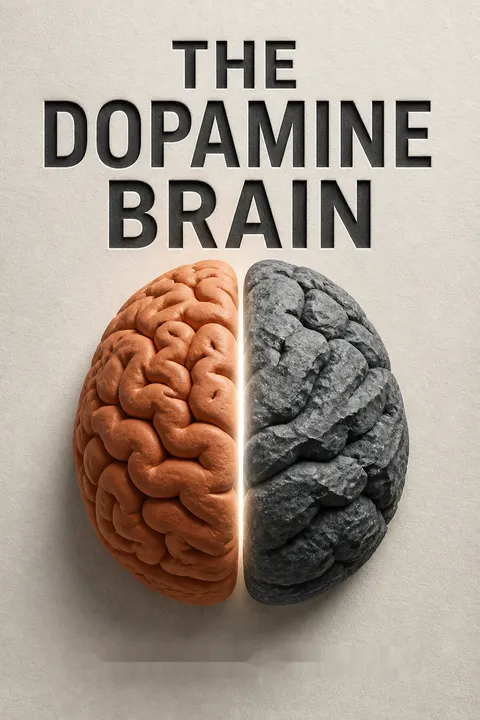
The Dopamine Brain receives mostly positive reviews, with readers praising its accessible approach to neuroscience and practical advice for habit formation. Many found the book insightful, offering valuable strategies for personal growth and understanding dopamine's role in behavior. Some readers appreciated the scientific explanations, while others found the self-help aspects more beneficial. A few critics felt the book lacked depth in certain areas or disagreed with some of the author's statements. Overall, reviewers recommend it for those seeking to understand and change their habits.
Glossary
Dopamine drive
Reward-seeking motivationThe book’s informal term for dopamine’s role in motivating people to pursue rewarding experiences. The drive can begin before a reward is obtained, as reminders and familiar situations prompt anticipation. It supports learning and ordinary goal pursuit, but repeated, easily available rewards can make some actions feel automatic or difficult to regulate.
components model
Six signs of addictionMark Griffiths’s framework for examining addiction through six features: salience, mood modification, tolerance, withdrawal, conflict, and relapse. An activity may dominate attention, alter mood, require more stimulation, produce distress when stopped, create personal or social problems, and return after attempts to quit. The model helps describe patterns; diagnosis and treatment require professional assessment.
hedonic happiness
Pleasure and pain reliefA form of happiness associated with enjoyment, immediate reward, and avoiding discomfort. The book uses the term to describe the satisfaction of pleasurable activities such as eating, entertainment, shopping, or social approval. Hedonic pleasure can be a healthy part of life, but it may not provide lasting purpose or fulfilment on its own.
eudaimonic happiness
Meaningful life satisfactionA form of wellbeing associated with meaningful pursuits and living in ways that feel significant. Examples in the book include contributing to a community, pursuing personally important work, and sustaining valued relationships. It is distinct from momentary pleasure, but the book argues that a fulfilling life can include both eudaimonic meaning and hedonic enjoyment.
choice point
Moment to choose directionA concept used in acceptance and commitment therapy for a moment when a person can select an action that moves toward or away from their values. Pausing at a choice point makes room to notice urges, thoughts, or emotions before acting. The aim is not perfect control, but a more deliberate response to the situation.
Hebbian learning
Connections strengthened by repetitionA theory of learning associated with Donald Hebb: repeated activity among connected neurons can strengthen their connections. In the book, it helps explain why familiar actions become quicker and more automatic through practice. The concept also supports the possibility of developing new patterns through repeated behaviour, though it is a simplified account of complex brain change.
neuroplasticity
The brain’s capacity to changeThe brain’s ability to alter its connections and organisation in response to experience, learning, injury, and repeated activity. Hronis uses examples such as London taxi drivers’ spatial memory and people whose brains adapt after serious injury. Neuroplasticity helps explain how habits can become entrenched and how new skills and patterns can develop.
interoceptive awareness
Awareness of inner signalsThe ability to notice internal bodily sensations and cues, such as hunger, heartbeat, pain, tension, or an urge. The book presents this awareness as a foundation for recognising emotional states and regulating responses. When people can identify what is happening inside, they may have more options than immediately avoiding the feeling or acting on a craving.
place filler
Values-based urge alternativeA quick, accessible action that can occupy the moment when a person feels pulled toward a habit they are trying to change. Unlike a distraction with no further purpose, a place filler also expresses a personal value, such as calling someone for connection or practising an instrument for creativity. It complements, rather than replaces, larger planned goals.
homeostasis
Internal state regulationThe body and brain’s tendency to maintain stable internal functioning. The book applies this concept to explain why repeated intense stimulation may change how rewarding an experience feels and why stopping a familiar behaviour can feel uncomfortable. It does not mean that a short abstinence period produces a universal or guaranteed chemical reset.
FAQ
What's "The Dopamine Brain" about?
- Understanding Dopamine: The book explores the role of dopamine, a neurotransmitter, in influencing our habits and behaviors, particularly those related to pleasure and reward.
- Balancing Life: It provides insights into how dopamine affects our daily choices and how we can balance pleasure with purpose to lead a more fulfilling life.
- Scientific Backing: The book is grounded in the latest research in neuroscience and psychology, offering a comprehensive look at how dopamine functions in the brain.
- Practical Advice: It includes actionable advice, case studies, and personal stories to help readers understand and manage their dopamine-driven behaviors.
Why should I read "The Dopamine Brain"?
- Gain Insight: It offers a deep understanding of how dopamine influences your behavior and decision-making processes.
- Improve Well-being: The book provides strategies to balance pleasure and purpose, which can lead to a more fulfilling and meaningful life.
- Scientific Approach: With a foundation in neuroscience, the book offers credible and research-backed information.
- Practical Tools: It includes practical advice and exercises to help you apply the concepts to your own life.
What are the key takeaways of "The Dopamine Brain"?
- Dopamine's Role: Dopamine is crucial in the brain's reward system, influencing pleasure, motivation, and behavior.
- Balance is Key: Finding a balance between dopamine-driven pleasures and meaningful pursuits is essential for well-being.
- Behavioral Control: The book emphasizes the importance of understanding and controlling dopamine-driven behaviors.
- Values Alignment: Living in alignment with your values can help mitigate the negative effects of dopamine-driven habits.
How does "The Dopamine Brain" explain dopamine's influence on behavior?
- Reward System: Dopamine is involved in the brain's reward system, reinforcing behaviors that feel good and motivating us to repeat them.
- Pleasure and Motivation: It not only provides pleasure but also drives the pursuit of pleasurable experiences.
- Tolerance and Addiction: Over time, repeated dopamine release can lead to tolerance, requiring more stimulation for the same pleasure, potentially leading to addiction.
- Behavioral Patterns: The book explains how dopamine can create automatic and unconscious behavioral patterns.
What strategies does "The Dopamine Brain" offer for managing dopamine-driven behaviors?
- Take a Break: The book suggests taking a break from dopamine-driven activities to reset your brain's baseline dopamine levels.
- Mindfulness Practices: It recommends mindfulness to help manage urges and sit with discomfort without acting on it.
- Values-Based Actions: Replacing dopamine-driven behaviors with actions aligned with your values can lead to more meaningful fulfillment.
- Behavioral Control: Developing strategies to control impulses and make conscious choices is emphasized.
What is the "pleasure purpose dance" mentioned in "The Dopamine Brain"?
- Concept Overview: The "pleasure purpose dance" refers to the balance between seeking immediate pleasure and pursuing long-term purpose.
- Life Balance: The book discusses how to navigate the tension between these two drives to lead a balanced life.
- Dopamine's Role: Dopamine plays a significant role in this dance, as it drives both pleasure-seeking and purposeful actions.
- Practical Application: The book provides strategies to help readers find their own balance between pleasure and purpose.
How does "The Dopamine Brain" address common myths about dopamine?
- Detox Myth: The book debunks the myth that you can detox from dopamine, explaining that it's a naturally occurring neurotransmitter essential for functioning.
- Addiction Misconception: It clarifies that people become addicted to activities or substances that release dopamine, not dopamine itself.
- Happiness and Dopamine: The book explains that more dopamine doesn't necessarily equate to more happiness, as the relationship is complex.
- Focus and Productivity: It addresses the misconception that boosting dopamine always improves focus and productivity, highlighting the need for balance.
What role do values play in "The Dopamine Brain"?
- Values Definition: Values are described as guiding principles that give meaning and direction to our lives.
- Alignment with Actions: The book emphasizes the importance of aligning actions with values to achieve fulfillment and satisfaction.
- Values Identification: It provides exercises to help readers identify their core values and assess whether their lives align with them.
- Values and Dopamine: Understanding and living by your values can help counteract the pull of dopamine-driven behaviors.
What are some practical exercises from "The Dopamine Brain"?
- Values Identification: The book includes exercises to help readers identify and prioritize their core values.
- Mindfulness Practices: It offers mindfulness exercises to help manage urges and sit with discomfort.
- Behavioral Reflection: Readers are encouraged to reflect on their daily actions and assess alignment with their values.
- Goal Setting: The book provides guidance on setting goals that align with values and replacing dopamine-driven behaviors.
How does "The Dopamine Brain" suggest dealing with discomfort?
- Embrace Discomfort: The book encourages embracing discomfort as a natural part of life and a source of valuable information.
- Mindfulness Techniques: It suggests using mindfulness to observe and sit with uncomfortable emotions without judgment.
- Riding the Wave: The concept of "riding the wave" is introduced to help manage urges and emotions by acknowledging their temporary nature.
- Practical Strategies: The book offers practical strategies, such as distraction and sensory experiences, to manage discomfort when mindfulness isn't enough.
What are the best quotes from "The Dopamine Brain" and what do they mean?
- "Neurons that fire together, wire together." This quote explains how repeated behaviors strengthen neural pathways, making them more automatic.
- "The secret of change is to focus all of your energy not on fighting the old, but on building the new." It emphasizes the importance of creating new, healthier habits rather than just resisting old ones.
- "Life is full of paradoxes." This highlights the complexity of balancing pleasure and purpose, acknowledging that life is both simple and complex.
- "Nothing changes if nothing changes." A reminder that meaningful change requires action and effort, not just intention.
How does "The Dopamine Brain" relate to addiction and recovery?
- Addiction Spectrum: The book explains that addiction exists on a spectrum, and not all problematic behaviors are full-blown addictions.
- Dopamine's Role: It discusses how dopamine contributes to addiction by reinforcing behaviors that release it.
- Recovery Strategies: The book offers strategies for managing dopamine-driven behaviors, which can be applied to addiction recovery.
- Behavioral Control: Emphasizing the importance of understanding and controlling dopamine-driven behaviors is key to recovery.
Download PDF
Download EPUB
.epub digital book format is ideal for reading ebooks on phones, tablets, and e-readers.








