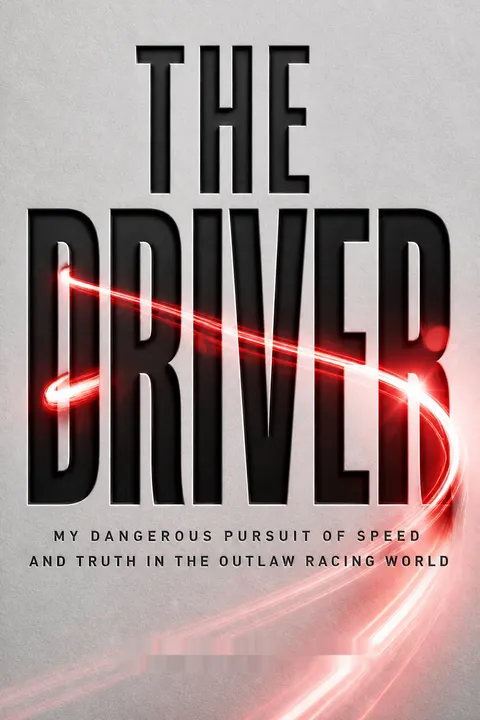


Key Takeaways
Turn inherited mysteries into a purpose, but question whose purpose it is.
A secret becomes a summons. As his father lay dying, he revealed that he had entered the 1979 Cannonball Run, an illegal cross-country race, and urged his son to find a mysterious driver who might break its record. His father died before explaining everything. Alexander Roy took up the search, treating a race as both a practical challenge and a way to understand the man he had lost.
Grief shaped the pursuit. The mission drew him through the Gumball 3000 rally, increasingly dangerous drives, and years of preparation. But the book’s deeper question is not only whether he can find the elusive racer. It is whether a son can turn an inherited story into a life that is genuinely his.
What's striking is how grief gives the quest emotional force while also making it harder to question. A family story can function like a vocation: it offers direction when loss has made ordinary choices feel thin. Yet a compelling origin story is not proof that a mission is wise or truly chosen. The useful distinction is between honoring someone and obeying an imagined demand from them. Roy’s narrative gains depth because the search for a racing figure gradually becomes a test of identity, not simply a pursuit of speed.
Train the whole system, not just the person behind the wheel.
Preparation was painstaking. Before his New York City lap, Roy spent a year studying the route, recording hazards, and practicing. On the first attempt, he completed the lap in 27 minutes, committing 109 moving violations. For Gumball, he recruited a copilot, prepared a BMW M5, tested communications gear, and planned routes, fuel stops, and ways to detect police.
The team mattered as much as the car. Later attempts included dedicated roles for a copilot, chase cars, an aircraft, cameras, and people monitoring weather and traffic. The effort shows how performance depends on coordinated tools and people, not merely individual nerve. But elaborate preparation did not make illegal driving safe, and Roy’s precautions could not control every hazard on public roads.
The book’s systems thinking resembles preparation in aviation and emergency response, where clear roles, redundancy, and rehearsal help people act under pressure. Its most transferable lesson is to design for the whole task, including communication and failure recovery, rather than overinvesting in individual skill. There is an important limit: adding equipment also adds complexity, and a checklist can create confidence without eliminating uncertainty. Roy’s account makes that tension vivid. Extensive preparation improves readiness, but it cannot turn an uncontrolled public road into a racecourse.
Choose equipment for the mission, not the audience.
Flashy cars could be poor tools. Gumball officially called itself a rally, not a race, yet some entrants competed intensely. Roy concluded that success depended less on peak speed than on reliability, fuel range, handling, and the ability to avoid police attention. A costly supercar could impress spectators but burn fuel quickly or struggle with rough roads.
The M5 fit his strategy. Roy selected a BMW sedan that could carry two people and substantial equipment while remaining capable at speed. His approach contrasted with the spectacle of Ferraris and other exotic cars. The distinction mattered whenever the route demanded endurance rather than a short burst of performance. In his view, a car’s value depended on what the journey required, not what its badge or price announced.
This is a sharp distinction between performance as display and performance as fitness for purpose. Similar tradeoffs appear in product design: the most powerful tool is not necessarily the most useful when reliability, range, and adaptability matter more. Roy’s choice also shows how social settings can distort technical judgment. Spectators reward visible horsepower; the task rewards less glamorous capabilities. Still, his criteria serve an illegal and dangerous objective. The principle of matching tools to a mission is valuable, but the mission itself deserves scrutiny before optimization begins.
Pair complementary strengths, then let evidence revise the plan.
The partnership changed the result. Roy brought extensive route research, technical preparation, and a cautious approach to risk. David Maher was a more aggressive driver, willing to sustain speeds Roy would not have chosen. During their 2006 cross-country attempt, Maher drove a demanding late stage at remarkable speed, while Roy handled navigation, spotting, and decisions about the route.
Trust meant adapting roles. Roy had long seen himself as the central driver and planner. The record attempt forced him to recognize that letting Maher take more of the wheel could improve their chances. Together they completed the journey in 31 hours and 4 minutes, faster than the 32:07 U.S. Express mark they had set out to challenge.
Their strongest asset is not simple agreement but complementary judgment. Research on team performance often distinguishes coordination from mere compatibility: people contribute more when roles fit their strengths and information can move freely between them. Roy’s willingness to let Maher drive is a concrete shift from personal control toward shared execution. The harder question is whether confidence in a partner can become a substitute for a safety check. Trust is most useful when it supports candor and clear boundaries, not when it turns one person’s risk tolerance into the team’s default.
Make safety a decision rule, not a reassuring slogan.
Good intentions met hard limits. Roy repeatedly wrote reminders to breathe and avoid harming others. He researched hazards, checked equipment, and worried about bystanders. Yet his chosen activity involved speeding, illegal maneuvers, and relying on drivers around him to react predictably. In Morocco, he witnessed a serious crash after a competitor made a dangerous pass; the injured copilot survived, but the scene showed how quickly a rally’s risks could become real.
Risk extended beyond the team. A driver could accept danger for himself, but other road users had not agreed to participate. Roy’s precautions sometimes reduced specific risks, but they could not remove the larger danger of turning public roads into a contest. The book’s candor is valuable because it shows the gap between intending not to cause harm and having the power to prevent it.
The ethical issue is consent. In controlled sport, participants knowingly accept defined risks; on public roads, bystanders do not choose to join the event. That asymmetry cannot be solved by skill, good intentions, or a careful checklist. Roy’s repeated concern for others is sincere, and the Moroccan crash makes the danger concrete, but concern is not the same as control. This section invites a useful test for any ambitious project: who bears the downside, and did they have a meaningful choice? Safety is a boundary on action, not merely a feeling of confidence.
When instruments disagree, diagnose reality before trusting the plan.
The plan repeatedly met surprises. In 2003, Roy’s GPS map failed at the start of a Gumball stage, forcing him and Maher to navigate with paper maps. A tire warning appeared at high speed, and they had to decide whether it signaled real danger. During the 2006 record attempt, a mechanical or electrical problem repeatedly stopped the M5 in Oklahoma, where police were already asking about a blue BMW with antennas.
Adaptation kept the effort moving. Roy and his team used redundant devices, radio reports, and direct observation, but no instrument was infallible. They sometimes had to discard a carefully prepared plan and respond to conditions in front of them. Their eventual 31:04 required both preparation and real-time judgment, not blind obedience to the spreadsheet or dashboard.
This is a useful lesson from resilience engineering: redundancy helps only when people can recognize disagreement and decide which signal deserves attention. More sensors do not automatically produce better decisions; they can create overload or false confidence. Roy’s experience also shows why a plan should include explicit fallback options, not just a target. The broader caution is that adaptation is not always a license to continue. Sometimes the most competent response to conflicting evidence is to stop, especially when the cost of a false positive falls on other people.
Earn respect in the convoy by helping rivals when it counts.
Competition did not erase cooperation. Roy’s rivals were not interchangeable villains. He respected veteran drivers such as Richard Rawlings and Rob Kenworthy, even while trying to beat them. After Michael Ross’s Bentley suffered a problem during Gumball, Roy and his copilot helped him repair it and later protected his position in the convoy. Rawlings, in turn, left Roy fuel when the M5 ran dry during a stage.
Conduct carried more weight than claims. Gumball’s Spirit Trophy was awarded for embodying the event’s enthusiasm and ingenuity, not simply arriving first. Roy won it with Maher in 2003. The informal code he describes valued starting on time, driving with judgment, passing respectfully, helping stranded competitors, and finishing well.
The convoy functions as a small social system in which reputation is built through repeated conduct, not slogans. Cooperation is not a betrayal of competition; it can create the trust that makes competition possible at all. This resembles professional communities where rivals share expertise or assist in emergencies because norms matter beyond one result. There is a tension, though: informal codes can make risky behavior feel honorable simply because it is shared. Respect is meaningful, but it does not validate the danger of the activity itself.
Let a finished record end the test, not define your worth.
The number did not settle everything. Roy and Maher reached Santa Monica in 31 hours and 4 minutes, beating the 32:07 U.S. Express time. The effort had required years of preparation, extensive help, and a dangerous drive. Roy initially treated completion as proof that the pursuit had been worth its cost, but the ending is more unsettled: he reflects on what he had sacrificed and on how little a record can explain about a person’s life.
The danger became unmistakable. In 2007, a Gumball driver collided with a car in Macedonia, killing its two occupants. Later that year, Rawlings and Dennis Collins completed a New York to Los Angeles run in 31:59. Roy did not answer their achievement with another attempt. He turns toward rest, relationships, and the limits of what a record can provide.
A measurable finish can close a contest without resolving the motives that created it. Roy’s achievement is real, but the book refuses to make the stopwatch a complete moral accounting. In psychology, the sunk-cost effect describes how past investment can pressure people to continue simply because they have already spent so much. His ending resists that logic: a completed pursuit can be honored without becoming a permanent obligation. The deaths in Macedonia make the distinction stark. Some ambitions are not merely costly to their pursuers; their risks spill outward.
Analysis
The Driver is part memoir, part adventure narrative, and part inquiry into an obscure racing history. Its structure follows Roy’s changing understanding of what he is chasing: first a dead father’s concealed past, then a mysterious racer, then a place among Gumball’s competitive veterans, and finally a specific cross-country record. This layered pursuit gives the book momentum, but it also makes the central motive unstable. Roy repeatedly frames the task as discovery, homage, competition, and self-definition. None fully explains it alone.
The book’s greatest strength is its willingness to expose the machinery behind the legend. Detailed accounts of route planning, failed equipment, fuel calculations, and shifting roles show that extraordinary performance is collective and contingent. The climactic 31:04 is not a lone-driver triumph. It depends on Maher, Cory, a spotter aircraft, chase crews, friends, mechanics, and witnesses. The narrative becomes most persuasive when it admits how little any single participant could control.
That same specificity creates an ethical challenge. The author’s preparation and concern for safety can sound like a defense of conduct that places uninvolved people at risk. Yet the account also records crashes, near misses, and the limits of mitigation. Readers should distinguish the book’s fascination with operational competence from an endorsement of its objective. Preparation may reduce some dangers while leaving the underlying choice unjustifiable.
The ending complicates the usual adventure-story reward. A record is set, but no clean moral resolution follows. The later fatal crash and Roy’s refusal to keep competing push the reader to consider the difference between achievement and wisdom. The lasting value lies less in speed than in the self-critique: a person can pursue a goal with discipline, loyalty, and courage, and still need to ask whether those virtues are serving a life worth living.
Review Summary
The Driver receives mixed reviews, with ratings ranging from 2 to 5 stars. Many readers find Roy's story of illegal cross-country racing thrilling and well-written, praising his attention to detail and the adrenaline rush of his experiences. However, some criticize Roy as arrogant and the book as self-indulgent. Positive reviews highlight the book's exploration of obsession and the search for meaning, while negative reviews focus on the dangerous and illegal nature of Roy's actions. Overall, the book appeals strongly to car enthusiasts but may not resonate with all readers.
People Also Read







Glossary
The Driver
Elusive racer and personal idealThe name Roy gives the mysterious racer his father urges him to find. As the story develops, the term also becomes a symbol for the people and qualities Roy pursues through racing, including his father, his rivals, and an ideal version of himself.
U.S. Express
Secret cross-country road raceAn illegal American endurance race that followed the earlier Cannonball events. The book focuses on the 1983 U.S. Express, in which Doug Turner and David Diem reportedly set a New York to Los Angeles time of 32 hours and 7 minutes, a record Roy later attempts to beat.
Gumball Spirit Trophy
Award for rally spiritA Gumball 3000 award presented for enthusiasm, creativity, and embodying the event’s spirit rather than simply arriving first. Roy and David Maher receive it in 2003, after completing the rally in a conspicuously equipped BMW and embracing its irreverent culture.
Rally Math
Estimating time and distanceRoy’s informal term for calculating how speed, distance, fuel stops, delays, and route choices affect a rally’s likely completion time. The calculations help him compare pace with a target, but the book shows that changing weather, traffic, mechanical trouble, and faulty equipment can quickly make projections unreliable.
Danger Coefficient
A rough risk comparisonRoy’s informal estimate comparing the danger of Gumball driving with that of professional racing. He considers factors such as speed, public traffic, road conditions, medical response, and safety equipment. The figure is a personal calculation rather than a validated measure, and its purpose in the narrative is to make the risks harder to dismiss.
Download PDF
Download EPUB
.epub digital book format is ideal for reading ebooks on phones, tablets, and e-readers.








