Key Takeaways
1. Druidry: A Modern Quest for Nature Spirituality
The idea of a green way of wisdom, a spirituality rooted in nature and the living Earth, had a potent attraction for people who couldn’t stomach either the rigid dogmatism of organized Christianity or the equally rigid nihilism of emerging modern science.
A Third Option. Modern Druidry emerged from a 17th-century quest for a spiritual path that transcended the rigid dogmatism of established religions and the spiritually barren materialism of nascent science. Scholars like John Aubrey, fascinated by ancient British megaliths and the fragmentary accounts of Druids, sought meaning in a world torn by religious conflict and increasingly defined by a "mechanical philosophy." This search for a holistic view, rooted in the "Book of Nature," laid the groundwork for a revival.
Revival, Not Continuity. The modern Druid movement, traditionally dating its formal beginning to 1717, did not inherit an unbroken lineage from ancient Celtic Druids. Instead, it was a creative reconstruction, drawing inspiration from limited classical texts, folklore, and the silent testimony of ancient stones. Early Revival Druids, including figures like John Toland and William Stukeley, innovated by blending pantheistic views (nature as divine) with Latitudinarian Christianity, seeking a personal spirituality compatible with nature reverence.
Evolving Tradition. This early period of borrowing and innovation established Druidry as a dynamic, adaptable tradition. It incorporated elements from Freemasonry, Welsh bardic lore (like Iolo Morganwg's contributions), and later, ecological thought. The core appeal remained a spirituality that challenged the industrial order's desecration of nature, offering a vision of humanity as children and students of the living Earth, rather than its adversaries.
2. The Triadic Core of Druid Philosophy
Myths are things that never happened, but always are.
Profound Meaning. Druid philosophy, unlike literalist interpretations of sacred texts, understands myths not as historical facts but as timeless truths that reveal deeper meanings. The story of Einigen the Giant and the Three Rays of Light, for instance, is the origin myth of the Druid Revival, symbolizing Awen—inspiration and illumination—descending from the divine (invoking form |/) and awakening within the soul (evoking form /|). This myth teaches the difference between a religion of belief and a spirituality based on understanding.
Circles of Existence. The Three Circles of Manifestation—Abred, Gwynfydd, and Ceugant—map the soul's journey. Abred is the cycle of reincarnation through plant and animal life, where souls gather knowledge through countless forms. Human life, the upper limit of Abred, introduces freedom, allowing souls to ascend to Gwynfydd (fulfillment) or fall back. Gwynfydd is a new journey of unfolding potential, while Ceugant represents infinity, the limitless potential beyond even Gwynfydd, where divine powers dwell.
Elements of Experience. Druid natural philosophy employs three elements: Nwyfre (life/consciousness, sky), Gwyar (change/fluidity, water), and Calas (form/stability, stone). These are not chemical elements but basic categories of human experience, allowing for a holistic understanding of the universe. This ternary thinking helps overcome modern dualistic habits, revealing how opposing forces are connected and how a third factor can bring balance and deeper insight.
3. Cosmic Energies and the Wheel of Life
The Wheel of Life, as one might call the eightfold year in its cosmogrammatic form, provides a map of spiritual powers and realms, a way of sorting out the complicated phenomena of inner experience, and a chart for inner journeys from one realm of energy to another.
Above and Below. Druidry recognizes two primary currents of nwyfre (life force): the solar current, descending from the Sun and sky, stimulating intellect and impersonal awareness (wisdom); and the telluric current, rising from deep within the Earth, engendering life, love, and vital force (power). These are symbolically masculine and feminine, respectively, and their balanced flow is essential for creation. Neither is superior; both are barren alone.
The Lunar Current. The fusion of solar and telluric currents creates a third, the lunar current (also called the Green Ray or Aur/Or), which mediates between them. This current, generated within an individual, awakens higher energy centers, bringing healing, creativity, and illumination. On a larger scale, it brings fertility and abundance to the land. The process is mirrored in nature, like a seed sprouting, and is subtly linked to the Grail legend, where healing the land requires asking unasked questions and restoring balance.
Eightfold Year. The eightfold year, a sacred calendar of festivals, serves as a cosmogram—a diagram of the universe of human experience. It tracks the Sun's movement through the seasons, marking solstices, equinoxes (Alban Gates), and cross-quarter days (Samhuinn, Imbolc, Belteinne, Lughnasadh). Each station embodies specific seasonal energies and is often associated with Celtic deities or archetypal figures, providing a framework for understanding spiritual powers and guiding inner journeys.
4. Ogham: The Alphabet of Nature's Deep Symbolism
The old Irish word for each of these begins with the few, and a set of animals can readily be added along the same lines. Other symbolism has been added in recent centuries by Druids working with the alphabet.
Ancient Irish Script. Ogham, an ancient Irish alphabet, is a central theme in modern Druidry, despite its mysterious origins and unique bottom-to-top inscription style. Its twenty basic letters, or fews, are grouped into four aicme, with five additional forfedha added later. Each few is linked to a tree, bird, color, agricultural tool, and art, forming a rich symbolic system.
Evolving Meanings. While some purists object to modern additions, the Irish Ogham texts themselves encourage students to adapt symbols to their own experience. This adaptability has allowed Ogham to serve as a magical alphabet for divination, ritual, and other Druid practices. Robert Graves's 20th-century creation of a thirteen-month tree calendar based on Ogham, though not historically ancient, demonstrates its enduring utility and capacity for new interpretations within the tradition.
Framework for Practice. Ogham's symbolism provides a framework of images and ideas for inner transformation. Learning the fews by sight and understanding their meanings is foundational for advanced Druid practice. Regular meditation on the fews and their associated symbols opens pathways to deeper insights, connecting the practitioner to the intricate dance of nature's energies and the wisdom embedded within the living world.
5. Mythic Figures as Guides for the Druid Path
As modern Druids have pointed out more than once, the three stages of Taliesin’s initiation take place in any form of spiritual training.
Taliesin: The Initiatory Journey. Taliesin, the archetypal wizard-bard of British myth, embodies the core pattern of Druid initiation. His legend, from Gwion stirring Ceridwen's cauldron for a year and a day to his shapeshifting flight and rebirth as Taliesin, mirrors a transformative process of:
- Patient practice (stirring the cauldron)
- Sudden awakening and transformation (shapeshifting)
- Retreat into silence for inner development (Ceridwen's womb)
This narrative provides a model for spiritual training, emphasizing that enlightenment unfolds in cycles of effort, insight, and quiet integration.
Arthur: The Once and Future King. King Arthur, beyond his historical roots as a 5th-century war leader, represents a profound mythic archetype. His legend, a tapestry of history, medieval romance, and ancient mythology, symbolizes the human capacity to shape the world and embody full human potential. The title "Pendragon" (chief dragon) links him to the hidden energies of the land and the latent powers within the self, reminding Druids that their path embraces the immense challenge of becoming magnificently human and bringing healing to the Earth.
Merlin: The Archetypal Mage. Merlin, the archmage and initiator of Arthur, is a complex figure embodying the Druid's character: acerbic yet benevolent, wise yet humble. His legend emphasizes wisdom and knowledge of the unseen over mere magical power. Merlin's ultimate retreat into an "esplumoir" or hidden vault symbolizes the mystical tradition of sages who become guiding presences in the inner realms. This teaches that each human contains vast, sleeping potentials, and recognizing this is the first step toward awakening them.
6. The Earth Path: Cultivating Harmony with Nature
The Druid vision suggests that what’s been lost is a living connection with nature, as essential to human life as sunlight, rain, and soil are to the life of a tree.
Reconnecting with Nature. The Earth Path is fundamental to Druidry, emphasizing a life in harmony with the living Earth. It challenges the "unnatural habits" of industrial civilization, which has alienated humanity from nature. This path involves both reconnecting with nature through awareness and making conscious lifestyle changes to reduce one's impact on the planet. It's about recognizing that human well-being is intrinsically linked to the health of the biosphere.
Beyond Consumption. The modern pursuit of wealth and luxury often obstructs spirituality and happiness. The Earth Path aligns with "voluntary simplicity," advocating for outwardly simple, inwardly rich lives. It highlights that our minds and spirits evolved in intimate contact with nature, and isolation from natural environments can lead to a pervasive sense of loss and even mental imbalance, as explored by ecopsychology.
Practical Awareness. This path involves three practices:
- Stillness: Regularly sitting in nature, broadening awareness to sights, sounds, and subtle changes.
- Focus: Paying close attention to specific natural details (a stone, bark, a patch of grass).
- Study: Learning about local natural history, geology, weather, flora, and fauna, using Druid philosophical concepts (Annwn, Abred, Gwynfydd) as a framework.
These practices help break through the "hallucinatory unreality" of modern industrial culture.
7. The Sun Path: Ritualizing Nature's Cycles
Ross Nichols, one of the major figures in twentieth-century Druidry, offered a way around this confusion by proposing that 'ritual is poetry in the world of acts.'
Ritual as Poetry. The Sun Path is the way of ritual and celebration, traditionally performed "in the face of the Sun, the eye of light"—outdoors. Ritual, like poetry, reshapes awareness, revealing neglected connections and highlighting deeper meanings. It lifts participants from mundane consciousness into a wider appreciation of the turning wheel of the year, restoring meaning to life by connecting it to the larger context of living beings and spiritual powers.
The Eightfold Year. The modern Druid calendar, largely formalized in the 1950s, celebrates eight holy days: the solstices (Alban Arthuan, Alban Heruin), equinoxes (Alban Eiler, Alban Elued), and cross-quarter days (Samhuinn, Imbolc, Belteinne, Lughnasadh). These festivals track the Sun's movement and the rhythms of the natural world, embodying themes of birth, life, death, and rebirth. Each festival has specific symbols, colors, and associated deities, reflecting the seasonal energies.
Active Participation. Regular practice of ritual is crucial for the Sun Path. It's a performing art where participants are also the audience, learning through active engagement. The book provides detailed rituals for opening and closing a sacred grove, along with specific ceremonies for each of the eight holy days. These rituals, while adaptable to local ecology and personal theology, require memorization and consistent practice to become effective and powerful experiences, deepening one's connection to the Earth's cycles.
8. The Moon Path: Meditation for Inner Awakening
In many ways, the Moon Path of meditation is the heart and soul of the Druid way.
Inner Life of Druidry. The Moon Path, the way of meditation, is central to Druidry, providing the inner life for the Earth and Sun Paths. Just as the Moon reflects the Sun's light and the Earth's radiance, the mind reflects both the outer world and hidden inner realms. Meditation is crucial for developing new awareness and knowledge, addressing the "blighted psyche" that underlies humanity's damage to the living Earth.
Discursive Meditation. Unlike Eastern methods that aim to silence the mind, Druid meditation, like many Western systems, trains and directs thought. This "discursive meditation" involves focusing attention steadily on a chosen theme (an idea, sentence, or image), allowing the mind to explore its implications and unfold its inner potential. This approach respects both knowledge and spiritual insight, fostering conscious thinking rather than merely suppressing mental chatter.
Practical Techniques. The Moon Path involves a structured approach:
- Preliminaries: Establishing a private, consistent place and time, wearing comfortable clothing, and managing lifestyle factors like diet and drug use.
- Posture & Relaxation: Learning stable, comfortable postures (seated or walking) and systematically releasing bodily tension.
- Breathing: Mastering cleansing, rhythmic, and silent breaths to calm nwyfre (life force) and enhance focus.
- Color Breathing: Using imagination to breathe in specific colors (e.g., red for energy, blue for receptivity) to influence mind and body.
- Concentration: Training the mind to sustain focus on a target (like a white circle on black) before moving to thematic meditation.
- Nwyfre Exercises: Practices like solar, telluric, and tree nwyfre exercises to draw in or exchange life force, and the "Druid's Egg" for psychic shielding.
9. Personal Action as the Response to Ecological Crisis
The dirty little secret of the ecological crisis is that it results from choices made by ordinary people.
Individual Responsibility. The ecological crisis is largely a consequence of choices made by ordinary people, driven by consumer demands. Governments and corporations often merely respond to these demands. Therefore, personal action and example are crucial, as political change often begins with individual transformation. Each person who adopts a conserver lifestyle contributes to a viable future and blazes a trail for others.
Beyond Hypocrisy. "SUV environmentalism," which demands action without personal sacrifice, is a form of hypocrisy. A transition to a conserver society will inevitably mean fewer goods, services, and conveniences. This shift can be voluntary, preserving the best of industrial achievements, or forced by escalating ecological and resource crises, leading to chaos. Personal choices today determine which path humanity takes.
Constructive Engagement. Druid ecological action is about leading by example, not browbeating others. It involves:
- Ecological Thinking: Asking questions like "What is it made of?", "How is it made?", "How far did it travel?", "What inputs does it require?", "How much waste is involved?", "How long does it last?", "Where does it go?", and "How necessary is it?"
- Lifestyle Changes: Implementing practical steps like growing food, buying organic, reducing energy use, conserving water, and recycling.
- Tree Planting: A highly beneficial act, contributing oxygen, absorbing carbon dioxide, fighting erosion, and supporting local ecosystems.
This approach emphasizes informed, personal action over empty words or misguided activism.
10. Druidry's Evolving and Inclusive Nature
The age of a tradition has no bearing at all on its relevance or value.
Modern Relevance. Modern Druidry, despite its historical roots in a revival rather than an unbroken lineage, has proven its relevance and value over three centuries. Its ability to adapt, borrow, and innovate, while remaining rooted in nature spirituality, has allowed it to address contemporary challenges like the ecological crisis and the need for inner development. The "Reformed Druids of North America" (RDNA) exemplify this, starting as a prank but evolving into a meaningful spiritual path for many.
Open-Ended Path. Druidry embraces an open-ended approach to spiritual training, encouraging individual choice and unique paths. While structured curricula exist (like AODA's three degrees), the ultimate goal is the awakening of each individual's unique gifts and insights. This contrasts with traditions that prescribe fixed courses of study and identical outcomes.
Inclusivity and Tolerance. Druidry is largely inclusive, welcoming individuals of all religious, ethnic, cultural, national, and linguistic backgrounds. While some "Reconstructionist" or nationalist groups may hold exclusive views, the broader modern Druid movement values tolerance and diversity. This openness allows Druidry to continue growing and evolving, building bridges between different spiritual perspectives rather than raising walls.
Last updated:
Review Summary
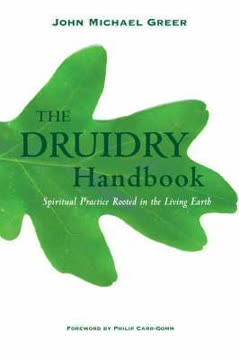
The Druidry Handbook receives mixed reviews averaging 3.98/5 stars. Readers appreciate Greer's non-dogmatic approach, honest historical treatment, and practical exercises covering meditation, seasonal celebrations, and nature connection. The book serves as AODA's first-degree curriculum, structured around three paths: Earth, Moon, and Sun. Criticisms include anti-science statements about nuclear energy and modern medicine, individualistic environmentalism ignoring collective action, problematic health advice for chronically ill readers, and dismissal of scientific worldviews as "nihilistic." Some find the ritual magic anachronistic or too specific. Overall, it's considered a solid beginner's introduction to modern revival Druidry, though better alternatives exist.